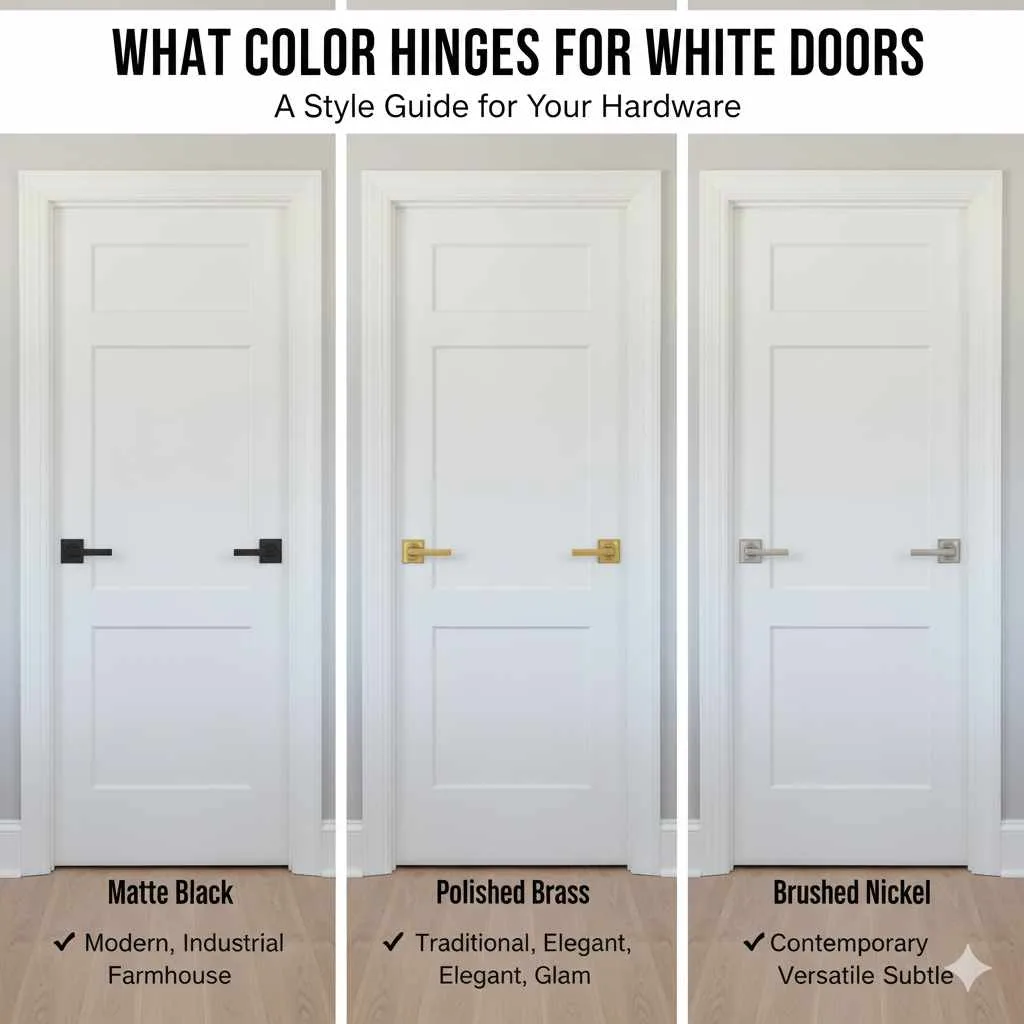
When choosing hinges for white doors, the best options often include classic satin nickel, sleek matte black, timeless polished brass, and elegant brushed brass. These colors create a beautiful contrast or a subtle complement, enhancing your door’s appearance and your room’s overall style.
Choosing the right hardware can feel like a big decision, especially when aiming for a polished look. White doors are incredibly versatile, fitting into almost any decor. But what about the details? The hinges, while small, play a significant role in the overall aesthetic. You might be wondering, “What color hinges will look best on my white doors?” It’s a common question because the wrong choice can sometimes make these often-overlooked elements stand out in a not-so-great way. Don’t worry, though! As your friendly home decor advisor, I’m here to guide you through making a choice that feels right and looks stunning. We’ll explore the most popular and effective hinge colors that will make your white doors shine.
Why Hinge Color Matters More Than You Think
It’s easy to overlook the hinges. They’re functional pieces of hardware, after all. But think of them as jewelry for your doors. Just like earrings or a necklace can complete an outfit, the right hinge color can seriously elevate the look of your doors and, by extension, your rooms. Hinges are visible every time a door opens or closes, and they can either blend in seamlessly or create a striking focal point. Getting this detail right adds a layer of sophistication and intentionality to your home’s design. This guide will simplify the decision process for you, making it easy to pick hinges that will make your white doors look their absolute best.

Understanding Different Hinge Finishes
Before we dive into the best color choices, let’s quickly touch upon what these finishes actually look like. The terms “color” and “finish” are often used interchangeably with door hardware. Each finish offers a unique visual appeal and can complement different interior design styles.
- Satin Nickel (or Brushed Nickel): This is a very popular choice. It has a soft, matte sheen with a slightly brushed texture. It’s less reflective than polished nickel, making it very forgiving for fingerprints and smudges.
- Matte Black: A bold and modern choice, matte black hardware offers a strong, graphic contrast against white. It’s sophisticated and can anchor a space.
- Polished Brass: This is a classic, warm-toned metal with a high shine. It harkens back to traditional and vintage styles but can also add a touch of glam to contemporary spaces.
- Brushed Brass (or Satin Brass): Similar to polished brass but with a softer, less reflective finish. It offers a warm, elegant look without being overly flashy.
- Chrome: Known for its bright, highly reflective surface, chrome offers a modern and crisp look. It pairs well with cooler color palettes.
- Oil-Rubbed Bronze: This finish typically features dark, brownish-black tones with hints of reddish undertones, often with a rugged, antiqued look.
- White: Yes, you can get white hinges! These are ideal for a completely seamless, modern look, making the door appear to have no hardware at all.
Best Hinge Colors for White Doors: A Breakdown
Now for the exciting part! Let’s explore which hinge colors are the star players when paired with white doors. I’ve broken down the top contenders, considering aesthetics, style, and practicality for your home.
1. Satin Nickel: The Timeless Classic
Satin nickel is often the go-to for a reason. It’s incredibly versatile and offers a clean, refined look that complements white doors beautifully. It provides a subtle contrast without being too stark, making it suitable for a wide range of interior styles, from modern farmhouse to transitional and even minimalist designs.
Why it works with white doors:
- Subtle Contrast: It’s not as stark as chrome or as warm as brass, creating a pleasant visual balance.
- Fingerprint Resistant: The brushed texture means fewer visible smudges compared to polished metals.
- Versatile: Pairs well with most other hardware finishes in your home, like cabinet knobs or light fixtures.
- Modern Yet Classic: It bridges the gap between traditional and contemporary aesthetics.
Best for: Almost any room! It’s a safe and stylish bet for living rooms, bedrooms, hallways, and even kitchens and bathrooms where a neutral, sophisticated look is desired.
2. Matte Black: The Bold Statement
For a more contemporary and dramatic flair, matte black hinges are an exceptional choice. They create a sharp, graphic contrast against bright white doors, making the hardware stand out as a deliberate design element. This finish is incredibly popular in modern, industrial, and even Scandinavian-inspired interiors.
Why it works with white doors:
- Striking Contrast: Creates a bold, eye-catching look that adds definition.
- Modern Appeal: Especially effective in spaces with clean lines and minimalist decor.
- Hides Dirt: Matte finishes generally hide dust and minor scuffs well.
- Draws the Eye: If you want your door hardware to be noticed, black is the way to go.
Best for: Modern homes, industrial lofts, minimalist interiors, or any space where you want to add a touch of graphic sophistication. Think living rooms, home offices, and accent doors.
3. Polished Brass: The Warm Welcome
If you love a touch of warmth and tradition, polished brass is a stunning option for white doors. It offers a bright, cheerful glow that can make white doors feel more inviting and luxurious. This choice leans towards more traditional, vintage, or eclectic styles, but can also add a surprising pop of glam to modern spaces.
Why it works with white doors:
- Elegant Warmth: Adds a welcoming and sophisticated feel.
- Classic Appeal: A timeless choice that never truly goes out of style for certain aesthetics.
- Statement Piece: Can instantly elevate the perceived value and style of a door.
Considerations: Polished brass can show fingerprints more readily than brushed finishes, and it tends to be a bolder statement. It might require more frequent cleaning to maintain its shine.
Best for: Traditional homes, vintage-inspired interiors, entryway doors, or any space aiming for a more opulent or classic feel. Also great for adding a touch of unexpected luxury to a modern bathroom.
4. Brushed Brass: The Understated Elegance
For those who appreciate the warmth of brass but prefer a more subdued look, brushed brass is the perfect compromise. It offers the beautiful golden hue of brass but with a softer, matte finish that is less reflective and more forgiving than its polished counterpart. This makes it an incredibly elegant and practical choice for white doors.
Why it works with white doors:
- Sophisticated Warmth: Provides a rich, warm tone that feels elegant and inviting.
- Low Maintenance: The brushed texture hides smudges and fingerprints better than polished brass.
- Versatile Elegance: Suits a range of styles, from modern farmhouse to transitional and even art deco inspired designs.
- Subtle Luxury: Adds a touch of high-end style without being ostentatious.
Best for: A wide range of rooms, including living areas, dining rooms, and bedrooms. It’s particularly lovely in homes that incorporate natural wood tones or warmer accent colors.
5. Chrome: The Crisp and Clean
Chrome offers a bright, highly reflective finish that brings a sense of clean, modern crispness to white doors. If your home features a lot of cool tones, stainless steel appliances, or a generally minimalist and airy aesthetic, chrome hinges can be an excellent choice. They tend to look very sleek and blend well with a modern or even art deco-inspired design.
Why it works with white doors:
- Bright and Airy: Enhances the clean, light feel of white doors.
- Modern Aesthetic: Perfect for contemporary and minimalist interiors.
- Durable: Chrome is known for its durability and resistance to corrosion.
Considerations: Chrome is highly reflective and can show fingerprints and water spots easily. It can also feel a bit cold in warmer-toned or more traditional spaces.
Best for: Modern bathrooms, kitchens, minimalist living spaces, or anywhere you want a very clean, bright, and reflective hardware accent.
6. Oil-Rubbed Bronze: The Earthy Charm
Oil-rubbed bronze offers a deep, rich, and earthy tone. While not a direct color match, the dark, often variegated finish provides a beautiful, grounding contrast against white doors. This finish is fantastic for Craftsman, rustic, farmhouse, or traditional homes, adding a touch of old-world charm and warmth.
Why it works with white doors:
- Warm Contrast: Provides a rich, dark contrast that is softer than matte black.
- Rustic/Traditional Appeal: Excellent for specific design styles.
- Forgiving Finish: Hides dirt and smudges quite well due to its varied tones.
Best for: Homes with natural wood elements, stone accents, or those embracing rustic, farmhouse, or traditional decor styles. Great for entry doors, interior doors in these styles, and especially appealing in kitchens and bathrooms.
7. White: The Invisible Ninja
For a truly seamless and modern look, choosing white hinges can make your doors appear as if they have no hardware at all. This is a fantastic option for achieving a minimalist, clean aesthetic, especially in contemporary homes or spaces where the doors are meant to blend into the walls.
Why it works with white doors:
- Ultimate Seamlessness: Creates a floating or invisible door effect.
- Ultra-Modern: Perfect for minimalist and ultra-contemporary designs.
- Focus on the Door: Allows the door itself and the surrounding architecture to be the focus.
Considerations: White hinges might be harder to find in all styles and may require special ordering. They can also show dirt or scuffs more prominently than darker or brushed finishes.
Best for: Highly minimalist interiors, modern art galleries at home, or spaces where you want the doors to disappear into the wall.
Factors to Consider When Choosing
Selecting the perfect hinge color isn’t just about aesthetics; a few practical considerations can help you make the best choice for your home.
1. Your Home’s Overall Style
This is the most crucial factor. Are you aiming for modern chic, cozy farmhouse, traditional elegance, or eclectic cool? The hinge color should complement your existing decor. A sleek matte black hinge might feel out of place in a very traditional, ornate room, while polished brass might clash with a minimalist Scandinavian design.
2. Other Hardware in the Room
Look around your room. What color are your doorknobs, light fixtures, cabinet hardware, and drawer pulls? While you don’t need everything to match perfectly, it’s usually best to have hardware finishes that are in the same color family or complementary tones. For example, if your doorknobs are brushed nickel, satin nickel hinges will likely look harmonious. If you have black faucets, matte black hinges can tie the look together.
3. The Room’s Atmosphere
Do you want the hinges to be a subtle supporting character or a bold statement piece? Warm tones like brass tend to make a space feel cozier and more inviting, while cool tones like chrome or stark black can feel more crisp and modern. For a bright, airy feel, satin nickel or chrome are excellent. For drama and sophistication, matte black reigns supreme.
4. Durability and Maintenance
Some finishes are more forgiving than others. Brushed or satin finishes (like satin nickel or brushed brass) are generally better at hiding fingerprints and smudges than highly polished finishes (like polished chrome or polished brass). If you have a busy household with children or pets, a more durable and low-maintenance finish might be preferable.
5. The Type of Door
For interior doors, you have more freedom to experiment with style. For exterior doors, durability and resistance to the elements are often more critical. While most interior hinge finishes can withstand outdoor conditions if properly coated, it’s something to keep in mind.
Visualizing the Options: A Comparison Table
To help you see the differences clearly, here’s a table comparing some of the most popular hinge colors for white doors. This can be a great quick reference!
| Hinge Finish | Appearance | Best For Styles | Pros | Cons |
|---|---|---|---|---|
| Satin Nickel | Soft, matte sheen; subtle texture | Modern Farmhouse, Transitional, Minimalist, Casual | Versatile, hides smudges well, neutral | Can sometimes look too “standard” if not careful |
| Matte Black | Deep, non-reflective black | Modern, Industrial, Contemporary, Scandinavian | Bold contrast, sophisticated, hides dirt well | Can be too stark for traditional spaces |
| Polished Brass | Bright, high shine brass | Traditional, Vintage, Glam, Eclectic | Luxurious, warm, classic statement | Shows fingerprints easily, can look dated if not well-maintained or in wrong style |
| Brushed Brass | Warm, muted gold with a soft sheen | Modern Farmhouse, Transitional, Art Deco, Bohemian | Elegant, warm, hides smudges well, less flashy than polished | Can be pricier |
| Chrome | Bright, highly reflective silver | Modern, Art Deco, Minimalist, Coastal | Crisp, clean look, durable, reflects light | Shows fingerprints and water spots easily, can feel cool |
| Oil-Rubbed Bronze | Dark brown/black with reddish undertones, often mottled | Craftsman, Rustic, Farmhouse, Traditional | Earthy, warm, hides dirt well, charming | Can be too dark/heavy for very light interiors |
| White | Solid white, can be matte or semi-gloss | Ultra-Modern, Minimalist, Scandinavian | Seamless, invisible look, clean | May be harder to find, can show dirt, less distinct hinge accent |
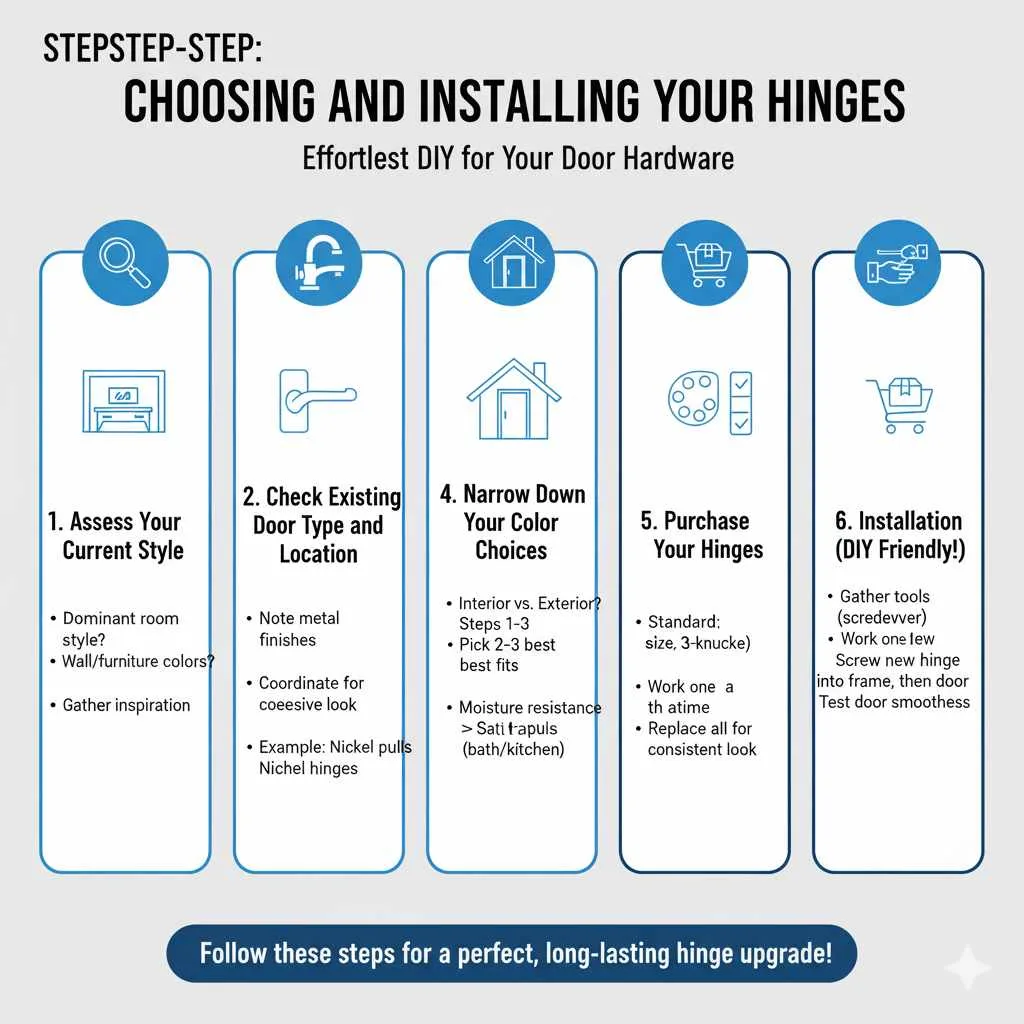
Step-by-Step: Choosing and Installing Your Hinges
Ready to make a decision? Follow these simple steps to select and install your new door hinges.
Step 1: Assess Your Current Style
Take a good look at the room where the white doors are located. What is the dominant style? What colors are present in your furniture, walls, and decor? Gather inspiration by looking at interior design magazines or reputable websites like Houzz for ideas. Consider the overall mood you want to create.
Step 2: Check Existing Hardware
As mentioned earlier, note the finishes of other metal elements in the room. While perfect matching isn’t essential, coordinating finishes will create a more cohesive and professional look. If you have brushed nickel drawer pulls and a chrome faucet, you might lean towards satin nickel hinges for a harmonious blend of similar metallic tones.
Step 3: Consider the Door Type and Location
Is this an interior door or an exterior door? Is it in a high-traffic area? For everyday interior doors, style might be your primary driver. For a front door, you’ll want something durable and perhaps a bit more decorative. For bathrooms or kitchens, consider finishes that are resistant to moisture and easy to clean.
Step 4: Narrow Down Your Color Choices
Based on steps 1-3, start narrowing down your options from the list above. Most people find themselves drawn to 2-3 finishes that seem to fit best. Don’t be afraid to get samples if possible.
Step 5: Purchase Your Hinges
Once you’ve decided, it’s time to buy! Ensure you purchase the correct size and type of hinge for your doors. Standard interior doors typically use 3.5-inch, 3-knuckle hinges with a semi-mortise or full-mortise design. It’s always a good idea to replace all hinges on a door at once to ensure a consistent look and proper function. You might also need new hinge pins if you’re not replacing the entire hinge. For guidance on hinge types, resources like Family Handyman offer helpful explanations.
Step 6: Installation (DIY Friendly!)
Replacing door hinges is a relatively straightforward DIY project. Here’s a simplified overview:
- Prepare: Gather your new hinges, a screwdriver (usually a Phillips head), and possibly a utility knife. If it’s a door with multiple hinges, it’s best to work on one hinge at a time to keep the door stable. You can also use shims to support the door’s weight.
- Remove Old Hinge: Unscrew the old hinge leaves from both the door and the door frame. Start with the bottom hinge if you’re replacing all.
- Install New Hinge: Place the new hinge in the mortise (the cutout in the wood). Screw the hinge leaf into the door frame first, then into the door. Ensure it’s seated correctly.
- Repeat: Do this for each hinge on the door.
- Test: Open and close the door to ensure it operates smoothly. Adjustments may be needed if the door sticks or binds.
For more detailed instructions, check out guides from reputable sources like This Old House. Most home improvement stores also have staff who can offer advice.
FAQ: Your Hinge Questions Answered
Here are some common questions beginners have about choosing hinges for white doors.
Q1: Can I mix and match hinge colors in my house?
A: Generally, it’s best to stick to one main finish throughout your home for consistency. However, you can sometimes use different finishes in separate rooms or for specific purposes (e.g., black hinges in a modern kitchen and brushed nickel in a bedroom). The key is to ensure the finishes complement each other and don’t clash drastically.
Q2: Do hinges need to match the doorknob color exactly?
A: Not necessarily exactly, but they should harmonize. If your doorknobs are satin nickel, satin nickel hinges are a safe bet. If your knobs are matte black, matte black hinges work well. You can also pair a brushed finish with a polished finish in the same color family, like brushed nickel with polished nickel, but avoid mixing vastly different metal tones across the entire door unless it’s a very intentional design choice.
Q3: Are black hinges a good choice for high-traffic areas?
A: Yes, matte black hinges are often a great choice for high-traffic areas. They tend to be durable and the matte finish is excellent at masking fingerprints, smudges, and minor scuffs that are common in busy parts of the home.
Q4: What is the most popular hinge color for white doors right now?
A: Satin nickel remains incredibly popular due to its versatility and wide appeal. However, matte black has seen a surge in popularity for its bold, modern aesthetic and is a very strong contender.
Q5: Should I get hinges with rounded or square corners?
A: This detail should ideally match the corners of your existing door frame mortises and the style of your doors. If your doors have clean, modern lines with squared edges, square-corner hinges will look best. For more traditional doors or frames, rounded corners are often the appropriate choice. Many hinges are also “Eased” or “Beveled” to help with door swing.
Q6: What does “door hinge radius” mean?
A: The “radius” of a hinge refers to the shape of its corners, often described as square, 1/4-inch radius, 5/8-inch radius, etc. When replacing hinges, you want the new hinge’s radius to match the old one, or match the existing mortise cut into the door and frame. This ensures a snug fit without gaps.
Q7: Are white hinges a good idea for a minimalist look?
A: Absolutely! White hinges are perfect for achieving an ultra-minimalist or seamless look. They virtually disappear against white doors and walls, allowing the architectural lines of the door and room to be the sole focus. They create a very clean, modern aesthetic.
Conclusion
Choosing the right color hinges for your white doors doesn’t have to be a chore. By considering your home’s overall style, the existing hardware, and the desired ambiance, you can easily select a finish that enhances your doors and your space. Whether you opt for the timeless appeal of satin nickel, the bold statement of matte black, the warm elegance of brushed brass, or any of the other beautiful options, the perfect hinges are within reach. Remember, these small details are like the finishing touches on a masterpiece, adding a layer of polish and intention to your home. With this guide, you’re well-equipped to make a confident choice that you’ll love every time you open your doors!