How to Remove Blood Stains from a Mattress (Fresh and Dried)
You pull back the sheets after a rough night’s sleep or a kid’s nosebleed, and there it is — a rust-colored blotch on the mattress. Your first instinct might be to grab a wet cloth and scrub. Don’t. Scrubbing and warm water will set that protein-based stain permanently into the fibers. Blood is tricky because it coagulates and binds to fabric quickly. The good news? It’s almost always removable if you act with the right method and a little patience.
This guide walks you through every scenario: fresh stains, dried crusty ones, large saturated messes, and the stubborn marks that seem to laugh at your efforts. You’ll also learn why your mattress material matters, how to test cleaning solutions safely, and how to dry everything without inviting mold. No guesswork — just a clear path to a clean mattress.
For everyday accidents, a dedicated spot cleaner like the Gardian Mattress Cleaner is a solid addition to your routine. It’s a ready-to-use spray designed for blood, urine, sweat, and other organic stains on mattresses, bedding, and upholstery. It works on both fresh and dried-in marks, which makes it handy for guest beds and kids’ rooms. Keep it in the linen closet for quick touch-ups between deep cleans.
Why Cold Water is Non-Negotiable for Blood Stains
Blood is mostly water, but the part that stains is protein (hemoglobin) plus iron. Heat does two bad things to that protein: it denatures it, like cooking an egg, and it makes the iron oxidize. The result is a brownish, permanent bond to the mattress fibers.
Cold water does the opposite. It keeps the protein from setting, so the stain stays soluble and can be lifted out. That’s why every method in this guide starts with cold water. Hot or even warm water will seal the stain in a way that no amount of scrubbing will fix.
Also skip the scrub brush. Aggressive scrubbing pushes blood deeper into the mattress padding and can damage the fabric. Blotting and gentle pressure pull the stain out. Think of it as coaxing the blood out, not attacking it.
Before You Start: Identify Your Mattress Type and Gather Supplies
Not all mattresses react the same way to cleaning solutions. A cotton-covered innerspring mattress can handle more moisture than a memory foam one. Latex is sensitive to certain chemicals. Knowing what you’re working on prevents accidental damage.
- Cotton or polyester cover: Most absorbent, easiest to clean. Can tolerate enzyme cleaners and oxygen bleach.
- Memory foam: Sponge-like, so it soaks up liquid fast. Use minimal moisture and blot quickly. Never saturate it.
- Latex: Naturally resistant to water but can degrade with harsh chemicals. Stick to mild dish soap and hydrogen peroxide.
Check the mattress tag if you’re unsure. If the cover is removable and machine-washable, take it off and treat it separately. The core mattress still needs spot cleaning, but the cover can go through a cold wash cycle with enzyme detergent.
What You’ll Need (Based on Stain Age)
For fresh stains, gather cold water, clean white cloths or paper towels, and either table salt or hydrogen peroxide. For dried stains, add baking soda, dish soap, and an enzyme cleaner to the list. Enzyme cleaners break down the protein in blood, which is why they’re effective on older stains.
Before applying anything to the stain, test your cleaning solution on a hidden area of the mattress — under a corner or near the tag. Dab a little solution and blot. If the color bleeds or the fabric feels weird, switch to a milder approach. This step takes two minutes and saves you from a bigger problem.
How to Remove Fresh Blood Stains (Under 24 Hours)
Fresh blood is the easiest to remove because the proteins haven’t fully bonded to the fabric yet. Act within a few hours for the best results, but you have up to a day before it becomes a tougher job.
The Salt and Cold Water Blot Method
This is the gentlest method and works well on delicate fabrics. Mix a paste of cold water and table salt — about three parts salt to one part water. Spread the paste over the stain and let it sit for 10 minutes. The salt draws moisture and blood out of the fibers.
After 10 minutes, use a damp cold cloth to blot the paste away. Repeat if the stain lightens but doesn’t disappear. Salt won’t damage most mattress fabrics, which makes it a safe first attempt.
The Hydrogen Peroxide and Dish Soap Solution
Hydrogen peroxide (3% concentration, the standard brown bottle) breaks down the organic compounds in blood. Mix one part hydrogen peroxide with one part cold water and a drop of dish soap. Dish soap helps lift the stain from the fabric.
Apply the solution to the stain with a spray bottle or a cloth. Let it bubble for 5 minutes. Blot with a clean, dry cloth. Keep blotting until you see the stain transfer to the cloth. Rinse the area with a cold damp cloth to remove any soap residue.
One caution: hydrogen peroxide can lighten colored fabrics. Always test on a hidden spot first, and don’t leave it on the mattress longer than 10 minutes.
How to Remove Dried Blood Stains (Over 24 Hours)
Dried blood is harder because the proteins have set. You’ll need more time and stronger tools, but it’s still doable. The key is patience — you might need multiple applications.
The Baking Soda and Hydrogen Peroxide Paste
Mix baking soda with a small amount of hydrogen peroxide to form a thick paste. Spread it over the dried stain and let it sit for 30 minutes. The baking soda gently abrades the stain while the peroxide breaks down the protein.
After 30 minutes, blot the paste away with a damp cloth. If the stain is still visible, repeat the process. You can also add a few drops of dish soap to the paste for extra lifting power.
The Enzyme Cleaner Soak Method
Enzyme cleaners are specifically designed to digest organic stains like blood, urine, and sweat. They’re available at most grocery stores or pet supply shops. Apply the enzyme cleaner directly to the stain and let it sit for the time listed on the label — usually 15 to 30 minutes.
Blot the area with a clean cloth. For thick mattress padding, you may need to apply the cleaner twice. Enzyme cleaners work slowly but thoroughly, and they’re safe for most fabrics. This is also a good option if you’re dealing with a stain that’s been there for weeks.
If you prefer a ready-made solution, the Gardian Mattress Cleaner spray handles both fresh and dried blood stains without mixing anything. Just spray, blot, and repeat if needed. It’s a practical choice when you want something that works without the measuring.
How to Remove Stubborn or Large Blood Stains
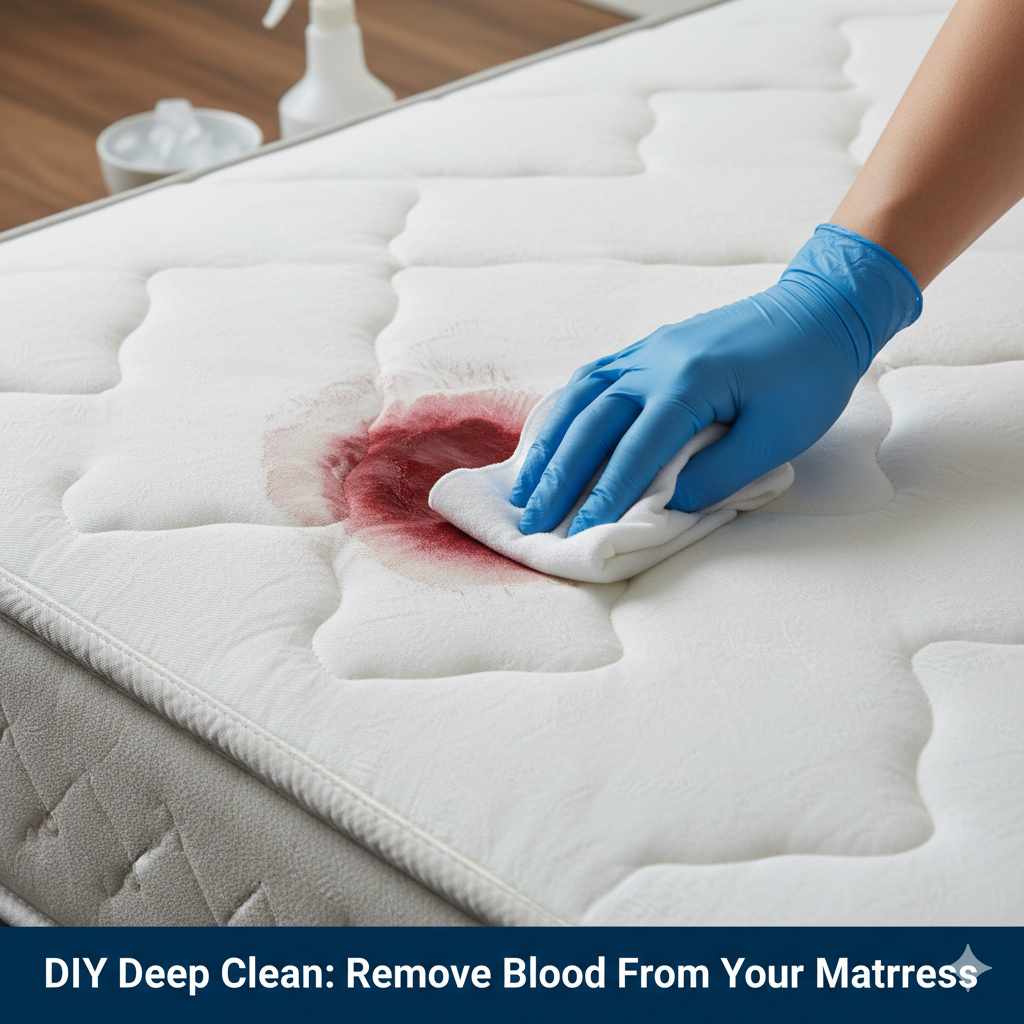
Large stains, like from a heavy nosebleed or an injury, saturate deep into the mattress layers. Small spot treatments won’t cut it. You need a more thorough approach.
The Meat Tenderizer Trick
Meat tenderizer contains papain, an enzyme that breaks down protein — the same reason it softens meat. Mix one part meat tenderizer with two parts cold water to form a paste. Apply it to the stain and let it sit for 30 minutes.
Blot the paste away and check the stain. This method is surprisingly effective on older, protein-heavy stains. It’s not a common household hack, but it works when other methods stall.
When to Call a Professional Upholstery Cleaner
If you’ve tried multiple methods and the stain persists, or if the blood has soaked through to the mattress core, it’s time for a professional. Upholstery cleaning services use industrial-grade extraction machines that pull deep-set stains and moisture out of the mattress.
Professional cleaning costs between $75 and $150 depending on your area and mattress size. It’s worth it if the mattress is expensive or if the stain has started to smell. A pro can also sanitize the mattress, which matters if the blood came from a sick person or an animal.
How to Deodorize and Sanitize the Mattress After Cleaning
Blood doesn’t just stain — it can leave an odor, especially if it sat for a while. After the stain is gone, sprinkle a light layer of baking soda over the entire affected area. Let it sit for at least 30 minutes, preferably a few hours. Baking soda absorbs odors and any residual moisture.
Vacuum the baking soda thoroughly with the upholstery attachment on your vacuum. For extra sanitizing, you can use a fabric-safe disinfectant spray, but test it on a hidden area first. Let the mattress air out completely before putting sheets back on.
How to Dry the Mattress Quickly and Prevent Mold
Moisture left in a mattress leads to mold, and mold is a much bigger problem than a blood stain. After cleaning, blot the area with dry towels to absorb as much water as possible. Press firmly — don’t rub.
Point a fan at the wet spot and leave it running for several hours. If you have a hairdryer, use it on a cool or low-heat setting, holding it a few inches away. Never use high heat; that brings back the protein-setting problem.
For heavily saturated stains, you might need to let the mattress dry overnight. Flip the mattress on its side so air circulates around the wet area. Check for dampness before putting on bedding.
How to Protect Your Mattress from Future Stains
The simplest fix is a waterproof mattress protector. It costs between $20 and $50 and takes five seconds to put on. A good protector blocks blood, urine, sweat, and spills from reaching the mattress itself. This turns a stressful cleanup into a simple sheet removal and a trip to the washing machine.
If you don’t want a full protector, at least keep a stain remover like Gardian’s spray nearby. Fast action on a fresh stain is the difference between a 10-minute cleanup and an hour-long project. Also, wash your sheets weekly to catch any small spots before they set.
For other household stain challenges, you might find our fabric sofa stain guide helpful, or if you’re dealing with a similar issue on a futon, check out how to clean urine from a futon mattress.
Frequently Asked Questions
Can I use hot water on a blood stain?
No. Hot water cooks the protein in blood and permanently sets the stain into the mattress fibers. Always use cold water for blood stains. If you’ve already used hot water, try the enzyme cleaner method — it might still break down the protein, but the stain will be much harder to remove.
Does toothpaste work on blood stains?
Toothpaste is a mild abrasive and can sometimes lift small, fresh stains, but it’s not a reliable method for mattresses. The gel or paste can leave a residue that attracts dirt. Stick to salt, hydrogen peroxide, or an enzyme cleaner — they’re designed for this kind of stain.
What if the stain is still visible after cleaning?
Reapply the cleaning method. Some stains need two or three rounds, especially if they’re dried or large. If the stain is still there after multiple attempts, the blood may have oxidized and bonded deeply. Professional cleaning is the next step, and it’s often successful where home remedies fail.
Can I use bleach on a blood stain?
Chlorine bleach will damage the mattress fabric and can leave a yellow stain. Oxygen bleach (like OxiClean) is safer and can be effective on white or light-colored mattresses, but test it on a hidden area first. For colored mattresses, skip bleach entirely and use hydrogen peroxide instead.
How long should I wait before putting sheets back on?
Wait until the mattress is completely dry to the touch. Press a dry paper towel against the area — if it comes away damp, wait longer. Rushing this step can trap moisture and cause mold. Usually, a few hours with a fan is enough for small stains; large ones may need overnight.
What Actually Works: Your Quick Reference
Here’s a comparison of the methods covered in this guide, so you can pick the right one for your situation.
| Method | Best For | Key Ingredient | Time Needed | Caveat |
|---|---|---|---|---|
| Salt and Cold Water | Fresh stains on delicate fabrics | Table salt | 10-15 minutes | Gentle but may need repeat |
| Hydrogen Peroxide + Dish Soap | Fresh stains, most fabrics | 3% hydrogen peroxide | 5-10 minutes | Can lighten colored fabrics |
| Baking Soda Paste | Dried stains | Baking soda + peroxide | 30 minutes | Requires blotting effort |
| Enzyme Cleaner | Dried or old stains, odors | Enzymes | 15-30 minutes | Slow but thorough |
| Meat Tenderizer | Stubborn protein stains | Papain | 30 minutes | Unusual, but effective |
| Professional Cleaning | Large or deep-set stains | Industrial extraction | 1-2 hours | Costs money |
Final Checklist for a Clean Mattress
You’ve got the knowledge. Here’s the short version to keep handy.
- Always use cold water — never hot — to keep blood from setting.
- Blot, don’t scrub. Scrubbing pushes the stain deeper.
- Test any cleaning solution on a hidden area first.
- For fresh stains, salt or hydrogen peroxide works best.
- For dried stains, use a baking soda paste or an enzyme cleaner.
- Dry the mattress completely with a fan before replacing bedding.
- Invest in a waterproof mattress protector to avoid future headaches.
Blood stains are frustrating, but they’re not permanent. With the right method and a little patience, your mattress can look as good as new. If you’re in a pinch, a quality spray like Gardian’s is a reliable shortcut that handles both fresh and dried spots without the mixing and measuring.
Products related to this article
Sponsored / affiliate links. As an Amazon Associate I earn from qualifying purchases. I may earn additional commission from eligible campaigns.