
Quick Summary (Top of Article)
LED bulbs offer an impressive lifespan, typically lasting 15,000 to 50,000 hours, significantly outperforming incandescent and CFL bulbs. This means fewer replacements and substantial long-term savings on your electricity bills and maintenance costs.
Hello there, fellow home adorner! Are you ever curious about those little light bulbs in your lamps and fixtures? You know, the ones that seem to stay lit forever? We’ve all been there, wondering if it’s time to replace a bulb or if it still has plenty of life left. It can be a bit of a puzzle, hoping for bright, cozy rooms without constantly running to the store for replacements.
But what if I told you there’s a type of light bulb that lasts incredibly long, saving you time, money, and hassle? That’s the magic of LED bulbs! They’re not just energy-efficient; they’re also champions of longevity. Get ready to discover just how long these wonders can shine and why they’re such a smart choice for your beautiful home.
The Astonishing Lifespan of LED Bulbs: A Bright Difference
When we talk about how long LED bulbs last, we’re entering a realm that’s quite different from the bulbs of yesteryear. Gone are the days of frequently changing dusty, burnt-out bulbs. LED (Light Emitting Diode) technology has revolutionized home lighting, offering not only energy savings but also an incredibly durable and long-lasting performance. This means less time spent on maintenance and more time enjoying your beautifully lit spaces.
Let’s dive into what makes their lifespan so impressive and what you can realistically expect when you switch to LEDs. It’s exciting news for anyone who loves a well-lit home and appreciates smart, practical solutions!
Understanding LED Bulb Lifespan: More Than Just Hours
The lifespan of any light bulb is usually measured in hours. For LED bulbs, this number is remarkably high. Unlike traditional incandescent bulbs that burn out when their filament breaks, LEDs degrade over time. This means they don’t suddenly “pop”; instead, their light output gradually decreases until they are no longer considered functional.
This gradual dimming is a key difference. It gives you a heads-up that a bulb is nearing the end of its life, rather than an unexpected darkness!
What is an Hour of Light?
To put the lifespan of LED bulbs into perspective, let’s break down what those thousands of hours mean in practical terms. Imagine your most-used lights are on for about 3 hours a day. Here’s how their lifespan stacks up:
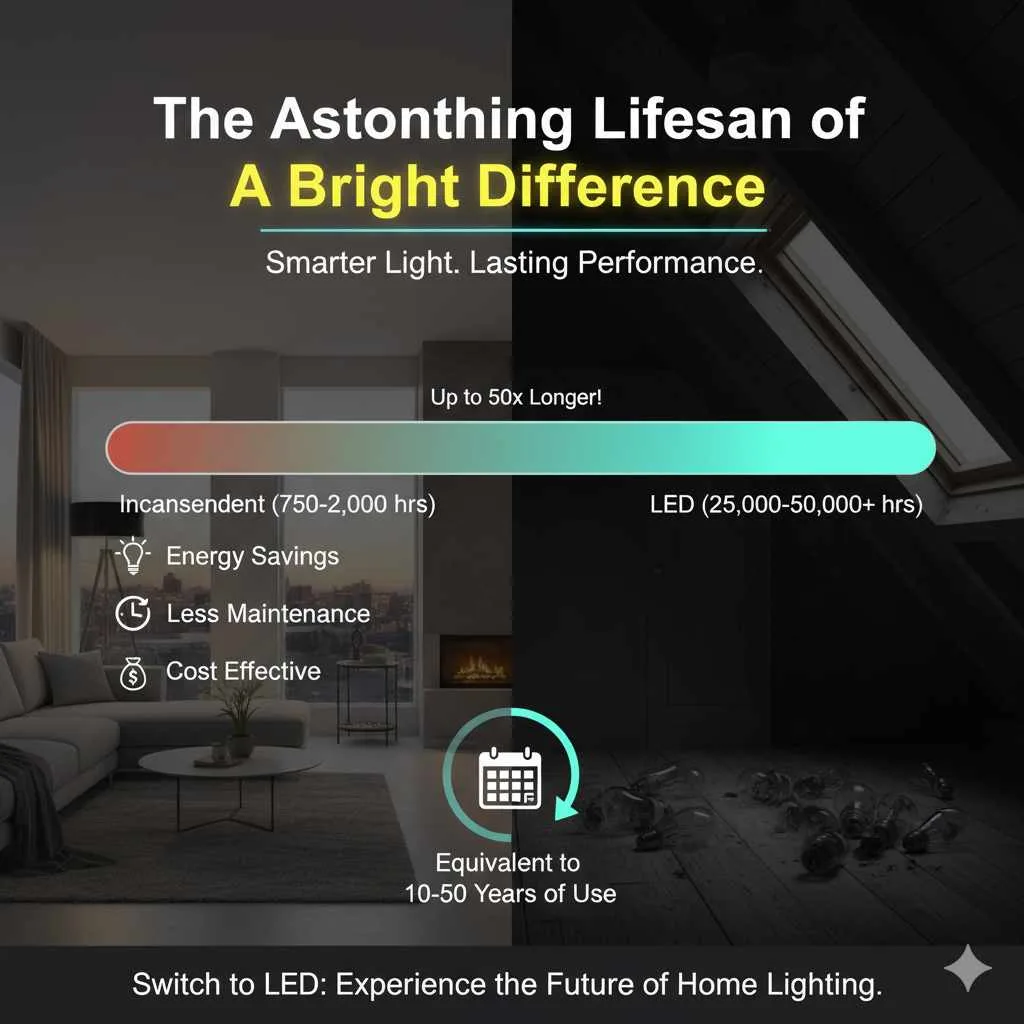
- Incandescent bulbs: Typically last around 1,000 hours. At 3 hours a day, this is less than a year (about 9-10 months).
- CFL (Compact Fluorescent Lamp) bulbs: Usually last between 8,000 to 10,000 hours. This is roughly 7 to 9 years at 3 hours a day.
- LED bulbs: Commonly range from 15,000 to 50,000 hours. At 3 hours a day, this equates to around 13 to 45 years!
See the incredible difference? Switching to LEDs means you might not have to think about changing a bulb in your living room lamp for decades!
The Proven Life Span: What the Numbers Tell Us
When manufacturers state the lifespan of an LED bulb, they typically refer to its “rated life.” This is the point at which the bulb is expected to produce 70% of its initial light output. This 70% mark is often referred to as L70. So, a bulb rated for 25,000 hours is expected to still be emitting 70% of its original brightness after 25,000 hours of use.
This is a crucial detail! It means the bulb doesn’t fail completely at this point; it just becomes less bright. For most home applications, this dimmer light is still perfectly usable, but it marks a transition point.
Average Lifespan by Bulb Type: A Quick Comparison
To help you visualize the longevity of LEDs compared to other common bulb types, here’s a handy table:
| Bulb Type | Average Lifespan (Hours) | Estimated Years of Use (3 hours/day) |
|---|---|---|
| Incandescent | 1,000 | ~ 1 year |
| Halogen | 2,000 | ~ 2 years |
| CFL | 8,000 – 10,000 | ~ 7 – 9 years |
| LED | 15,000 – 50,000+ | ~ 13 – 45+ years |
As you can see, LEDs offer a significantly longer lifespan, making them an excellent long-term investment for your home lighting needs. This durability translates into fewer replacements, saving you both money and the inconvenience of climbing ladders to change bulbs!
Factors Influencing LED Bulb Lifespan
While LED bulbs are built to last, several factors in your home environment can influence how long they actually perform at their best. Understanding these can help you maximize the lifespan of your bulbs and ensure you get the most for your money. Think of it like taking good care of a treasured item – a little understanding goes a long way!
1. Heat is the Enemy
One of the most significant factors affecting LED lifespan is heat. While LEDs themselves produce very little heat compared to incandescent bulbs, the heat generated by the internal components needs to be managed efficiently. Poorly ventilated fixtures or enclosed housings can trap heat, leading to premature degradation of the LED components.
Look for LEDs designed for enclosed fixtures if you’re replacing bulbs in sconces or covered ceiling lights. Good heat dissipation is key!
2. Power Surges and Voltage Fluctuations
Like any electronic device, LEDs can be sensitive to power fluctuations. Sudden spikes or dips in voltage can stress the components and shorten their lifespan. Using surge protectors for sensitive electronics and ensuring your home’s electrical system is up to code can help mitigate this.
For particularly sensitive areas or homes with temperamental power, consider using smart plugs or power conditioners.
3. Frequent On/Off Cycles
While LEDs handle being turned on and off more gracefully than CFLs (which can be damaged by frequent switching), extremely frequent cycling can still have a minor impact on their lifespan over many years. However, this is far less of a concern than with older technologies. The primary driver of their longevity is the steady operation.
For lights that are toggled on and off constantly (like a light switch by a busy doorway), using LEDs is still a fantastic choice due to their overall resilience.
4. Quality of the LED Bulb
Not all LED bulbs are created equal. Cheaper, unbranded bulbs might not have the same quality components or robust design as those from reputable manufacturers. These lower-quality LEDs may not reach their advertised lifespan and could be more prone to failure.
Always choose LEDs from well-known brands that offer clear specifications for their lifespan and warranty. The U.S. Department of Energy’s Solid-State Lighting program provides valuable information and research on LED technology and performance standards, helping consumers make informed choices.
5. Dimmer Compatibility
If you have dimmer switches in your home, it’s crucial to use LED bulbs that are specifically labeled as “dimmable.” Using non-dimmable LEDs with a dimmer switch can cause flickering, buzzing, and significantly shorten the bulb’s life. Conversely, using dimmable LEDs with a standard switch is usually fine, but they perform best when paired with a compatible dimmer.
Always check the packaging for “dimmable” compatibility if you intend to use them with a dimmer. This ensures both smooth operation and a long, happy life for your bulbs.
Maximizing LED Bulb Life: Tips for Your Home
Now that you know what influences LED lifespan, let’s talk about how you can ensure your bulbs perform for as long as possible. These are simple, practical steps that anyone can take to get the best performance from their lighting – contributing to both beauty and smart savings!
- Choose the Right Fixture: Ensure your light fixtures provide adequate ventilation. Avoid placing LED bulbs in tightly sealed or enclosed fixtures unless the bulb is specifically designed for them. Good airflow helps dissipate heat effectively.
- Use Dimmable LEDs with Dimmers: If you have dimmer switches, purchase dimmable LED bulbs to avoid compatibility issues like flickering or premature failure.
- Opt for Quality Brands: Invest in LED bulbs from reputable manufacturers. These often come with better warranties and are built with higher-quality components that ensure longevity.
- Check Operating Temperatures: Some high-performance LEDs can generate more heat. While still efficient, ensure your fixture is rated to handle the bulb’s operating temperature, especially in tight spaces.
- Protect Against Power Surges: While not always necessary for every bulb, for critical or high-traffic areas, consider using surge protectors or ensuring your home’s electrical system is in good condition to prevent damaging power fluctuations.
- Consider Ambient Heat: Avoid installing LED bulbs in locations that are already excessively hot, such as directly above a heat vent or in a very small, unventilated sunroom attached to another heated space.
By following these simple guidelines, you’re not just installing lights; you’re setting up your home for years of reliable, beautiful illumination. It’s all about making smart choices that contribute to a more comfortable and hassle-free living space.
The Cost-Saving Advantage: Beyond the Initial Purchase
The longer lifespan of LED bulbs offers a significant financial advantage that goes far beyond the initial purchase price. When you think about how long do LED bulbs last, also consider the cumulative cost of replacing traditional bulbs multiple times over the years. Suddenly, the slightly higher upfront cost of an LED bulb begins to look like a wise investment.
Here’s a look at the savings:
- Reduced Replacement Costs: You buy fewer bulbs because they last so much longer. This saves you money on the bulbs themselves and the cost of replacements (if you were paying someone to do it).
- Lower Electricity Bills: LEDs use significantly less energy than incandescent bulbs to produce the same amount of light. This means your electricity bill will be lower every month. According to the U.S. Energy Information Administration (EIA), LEDs are about 75% more efficient than incandescent lighting.
- Less Maintenance: Fewer bulb changes mean less work and less time spent on home maintenance. For places with high ceilings or difficult-to-reach fixtures, this can be a huge relief.
The combination of these factors means that over the lifetime of a single LED bulb, the overall cost of ownership is dramatically lower than with older lighting technologies.
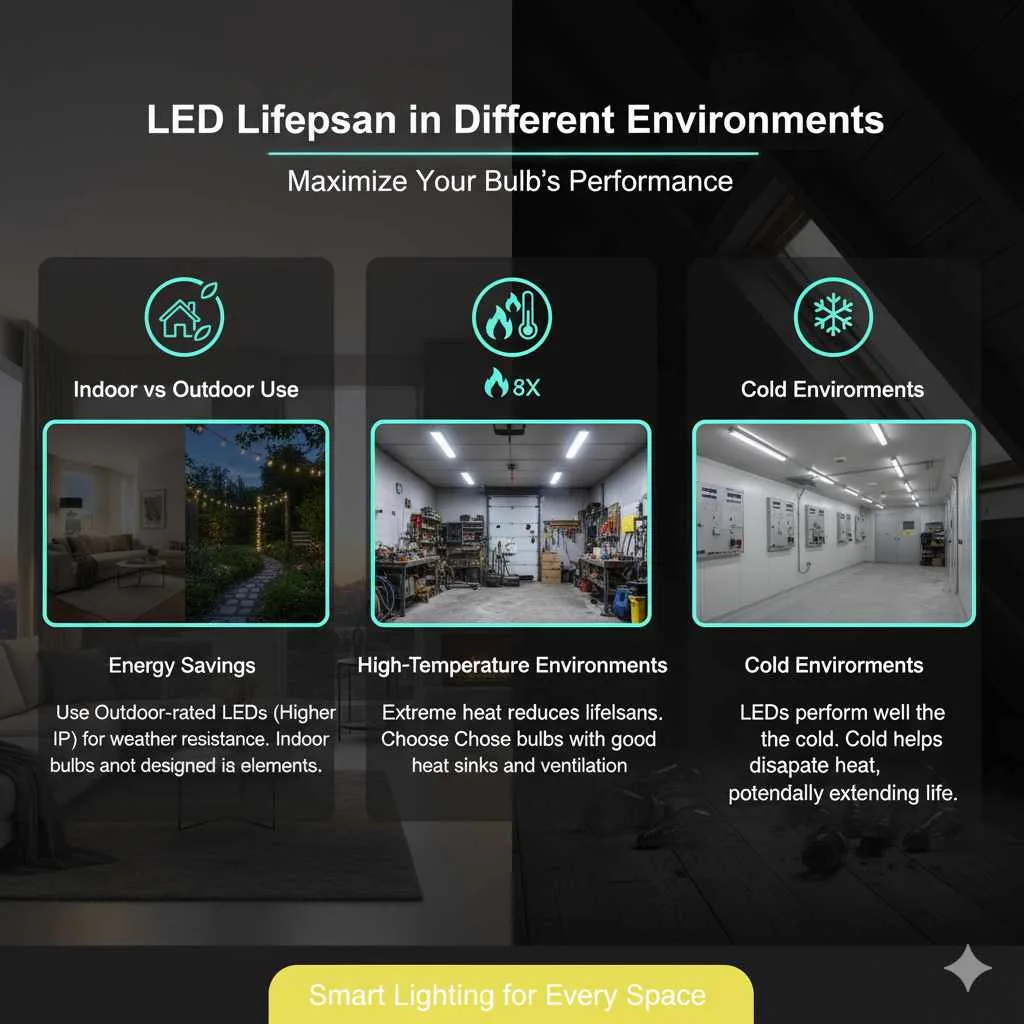
LED Lifespan in Different Environments
The environment where an LED bulb is used can subtly influence its performance and perceived lifespan. While the core technology is robust, certain conditions require careful consideration.
Indoor vs. Outdoor Use
Many LED bulbs are designed for indoor use. If you plan to use LEDs outdoors, ensure they are specifically rated for outdoor use. Outdoor-rated LEDs are built to withstand varying temperatures, humidity, and exposure to the elements. They often have higher IP (Ingress Protection) ratings to protect against dust and water. Using indoor bulbs outdoors can lead to moisture intrusion and premature failure.
High-Temperature Environments
As mentioned earlier, extreme heat is detrimental to LEDs. If you’re lighting an area that naturally gets very hot, like a garage in a desert climate or near a heat-generating appliance, choose LEDs designed for high-temperature operation or ensure the fixture has ample ventilation. Look for bulbs with good heat sinks designed as part of their structure.
Cold Environments
LEDs actually perform very well in cold temperatures, often outperforming incandescent and CFL bulbs in chilly conditions. In fact, cold can help dissipate heat, potentially extending their life. However, rapid temperature swings (e.g., going from very cold to very hot repeatedly) can be more stressful than stable temperatures.
Frequently Asked Questions About LED Bulb Lifespan
Q1: Will my LED bulbs suddenly stop working?
No, generally LED bulbs don’t “burn out” like incandescent bulbs. Instead, they gradually dim over a very long period. You’ll notice their light output slowly decrease until they reach their rated end-of-life (often at 70% brightness). This provides a warning that replacement is nearing, rather than sudden darkness.
Q2: Is it okay to use LED bulbs in enclosed light fixtures?
It depends on the LED bulb. Some LEDs are specifically designed for enclosed fixtures and have good heat management. However, many standard LEDs can overheat in enclosed spaces, shortening their lifespan. Always check the bulb’s packaging for compatibility with enclosed fixtures. If in doubt, choose a bulb listed as suitable for enclosed fixtures.
Q3: What does “rated life” mean for an LED bulb?
The rated life of an LED bulb, often expressed as L70, is the estimated number of hours the bulb will operate before its light output decreases to 70% of its initial brightness. It’s not necessarily when the bulb will fail completely, but rather when its brightness significantly diminishes.
Q4: Can I use any LED bulb with a dimmer switch?
No, you must use LED bulbs specifically labeled as “dimmable” with dimmer switches. Using non-dimmable LEDs with a dimmer can cause flickering, buzzing, and premature failure. Always check the packaging for dimmable compatibility.
Q5: How can I tell if my LED bulb is nearing the end of its life?
The most common sign is a gradual decrease in brightness. You might also notice a change in the color of the light, or occasional flickering as it gets very old. Unlike incandescent bulbs that often fail abruptly, LEDs tend to fade.
Q6: Do LED bulbs get hot?
LED bulbs themselves produce very little heat compared to incandescent bulbs. However, the electronic components within the bulb do generate some heat, which needs to be dissipated. If the bulb feels very hot to the touch, it might indicate poor heat management or an issue with the fixture’s ventilation.
Q7: Can I use smart LED bulbs for even longer life?
Smart LED bulbs follow the same LED lifespan principles. Their “smart” features relate to connectivity and control, not necessarily their inherent longevity. However, the quality of the LED components within a smart bulb from a reputable brand should still offer a long, reliable lifespan, typically within the 15,000-50,000 hour range.
Conclusion
It’s clear that when it comes to illumination, LED bulbs are champions of endurance. Their proven lifespan, often measured in tens of thousands of hours, makes them an incredibly savvy choice for any home. From cutting down on frequent replacement trips to significantly lowering your energy consumption, the benefits are substantial and long-lasting.
As you continue to enhance your home’s comfort and style, remember the power of smart lighting choices. LEDs offer a beautiful, reliable, and economical way to brighten every room. By understanding their lifespan and how to care for them, you ensure that your home stays beautifully lit for years to come, allowing you to focus on what truly matters – enjoying your comfortable, personalized sanctuary. Make the switch, and let your lights shine bright for a very, very long time!