
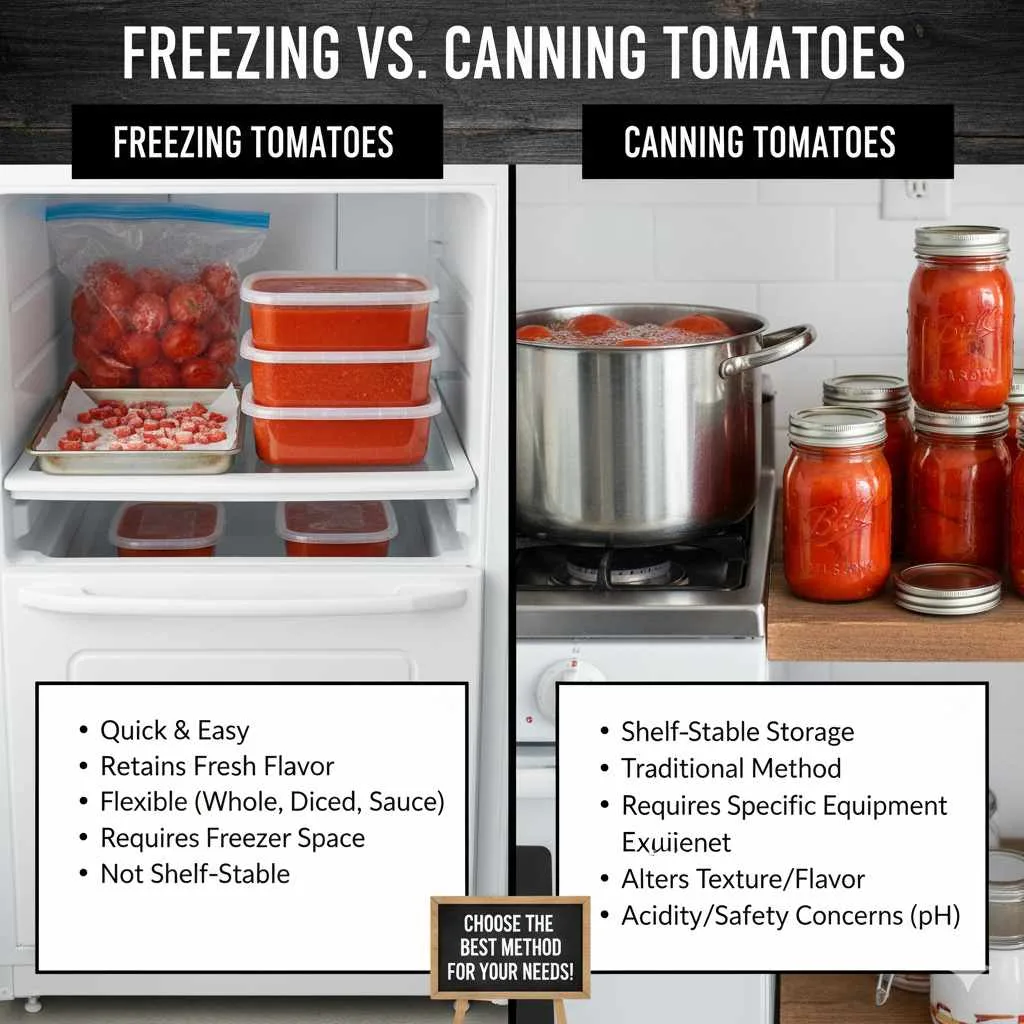
When deciding between freezing vs canning tomatoes, freezing is the simpler, quicker method for fresh flavor preservation, ideal for beginners and preserving texture for cooked dishes. Canning offers shelf-stable storage for years but requires specific equipment and careful processing to ensure safety.
Tomatoes are a summer’s delight, and preserving their vibrant flavor for enjoyment year-round is a wonderful way to capture those sunny days. But when your harvest is overflowing, you might wonder: should you freeze your tomatoes or can them? It can seem a little daunting, especially if you’re new to preserving your own food. Don’t worry, it’s simpler than you think! Both methods work beautifully, but they each have their own special benefits and steps. We’ll walk through it all, making it easy for you to choose the best way to keep your homegrown goodness safe and delicious. Let’s get started on making our kitchens smarter and our pantries fuller!
Freezing vs Canning Tomatoes: Your Essential Guide
As a fan of making every home space both beautiful and functional, I know the joy of a pantry stocked with summer’s bounty. Preserving tomatoes is a fantastic way to extend their goodness. Let’s explore the two most popular methods: freezing and canning.
Understanding the Basics: Why Preserve Your Tomatoes?
When tomato season hits its peak, it’s a beautiful thing! You might have more than you can eat fresh. Preserving ensures none of that deliciousness goes to waste. It’s about capturing that sun-ripened taste for soups, sauces, and stews when those garden-fresh tomatoes are long gone.
Key Differences at a Glance
The core difference lies in accessibility and shelf life. Freezing is quick and easy, perfect for a beginner’s touch. Canning, while more involved, creates shelf-stable products that last for years.
The Case for Freezing Tomatoes
Freezing is often the go-to for many home preservers because it’s incredibly straightforward. You don’t need a lot of fancy equipment, and it’s a faster process than canning.
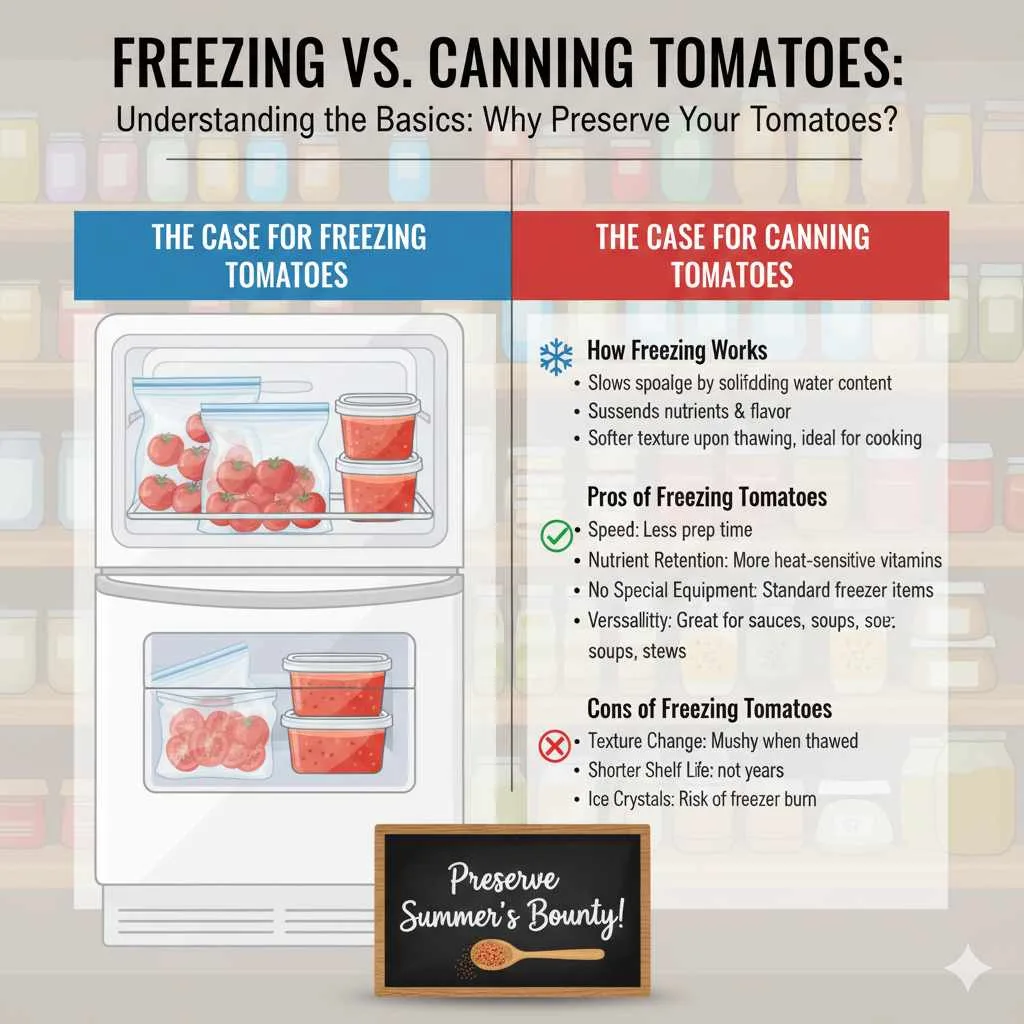
How Freezing Works
When you freeze tomatoes, you’re essentially slowing down the process of spoilage by making the water content inside them solid. This keeps the tomatoes in a state of suspended animation, preserving their nutrients and flavor. When you thaw them, they’ll be softer, which is why they excel in cooked applications.
Pros of Freezing Tomatoes
Simplicity: It’s very easy to learn and execute.
Speed: Requires less preparation time compared to canning.
Nutrient Retention: Generally retains more heat-sensitive vitamins than canning.
No Special Equipment: Uses standard freezer bags or containers.
Versatility: Great for sauces, soups, stews, and even smoothies if you like.
Cons of Freezing Tomatoes
Texture Change: Tomatoes become mushy upon thawing. They lose their firmness and are not ideal for slicing or eating raw.
Space Requirement: Frozen items take up valuable freezer space.
Shorter Shelf Life: While they can last for months, they don’t have the multi-year shelf life of canned goods.
Potential for Ice Crystals: Improper packaging can lead to freezer burn.
Methods for Freezing Tomatoes
There are a few ways to freeze your tomatoes, depending on how you plan to use them later:
Method 1: Freezing Whole (Best for Soups & Sauces)
This is the easiest method and requires minimal prep.
- Gently wash and dry your tomatoes.
- Remove the core if desired, or leave it in for simplicity.
- Place tomatoes in a single layer on a baking sheet lined with parchment paper.
- Freeze until solid, about 2-3 hours.
- Transfer frozen tomatoes to freezer bags or containers. Remove as much air as possible before sealing.
Tip: Freezing them on a tray first prevents them from freezing into one giant clump.
Method 2: Freezing Chopped or Pureed (Great for Quick Sauces)
If you want to save time when you’re ready to cook, pre-chopping or pureeing is a great option.
- Wash tomatoes. You can choose to peel and seed them if you prefer a smoother texture later, or leave them as is.
- Chop tomatoes into desired sizes or add whole to a blender/food processor and puree until smooth.
- For chopped tomatoes: Spread them in a single layer on a parchment-lined baking sheet and freeze until firm. Then, transfer to freezer bags.
- For pureed tomatoes: Spoon into ice cube trays and freeze until solid. Once frozen, pop out the “tomato cubes” and place them in a freezer bag. This makes it easy to add just a small amount to recipes. Alternatively, you can freeze larger portions in freezer bags, laid flat to save space.
The process of freezing tomatoes is a delightful way to keep their sunny flavor alive. It’s accessible and forgiving, making it a favorite for many home cooks.
The Art of Canning Tomatoes
Canning is a more traditional method of food preservation. It uses heat to destroy microorganisms and creates a vacuum seal, making food safe to store at room temperature for extended periods. It’s a bit more involved, but the results are incredibly rewarding.
How Canning Works
Canning involves packing food into jars, sealing them, and then processing them in a boiling water bath or a pressure canner. The heat destroys enzymes and microorganisms that cause spoilage. Cooling the jars creates a vacuum seal, preventing recontamination.
Pros of Canning Tomatoes
Shelf Stability: Canned goods can last for 1 to 5 years or more when stored properly.
Space Saving: Frees up freezer space; canned goods are compact.
Convenience: Ready to use straight from the pantry, no thawing required.
Versatility: Can be packed as whole, diced, crushed, or in sauces.
Preserves Texture: While softer than fresh, properly canned tomatoes can retain a better texture than frozen for some applications (though still softer than fresh).
Cons of Canning Tomatoes
Requires Special Equipment: You’ll need canning jars, lids, rings, and either a water bath canner or a pressure canner.
Time-Consuming: The preparation and processing steps take longer than freezing.
Safety Concerns: Improper canning can lead to botulism, a serious foodborne illness. Strict adherence to tested recipes and processing times is crucial.
Heat Loss: Some nutrients can be lost during the high-heat processing.
Methods for Canning Tomatoes
There are two primary methods for canning tomatoes, depending on the type of tomato and desired end product:
Method 1: Water Bath Canning (For Acidic Tomatoes)
This method is suitable for raw or cooked tomatoes that are naturally acidic. Most ripe tomatoes are acidic enough, but it’s always good to check with trusted sources like the National Center for Home Food Preservation for specific guidelines.
Preparation:
- Wash tomatoes and prepare them as desired (whole, sliced, crushed). You may want to skin them by dipping them in boiling water for 30-60 seconds, then immediately in ice water.
- Pack tomatoes into sterilized canning jars. You can add lemon juice and citric acid to increase acidity, which is vital for safe water bath canning. Follow tested recipes for exact amounts.
- Add salt if desired.
Processing:
- Place tops on jars, screw on bands fingertip-tight.
- Submerge jars in boiling water in your canner. Ensure water covers jars by at least 1-2 inches.
- Process for the time specified in a tested recipe, adjusting for altitude.
- Remove jars from canner and let them cool completely on a towel-lined counter for 12-24 hours without disturbing them. Check seals.
Method 2: Pressure Canning (For Low-Acid Combinations or Tomato Products)
While most tomatoes are acidic, some tomato recipes that include vegetables like peppers, onions, or mushrooms can create a low-acid mixture. These require pressure canning for safety.
Preparation:
- Prepare tomatoes and any other ingredients as per a tested recipe.
- Pack into sterilized canning jars.
Processing:
- Place tops on jars, screw on bands fingertip-tight.
- Load jars into your pressure canner according to manufacturer instructions.
- Add the specified amount of water to the canner.
- Process under pressure at the required PSI (pounds per square inch) for the time specified in a tested recipe, adjusting for altitude.
- Allow canner to depressurize naturally before opening.
- Remove jars, let them cool, and check seals as with water bath canning.
It is crucial to always use up-to-date, research-tested canning recipes from reliable sources like the National Center for Home Food Preservation or your local extension office to ensure safety.
Canning is a rewarding skill that offers long-term storage and incredible convenience. It requires diligence and a commitment to safety, but the pantry full of home-canned goods is a true testament to your efforts.
Freezing vs Canning Tomatoes: A Comparative Look
To help you decide which method suits your needs best, let’s break down the key factors side-by-side.
Table: Freezing vs. Canning Tomatoes – Key Factors
| Feature | Freezing | Canning |
| :—————- | :——————————————- | :——————————————– |
| Ease of Use | Very Easy, beginner-friendly | Moderate to Advanced, requires precision |
| Time Commitment | Short (prep & freeze) | Long (prep, process, cool) |
| Equipment | Freezer bags/containers | Jars, lids, rings, water bath or pressure canner |
| Shelf Life | 6-12 months (optimal) | 1-5+ years |
| Texture | Soft, mushy when thawed | Retains some structure, softer than fresh |
| Cost | Minimal (packaging, electricity) | Moderate (equipment, jars, lids) |
| Space | Requires freezer space | Requires pantry/storage space |
| Safety Risks | Minimal (food spoilage if not frozen properly) | High (botulism if processed incorrectly) |
| Best For | Soups, sauces, smoothies, cooked dishes | Sauces, diced tomatoes, ketchup, pastes |
Which Method Should You Choose?
The choice between freezing and canning often comes down to your lifestyle, available equipment, and how you plan to use the tomatoes.
Choose Freezing If:
You are new to food preservation and want a simple entry point.
You have plenty of freezer space.
You primarily use tomatoes in cooked dishes like sauces, soups, and stews where texture is less critical.
You want to preserve them quickly without extensive equipment.
Choose Canning If:
You want long-term, shelf-stable storage for your tomatoes.
You have limited freezer space or want to free it up.
You have the necessary canning equipment and are willing to learn the safe procedures.
You plan to use canned tomatoes in recipes where a slightly firmer (though still cooked) texture is acceptable, or for specific products like whole peeled tomatoes.
Tips for Success with Both Methods
Regardless of whether you choose freezing or canning, a few tips can enhance your results:
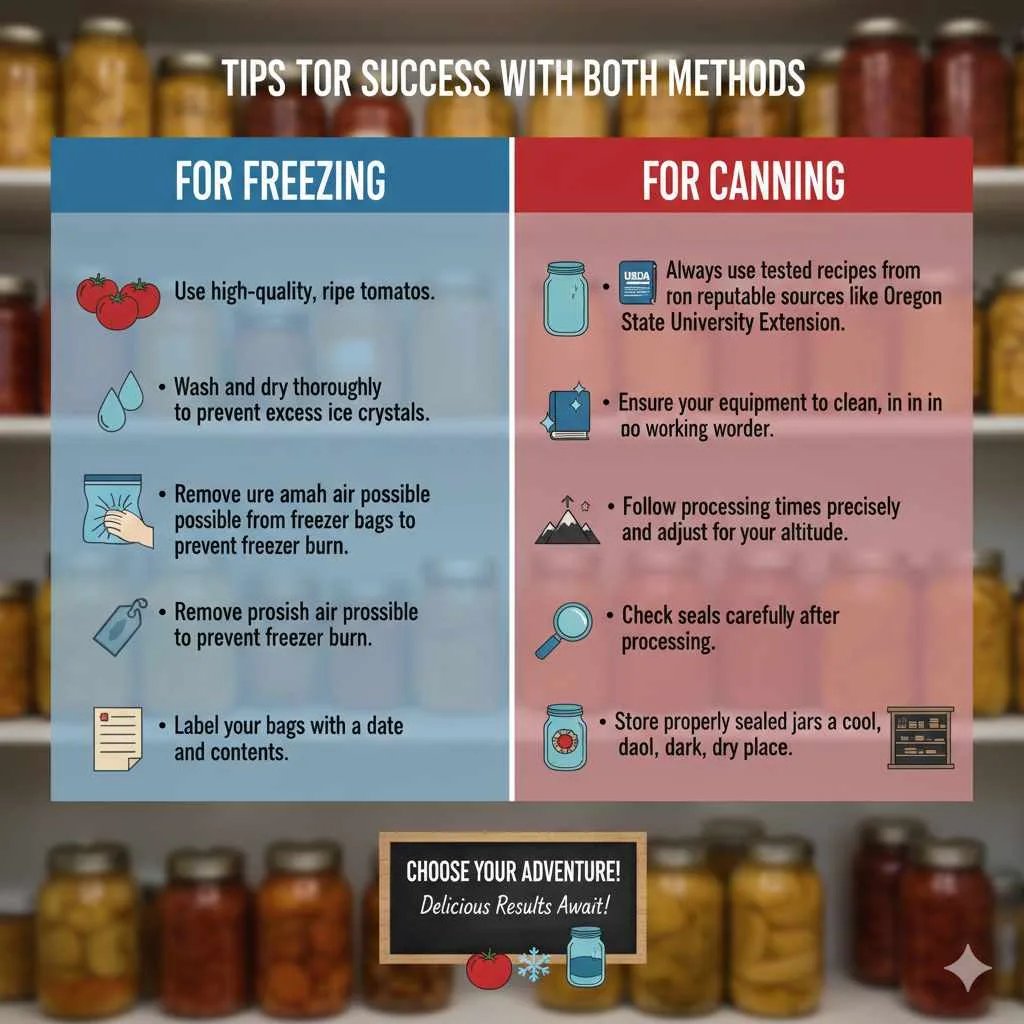
For Freezing:
- Use high-quality, ripe tomatoes.
- Wash and dry thoroughly to prevent excess ice crystals.
- Remove as much air as possible from freezer bags to prevent freezer burn.
- Label your bags with the date and contents.
For Canning:
- Always use tested recipes from reputable sources like the Oregon State University Extension or a similar accredited university extension service.
- Ensure your equipment is clean and in good working order.
- Follow processing times precisely and adjust for your altitude.
- Check seals carefully after processing.
- Store properly sealed jars in a cool, dark, dry place.
Frequently Asked Questions (FAQ)
Q1: Can I freeze tomatoes and then can them later?
It’s generally not recommended to freeze tomatoes and then try to can them. The freezing process softens the tomatoes significantly, and their cellular structure breaks down. This can result in a mushy product after canning, and it may also affect the safety of the canning process due to changes in moisture content.
Q2: Do I need to peel tomatoes before freezing or canning?
For freezing, peeling is optional. If you’re freezing whole, you can leave the skins on. For chopped or pureed, peeling can give a smoother result, but it’s not strictly necessary. For canning, peeling is often recommended for a better texture and appearance, especially for whole or sliced tomatoes. It’s easier to peel after a quick blanch in boiling water.
Q3: What is the safest way to can tomatoes?
The safest way to can tomatoes is to follow tested, up-to-date recipes from reliable sources like the National Center for Home Food Preservation or your local university extension office. These recipes are written based on scientific research to ensure proper acidity levels and processing times/pressures needed to destroy harmful bacteria and prevent spoilage. Always use the recommended amounts of acidifiers (like lemon juice or citric acid) and adhere strictly to processing times and methods (water bath or pressure canning).
Q4: How long do frozen tomatoes last?
Properly frozen tomatoes can retain good quality for about 8 to 12 months. While they may remain safe to eat for longer, their flavor and texture can degrade over time. For best results, use them within a year.
Q5: How long do canned tomatoes last?
When canned properly and stored in a cool, dark, dry place, home-canned tomatoes can last for at least 1 to 2 years and often up to 5 years or more. However, quality may decline over time, so it’s best to consume them within a few years for optimal flavor and texture.
Q6: Can I use a regular stockpot for canning tomatoes?
For water bath canning, a dedicated water bath canner is recommended because it’s deep enough to fully submerge the jars in water and usually has a rack to keep jars from sitting directly on the bottom. While you can use a large, deep stockpot, ensuring you have enough water to cover jars by 1-2 inches and a way to keep jars from touching each other or the bottom (like a steaming rack) is crucial. For pressure canning, you absolutely need a tested pressure canner.
Q7: What’s the difference between a water bath canner and a pressure canner?
A water bath canner uses boiling water (212°F or 100°C at sea level) to process high-acid foods like most fruits and properly acidified tomatoes. A pressure canner reaches higher temperatures (around 240°F or 116°C) by using steam under pressure, which is necessary to safely preserve low-acid foods like vegetables and meats. For canning tomatoes, you’ll typically use a water bath canner unless your recipe includes low-acid ingredients, in which case a pressure canner is required.
Conclusion: Your Preserving Journey Awaits
Choosing between freezing and canning tomatoes is about finding the method that best fits your kitchen, your time, and your culinary goals. Freezing offers a pathway to preserving that sun-kissed flavor with minimal fuss, perfect for busy cooks and beginners. It’s a fantastic way to stash away that summer sweetness for hearty winter sauces and comforting soups.
On the other hand, canning is a time-honored tradition that yields shelf-stable treasures, meaning you can open a jar of summer tomatoes on a snowy day years down the line. It requires a bit more investment in equipment and a careful adherence to safety guidelines, but the reward is immense – a pantry stocked with your own perfectly preserved goodness.
Whichever path you choose, the practice of preserving your harvest is incredibly satisfying. It connects you to your food, reduces waste, and ensures you can enjoy the taste of summer long after the season has passed. So, gather your tomatoes, embrace these simple steps, and get ready to savor your very own preserved produce! Happy preserving!