
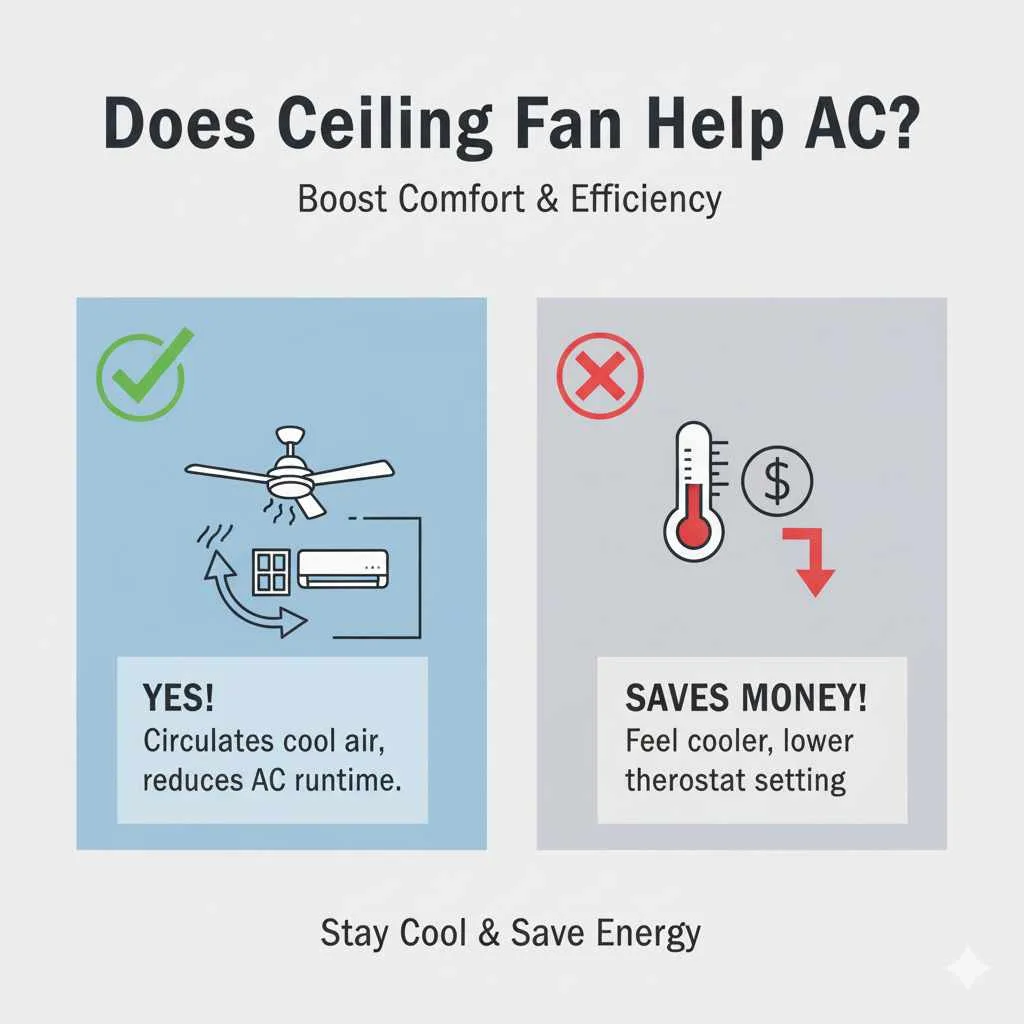
Yes, a ceiling fan absolutely helps your AC! By circulating cool air more efficiently, it allows your air conditioner to run less, saving you money and energy. It’s a simple, stylish way to boost comfort and create a cooler home.
Feeling the heat and wondering if that gentle whirring overhead can really team up with your air conditioner? It’s a common question, especially when the summer sun starts beaming down and your energy bills begin to climb. You’ve got your AC set to a nice, cool temperature, yet some rooms still feel a bit stuffy. What if there’s a simple, stylish solution that’s been right above your head all along? I’m here to tell you that, yes, your ceiling fan is your AC’s best friend, and together they can make your home wonderfully cool and comfortable without breaking the bank. We’ll explore exactly how this amazing duo works and how you can use them to your advantage.
The Genius Duo: How Ceiling Fans and ACs Work Together
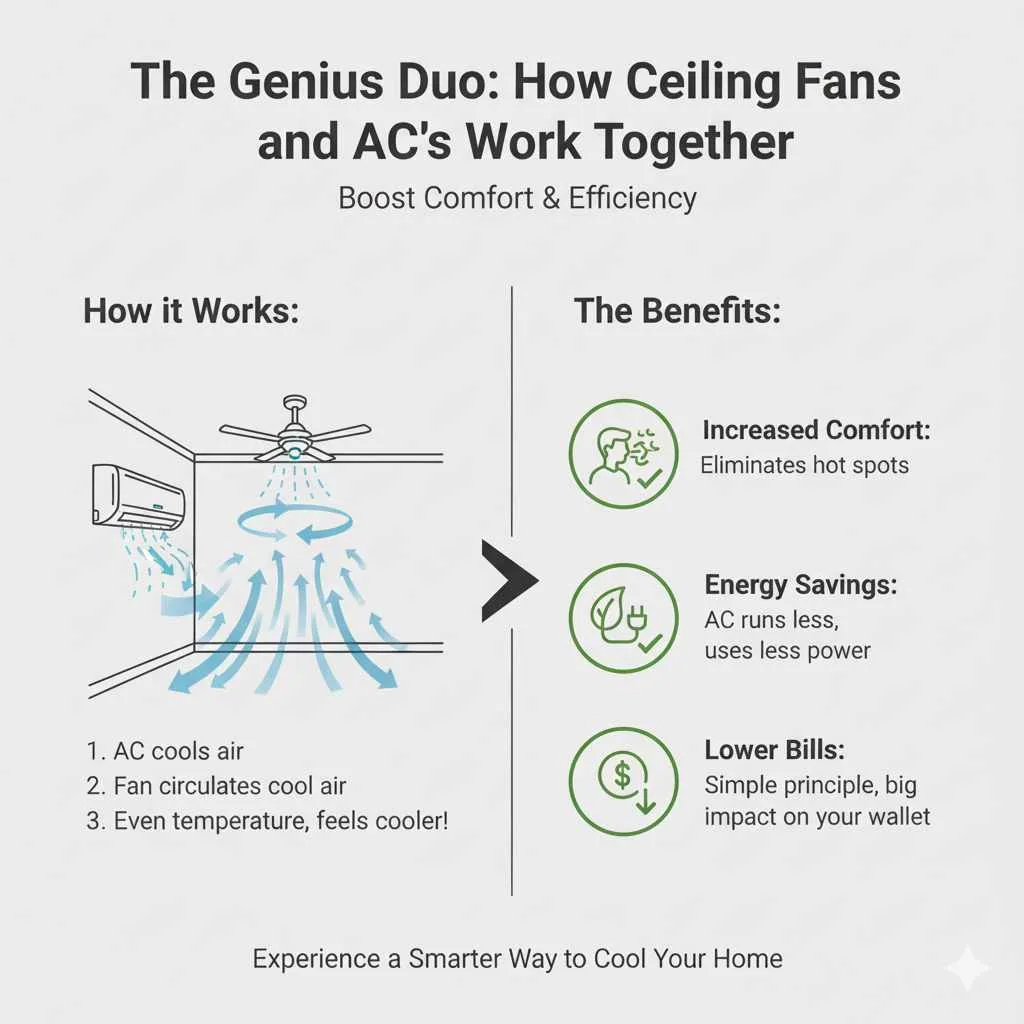
Think of your air conditioner like a powerful ice chest, chilling the air and pushing it into your rooms. It does a fantastic job, but sometimes that cool air prefers to just sit there, especially near the ceiling. This is where your ceiling fan swoops in to save the day! A ceiling fan doesn’t actually cool the air itself; instead, it creates a gentle breeze. This breeze makes the air feel cooler on your skin through a process called evaporative cooling (when moisture from your skin evaporates, it cools you down).
More importantly, the fan mixes the cooler air that your AC produces with the warmer air in the room. This constant circulation helps to distribute the cool air more evenly throughout the space, preventing hot spots and making the entire room feel more comfortable. When the air is circulating well, your AC doesn’t have to work as hard to reach and maintain your desired temperature. It short-cycles, meaning it turns off sooner because it senses the room has reached the set temperature thanks to the fan’s help.
Understanding Airflow and Your AC
Your air conditioner works by drawing in warm air from your home, passing it over cold coils, and then blowing the cooled air back out. For this to be most effective, good airflow is key. Stagnant air can make it seem like your AC isn’t cooling properly, even if it’s working perfectly.
A ceiling fan enhances this airflow in a couple of brilliant ways:
- Circulation: The fan blades push air downwards, creating a gentle downdraft that circulates cool air from the AC throughout the room.
- Mixing: It stirs the air, preventing pockets of warm air from lingering and helping the cool air reach every corner.
- Perceived Cooling: The breeze from the fan on your skin tricks your brain into feeling cooler, allowing you to set your thermostat a few degrees higher and still feel comfortable.
This combination means your AC doesn’t have to run as long or as intensely to keep you cool, which directly translates into lower energy bills! It’s a simple principle with a significant impact on your home’s comfort and your wallet.
The Energy-Saving Secret: How Fans Cut Down on AC Use
This is where the “Genius Energy Saver” aspect really shines! When summer temperatures soar, our instinct is to crank up the air conditioning and keep it running constantly. However, this can be a huge drain on your energy resources. By using a ceiling fan in conjunction with your AC, you can significantly reduce the amount of time your air conditioner needs to be on.
The U.S. Department of Energy notes that using ceiling fans can allow you to raise your thermostat by as much as 4 degrees Fahrenheit without a decrease in comfort. This is a big deal! For every degree you raise your thermostat, you can save a noticeable percentage on your cooling costs.
Consider this: if your AC is working hard to cool a room and the cool air just settles near the ceiling, it might keep cycling on even when the air near the floor is already at your set temperature. A fan stirs this air, so the cool air is distributed better, telling the thermostat that the room is cooler than it would be without the fan. Consequently, the AC cycles off sooner. This reduced run time means less electricity consumed, offering a practical and cost-effective benefit. You’re essentially getting more cooling comfort for less energy input.
Boosting Comfort Without Overworking Your AC: A Practical Guide
It’s not just about saving money; it’s about creating a consistently comfortable living space. When you combine your AC and ceiling fan, you can achieve a more balanced temperature throughout your home. No more battling those hot spots near windows or stuffy corners!
Here’s how to maximize their combined power:
- Set Your Thermostat Wisely: Start by setting your thermostat to a comfortable, energy-saving temperature. For many, this falls between 75-78°F (24-26°C) when they are home.
- Turn On the Fan: Engage your ceiling fan. Ensure it’s set to rotate counter-clockwise during warmer months. This direction pushes air downwards, creating that refreshing breeze.
- Feel the Difference: You’ll notice a cooler feeling almost immediately. This “wind chill” effect allows you to feel comfortable at a higher thermostat setting than you would with just the AC.
- Adjust as Needed: If certain areas are still a bit warm, adjust the fan speed or consider if additional fans are needed in other parts of your home.
- Turn Off When Leaving: Remember to turn off your ceiling fan when you leave the room for extended periods. Fans cool people, not rooms, so there’s no need to run them when no one is there.
This simple strategy leverages the best of both appliances, ensuring your home stays cool and comfortable while minimizing energy usage. It’s an intuitive approach to home climate control that makes a real difference.
Choosing the Right Ceiling Fan for Your Space
Not all ceiling fans are created equal, and choosing the right one can enhance its effectiveness with your AC even further. When you’re looking for a fan, consider these factors:
- Size Matters: The fan’s size should match the room. A fan that’s too small won’t move enough air, while one that’s too large can create an uncomfortable draft. A general guideline is:
- Rooms up to 75 sq ft: 29-36 inch fan
- Rooms from 75-144 sq ft: 42-48 inch fan
- Rooms over 144 sq ft: 50-60 inch fan
- Blade Design: Wider blades and a steeper pitch (the angle of the blade) generally move more air. Look for fans with blades made from materials like wood, metal, or durable plastic that can withstand regular use.
- Motor Quality: A good quality motor is crucial for quiet operation and longevity. Look for fans with energy-efficient motors, such as DC (Direct Current) motors, which can use significantly less energy than traditional AC motors. Many modern, high-efficiency fans meet ENERGY STAR® guidelines for energy efficiency. You can learn more about ENERGY STAR certified home appliances on their official ENERGY STAR website.
- Features: Many fans come with additional features like remote controls, dimmable lights, and reversible motors (for winter use). While lights are convenient, focus on the fan’s ability to move air efficiently for its primary role in cooling.
- Installation Height: Ensure the fan blades are at least 7 feet above the floor for safety and optimal airflow. They should also be at least 18 inches away from any walls or sloped ceilings.
Investing in a well-chosen ceiling fan is an investment in both comfort and efficiency. It’s a decorative element and a functional appliance that pays dividends throughout the year.
Maximizing Efficiency: Fan Direction for Every Season
This is a frequently overlooked, yet crucial, detail that significantly impacts how your ceiling fan works with your AC. The direction your fan spins is key to its function, and it changes depending on the season.
Summer Mode: Cooling Down
During the hot summer months, you want your ceiling fan to create a cooling breeze. To achieve this, the fan should rotate counter-clockwise.
When rotating counter-clockwise, the fan blades pull air upwards and push it downwards. This downdraft creates pleasant airflow across your skin, making you feel cooler through evaporation. This is the setting you’ll use when your AC is running to help circulate that chilled air more effectively.
Winter Mode: Warming Up (Yes, Really!)
Believe it or not, ceiling fans can also help in the winter! In colder months, you want the fan to operate clockwise at a low speed.
When rotating clockwise, the fan blades draw cooler air up from the floor and push the warmer air that naturally rises and collects near the ceiling down the sides of the room and back towards your living space. This gentle circulation helps to distribute the heat generated by your furnace more evenly, reducing the workload on your heating system and preventing you from feeling cold spots. It can help make your home feel warmer without having to turn up the thermostat, leading to energy savings during the heating season as well.
Understanding and switching these directions seasonally is a simple yet powerful way to get the most out of your ceiling fan year-round.
Ceiling Fan vs. Portable Fan: Which is Better for AC Support?
When considering ways to enhance your AC’s performance, both ceiling fans and portable fans come to mind. However, they serve slightly different purposes when it comes to working with your central air conditioning system.
Ceiling Fan Advantages:
- Whole-Room Circulation: Designed to move a large volume of air throughout an entire room.
- Energy Efficiency: Typically use less energy than portable fans for the same coverage, especially high-efficiency models.
- Integrated Operation: Work seamlessly with your AC to distribute cool air evenly, allowing higher thermostat settings.
- Aesthetics: Can be a stylish addition to your home decor.
- Permanent Installation: Always in place and ready to use.
Portable Fan Advantages:
- Targeted Cooling: Excellent for directing a breeze precisely where you need it, like a desk or a sofa.
- Flexibility: Can be moved from room to room as needed.
- Lower Upfront Cost: Usually less expensive to purchase initially.
- Supplemental Cooling: Good for rooms without ceiling fans or when you need an extra boost of airflow.
When the goal is to help your AC work more efficiently and cool an entire room more evenly, a ceiling fan is generally the superior choice. It’s designed for continuous, widespread airflow that complements the distributed nature of central air. Portable fans are fantastic for personal comfort or in specific spots but don’t offer the same systemic benefit to an AC system as a well-placed ceiling fan.
Understanding Ceiling Fan Energy Consumption
It’s a common misconception that running any electrical appliance will automatically increase your energy bill. While it’s true that ceiling fans use electricity, their energy consumption is remarkably low, especially compared to air conditioners. This low usage is a key reason why they are such effective energy savers when paired with AC.
Here’s a general idea of how much energy a ceiling fan uses:
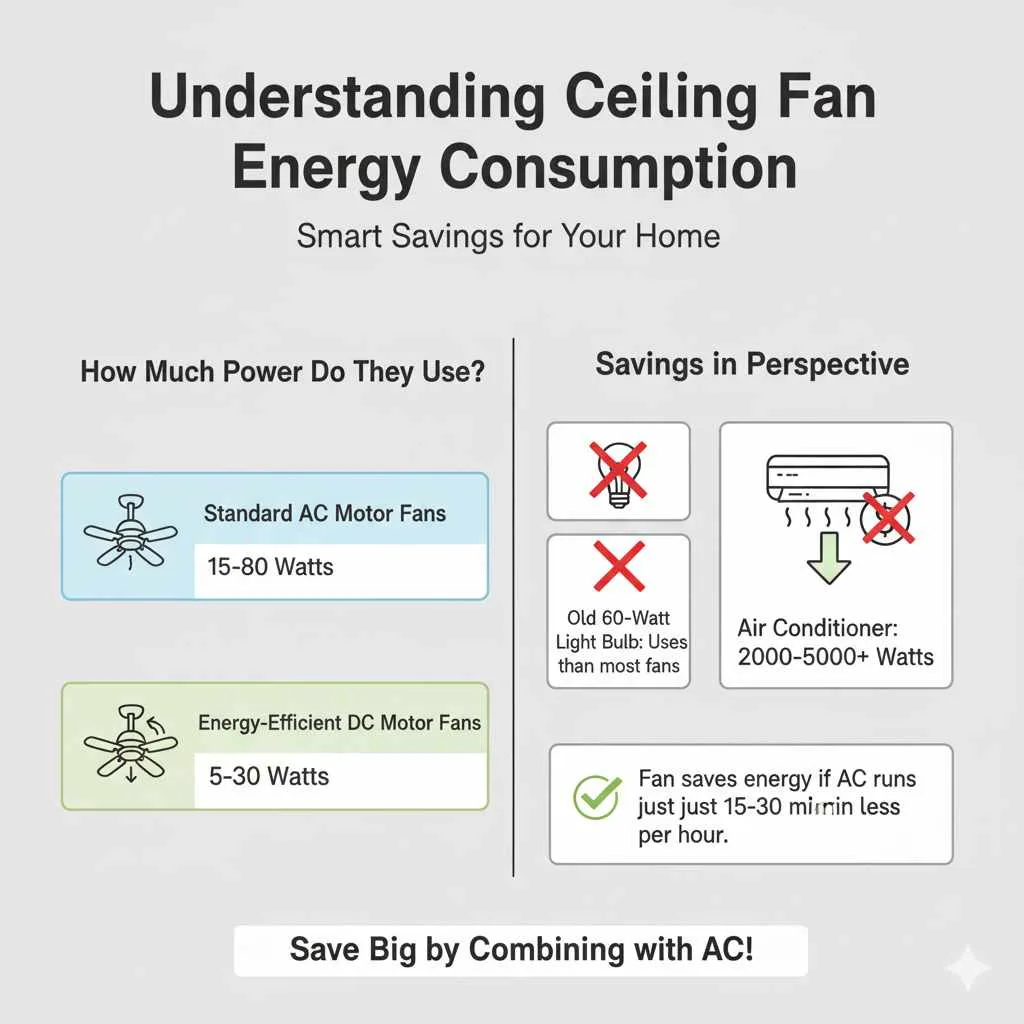
- Standard AC Motor Fans: Typically consume between 15 to 80 watts of power, depending on the size and speed setting.
- Energy-Efficient DC Motor Fans: Can use as little as 5 to 30 watts.
To put this into perspective, a standard 60-watt light bulb uses more energy than most ceiling fans on their highest setting. Your air conditioner, on the other hand, can consume anywhere from 2,000 to 5,000 watts or even more! This massive difference highlights the energy-saving potential. If running your ceiling fan allows your AC to run just 15-30 minutes less per hour, you’re likely saving more energy than the fan is consuming.
For more details on energy efficient home appliances and their consumption, the U.S. Department of Energy’s Energy Saver website provides excellent resources on reducing home energy use.
Cost Comparison: Ceiling Fan vs. AC Run Time
Let’s break down the financial impact. Running your AC is the primary driver of summer cooling costs. By using a ceiling fan, you’re aiming to reduce that run time. Here’s a simplified look at the potential savings:
| Appliance | Typical Wattage | Average Run Time (per hour) | Estimated Cost per Hour (at $0.15/kWh) |
|---|---|---|---|
| Air Conditioner (Small) | 1500 watts | 1 hour | $0.23 |
| Air Conditioner (Large) | 3500 watts | 1 hour | $0.53 |
| Ceiling Fan (Standard) | 60 watts | 1 hour | $0.01 |
| Ceiling Fan (DC Motor) | 20 watts | 1 hour | $0.003 |
Note: Electricity costs vary by region. Calculations are approximate.
If running your ceiling fan for an hour allows your AC to run 30 minutes less, consider the savings:
- Scenario 1 (Small AC): You run the fan for 1 hour (cost $0.01). Your AC runs for only 30 minutes (saving $0.115). Net saving: $0.115 per hour.
- Scenario 2 (Large AC): You run the fan for 1 hour (cost $0.003). Your AC runs for only 30 minutes (saving $0.265). Net saving: $0.262 per hour.
Over a summer of regular use, these savings add up significantly. It demonstrates that the small cost of running a ceiling fan is easily offset by the energy savings from reducing your AC’s workload. It’s a smart financial move for any homeowner or renter looking to manage their utility bills more effectively.
Frequently Asked Questions (FAQs)
Can I use a ceiling fan without AC?
Yes, absolutely! In milder weather, a ceiling fan can provide a refreshing breeze without needing to run your air conditioner at all, saving you energy and money. Just make sure it spins counter-clockwise for a cooling effect.
Does ceiling fan direction matter?
Yes, it matters a lot! For summer cooling, fan blades should spin counter-clockwise to push air down. For winter heating, they should spin clockwise (on a low setting) to gently push warm air down from the ceiling.
How high should a ceiling fan be installed?
For safety and optimal airflow, the fan blades should be at least 7 feet from the floor. They should also be at least 18 inches from any walls or obstructions.
Will running a ceiling fan increase my electricity bill significantly?
No, ceiling fans use very little electricity, typically between 15-80 watts. This is far less than your air conditioner, which can use thousands of watts. By allowing your AC to run less, a ceiling fan actually helps reduce your overall electricity bill.
Do I need to turn off my ceiling fan when I leave the room?
Yes, it’s a good idea. Ceiling fans cool people by creating a wind chill effect. They don’t actually lower the room’s temperature. So, if there’s no one in the room to feel the breeze, there’s no need to keep the fan running, and you can save a little extra energy.
Are there different types of ceiling fans?
Yes, there are many! They vary in size, motor type (AC vs. DC), blade design, style, and features like lights and remote controls. For energy savings, look for fans with DC motors and ENERGY STAR certification.
Can a ceiling fan cause my AC to freeze up?
No, a ceiling fan won’t cause your AC to freeze up. Freezing usually happens due to restricted airflow over the evaporator coils or a refrigerant issue within the AC unit itself. Ceiling fans help circulate air, which can prevent freezing by ensuring proper air movement.
Conclusion: Stay Cool, Save Smart!
So, there you have it! Your ceiling fan is more than just a stylish addition to your room; it’s a powerful ally for your air conditioner and a fantastic tool for energy savings. By understanding how it works – creating that vital airflow and perceived cooling effect – you can confidently use it to boost your AC’s efficiency, reduce your energy consumption, and