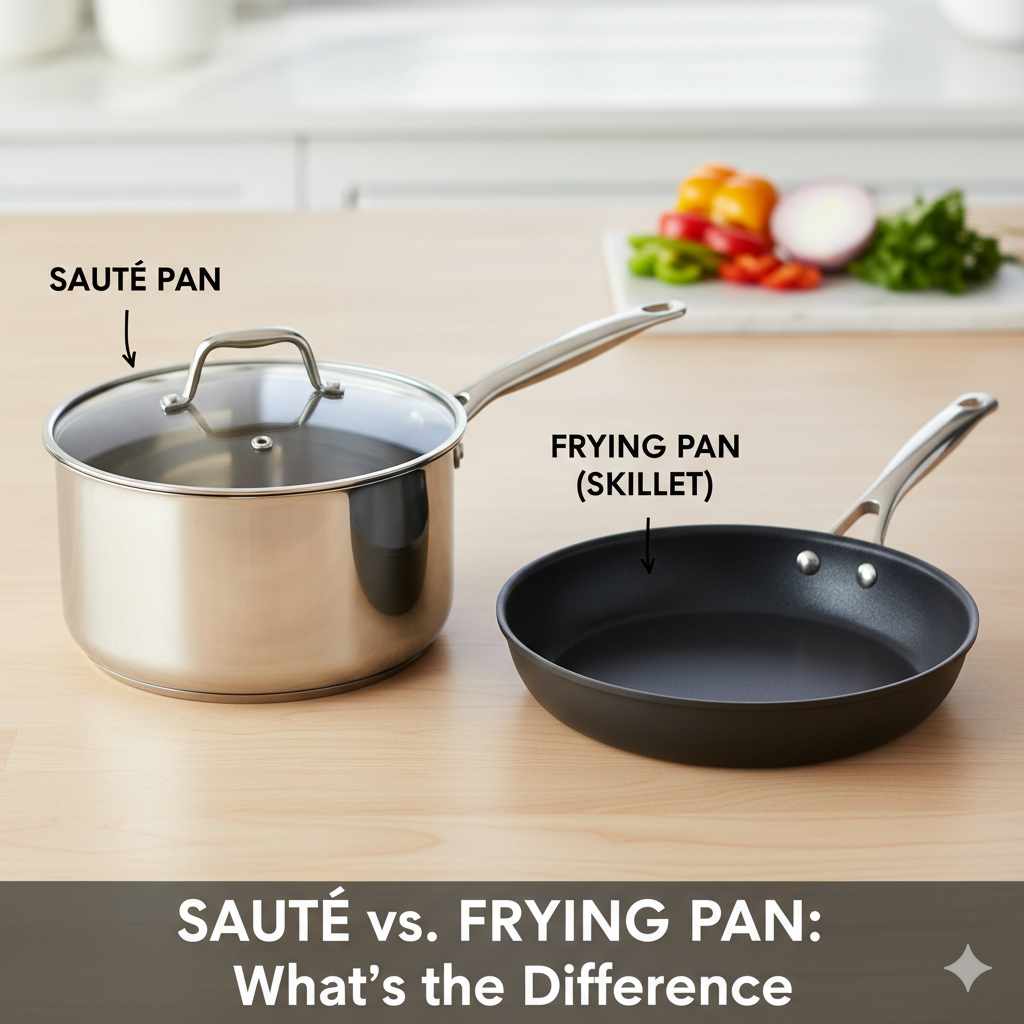
Walking into a kitchen can sometimes feel like looking under the hood of a car for the first time. You see a lot of different tools, and while they might look similar, you know each one has a specific job. Two of the most common tools you’ll find hanging on a pot rack are the sauté pan and the frying pan. They look alike, but using the wrong one is like trying to use a socket wrench when you need a screwdriver—it might work, but it won’t be easy or efficient.
If you’ve ever felt confused about which pan to grab, you’re not alone. It’s a common question, and the answer is surprisingly simple. We’re going to break down the difference between these two kitchen essentials, piece by piece. Forget the confusing jargon. By the end of this guide, you’ll know exactly which pan to use and why, giving you the confidence to tackle any recipe that comes your way. Let’s get started.
What is a Sauté Pan? Let’s Pop the Hood
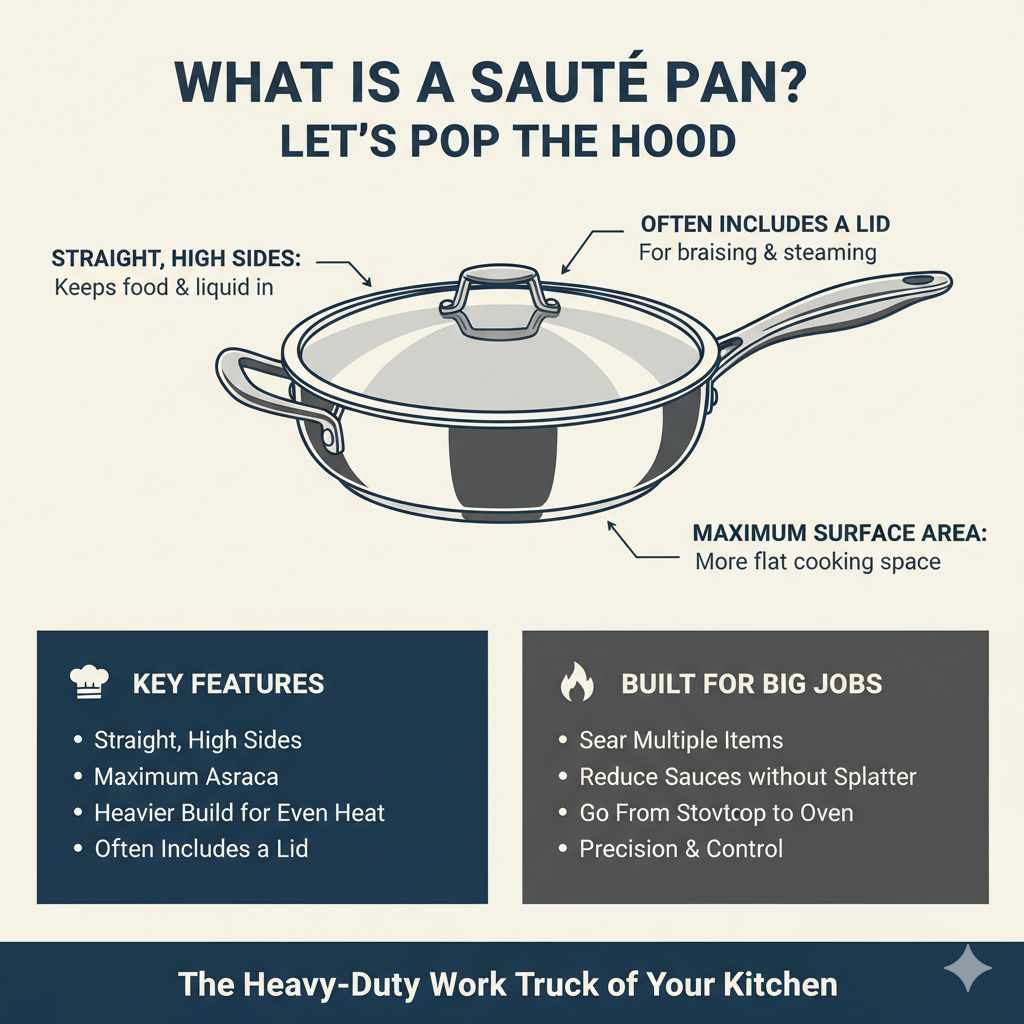
Think of a sauté pan as the heavy-duty work truck of your kitchen. It’s built for big jobs, tough tasks, and handling things with precision and control. It’s a specialized tool that, once you understand it, becomes incredibly useful.
The most important feature of a sauté pan is its shape. It has tall, straight sides that meet the bottom at a sharp, 90-degree angle. This design gives it a very large, flat cooking surface. A 12-inch sauté pan has a full 12 inches of usable cooking space on the bottom.
Key Features of a Sauté Pan:
- Straight, High Sides: These walls are great for keeping food and liquids contained. No more splattering oil all over your stovetop when searing a steak or simmering a sauce.
- Maximum Surface Area: Because the sides go straight up, you get more flat space on the bottom compared to a frying pan of the same diameter. This is perfect for searing multiple chicken thighs or pork chops without overcrowding the pan.
- Heavier Build: Sauté pans are generally thicker and heavier than frying pans. This helps them hold heat evenly, which is critical for getting a perfect, golden-brown crust on your food.
- Often Includes a Lid: Most sauté pans come with a tight-fitting lid, making them excellent for tasks like braising or steaming, where you need to trap moisture and heat.
What is a Sauté Pan Best For?
The name “sauté” comes from a French word meaning “to jump,” which describes the quick cooking method of tossing food in a hot pan with a little fat. While you can do that in a sauté pan, its design truly shines with other tasks:
- Searing Meat: The large, flat surface allows you to get a deep, even sear on steaks, scallops, or chicken. You can place items in the pan without them steaming from being too close together.
- Making Pan Sauces: After searing meat, you can deglaze the pan with wine or stock. The straight sides keep all that flavorful liquid contained, making it easy to build a delicious sauce.
- Braising and Simmering: A sauté pan is perfect for browning meat on the stovetop and then adding liquid, covering it with the lid, and finishing it in the oven. The depth is ideal for this.
- Shallow-Frying: The high sides provide a great barrier against oil splatters when you’re shallow-frying things like breaded cutlets or fish fillets.
What is a Frying Pan (Skillet)? Your Everyday Driver
If the sauté pan is a work truck, the frying pan—often called a skillet—is your versatile, all-purpose sedan. It’s the pan you’ll probably reach for most days because it’s nimble, easy to handle, and good at a wide variety of jobs. It’s the reliable daily driver of your cookware collection.
The defining feature of a frying pan is its shape. It has shallow, sloped or flared sides. These gently curved sides make it incredibly easy to toss food with a flick of the wrist or to get a spatula underneath delicate items like eggs or fish.
Key Features of a Frying Pan:
- Sloped Sides: This is the frying pan’s superpower. The gentle slope allows you to easily slide food out of the pan and onto a plate. It also helps excess steam escape, which prevents food from getting soggy.
- Lighter Weight: Frying pans are typically lighter than sauté pans, making them easier to lift, shake, and maneuver on the stovetop.
- Responsive to Heat Changes: Their lighter construction often means they heat up and cool down faster, giving you quick control over your cooking temperature.
- Designed for Movement: The entire pan is built for action—stirring, flipping, and tossing. It’s the pan you use when you’re actively cooking, not just letting something simmer.
What is a Frying Pan Best For?
A frying pan is your go-to for fast-moving, high-heat cooking where you need to be able to move food around easily.
- Cooking Eggs: Whether you’re making a fluffy omelet, scrambled eggs, or a perfect sunny-side-up egg, the sloped sides let you get a spatula right under it for a clean flip or fold.
- Stir-Frying: The flared shape is perfect for tossing vegetables and meat, ensuring everything cooks quickly and evenly.
- Flipping Pancakes and Crepes: Those low, sloped sides are exactly what you need to slide a pancake onto a spatula without breaking it.
- Quick Sautéing: For jobs like cooking garlic, onions, or mushrooms, a frying pan allows you to quickly toss them so they don’t burn.
Side-by-Side Comparison: The Spec Sheet
Just like comparing two car models, laying out the specs side-by-side makes the differences crystal clear. Here’s a simple breakdown of a sauté pan versus a frying pan.
| Feature | Sauté Pan | Frying Pan (Skillet) |
|---|---|---|
| Shape of Sides | Tall and straight | Short and sloped (flared) |
| Cooking Surface Area | Larger, maximized flat bottom | Smaller flat bottom due to sloped sides |
| Volume / Capacity | Holds more liquid | Holds less liquid |
| Weight | Heavier, thicker base | Lighter, easier to handle |
| Best For Tossing Food | Difficult due to straight sides | Excellent, designed for flipping |
| Lid Included | Almost always | Sometimes, but less common |
| Primary Use | Searing, sauces, braising, shallow-frying | Quick cooking, eggs, stir-frying, flipping |
Which Pan Should You Use? A Task-by-Task Breakdown
Okay, the theory is great, but let’s get practical. You’re standing in front of your stove, ingredients ready. Which pan do you pull out? Here are some common cooking scenarios to guide you.
When to Reach for Your Sauté Pan
Grab your sauté pan when you need stability, space, and control over liquids.
- Searing a Thick Steak: You want maximum contact between the meat and the hot pan surface to build a great crust. A sauté pan’s large, flat bottom is perfect for this. It also contains any oil splatters.
- Making a One-Pan Pasta Sauce: After browning your ground meat and onions, you’ll add crushed tomatoes and let it simmer. The deep, straight sides of the sauté pan can hold all that sauce without any risk of it sloshing over the side.
- Braising Chicken Thighs: You can sear the chicken thighs in the sauté pan on the stove, add your braising liquid (like stock and wine), cover it with its tight-fitting lid, and transfer the whole thing directly into the oven to finish cooking. It’s a true one-pan wonder for this job.
- Cooking for a Crowd: If you’re making a large batch of anything, the sauté pan’s generous volume and surface area give you the room you need without overcrowding.
When a Frying Pan is Your Best Bet
Reach for your frying pan when speed, agility, and easy food release are your priorities.
- Making a French Omelet: The sloped sides are essential. They help you roll the delicate eggs into the classic omelet shape and slide it perfectly onto your plate. You simply can’t do this as easily in a sauté pan.
- Stir-Frying Vegetables for a Quick Weeknight Meal: You need to keep the food in constant motion. The frying pan’s lightweight build and flared sides are designed for the quick wrist-flick needed to toss vegetables efficiently.
- Toasting Nuts or Spices: You need to shake the pan frequently to prevent burning. A lightweight frying pan is much easier to handle for this delicate, fast-paced task.
- Making Grilled Cheese: The low sides make it effortless to get a spatula under the sandwich for that crucial flip.
Beyond the Shape: What Else Matters?
The shape is the main difference, but the material your pan is made from is like the engine under the hood. It dictates how your pan performs—how it heats up, how it holds heat, and how much maintenance it needs. Understanding materials will help you make an even better choice.
Pan Materials: The “Engine” of Your Cookware
Different materials offer different benefits. There’s no single “best” one; it’s about what works for your cooking style and budget. You can learn more about how different materials conduct heat from educational resources like the MIT School of Engineering.
| Material | Pros | Cons | Best For |
|---|---|---|---|
| Stainless Steel | Durable, non-reactive, great for searing, often dishwasher safe. | Food can stick without proper technique, heats less evenly than aluminum. | All-purpose cooking, searing meats, developing fond for pan sauces. |
| Nonstick | Excellent food release, easy to clean, requires little oil. | Less durable coating, cannot use high heat or metal utensils. | Delicate foods like eggs, fish, and pancakes. |
| Cast Iron | Incredible heat retention, naturally nonstick when seasoned, lasts forever. | Very heavy, requires maintenance (seasoning), slow to heat up. | Searing, frying, baking (cornbread), anything needing steady, high heat. |
| Carbon Steel | Heats quickly, lightweight, develops a nonstick patina like cast iron. | Requires seasoning, can rust if not cared for, reactive to acidic foods. | Professional kitchens, stir-frying, searing at high temperatures. |
Do You Really Need Both? Building Your “Tool Kit”
When you’re just starting to build your kitchen “tool kit,” you might wonder if you truly need both pans. It’s a fair question, especially if you’re on a budget or have limited storage space.
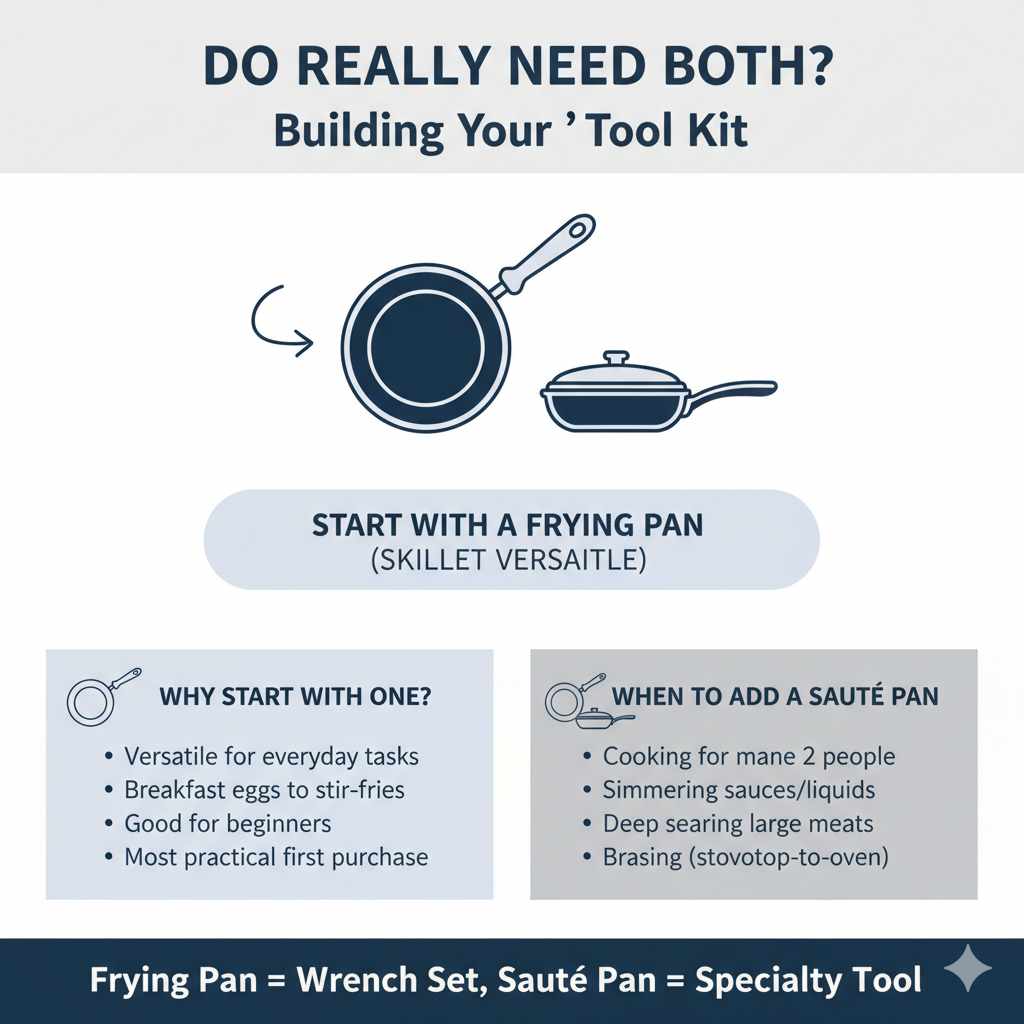
If you can only choose one pan to start, the most versatile choice for a beginner is a 10 or 12-inch frying pan (skillet). A good nonstick or stainless steel frying pan will handle a huge range of everyday tasks, from breakfast eggs to weeknight stir-fries. Its versatility makes it the most practical first purchase.
When should you add a sauté pan? You’ll know it’s time to add a sauté pan to your collection when you find yourself regularly doing these things:
- You’re trying to cook for more than two people and keep running out of space in your frying pan.
- You’re making more dishes that involve simmering sauces or liquids and are tired of them sloshing over the sides.
- You want to get a better, deeper sear on large cuts of meat.
- You’re getting into braising and need a pan that can go from the stovetop to the oven with a lid.
Think of it like this: everyone needs a basic set of wrenches. But as you start doing more complex repairs, you’ll eventually need that specialized tool. The frying pan is your essential wrench set, and the sauté pan is that specialty tool you’ll be glad to have when the right job comes along.
Frequently Asked Questions (FAQ)
Can I use a frying pan instead of a sauté pan?
Yes, you often can, but with some limitations. For searing, you’ll have less flat surface area, so you may need to cook in batches. For sauces, the low, sloped sides mean you have to be careful about liquids spilling. It works in a pinch, but it’s not ideal for those specific jobs.
What is a skillet? Is it the same as a frying pan?
Yes, the terms “skillet” and “frying pan” are used interchangeably. They both refer to a pan with shallow, sloped sides. “Skillet” is often used more for cast iron pans, but there is no technical difference.
Why does my sauté pan have a long handle and a smaller “helper” handle?
Sauté pans are heavy, and they get even heavier when they’re full of food and liquid. The long handle is for everyday maneuvering on the stovetop, while the smaller “helper” handle on the opposite side allows you to use two hands for a secure grip when lifting it in and out of the oven or carrying it to the counter.
What size sauté pan or frying pan should I buy first?
A 10-inch or 12-inch pan is the most versatile size for most home cooks. A 10-inch is great for cooking for one or two people, while a 12-inch gives you more flexibility for larger meals or cooking for a family. This size is large enough for most tasks without being too heavy or difficult to store.
How do I stop food from sticking in a stainless steel pan?
The trick is proper heat management. First, preheat the dry pan over medium heat. Then, add your cooking oil and let it heat up until it shimmers. This creates a temporary nonstick layer. Adding food to a cold pan with cold oil is the number one cause of sticking.
Can both types of pans go in the oven?
Most can, but always check the manufacturer’s instructions. Pans made entirely of metal (like stainless steel, cast iron, and carbon steel) are usually oven-safe to high temperatures. If the pan has a plastic or rubberized handle, it will have a lower maximum oven temperature, or it may not be oven-safe at all.
Does the lid from my sauté pan fit my frying pan?
Usually not. Even if they have the same diameter (e.g., 12 inches), the flared rim of a frying pan is often wider than the straight-sided rim of a sauté pan. Sauté pan lids are designed to fit snugly on their straight-sided pan.
The Final Tune-Up: Your Pan Knowledge Perfected
Choosing between a sauté pan and a frying pan is no longer a mystery. It all comes down to the same principle we use in the garage: picking the right tool for the job. You wouldn’t use a hammer to turn a bolt, and you shouldn’t use a sauté pan to flip an omelet if you can help it.
Remember the core difference: a sauté pan’s straight sides are built for containing liquids and maximizing surface area for searing. A frying pan’s sloped sides are designed for agility, making it easy to toss, flip, and slide food out. One is about stability and capacity; the other is about speed and movement.
By understanding this simple distinction, you’ve taken a huge step toward becoming more confident and efficient in the kitchen. Now, you can look at a recipe, understand the technique it calls for, and grab the perfect pan every single time. Your cooking will be easier, cleaner, and more enjoyable—and that’s a repair everyone can get behind.