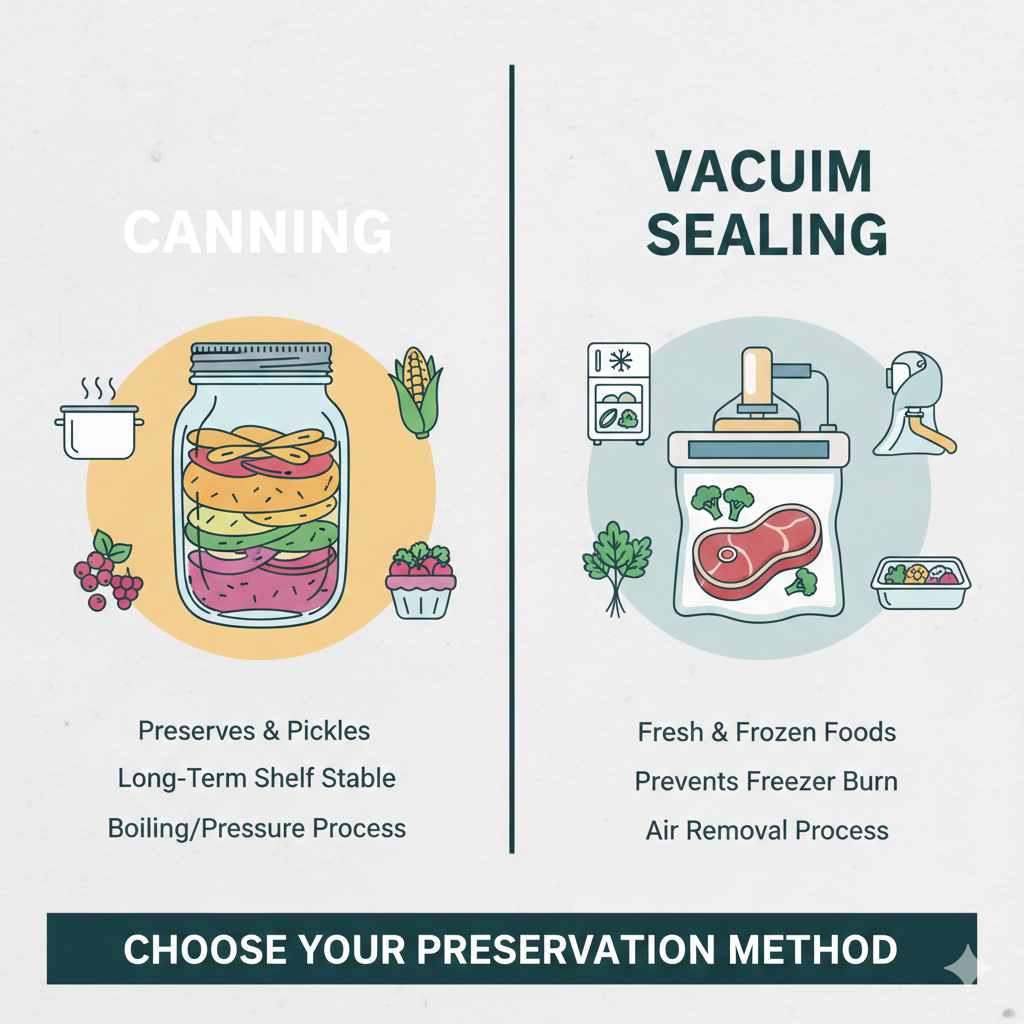
Canning offers long-term shelf stability without refrigeration by sterilizing food in sealed jars, while vacuum sealing removes air for short-term freezer or fridge storage, preventing freezer burn. Both are proven essentials for food preservation, but canning is superior for pantry storage.
Are you tired of watching good food go bad too quickly? Maybe you bought too much from the farmer’s market, or perhaps you’re looking for smarter ways to keep your emergency food supply fresh. Dealing with leftovers or bulk buying can feel tricky. You want food to last, but you don’t want to spend hours figuring out complicated methods. That’s where preservation comes in! We are going to break down two popular methods: canning and vacuum sealing. Don’t worry; we will keep this super simple. By the end of this guide, you’ll know exactly which method is the best tool for your pantry, fridge, or freezer storage needs. Let’s get started and save that delicious food!
Understanding Food Preservation: Why We Do This
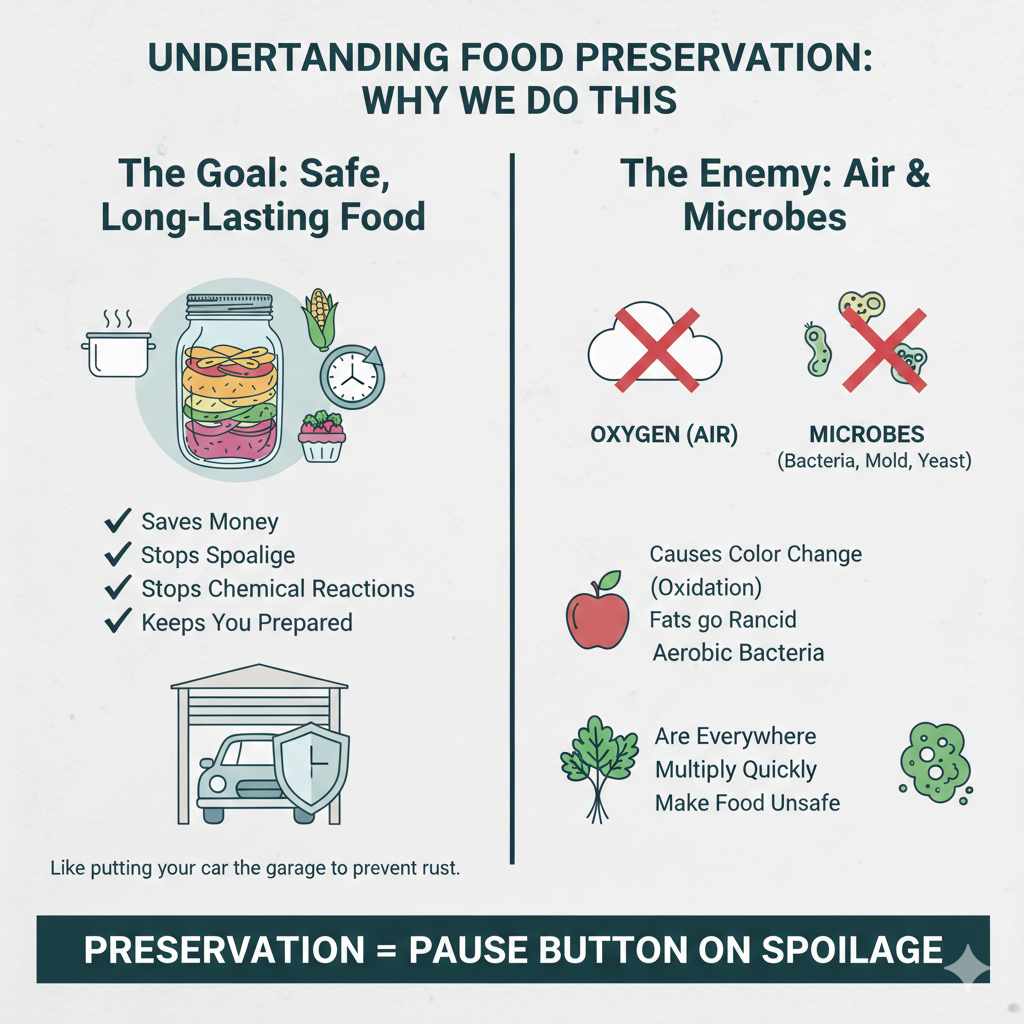
Think of food preservation as hitting the “pause” button on spoilage. Food naturally breaks down because of tiny living things—bacteria, yeasts, and molds—and chemical reactions, like oxidation. If we stop these things, our food lasts much longer. It’s like putting your car in the garage to prevent rust and wear when you aren’t driving it.
For everyday drivers, thinking about food preservation might seem far off, but it saves you money and keeps you prepared. We use preservation in our kitchens just like mechanics use protective coatings to keep engine parts running smoothly. The goal is simple: safe, long-lasting food.
The Enemy: Air and Microbes
Two things ruin your food supply the fastest:
- Oxygen (Air): Oxygen causes food to change color (oxidation) and allows aerobic bacteria to grow. It also causes fats to go rancid.
- Microorganisms: Bacteria, mold, and yeast are everywhere. In the right conditions (moisture, moderate temperature), they multiply quickly, making food unsafe to eat.
Deep Dive: Canning—The Ultimate Shelf-Stable Solution
Canning is an old, reliable method. Think of it as creating a tiny, sterile fortress around your food inside a glass jar. The process uses heat to kill any spoilage organisms inside the jar, and when done right, it creates a vacuum seal as it cools, keeping new contaminants out.
How Canning Works (The Quick Version)
Canning relies on two key steps:
- Heat Treatment: Food is packed into sterilized jars and heated to a very specific temperature for a set time. This heat kills bacteria, mold, and enzymes.
- Sealing: As the jar cools down after heating, the contents shrink slightly, pulling the lid down tight. This creates a strong, airtight, and safe vacuum seal.
If the seal holds, the food inside is protected from air and microbes. This means properly canned food can sit on a shelf in your pantry for years, sometimes even decades, without needing refrigeration or freezing.
Types of Canning Methods
Not all foods can be canned the same way. Safety is key here, so knowing which method to use is vital. Incorrect heating can lead to serious issues, like botulism, which is why following tested recipes is non-negotiable.
1. Water Bath Canning
This is for high-acid foods. Think fruits, jams, jellies, pickles, and anything with added vinegar or lemon juice. The high acid level prevents dangerous bacteria from growing, so boiling water (212°F or 100°C) is hot enough to kill everything else.
2. Pressure Canning
This method is essential for low-acid foods, like most vegetables, meats, poultry, and fish. Why the difference? Low-acid environments allow dangerous bacteria, like Clostridium botulinum, to thrive if the temperature isn’t high enough. Pressure canners reach temperatures above boiling point (around 240°F or 116°C), which is required to kill these spores safely. If you plan to preserve garden green beans or meat, you must use a pressure canner.
For more details on safe canning practices, always refer to official resources like the National Center for Home Food Preservation (NCHFP) guidelines, which are based on USDA research.
Pros and Cons of Canning
Canning is fantastic for long-term storage, but it takes commitment:
| Pros of Canning | Cons of Canning |
|---|---|
| Extremely long shelf life (1–5+ years). | Requires specialized equipment (canner, jars, lids). |
| Pantry stable—no electricity needed for storage. | Time-consuming process requiring focused attention. |
| Excellent for large batches of food. | Some nutrient loss due to high heat processing. |
| Very low cost per jar once equipment is bought. | Requires strict adherence to tested recipes for safety. |
Deep Dive: Vacuum Sealing—The Freezer’s Best Friend
Vacuum sealing is much newer and focuses on removing the air from around your food. If canning is a fortress, vacuum sealing is a tightly wrapped protective blanket.
How Vacuum Sealing Works
A vacuum sealer machine sucks the air out of a special plastic bag surrounding your food. Once the air is removed, the machine uses heat to seal the bag shut. Because most spoilage organisms need oxygen to grow, taking the air away dramatically slows down these processes.
This method is primarily used for extending the life of food stored in the refrigerator or, most effectively, the freezer.
When to Use Vacuum Sealing
Vacuum sealing shines brightest when dealing with items you plan to use within a few months to a year, especially frozen goods.
- Freezer Storage: This is where vacuum sealing truly proves its worth. It eliminates freezer burn—that ugly, dry surface on frozen food—by stopping ice crystals from forming on the surface.
- Refrigerated Items: Cheese, deli meats, or dry goods like coffee beans stay fresher longer in the fridge or pantry because oxidation is minimized.
- Sous Vide Cooking: Vacuum sealing is the required first step for this popular cooking technique.
Think about keeping parts for your car, like rubber hoses or electrical connectors, dust-free and protected from humidity—that’s what vacuum sealing does for your food.
Pros and Cons of Vacuum Sealing
Vacuum sealing is fast and simple, but it has limits:
| Pros of Vacuum Sealing | Cons of Vacuum Sealing |
|---|---|
| Very fast and easy to use. | Not shelf-stable; requires refrigeration or freezing. |
| Prevents freezer burn almost completely. | Requires an electrical appliance (the sealer machine). |
| Maintains better color and texture than canning. | Ongoing cost of bags or rolls. |
| Good for storing non-food items too (like important documents). | The plastic seal can sometimes fail over time or if punctured. |
Canning Vs Vacuum Sealing: Head-to-Head Comparison
To make the decision clear, let’s look at how these two methods stack up against each other based on the most important factors for home storage.
Storage Duration and Stability
This is the biggest difference. If you want to store food for an emergency kit or save the bounty of your garden for next year, canning wins, hands down.
- Canning: Creates an environment that is truly shelf-stable. You don’t need power to keep it safe.
- Vacuum Sealing: Relies entirely on temperature control. If your freezer breaks, the food will spoil eventually, though much slower than if it were left open to the air.
Food Quality and Texture
High heat changes food. Canning involves significant heat, which can soften vegetables or change the flavor profile slightly.
- Canning: Can lead to a softer texture, especially in vegetables. Some nutrients are lost due to the necessary high temperatures.
- Vacuum Sealing: Since it uses low or no heat (just for sealing the bag), it retains much of the food’s original texture, color, and nutrients better than canning.
Safety Considerations
Both methods are safe when done correctly, but the risks involved are different.
When canning, the primary danger is under-processing low-acid foods, leading to botulism risk. This is why following specific USDA/NCHFP guidelines is crucial for pressure canning. Always check your seals before storing!
When vacuum sealing, the main risk comes if the seal breaks or if the food is stored improperly afterward (e.g., leaving sealed meat on the counter). It does not sterilize the food; it just slows down the spoilage of already fresh food.
For safe, long-term preservation of low-acid foods, pressure canning is the proven essential technology because it achieves the necessary heat penetration to destroy spores, something vacuum sealing cannot do.
Step-by-Step: Choosing the Right Method for Your Project
As a beginner, picking the right tool for the job makes all the difference. Think about what you are preserving and when you plan to eat it.
Scenario 1: Storing Garden Tomatoes for Winter (Long-Term Pantry)
Method: Canning (Water Bath or Pressure if mixing ingredients).
Why: You need this food safe on a shelf for 12 months or more. Tomatoes are acidic, so water bath canning is usually safe, provided you follow a tested recipe that ensures adequate acidity.
- Prepare your jars, lids, and canner according to the type required (water bath or pressure).
- Pack your prepared tomatoes into hot jars, leaving the correct headspace.
- Wipe the rims clean, apply lids and rings (fingertip tight).
- Process in the canner for the time specified by your tested recipe.
- Remove jars and let them cool undisturbed to allow the vacuum seal to form.
Scenario 2: Freezing Bulk Meat Purchased on Sale (Short-Term Freezer)
Method: Vacuum Sealing.
Why: You want to prevent freezer burn and keep the meat looking and tasting fresh for up to a year in the freezer. Canning meat requires a pressure canner and results in a very soft texture, which some drivers don’t prefer for steaks or chops.
- Cut meat into usable portions.
- Place portions into vacuum sealer bags, ensuring the inside of the bag opening stays clean.
- Place the open end of the bag into the sealer machine chamber.
- Select the appropriate setting (often labeled “moist” or “dry”) and press the vacuum/seal button.
- Label the bag with the contents and date, and immediately place it in the deep freeze.
Scenario 3: Storing Dry Goods Like Coffee Beans or Flour (Extended Pantry)
Method: Vacuum Sealing (for flavor preservation) OR Canning (for maximum protection against pests).
Why: Dry goods don’t necessarily need to be sterilized, but they spoil via oxidation (going stale/rancid) or pest infestation.
- Vacuum Sealing: Removes oxygen, which keeps coffee beans from going stale quickly. This is great if you eat them within 6–12 months.
- Canning: If you are worried about pantry moths or rodents getting into your supplies, canning (using mason jars, not specialized canning lids for these dry items—just a standard two-part lid) creates a physical barrier that pests cannot penetrate.
If you are prepping for long-term survival scenarios where power might be unavailable for years, the robust, non-electric seal of canning is the safer bet for nearly all food groups, provided you use the correct pressure canning process for perishables.
Safety First: The Most Crucial Difference
In the automotive world, following the torque specs when changing your tires isn’t optional—it’s safety-critical. Food preservation is the same way. A mistake can mean illness.
When discussing canning vs vacuum sealing, the key safety consideration is sterilization. Vacuum sealing does not sterilize. It simply slows down growth. Canning does sterilize.
The Botulism Concern (Why Pressure Canners Exist)
The bacteria that causes botulism thrives in oxygen-free environments (like a sealed jar) but requires a high-temperature kill step to be eliminated. Water bath canning (212°F) isn’t hot enough to guarantee these spores are destroyed in low-acid foods.
A pressure canner raises the internal temperature above the boiling point of water, reaching temperatures required to destroy these deadly spores. This is why the USDA stresses that if you are canning vegetables, meat, or broth, you must use a pressure canner and follow current, tested processing times exactly. You can read more about the science behind spore destruction and safe pressure canning temperatures on reliable food safety websites.
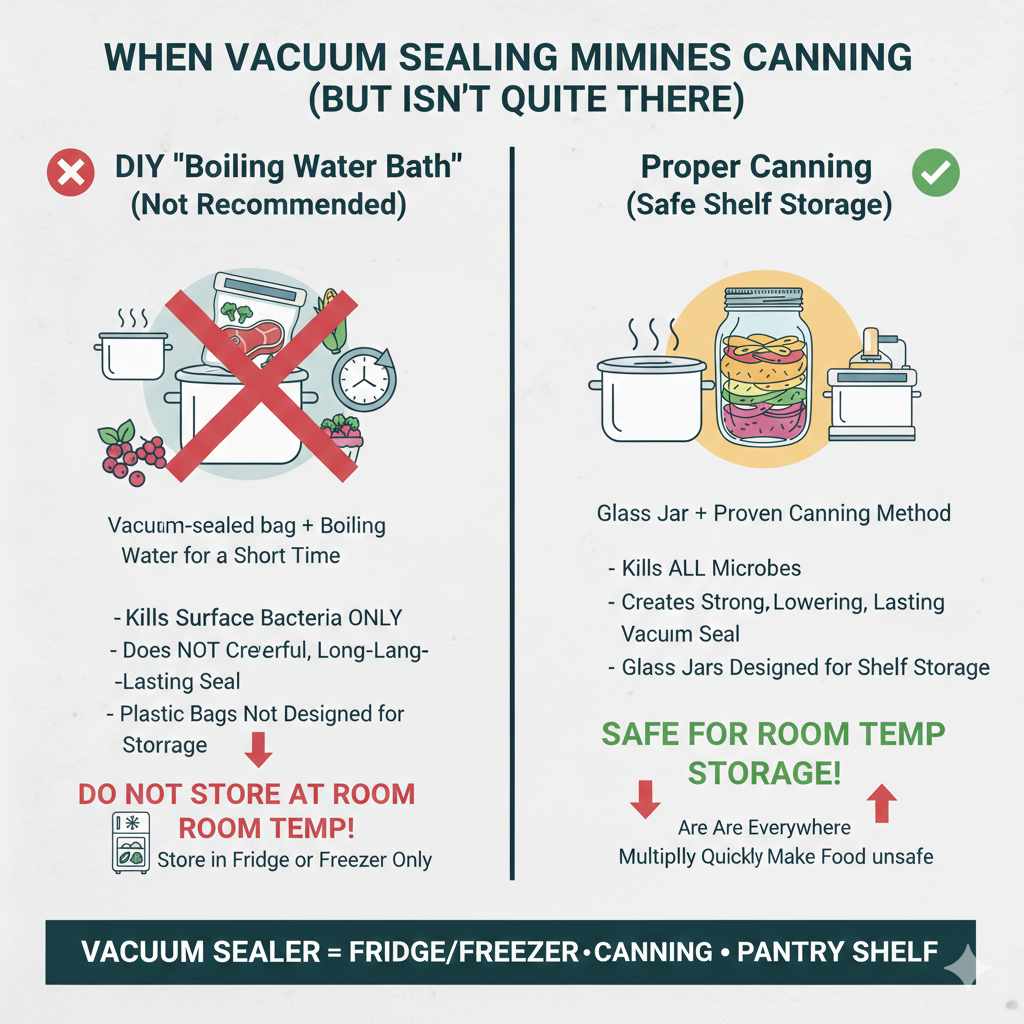
When Vacuum Sealing Mimics Canning (But Isn’t Quite There)
Sometimes, people use a vacuum sealer and then boil the sealed bag (a technique often related to sous vide). This is called “boiling water bath canning” but it is not recommended for long-term shelf storage.
While boiling a sealed bag for a short time might kill surface bacteria, it does not create the same powerful, long-lasting, high-heat vacuum seal achieved by traditional canning methods. The plastic bag itself also isn’t designed for long-term, room-temperature storage.
If you use a vacuum sealer, commit to keeping that food in the fridge or freezer. If you want shelf storage, use glass canning jars and a proven canning method.
FAQ: Simple Answers for Preserving Beginners
Q1: Can I store vacuum-sealed food on the shelf without a fridge?
A: Generally, no. Vacuum sealing removes air but does not sterilize the food. Unless the food was dried or cured, it must be kept frozen or refrigerated to remain safe for more than a few days.
Q2: Is canning bad because it uses so much heat? Will I lose all the vitamins?
A: Some vitamins, especially Vitamin C, are reduced by heat. However, canning is incredibly effective at preserving minerals and fiber. For long-term storage, the trade-off for guaranteed safety and shelf stability is usually worth it.
Q3: Which method is cheaper to start with?
A: Vacuum sealing usually has a lower entry cost—a basic machine and rolls of bags. However, canning has lower ongoing costs because jars and lids are reusable (lids typically once, rings multiple times), and you don’t need electricity to store the final product.
Q4: Can I use canning jars for vacuum sealing?
A: Yes! Many vacuum sealer systems come with attachments that allow you to draw the air out of standard mason jars. This is a great way to use your existing jars for short-term storage of dry goods or liquids in the fridge.
Q5: If I pressure-canned vegetables, can I just freeze them instead?
A: You can, but it’s redundant. Pressure-canned food is already shelf-stable. Freezing it takes up valuable freezer space and electricity. Use vacuum sealing for things you plan to freeze instead of canning.
Q6: How do I know if my canned food seal has failed?
A: A good seal will have the center of the lid sucked down. If you press the center and it clicks up and down, the seal has failed. Also, look for signs of gas production (bubbles rising in the jar) or rust/leakage around the rim.
Q7: Which method is best for preserving herbs?
A: Drying the herbs and then storing them in vacuum-sealed bags is usually best for maintaining flavor for the short to medium term. Canning herbs is generally not recommended as the flavor and color degrade too much from the heat.
Conclusion: Making the Smart Choice for Your Kitchen
When deciding between canning vs vacuum sealing, the choice comes down to time horizon and storage location. They are not really competitors; they are tools for different jobs.
If you need food that lasts safely for years without electricity or refrigeration—for homesteading, long-term preparedness, or simply stocking a deep pantry—canning is the proven, essential method, particularly pressure canning for low-acid items.
If you are protecting high-quality freezer inventory from freezer burn, maximizing the freshness of meats and cheeses for the next few months, or prepping for sous vide cooking, then vacuum sealing is your quick, reliable choice.