
Bakers vs Bookers: The essential difference is simple: ‘Bakers’ refers to the people who physically work on your car (mechanics/technicians), while ‘Bookers’ are the service advisors who manage the customer relationship and scheduling. Understanding this helps you know exactly who you are talking to at the repair shop.
For a related kitchen decision, Conventional Oven Vs Toaster Oven: Showdown adds another practical detail to check.
For a related kitchen decision, Crock Pot Casserole Cooking Times adds another practical detail to check.
Have you ever dropped your car off for service, spoken to one person about the problems, and then received a call from a totally different person quoting you a price? It’s confusing! Many drivers feel lost navigating the front office of an auto repair shop. You want honest work done, but sometimes the process feels like you’re talking to someone who manages appointments rather than someone who actually turns the wrenches.
Don’t worry; this is super common. We are going to clear up the mystery between the “Bakers” and the “Bookers” at the service center. Knowing this simple distinction will boost your confidence when discussing repairs. We will break down exactly what each role does, how they interact, and how you can ensure you are always getting the best service information. Let’s make car repair less mysterious, starting right now!
Understanding the Roles: Bakers vs Bookers in Auto Repair
When you walk into a dealership service bay or a busy independent repair shop, the people you see are generally split into two main groups based on their primary duty: those who work on the vehicle and those who work with the customer paperwork and scheduling. We can use the simple terms ‘Bakers’ and ‘Bookers’ to easily tell them apart.
This distinction isn’t just jargon; it directly affects how your repair process flows, how you get estimates, and who answers your technical questions. Let’s look closely at what defines each group.
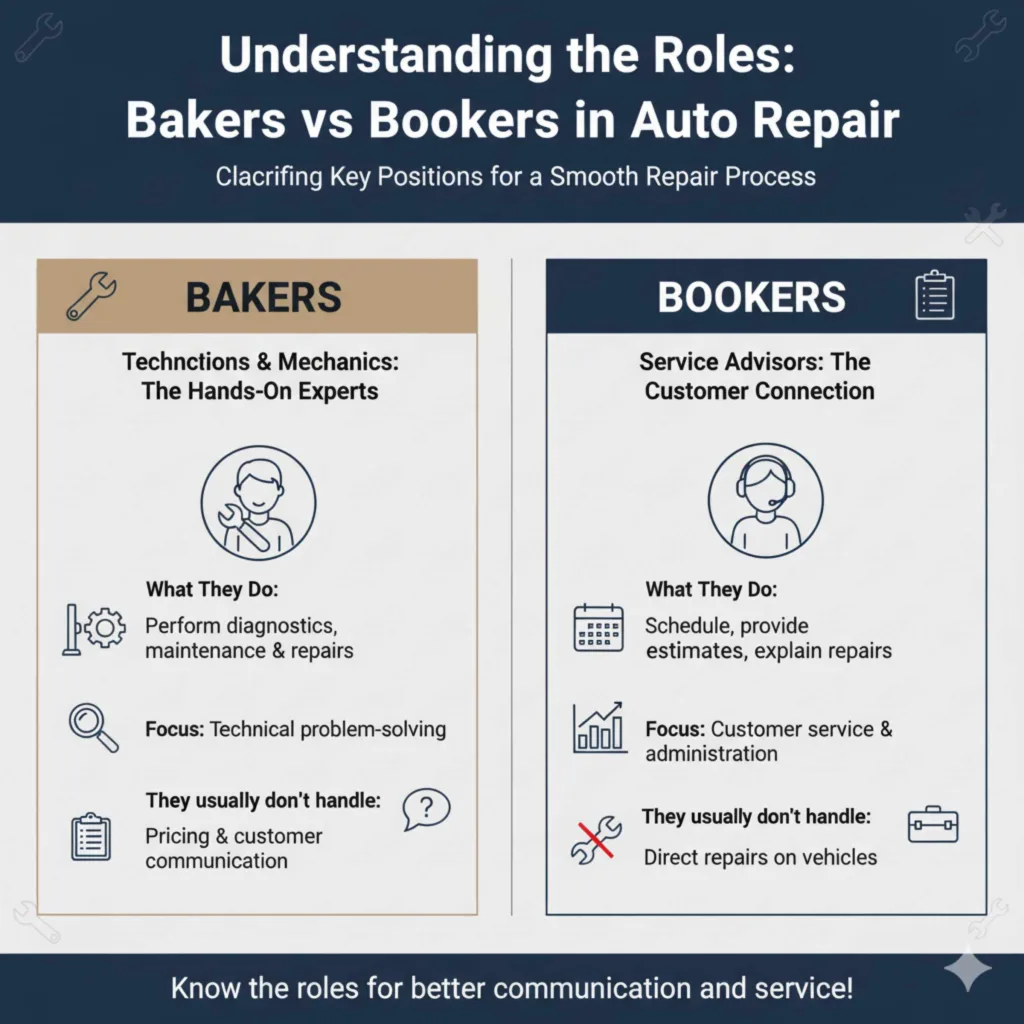
The ‘Bakers’: The Hands-On Technicians
Think of the ‘Bakers’ as the highly skilled craftspeople of the automotive world. They are the ones under the hood, using the lifts, diagnostic tools, and wrenches. Their primary goal is fixing the mechanical or electrical issue correctly and safely.
Who Are the Bakers?
The Bakers are your certified mechanics, automotive technicians, and master diagnosticians. These are the professionals who spent years learning the intricate systems of your car, from engines to transmissions.
- Job Focus: Diagnosis, repair, maintenance procedures, and inspection.
- Key Skills: Technical proficiency, tool operation, problem-solving, and adherence to safety standards.
- Why They Are Called ‘Bakers’: This term is industry slang, often used internally, referring metaphorically to those who “bake” the repair plan into reality, or sometimes colloquially linked to the technician bay environment. (The exact origin is murky, but the function is clear: they do the physical work.)
What Bakers Do (And What They Don’t Do)
It is important to know their scope. The Baker excels at the technical side. They identify the problem, determine the necessary parts, and perform the labor required to make your car safe and reliable again.
However, because they are intensely focused on the technical work, they usually do not handle pricing negotiations or direct customer relationship management. Their communication with you is often filtered through the Booker.
- Inspect the Vehicle: They perform tests based on the concern you reported.
- Document Findings: They write down exactly what is wrong and what needs to be fixed, often using technical codes.
- Estimate Parts/Labor Needs: They tell the service advisor (the Booker) what time and what components are required for the repair.
- Perform the Repair: They execute the necessary physical changes to the vehicle.
The ‘Bookers’: The Customer Connection
If the Bakers are the engine of the repair process, the Bookers are the steering wheel and navigation system. They manage the client relationship from the moment you drop off your car until you pay and leave.
Who Are the Bookers?
The Bookers are usually known as Service Advisors, Service Writers, or Customer Relations Managers. They act as the essential translator between the technical language of the Baker and the everyday language of the driver.
- Job Focus: Customer communication, scheduling, invoicing, service history logging, and managing the workflow between you and the technicians.
- Key Skills: Communication, organization, sales (recommending needed maintenance), and administrative accuracy.
- Why They Are Called ‘Bookers’: Historically, this role involves “booking” the repair order, scheduling the bay time, and “booking” the customer appointment.
The Booker’s Critical Role
The Booker’s main job is taking your complaint, relaying it accurately to the Baker, interpreting the Baker’s technical findings, and presenting a clear, itemized estimate to you. They are crucial for managing expectations regarding time and cost. If you have a billing question or need a status update, the Booker is your primary connection.
Their role is vital for customer satisfaction. A bad Booker can ruin the best mechanical work, while a great Booker can make a complex repair feel manageable. You can review the importance of accurate maintenance records, which the Bookers manage, on resources like the NHTSA website regarding vehicle safety and history.
Bakers Vs Bookers: A Side-by-Side Comparison
To make the roles absolutely clear, here is a table directly comparing the two functions within an automotive service department.
| Feature | Bakers (Technicians) | Bookers (Service Advisors) |
|---|---|---|
| Primary Location | The Service Bay / Shop Floor | The Service Desk / Office Area |
| Main Responsibility | Hands-on repair and diagnosis | Customer interface and administration |
| Typical Communication Style | Technical, brief, focused on the fix. | Explanatory, detailed pricing, focused on process. |
| Key Tools Used | Scanners, lifts, wrenches, diagnostic equipment. | Computer systems, scheduling software, invoicing tools. |
| What They Tell You | “The water pump seized due to bearing failure.” | “The water pump replacement, including parts and labor, will be $550.” |
Why Knowing the Difference Helps You Save Time and Money
As a driver, understanding the Baker/Booker dynamic empowers you. When you know who handles what, you can ask the right questions to the right person, leading to clearer communication and fewer misunderstandings about your bill.
Scenario 1: Asking Technical Questions
If you want to know why your brakes are squealing louder than before, you need the Baker’s input. If you talk to the Booker and ask them, they will likely have to interrupt a Baker to find out. This slows down the entire process for everyone.
Best Practice: If you have a technical question about the cause of a failure or the quality of the parts suggested, ask the Booker to put you in touch with the Technician (Baker) who actually performed the inspection. A good service department accommodates this.
Scenario 2: Discussing Pricing and Scheduling
If you need to authorize a repair, extend the pickup time, or discuss why a specific part is expensive, you are dealing with the Booker’s domain.
Best Practice: Always direct cost and timing questions to the Booker. They have access to the standardized labor rates, parts catalogs, and the technician schedules. Arguing about price with the Baker is usually pointless because they didn’t set the shop’s pricing structure.
When the Roles Overlap (Small Shops)
In small, independent repair shops—the kind with one or two lifts—you will often find that one person performs both roles. This owner/operator is both the Baker and the Booker. They fix the car and write the invoice.
While this means you get direct access to the technician, it can also mean services slow down. If the sole mechanic is halfway through installing an alternator and the phone rings with a customer asking about a tow, the repair stops until the Booker duties are handled. In these setups, communication is often more streamlined, but patience is key when they are busy working under a vehicle.
In larger operations, the separation is usually strict for efficiency, but recognizing the roles helps you navigate that structure deliberately.
How to Communicate Effectively with Both Roles
Your car repair experience hinges on clear communication. Here are simple, actionable steps to ensure you connect effectively with the Booker managing your service and the Baker doing the actual work.
Communicating with Your Booker First
Your initial conversation sets the stage for the entire repair. Be precise and patient.
- Be Detailed About Symptoms: Don’t just say “It shakes.” Say, “When I brake slowing down from 40 mph, the steering wheel shakes hard.” This detailed input helps the Baker diagnose immediately.
- Prioritize Needs: If you have a long list of issues, tell the Booker which ones are safety critical (e.g., brakes) versus things that can wait (Check Engine Light—let’s see what the diagnosis says first).
- Confirm Estimates in Writing: Always insist on a written or emailed estimate before any wrench turns beyond initial diagnosis. This locks in the Booker’s quoted price structure.
Connecting with the Baker (The Technician)
Contacting the Baker should usually happen through the Booker first, but sometimes you need a quick clarification.
- Ask the Booker for Clarification Time: Say, “Once the Baker has diagnosed the alternator, could you see if they have three minutes to confirm if the noise came from the bearing or the belt pulley?”
- Use Simple Language: If you speak directly to the Baker, stick to describing what you heard, felt, or smelled, rather than trying to use technical terms you might have read online.
- Trust the Process: Remember, the Baker is focused on the technical integrity of the repair. Trust their assessment of what is truly needed for safe operation based on their inspection versus your initial guess. Safety is paramount; consult resources like the Institution of Engineering and Technology regarding technician training standards if you have concerns about skill level.
The Flow of Information: From You to the Repair
This visual flow shows how information moves between you, the Booker, and the Baker.
| Step | Action | Primary Contact Person |
|---|---|---|
| 1 | Report Vehicle Problem | You $rightarrow$ Booker |
| 2 | Diagnosis & Repair Recommendation | Booker $leftrightarrow$ Baker |
| 3 | Review & Approve Estimate | Booker $rightarrow$ You |
| 4 | Execute Repair Work | Baker (Hands-on) |
| 5 | Final Paperwork & Payment | Booker $rightarrow$ You |
When Things Go Wrong: Navigating Service Disputes
Even with clear roles, things sometimes go sideways. Maybe the repair didn’t fix the original issue, or the price is suddenly higher than quoted. Knowing whether you should approach the Booker or the Baker is key to resolving the situation quickly.
If the Repair Failed or Seems Incomplete
If you pick up your car and the original noise is still there:
Contact the Booker Immediately. This is a service failure, and the Booker is responsible for managing the quality control process. They need to schedule the car back in, often under warranty for the initial labor, and relay the new findings back to the Baker responsible.
If You Disagree with a Diagnosis or Part Recommendation
If the Booker says the transmission needs replacing, but you aren’t sure:
Ask to Speak to the Lead Baker/Diagnostic Manager. If the Booker is simply relaying information that seems excessive or unclear, request a brief conversation with the senior technician. This ensures you get the most technical insight before making a big financial decision.
If You Have a Billing Discrepancy
If the invoice shows more labor hours than the estimate:
Review with the Booker. Billing questions are almost always administrative. The Booker needs to check the time clock records against the original estimate approval.
Remember, the goal is always mutual respect. The Bakers need time to fix the car safely, and the Bookers need accurate information to quote you fairly. Approaching disagreements calmly makes resolution much faster.
Tips for Building a Good Relationship with Your Service Team
When you treat your service team like partners rather than adversaries, the experience improves tenfold. This applies to everyone, from the front-desk Booker to the technician in the back bay.
Here are a few confidence-building tips:
- Be Loyal: If you find a Booker or a service department you trust, stick with them. Loyalty often results in better scheduling flexibility and sometimes a little extra attention when issues arise.
- Ask for Names: Knowing the Booker and the Lead Baker’s names helps personalize the interaction and establishes accountability.
- Review Paperwork Together: When picking up the keys, ask the Booker to walk you through the invoice line by line. This prevents surprises later and shows you are an attentive owner. (This relates to best practices for consumer rights; see guides from the Federal Trade Commission regarding consumer transactions.)
- Don’t Micromanage the Baker: Once you hand off the keys, let the Baker focus on their highly skilled job. Constant check-ins slow down the professional.

FAQ: Getting Answers About Your Auto Shop Roles
Q1: Does the Booker actually know anything about cars?
A: Some do. Many Bookers have prior Technician experience, but their main job shift is to customer relations. They understand how systems work conceptually, but they rely on the Baker for complex technical details.
Q2: Should I try to talk directly to the Baker instead of the Booker?
A: Generally, no. Interrupting specialized technicians slows down the repair queue. If you must speak to the Baker, ask the Booker to facilitate the conversation when the Baker has a scheduled break or moment of availability.
Q3: If the Booker quotes me a price, is that final, even if the Baker finds more problems?
A: No price is final until you approve the change order. The Booker gives an estimate based on the Baker’s initial assessment. If the Baker finds a surprise critical issue, the Booker must stop work and contact you for approval on the new costs.
Q4: What if the Booker is pushing me to buy extra services I didn’t ask for?
A: This is where the Booker’s sales role is active. It is your right to decline any service. If you disagree, you can say, “Thank you for the recommendation, but I only authorized the initial work for now.” You can always return later for the secondary maintenance.
Q5: Are ‘Bakers’ and ‘Bookers’ the only roles in a shop?
A: No. You also have the Service Manager (who oversees both groups), the Parts Department staff, and the Porters/Shuttle Drivers. But Bakers and Bookers are the two primary contacts for the actual repair process.
Q6: Which role is more important for my car’s long-term health?
A: Both are equally important. The Baker ensures the technical quality of the repair, which keeps the car running. The Booker ensures the history is recorded accurately and that you authorize the proper preventative maintenance, which keeps the car reliable over years.
Conclusion: Know Who You’re Talking To, Take Control of the Repair
Understanding the difference between Bakers and Bookers instantly puts you ahead of most car owners. Once you know that Bakers are the skilled technicians fixing your vehicle and Bookers are the advisors managing communication, pricing, and scheduling, the entire repair process becomes clearer, faster, and far less stressful.
This knowledge helps you ask the right questions to the right people, avoid miscommunication, and make confident decisions about your car. You’ll know when to dig deeper into a diagnosis, when to discuss costs, and how to keep repairs moving without confusion or frustration.
At the end of the day, a smooth auto repair experience isn’t about knowing how to fix cars—it’s about knowing how the shop works. When Bakers and Bookers do their jobs well and you understand their roles, you gain transparency, trust, and control over your vehicle’s care.
Bottom line: Clear communication leads to better repairs, fair pricing, and peace of mind. Walk into your next service appointment informed—and drive away confident!