
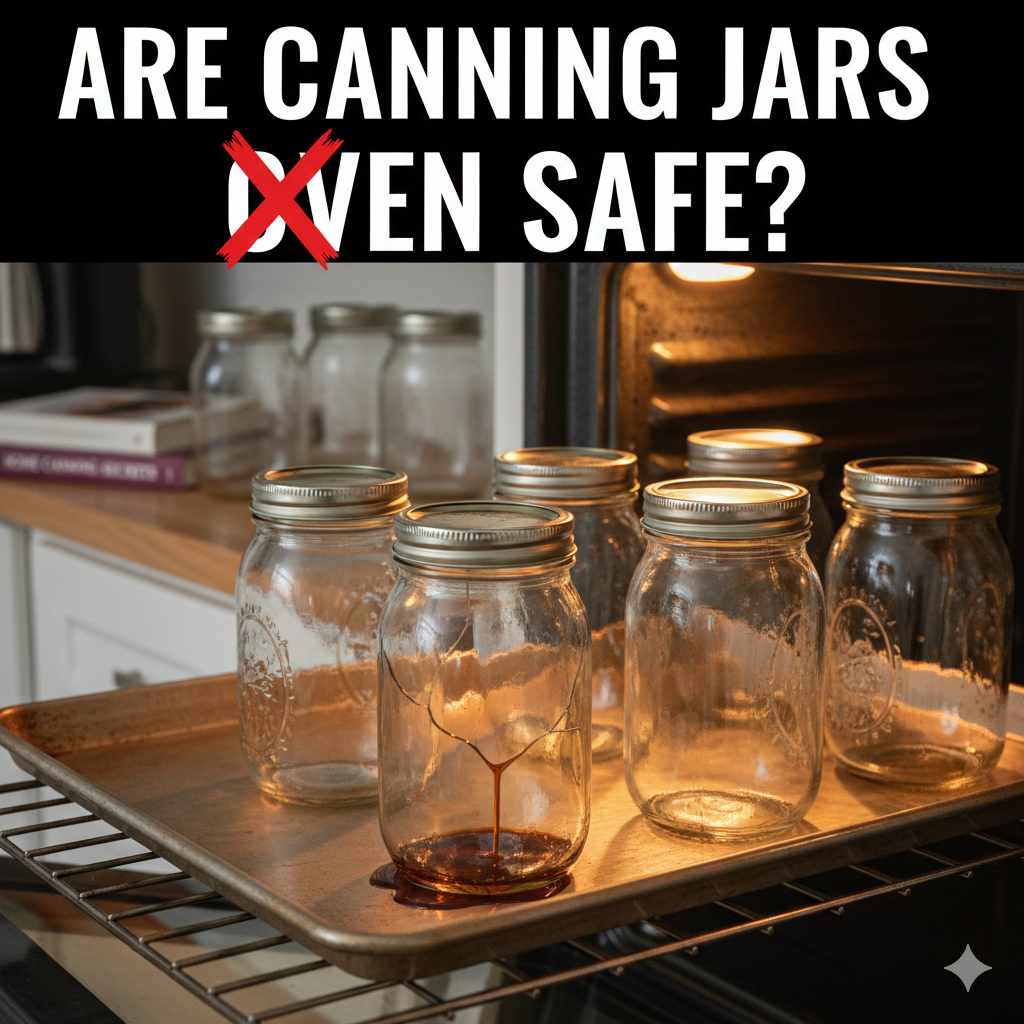
Are Canning Jars Oven Safe? Canning jars (like Ball or Kerr) are generally NOT safe for direct oven use due to thermal shock risk; rapid temperature changes cause glass stress, leading to shattering. Only use them for water bath or pressure canning, never for baking, roasting, or heating dry goods in a conventional oven unless explicitly marked as oven-safe by the manufacturer.
It’s a common question that pops up when you’re getting creative in the kitchen: Can I just put my canning jars right into the oven? Maybe you want to keep food warm, bake a tiny casserole, or simply warm the jars before filling them. Dealing with glass jars around high heat can feel tricky, and nobody wants broken glass or a kitchen mess.
Understanding Canning Jars: Built for Boiling, Not Baking
Canning jars, often called Mason jars, are specifically designed glass containers used for home food preservation. They are workhorses in the kitchen, designed to withstand the specific heat requirements of safe canning procedures.
The Science Behind Canning Jar Construction
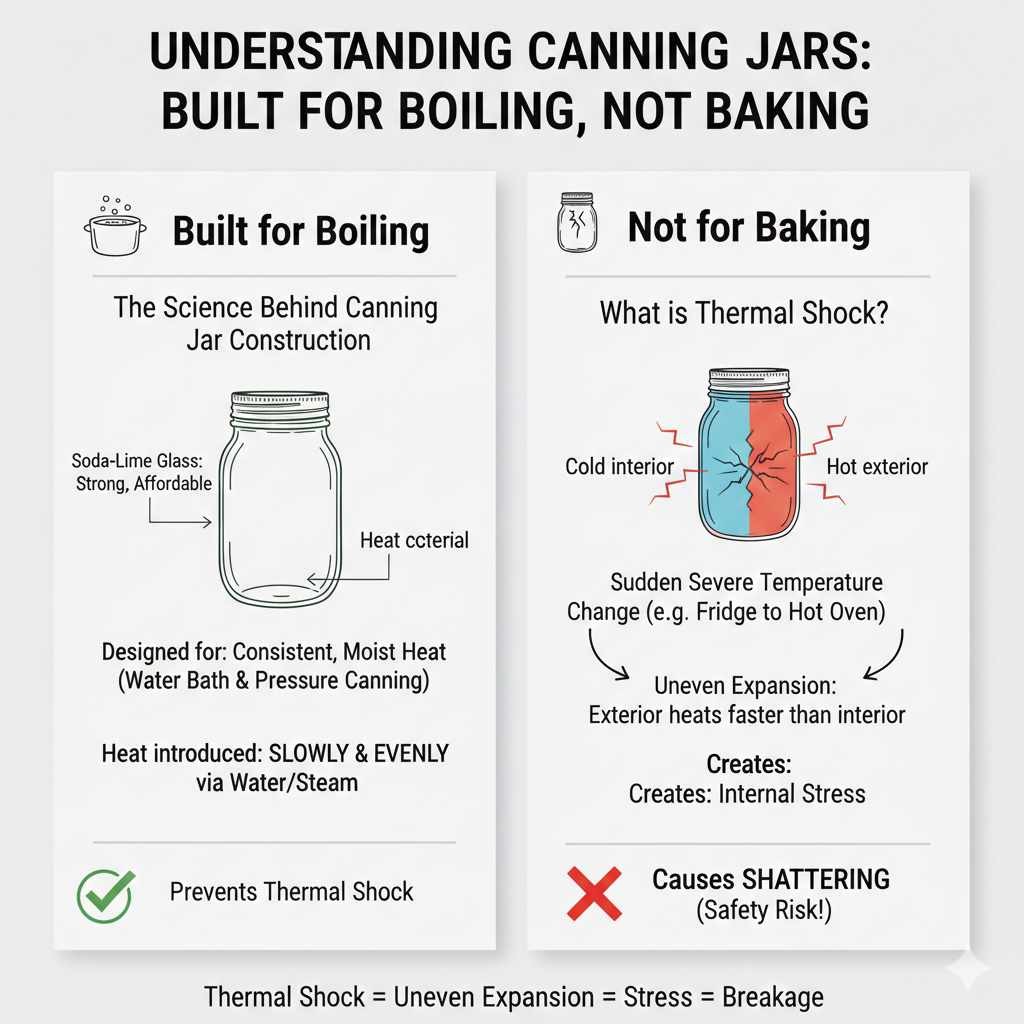
Canning jars are usually made from soda-lime glass. This type of glass is strong, affordable, and works well for sealing food. However, its main strength lies in its ability to handle consistent, moist heat, like boiling water.
When you use them for water bath canning or pressure canning, the heat is introduced slowly and evenly through water or steam. This process is crucial because it prevents something called thermal shock.
What is Thermal Shock and Why Does it Matter?
Thermal shock happens when glass experiences a sudden, severe temperature change. Imagine taking a jar straight from the refrigerator (cold) and placing it on a hot burner or into a preheated 400°F oven (hot). The exterior glass heats up much faster than the interior glass. This uneven expansion creates internal stress within the glass structure.
This stress is like pulling on a rope from both ends; eventually, something gives way. With canning jars, that “giving way” means shattering, often violently. This is the number one safety risk when using canning jars improperly with dry heat.
Direct Answer: Are Canning Jars Oven Safe?
In almost every common home scenario, No, standard canning jars are not safe to use inside a conventional oven.
Manufacturers like Ball and Kerr design their jars for canning processes which utilize moist heat (water bath or pressure canning). They are not tempered or formulated for the dry, intense, and often uneven heat found in a standard home oven set to baking or roasting temperatures.
When Canning Jars Can Handle Heat (But Not the Oven)
It’s important to differentiate between oven use and safe canning practices:
- Water Bath Canning: Jars are submerged in boiling water (212°F / 100°C). This is safe because the heat transfer is gentle and even through the water.
- Pressure Canning: Jars are heated under pressure, reaching temperatures usually between 240°F and 250°F (115°C to 121°C). Again, the heat is controlled and distributed by steam.
- Sterilization: Warming jars in hot (but not boiling) water before filling is standard practice and safe.
The Oven Danger Zone
When you set your oven to 350°F (175°C) or higher, you are introducing dry radiant heat. This type of heat penetrates glass much differently than steam or hot water, making the risk of cracking or exploding extremely high. For beginners, the safest rule is: if it’s not explicitly labeled for oven use, keep it out.
| Scenario | Heat Type | Temperature Range | Safety Verdict |
|---|---|---|---|
| Water Bath Canning | Moist/Steam | 212°F (100°C) | Safe (Designed Use) |
| Pressure Canning | Moist/Steam | 240°F – 250°F (115°C – 121°C) | Safe (Designed Use) |
| Oven Heating (Baking) | Dry/Radiant Heat | 300°F+ (150°C+) | DANGEROUS / NOT RECOMMENDED |
| Microwaving (Jar Only) | Microwave Energy | Varies | Generally Safe (No Metal Parts) |
When You Might Think You Need the Oven (And Better Alternatives)
Most people consider putting canning jars in the oven for one of three reasons. Let’s address each one with a safer, garage-friendly alternative.
Scenario 1: Keeping Food Warm
Perhaps you made a big batch of chili or sauce and want to keep it warm while serving dinner. Sticking the sealed jar in the oven seems tempting.
The Safer Solution: Slow Cooker or Double Boiler
Do not put sealed jars in the oven. Instead, use a slow cooker (crockpot) set to the “Warm” setting. Alternatively, create a makeshift double boiler by placing the jar in a larger pot filled with an inch or two of warm water on the stovetop. This keeps the temperature low and moist, mimicking safe heating.
Scenario 2: Baking Small Portions (e.g., Brownies in a Jar)
The “baked goods in a jar” trend is popular, but it requires specific, labeled glassware.
The Safer Solution: Only Use Truly Oven-Safe Glassware
If you want to bake directly in glass, you must use products explicitly marked as oven-safe. Look for brand names like Pyrex or Anchor Hocking that state “Oven Safe” right on the packaging or the bottom of the glass. Standard canning jars will likely fail under these dry baking conditions.
If you use oven-safe glass, always follow these steps to avoid thermal shock:
- Place the empty, room-temperature glass container on a cool baking sheet.
- Place the baking sheet into a cold oven.
- Set the oven temperature and allow both the oven and the glass to heat up together slowly.
- Never move the hot glass container onto a cold countertop when done. Always use a trivet or thick towel.
Scenario 3: Sterilizing Jars Before Use
Many traditional canning recipes suggest heating jars before filling them with hot food to prevent thermal shock during the filling process. People often default to the oven for this step.
The Safer Solution: The Water Bath or Oven Warming Rack (Low Heat Only)
While the water bath method(keeping jars submerged in simmering water) is the gold standard for sterilization and warming, if you must use the oven for warming only, you need extreme caution. This method requires the jars to be completely dry on the inside, which defeats the purpose of quick warming for many canners. For true sterilization, stick to moist heat.
If you are only warming them slightly (not sterilizing), you can place clean, dry jars on a rack in a very low oven—no higher than 225°F (107°C)—for about 10 minutes while your canner heats up. Crucially, do not leave them unattended, and do not let the oven temperature creep up.
For reliable information on safe sterilization before canning, always refer to trusted sources like the National Center for Home Food Preservation (NCHFP).
Identifying Your Glass: How to Tell What You Have
If you have a jar but aren’t sure if it’s a standard canning jar or something else, a quick inspection can save you a headache.
Standard Canning Jars (Ball, Kerr, Golden Harvest)
These are designed for canning and generally should not** go in a high-heat oven. They are usually marked with:
- The brand name (Ball, Kerr, Atlas, etc.).
- Markings indicating measurements or size (e.g., “Pint”).
- Often have distinct shoulder curves.
Borosilicate Glass (Like Pyrex or Specialty Bakeware)
This glass is engineered differently. It contains boron trioxide, which dramatically reduces thermal expansion. This makes it much more resistant to thermal shock, allowing it to handle oven temperatures.
- Usually marked clearly as “Oven Safe” or “Heat Resistant.”
- Often have smoother, straighter sides, especially for baking dishes.
When in doubt, assume it is NOT oven safe. Safety first builds confidence later!
Step-by-Step Safety Checklist Before Heating Glass
Before you apply any heat to any glass container that isn’t a dedicated piece of ovenware, run through this checklist. This is the confidence-building routine that keeps your kitchen safe.
1. Inspect the Glass Thoroughly
Never heat a jar that shows any sign of damage. This includes:
- Chips or nicks, especially around the rim where the lid seals.
- Deep scratches or abrasions on the body.
- Cloudiness that wasn’t there before (sometimes an indicator of stress fractures).
Any existing flaw creates a weak point that heat will exploit.
2. Check for Metal or Plastic Components
This is critical for any heating method, especially microwaves or ovens.
- Remove the metal two-piece canning lid (the flat disc and the screw band).
- If you are using the jar for any purpose other than water bath canning, ensure absolutely no metal components are touching the glass or inside the jar when heated. Metal heats much faster than glass and will cause localized hotspots leading to breakage.
3. Know Your Heat Source and Temperature
Only use the jar in the method it was designed for (moist heat for canning). If you must warm it:
- Use a stove burner on the lowest setting possible, preferably with a heat diffuser underneath the jar.
- If using the oven, keep the temperature under 250°F (121°C) and never use the broiler.
4. Avoid Direct Contact with Heating Elements
Whether in the oven or on the stovetop, the glass should never physically touch a glowing hot electric element or a direct flame. Always place jars on a cooling rack, a trivet, or inside a pan of water.
Why the Price of Safety is Worth It (Avoiding Costly Mistakes)
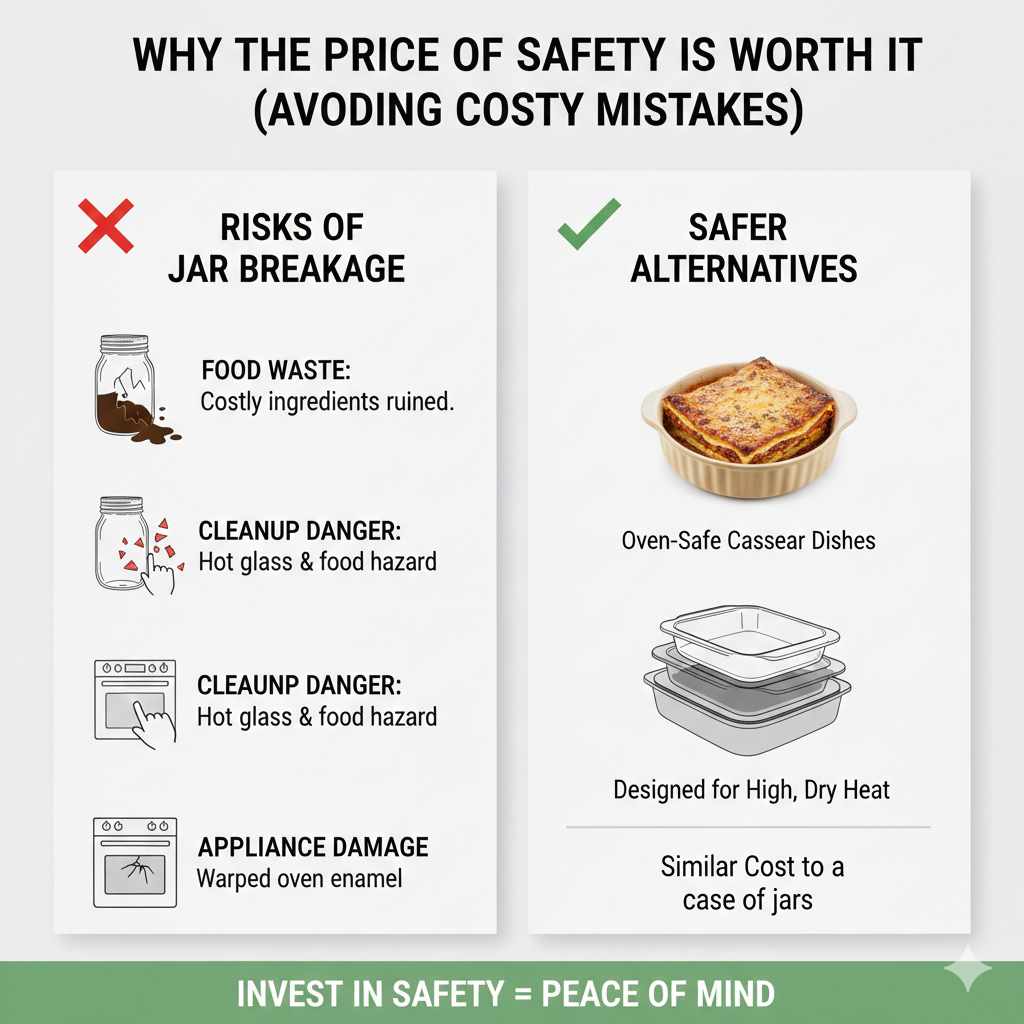
Thinking about the potential cost might help reinforce the safety rules. When a canning jar breaks in the oven, you face several immediate problems:
- Food Waste: Whatever was inside—perhaps a costly sauce or baked goods—is ruined.
- Cleanup Danger: Hot glass shards mixed with hot food create a severe hazard. Shards can embed themselves in oven racks or the bottom of your oven cavity.
- Appliance Damage: Extreme temperature shifts can sometimes warp or crack the interior enamel of a very expensive oven.
Compared to buying a proper set of oven-safe casserole dishes (which cost about the same as a case of canning jars), the risk isn’t worth the small convenience of repurposing.
Safe Alternatives to Oven Use
If you are looking for a vessel to safely heat or cook food in, invest in containers made for that purpose. Here is a comparison of what works:
| Container Type | Oven Safe? (Standard Use) | Best For |
|---|---|---|
| Standard Canning Jar (Ball/Kerr) | No (Dry Heat) | Canning, Storage, Drinking |
| Borosilicate Glass (Pyrex/Anchor Hocking) | Yes (Check Label) | Baking, Roasting, Casseroles |
| Ceramic/Stoneware Baking Dish | Yes | Casseroles, Lasagnas |
| Metal Baking Sheets/Pans | Yes | Roasting, Cookies |
FAQs for Beginner Home Preservers
Q1: Can I put an empty canning jar in a hot oven to dry it quickly?
A: No, that’s dangerous. Even empty jars are susceptible to thermal shock. If you need to dry them quickly after washing, wipe them with a clean cloth or let them air dry upside down on a clean rack. If you must use heat, place them in a very low oven (under 200°F) for a few minutes, ensuring they are completely dry first.
Q2: If my canning jar breaks in the oven, what should I do immediately?
A: Turn the oven off immediately. Do not open the door until the oven has cooled down completely—this might take an hour or more. Opening the door lets in cool air, which can cause remaining hot glass to shatter further. Once cool, wear heavy gloves, remove large pieces, and use a damp paper towel to carefully pick up tiny shards.
Q3: Are Mason jars okay to use in the microwave?
A: Yes, clean glass Mason jars (with the metal lid removed) are generally safe for microwave use, provided you are only heating liquids or microwave-safe foods inside. Microwaves heat the food directly, not the glass as intensely as oven elements do.
Q4: I’ve seen people use jars for baking desserts. Are they cheating the system?
A: They are likely using jars specifically designed for baking. Look closely at those jars; they are usually made from borosilicate glass and are explicitly labeled as oven-safe. Never assume a jar used by someone else for baking is safe for your standard canning jars.
Q5: Is it safe to use the metal canning lid ring in the oven?
A: Absolutely not. The metal canning lid rings are designed to keep the sealing compound on the lid pressed against the jar rim during processing. They can discolor, warp, or even spark in an oven, and they serve no purpose when using the jar for baking.
Q6: What is the safest way to heat a sealed jar of canned soup on the stovetop?
A: The safest way is to remove the lid entirely (or just the band and use the flat lid loosely placed on top). Place the jar in a saucepan with plenty of water so that the water comes at least halfway up the side of the jar. Heat this water bath gently until the contents are warm. This mimics safe canning temperatures.
Conclusion: Confidence Through Correct Heat Handling
Being a confident home preserver or DIY enthusiast means knowing your tools inside and out. When it comes to canning jars, remember this simple rule: they are champions of the moist heat world (boiling water baths), but they are fragile when introduced to the dry, intense environment of a conventional oven.
By sticking to the intended purpose—canning, storage, and safe microwave use (without metal)—you protect your investment, your food, and, most importantly, your safety. If you need to bake or roast, please reach for the cookware clearly marked as oven-safe. Keep those beautiful canning jars for sealing in your delicious preserves, and you’ll enjoy years of safe, successful food storage!