
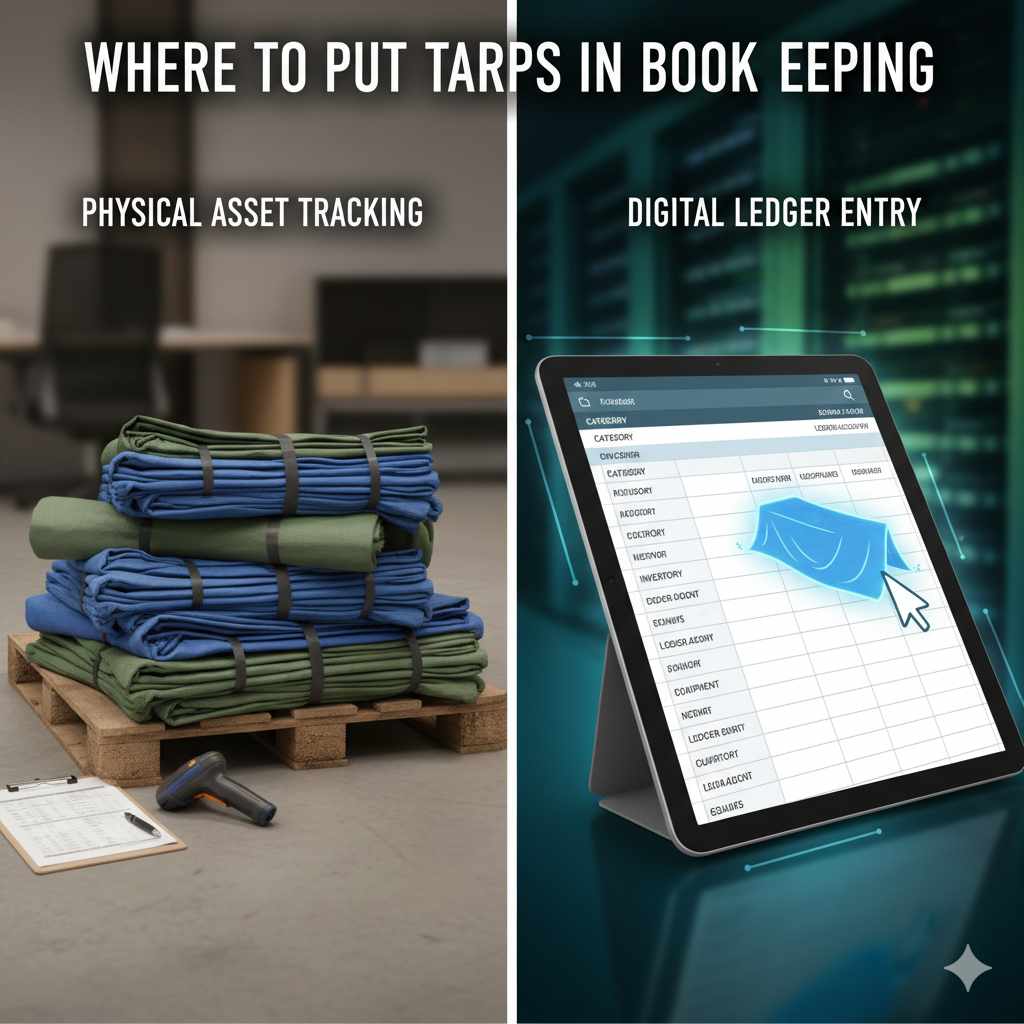
As a busy car owner or small business operator, you juggle a lot. You know that keeping essential items protected—like inventory, equipment, or even your service vehicle while you work on it—is crucial. That’s where tarps come in! They are lifesavers for protection. But when tax time rolls around, you might scratch your head wondering: “Where exactly does this expense go in my books?” It can feel tricky deciding if a tarp is a supply, a repair, or something else entirely.
Don’t worry; this is a common sticking point, even for seasoned business folks. We are going to break down the bookkeeping for tarps piece by piece. We will use simple, clear terms, just like we would when explaining how to check your tire pressure. By the end of this guide, you will know exactly where to record that tarp purchase confidently, saving you confusion and maybe even saving you money at tax time!
Understanding Tarps in a Business Context
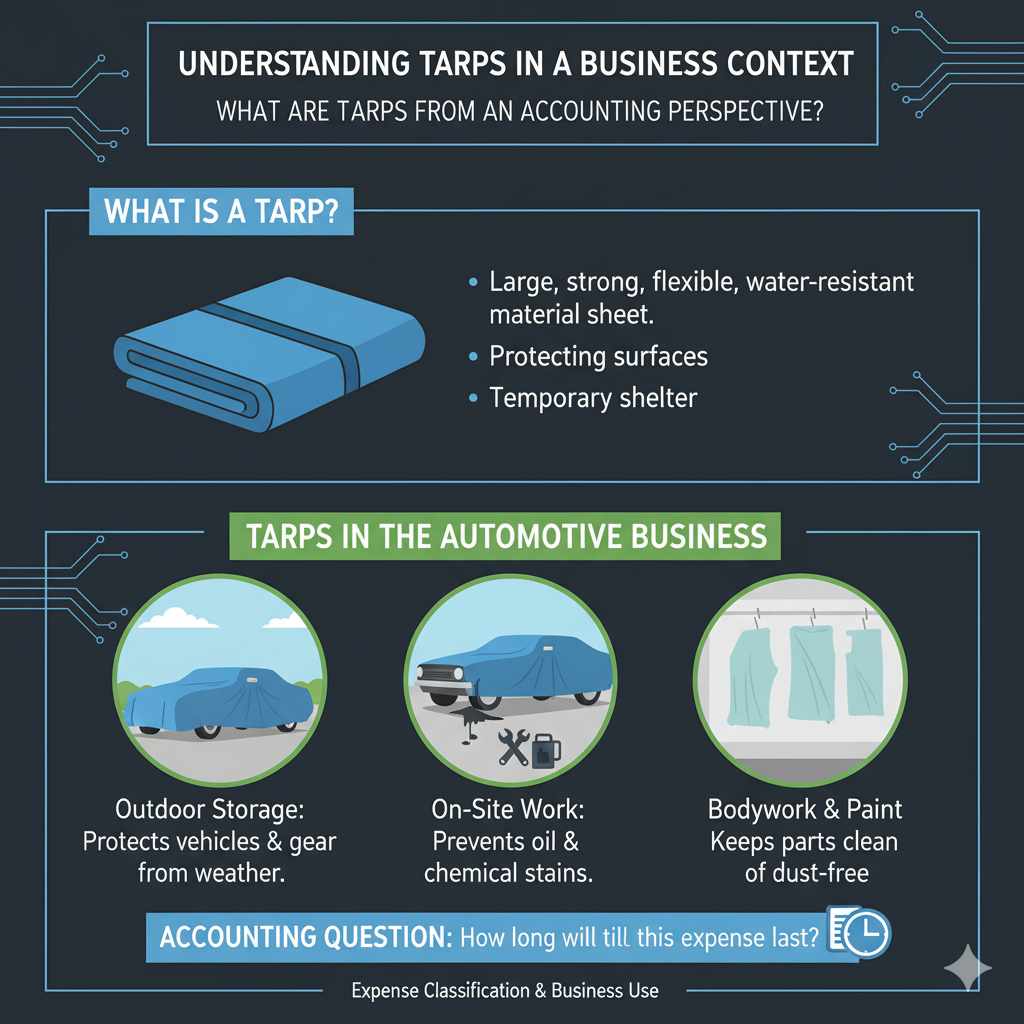
Before we dive into debits and credits, let’s clearly define what a tarp means for your business. A tarp (short for tarpaulin) is a large sheet of strong, flexible, water-resistant material.
In the automotive world, you might use a tarp to:
Cover equipment during outdoor storage.
Protect a customer’s driveway or lawn from oil drips during an on-site oil change.
Cover bodywork panels awaiting paint.
When these items cross into your ledger, they become an expense. The main question for accounting is: How long will this expense last?
The Lifespan Rule: Expense vs Asset
Accounting rules generally follow the concept that items used up quickly are immediate expenses, while big-ticket items that last a long time (usually more than one year) are assets that get depreciated.
Expense: Costs that are used up quickly (usually within one year). Most standard tarps fall here because they wear out, tear, or get lost relatively fast, especially when used for messy jobs.
Asset: Big purchases that provide value for many years. If you bought a massive, commercial-grade canvas cover designed to last a decade, you might consider it a fixed asset, but for typical tarps, we focus on expenses.
Since most tarps are relatively inexpensive and have a short active life, they almost always fall into the Expense category.
Where To Put Tarps In Bookkeeping: The Main Home
For the vast majority of small business owners, recording the purchase of tarps is straightforward. They belong on your Profit and Loss (P&L) statement, as they are necessary costs to run your daily operations.
Option 1: Supplies Expense (The Most Common Choice)
This is the default and safest place to record the majority of your tarp purchases.
The Supplies account is designed for consumable items used in the day-to-day running of the business that aren’t sold directly to customers. Think of printer paper, cleaning rags, and, yes, tarps used for basic protection.
When to Use Supplies Expense:
A standard blue/brown plastic tarp for covering tools after work.
Small drop cloths used during minor detailing jobs.
Inexpensive vinyl covers for paint guns or sprayers.
If the government (like the IRS in the United States) looks at your books, the Supplies Expense category is easily understood as a routine operating cost. This keeps your bookkeeping clean and simple.
Option 2: Repairs and Maintenance Expense
Sometimes, a tarp isn’t just a supply; it’s part of a necessary repair or maintenance activity. This is slightly less common but important to understand, especially in the automotive field.
Consider this: You are repairing exterior siding on your shop building. You buy a high-quality, heavy-duty tarp to protect sensitive equipment from falling debris during the entire two-week repair process. In this context, the cost of that necessary protection might be bundled with, or run alongside, the Repairs & Maintenance category, as it directly facilitated a repair project.
When to Use Repairs & Maintenance:
A tarp specifically purchased to block weather while an emergency, time-sensitive repair (like patching a roof leak) is underway.
Heavy, specialized coverings bought solely to protect a major piece of machinery while its mechanical components are being fixed.
Pro Tip: If you are unsure between Supplies and Repairs, stick with Supplies. Consistency is key in bookkeeping!
Option 3: Cost of Goods Sold (COGS) – Rare Exception
Cost of Goods Sold is where you track the direct costs associated with the product you sell. For an auto repair shop, COGS usually includes the actual parts you install on a customer’s car (e.g., the oil filter, the set of brake pads).
It is extremely rare for a tarp to belong in COGS unless you specifically sell the tarp as part of the final service package.
For instance, if you sell a “Premium Vehicle Protection Kit” that includes floor mats, a steering wheel cover, and a small carry bag—and you bill the customer for the components—then the cost of that specific bag/tarp might flow through COGS. For 99% of shop owners, ignore COGS for routine tarp purchases.
Step-by-Step: How to Record the Tarp Purchase
Let’s walk through the actual entry process. We will assume you are using standard double-entry bookkeeping software like QuickBooks, Xero, or even a simple spreadsheet that mimics it.
Step 1: Determine the Cost and Date
Gather your receipt. Note the total cost and the exact date you paid for the tarp.
Step 2: Choose the Right Account
Based on our guide above, select the appropriate expense account. For almost everyone, this will be Supplies Expense.
Step 3: Enter the Transaction
When entering the transaction into your software:
1. Date: Use the date on your receipt.
2. Payee: The store where you bought it (e.g., Home Depot, Amazon).
3. Payment Account: Which bank account or credit card you used.
4. Category/Account: Select “Supplies Expense.”
5. Amount: Enter the purchase price (including tax, if applicable to that expense category).
6. Memo/Description: Briefly describe what it was for. Example: “Heavy-duty blue tarp for outdoor equipment cover.”
Example Transaction Table
Here is how the transaction might look in your books:
| Account Title | Debit (Increase) | Credit (Decrease) |
|---|---|---|
| Supplies Expense (P&L) | $35.00 | |
| Accounts Payable or Checking/Credit Card (Balance Sheet) | $35.00 |
This entry correctly shows that your Expenses went up (Supplies), and your Cash or Debt went down (Checking Account/Credit Card).
The Importance of Deductibility and Small Purchases
One reason bookkeeping for small items like tarps matters is that every legitimate business expense reduces your taxable income. If you forget to record that $35 tarp, you are essentially paying tax on that $35 unnecessarily.
The De Minimis Safe Harbor Election for Small Assets
While standard tarps are usually supplies, what if you bought a very expensive, high-quality tarp that maybe should be an asset, but you want to expense it immediately?
Many tax authorities, including the IRS, offer something called the De Minimis Safe Harbor Election. This rule allows businesses to immediately expense low-cost items that might otherwise be capitalized (put on the balance sheet and depreciated over years).
For 2023/2024, the threshold for this election is often around $2,500 per item (though you must formally adopt the policy).
Takeaway for Tarps: Unless you ordered a custom, industrial-grade vinyl enclosure costing thousands of dollars expecting it to last seven years, you don’t need to worry about depreciation or amortization. Keep it simple and expense it under Supplies.
For more technical details on how the IRS views business expenditures, you can often consult official documentation, such as guidance provided by the IRS regarding capitalization of assets. For instance, Publication 535 covers general business expenses clearly for new business owners.
Advanced Scenarios: Heavy-Duty Protection
Sometimes, a “tarp” isn’t just a flexible sheet; it’s a highly specialized cover integrated into your operations, leading to different accounting treatments.
Scenario A: Custom Vehicle Covers
Imagine you run a classic car restoration shop. You commission a local canvas maker to create semi-permanent, fitted dust covers for three high-value customer vehicles that will remain in your shop for six months waiting for specialized paintwork. These covers cost $1,500 each.
Because these are expensive, specialized items designed to protect inventory over a long period, they could argue for capitalization.
Treatment if Capitalized: They would be listed as a fixed asset first. Since they are a protection item, they would likely be depreciated over their useful life (perhaps 3-5 years). This is much more complex and usually requires consulting a CPA.
Scenario B: Tarp Rental vs. Purchase
If you rent a massive tent or equipment cover for a single weekend event (like a large outdoor auction), this is easy. It stays firmly in the Rentals Expense or Event Expense category—not Supplies.
Scenario C: Tarp Replacement Fund
If you consistently use and throw away tarps, you might consider budgeting for this. Instead of just recording individual purchases, you could set up a specific sub-account under Supplies called “Consumable Protection Materials.” This helps you track how much you spend protecting your assets annually.
Tracking Tarp Spend (Example Breakdown)
| Business Activity | Recommended Account | Reasoning |
|---|---|---|
| Covering inventory stored outside | Supplies Expense | Standard operational consumable. |
| Protecting shop floor during brake line replacement | Supplies or Maintenance | Used to contain mess during service. |
| Renting a large cover for a one-day used car sale | Rentals Expense | Rental cost, not tangible asset purchase. |
| Custom-made, fitted engine cover meant to last 4 years | Fixed Assets (Depreciation) | High cost, long expected life (requires CPA review). |
Tips for Audit-Proof Tarp Records
When the tax man comes calling, the strength of your documentation matters more than the exact account number you chose (as long as it’s a reasonable operating expense). Here’s how to keep your tarp records solid:
1. Keep Every Receipt: Digital copies work perfectly! Scan or photograph the receipt right after purchase.
2. Use Clear Descriptions: Don’t just code it as “Supply.” Use the memo line to explain whyyou needed it. “Tarp for engine hoist storage” is better than “Blue sheet.”
3. Batch Small Purchases: If you buy three tarps over three months from the same place, it’s often easier just to record them when purchased, rather than waiting. Consistency keeps your P&L timely.
4. Avoid Mixing Personal and Business Use: If you buy one big tarp and use half for the business and half to cover your boat at home, you should only expense half the cost. If you can’t split it accurately, it’s best to keep the entire purchase out of the business books, as misrepresenting small expenses can cause bigger issues later.
Tools That Make Tarp Bookkeeping Simple
Modern accounting software takes the guesswork out of categorization. If you are still using a paper ledger, even just switching to a simple, free spreadsheet program can help immensely.
Software Features That Help:
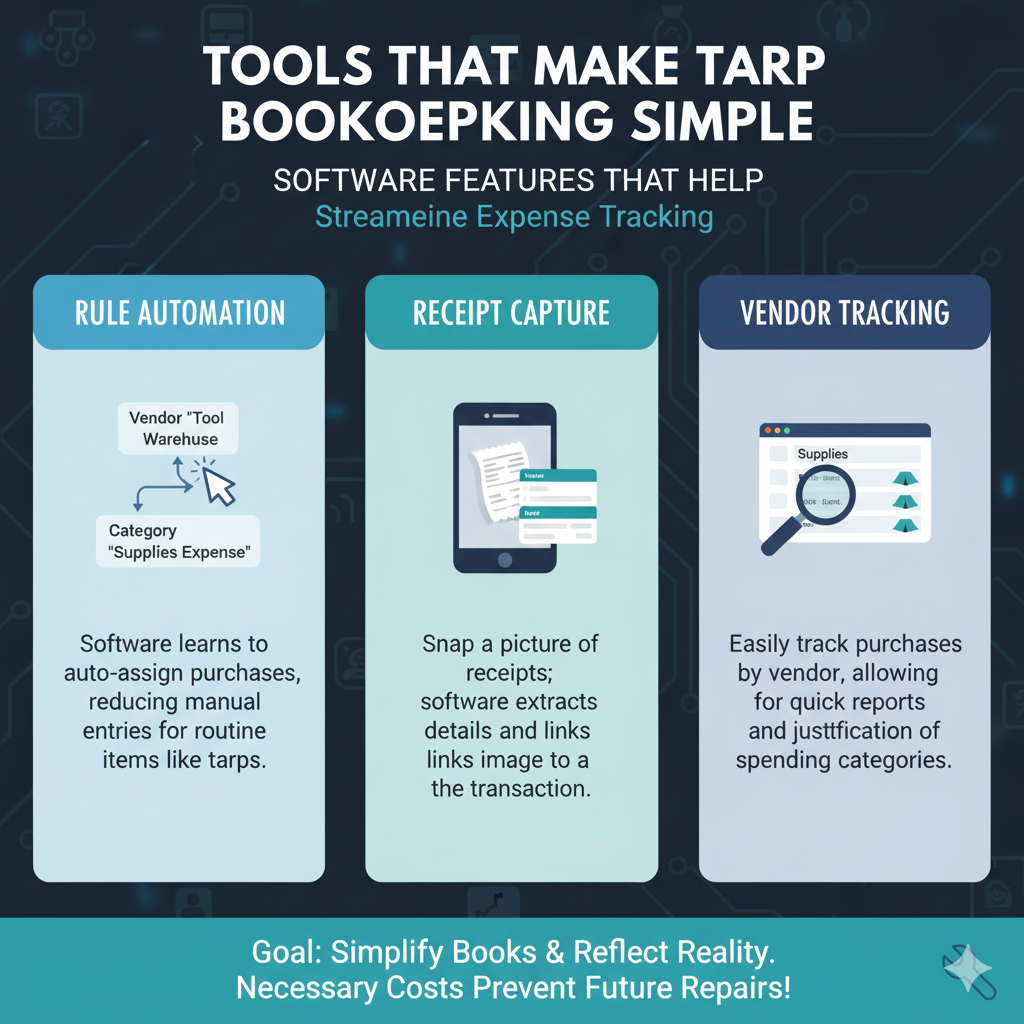
Rule Automation: Many modern platforms can learn: “Every time you buy from ‘Tool Warehouse,’ assign it to Supplies Expense.” This cuts down on manual repeating entries for routine items like tarps.
Receipt Capture: You can often snap a picture of the receipt, and the software will automatically pull the vendor, amount, and date, linking the digital image directly to the transaction code.
Vendor Tracking: By tracking what vendors you buy tarps from, you can easily pull up a list of all “Supplies” transactions later if you need to justify your categories.
Remember, the goal is to make your books reflect reality simply. If you are spending hundreds yearly on tarps to keep your specialized equipment clean and dry—which prevents costly repairs down the line—that cost is absolutely a necessary part of doing business.
Frequently Asked Questions (FAQ)
Q1: Can I expense a tarp on my taxes?
A: Yes, almost always. Since tarps are generally low-cost items used up within the business year for general operations (like protecting equipment), they are routine business expenses fully deductible on your Profit and Loss statement.
Q2: Should I record a tarp in my inventory?
A: No, you should not record a tarp in inventory unless you regularly sell packaged protection kits directly to customers. For internal use, it is an expense, not inventory waiting to be sold.
Q3: What if I buy a tarp and use it personally later?
A: If you use a business-purchased item partially for personal use, you should only expense the portion related to business activities. If the use is mixed, it is often safer and simpler for small amounts to expense the entire item if the personal use is minimal, or not expense it at all if you cannot easily separate the costs.
Q4: Is there a dollar limit where a tarp becomes an “Asset” instead of an “Expense”?
A: Yes. If a tarp is very expensive (often thousands of dollars) and expected to last many years (e.g., a custom, structural cover), it might need to be capitalized as an asset and depreciated. For standard, off-the-shelf tarps, they are almost always below this capitalization threshold and should be expensed immediately.
Q5: Where does the receipt for the tarp need to be kept?
A: You should keep the receipt for the tarp either physically or digitally (scanned or photographed) in your financial or maintenance records. If the tarp was purchased for business, property maintenance, or insurance purposes, the receipt may be required as proof of expense. Most financial experts recommend keeping such receipts for 3 to 7 years, depending on your country’s tax regulations. Storing a digital backup in cloud storage or accounting software can also help ensure the receipt is safe and easy to access if it is needed for audits, reimbursements, or insurance claims.
Conclusion
Figuring out where to put a simple item like a tarp in your bookkeeping doesn’t need to be a stressful overhaul. For the everyday driver, mechanic, or small service provider, the rule of thumb is clear: Tarps are overwhelmingly categorized as Supplies Expense on your Profit and Loss statement. They are consumable items essential for keeping your tools, inventory, and workspace protected against the elements and daily wear and tear.
By consistently recording these small purchases accurately, you ensure every dollar spent on protecting your assets translates into less taxable income. Keep those receipts safe, use clear descriptions, and trust that you are recording routine operating expenses correctly. Handling these basic bookkeeping decisions confidently is a huge step toward mastering your business finances, just like tackling that oil change or tire rotation yourself! You’ve got this.