What Should Urine Look Like: Essential Guide
Your urine’s color and clarity are simple, yet important, indicators of your hydration and overall well-being. Generally, it should be pale yellow and clear. Deviations can signal a need to adjust your fluid intake or, less commonly, a sign of a health concern. This guide will help you understand what’s normal and when to pay closer attention.
For a closely related home or decor topic, Do Fibroids Cause Blood In Urine? gives readers a useful next step.
For a closely related home or decor topic, What Causes Glucose in Urine: Warning Signs gives readers a useful next step.
For a closely related home or decor topic, How Long Does Tylenol 3 Stay in: Urine Facts gives readers a useful next step.
Having a clear understanding of what your body is telling you can feel like unlocking a secret language. One of the most accessible ways to tune into your health is by simply looking at your urine. You might think, “How much can urine really tell me?” But trust me, this little daily observation can offer valuable insights into your hydration levels and general wellness. It’s an easy, zero-cost check-up that anyone can do!
We often don’t give our urine a second thought unless something seems… off. That slight change in color or perhaps an unusual smell can spark a moment of concern. But when you don’t know what “normal” even looks like, it’s hard to tell if that change is just a blip or something you should discuss with a doctor. This guide is here to demystify the topic. We’ll break down the different appearances of urine, explain what they mean, and most importantly, give you the confidence to know what’s healthy for you. Get ready to become an expert on your own body’s signals!
Understanding Urine Color: A Rainbow of Possibilities
Urine color is primarily determined by a pigment called urochrome (or urobilin), which is a byproduct of the breakdown of hemoglobin in your body. The concentration of urochrome in your urine, influenced by how diluted or concentrated it is with water, dictates its shade. Think of it like making tea: a lot of water makes light tea, while less water makes a darker brew.
The Ideal: Pale Yellow to Straw-Colored
The “gold standard” for urine color is a light to medium yellow, often described as pale yellow, straw-colored, or light gold. This indicates you are well-hydrated. Your kidneys are efficiently flushing out waste products, and the urochrome is diluted enough to produce this pleasant, clear hue. It’s a sign that your body is functioning optimally and has sufficient fluid to carry out its essential tasks.
When to Drink More: Darker Yellow or Honey-Colored
If your urine is a deeper yellow, almost like honey, it’s a pretty clear signal that you need to drink more fluids. This means your urine is more concentrated, with a higher amount of urochrome per volume of water. It’s not necessarily alarming, but it’s your body’s way of nudging you to hydrate. Often, a persistent dark yellow can lead to dehydration if not addressed. Aim to increase your water intake gradually until your urine lightens up.
A Sign to Rehydrate Immediately: Amber or Brown Urine
Amber or brown urine can be a more serious indicator. It suggests significant dehydration, where your body is holding onto fluids very tightly. This level of concentration can stress your kidneys. In some cases, amber or brown urine can also be a sign of liver problems or other underlying medical conditions, so if it persists even after you’ve increased your fluid intake significantly, it’s essential to consult a healthcare professional.
Hydration is Key: Clear or Colorless Urine
While it might seem like clear urine is the best, consistently colorless urine can actually indicate that you’re drinking too much water. Overhydration, or hyponatremia (a condition where sodium levels in your blood become dangerously diluted), can be a concern for some individuals. It means your kidneys might be working overtime to excrete excess water, potentially flushing out essential electrolytes. A very pale yellow is generally the sweet spot.

Beyond Color: Clarity and Other Visual Clues
The appearance of urine isn’t just about color; its clarity also provides important information.
The Ideal: Clear and Transparent
Healthy urine should be clear and transparent, meaning you can easily see through it. The absence of cloudiness is a good sign that everything is functioning as it should, with no unusual substances present in significant amounts.
When to Be Mindful: Cloudy or Murky Urine
Cloudy or murky urine can have several causes. It might be due to:
Dehydration: Concentrated urine can sometimes appear slightly cloudy.
Diet: Certain foods, like asparagus, can temporarily affect urine appearance and odor. Phosphates in some foods can also cause temporary cloudiness.
Infections: Urinary tract infections (UTIs) can cause cloudy urine due to the presence of bacteria, white blood cells, and pus.
Kidney Stones: Small stones or grit can make urine appear cloudy.
Other Medical Conditions: Conditions like diabetes or kidney disease can sometimes manifest as cloudy urine.
If your urine is persistently cloudy, especially if accompanied by other symptoms like pain, burning, or fever, it’s a good idea to consult your doctor.
What About Other Colors? Unusual Urine Hues
Sometimes, urine can take on colors that fall outside the typical yellow spectrum. These are often linked to diet, medications, or specific health conditions.
Orange Urine
Orange urine can be caused by:
Dehydration: Similar to dark yellow, severe dehydration can lead to an orange hue.
Medications: Certain drugs, such as phenazopyridine (used for urinary tract pain) and rifampin (an antibiotic), can turn urine orange.
Vitamins: High doses of B vitamins, especially B2 (riboflavin), can cause a bright yellow or orange tint.
Liver or Bile Duct Issues: Advanced conditions affecting the liver or bile duct can produce very dark, orange-like urine.
Pink or Red Urine
Seeing pink or red in your urine is often the most startling and typically indicates the presence of blood. This phenomenon, known as hematuria, can be caused by:
Urinary Tract Infections (UTIs): A common cause, especially in women.
Kidney Stones: As stones move through the urinary tract, they can cause bleeding.
Kidney Disease: Various kidney conditions can lead to blood in the urine.
Bladder or Kidney Cancer: Less common, but a serious cause that requires immediate medical attention.
Strenuous Exercise: In some rare cases, intense physical activity can cause temporary hematuria.
Certain Foods: Beets, blackberries, and rhubarb can pigment urine red, but it’s usually a brighter, less alarming red than blood and is temporary.
If you notice pink or red urine, especially if it’s not clearly linked to food, it’s crucial to seek medical advice promptly.
Blue or Green Urine
Blue or green urine is relatively rare and most often due to:
Dyes: Food dyes in candies, sports drinks, or other products can cause urine to appear blue or green.
Medications: Certain medications, like amitriptyline (an antidepressant), indomethacin (an anti-inflammatory), and propofol (an anesthetic), can cause this color change.
Medical Conditions: Rare genetic conditions or infections can sometimes lead to blue or green urine. For instance, the rare “blue diaper syndrome” affects infants.
Foamy or Bubbly Urine
While an occasional bubble or two in the toilet after urinating is normal, persistent foaminess might signal a health issue. This can occur when there’s an excess of protein in the urine (proteinuria), which can be an early sign of kidney problems. It can also sometimes be related to rapid urination or changes in toilet bowl surface. However, if you notice your urine is consistently foamy, it’s worth discussing with your doctor.
Understanding Urine Odor
While less visually instructive than color, the smell of urine can also offer clues.
The Normal Odor
Fresh urine typically has a mild, slightly ammonia-like smell. This is due to the breakdown of urea, a waste product from protein metabolism.
Unusual Odors and What They Might Mean
Strong Ammonia Smell: Often indicates dehydration. When urine is concentrated, the ammonia smell becomes more pronounced.
Sweet or Fruity Smell: Can be a sign of uncontrolled diabetes, as the body tries to get rid of excess sugar. It can also occur in ketosis, such as during a very low-carb diet or starvation.
Pungent or Foul Smell: May suggest a urinary tract infection (UTI) or other bacterial infection. Sexually transmitted infections (STIs) can also cause unusual odors.
Maple Syrup Smell: A rare genetic disorder called maple syrup urine disease (MSUD) causes urine to smell like maple syrup.
Certain Foods: Asparagus is famously known for giving urine a distinct, sometimes sulfurous smell, due to sulfur compounds it contains. Coffee can also alter urine odor.
Key Factors Influencing Urine Appearance
Let’s summarize the main influences on what your urine looks like:
Hydration Levels
This is the most significant factor. As discussed, more water leads to lighter, clearer urine, while less water results in darker, more concentrated urine. Monitoring your daily fluid intake is the simplest way to manage urine color. The U.S. National Academies of Sciences, Engineering, and Medicine recommend a general daily fluid intake of about 15.5 cups (3.7 liters) for men and about 11.5 cups (2.7 liters) for women, but this can vary greatly based on activity level, climate, and individual health. More information on adequate fluid intake can be found on the National Academies of Sciences, Engineering, and Medicine website’s general guidance.
Diet
As we’ve seen, certain foods and drinks can have a dramatic effect. Beets can turn urine reddish-pink, asparagus can affect odor, and even bright food colorings can change the hue.
Medications and Supplements
A vast number of medications, from antibiotics to chemotherapy drugs and certain laxatives, can alter urine color. Similarly, high doses of vitamins, particularly B vitamins, can lead to fluorescent yellow or orange urine. Always check the side effects of any new medication or supplement you’re taking.
Medical Conditions
Various health issues, including infections, kidney disease, liver disease, diabetes, and certain genetic disorders, can manifest through changes in urine color, clarity, or odor.
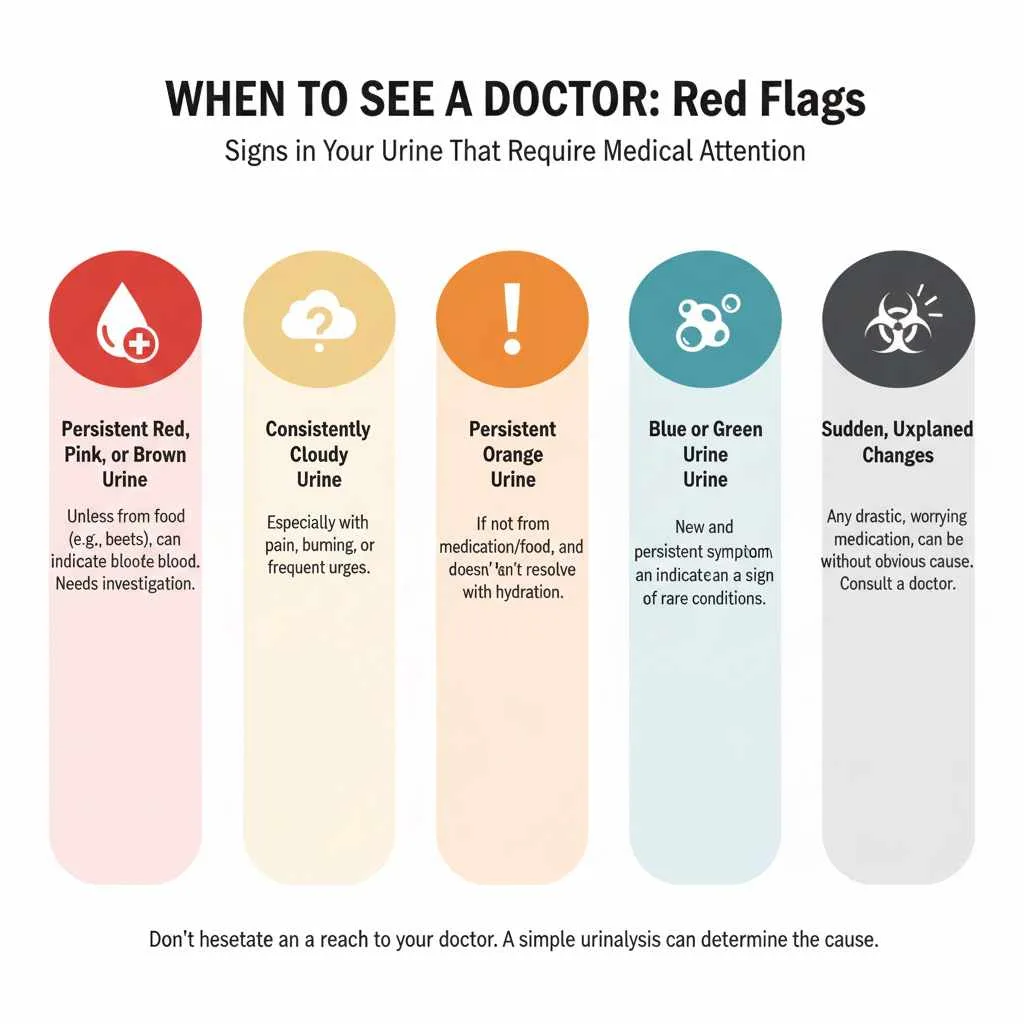
When to See a Doctor: Red Flags
While most changes in urine appearance are benign and easily managed, some require professional medical attention. You should consult a healthcare provider if you experience any of the following:
Persistent Red, Pink, or Brown Urine: Unless you’ve recently eaten beets and the color returns to normal, blood in the urine needs to be investigated.
Consistently Cloudy Urine: Especially if accompanied by pain, burning, or frequent urges to urinate.
Persistent Orange Urine: If it doesn’t resolve after increasing fluid intake and you haven’t taken orange-dyeing medications.
Foamy Urine: Particularly if it’s a new and persistent symptom, as it can indicate protein loss from the kidneys.
Blue or Green Urine: Unless you know it’s from a food dye or medication and it’s temporary.
Sudden, Unexplained Changes: Any drastic or worrying alteration in urine appearance that you can’t attribute to obvious causes.
Don’t hesitate to reach out to your doctor. They can perform simple tests, like a urinalysis, to determine the cause and recommend the appropriate course of action. For more information on urinalysis, you can refer to resources like the University of Rochester Medical Center’s explanation.
A Quick Reference Table: Urine Appearance Guide
Here’s a handy table to help you quickly assess common urine appearances:
| Urine Appearance | Possible Cause(s) | When to Act |
|---|---|---|
| Pale Yellow to Straw Colored | Well-hydrated, healthy | Normal |
| Dark Yellow or Honey | Mild dehydration | Increase fluid intake |
| Amber or Brown | Severe dehydration; potential liver/kidney issues | Increase fluids immediately; seek medical advice if persistent |
| Clear or Colorless | Overhydration | Moderate fluid intake; monitor electrolytes if concerned |
| Cloudy or Murky | Dehydration, infection (UTI), kidney stones, diet | Increase fluids; see doctor if persistent or with symptoms |
| Pink or Red | Blood (UTI, stones, kidney disease, cancer), foods (beets), medications | Seek medical advice immediately (unless from specific foods) |
| Orange | Dehydration, medications, vitamins, liver/bile duct issues | Increase fluids; see doctor if persistent or unexplained |
| Blue or Green | Food dyes, medications | Monitor; see doctor if persistent and unexplained |
| Foamy or Bubbly | Excess protein (kidney issue), rapid urination | See doctor if persistently foamy |
Frequently Asked Questions (FAQ)
Q1: How much water should I drink daily to have healthy-looking urine?
A well-hydrated individual often has pale yellow urine. While general recommendations exist, it’s best to listen to your body. Aim for enough fluid so your urine consistently appears light yellow. For most adults, this means drinking around 8 glasses (64 ounces) of water per day, but this can increase with exercise and hot weather.
Q2: Can my diet really change my urine color?
Yes, absolutely! Foods like beets can turn your urine pink or red. Carrots and foods high in beta-carotene can make it slightly orange. Even certain vitamins and artificial food colorings can significantly alter urine color.
Q3: Is foamy urine always a sign of a kidney problem?
Not always. Sometimes, foamy urine can simply be caused by urinating with a lot of force or a change in the toilet bowl’s surface. However, if your urine is consistently foamy, it could indicate an excess of protein, which might point to a kidney issue, so it’s worth checking with a doctor.
Q4: What does it mean if my urine is very dark, almost brownish?
Very dark or brownish urine can be a sign of significant dehydration, where your body is conserving water. It can also potentially indicate liver problems or other underlying medical conditions. It’s important to try rehydrating with plenty of fluids and consult a healthcare professional if the color doesn’t return to normal or if you have other symptoms.
Q5: I noticed my urine had a strong smell after eating asparagus. Is this normal?
Yes, that’s perfectly normal! Asparagus contains compounds that, when broken down by your body, produce a distinct sulfurous odor in the urine for some people. It’s harmless and temporary.
Q6: When should I worry about the color of my urine if I’m taking medication?
If you’re taking medications, it’s common for them to change urine color – this is usually harmless. However, you should still consult your doctor if you notice red, pink, brown, or consistently cloudy urine, even while on medication, as these could signal other issues. Always check the medication’s leaflet for potential side effects.
Conclusion
Observing the color and clarity of your urine is a simple, yet incredibly effective, way to gauge your everyday hydration and general well-being. It’s like having a tiny health report available to you multiple times a day, at no cost! Most of the time, a pale yellow, clear urine is your body’s way of saying “all systems go.” When it veers toward darker shades of yellow or becomes cloudy, it’s often a gentle nudge to increase your fluid intake.
Remember, while changes can be concerning, they are frequently tied to diet, hydration, or common medications. The key is to be aware of what’s normal for you and to recognize when changes might warrant a closer look from a healthcare professional. Don’t hesitate to consult your doctor if you notice persistent, unusual changes, especially red, brown, or persistently foamy urine. By understanding these simple signals, you empower yourself to make small adjustments for better health and gain confidence in listening to your body’s invaluable cues. Keep checking in, and you’ll become an expert custodian of your own wellness!
Products related to this article
Sponsored / affiliate links. As an Amazon Associate I earn from qualifying purchases. I may earn additional commission from eligible campaigns.