Man Vs Women Chair Challenge: Who Wins the Viral Test?
The “Man vs Women Chair Challenge” is a quirky, viral test that’s swept across social media, sparking curiosity and laughter in homes, classrooms, and even offices worldwide. If you’ve ever seen people leaning over a chair, trying to lift it while standing up, you may have wondered why men often struggle while women seem to succeed more easily.
The challenge looks simple, but its results reveal surprising facts about human body mechanics, balance, and even the subtle differences between men and women.
But what’s really happening behind this viral phenomenon? Is it just a social media trick, or does science have something to say? Here, we’ll explore the origins of the chair challenge, why it works (or doesn’t), what science says about body proportions, and the cultural impact of this fun, puzzling test.
You’ll find practical tips, real examples, and even comparisons you haven’t seen before. Let’s break down the mystery of the Man vs Women Chair Challenge.
What Is The Man Vs Women Chair Challenge?
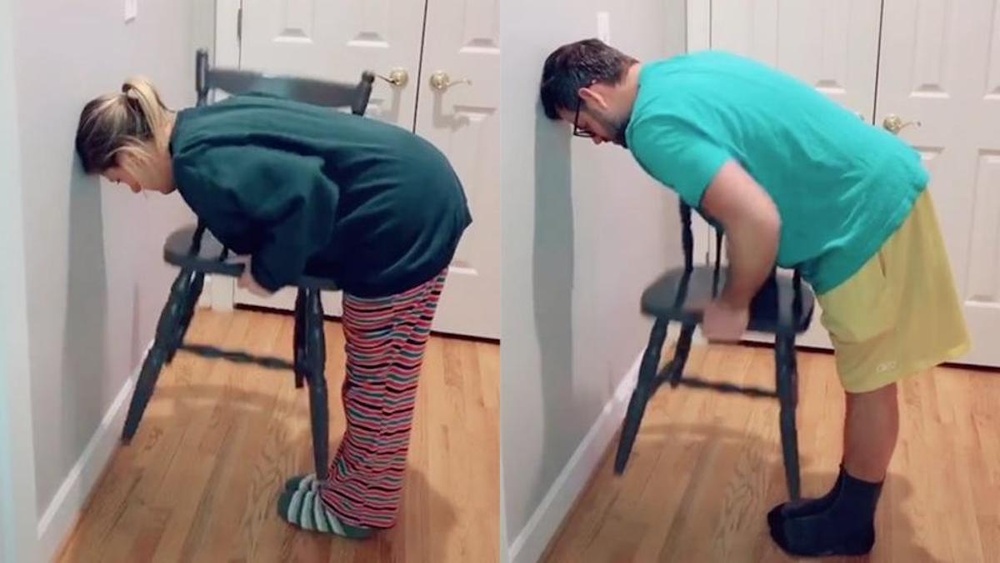
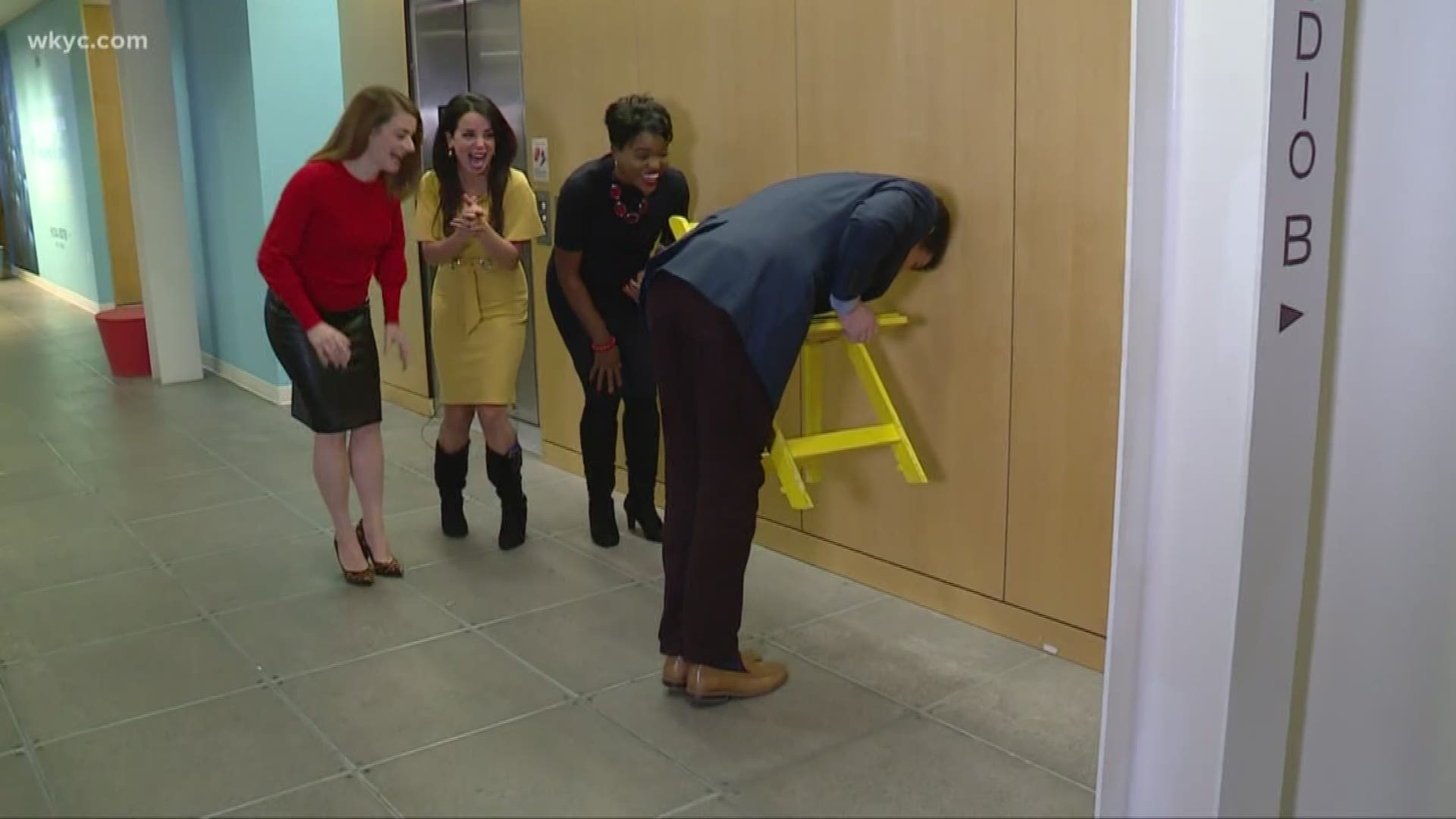
The challenge is simple: Stand facing a wall. Take two steps back. Place a chair between you and the wall. Bend over so your head touches the wall. Pick up the chair and try to stand upright, holding it close to your chest. Most women can do it easily, but many men cannot.
This challenge exploded in popularity on platforms like TikTok and YouTube, with thousands of videos showing people trying, and sometimes failing, at the test. The viral spread is partly because it’s so easy to try at home, and the results are often surprising.
Key steps:
- Stand facing the wall, feet together.
- Take two or three steps back (the exact distance varies in different versions).
- Place a chair in front of you.
- Bend forward at the waist, so your torso is parallel to the floor and your head touches the wall.
- Lift the chair to your chest.
- Try to stand up straight while holding the chair.
For many, the result is clear: women rise smoothly, while men are stuck, unable to straighten up. But why does this happen?
The Science Behind The Challenge
The chair challenge may look like a party trick, but it’s rooted in biomechanics, the study of movement and the human body. Researchers and science educators have tried to explain why men and women perform differently.
Center Of Gravity Differences
One key factor is the center of gravity. On average, men have a higher center of gravity (closer to the chest), while women’s center of gravity is lower (closer to the hips). This affects balance, especially when bending forward.
When you lean over with your head touching the wall, your body weight shifts forward. If your center of gravity stays behind your feet, you can stand up easily. If it moves in front, standing up becomes much harder.
Torso And Leg Proportions
Another important point is body proportions. Men typically have longer torsos and shorter legs compared to women, who often have shorter torsos and longer legs (relative to their overall height). This means men’s upper bodies extend further forward in the challenge, making it tougher to keep balance.
Here’s a simple comparison:
| Body Feature | Average Men | Average Women |
|---|---|---|
| Center of Gravity | Higher, near chest | Lower, near hips |
| Torso Length | Longer | Shorter |
| Leg Proportion | Shorter (relative) | Longer (relative) |
| Success in Chair Challenge | Often fails | Often succeeds |
Foot Position And Wall Distance
The distance from the wall is also critical. Most versions recommend taking two or three foot-lengths back. If the steps are based on your own foot size, men (with larger feet) end up further from the wall, forcing them to lean more and making the challenge even harder.
Pro Tip: If both men and women use the same absolute distance from the wall (not foot-lengths), the difference in success is less dramatic.
Not Everyone Fits The Average
It’s important to know that body proportions vary a lot from person to person. Some men can do the challenge. Some women cannot. The viral videos show trends, not strict rules.
Viral Spread And Social Media Impact
The chair challenge became a global trend thanks to the internet. On TikTok, millions of people have watched and shared their results, often with humorous commentary. The challenge appeals because it’s easy to try, surprising, and highlights differences that seem mysterious at first.
Why Do People Love This Challenge?
- Simplicity: You only need a chair and a wall.
- Surprise factor: The results are unexpected, and people love seeing “impossible” challenges.
- Gender comparison: The test seems to pit men and women against each other in a playful way.
- Shareability: Short, funny clips are perfect for platforms like TikTok and Instagram.
Social Reactions And Debates
The challenge also sparks debates online. Some people joke about “male weakness” or “female superpowers,” but others look for scientific explanations. It’s become a fun way to talk about anatomy and physics without needing a classroom.
Interestingly, the challenge sometimes fuels gender stereotypes, but it can also open the door to real science discussions. Some science teachers even use the chair challenge to explain body mechanics.
Exploring The Origins
The exact origins of the chair challenge are unclear, but it’s been around for decades in various forms. Some say it began as a school experiment or party game. Over time, it was picked up by TV shows and, later, social media.
In my experience, I first heard about it from a friend who challenged me at a party. We laughed, tried multiple times, and eventually looked up the science behind it. This is common, the challenge often starts as a joke, but leads to deeper curiosity.

Credit: www.fatherly.com
Comparing Men And Women: Real-world Data
While the viral videos show clear trends, there’s not a lot of formal scientific research on the chair challenge itself. However, there are many studies on body proportions and center of gravity.
Average Body Proportion Data
To see why the challenge works, look at average body measurements for men and women. The differences may seem small, but in balance and movement, they matter.
| Measurement | Average Adult Male | Average Adult Female |
|---|---|---|
| Height | 5’9″ (175 cm) | 5’4″ (162 cm) |
| Torso Length | Longer, proportionally | Shorter, proportionally |
| Leg Length | 32″ (81 cm) | 30″ (76 cm) |
| Center of Gravity (from ground) | ~56% of height | ~55% of height |
These numbers come from anthropometric studies used in sports science, ergonomics, and even car safety design.
What The Data Means For The Chair Challenge
A one or two percent difference in center of gravity may not sound like much. But when balancing with your head against a wall, even a small shift can make the difference between standing up easily or losing balance.
How To Try The Challenge Safely
Anyone can try the chair challenge at home, but safety comes first. Some people have fallen while trying to stand up. Here are tips to stay safe:
- Use a sturdy chair with no wheels.
- Do not use a chair that is too heavy or too large.
- Try the challenge on a non-slip surface to avoid sliding.
- Have someone nearby to help if needed.
- If you have balance problems or back pain, skip this challenge.
Warning: Never force yourself if you feel uncomfortable or dizzy.
Why The Chair Challenge Isn’t A Perfect Gender Test
It’s important to understand that the challenge does not “prove” women are stronger or more balanced than men. Instead, it shows how small differences in body structure and mechanics can affect a specific movement.
Outliers And Exceptions
Not all men fail, and not all women succeed. Factors that can affect the outcome include:
- Height and body size
- Flexibility
- Footwear
- The type of chair used
- The exact distance from the wall
In real life, some tall women or men with shorter torsos can perform the challenge. Meanwhile, some women struggle if they use a big, heavy chair.
Chair Challenge Variations
Over the years, people have created different versions of the challenge. These often change the rules slightly, making the test easier or harder.
Common Variations
- Distance from the Wall: Some versions use two foot-lengths, others three.
- Chair Size: Using a child’s chair makes the challenge easier for everyone.
- Head Placement: Some require touching the wall with the forehead, others with the nose.
- Chair Weight: Heavier chairs increase the difficulty.
Group And Solo Play
The challenge is often done in groups, with people taking turns and cheering each other on. This social aspect makes it more fun, and the results often surprise everyone.
Example: In a classroom, students can test the challenge and record who succeeds, then discuss why the results differ.
What The Challenge Teaches Us
The chair challenge is more than just a fun trick. It’s a quick way to show how physics and anatomy shape our daily lives.
Lessons About Body Mechanics
- Balance and leverage: The way we position our bodies affects what we can do.
- Small changes matter: Even tiny shifts in body proportions change movement ability.
- Science is everywhere: Everyday activities, even viral internet challenges, can teach us about science.
Lessons About Gender And Stereotypes
The challenge also reminds us to be careful with assumptions. Just because a test favors one group in general does not mean it applies to every individual. Gender is only one factor among many.
Fun Experiments And Learning Activities
You can use the chair challenge as a starting point for more learning. Here are some ideas:
- Measure your own body proportions. Compare your torso and leg length, and see if this predicts your success.
- Try the challenge with different chair sizes. Does it get easier or harder?
- Record results with friends of different ages and heights. Are the results always the same?
- Discuss the science behind balance and center of gravity. How do athletes use this knowledge in sports?
- Explore similar challenges. For example, the “broomstick challenge” or “wall sit” can also highlight body mechanics.

Credit: gulfnews.com
Comparing With Other Viral Body Challenges
The chair challenge is not the only “impossible” test that’s gone viral. There are several similar challenges that use body mechanics to create surprising results.
| Challenge | Description | Who Usually Succeeds |
|---|---|---|
| Chair Challenge | Lift chair while leaning over and standing up | Women |
| Wall Sit | Hold a sitting position against a wall | Both, depends on leg strength |
| Broomstick Challenge | Try to stand after lifting a broomstick behind your knees | Varies |
| Pencil Drop Challenge | Drop a pencil and catch it after spinning | Agile people |
These challenges all use leverage, balance, and center of gravity to create unexpected difficulty.
What Experts Say
Some science educators have used the chair challenge in classrooms to teach physics and anatomy. A few researchers have mentioned it in studies about body proportions, although there is no large academic research focused only on this challenge.
According to the Smithsonian Magazine, the challenge demonstrates how “different centers of mass influence movement.” This supports the idea that small differences in body structure can lead to big differences in what we can do physically.
Addressing Myths And Misconceptions
The chair challenge is often misunderstood. Here are some common myths and the facts:
- Myth: “Women are stronger than men.”
Fact: The challenge isn’t about strength, but about balance and body mechanics.
- Myth: “All men fail, all women succeed.”
Fact: There are many exceptions based on height, chair size, and other factors.
- Myth: “The challenge proves gender superiority.”
Fact: It only demonstrates one aspect of physical difference, not overall ability.
Real-life Applications
While the chair challenge itself is mostly for fun, the science behind it is used in real life. Ergonomists use body proportion data to design furniture and workplaces. Athletes and coaches study center of gravity to improve performance. Even car designers think about these factors when planning safety features.
Understanding how our bodies are built helps us design better tools, safer environments, and even more effective sports training.
Frequently Asked Questions
What If A Woman Can’t Do The Chair Challenge?
Not all women succeed in the chair challenge. Body proportions, strength, flexibility, and even the type of chair used can affect the outcome. For example, taller women or those with longer torsos may find the challenge more difficult. It’s normal for the results to vary, and it does not reflect anything negative about a person’s abilities.
Credit: www.wkyc.com
Is The Chair Challenge Safe For Children Or Older Adults?
While the challenge looks harmless, it may not be safe for everyone. Children should always be supervised, and older adults or those with balance or back problems should avoid it. Falls can happen if someone loses balance. Always choose a lightweight chair, clear the area, and have someone nearby if possible.
Can The Distance From The Wall Change The Results?
Yes, the distance from the wall is crucial. If everyone uses their own foot-lengths, men (who often have bigger feet) will be further from the wall, making the challenge harder. Using a fixed distance (like 18 inches for everyone) can make the test more balanced.
Experimenting with distance is a good way to see how small changes affect the outcome.
Does The Chair Challenge Prove Women Have Better Balance?
The challenge isn’t a full test of balance. It’s specific to one movement, influenced by center of gravity and body proportions. In many sports and activities, men and women can both have excellent balance, especially with training. The chair challenge is just one example of how body mechanics can affect performance in a specific task.
Where Can I Learn More About Body Proportions And Human Movement?
You can explore resources from scientific organizations, sports science textbooks, or websites like the
Products related to this article
Sponsored / affiliate links. As an Amazon Associate I earn from qualifying purchases. I may earn additional commission from eligible campaigns.