
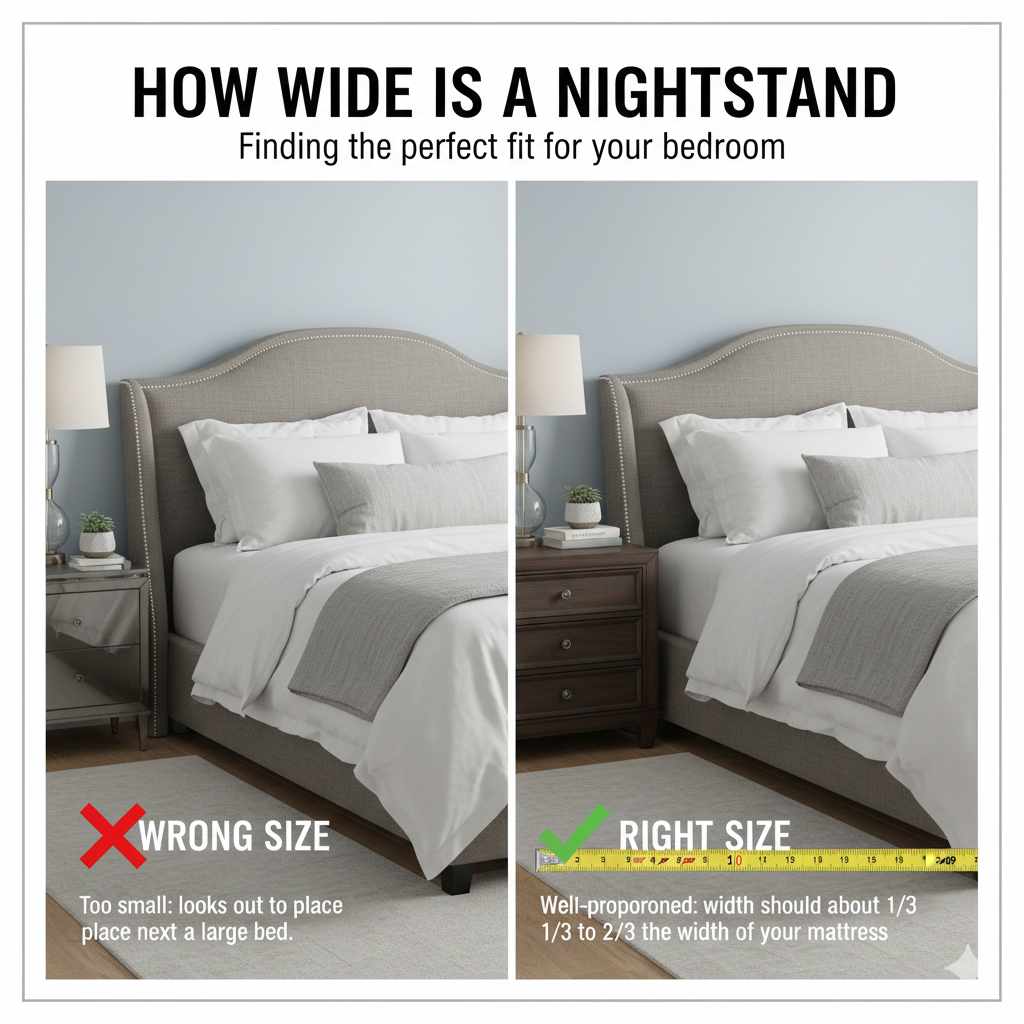
The standard width for a nightstand is typically between 18 to 24 inches wide. This range works well for most bedrooms, but the perfect size actually depends on your bed size, available floor space, and how much stuff you need to keep handy. We’ll walk through the easy ways to measure and choose your ideal fit.
If you’ve ever tried to squeeze a bulky bedside table next to your bed, or found one so small it barely holds your phone, you know the frustration. Choosing the right size for a nightstand—especially the width—feels like a big decision for such a small piece of furniture. Getting this wrong can look awkward or make your room feel cramped. But trust me, this is easier than changing a flat tire! You don’t need a blueprint; you just need a tape measure and a little simple know-how. We are going to break down the common sizes, explain how to measure your specific space perfectly, and give you the confidence to pick the right width every time. Let’s make sure your bedside setup is just right.
Why Nightstand Width Matters: More Than Just Looks
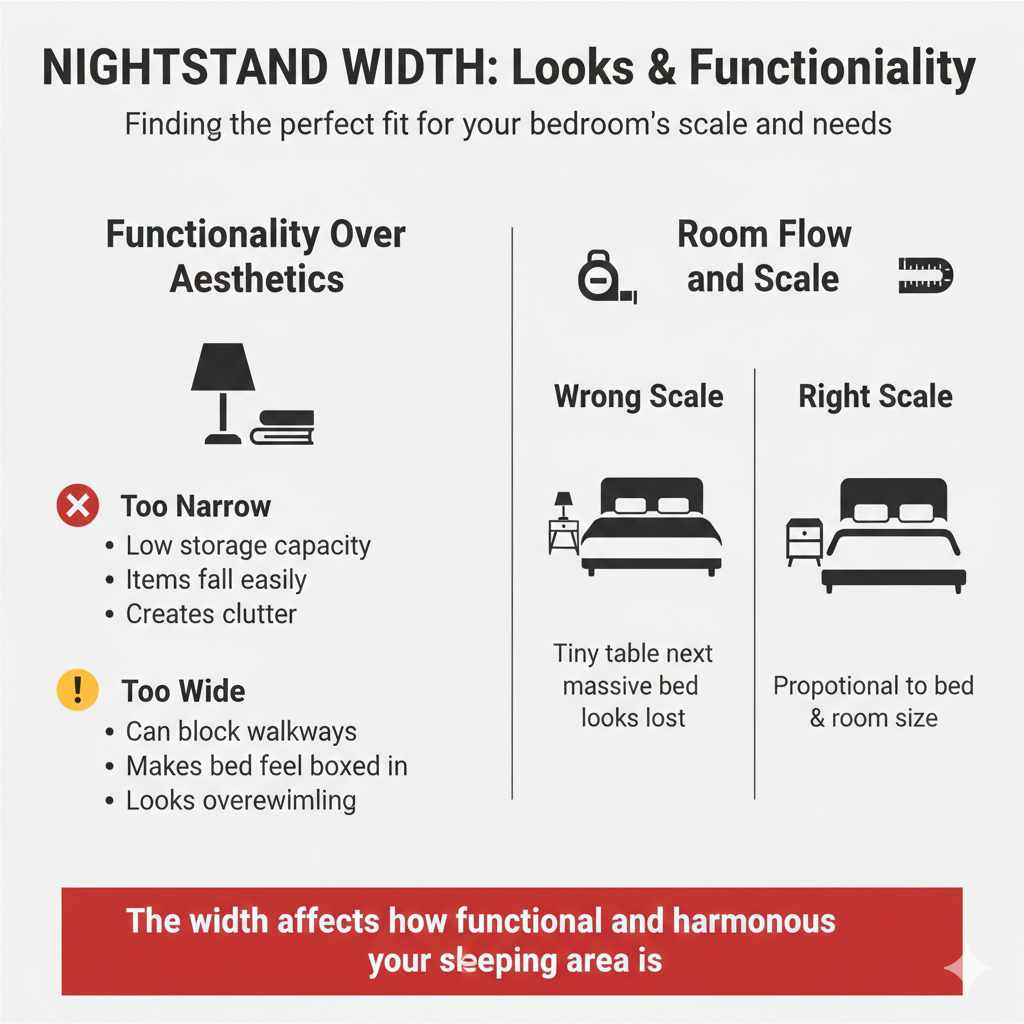
The width of your nightstand affects more than just the look of your bedroom. It impacts how functional your sleeping area is. Think of it like choosing the right socket wrench—the wrong size makes the job impossible!
Functionality Over Aesthetics
A nightstand needs to hold your essentials: a lamp, an alarm clock, a glass of water, and maybe a book. If it’s too narrow, things are constantly sliding off or piling up precariously.
- Too Narrow: Low storage capacity, items fall easily, creates clutter.
- Too Wide: Can block walkways, make the bed feel boxed in, or look overwhelming next to a smaller frame.
Room Flow and Scale
The size needs to match the scale of your bed and the room. A tiny table next to a massive king-size bed looks lost. Conversely, a bulky table next to a twin bed takes up too much walking space. We must consider the “visual weight” of the piece.
The Standard Nightstand Width: What Most People Buy
For most standard American bedrooms, manufacturers focus on a few key widths because they work reliably with common bed frames. If you are rushing and just need a safe default, stick to these measurements.
The “Sweet Spot” Range (18 to 24 Inches)
This range is the industry standard for a reason. It offers enough surface area without overwhelming the space around the bed.
18 Inches Wide: This is perfect for smaller spaces, like guest rooms, or when using a smaller bed size (like a twin or full). It offers just enough space for the basics.
21 Inches Wide: Often considered the versatile average. This width works well with queen beds and provides a good balance of presence and function.
24 Inches Wide: A great choice for queen or king beds where you want a bit more surface area, especially if you use a large table lamp or tend to keep phones, tablets, and books bedside while you sleep.
When to Go Narrower or Wider
Sometimes, space dictates your choice. If you have a tight wall space between the bed and a dresser, you might need to look at models under 16 inches. If you are using a massive, low-profile platform bed and have loads of space, you might consider a wider piece up to 30 inches for a grander, more balanced look.
Step-by-Step Guide: Measuring Your Space Like a Pro
Forget guessing! Making accurate measurements is the most important step in this whole process. This is where we stop relying on averages and start focusing on your bedroom. This process ensures safety and proper room flow—just like making sure your car has the right tire pressure readings from the service manual.
Tools You Need
You only need a couple of simple things for this job. No special tools required!
- A standard measuring tape (the retractable metal kind works best).
- A notepad and pen to jot down your numbers.
- A willingness to clear a small space to test fitment!
Measure 1: Bed Width and Mattress Depth
First, we need to know the size of the object the nightstand will be next to. This measurement is crucial because the nightstand should usually sit flush (or nearly flush) with the edge of your mattress.
- Measure the Mattress Width: Measure straight across the widest part of your mattress.
- Measure Mattress Depth (Front to Back): Measure from the very front edge of the mattress to the very back edge where it meets the headboard or wall. This tells you how much space the nightstand can protrude into the room before it hits the walkway.
Measure 2: Confirming Clearance Space
This step ensures you can still walk around your bed comfortably. This is critical for safety, especially moving around in the dark.
- Stand at the foot of your bed, facing the side where the nightstand will go.
- Imagine where the edge of the nightstand will sit.
- Walk one step past where that edge would be. Is there still comfortable room to move? We need about 24 to 30 inches of clear walkway space next to the bed. If a 24-inch nightstand uses up 20 inches of space, and you only have 28 inches total before a wall or dresser, you might need a shallower or narrower table.
Measure 3: Checking for Obstructions
Is there anything else next to the desired nightstand location?
- Check for wall outlets, heating vents, or light switches. You don’t want the nightstand blocking access to these essential controls.
- If you have a high headboard, make sure the nightstand doesn’t look silly next to it (usually, the nightstand height is more important here, but width can sometimes look unbalanced if the headboard flanks it oddly).
Matching Nightstand Width to Your Bed Size
The size of your mattress is the biggest determining factor for the ideal nightstand width. Here is a simple guide to match the furniture feel to the bed size.
The Size Guide Table
This table provides an easy reference for popular bed dimensions and corresponding nightstand recommendations.
| Bed Size | Ideal Nightstand Width Range (Inches) | Why This Size Works |
|---|---|---|
| Twin (38″ Wide) | 16″ to 20″ | Smaller scale keeps the room from overcrowding. |
| Full/Double (54″ Wide) | 18″ to 22″ | Good balance; allows for walkway clearance. |
| Queen (60″ Wide) | 20″ to 24″ | Standard pairing; provides ample surface area. |
| King (76″ Wide) | 24″ to 30″ | Needs more visual weight to balance the large bed. Often use two larger matching units. |
| California King (72″ Wide) | 24″ to 28″ | Similar width to a standard King, but slightly longer; 24″ is often sufficient. |
The “Floating Half” Rule for King Beds
For King or California King beds, the mattress is so wide that a small nightstand looks unbalanced. People often choose a width that sits slightly past the halfway mark of the mattress width on each side to create a more substantial look. For example, a 76-inch King mattress can comfortably handle 30-inch wide tables on either side without looking too big.
Understanding Nightstand Depth vs. Width for Walkability
When shopping, you will see two key measurements: width (side to side) and depth (front to back). Both are crucial for a comfortable bedroom setup. While this guide focuses on width, you cannot ignore depth, especially in smaller rooms.
The Importance of Shallower Depths
If you have a narrow bedroom, the depth of the nightstand matters more than the width. Standard nightstand depth is often 16 to 18 inches. However, if your walkway clearance (from the mattress edge to the nearest wall or furniture) is tight—say, less than 30 inches total—you should look for “slim” or “shallow” nightstands, often measuring only 12 to 14 inches deep.
Even a wide, 30-inch nightstand can work if it is shallow (12 inches deep), as it won’t jut out into your walking path as much. For excellent resources on maximizing small bedroom layouts, organizations like the Architectural Digest often share tips on furniture placement that prioritize flow.
How Width and Depth Interact
Imagine your bed touches one wall. You only have 32 inches of floor space before the opposite wall.
- Option A (Wide & Shallow): 24″ Wide by 14″ Deep. This leaves 18 inches of walking space (32 – 14 = 18). This works well.
- Option B (Narrow & Deep): 18″ Wide by 18″ Deep. This leaves only 14 inches of walking space (32 – 18 = 14). This might feel tight and potentially block access when opening a closet door nearby.
Special Cases: When Standard Rules Don’t Apply
Not every bedroom fits the standard model. Be prepared to adjust your expectations based on how you use your bed or unique furniture constraints.
Platform Beds and Low Profiles
Platform beds often sit lower to the ground. While height adjustment is key here, the width should still correspond to the overall scale of the mattress. However, because platform beds often look cleaner and less bulky, you can sometimes get away with a slightly narrower nightstand (e.g., 18 inches on a Queen) purely for aesthetic reasons, as the low profile doesn’t visually dominate the space as much as a traditional footboard/headboard set.
Using Nightstands with Headboards That Extend Past the Mattress
Some elaborate headboards or bed frames extend several inches past the actual mattress width. You must measure from the edge of the headboard, not the mattress, to ensure the nightstand sits flush against the larger structure. If the headboard edge feels awkward and the nightstand looks stuck in the middle, you may need a very narrow nightstand or a floating shelf instead.
Shared Beds (Two People)
If two people share one side of a bed (common in narrow Full beds or in situations where one person needs access near a wall), you might need to compromise. A shared side might require a smaller table (16 inches) to ensure both people have a clear path to get in and out of bed if space is shared.
Choosing Nightstand Style Based on Width
The way the width is visually translated into the piece of furniture also affects how it feels in the room.
Floating Nightstands (Shelves)
Floating nightstands are attached directly to the wall. Because they don’t have legs, they create a feeling of open floor space, which can make a narrow room feel wider.
Pros: Visually lighter, easier to clean under.
Cons: Limited weight capacity, usually narrower (15″ to 20″ wide), often lack drawers.
Leggy vs Solid Base Nightstands
Leggy/Open Base: If the nightstand has legs and you can see the floor underneath, it feels less bulky, even if it is 24 inches wide. This helps maintain scale in smaller rooms.
Solid Base (Drawers Go to Floor): These pieces offer maximum storage but look heavier. If you choose a solid base, stick to the lower end of the recommended width range (e.g., 18″ or 20″ for a Queen bed) to prevent the room from feeling weighted down.
When you are thinking about structural integrity and how furniture is built, remember that the framing needs to support the weight over time. For reliable building standards, you can find general guidelines on residential construction, which often touch upon minimum clearances, although specific furniture dimensions are less regulated. Resources like those provided by the Environmental Protection Agency related to smart growth often emphasize efficient space utilization, which applies to interior design, too.
The Ultimate Checklist Before You Buy
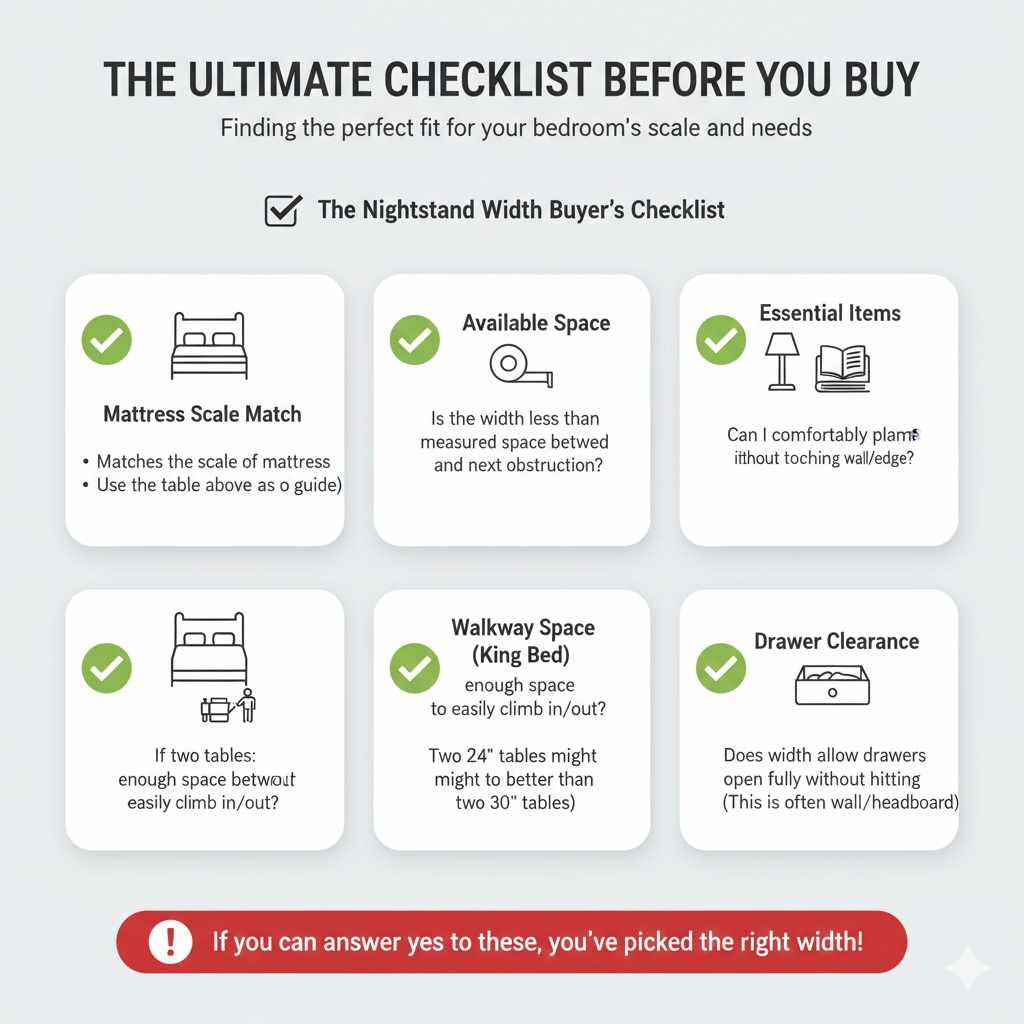
Before you click “Add to Cart,” run through this quick, practical checklist. If you can answer yes to these, you’ve picked the right width!
The Nightstand Width Buyer’s Checklist:
- Does the width roughly match the scale of my mattress (use the table above as a guide)?
- Is the width less than the available space I measured between the bed and the next obstruction?
- Can I comfortably place my lamp and a few essential items on the surface without them touching the wall or the edge?
- If I am buying two for a King bed, do they leave enough space in the middle for me to easily climb in and out of bed? (If two 30″ tables are too close together, you might need two 24″ tables).
- Does the width allow me to easily open the drawers all the way without hitting the wall or headboard? (This is often overlooked!)
Frequently Asked Questions (FAQ) About Nightstand Sizing
Q1: What is the absolute smallest width a nightstand can be?
The smallest practical width most people buy is usually 16 inches. Anything smaller than that often results in a very shallow depth (less than 12 inches) or a piece that just looks like a small stool rather than functional furniture.
Q2: Should my nightstand width match the height of my mattress?
No, width and height are separate concerns. While height should generally be within 2 to 4 inches of your mattress top for easy reach, width is determined by the length of the mattress and the space available beside it.
Q3: If my room is very small, is it better to have one large nightstand or two small ones on a Queen bed?
If space is severely limited, it is usually better to have one smaller nightstand (around 18 inches) on the side that has more traffic or needs walking clearance, and potentially skip the other, or use a slim wall shelf instead of a full table on the wall side.
Q4: My mattress is 60 inches wide (Queen). If I buy two 20-inch nightstands, will there be a gap in the middle?
Yes, there will be a gap. 20″ + 20″ = 40 inches of table space, leaving a 20-inch gap between the two tables in the center of your 60-inch wide bed. This gap is often perfect for reaching charging cords or just giving you elbow room.
Q5: Do I need to match the width of the nightstand to the width of the headboard?
Only if the headboard extends significantly wider than the mattress. If the headboard is just a simple frame around the mattress, focus your width measurement on the mattress itself. If the headboard is decorative and much wider, ensure your nightstand doesn’t look lost next to the massive structure.
Q6: Can I use a taller, narrower dresser as a nightstand if I don’t have space for a standard one?
Yes, a tall, narrow chest of drawers can work as a very functional nightstand, providing great storage. The main consideration here is height (it should still align closely with the mattress top) and surface space—the top surface might be small, so double-check it can hold your lamp.
Conclusion: Confidence in Your Bedside Choice
Finding the right nightstand width moves from being a mystery to a straightforward calculation when you have the right measurements. Remember, the goal here isn’t to force a piece of furniture into a space; it’s about making the space work perfectly for you, just like ensuring all the components in your car engine work together for smooth running.
The standard 18 to 24-inch range is a reliable starting point, but your tape measure is the final authority. Compare your available space against your mattress dimensions, consider the depth for walkway clearance, and choose a width that feels balanced and functional. Now you can shop with genuine confidence, knowing that the bedside piece you select will fit perfectly, look great, and keep your essentials right where you need them, making your bedroom a more comfortable and organized sanctuary. You’ve got this!