

Quick Summary:
Putting a futon down is a simple process! Most futons easily convert by lifting the backrest until it clicks into place, then lowering it flat. This transforms your futon into a comfortable bed, ready for guests or a quick nap in just seconds.
Hey everyone, Dustin Hall here! Ever found yourself staring at a futon, wondering how to transform it from a couch for movie night into a guest bed for unexpected sleepovers? It happens to the best of us! Futons are super handy, saving space and offering a dual-purpose solution for our homes. But sometimes, figuring out that simple conversion can feel like solving a puzzle when you’re tired. Don’t sweat it! We’re going to walk through exactly how to put a futon down, step-by-step. You’ll be amazed at how easy it is to get that comfy sleeping space ready. Stick around, and we’ll get your futon ready for dreamland in a jiffy!
Why Futons Make a Great Sleepy Solution
Futons are like the multi-tools of the furniture world. They’re fantastic for smaller apartments, guest rooms, or even as a stylish seating option in a living room. Their main appeal? They can easily switch from a sofa to a bed. This flexibility means you can host friends overnight without needing a dedicated guest room, or even have a comfortable spot for naps right where you’re relaxing. Plus, compared to many traditional sofa beds, futons are often more budget-friendly and simpler to operate once you know the trick.
Understanding Your Futon’s Mechanism
Before we dive into the “how-to,” let’s chat about how futons generally work. Most modern futons use a metal frame with a hinge system. This hinge is the key to its transformation. It allows the backrest to fold up and down, and sometimes even to recline into different positions. You’ll usually find a series of metal arms and joints that lock into place, providing stability whether it’s in sofa mode or bed mode.
Different futon designs might have slight variations, but the fundamental principle is the same: a locking mechanism that holds the frame in its different positions. The most common types you’ll encounter are:
- Click-Clack Mechanism: This is where slats or metal bars “click” into place as you move the backrest, allowing it to lock upright, in a reclined position, or fully flat.
- Basic Hinge System: Simpler frames might just rely on gravity and positioning to stay put, or have a simple pin or lever to secure them.
- Platform Style: Some futons have a solid platform base rather than slats, which can offer a different feel but convert similarly.
Knowing which type you have is helpful, but the steps to convert them are generally very similar. We’re focusing on the most common method today.
How to Put a Futon Down: A Step-by-Step Guide
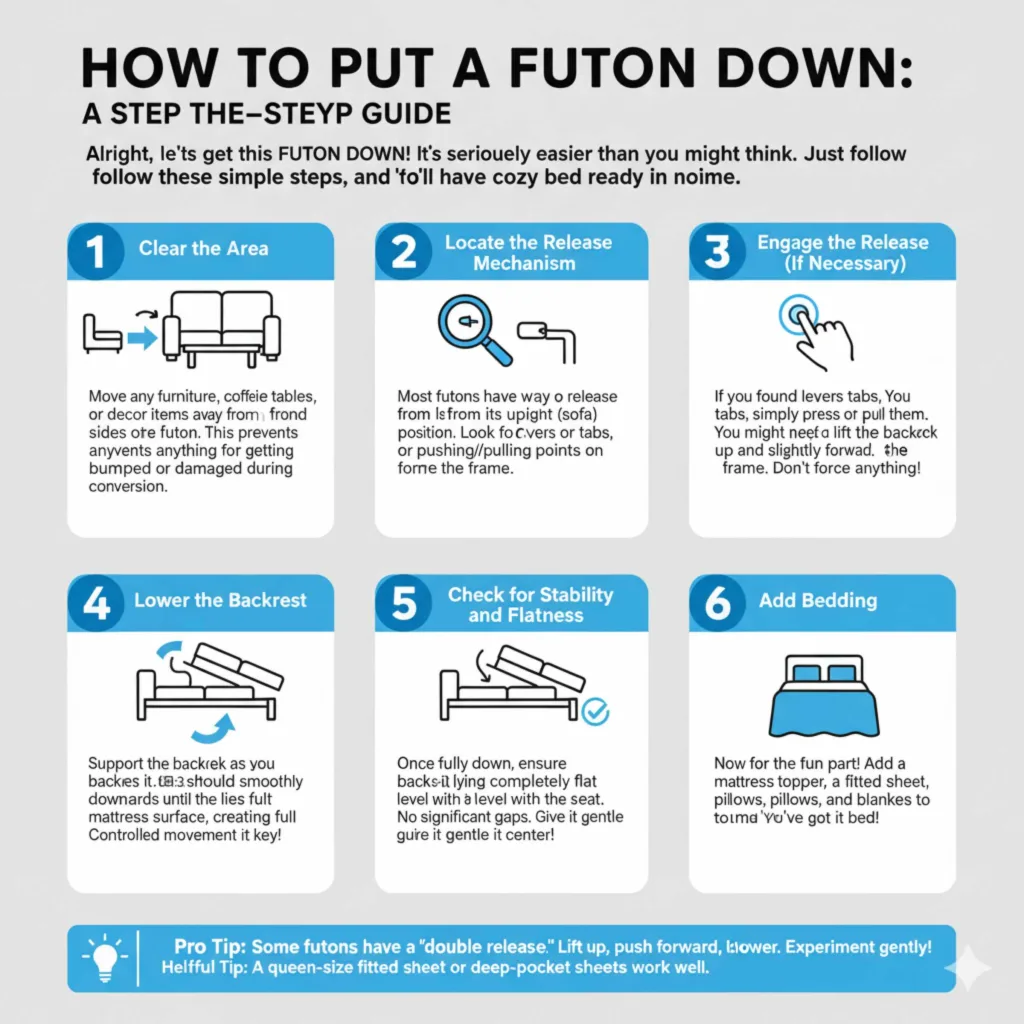
Alright, let’s get this FUTON DOWN! It’s seriously easier than you might think. Just follow these simple steps, and you’ll have a cozy bed ready in no time.
Step 1: Clear the Area
First things first, make sure you have enough space around your futon. You’ll need room to maneuver the backrest and to access the frame. Gently move any coffee tables, ottomans, or decor items away from the front and sides of the futon. This prevents anything from getting bumped or damaged during the conversion.
Step 2: Locate the Release Mechanism
Most futons have a way to release the backrest from its upright (sofa) position. Look for:
- Levers or Tabs: Sometimes, there are small levers or tabs on the underside or sides of the frame, usually near the armrests or where the seat meets the back.
- Pushing or Pulling Points: Other times, the release is triggered by pushing the backrest forward slightly or pulling it up and back.
Don’t force anything! If you’re not sure where to look, gently feel around the frame. Many mechanisms are designed to be intuitive once you find them.
Step 3: Engage the Release (If Necessary)
If you found levers or tabs, simply press or pull them. If your futon doesn’t have obvious levers, you might need to lift the backrest up and slightly forward. This movement often disengages the lock.
Pro Tip: Some futons have a “double release.” You might need to lift the back up a bit first, then push it forward, and then it will be free to move down. Don’t be afraid to experiment gently!
Step 4: Lower the Backrest
Once the backrest is released, gently begin to lower it. It should move smoothly downwards. The goal is to bring it all the way down until it lies flat with the seat, creating a full mattress surface. You might hear clicks as the mechanism shifts.
Support the backrest as you lower it. Don’t just let it drop! Controlled movement is key to protecting the futon’s frame and ensuring a smooth transition. Imagine you’re lowering a flat surface down to meet another flat surface.
Step 5: Check for Stability and Flatness
Once the futon is fully in the down position, give it a quick inspection. Ensure the backrest is lying completely flat and level with the seat. There shouldn’t be any significant gaps or angles. The frame should feel sturdy. If it feels wobbly, double-check that all parts are properly engaged and that there aren’t any forgotten levers still engaged.
Give it a gentle push in the center to make sure it doesn’t sag unevenly. A well-converted futon should feel like a solid, flat surface, ready to support a mattress topper or fitted sheets.
Step 6: Add Bedding
Now for the fun part! Your futon is officially a bed. Add a mattress topper for extra comfort if you have one. Then, a fitted sheet to cover the entire surface will keep everything in place. Don’t forget pillows and blankets to make it cozy!
Helpful Tip: For a standard futon mattress, a queen-size fitted sheet often works well, as it has enough depth and width to tuck underneath. Alternatively, deep-pocket sheets designed for thicker mattresses can be a great option. You can find advice on bedding sizes and types on resources like Housing.com’s guide to futon mattress sizes, which can help you pick the right sheets.
Troubleshooting Common Futon Issues
Even with simple mechanisms, things can sometimes be a little sticky. If you’re having trouble, here are a few common snags and how to fix them:
Futon Won’t Lower
- Check for Obstructions: Make sure nothing is caught in the hinges or joints.
- Re-engage and Release: Sometimes, the locking mechanism needs to be reset. Try pushing the backrest up and forward again to disengage the locks, then try lowering it.
- Look for Hidden Levers: Double-check the undersides and sides; sometimes, levers can be a bit camouflaged.
- Lubrication: If parts seem stiff, a little spray lubricant (like WD-40) on the hinges can work wonders. Just be sure to wipe up any excess.
Futon Feels Uneven or Wobbly
- Ensure Full Lock: Make sure the backrest is all the way down and fully locked into its bed position. Sometimes it might look flat but hasn’t clicked into place.
- Check Frame Legs: If your futon has separate legs that fold out in bed mode, ensure they are fully extended and locked.
- Examine Hinges: Loose screws or bolts on the hinges can cause instability. Tighten them if needed.
The “Click-Clack” Sounds are Loud or Stuck
- Lubricate Hinges: As mentioned, a bit of lubricant can smooth out noisy or stiff mechanisms.
- Inspect for Damage: If there’s bent metal or broken parts, it might be time for a repair or replacement.
Types of Futon Mechanisms and How They Convert
While the basic principle of “release and lower” holds true, the specific parts you interact with can vary. Here’s a quick rundown of common mechanism types:
| Mechanism Type | How to Deploy (Put Down) | Key Features |
|---|---|---|
| Basic Click-Clack | Lift backrest up and slightly forward until it releases, then lower it all the way down. | Distinct “clicks” as it locks into upright, reclined, and flat positions. Usually has a slatted base. |
| Lever-Actuated Frame | Locate levers (often on the sides or under the seat), push or pull them to release the back. | May have more distinct locking points and often feels more robust. |
| Platform Base with Hinges | Similar to Click-Clack, but the base is solid. Lift and lower the backrest to flatten. | Provides a firmer sleeping surface; conversion is usually very smooth. |
| Convertible Ottoman/Bed | Unzip a hidden mattress, unfold it, and lay it flat. The ottoman itself might not move. | Very compact; the “futon” part is the mattress hidden inside. |
No matter the specific design, the underlying goal is always the same: to create a safe, stable, and flat surface for sleeping. If you’re ever unsure, checking the manufacturer’s manual or looking up your specific model online can be incredibly helpful. Websites like The U.S. Consumer Product Safety Commission (CPSC) offer safety information and recall notices that can be useful for understanding furniture safety, though they won’t have specific assembly instructions for every model.
Tips for Maximizing Futon Comfort
A futon, by its nature, can sometimes feel a bit firmer than a traditional mattress. But with a few smart additions, you can make it incredibly comfortable for guests or even for yourself!
- Invest in a Good Mattress Topper: This is the single best thing you can do. A 2-3 inch memory foam or plush fiber topper can dramatically soften the surface and even out any minor unevenness from the frame.
- Use Quality Bedding: A thick, comfortable fitted sheet is essential. High thread count cotton or soft microfiber sheets feel luxurious.
- Pillows Galore: Don’t skimp on pillows! A variety of firmness and size will make your futon feel more like a real bed.
- Consider a Mattress Pad: Beyond a topper, a quilted mattress pad adds a layer of softness and protects the futon mattress itself.
- Check the Futon Mattress Itself: Over time, futon mattresses can sag or develop lumps. If yours is old and uncomfortable, consider replacing it. They are often sold separately from the frame.
Making your futon a great sleep solution is all about layering comfort. Think of it like building a perfect sandwich – each layer adds to the overall experience!

FAQ: Your Futon Questions Answered
Q1: How do I know if I have released the futon’s backrest correctly?
A1: You’ll usually feel a distinct “give” or free movement in the backrest. If it was locked, it will now be able to move downwards smoothly. Some mechanisms also make a “click” or “clack” sound when released, and another set of clicks as it goes flat.
Q2: Can I recline my futon without putting it all the way down?
A2: Yes, many futons can lock into several positions, including a reclined one, before going fully flat. You typically achieve this by stopping the lowering process when you find your desired angle and ensuring it clicks into place.
Q3: Is it safe to sleep on a futon every night?
A3: For most people, it can be a comfortable daily sleeping solution, especially if you add a good mattress topper for support and cushioning. However, if you have specific back issues or need specialized support, it’s always best to consult with a healthcare professional about your sleeping arrangements.
Q4: My futon makes squeaking noises when I try to put it down. What should I do?
A4: Squeaking usually comes from friction in the metal joints and hinges. A quick fix is to apply a small amount of silicone-based lubricant or WD-40 to the moving parts of the frame. Wipe away any excess to avoid stains.
Q5: What’s the difference between a futon mattress and a regular mattress?
A5: Futon mattresses are typically thinner and more flexible, designed to be folded and bent. They are often made with layers of cotton, foam, or polyester batting. Regular mattresses are usually thicker and designed for a flat, stationary bed frame, often offering more specialized support features.
Q6: Do I need to remove the cushions before putting the futon down?
A6: For most standard futons, no. The “cushions” are actually the mattress itself. You just manipulate the frame to lay the mattress flat. For futons that are more like traditional sofas with separate seat and back cushions, you would remove those first, then convert the underlying frame.
Q7: How much weight can a futon hold when it’s in bed mode?
A7: Weight capacity varies greatly by model and frame construction. A sturdy metal frame can often support 300-600 pounds or more. Always check the manufacturer’s specifications for your specific futon to ensure safe use.
Conclusion: Your Futon is Ready for Snoozing!
There you have it! Mastering how to put a futon down is a fantastic skill for any homeowner or apartment dweller. It transforms a piece of furniture from a stylish seating arrangement into a practical and comfortable bed in mere moments. By following these straightforward steps – clearing the space, locating and engaging the release, lowering the backrest, and ensuring stability – you can confidently convert your futon whenever the need arises.
Remember, a little comfort can go a long way, so don’t hesitate to add a mattress topper and cozy bedding to make your futon sleep space even more inviting. With a bit of know-how and perhaps a touch of lubricant for stiff joints, your futon is always ready to offer a genial solution for sleep. Now go forth and conquer that couch-to-bed transformation! Sweet dreams!