
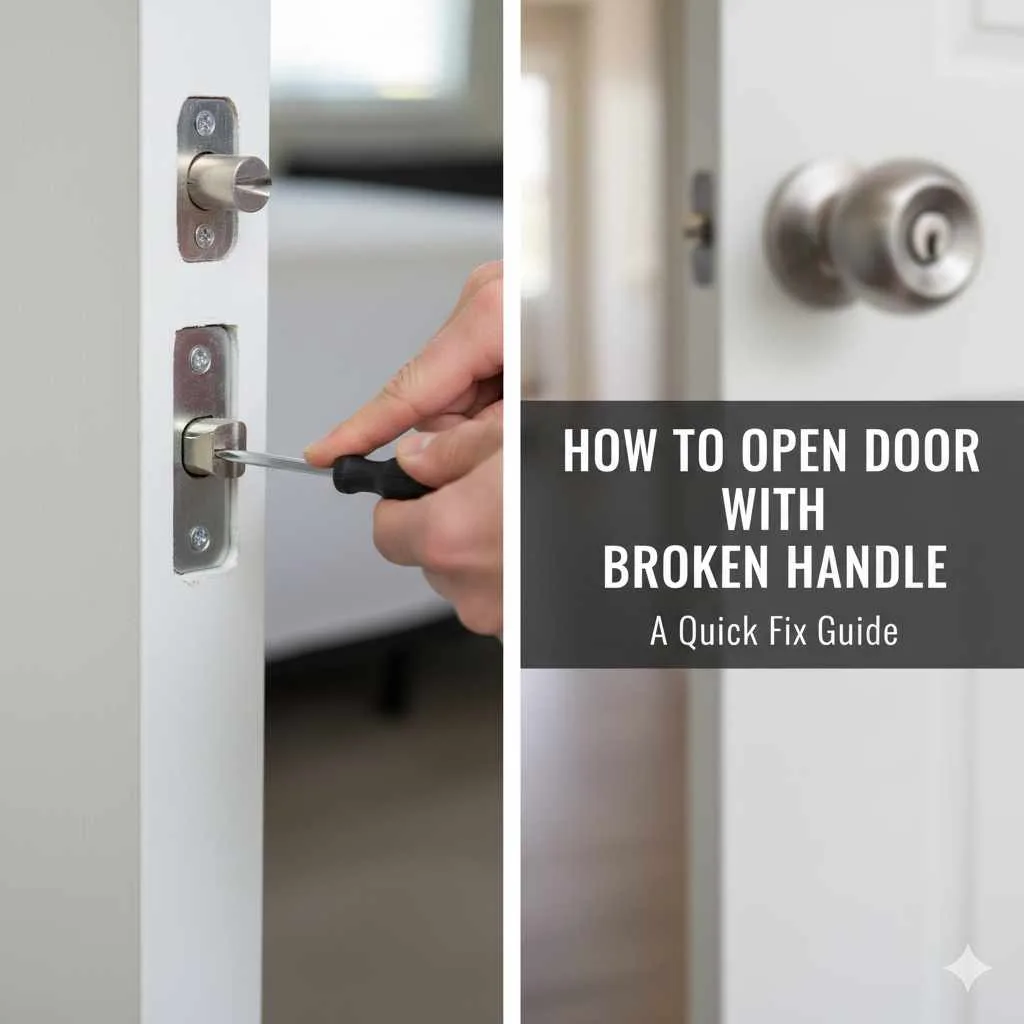
Bolded Quick Summary (Top of Article)
If your door handle is broken and stuck, don’t worry! This guide offers simple, beginner-friendly solutions to open your door. We’ll cover common scenarios and provide easy DIY steps, turning a frustrating problem into a manageable fix. Get ready to unlock your door with confidence!
Oh, the frustration! You reach for your door handle, and… it just spins, or worse, it comes off entirely. A broken door handle can feel like a house-sized problem, especially when you’re in a hurry or need to get through. It’s a common household hiccup, but it doesn’t have to stop you in your tracks. Whether it’s a bedroom door, a closet, or even an exterior door facing a tricky situation, there’s always a way to get it open without panicking or calling an expensive professional.
Sometimes, a simple jiggle or a clever tool can do the trick. Other times, a slightly more involved but still easy approach is needed. Don’t let a stubborn door handle get you down. This guide is here to walk you through some genius, beginner-friendly solutions. We’ll break down the steps so you can tackle this with confidence. Ready to learn how to salvage your day and your door?
Understanding the Broken Handle Dilemma
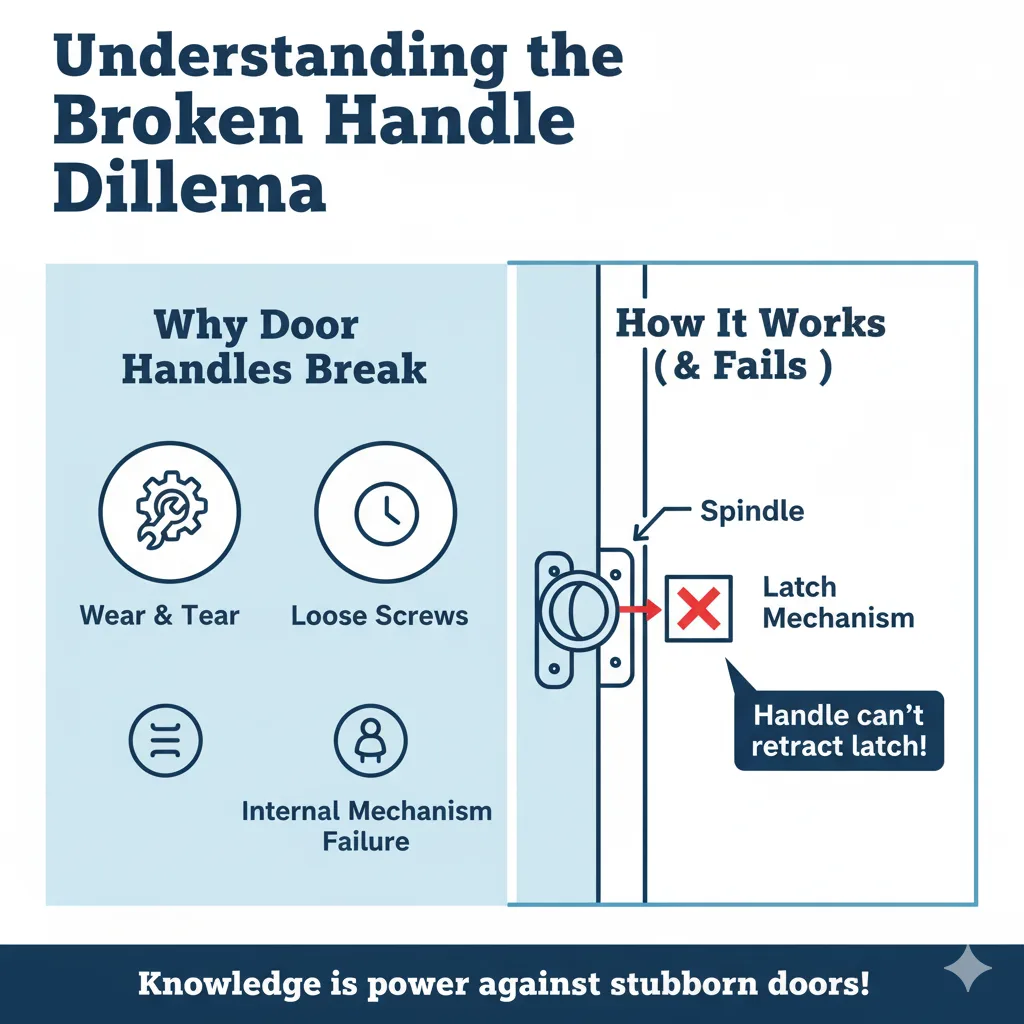
Before we dive into solutions, let’s briefly touch on why door handles break. Usually, it’s due to wear and tear, a loose screw, or a malfunctioning internal mechanism. Knowing this helps us address the problem effectively. The good news is that most basic door handle mechanisms are quite similar, making the fixes surprisingly universal.
When a handle breaks, it typically means the connection between the handle itself and the latch mechanism is compromised. This latch is the part that slides into the door frame to keep the door closed. If the handle can’t operate the spindle that retracts this latch, the door will remain stubbornly shut.
Tools You Might Need (Keep it Simple!)
You don’t need a full toolbox for these fixes. Chances are, you have most of these items around your home already. Having the right tools makes the process much smoother and less stressful. Think of these as your trusty sidekicks in our door-opening adventure!
- Screwdriver set: Flathead and Phillips head screwdrivers are essential.
- Pliers: Needle-nose pliers can be very handy for gripping small parts.
- Butter knife or thin, sturdy card: For certain types of latch mechanisms.
- Hammer (optional, use gently): For tapping things into place if needed.
- WD-40 or lubricant: Sometimes, a bit of lubrication is all it takes.
- Credit card or plastic shim: For bypassing simple spring latches.
- Hairdryer (optional): For softening adhesive if present.
- Small pry bar or flathead screwdriver: For gently easing trim.
The Genius Solutions: Step-by-Step
Let’s get to the heart of it! Here are some tried-and-true methods to open a door with a broken handle. We’ll start with the easiest and move to slightly more involved steps. Remember to stay calm and work patiently – you’ve got this!
Scenario 1: The Spinning or Loose Handle
This is common when screws holding the handle assembly together loosen. The handle turns, but it doesn’t engage the latch.
- Inspect the handle escutcheons (the decorative plates): Look for visible screws. Many interior door handles have these screws on the side of the handle that faces away from the door frame.
- Tighten the screws: If you find screws, use the appropriate screwdriver to tighten them firmly. Don’t overtighten, but make sure they are snug.
- If no screws are visible: Some handles have a small notch or slot on the underside or side. You might need a very small flathead screwdriver or a paperclip to push a release button or spring inside this notch. This often allows you to pull the handle off its backing or rotate the escutcheon to reveal hidden screws.
- Try the handle again: Once screws are tightened or reassembled, test the handle.
Scenario 2: The Handle Came Off Completely
If the handle is detached, you can often still operate the latch mechanism directly.
- Examine the spindle: You’ll see a roughly square metal rod (the spindle) sticking out of the door where the handle used to be.
- Identify the latch mechanism: Look at the edge of the door where the latch bolt protrudes. You should see a hole or a small slot directly in front of this bolt.
- Use pliers or a screwdriver: Insert needle-nose pliers or a flathead screwdriver into the hole where the spindle was. You might need to insert it into the square hole.
- Rotate the spindle: Try to rotate this spindle in the direction that would retract the latch. It usually takes a clockwise or counter-clockwise turn to open the door. If you can’t grab the spindle directly, try inserting your tool into the small slot or hole located near the spindle, which might be connected to the latch mechanism.
- Gentle pressure: While turning the spindle, gently push or pull the door.
Scenario 3: The Latch Won’t Retract (Even with Direct Spindle Operation)
Sometimes, the latch itself is jammed, or the internal mechanism is truly broken. Here’s where a bit more finesse might be needed.
Method 3A: The Credit Card Trick (For Spring Latches)
This works best on doors with a sloped latch bolt, typically found on interior doors where the handle is completely non-functional or has fallen off. It’s a classic for a reason!
- Gather your tool: Find a sturdy, flexible object like a credit card, a loyalty card, or a firm piece of plastic.
- Wedge it in the gap: Slide the card into the gap between the door and the door frame, right on the latch bolt.
- Angle and push: Angle the card towards the door frame and push it in. The goal is to slide the card along the slope of the latch bolt, forcing it to retract into the door.
- Work it: While applying gentle pressure with the card, try to jiggle or push the door open. You might need to try this from different angles or with a stronger piece of plastic.
Method 3B: Using a Butter Knife or Thin Shim
Similar to the credit card trick, but with a bit more rigidity.
- Insert the tool: Slide a thin, sturdy knife or a metal shim into the gap between the door and the frame, aiming for the latch.
- Wiggle and pry: Gently push the knife/shim to depress the latch. You might need to use a slight prying motion against the door frame to push the latch bolt back. Be careful not to damage the frame or the door.
- Combine with door movement: As you try to depress the latch, gently push or pull the door to help it open.
Method 3C: Forcing the Latch Bolt (Use With Caution!)
If there’s a visible square spindle hole but even direct manipulation doesn’t work, the latch mechanism might be internally seized.
- Insert a sturdy tool: Use a strong, thin tool like a small pry bar or a very strong, flat screwdriver into the square spindle hole.
- Apply firm, controlled force: Try to rotate the spindle with significant but controlled force. You are trying to overcome internal resistance.
- Gentle “shock”: Sometimes, a quick, sharp rap on the handle assembly with the palm of your hand or a rubber mallet can help dislodge a seized mechanism, allowing the spindle to turn. Do this while applying turning force.
Scenario 4: The Handle Assembly is Completely Separated and Jammed
In some cases, the internal mechanism is broken into pieces, or the entire handle assembly needs to be removed to access it.
- Look for set screws: Many handles have small set screws on the side of the handle, often hidden by a small cap or cover. You might need a small Allen wrench or a tiny screwdriver.
- Remove the handle: Unscrew the set screw. The handle should then slide off its spindle.
- Expose the internal mechanism: Once the handle is off, you’ll have better access to the spindle and the internal workings. You may need to remove the escutcheon plate as well. This often involves unscrewing more visible screws or looking for release clips.
- Operate the spindle: With the mechanism exposed, use pliers or a screwdriver to turn the spindle and retract the latch.
Scenario 5: When All Else Fails – The “Last Resort” Options
If the above methods don’t work, or if the door is particularly stubborn (like a stuck closet door), you might need to consider these options. They are more direct but should be approached carefully to minimize damage.
Option 5A: Removing the Hinge Pins
This is usually only feasible for interior doors where the hinge pins are accessible from your side. Exterior doors often have security pins that prevent this.
- Locate hinge pins: Look at the hinges on your door. You’ll see a pin in the center of each hinge.
- Tap the pins out: Place the tip of a flathead screwdriver or a sturdy nail on the bottom of the hinge pin and gently tap it upwards with a hammer.
- Remove pins: Once the pins are loose, you can pull them out.
- Open the door: With the pins removed, the door should swing open freely from the frame, even if the latch is stuck. Note that the door might sag slightly as you remove pins.
- Replace pins: Once the door is open and you can fix the handle, reinsert the hinge pins to secure the door.
Option 5B: Drilling Out the Latch Mechanism
This is a more destructive method and should be considered a last resort for a door you can still replace or repair. It’s often used for exterior doors where other entry methods are impossible. This is best done with a drill and a metal drill bit.
- Identify the latch bolt: Locate the deadbolt or latch bolt that is preventing the door from opening.
- Drill into the bolt: Using a metal drill bit (appropriate size for the bolt), drill directly into the center of the latch bolt. You are trying to destroy the internal mechanism holding it.
- Work through the bolt: Drill through the entire length of the bolt. You may need to drill several holes around the bolt.
- Pry open: Once the bolt is sufficiently weakened or destroyed, you should be able to pry the door open.
Important Note: This method will permanently damage the latch mechanism and likely the door. Only use this if you are prepared to replace the lockset or door.
When to Call a Professional
While most of these solutions are designed for DIY success, there are times when it’s best to call in an expert. If you’re dealing with an exterior door and aren’t comfortable with any of these methods, or if the door has a high-security lock, it’s often safer and quicker to contact a locksmith or a handyman. Resources like the DIY website’s guide on choosing a locksmith can help you find reliable help.
Also, if you try these methods and they don’t work, or if you accidentally cause more damage, don’t feel discouraged. Professionals have specialized tools and knowledge to handle even the most stubborn situations without causing further harm.
Preventing Future Handle Problems
Once you’ve successfully opened your door, wouldn’t it be nice to avoid this hassle in the future? A little bit of preventative care can go a long way!
- Regularly tighten screws: Check the screws on your door handles periodically. A quick tightening can prevent them from loosening too much.
- Lubricate mechanisms: If a handle feels stiff or sticky, a shot of lubricant like WD-40 can often smooth out its operation and prevent internal wear.
- Address loose handles promptly: Don’t wait until a handle completely fails. If you notice it’s wobbly, tighten it immediately.
- Choose quality hardware: When replacing handles, opt for reputable brands known for durability.

Troubleshooting Table
Here’s a quick reference table to help you diagnose and apply the right solution:
| Symptom | Likely Cause | Best Solution(s) |
|---|---|---|
| Handle spins freely, door won’t open. | Loose screws or stripped mechanism connection. | Tighten screws, use pliers on spindle, remove handle. |
| Handle came off in hand. | Failed mounting screws or internal mechanism failure. | Operate spindle directly with pliers/screwdriver. |
| Door is stuck shut; latch won’t retract. | Jammed latch, broken internal lock mechanism. | Credit card trick, butter knife, direct spindle operation, or hinge pins. |
| Handle is stiff or hard to turn. | Lack of lubrication, worn internal parts. | Lubricate, try to tighten handle, consider replacement. |
Frequently Asked Questions (FAQs)
Q1: Can I really open a door with a broken handle myself?
Absolutely! Many broken handle issues are simple to fix or bypass with common household items. This guide provides easy steps to help you tackle it.
Q2: What if my door handle broke on an exterior door? Should I use the same methods?
For exterior doors, be more cautious. While some methods like tightening screws or operating the spindle directly can work, consider the security implications. If you’re unsure, contacting a professional locksmith is often the safest bet for exterior doors.
Q3: Will these methods damage my door or frame?
Most of the suggested methods, especially the credit card trick or tightening screws, are non-damaging. Methods like drilling or forcing a latch should be considered last resorts and may cause cosmetic damage. Always aim for gentle, controlled force.
Q4: How do I know which type of latch my door has if it’s stuck?
Interior doors most commonly have spring latches, which are the ones with a slanted bolt. These are the easiest to bypass with a card or shim. Other doors might have deadbolts or different locking mechanisms. If it’s not a simple spring latch, it can be trickier.
Q5: I don’t have any tools. Can I still open the door?
Sometimes, yes. If a handle is just loose, you might be able to push it back into place. If it’s completely off, you might be able to manipulate the spindle with a sturdy key or another thin, strong object you might have on hand. However, having basic tools like a screwdriver or pliers makes the job much easier and more effective.
Q6: What’s the quickest way to open a door with a broken handle?
The quickest method usually depends on the specific way the handle is broken. If it’s just loose screws, tightening them is fastest. If the handle is off but the spindle is accessible, using pliers to turn it is generally quick if it works. If you need to bypass a stuck latch, the credit card method is often speedy if successful.
Conclusion
Dealing with a broken door handle can feel like a major inconvenience, but as you’ve seen, it’s often a solvable problem with a little know-how and a few common household items. We’ve covered everything from simple screw tightening to more advanced (but still beginner-friendly!) techniques for bypassing a stubborn latch. Remember, patience and a gentle approach are your best tools.
By understanding the basic mechanics of your door and handle, you can confidently tackle this issue, save money on professional help, and keep your home running smoothly. Don’t let a broken handle disrupt your day! You’ve got the knowledge now to get that door open and get back to enjoying your beautiful, functional home. Keep these tips in mind, and you’ll be prepared for any future handle mishaps. Happy fixing!