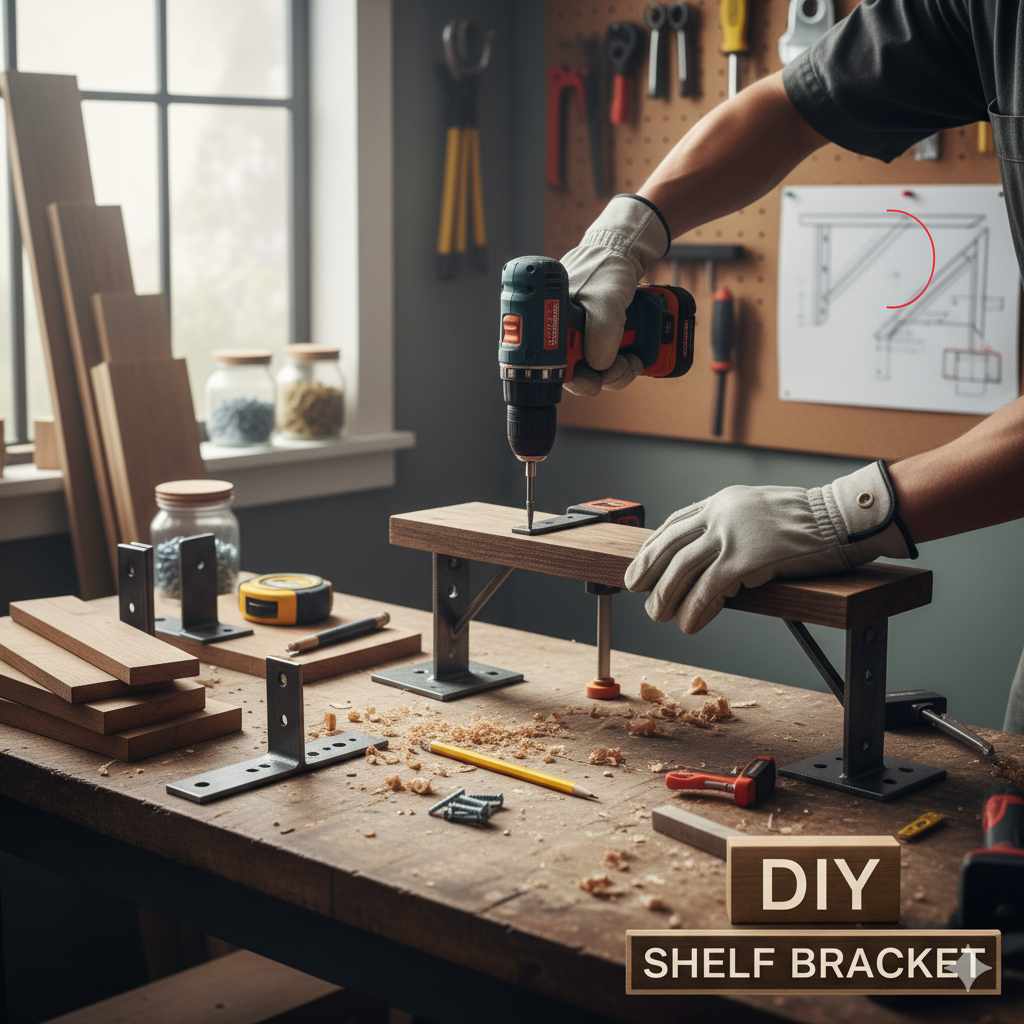
Learn how to build a shelf bracket easily! This guide shows you, step-by-step, how to measure, cut, and securely attach a strong, custom shelf support using simple tools and quality materials. You’ll gain the confidence to create sturdy, lasting shelving for your home projects.
Are you tired of wobbly shelves that just won’t hold your favorite items? Building your own shelf bracket might seem like a job just for seasoned woodworkers, but I promise, it is not! Many drivers fix their cars with basic tools, and building a simple bracket uses the same skills: measure twice, cut once. This guide cuts out the confusing jargon and gives you a clear path to making rock-solid supports. We will cover everything from picking the right wood to making sure it’s anchored safely. Let’s grab our gear and get ready to build something strong and useful!
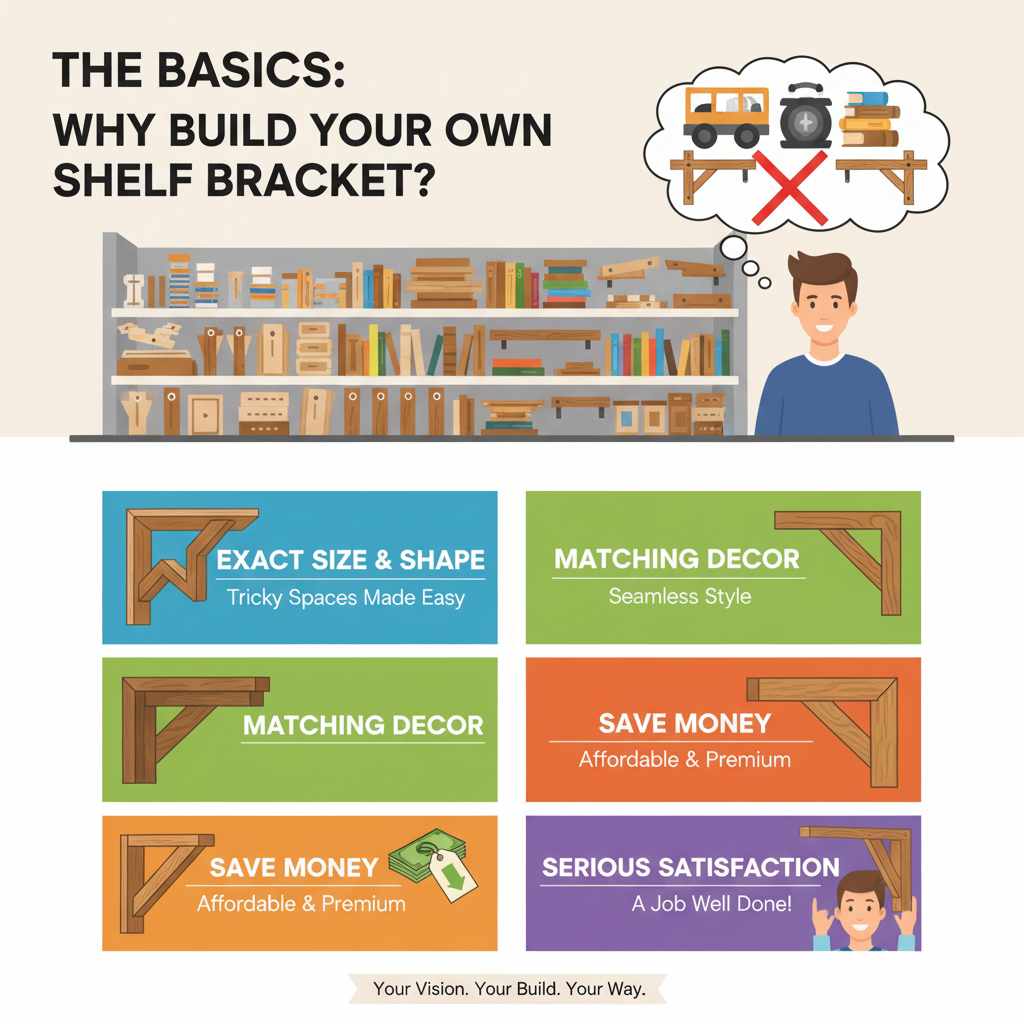
The Basics: Why Build Your Own Shelf Bracket?
When you head to the big box store, you often find brackets that are either too small, the wrong color, or just not strong enough for what you need to store. Building your own shelf bracket gives you complete control. Think about loading up your garage shelving with heavy car parts or your living room shelf with a growing collection of books—you need reliability.
Building them yourself lets you:
- Create the exact size and shape you need for tricky spaces.
- Choose wood that matches your existing decor perfectly.
- Save a few bucks compared to buying premium hardware.
- Gain serious satisfaction from a job well done!
Understanding Shelf Bracket Styles for Beginners
Before we start cutting, let’s look at the most common and easiest styles to build. For beginners, we focus on durability and simplicity. Here are the top three:
- The Simple L-Bracket (or “Corbel”): This is the classic, most straightforward design. It uses two pieces of wood joined at a 90-degree angle. It’s strong if sized correctly.
- The Gusset Bracket: This style adds a triangular piece behind the ‘L’ shape for extra support and a more decorative look. This is highly recommended if you plan to hold significant weight.
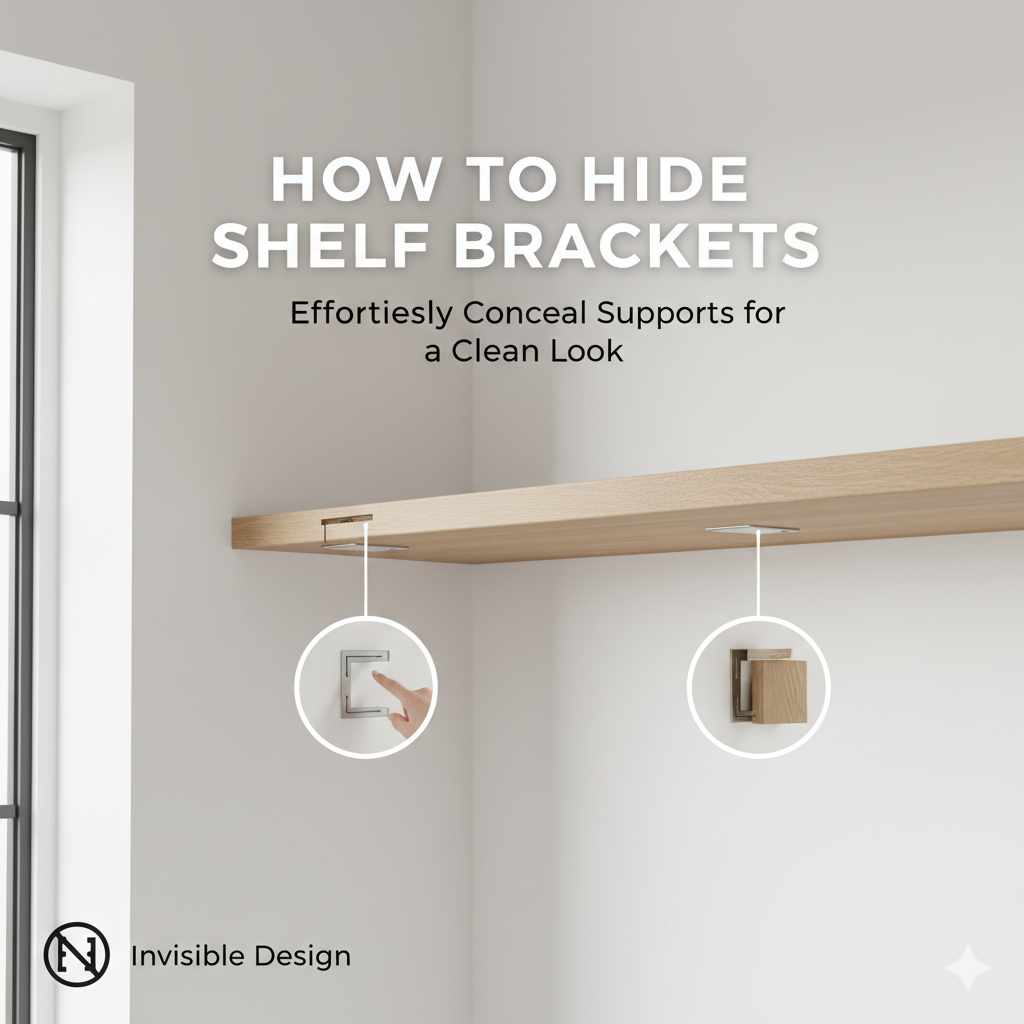
- The Hidden Bracket: These rely on heavy-duty steel rods driven deep into wall studs—these look minimalist but require very precise drilling. For this guide, we will focus on the sturdy, visible Gusset Bracket as it offers the best balance of ease and strength for DIYers.
Section 1: Gathering Your Essential Tools and Materials
Just like changing your oil requires the right wrench, building a proper bracket needs the right supplies. Don’t worry; you probably have most of these items already, or they are easy to find at any hardware store. Remember, using quality materials makes the final build much safer!
Essential Tools Checklist
Keep this list handy as you visit your local hardware supplier:
| Tool | Purpose | Pro Tip from Dustin |
|---|---|---|
| Measuring Tape | Precise marking and sizing. | Always use a metal tape measure; plastic ones bend easily. |
| Pencil/Marker | Marking cut lines. | Use a sharp pencil for thin, accurate lines. |
| Circular Saw or Hand Saw | Cutting the lumber to size. | If using a circular saw, practice on scrap wood first to get smooth cuts. |
| Power Drill/Driver | Driving screws into the wood and wall. | A cordless drill is much easier to manage than a corded one for overhead work. |
| Level (Torpedo or Standard) | Ensuring the bracket is perfectly straight. | Never skip the level! A crooked shelf looks bad and might be less safe. |
| Safety Glasses & Gloves | Protecting your eyes and hands. | Safety gear isn’t optional—it’s non-negotiable, especially when cutting. |
Choosing Your Lumber and Hardware
The strength of your bracket depends heavily on what you build it from. Since we are aiming for durability, skip very soft woods like pine for the main support, unless it’s a very small, light-duty shelf.
Recommended Wood Types for Brackets
- Hardwoods (Oak, Maple): Excellent strength, beautiful grain, but harder to cut and more expensive. Great for heavy loads.
- Plywood (High-Grade): Cabinet-grade plywood (like Birch) is very stable and strong in all directions, making it a great choice for the gusset piece.
- Poplar or Fir: Good middle ground. Stronger than pine but easier to work with than oak. Perfect for most beginner projects holding moderate weight.
Must-Have Hardware
For mounting the bracket to the wall and assembling the wood pieces, you need the right screws. The wall material dictates the fasteners, but for assembling the bracket itself, use these:
- Wood Screws (1 ¼” to 2”): Choose structural or wood screws over drywall screws. Wood screws have a stronger shear strength.
- Lag Bolts or Heavy-Duty Toggle Bolts: If you are not hitting a wall stud (more on that later), you need serious anchors. Check anchor weight ratings—do not guess! Many reliable sources, like the Green Building Advisor, discuss fastener strength thoroughly.
Section 2: Measuring and Cutting the Gusset Bracket Components
We are building a Gusset Bracket. This means we need three pieces:
- A horizontal piece (the Arm) that supports the shelf.
- A vertical piece (the Back Plate) that attaches to the wall.
- A diagonal piece (the Gusset) connecting the two for reinforcement.
Step 1: Determine Bracket Size
Shelf depth is the most important measurement. The bracket should never stick out further than the shelf base itself. A good rule of thumb is that the bracket depth (Arm length) should be about 75% of the shelf depth. The height (Back Plate) should be about half the width of the shelf, or at least 6”-8” for stability.
Let’s assume you are building a bracket for a shelf that is 10 inches deep. Your measurements might look like this:
- Arm Length (Horizontal Support): 8 inches
- Back Plate Height (Vertical Support): 6 inches
- Gusset Length (Diagonal Support): This will be calculated after cutting the other two pieces.
Step 2: Cutting the Arm and Back Plate
Use your pencil and measuring tape to mark the dimensions clearly onto your chosen lumber stock (e.g., a 2×4 or 1×8 board). Accuracy here is key for a square fit.
- Measure and mark both the 8-inch Arm piece and the 6-inch Back Plate piece. Ensure the edges are perfectly square (using a speed square if you own one).
- Put on your safety glasses. If using a circular saw, set the blade depth slightly deeper than the wood thickness for a clean cut.
- Carefully cut both pieces. Slow and steady wins the race for smooth edges.
Step 3: Cutting the Gusset (The Diagonal Brace)
This is often the part that trips beginners up, but it’s simple geometry. The Gusset connects the end of the Arm to the Back Plate, forming a hypotenuse. You are essentially creating a right triangle off the corner.
If your Arm is 8” long and your Back Plate is 6” high, you need a piece of wood (the same thickness as your Arm and Back Plate) that will span that distance. You cut this piece based on a 90-degree angle where it meets the shelf top.
The Easiest Method (No Complex Math):
- Take a scrap piece of the same thickness wood as your Arm/Back Plate.
- Hold the Arm and Back Plate together at a perfect 90-degree angle (use a square or the corner of a sturdy box).
- Place the scrap wood where the diagonal brace will go. Mark one end flush against the Back Plate and the other end flush against the Arm.
- Use a sliding T-bevel or speed square to trace the exact angle needed at both ends of the scrap piece.
- Cut the scrap piece along these marked lines. This new piece is your perfect Gusset template!
- Trace this template onto your main Gusset stock material and cut it out.
Section 3: Assembling the Wooden Bracket
Now that we have our three pieces—Arm, Back Plate, and Gusset—it’s time to join them. We are aiming for a very strong L-shape reinforced by the diagonal.
Step 4: Joining the Arm and Back Plate
We join the Arm and Back Plate first, making sure they are perfectly perpendicular (90 degrees).
- Lay the Back Plate flat on your workbench.
- Apply a small amount of high-quality wood glue to the 6-inch edge of the Arm piece. Glue acts as a powerful grip enhancer before the screws even go in.
- Align the Arm flush with the bottom edge of the Back Plate, ensuring they meet squarely. Clamp them together if you have clamps, or have a helper hold them steady.
- Using your 2-inch wood screws, drill pilot holes first. Pilot holes prevent the wood from splitting, which is crucial for structural integrity. Drill two screws straight through the Back Plate and into the end grain of the Arm.
Step 5: Securing the Gusset Brace
This diagonal piece is what transforms a simple corner support into a strong bracket capable of holding real weight. It prevents the joint from racking (wobbling side to side).
- Apply wood glue to both sides of the Gusset piece—the side that touches the Arm and the side that touches the Back Plate.
- Fit the Gusset snugly into the inner corner you just created.
- Drill three screws, angled slightly, through the Gusset into the Arm piece.
- Drill three more screws, angled slightly, through the Gusset into the Back Plate piece.
You now have a fully assembled wooden bracket. If you plan to paint or stain it now is the best time to do so before mounting it!
Section 4: Mounting Your Shelf Bracket Safely to the Wall
This is arguably the most crucial step. A beautifully built bracket is useless if it pulls out of the wall. As an automotive guide, I always preach about checking your suspension components; here, we check the wall structure!
Step 6: Locating and Marking Wall Studs
For any shelf that will hold more than just lightweight decorations (think more than 15 lbs), you MUST anchor into solid wood framing (studs) inside your wall. Drywall alone is not strong enough for structural support.
- Use a reliable electronic stud finder to locate the vertical wooden studs behind your drywall. Mark the center of the stud lightly with a pencil. Studs are usually spaced 16 inches apart on center.
- Hold your completed bracket up against the wall where you want it. Use your level on the horizontal Arm to ensure the Back Plate is perfectly vertical.
- Mark the positions where you will drill your main mounting screws through the Back Plate and into the studs. Make sure your screws will pass through the thickest part of the Back Plate and hit the center of the stud.
- For extra security, aim to hit at least two studs with the Back Plate.
Step 7: Anchoring the Bracket
Use the largest, strongest fasteners appropriate for your wall material. For attaching to studs, use Lag Bolts (if you have the room to drive them) or very long, thick structural wood screws (3 inches or longer).
| Wall Material | Recommended Fastener Type | Depth Required |
|---|---|---|
| Drywall with Studs Hit | Structural Wood Screw (3″+) or Lag Bolt | Screw must penetrate the stud by at least 1.5 inches. |
| Brick/Concrete Wall | Masonry Tapcon Screws | Use a hammer drill and sleeve anchors rated for the load. |
| Drywall Only (Light Load Only) | Heavy-Duty Toggle Bolts or Self-Drilling Anchors | Use the highest weight-rated anchor you can find. |
Follow these steps for flawless mounting:
- Drill pilot holes through the Back Plate and into the stud locations on the wall. These holes should be slightly smaller than the threads of your mounting screws.
- Hold the bracket back up to the wall, lining up the holes precisely.
- Drive your heavy-duty screws through the Back Plate and deep into the studs. Tighten them firmly, but stop right before you feel the wood start to compress or the screw head starts to strip. You want tight, not stripped!
Step 8: Installing the Shelf
Once the brackets are rock solid, setting the shelf plank on top is easy! The top surface of the Arm piece should be flush, or slightly recessed, from the back edge of your shelf board.
- Rest your finished shelf plank onto the horizontal Arms of the attached brackets.
- Check alignment one last time with your level.
- From underneath, drive two finishing screws up through the Arm and into the bottom of the shelf board at each bracket connection point. This keeps the shelf locked onto the support.
You have successfully built and installed a strong, custom shelf bracket! For advanced stability on very long shelves, consider using an external resource like the National Park Service Guide on Shelving to review load-bearing best practices.
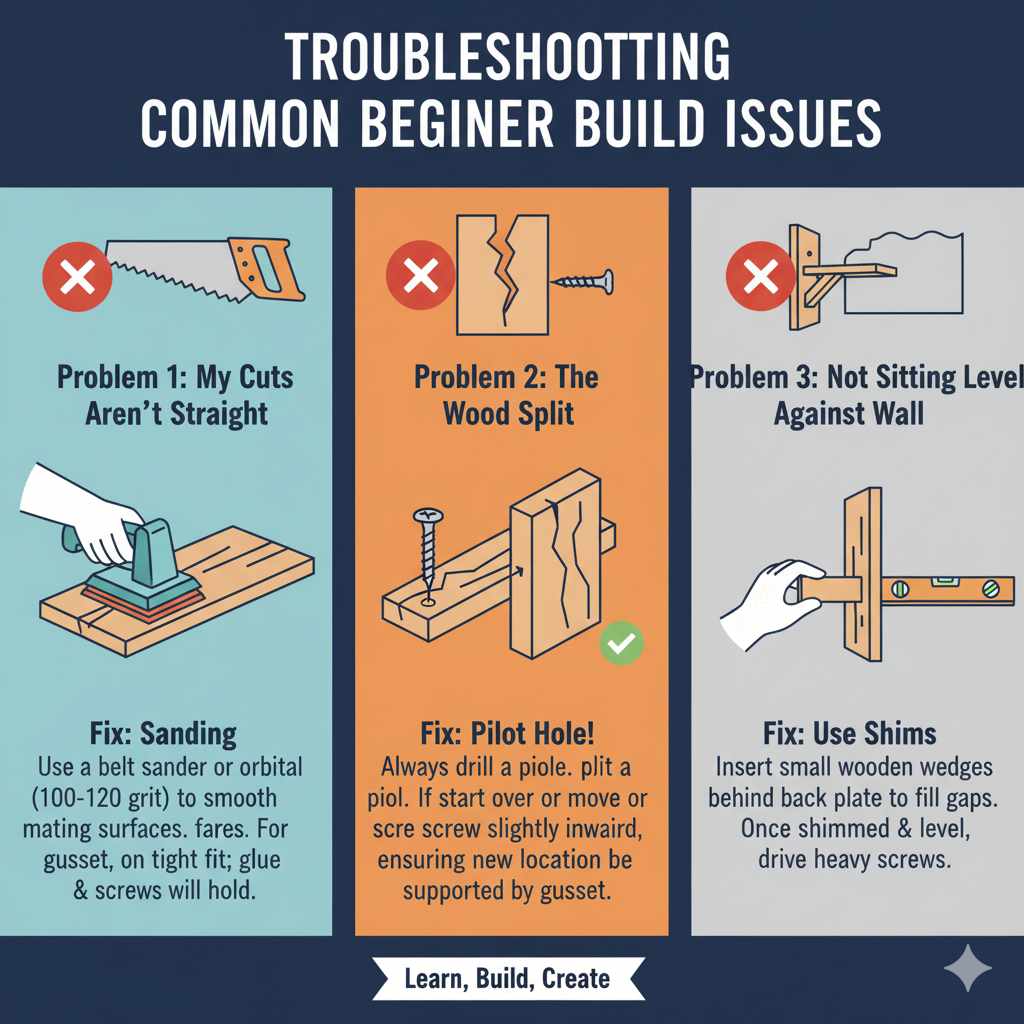
Troubleshooting Common Beginner Build Issues
Even experienced builders run into snags. Here are simple fixes for the issues most likely to happen when you’re learning how to build a shelf bracket.
Problem 1: My Cuts Aren’t Straight
Fix: If your cuts are wavy, the easiest fix is sanding. Use a belt sander or an orbital sander with medium-grit paper (100 or 120 grit) to smooth the mating surfaces (where the Arm meets the Back Plate). For the gusset, aim for a tight fit regardless of minor imperfections; the glue and the screws will hold it tight.
Problem 2: The Wood Split When I Screwed It In
Fix: This happens all the time, especially when screwing into the end grain (the narrow edge of a board). Always drill a pilot hole! If it already split, you have two options: 1) Discard the piece and start over, or 2) If the split only occurred near the edge, you might be able to move your screw location slightly inward, making sure the new location is still well-supported by the Gusset.
Problem 3: My Bracket Isn’t Sitting Level Against the Wall
Fix: If your stud finder isn’t perfect, the bracket might naturally want to sit slightly off. Before putting in your final, heavy-duty screws, use small wooden shims (thin wedges of wood) behind the Back Plate where needed to fill any gaps between the bracket and the wall surface. Once shimmed and level, proceed with driving the heavy screws in.
Frequently Asked Questions (FAQ) About Building Shelf Brackets
Q1: Do I really need to use wood glue if I am using big screws?
A: Yes, you absolutely should! Screws provide clamping force, but wood glue creates a chemical bond that prevents wood movement and significantly boosts the bracket’s weight capacity by distributing the load across the entire surface area, not just where the screw heads press.
Q2: Can I build these out of metal instead of wood?
A: You can, but metalwork requires welding or specialized brackets and tools that beginners might not have. For a first-time DIY project, wood is far more forgiving and easier to cut accurately with standard tools.
Q3: How deep should my shelf bracket (the arm) be?
A: For standard shelving, your bracket arm (the part running under the shelf) should be about 70–75% of the total shelf depth. For example, if your shelf board is 12 inches deep, the bracket arm should be roughly 8 to 9 inches long. This provides strong support while still keeping the bracket hidden under most of the shelf. If you plan to store heavy items like books or tools, consider using slightly deeper arms and spacing the brackets closer together for extra stability.
Q4: How far apart should shelf brackets be spaced?
A: A good rule of thumb is to place shelf brackets every 16 to 24 inches, depending on the weight the shelf will hold. For heavier loads such as books, tools, or kitchen equipment, keep the spacing closer to 16 inches and anchor the brackets directly into wall studs. Lighter decorative shelves can sometimes extend to 24 inches between brackets, but proper wall anchoring is still essential.
Q5: What type of wood works best for DIY shelf brackets?
A: For strong and durable shelf brackets, hardwoods like oak or maple are excellent choices because they can support heavier loads and resist warping. If you want something easier to cut and more budget-friendly, poplar or fir also works well for most home shelving projects. Avoid very soft woods like low-grade pine if the shelf will carry heavy items, as they can bend or split over time.
Conclusion: Build Strong, Reliable Shelf Brackets with Confidence
Learning how to build a shelf bracket is a practical DIY skill that can improve both the function and appearance of your home storage. With just a few basic tools, quality wood, and careful measurements, you can create strong, custom brackets that perfectly fit your space and support your shelves safely. The key is to focus on accurate cuts, solid assembly with screws and wood glue, and proper wall mounting into studs.
Building your own brackets also gives you flexibility that store-bought options often cannot provide. You can choose the exact size, style, and wood type that matches your decor while ensuring the bracket is strong enough for the items you plan to store. Whether you are organizing a garage, displaying books in your living room, or adding shelves in the kitchen, a well-built bracket makes all the difference.
Most importantly, this project proves that DIY woodworking does not have to be complicated. By following simple steps and prioritizing safety, even beginners can create sturdy, professional-looking results. Once you complete your first bracket, you’ll likely feel confident enough to tackle more shelving projects and customize your home exactly the way you want.