
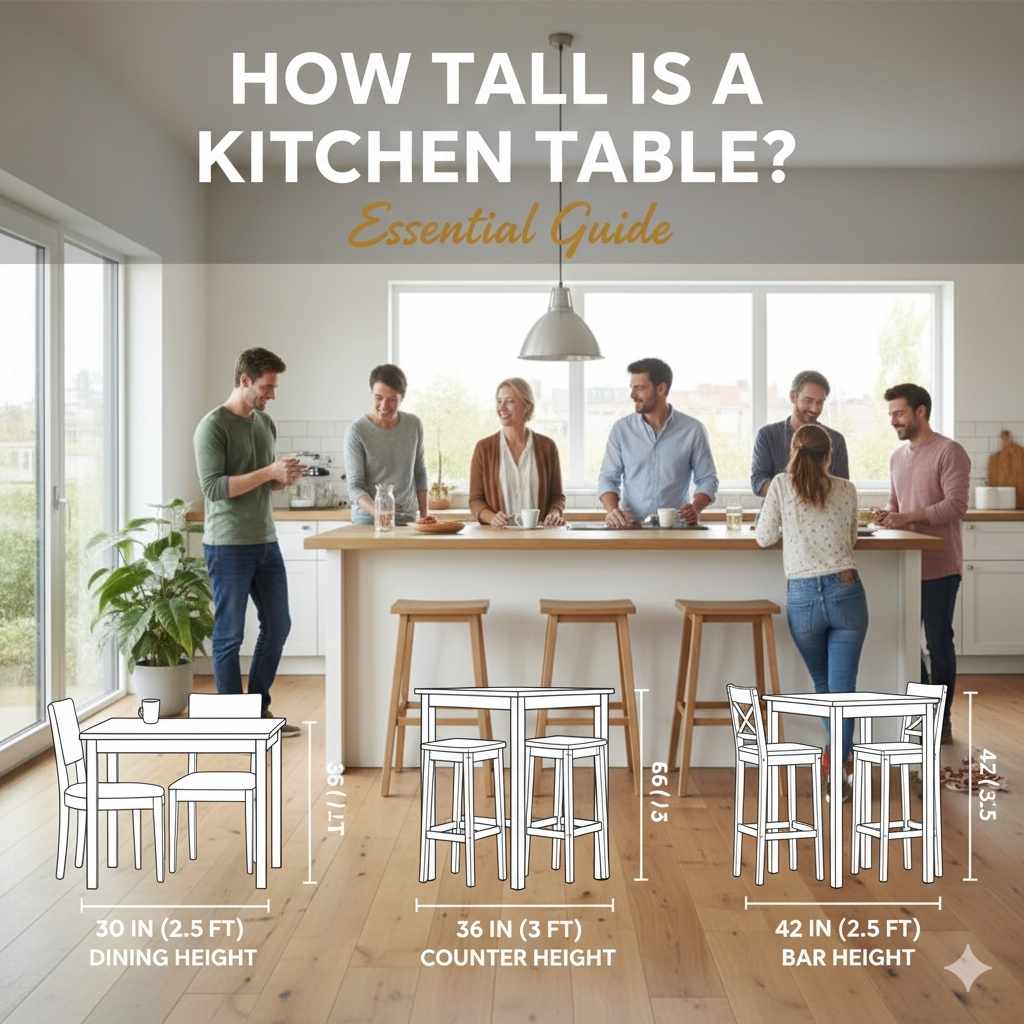
The standard height for a kitchen table is generally 28 to 30 inches high, which is perfect for comfortable seating with standard dining chairs. However, this can change based on whether you have a breakfast bar, counter-height seating, or a taller pub table.
Getting the right height for your kitchen table is crucial for happy mealtimes. If your table is too high or too low, your family won’t want to sit down to eat! It can feel awkward, strain your wrists, or just look wrong in the room. Don’t worry about this common problem. We are going to walk through all the standard sizes, why they exist, and how to measure to find the perfect fit for your home. You’ll feel confident choosing or building your next dining setup after this guide.
Understanding the Three Main Kitchen Table Heights
When shopping for a new table, you’ll quickly notice they aren’t all the same height. Manufacturers design tables to fit different activities and chair styles. Think of it like choosing the right size wrench for a bolt—the wrong size makes the job hard!
There are three main categories that almost every dining table falls into. Knowing these will help you shop smart.
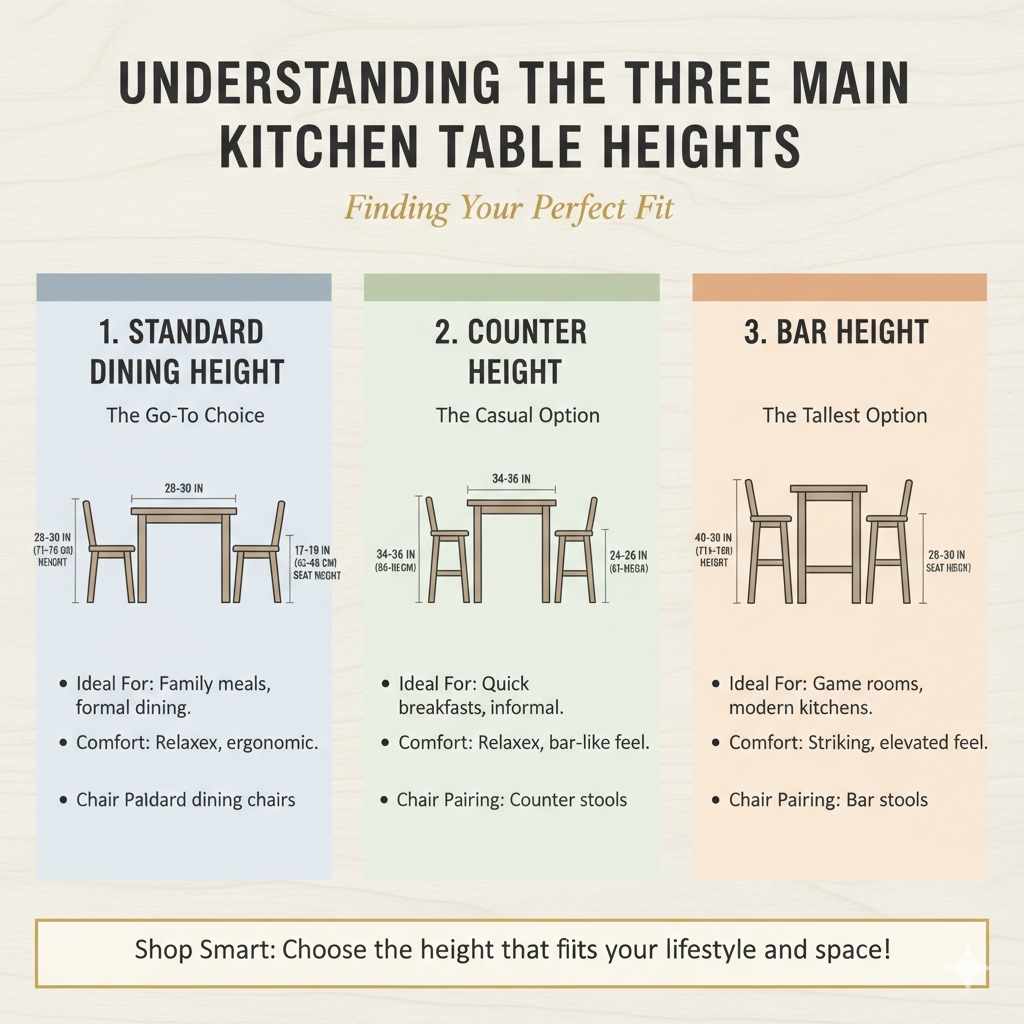
Standard Dining Height: The Go-To Choice
This is what most people think of when they hear “kitchen table.” It’s designed for regular family meals and comfortable sitting for long periods.
- Height Range: 28 to 30 inches (71 cm to 76 cm)
- Ideal For: Everyday family dinners, formal dining rooms, and homes where everyone is an adult or older child.
- Chair Pairing: Standard dining chairs, which usually have a seat height of 17 to 19 inches.
This height ensures your knees fit comfortably under the apron (the wooden frame just under the tabletop) and that your elbows rest naturally for eating. It’s the benchmark for comfort.
Counter Height: The Casual Option
Counter height tables are taller than standard tables. They are popular because they offer a more relaxed, bar-like feel, often used in open-concept kitchens where the table blends into the kitchen island.
- Height Range: 34 to 36 inches (86 cm to 91 cm)
- Ideal For: Quick breakfasts, informal gatherings, and smaller spaces where you want a higher sightline.
- Chair Pairing: Counter stools. These stools must have a seat height around 24 to 26 inches to work correctly.
If you are replacing a kitchen island top, or if you love the look of stools instead of traditional chairs, counter height is usually your answer.
Bar Height: The Tallest Option
Bar height tables are the tallest of the group. They mimic the height of a traditional home or commercial bar.
- Height Range: 40 to 42 inches (102 cm to 107 cm)
- Ideal For: Game rooms, dedicated bar areas, or very modern kitchens where you want a striking look.
- Chair Pairing: Bar stools, which need seats around 28 to 30 inches high.
These are fun, but make sure they fit your space. They can feel a bit imposing if the ceiling is low or if you have older adults using them often, as climbing onto a tall stool can be tricky.
The Golden Rule: The Knee Clearance Measurement
No matter which style you choose, the most important measurement isn’t the table height itself—it’s the space under the table. This is called knee clearance. If you can’t tuck your legs in properly, you’ll never be comfortable.
Think about how you adjust the seat height on your car for the best driving position; the table height works the same way for your legs.
What Is Ideal Knee Clearance?
Knee clearance refers to the distance between the bottom of the tabletop (or the apron, if the table has one) and the seat of the chair.
The general rule of thumb for comfortable dining is a 10 to 12-inch gap between the chair seat and the underside of the table.
If this gap is less than 10 inches, you’ll be bumping your knees. If it’s more than 12 inches, you’ll find yourself reaching up too high to eat, which strains your shoulders and wrists.
To help visualize this, let’s look at how the chair height relates to the table height across the categories:
| Table Type | Approx. Table Height (Inches) | Required Chair Seat Height (Inches) | Ideal Knee Clearance (Inches) |
|---|---|---|---|
| Standard Dining | 28″ – 30″ | 17″ – 19″ | 10″ – 12″ |
| Counter Height | 34″ – 36″ | 24″ – 26″ | 10″ – 12″ |
| Bar Height | 40″ – 42″ | 28″ – 30″ | 10″ – 12″ |
How to Measure Your Existing Setup
If you are replacing an old table or want to make sure your new chairs work with your current table, measuring is simple. You don’t need a fancy toolkit—just a reliable tape measure!
- Measure the Chair Seat Height: Place your tape measure on the floor and measure straight up to the very top of the seat cushion (or the hard surface if there is no cushion). This is your chair height.
- Measure the Table Height: Measure from the floor straight up to the bottom surface of the tabletop. If your table has a thick apron, measure to the lowest point of that apron.
- Calculate the Clearance: Subtract the chair height measurement from the table height measurement.
For example, if your table bottom is 30 inches high, and your chair seat is 18 inches high, you have 12 inches of clearance—that’s perfect! If you calculate 8 inches, you know you need shorter chairs or a lower table next time.
Factors That Influence Table Height Decisions
Choosing the right height isn’t just about the numbers; it’s about fitting the table into your life and your home’s design. Here are the key things to consider before you buy.
1. The Height of Your Users
This is the most personal factor. If you or your primary dining partners are taller than average (over 6 feet), you might find standard 30-inch tables feel too low. Taller people often prefer counter height (36 inches) because it allows them to sit more upright without hunching.
Conversely, if most of your family members are petite, a very tall table can feel awkward. Always try to sit at a table of the height you are considering before purchasing, if possible.
2. The Kitchen Layout and Flow
Where is the table going?
- Next to the Kitchen Island: If you have an island that is standard counter height (usually 36 inches), a matching counter-height dining table helps create a smooth, continuous visual line in your kitchen.
- In a Separate Nook: If the table is in a dedicated breakfast nook or a slightly more formal area, standard dining height (28–30 inches) is usually the most comfortable choice for lingering over meals.
- Open Concept Spaces: Taller tables (counter or bar height) can sometimes visually separate the dining space from the kitchen workspace, which can be a good design trick.
3. Chair Design and Bulkiness
The chair you use matters more than the table height sometimes!
Thick Cushions: If a chair has a very thick, soft cushion, it adds an extra inch or two to the actual sitting height. Remember to account for that when you measure your chair height.
Armrests: If you choose chairs with arms, you need to ensure the arms tuck under the table apron. Taller tables (counter or bar height) usually have less apron, making it easier for chairs to slide right under without obstruction.
4. Purpose of the Table
What will you primarily use this surface for?
Homework/Workstation: If kids or adults will be doing detailed work, like homework or paperwork, a standard 30-inch table is ergonomically best for writing, as it mimics desk height.
Buffet/Serving: Taller tables are excellent for buffet-style serving because guests don’t have to bend over as much to put food on their plates.
For more information on kitchen design standards, you can check out resources from organizations like the National Park Service on Historic Building Standards, which often outline common fixture heights.
Choosing the Right Seating Height for Your Table
Once you decide on the table height, you must match it with the correct seating. This is where many people run into trouble—they buy a beautiful counter-height table and then try to use standard dining chairs! That rarely works out comfortably.
Let’s look closer at the seating options that pair with each table style.
Standard Dining Chairs
These chairs are the most common. They are designed to fit perfectly under a 28–30 inch table.
Seat Height: Typically 17–19 inches.
Best For: Formal dining, maximizing comfort for long meals.
Counter Stools
These are the workhorses for kitchen areas. They are significantly taller than dining chairs but not as high as bar stools.
Seat Height: Typically 24–26 inches.
Best For: Kitchen islands and 36-inch tables. They often have footrests built in for support.
Bar Stools
These are the tallest seating option, built for that 40–42 inch surface.
Seat Height: Typically 28–30 inches.
Best For: Pub tables or high islands. Because they are so high, you often see them without backs or with very low backs.
Pro Tip for Adjustability: If you have a mixed-age family or frequently host guests with different needs, consider investing in adjustable height stools. Many modern counter stools have a lever that allows the seat height to shift between 24 inches and 30 inches, giving you flexibility.
How to Measure and Place a New Table
You’ve picked your height, now you need to make sure it fits the room and that you can pull the chairs out easily. This is vital for making the space functional.
Step-by-Step Placement Guide
Follow these steps to ensure your new table fits perfectly in your kitchen space:
- Determine the Table Footprint: Measure the exact length and width of the tabletop you plan to buy. Lightly tape this outline on the floor where the table will sit using painter’s tape.
- Add Clearance for Walking: You need space to walk around the table when no one is sitting there. Aim for at least 36 inches of clear space between the edge of the table and the nearest wall or cabinet.
- Calculate Seating Pull-Out Space: This is the crucial step! Once the table is placed, you need room for people to sit down comfortably. Add the required knee clearance (10–12 inches) PLUS the depth of the chair (about 20–24 inches) to the table edge. Mark this larger area on the floor.
- Check Traffic Flow: Walk the newly marked perimeter. Can you still easily access the refrigerator, stove, or sink without squeezing past someone sitting at the table? If not, you may need a smaller table or a different height that allows for a smaller chair footprint.
Remember, a standard dining set requires about 72 inches (6 feet) of clear space from the wall behind the chair all the way to the next obstacle for comfortable access. Taller, smaller-footprint tables might save you a little space, but you still need room to maneuver those tall stools.
Common Mistakes to Avoid When Buying a Table
Even with good measurements, people sometimes make simple mistakes when choosing table height. Let’s review the top traps so you can avoid them!
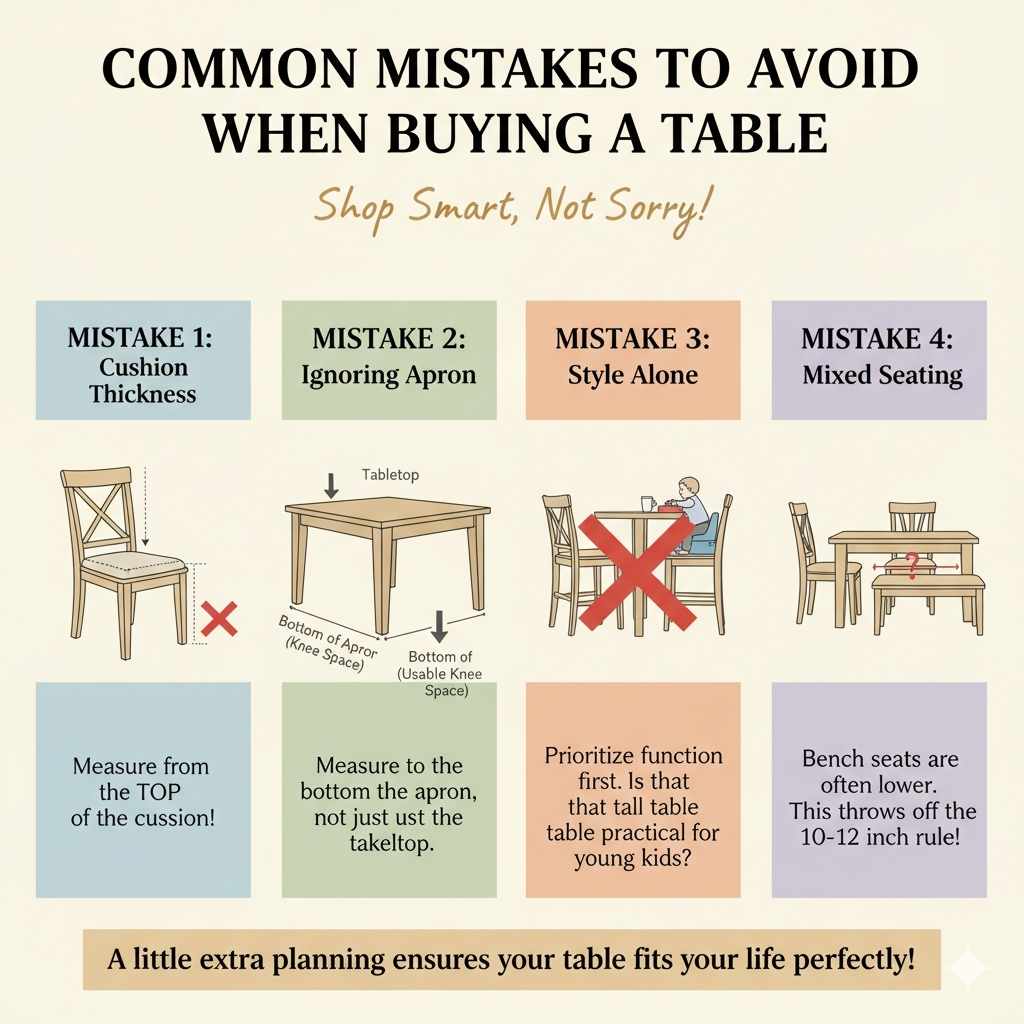
- Mistake 1: Forgetting Chair Cushion Thickness. Assuming a chair with a 2-inch cushion is the same height as a hard wooden chair. Always measure from the top of the cushion!
- Mistake 2: Ignoring Apron Thickness. On older or very solidly built tables, the wood piece underneath (the apron) can drop down several inches, reducing your usable knee space dramatically. Measure to the bottom of the apron, not just the tabletop.
- Mistake 3: Buying Based on Style Alone. That gorgeous 42-inch bar table looks amazing, but if your children are young, they will need safety steps or booster seats just to reach the top, making daily use a pain. Prioritize function first.
- Mistake 4: Not Considering Mixed Seating. If you plan to mix standard chairs on one side and a built-in bench on the other, measure the bench height. Benches often sit lower than standard chairs, which can throw off the 10–12 inch rule on that side.
FAQ: Frequently Asked Questions About Table Height
Q1: What is the most common kitchen table height?
The most common and standard kitchen table height is between 28 and 30 inches. This height works best with standard dining chairs (17–19 inch seat height) and offers excellent ergonomic comfort for eating.
Q2: Should I choose counter height if I have a small kitchen?
Counter height (34–36 inches) can sometimes make a small kitchen feel more open because the seating is more upright and less bulky than a large traditional table set. However, ensure you still have at least 36 inches of clearance around the table for walking.
Q3: Can I use a standard chair at a counter-height table?
No, this is generally uncomfortable and unsafe. Standard dining chairs (17–19 inches) are about 10–12 inches too short for a 36-inch counter table. You need counter stools that are usually 24–26 inches high to maintain proper knee clearance.
Q4: How do I measure the table if it has a thick base or apron?
Always measure to the lowest point where your knees will go. If your table has a wooden apron underneath the top, measure from the floor up to the bottom edge of that apron, as this is the true obstruction for your legs.
Q5: Is there a difference between bar height and counter height?
Yes, there is a significant difference. Counter height is typically 34–36 inches, designed to match kitchen counters. Bar height is taller, usually 40–42 inches, designed to match commercial bars. Always check the listed dimensions before buying stools!
Q6: What is the best height for tall people (over 6 feet)?
Taller individuals often find that counter height (36 inches) provides the most comfortable eating posture. It prevents them from having to lean down excessively, which can cause neck and back strain over time.
Conclusion: Finding Your Perfect Fit
Start with the standard 28–30 inch height if you want simplicity and classic comfort. If your kitchen leans modern or open-concept, consider the 34–36 inch counter height. Always, always double-check that 10-to-12-inch gap between the chair seat and the tabletop. Measuring twice and buying once saves you time, money, and the frustration of eating dinner with your knees jammed against the wood! Get that measurement right, and you’ll be enjoying comfortable meals for years to come. Happy dining!
You now have all the tools needed to tackle kitchen table shopping with confidence. Remember, the “right” height isn’t set in stone by any single rule—it’s set by the comfort of the people using it every day.