Your end table should ideally be around the same height as your sofa’s armrest or slightly lower. This makes it easy to reach drinks, remotes, or lamps without straining. Getting this simple measurement right makes your living room much more comfortable and functional.
Ever set up a new living room, only to find your end tables feel…off? Maybe they’re too tall, making it awkward to reach for your coffee, or too short, looking a bit lost next to your comfy sofa. It’s a common little frustration that can actually make a big difference in how you use and enjoy your space. But don’t worry, figuring out the right end table height compared to your sofa is easier than you think! We’ll walk through it step-by-step, so you can make your living room both stylish and super practical. Let’s get those tables perfectly placed!
Why End Table Height Actually Matters
It might seem like a small detail, but the height of your end table in relation to your sofa plays a surprisingly big role in your living room’s comfort and flow. Think of it like this: your sofa is the main hub for relaxing, watching TV, or chatting with friends. The end tables are its trusty sidekicks, there to hold your essentials.
When an end table is the right height, everything just works. You can easily set down a drink without worrying about it tipping. You can grab the remote right when you need it. A lamp can cast the perfect light without being too high or too low. It feels natural and effortless.
On the flip side, an end table that’s too high can feel awkward to use, and you might be reaching awkwardly for items placed on it. If it’s too low, it can look out of place and might not be practical for holding everyday items, sometimes even getting lost beside the sofa. It can also make the room feel a bit unbalanced. The goal is to create a cohesive look and a space that’s a joy to spend time in. We’ll break down exactly how to find that sweet spot.
Understanding Sofa and End Table Anatomy
Before we start measuring, let’s get a handle on what we’re talking about.
Sofa Armrest Height
This is your primary reference point. The armrest is the edge of the sofa your arm rests on when you’re sitting. Its height is usually measured from the floor to the top of the armrest cushion or frame. This is the benchmark for where your end table should ideally sit.
End Table Height
This is simply the measurement from the floor to the highest point of the end table’s surface. This is what we’ll be comparing to your sofa’s armrest.
The Golden Rule: End Table Height Compared to Sofa Armrest
Alright, here’s the main takeaway, the most important guideline for end table height compared to your sofa:
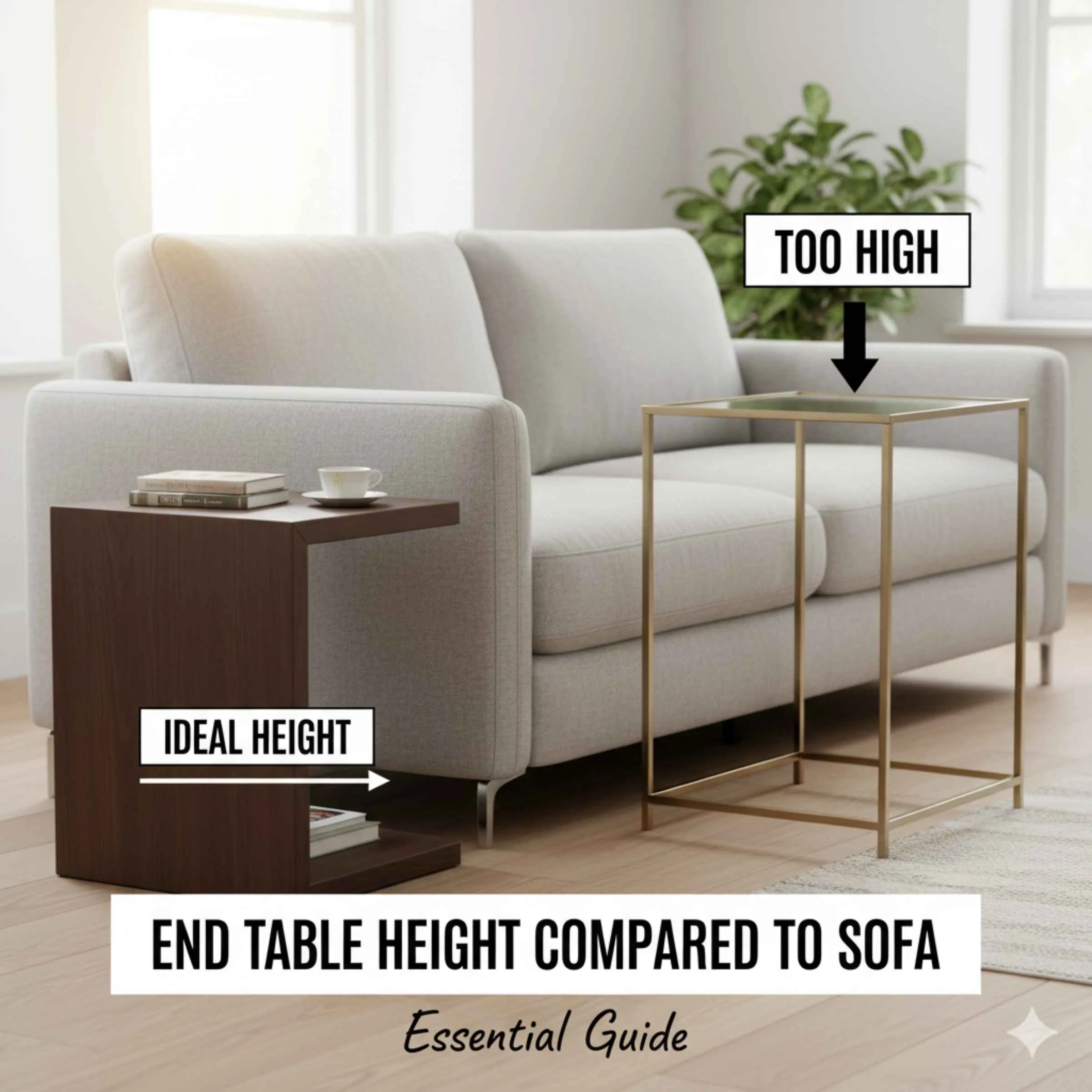
Ideal Height: The top of your end table should be roughly the same height as the top of your sofa’s armrest.
Slightly Lower is Also Great: If the end table is about 1-2 inches shorter than the sofa armrest, that’s perfectly fine too and often preferred by many designers.
Too High? Probably Not Ideal: If your end table is significantly taller than the sofa armrest, it can feel awkward and visually jarring.
Too Low? Also Not Ideal: If it’s much shorter, it might not be functional and can make the sofa look even bigger.
Think of it like adding a handy, stable surface right within easy reach. This simple principle maximizes convenience and helps create a balanced aesthetic in your living space.
How to Measure for the Perfect Fit
Don’t worry, this isn’t complicated math! You just need a simple tool and a few moments.
Tools You’ll Need
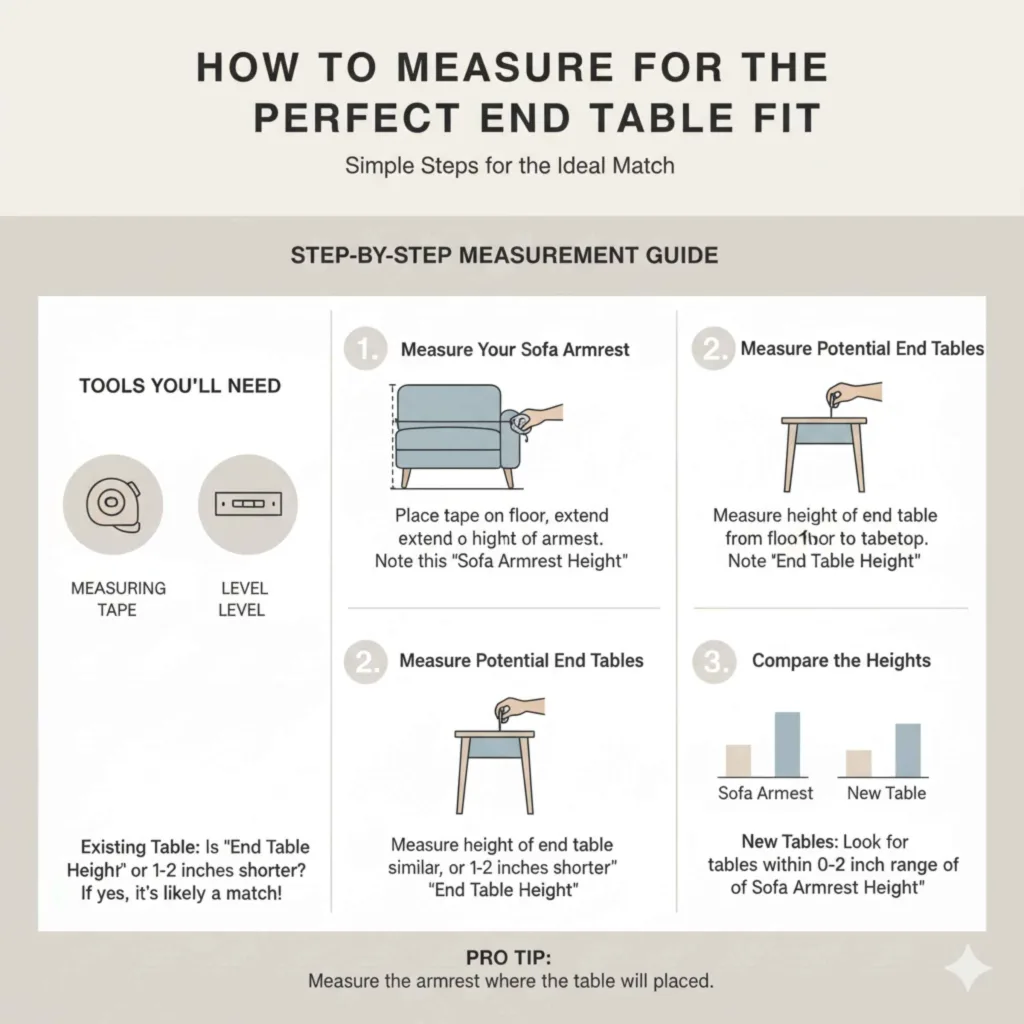
A Measuring Tape: A standard retractable tape measure is perfect.
A Level (Optional but helpful): To ensure your measurements are accurate.
Step-by-Step Measurement Guide
Follow these easy steps to find the ideal end table height for your sofa:
1. Measure Your Sofa Armrest:
Place your measuring tape on the floor directly in front of one of the sofa’s armrests.
Extend the tape measure straight up to the highest point of the armrest. This could be the top of the cushion or the top of the frame, depending on your sofa’s design.
Note this measurement down. Let’s call this your “Sofa Armrest Height.”
2. Measure Potential End Tables:
If you’re shopping for new end tables, measure the height of each one you’re considering.
If you already have an end table, measure its height from the floor to the tabletop. Let’s call this your “End Table Height.”
3. Compare the Heights:
For your existing end table: Compare its End Table Height to your Sofa Armrest Height. Is it roughly the same, or 1-2 inches shorter? If so, you’ve likely got a winner!
For new end tables: Look for tables where the advertised height is close to your Sofa Armrest Height (within that 0-2 inch range).
Pro Tip: If your sofa has different height armrests (some modern designs do), measure the ones you’ll be placing the end tables next to.
What If My End Table Height Isn’t “Right”?
It’s totally normal to find that your current end tables aren’t a perfect match. Don’t stress! Here are some practical, beginner-friendly solutions:
If Your End Table is Too Short
This is often an easier fix than you might think. The goal is to raise the table slightly to bring it closer to the sofa armrest height.
Use Furniture Risers: These are simple blocks or feet designed to elevate furniture. They come in various heights and styles, some looking quite decorative. You can often find them at home goods stores or online. They’re a budget-friendly and effective solution.
DIY Solutions (Use with Caution): For a short-term or less visible fix, you might use sturdy, stackable wood blocks or even very thick, hard books. Ensure whatever you use is stable and won’t wobble. Stability is key for safety!
Get a Small Stool or Pedestal: A decorative stool or a small pedestal can serve as a stable base to raise your end table. Make sure it’s wide enough to securely support the table.
Consider a Different Function: If the table is simply too short for its intended use next to the sofa, perhaps it would work better as a bedside table or in a different spot where its height is less critical.
If Your End Table is Too Tall
This can be a bit trickier, as you often can’t easily shorten a table.
Use it Elsewhere: The best solution is often to repurpose the table. A taller table might be perfect as a console table behind a sofa, a display stand for plants, or even a taller bedside table.
Look for a Piano or Furniture Dolly: If the table has legs, in very rare cases, you might be able to carefully saw off a small portion of the legs. This is an advanced DIY task and should only be attempted if you are comfortable with woodworking and have the right tools, and if you can ensure the table remains stable and the finished base is level. For beginners, it’s usually much safer and more practical to find a new home for the table.
Place it Further Away: If you must use it next to the sofa, try pulling it out a bit further from the sofa’s seating area. This can make the height difference less noticeable, though it might impact its immediate usability.
Consider Layering (for decor): While you can’t change the table’s height, you can adjust what you put on it. If the tabletop is much higher than the armrest, place decorative items with a lower profile on it.
If You’re Buying New: What to Look For
Check Dimensions Carefully: Always look at the product dimensions online or on the tag. Pay close attention to the overall height.
Consider the Style: End tables come in all sorts of designs. Some have very thick tops, some have chunky legs, and some have minimalist legs. These design elements affect the overall height.
Read Reviews: Other buyers might mention if the table’s height worked well with standard sofas.
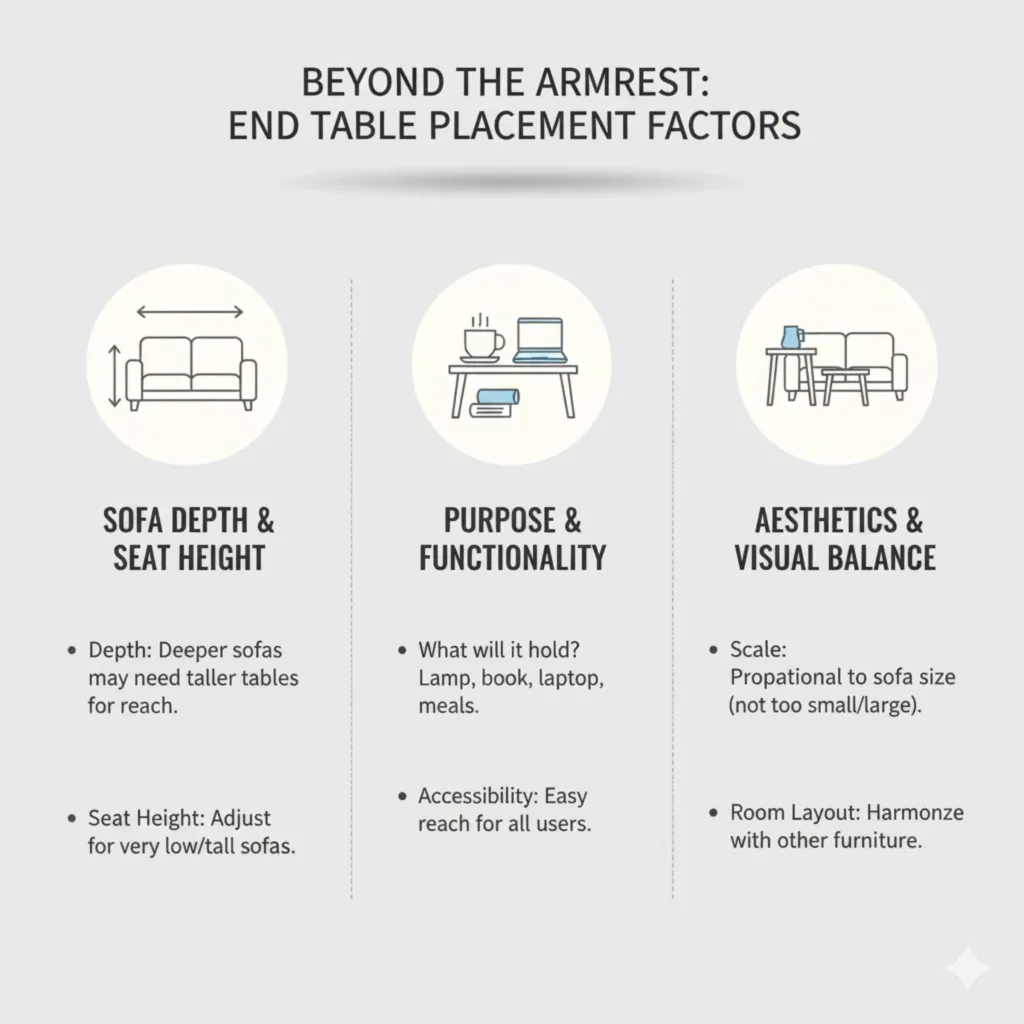
Beyond the Armrest: Other Factors for Placement
While armrest height is the primary guide, a few other things can influence where you place your end table and how it feels.
Sofa Depth and Seat Height
Depth: A very deep sofa might mean you want your end table a little closer or even a tad taller, so items feel more within reach without you having to lean too far forward.
Seat Height: If your sofa sits very low to the ground, a table that matches the armrest but feels quite tall relative to the seat might still feel a bit imposing. Conversely, a tall sofa might benefit from an end table that’s right at the armrest height, as it won’t feel too low.
Purpose and Functionality
What will it hold? If it’s just for a lamp and a coaster, a few inches difference might not matter much. If you plan to balance a laptop or eat meals there, precise height is more important.
Accessibility: Think about who uses the sofa. If kids or elderly individuals will be reaching for things, ease of access is paramount.
Aesthetics and Visual Balance
Scale: The end table needs to look proportional to the sofa. A tiny, short table next to a huge sectional can look lost. A massive, tall table next to a petite loveseat can feel overwhelming.
Room Layout: Your end table’s placement also depends on the overall room layout and the placement of other furniture.
Common End Table Heights and Sofa Armrest Heights: A Quick Look
To give you a better idea, here’s a general overview of common furniture dimensions. Keep in mind that sofa and end table heights can vary significantly based on style and manufacturer!
| Furniture Type | Typical Height Range (Inches) | Notes |
|---|---|---|
| Standard Sofa Armrest | 20″ – 25″ | Can be higher for sectional or modern designs. |
| Standard End Table | 20″ – 28″ | Look for one within 1-2 inches of your sofa armrest. |
| Standard Coffee Table | 16″ – 18″ | Typically lower than sofa seat height. |
| Console Table (behind sofa) | 28″ – 32″ | Usually aligns with sofa back height or higher. |
This table gives you a ballpark. The most reliable method is always to measure your specific pieces! For more detailed information on furniture dimensions and how they integrate into a room, resources like the Houzz guide to living room layouts can offer fantastic visual inspiration and design principles.
Visualizing the Right Height
Imagine yourself sitting comfortably on your sofa. Your arm rests naturally on the armrest. Now, picture everything you might need: a drink, your phone, a book, the remote. Where would you want those items to be? Ideally, they’d be on a surface that’s right there, at a comfortable height for you to reach without having to shift your body or crane your neck. That accessible spot is precisely what a correctly-heighted end table provides. If the table feels too far away, too high to reach easily, or too low to be useful, it’s a signal that the height isn’t quite working for optimal comfort and function.
FAQ: Your End Table Height Questions Answered
Q1: What is the most important measurement for end table height?
A1: The height of your sofa’s armrest is the most crucial measurement. Your end table should ideally be the same height as your sofa armrest, or just 1-2 inches shorter.
Q2: My end table is shorter than my sofa armrest. Is that okay?
A2: Yes, absolutely! An end table that is 1-2 inches shorter than your sofa armrest is often considered ideal. It still provides easy access without looking out of proportion.
Q3: My end table is much taller than my sofa armrest. What should I do?
A3: A significantly taller end table can be challenging to use comfortably next to a sofa. The best solution is often to use it in a different spot where its height works better, like a console table or plant stand. If you must use it by the sofa, try placing it slightly further away to minimize the visual difference.
Q4: Does standard sofa height vary a lot?
A4: Yes, sofa armrest heights can vary quite a bit. Modern, minimalist sofas might have lower armrests, while larger, plush, or sectional sofas might have higher ones. Always measure your specific sofa!
Q5: Can I use furniture risers to adjust the height of my end table?
A5: Absolutely! Furniture risers are a great, easy, and often inexpensive solution if your end table is too short. They come in various styles and heights to help you achieve the perfect match.
Q6: What if my sofa has no armrests?
A6: If your sofa has no armrests, you’ll need to choose a reference point. Often, the preferred height would then align with the seat height of the sofa, or a general guideline of aiming for a height that’s comfortable for reaching from a seated position without straining. You might also consider the height of any side chairs in the room.
Q7: How important is the height of my coffee table in relation to the sofa?
A7: While end tables are primarily measured against armrests, coffee tables are usually measured against the sofa seat height. A good rule of thumb is that a coffee table should be about the same height as the sofa’s seat cushion, or 1-2 inches lower. This makes it easy to reach items from a seated position.
Putting It All Together: A Perfectly Proportioned Space
Choosing the right end table height compared to your sofa is all about creating a space that is both beautiful and functional. It’s about making sure your comfort isn’t tripped up by a small detail. By taking a few simple measurements and applying the golden rule of matching the armrest height (or going just a little lower), you can ensure your end tables serve their purpose perfectly.
Remember, it’s not about rigid rules, but about creating a feeling of balance and ease. If your current setup isn’t quite hitting the mark, don’t feel discouraged! There are plenty of straightforward solutions, from simple furniture risers to repurposing tables elsewhere. The goal is to make your living room a place where everything feels just right, where reaching for your drink or a book is effortless, and your furniture looks like it was made for each other.
So, grab that tape measure, check your sofa and end table heights, and make those small adjustments. A few inches can indeed make a world of difference in your everyday comfort and the overall harmony of your home’s most social space. Happy decorating!