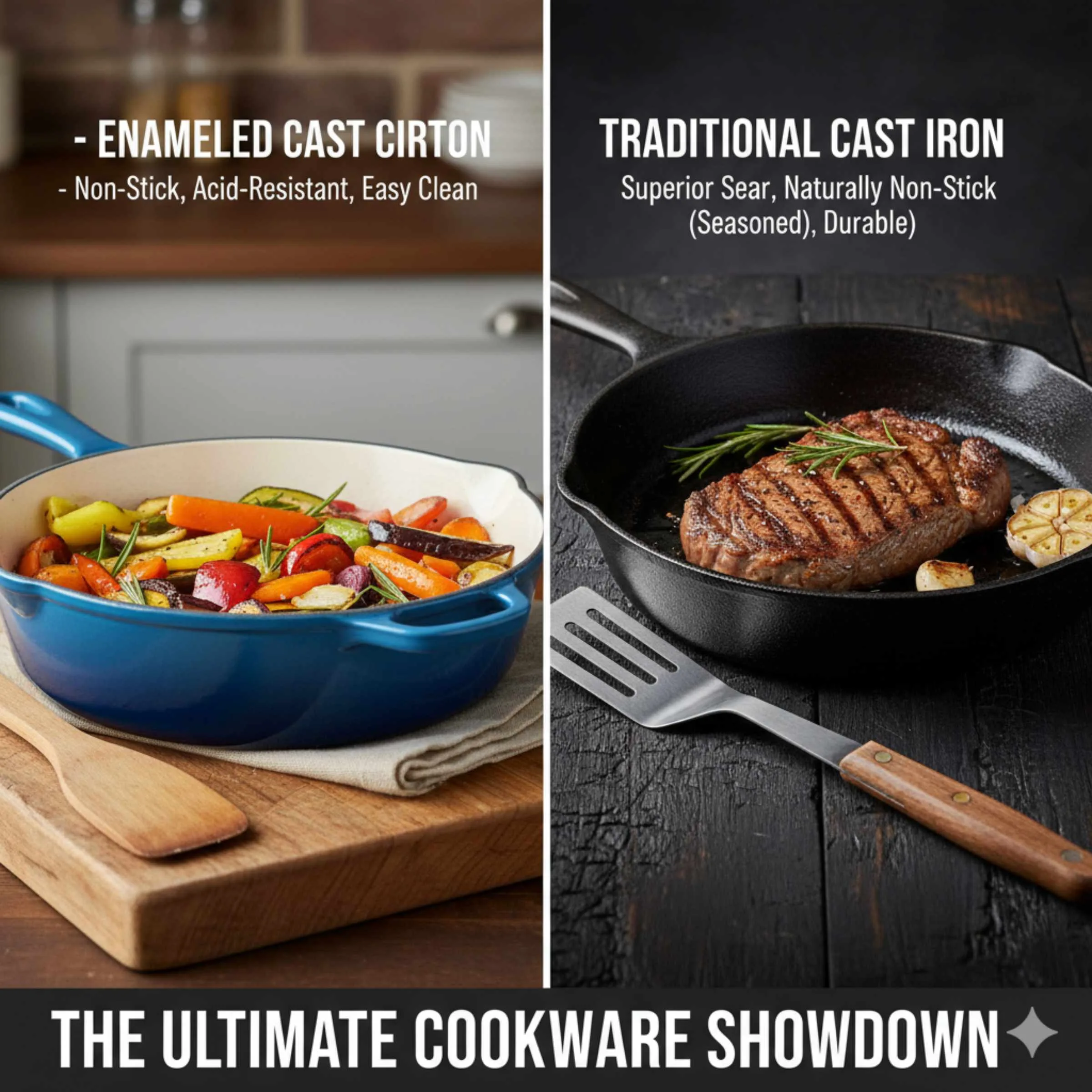
Enameled cast iron skillets offer non-stick convenience and zero seasoning maintenance, while traditional cast iron delivers superior heat retention and develops a natural, lifelong non-stick surface through regular seasoning. The choice depends on your cooking style and willingness to maintain the pan.
Deciding between a classic cast iron skillet and a newer enameled cast iron one can feel confusing. Both pans are heavy-duty kitchen workhorses, known for incredible heat control. You want the best tool for your kitchen, but the differences in maintenance often stop people in their tracks. Don’t worry! Choosing the right one is easier than you think once you know the simple breaks between them. We are going to walk through every key difference, so you can pick the perfect pan with total confidence. Let’s get cooking!
Enameled Cast Iron Vs Traditional Cast Iron: The Core Difference
When you look at traditional cast iron and enameled cast iron side-by-side, the main difference jumps right out: the finish. It’s like comparing a bare metal tool to one with a durable, protective coating. Understanding this coating—or lack thereof—is the key to making your purchase decision.
What is Traditional Cast Iron?
Traditional cast iron is just that—pure iron, poured into a mold and cooled. It has a rough, matte black surface. It doesn’t come with a non-stick coating; instead, it creates one over time through a process called seasoning.
The Magic of Seasoning
Seasoning isn’t seasoning in the culinary sense (like adding salt and pepper). In the world of cast iron, seasoning is baking thin layers of oil onto the metal until they polymerize—they turn into a hard, slick, protective layer. This layer prevents rust and creates a natural non-stick surface.
Think of seasoning like a protective wax coating on a new car finish. If you take care of it, it gets better and smoother the more you use it. Proper seasoning is what makes traditional cast iron so beloved for searing steaks and frying.
What is Enameled Cast Iron?
Enameled cast iron begins life exactly like its traditional sibling—it’s spun iron. However, before it ever leaves the factory, it gets coated inside and out with a layer of porcelain enamel. This is a type of glass fused to the metal at incredibly high temperatures.
This enamel coating is what gives brands like Le Creuset or Staub their signature bright colors. It seals the raw iron from air and moisture completely.
The Benefits of the Enamel Shell
Because of this glassy coating, the pan looks different, feels different, and, most importantly, cooks differently than bare iron. This shell means you never have to worry about rust or the tedious re-seasoning process. It’s ready to go right out of the box.

Side-by-Side Comparison: Key Characteristics
To make things crystal clear, let’s break down how these two types of skillets stack up against each other in the areas that matter most to home cooks. This comparison will help you see which one fits your kitchen habits better.
| Feature | Traditional Cast Iron | Enameled Cast Iron |
|---|---|---|
| Maintenance/Seasoning | Requires routine oiling and careful washing to maintain the seasoning layer. | Virtually maintenance-free; just wash and dry. |
| Non-Stick Quality | Develops a superior non-stick surface over time with use. | Good non-stick on the light interior; can stick if oil isn’t used or if the pan is scratched. |
| Acidic Foods | Not recommended (acids can strip the seasoning). | Excellent; the enamel safely handles tomatoes, wine, and citrus. |
| Appearance | Matte black, rustic look. | Available in many bright colors, smooth glaze finish. |
| Price Point | Generally much more affordable. | Significantly higher initial cost. |
| Stovetop Use | Perfect for gas, electric, and induction stovetops. | Perfect for gas, electric, induction, and even campfire use (if the lid is metal). |
Heat Retention and Distribution
This is where both pans truly shine, as they share the same iron core. Cast iron excels at thermal mass—it holds heat incredibly well. Once it’s hot, it stays hot!
- Searing Power: Both types are fantastic for achieving that perfect, crispy crust on meat because they deliver consistent, high heat to the food’s surface.
- Even Heating: While they take longer to preheat than thinner pans (like aluminum), once heated, the temperature is steady across the entire cooking surface. This prevents hot spots that burn food in one area while leaving another raw.
Durability and Longevity
When cared for properly, both pans can last for generations. However, their vulnerabilities differ:
Traditional Cast Iron Vulnerability: Rust. If left wet or subjected to harsh detergents, it can rust quickly. However, rust is usually reversible with scrubbing and re-seasoning.
Enameled Cast Iron Vulnerability: Chipping or cracking the enamel. If you drop the pan severely, or use metal utensils aggressively on the interior glass surface, the enamel can chip. Once the iron beneath is exposed, it can rust, and the chipped area won’t perform as well.
Choosing Your Pan: When to Select Traditional Cast Iron
Traditional cast iron is the rugged, reliable choice for the cook who doesn’t mind a little elbow grease in exchange for unbeatable performance and value. If you are looking to make a smart, long-term investment without a high upfront cost, bare iron is your ticket.
Why Traditional Cast Iron Might Be Right For You:
- Budget Conscious: A good starter traditional skillet costs a fraction of its enameled counterpart. You get maximum performance for minimum dollars.
- Deep Searing and High Heat: Many purists argue that the pure, seasoned surface provides a slightly better sear than the factory enamel finish, especially once the seasoning is mature.
- Outdoor Cooking: If you plan on using your skillet directly over coals or an open campfire, traditional cast iron is much less susceptible to surface damage than enameled cookware.
- Willingness to Maintain: You enjoy the ritual of caring for your cookware. You understand that cleaning means wiping, maybe a quick scrub with salt, and immediately drying and re-oiling.
Maintenance for Traditional Cast Iron: The Simple Steps
Don’t let seasoning scare you! It’s easy once you get the hang of it. Proper maintenance keeps your pan from rusting and ensures it becomes wonderfully non-stick. We recommend following guidelines similar to those for maintaining other high-heat tools, ensuring they are dry immediately after use. For more in-depth chemical information on surface treatments, you can review general material science principles outlining polymerization reactions, which is the basis of seasoning.
- Clean Immediately: While the pan is still warm (but not blazing hot), use hot water and a soft sponge. Avoid strong soap if possible, though a tiny drop of mild soap is okay on a well-seasoned pan. For stuck bits, use coarse salt and a paper towel as a gentle abrasive scrub.
- Dry Thoroughly: This is crucial! Never let it air dry. Place the clean skillet on a low burner for a few minutes until all moisture has evaporated.
- Oil Lightly: While the pan is still warm, apply a very thin layer of neutral oil (like canola or flaxseed) with a paper towel, covering the entire cooking surface. Wipe until it looks dry again—you only want a microscopic film of oil left.
- Store Properly: Store in a dry place. If stacking other pans on top, place a paper towel or thin cloth in the bottom of the cast iron to prevent scratching the seasoning.
When To Go Enameled: Convenience is King
Enameled cast iron is the modern solution for cooks who value ease of use, quick cleanup, and versatility across all types of ingredients, especially those messy, acidic ones.
Why Enameled Cast Iron Works Best for You:
- Cooking Acidic Foods: This is the biggest win. You can simmer a tomato sauce, braise red wine reductions, or cook lemon chicken without fear of destroying your pan’s surface.
- Beginner Cooks: If you’re still mastering cooking techniques, the enamel means you don’t have to worry about accidentally stripping your seasoning with the wrong soap or an accidental soak.
- Aesthetics Matter: You want your cookware to look beautiful on the stovetop or serving table. The bright colors are undeniably attractive.
- Low Maintenance Required: You want a pan that goes from the oven to the table to the sink with minimal fuss beyond standard washing.
Caring for Enameled Cookware
While low-maintenance, enameled care focuses on protecting the glass surface. Think of it like caring for a very sturdy but breakable counter top.
Do’s for Enameled Skillets:
- Use wooden, silicone, or nylon utensils. Metal scratches the enamel.
- Preheat gradually over low to medium heat. Rapid temperature changes can cause thermal shock and crack the enamel.
- Soak stuck-on food briefly with warm, soapy water to loosen it before scrubbing gently.
Don’ts for Enameled Skillets:
- Do not use steel wool, abrasive cleaners, or harsh scouring pads.
- Do not put a hot pan under cold water (thermal shock risk).
- Do not use high heat continuously, especially on electric stovetops, as this can cause discoloration or scorching on the light enamel interior.
Oven Performance and Broiling Comparison
Both skillet types are fantastic in the oven, which is why they are the go-to for many recipes that start on the stove and finish in the oven (like cornbread or deep-dish frittatas).
Traditional Cast Iron Oven Use
Traditional cast iron can handle nearly any temperature the oven can throw at it. If you are seasoning the pan in the oven (going through the high-heat baking cycles), you are heating it to 450°F or higher repeatedly. Manufacturers often list no upper temperature limit for seasoned raw iron—it’s incredibly heat-tolerant.
Enameled Cast Iron Oven Use
Enameled skillets are also oven-safe, but you must check the manufacturer’s specific rating. Most reputable brands rate their enameled cookware up to 500°F (about 260°C), but lids (if they have plastic knobs) might be rated lower, perhaps 375°F or 400°F. Always check the manufacturer’s guidance, such as the specifications provided by major brands, to ensure you don’t damage the enamel coating.
Best Uses: Which Pan Wins For Specific Tasks?
To help you decide which one belongs in your cabinet, let’s look at specific cooking scenarios. As a home mechanic, I always match the tool to the job, and cookware is no different!
For Perfect Pancakes and Eggs
Winner: Enameled Cast Iron (Light Interior)
Why: The light-colored enamel interior makes it much easier to monitor the browning on eggs and pancakes. You can see subtle color changes that you might miss on the dark surface of traditional iron. Plus, a well-oiled enameled surface is plenty non-stick for delicate morning foods.
For Deep-Dish Searing (Steaks and Chops)
Winner: Traditional Cast Iron
Why: Seasoned traditional iron, once preheated, delivers unrivaled, consistent “crust-building” heat. If you are comfortable with the post-sear cleanup (a quick wipe and oil), the result is the best sear possible.
For Making Sauces and Deglazing
Winner: Enameled Cast Iron
Why: If your recipe calls for deglazing the pan with wine or finishing a pan sauce with lemon juice—the enamel surface is chemically inert. It will not react with the acids, ensuring your sauce tastes exactly as it should without any metallic transfer.
For Fried Chicken and Deep Frying
Winner: Tie (But leaning Traditional)
Why: Both handle the high temperatures perfectly. Traditional iron might slightly edge out because minor oil splatters or residue left on the seasoned surface won’t stain or discolor it long-term the way it might stain enamel over hundreds of uses.
Understanding Weight and Size
Both skillet types are heavy—that’s the point of using cast iron! The iron alloy must be thick to hold heat effectively. Don’t expect either to be light.
Generally, an enameled skillet and a traditional skillet of the exact same dimensions will weigh almost identically. The enamel coating itself is very thin, adding negligible weight. If you are concerned about lifting a 10-inch skillet, you will find that both versions present the same handling challenge. For heavy lifting, consider looking at pans with helper handles.
A Practical Look at Cost and Investment
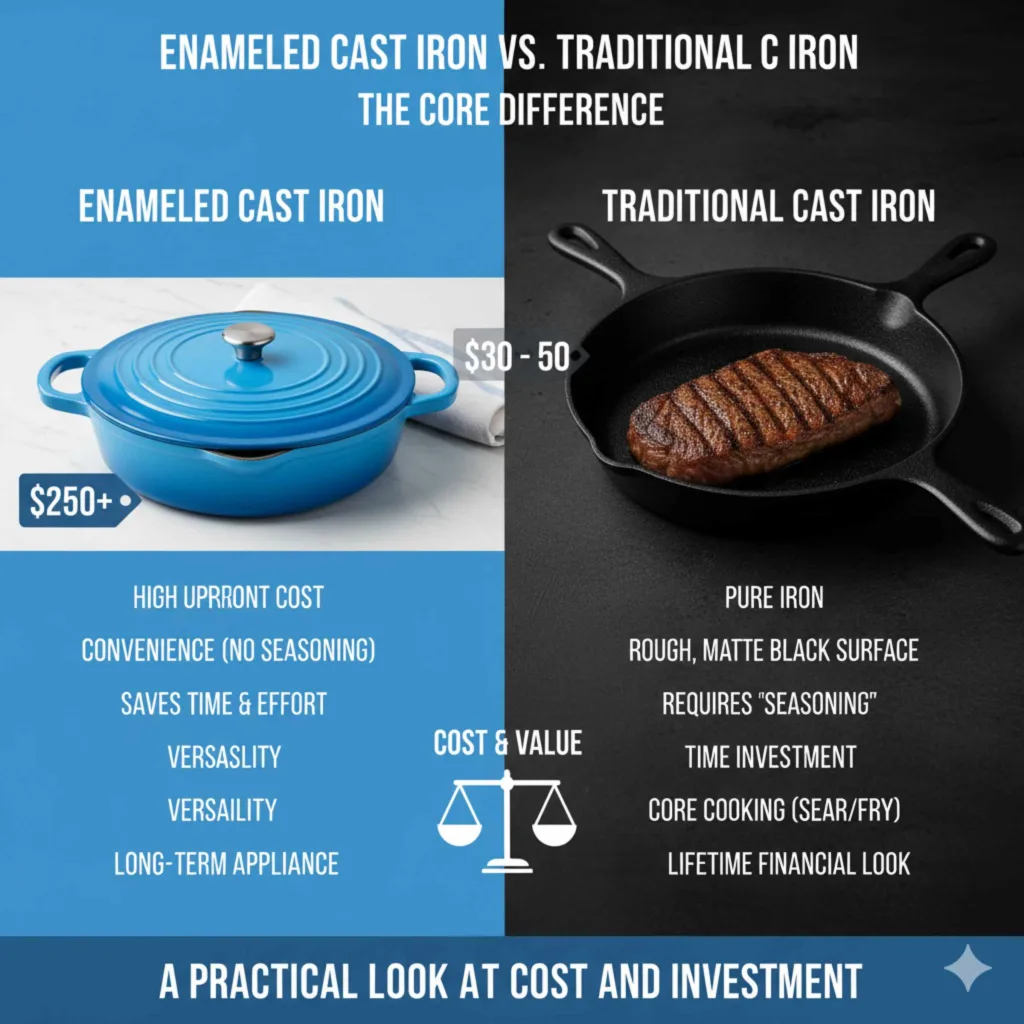
When talking about enameled cast iron skillet vs cast iron, price is a huge factor. You can typically find a great, durable 10-inch raw cast iron skillet for $30 to $50. High-quality, well-known brands of enameled skillets often start at $250 for the same size.
This is where you have to balance value versus convenience. Are you willing to pay 5 times the price for the no-seasoning benefit? If you are looking for a lifetime product that serves only your core cooking needs (searing, frying), the traditional route is the best financial investment.
However, if you view the enameled pan as an appliance that saves you 15 minutes of maintenance seasoning every month, then the upfront cost might be worth the saved time and peace of mind. Think about how much your time is worth!
Frequently Asked Questions (FAQ)
Q1: Can I use metal utensils in enameled cast iron?
A: It is strongly discouraged. Metal utensils (like forks or metal spatulas) can scratch the porcelain enamel coating, leading to dull spots, potential rusting if the iron underneath is exposed, and a less smooth cooking surface over time.
Q2: Will my traditional cast iron look as good as enameled iron?
A: No, and that’s what makes it cool! Traditional cast iron will look dark, matte, and well-used, which is a badge of honor for many chefs. Enameled iron offers bright, consistent, glossy colors. They serve different aesthetic purposes.
Q3: Is it safe to scrub stuck food off an enameled skillet?
A: Yes, but gently. You can use a plastic scraper or a nylon brush. For stubborn bits, soak the pan briefly with warm, soapy water. Avoid steel wool or harsh scouring powders, which can dull the glassy finish.
Q4: Can I cook with soap on traditional cast iron?
A: Modern, mild dish soaps are generally fine on a well-seasoned traditional skillet, contrary to old myths. The key is to use very little soap, clean quickly, and—most importantly—dry it immediately on the stove and immediately reapply a very thin coat of oil. Never let it soak in water.
Q5: Which pan is better for induction cooktops?
A: Both are excellent choices. Since both pans are made of iron, they create a strong magnetic field, making them perfectly compatible with induction burners. This is a tie.
Q6: Do I need to pre-season a new enameled skillet?
A: No. Enameled cast iron comes pre-seasoned (or more accurately, pre-coated) and ready to use immediately out of the box. You only need to wash it with warm water to remove factory dust and dry it before its first use.
Making the Final Decision: The Confident Choice
Choosing between these two legendary cooking vessels really comes down to your cooking philosophy. There isn’t a universally “better” option; there is only the best option for you.
If you approach cooking with a mindset that embraces tradition, trusts in natural surfaces, and views pot maintenance as part of the culinary process—and you want to save some cash—then the traditional cast iron skillet is your lifelong partner. It will reward your care tenfold with unparalleled searing capability.
Conversely, if you want the incredible heat retention of cast iron without the specialized cleaning rituals, if you frequently cook batches of chili or marinara, or if you simply prefer a vibrant, colorful look, the enameled cast iron skillet delivers premium performance with modern convenience.