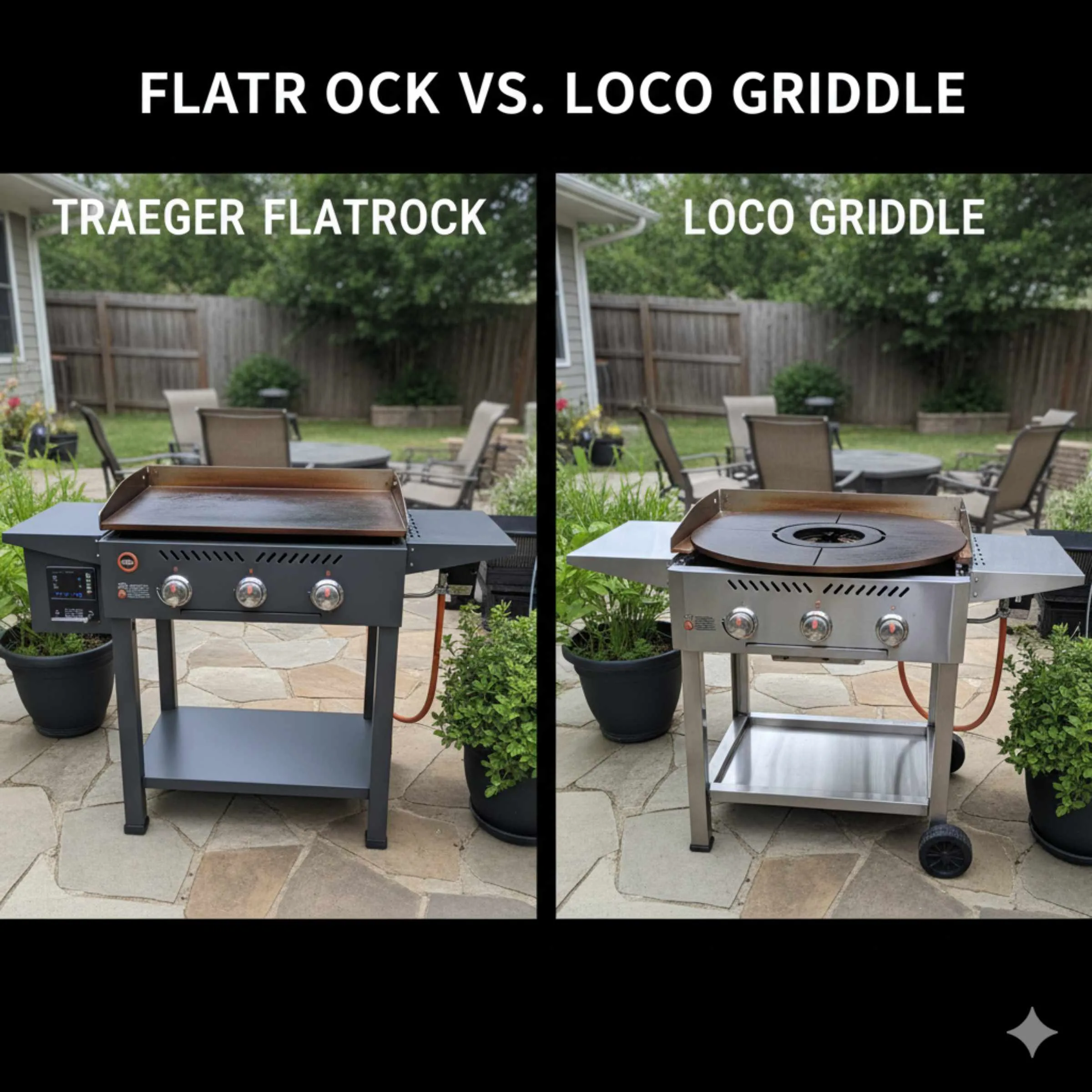
The Traeger Flatrock and the Loco Griddle are both excellent outdoor cooking surfaces, but the Traeger offers more versatility with its three distinct heat zones and built-in pellet hopper for smoky flavor, while the Loco Griddle provides simpler, massive, high-heat searing perfect for diners.
Are you looking to upgrade your backyard cooking game? Maybe you want those perfect smash burgers or giant breakfast spreads cooked outdoors. It can be tough deciding between two top flat-top griddles: the Traeger Flatrock and the popular Loco Griddle. These look similar, but they cook very differently, which can be confusing when you just want great results. Don’t sweat it! I’m Dustin, and I’m here to break down the differences in a way that makes total sense. We will compare everything from size to cleanup so you can pick the right one for your kitchen. Let’s jump right in and see which griddle brings the heat you truly need.
Traeger Flatrock Vs Loco Griddle: The Essential Showdown
Choosing a new griddle is exciting, but seeing two great options side-by-side requires a clear look at what each tool does best. Think of this like comparing two reliable wrenches; one might be better for tightening nuts quickly, while the other gives you more leverage. Similarly, the Traeger Flatrock leans into pellet technology, and the Loco Griddle focuses purely on massive, consistent gas heat.
First Look: What Are These Griddles?
Before diving into the head-to-head comparison, let’s quickly define what each unit is bringing to the backyard barbecue scene.
The Traeger Flatrock
The Flatrock is Traeger’s entry into the world of flat-top cooking, but they did it their way—using wood pellets. It’s a pellet-fueled griddle that offers high surface area cooking combined with the signature smoky flavor people pay a premium for with the Traeger brand. It is built for consistent heat and flavor infusion.
The Loco Griddle
The Loco Griddle (often associated with brands like Blackstone in the market narrative, but we focus on the brand “Loco”) is typically a straightforward, gas-powered flat-top grill. These are known for their massive cooking surface, incredible heat retention, and simple operation—you turn a knob, and it gets hot, fast. They focus on raw power and surface area for feeding a crowd.

Key Differences at a Glance: Traeger vs. Loco
The biggest difference you will notice right away is how they are powered and how that power affects the cooking surface. This impacts everything from cleanup to flavor.
| Feature | Traeger Flatrock | Loco Griddle (Typical Gas Model) |
| :— | :— | :— |
| Fuel Source | Wood Pellets | Liquid Propane (LP) or Natural Gas (NG) |
| Heat Zones | 3 Dedicated Zones (Variable Heat) | Usually 2–4 Main Burners (Direct Heat) |
| Flavor Profile | Smoky, Wood-Fired Flavor | Classic Searing/Griddle Flavor (No inherent smoke) |
| Temperature Control | Digital Controller (Set and Forget) | Manual Knob Control |
| Surface Area | Large, but slightly reduced by control housing | Usually a very open, uniform surface |
| Startup Time | Slower (Needs to heat up pellets) | Faster (Instant ignition) |
Fuel Source: Pellets vs. Gas
This is ground zero for the comparison. How you fuel your cook dictates the flavor and complexity of operation.
Traeger Flatrock: The Smoky Advantage
Because the Flatrock uses Traeger’s wood pellets, your bacon, pancakes, and steaks will pick up natural wood smoke. This is a huge selling point for Traeger loyalists. You set the desired temperature on the digital controller, and the auger feeds pellets to maintain that temp, much like their pellet smokers.
Loco Griddle: Simple, Powerful Gas Heat
The Loco typically runs on propane tanks (like the ones used for gas grills). This means quick startup and intense, direct heat. If you want classic diner-style searing without any added smoke flavor, gas is perfect. You manually adjust the knobs to manage the heat zones.
Cooking Performance: Heat Management and Zones
A griddle’s main job is to hold and distribute heat evenly across a large steel plate. How these two units achieve that differs significantly.
Traeger Flatrock’s Zoned Cooking System
The Flatrock is unique because it uses its pellet cooking mechanism to create defined temperature gradients across the surface.
Zone 1 (Hot Zone): Directly over the pellet burn pot, offering high heat perfect for searing steaks or getting a hard crust on smash burgers.
Zone 2 (Medium Zone): Great for general tasks like cooking eggs, sausages, or warming tortillas.
Zone 3 (Warm Zone): The coolest spot, ideal for keeping finished food warm without overcooking while you finish the rest of the batch.
This zoned approach, managed digitally, is very convenient. You can cook four different things at four different temperatures simultaneously.
Loco Griddle’s High and Mighty Heat
Loco griddles usually feature powerful U-shaped or straight burners directly beneath the steel plate.
Power: Gas burners often crank out higher BTUs (British Thermal Units) per square inch than pellet-based systems, leading to faster surface recovery after placing cold food on the griddle.
Uniformity: While they have defined burner areas (usually one burner per third or half of the surface), achieving extremely precise, multiple, low/high zones can sometimes be trickier than the Flatrock’s digital system. You rely more on heat conduction across the thick steel plate.
If you are looking for the absolute hottest surface possible for an immediate, hard sear (think professional restaurant style), many gas units like the Loco can often edge out pellet griddles in sheer BTUs. Always check the BTU rating when researching outdoor cooking equipment to understand its heat potential. For more on understanding BTU ratings, resources like the U.S. Department of Energy on appliances can give you background on how appliance power is measured.
Size and Cooking Capacity
For many people, the decision comes down to how much food they need to cook at one time.
Surface Area Comparison
While exact dimensions fluctuate between specific models, generally, both brands offer large cooking surfaces suitable for big families or gatherings.
Traeger Flatrock: The design is slightly compromised by the pellet hopper/control housing on one side, meaning the usable, flat top surface might feel marginally smaller than it looks compared to a fully open design.
Loco Griddle: These are usually designed as true, unobstructed rectangles, maximizing every inch of the cooking surface area for food placement. If open space is your priority for cooking massive batches of pancakes for a scout troop, the simpler design might win.
Assembly and Build Quality
Out of the box, setting up your new griddle should be straightforward. We want quality components that last when dealing with high heat.
Building the Flatrock
Traeger is known for solid build quality, often using heavier gauge steel in their components.
Assembly: Because the Flatrock incorporates pellet technology, assembly might involve a few more steps related to connecting the control panel or hopper area compared to a simple gas unit.
Durability: Expect robust construction, often featuring powder-coated steel bodies designed to withstand the elements.
Building the Loco Griddle
Loco griddles prioritize a sturdy base to support the weight of the thick steel top and the heat generated by the burners.
Assembly: Generally, these are simpler. You attach the legs, connect the tank manifold, and maybe bolt on side shelves. Fewer electronic components mean less to potentially troubleshoot later.
Durability: The primary focus here is on the quality of the steel top itself—how thick is it, and how well does it resist warping under extreme, direct heat? Thick steel is your best friend for even cooking.
Cleanup and Maintenance: The Post-Cook Chore
Nobody loves cleaning up after a great cookout, but one system might make it easier than the other.
Flatrock Cleanup: Dealing with Ash
Since you are burning wood pellets, you must manage ash and grease.
1. Grease Management: Like any griddle, you scrape grease toward the rear grease chute into a removable cup.
2. Ash Removal: Periodically, you will need to clean out the fire pot area where the pellets burn down, similar to cleaning a small pellet smoker. This adds a step that gas griddles completely avoid.
Loco Griddle Cleanup: Pure Grease Management
Gas griddles are fantastic for quick cleanup because there is no ash or complex internal mechanics to worry about.
1. Scrape and Wipe: Scrape all food debris and excess oil down the sloped surface into the catch pan.
2. Seasoning Focus: Maintenance mainly focuses on keeping the bare steel top seasoned properly to prevent rust, which involves wiping it down with cooking oil after every use.
Flavor Profile: Smoke or Sear?
This is purely a matter of taste, but it’s the most defining mechanical difference.
Traeger Flatrock: Flavor Infusion
If you already own a Traeger smoker and love that authentic wood-fired background flavor, the Flatrock lets you achieve that while searing. It’s a two-for-one benefit: high-heat searing plus mild smoke penetration. This is great for chicken wings, pork chops, or even vegetables where smoke enhances the natural sugars.
Loco Griddle: Pure Griddle Taste
The Loco delivers the intense Maillard reaction—that beautiful browning and crust you get on food cooked on a very hot, seasoned, non-smoked surface. This is what many pancake lovers, breakfast enthusiasts, and sear fanatics demand. If you use flavored oils or spices, they will shine through without interference from wood smoke.
Cost Considerations and Value Proposition
Griddles represent an investment, so understanding the price difference helps justify the features.
Generally, pellet-based appliances carry a higher initial cost than their direct gas counterparts due to the digital controllers, auger systems, and pellet hoppers.
Traeger Flatrock: You are paying a premium for the integration of Traeger’s wood-fire technology into a griddle format. This usually places it at a higher price point.
Loco Griddle: These often offer more cooking surface area per dollar spent, focusing on delivering maximum, reliable horizontal heat without the added complexity of digital pellet feeding.
When determining value, ask yourself: Is the convenience of digital temperature control and wood flavor worth $150–$300 more than a powerful gas unit?
Step-by-Step Guide: Seasoning Your New Griddle Top
Regardless of which model you choose, a brand-new, bare steel griddle top needs seasoning before cooking acidic foods or using it daily. Seasoning creates a non-stick, rust-resistant layer, similar to seasoning a cast iron pan. This applies to both the Traeger Flatrock and the Loco Griddle.
Tools You Will Need
High smoke-point oil (Flaxseed oil is often recommended for the first layer, but vegetable, canola, or grapeseed oil works well for maintenance). You can find suitable high smoke-point oils at most major retailers.
Paper towels or a lint-free cloth.
Spatula for spreading.
Safety gear (gloves, as the steel will get very hot).
The Seasoning Process (For Both Griddles)
Follow these steps carefully to build a great foundation for years of easy cooking:
- Clean the Surface: Unbox your griddle. Wipe down the steel surface thoroughly with water and a mild soap or vinegar solution to remove any manufacturing oils. Dry completely.
- Heat the Griddle: Turn your griddle on (using the lowest setting for the Flatrock, or one low burner for the Loco) until it is warm to the touch—about 250°F (121°C). This opens the pores of the metal.
- Apply the Oil: Pour about 1–2 tablespoons of your chosen high smoke-point oil onto the warm surface.
- Spread Thinly: Using paper towels soaked in oil, wipe the oil across the entire cooking surface, ensuring every millimeter is covered. It’s vital that the layer is paper-thin. Too much oil will result in a sticky, uneven mess.
- Burn Off the Oil: Increase the heat to high (or set the Flatrock to about 400°F or higher). Let the oil smoke off completely. You should see the surface change color from dull silver to a brownish, non-stick sheen. This curing process can take 30–45 minutes.
- Repeat (Recommended): For the best initial base, repeat steps 3 through 5 at least three times. Each layer builds the polymerized coating stronger.
- Cool Down: Turn off the heat and let the griddle cool completely before touching it. Your griddle is now ready for cooking!
Choosing Based on Your Cooking Style
The right griddle is the one that matches howyou cook, not just the one with the best specs on paper.
Choose the Traeger Flatrock If…
You already own and love Traeger products.
You want to experiment with adding light, natural wood smoke flavor to grilled items like vegetables, chicken, or burgers.
You prefer the precision of a digital temperature controller.
You value having three distinct cooking zones operating at different temperatures.
Choose the Loco Griddle If…
Your priority is pure, unadulterated, high-BTU searing power.
You frequently cook large batches of breakfast foods (pancakes, hash browns) where natural smoke isn’t desired.
You want the simplest possible startup and cleanup process (no ash to deal with).
You prioritize maximizing open, uninterrupted cooking space.

Frequently Asked Questions (FAQ) for Beginner Griddle Owners
This section answers common, practical questions new users have about flat-top cooking.
Q1: How often do I need to re-oil or re-season my griddle?
For daily use, you only need to apply a very thin coat of oil after* you clean up each time, while the griddle is still warm. Heavy scraping or cooking very acidic foods (like tomato sauce) might require a full re-seasoning session (Steps 1-6 above) every few months to maintain the best non-stick surface.
Q2: Can I cook smash burgers well on both the Flatrock and the Loco?
Yes, absolutely! Smash burgers require high, direct heat to achieve the crispy crust quickly. Both griddles can achieve this, but you will likely use the hottest zone on either unit. The Traeger Flatrock’s dedicated hot zone is perfect; ensure the Loco Griddle burners under the desired spot are cranked up!
Q3: Is the Traeger Flatrock hard to clean because it uses pellets?
The cooking surface cleanup is similar to the Loco—scrape grease into the chute. However, the Flatrock will require periodic cleaning of the fire pot to remove ash, just like any pellet grill. This is the main added maintenance step compared to the gas-only Loco.
Q4: Do I need a cover, even if my griddle is stored outside?
Yes, a high-quality, weather-resistant cover is essential for both units. Steel griddles left uncovered will rust quickly, even if seasoned. Rust ruins the cooking surface and makes cleanup a nightmare. Always protect your investment. You can find durable covers designed for outdoor cooking surfaces from most major hardware stores.
Q5: Which griddle heats up faster from cold?
The gas-powered Loco Griddle will almost always heat up faster. Propane delivers instant, massive heat directly to the underside of the steel plate. The Traeger Flatrock needs time to ignite the pellets, heat the burn pot, and bring three zones up to temperature, which usually adds 10–15 minutes to startup time.
Q6: Can I use the Traeger Flatrock without pellets?
No. The Flatrock relies entirely on the wood pellets to generate the heat needed to warm the steel surface. If you run out of pellets, the griddle will cool down. The Loco Griddle, being gas-powered, will continue to run as long as you have propane connected and tanks available.
Conclusion: Making Your Final Decision
When you boil down the Traeger Flatrock vs. Loco Griddle showdown, the choice becomes clear: it’s a choice between advanced technology with flavor infusion versus raw, simple, high-powered searing.
If your grilling philosophy leans toward traditional steakhouse searing, massive capacity, and hassle-free gas operation, the Loco Griddle provides a robust, straightforward platform that excels at providing consistent, powerful heat across a massive steel expanse. It’s the workhorse for feeding huge crowds fast.
However, if you’ve already bought into the world of Traeger—loving that wood-fired essence—and you value the digital consistency and built-in temperature zones, the Flatrock is a fantastic, multifunctional investment. It brings the smoky depth you expect from wood pellets directly onto your flat top, allowing you to multitask between searing and slow-cooking tasks simultaneously.
In the end, both machines are fantastic tools that will dramatically improve your outdoor cooking. Pick the one that aligns best with your flavor goals and your tolerance for maintenance routines, and get ready to master that flat-top cooking! Happy grilling!