
Quick Summary
Removing shutter fasteners is straightforward with the right tools and techniques. This guide offers effortless steps for safely detaching various shutter fastener types, ensuring a smooth DIY experience whether you’re updating your home’s exterior or refreshing your shutters. Prepare for a simple, successful project!
Hello there! Are you ready to give your home’s exterior a little refresh or perhaps tackle a DIY project that involves your charming window shutters? Sometimes, the simplest tasks can feel a little daunting, especially when you’re not sure how to begin. Removing old shutter fasteners might seem like it requires a professional touch, but I’m here to tell you it’s a perfectly achievable DIY task! With a few common tools and a bit of patience, you can easily and safely detach those fasteners, opening up a world of decorating possibilities. Let’s dive into making this process feel less like a chore and more like an exciting step in beautifying your home.
Why Removing Shutter Fasteners Matters
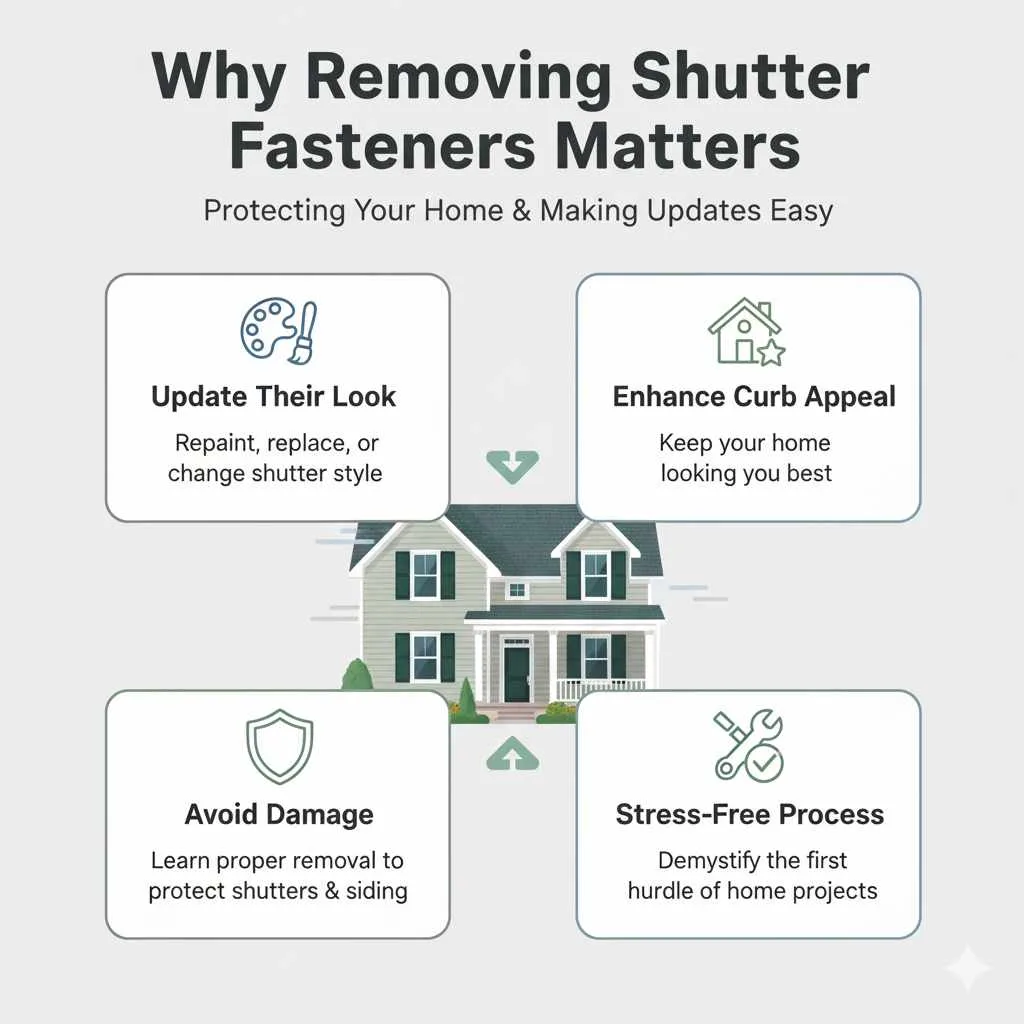
window shutters add a classic touch and can really enhance your home’s curb appeal. But over time, you might find yourself wanting to update their look, repaint them, replace them entirely, or even change the style of your home. Whatever your reason, the fasteners holding them in place are the first hurdle. Knowing how to remove them properly is key to avoiding damage to both the shutters and your home’s siding. This guide is designed to demystify the process, making it simple and stress-free.
Understanding Shutter Fasteners
Before we grab our tools, it’s helpful to know what you’re dealing with. Shutter fasteners, also known as shutter hardware or shutter ties, come in many shapes and forms. They’re designed to keep your shutters securely in place, whether they’re functional shutters that swing open and shut or purely decorative. The type of fastener you have will, in part, dictate the best removal method.
Common Types of Shutter Fasteners
Here are some of the most common types you’ll encounter:
- L-Hooks or J-Hooks: These U-shaped or L-shaped metal pieces typically screw into the siding or trim, and the shutter rests on them. Sometimes there’s a screw going through the shutter itself to hold it onto the hook.
- Straps or Hinges: Some shutters are attached with metal straps that might be screwed directly to the shutter and then to the house. These can sometimes look like decorative hinges.
- Turn Latch Fasteners: These often involve a small metal piece that pivots or turns to secure the shutter. They might screw into the shutter and then engage with a bracket on the house, or vice versa.
- Anchor Bolts or Sleeves: For heavier shutters, or sometimes for decorative styles, you might find bolts that go through the shutter and into the wall with a nut on the inside or a decorative anchor on the outside.
- Simple Screws: In some cases, the shutter might simply be screwed directly into the wall or trim from the front, especially if it’s purely decorative.
Gathering Your Tools: What You’ll Need
Don’t worry, you likely have most of these items already! Having the right tools makes the job much easier and safer.
- Screwdrivers: A set of Phillips head and flathead screwdrivers in various sizes is essential. Having a cordless drill with screwdriver bits can speed things up significantly.
- Wrench or Socket Set: If your fasteners use nuts and bolts, you’ll need a wrench or socket set to hold or turn them.
- Pliers: Needle-nose pliers or regular pliers can be helpful for gripping small or stubborn parts.
- Hammer: A small hammer or rubber mallet might be useful for gently persuading stuck parts.
- Utility Knife or Putty Knife: For carefully prying or scoring paint around the fastener.
- Penetrating Oil (like WD-40): If the fasteners are old and rusty, a spray of penetrating oil can help loosen them.
- Safety Glasses: Always protect your eyes, especially when working with metal or prying.
- Gloves: To protect your hands.
- Ladder: If your shutters are on an upper floor, a sturdy ladder is a must. Ensure it’s placed on stable ground. For safety, consider using a ladder stabilizer when working at heights. You can find helpful resources on ladder safety from organizations like the Occupational Safety and Health Administration (OSHA).
Step-by-Step Guide to Removing Shutter Fasteners
Now, let’s get down to business! We’ll break this down by the most common fastener types.
Step 1: Assess the Fastener Type
Before you touch anything, take a close look at how your shutters are attached. Identify the screws, bolts, hooks, or latches that are holding them. This initial assessment will help you choose the right tools and approach.
Step 2: Prepare the Area
If the fasteners are painted over, you might need to gently score the paint around the edges with a utility knife or putty knife. This will help prevent the paint from peeling off your siding when you remove the fastener. If you’re working with shutters that swing, make sure they are secured in a closed position so they don’t accidentally swing while you’re working.
Methods for Common Shutter Fastener Types
Method A: Removing L-Hooks or J-Hooks
These are quite common and usually quite simple.
- Locate the Screw: Often, the hook will have a screw going through a hole in the shutter and into the hook itself, or the hook will be screwed directly into the wall, with the shutter simply resting on it.
- Remove Securing Screws (if any): If there’s a screw going through the shutter into the hook, use the appropriate screwdriver to remove it. You might need a helper to hold the shutter steady.
- Detach the Shutter: Once any securing screws are out, the shutter should be free to lift off the hook.
- Remove the Hook (if desired): If the hook is screwed into the wall, simply use your screwdriver to remove the screws holding the hook in place.
Method B: Removing Strap or Hinge Fasteners
These fasteners often attach a strap directly to the shutter and then to the wall.
- Identify Screw Locations: Look for screws that go through the strap and into the shutter, and screws that go through the strap and into the wall.
- Start with the Shutter: It’s often easier to remove the screws attaching the strap to the shutter first. This can free up the shutter from the strap.
- Remove Wall Fasteners: Once the shutter is detached from the strap, you can then remove the screws holding the strap to the wall.
- Consider Rust: If the straps are rusty, they might be fragile. Apply penetrating oil if needed and work gently.
Method C: Removing Turn Latch Fasteners
These can vary, but typically involve a pivoting mechanism.
- Identify the Latch Mechanism: Find the part that turns or slides.
- Disengage the Latch: Usually, you’ll need to rotate the latch or slide it to an “open” position.
- Locate Attachment Screws: Once the latch is disengaged, you’ll likely see screws that hold the latch assembly to the shutter or the wall.
- Remove Screws: Use the appropriate screwdriver to remove these screws.
Method D: Removing Bolt or Anchor Fasteners
These are often used for heavier shutters and might require more effort.
- Access the Nut (if applicable): If there’s a bolt going through the shutter with a nut on the other side (possibly inside the house or within the wall cavity), you’ll need a wrench or socket to hold or turn the nut.
- Remove the Bolt: Unscrew the nut or the bolt head, depending on which side is accessible, until the bolt can be pulled out.
- For Decorative Anchors: Some fasteners have decorative anchors on the outside. If these are attached with screws, remove the screws. If they are part of a bolt, you may need to access the other side.
- Gentle Persuasion: If bolts are stuck, a little penetrating oil might help. Tapping gently with a hammer might also loosen them, but be careful not to damage the shutter or siding.
Method E: Removing Simple Screws
This is the most straightforward type.
- Identify Screw Type: Determine if it’s a Phillips head or a flathead screw.
- Insert Screwdriver: Fit the screwdriver snugly into the screw head.
- Turn Counter-Clockwise: Apply steady pressure and turn the screwdriver counter-clockwise to loosen and remove the screw. If using a drill, set it to the reverse (counter-clockwise) setting.
- Repeat for All Screws: Do this for every screw holding the shutter in place.
Step 3: Handle Stubborn Fasteners
Sometimes, fasteners can be old, rusty, or painted over so heavily that they’re difficult to move.
- Penetrating Oil: Spray a generous amount of penetrating oil onto the fastener and let it sit for at least 15–30 minutes, or even overnight for very stubborn ones. Reapply if necessary.
- Gentle Tapping: After applying oil, gently tap around the fastener with a hammer. This vibration can help break the rust or paint seal.
- Patience is Key: Avoid using excessive force, which can strip screws or damage your siding. If a screw head strips, you might need a specialized screw extractor tool, or you may have to carefully drill out the screw.
Step 4: Carefully Remove the Shutter
Once all fasteners are loosened or removed, carefully take the shutter off the wall. It’s always a good idea to have a helper, especially for larger or heavier shutters, to prevent them from falling.
Step 5: Clean Up and Inspect
Once the shutters are off, take time to clean up the area. Remove any debris. Inspect the mounting points on the wall and the shutters themselves for any damage. This is also a good time to clean the shutters thoroughly if you plan to repaint or reuse them.
Tips for a Smooth Removal Process
Here are a few extra tips to make your shutter fastener removal a breeze:
- Work in good lighting: You need to clearly see what you’re doing.
- Protect your siding: Place a drop cloth or cardboard behind where you’re working to catch any falling hardware or debris.
- Take photos: If you plan to reattach the shutters later, take pictures of how the fasteners were installed. This can be a lifesaver!
- Keep fasteners organized: If you are removing shutters to paint them and will reattach them, put the fasteners in a labeled baggie so you don’t lose them.
When to Consider Professional Help
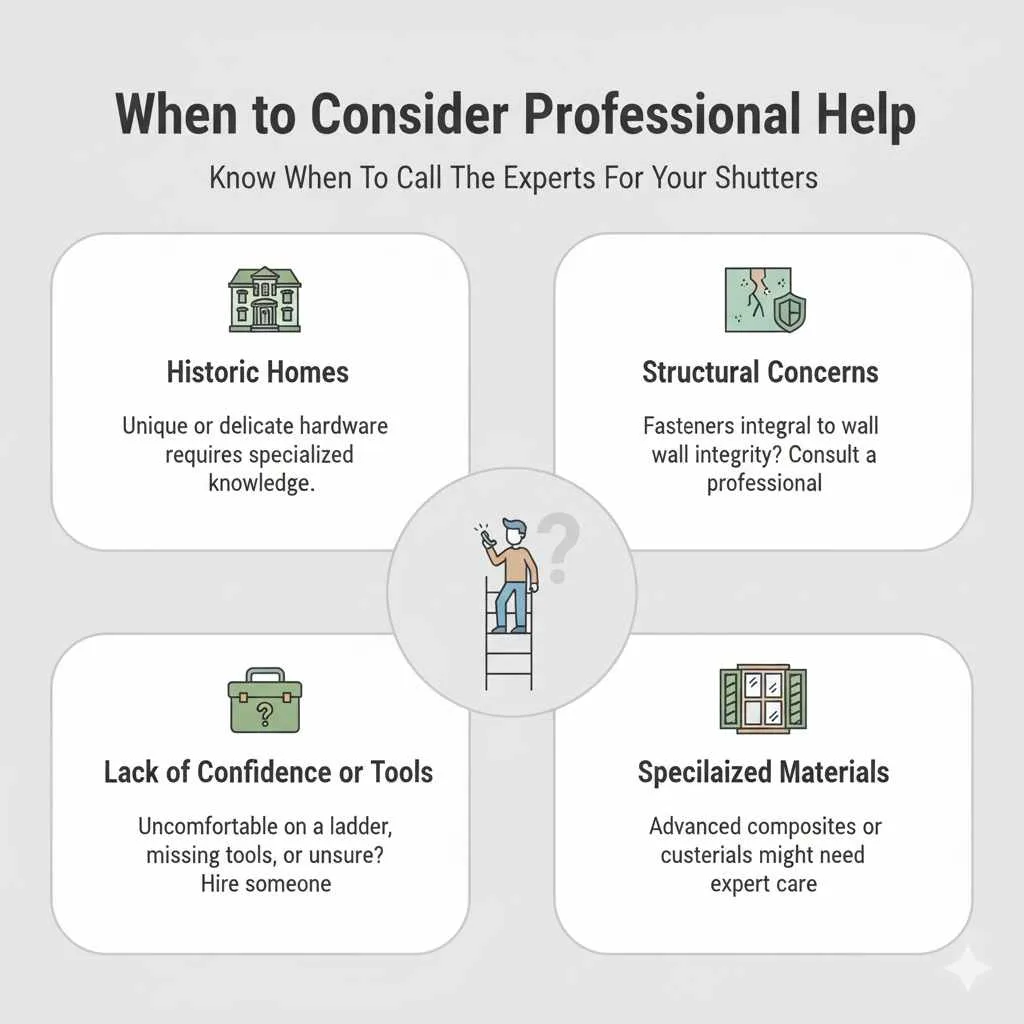
While most shutter fastener removals are DIY-friendly, there are a few situations where you might want to call a professional:
- Historic Homes: If you live in a historic home, you might have unique or delicate hardware that requires specialized knowledge to remove without causing damage.
- Structural Concerns: If you suspect the fasteners are integral to the structural integrity of a part of your wall, it’s best to consult a professional.
- Lack of Confidence or Tools: If you’re uncomfortable working on a ladder, don’t have the right tools, or simply lack confidence, hiring someone is a perfectly valid choice.
Shutter Fastener Removal: A Comparison
Here’s a quick look at the general difficulty and tool requirements for common fastener types.
| Fastener Type | General Difficulty | Primary Tools Needed | Potential Issues |
|---|---|---|---|
| L-Hooks/J-Hooks | Easy | Screwdriver | Painted over, rusted |
| Strap/Hinge | Easy to Moderate | Screwdriver | Rusted straps, stripped screws |
| Turn Latch | Easy to Moderate | Screwdriver | Stuck latch mechanism |
| Bolt/Anchor | Moderate | Wrench/Socket Set, Screwdriver | Rusted bolts, difficult access, stripped nuts |
| Simple Screws | Very Easy | Screwdriver (or Drill) | Stripped screw heads |
Frequently Asked Questions About Removing Shutter Fasteners
Q1: How do I know which type of screw I need to remove the fasteners?
Carefully examine the head of the screw. Most shutter fasteners use either Phillips head screws (which have a ‘+’ shape) or flathead screws (which have a ‘-‘ shape). Make sure your screwdriver fits snugly into the slot or cross to avoid stripping the screw head.
Q2: My shutter fasteners are rusted. What can I do?
For rusted fasteners, your best friend is a penetrating oil spray, like WD-40. Spray it generously on the rusted area and let it sit for at least 15-30 minutes, or even longer for severe rust. You can also try gently tapping the fastener with a hammer to help break up the rust after the oil has had time to work.
Q3: Can I damage my siding when removing shutter fasteners?
Yes, it’s possible, especially if the fasteners are painted over or if you use too much force. To prevent damage, score the paint around the fastener with a utility knife before attempting to remove it. Also, ensure you’re using the correct tools and applying steady, controlled pressure. Having a helper to support the shutter can also prevent it from falling and potentially damaging the siding.
Q4: What if the screw head is stripped and my screwdriver won’t work?
A stripped screw head can be frustrating. Try using a rubber band placed over the screw head before inserting your screwdriver; the rubber can sometimes provide enough grip. If that doesn’t work, you might need a screw extractor tool, which can be purchased at most hardware stores. In some cases, carefully drilling out the screw might be the only option, but this should be a last resort.
Q5: Do I need to remove the shutter completely, or can I just remove the fasteners?
It depends on your goal. If you’re simply cleaning or painting the shutters, you might be able to remove just enough fasteners to allow them to swing away or be worked on in place. However, if you’re replacing the shutters or doing significant work, removing them completely from all fasteners is usually the best approach.
Q6: How much pressure should I use when trying to remove a stubborn fastener?
You should use firm, steady pressure, but avoid excessive force. If a fastener isn’t moving with reasonable effort, stop and reassess. It might be rusted, painted over heavily, or have some other obstruction. Applying too much force can strip screws, break fasteners, or damage your siding. Always try penetrating oil and gentle tapping first before resorting to more force.
Conclusion
See? Removing shutter fasteners is entirely within your DIY capabilities! By understanding the different types of fasteners, gathering the right tools, and following these straightforward steps, you can confidently tackle this project. Whether you’re preparing for a paint job, a shutter replacement, or simply want to update your home’s charm, you now have the knowledge to do it effortlessly. Enjoy the process and the beautiful results that await as you enhance your home’s exterior. Happy decorating and DIYing!