
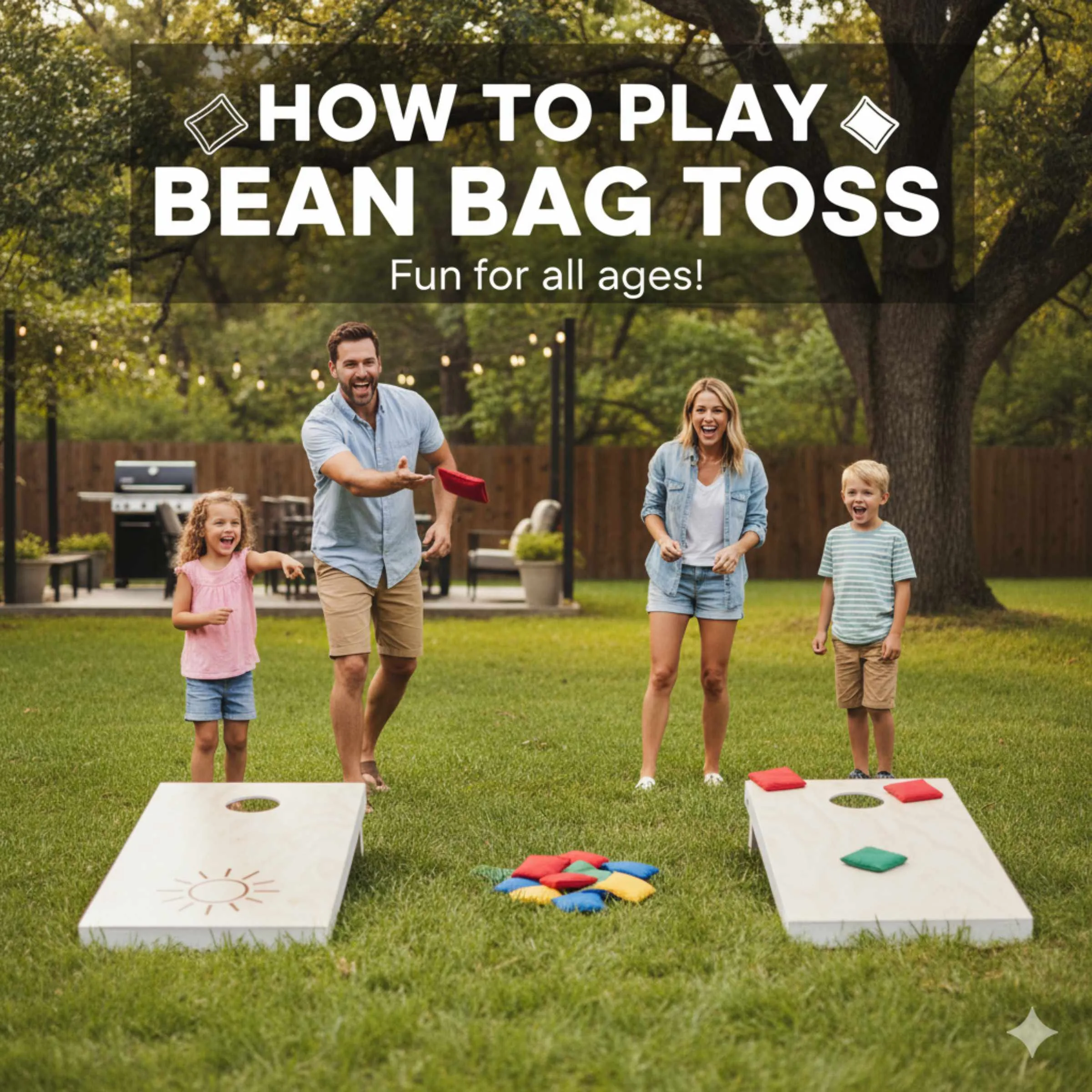
Exactly how to play Bean Bag Toss: It’s a simple, fun outdoor game requiring just two boards and bean bags. Aim to toss your bags onto or into the hole on the opposite board to score points. Easy to learn and perfect for gatherings!
Hey everyone, Dustin Hall here! Ever been to a backyard BBQ or a park gathering and heard the cheerful thud of bean bags hitting boards, or maybe a satisfying swish as one lands in the hole? That’s Bean Bag Toss (also known as Cornhole)! It looks fun, right? But maybe you’ve been a little unsure about the rules, or how scoring really works. Don’t worry, it’s much simpler than it sounds. Many folks feel a bit lost when they first see it, but I promise, understanding how to play Bean Bag Toss is super easy and opens the door to hours of friendly competition. Today, we’re going to break down everything you need to know, step-by-step, from setting it up to declaring the winner. Get ready to become the Bean Bag Toss champion of your next get-together!
What You Need to Play Bean Bag Toss
Before we dive into the fun, let’s make sure you’ve got the right gear. Think of it like prepping your car for a road trip – having the right tools makes everything smoother! For Bean Bag Toss, it’s wonderfully straightforward. You don’t need much, which is part of its charm.
The Essential Equipment
Here’s what you’ll need:
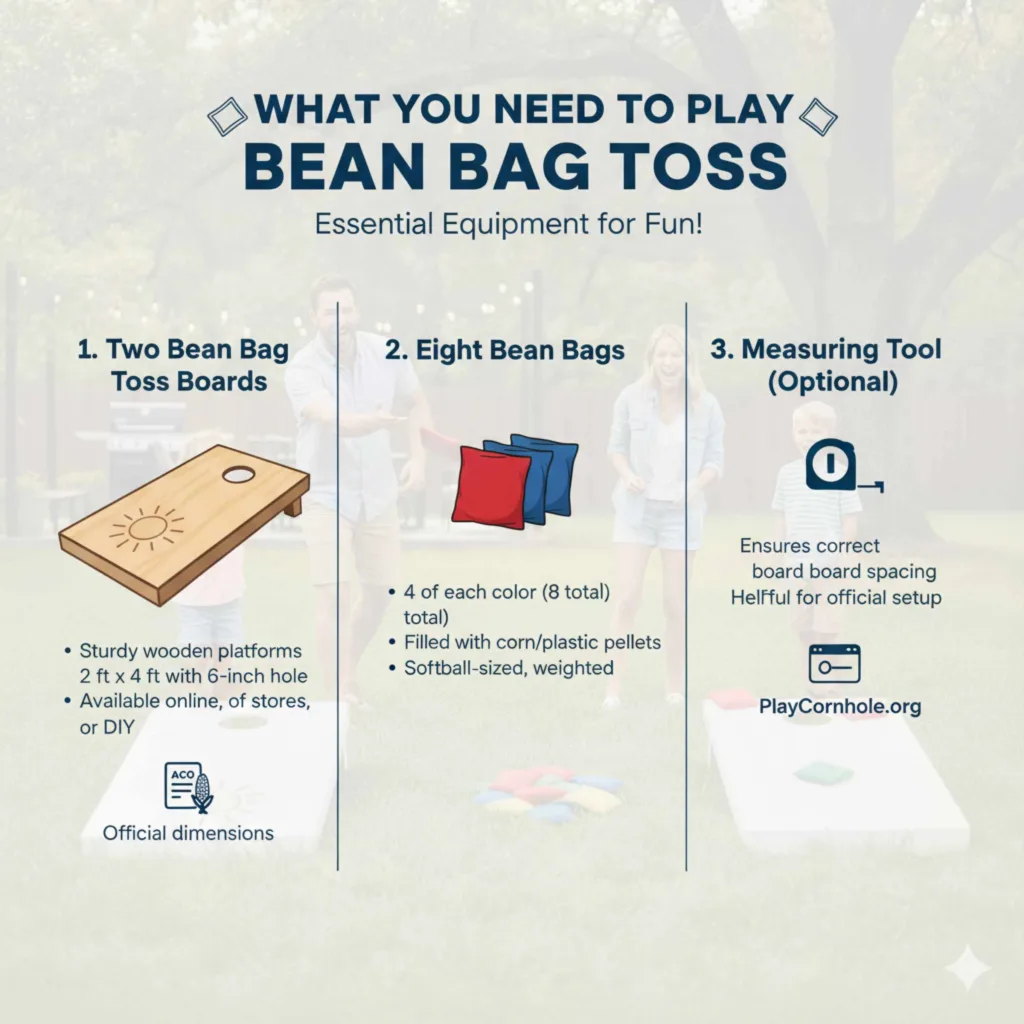
- Two Bean Bag Toss Boards: These are sturdy wooden platforms, typically 2 feet by 4 feet. They have a hole at the top, usually 6 inches in diameter. You can buy these online, at sporting goods stores, or even build your own if you’re feeling handy! A great resource for understanding board dimensions and construction is the American Cornhole Organization (ACO) rulebook, which provides official specifications for equipment recognized in competitive play.
- Eight Bean Bags: You’ll need four bags of one color and four of another. These are usually filled with corn (hence “Cornhole”) or plastic pellets, and they’re about the size of a softball. They should be weighted enough to fly well but soft enough not to cause damage.
- A Measuring Tool (Optional but helpful): A tape measure can be useful if you want to ensure your boards are spaced correctly, especially if you’re setting up for the first time.
Setting Up Your Bean Bag Toss Game
Getting your game ready is as easy as checking your tire pressure. A little setup ensures fair play and maximum fun.
The Standard Court Layout
The typical setup for Bean Bag Toss involves placing the two boards at opposite ends of a playing area. The standard distance between the front of each board is 27 feet. This distance is measured from the front edge of one board to the front edge of the other. This might sound precise, but for a casual game, a good estimate is perfectly fine. If you’re playing with kids or just want a more relaxed game, you can shorten this distance. The key is to have enough space so players on opposite sides aren’t right next to each other.
You’ll also want to make sure the area around the boards is clear. No one wants to trip over stray lawn chairs or picnic baskets while making a crucial toss!
The Basic Rules of Bean Bag Toss
Now for the good stuff! Understanding how to play Bean Bag Toss is all about knowing how to score. It’s more strategic than you might think, but the core concepts are simple.
Taking Turns and Tossing
Bean Bag Toss is usually played with two teams of one or two players each. If you have four players, one person from each team stands at one end, near a board, and the other two players stand at the opposite end. This way, you have partners throwing at the same board.
Players take turns tossing their bean bags. At each end of the court, the two players stationed there will alternate throws. So, player A from team 1 throws, then player B from team 2 throws, then player A from team 1 throws again, and so on, until all eight bags have been thrown for that round (or “frame”). Then, the scores are tallied, and players walk down to the other end to start the next round, throwing at the board they just walked towards.
How to Score Points
This is where it gets interesting and where the “strategy” really comes in. Points are awarded based on where your bean bags land and stay on the board.
- Bag on the Board: If your bean bag lands on the surface of the board and stays there without falling off, it’s worth 1 point.
- Bag In the Hole: If your bean bag goes through the hole and lands in the board, or bounces onto the board and then falls through the hole, it’s worth a fantastic 3 points.
- Fallen Bags: If a bean bag hits the ground at any point (even if it bounces up onto the board later), it’s worth 0 points. This is a key rule – you have to have a clean toss!
- Knocking Opponent’s Bags: This is where the fun and strategy really shine! You can strategically toss your bags to knock your opponent’s good bags off the board or even push them off. These bags still count if they end up on the board after being hit (1 point), but the goal is to get yours in and keep theirs out.
“Cancellation” Scoring
Bean Bag Toss uses a system called “cancellation” scoring. This makes the game so neat because it often prevents one team from running away with the score. Here’s how it works:
At the end of each round (after all eight bags have been tossed), you compare the points scored by each team.
- Calculate the difference: Whatever points Team A scored, subtract the points Team B scored.
- Award the difference: The team with the higher score gets awarded the difference in points. The other team scores zero for that round.
Let’s look at an example. Say Team 1 scores 3 points (one bag on the board, one bag in the hole) and Team 2 scores 1 point (one bag on the board).
The difference is 3 – 1 = 2. So, in this round, Team 1 is awarded 2 points, and Team 2 gets 0 points. You don’t add the raw scores together; you only award the net points to the winning team of that round.
If both teams score the same number of points in a round (e.g., both score 3 points), then zero points are awarded to either team. This is called a “wash” and is quite common.
Winning the Game
The objective is to be the first team to reach a predetermined score, usually 21 points. However, there’s a crucial rule to keep in mind:
You MUST win by at least two points. This means if you reach 21 points and your opponent has 19 points, you’ve won! But if you reach 21 points and your opponent also has 21 points, you haven’t won yet. You have to continue playing until one team achieves a score of 21 or more, AND has at least a two-point lead over the opponent.
This rule prevents a game from ending in a tie and keeps the competition exciting right until the very end. You might see scores like 21-19, 22-20, or even 24-22.
Variations and House Rules
While the official rules are great, Bean Bag Toss is also a game that’s easily adapted for casual play. Many people have their own “house rules” that can make the game more fun or tailored to their group.
Common Adjustments for Casual Play
- Shorter Distance: As mentioned, for younger players or those who want a less challenging game, you can shorten the distance between the boards. Just make sure both teams agree on the distance before starting.
- No Cancellation Scoring: Some groups prefer to just add up the points for each team each round. This can lead to higher scores and potentially quicker games, but it also means one team can build a significant lead more easily.
- Bounces Count Entirely: In some very casual settings, particularly with younger children, a bag that bounces off the ground and onto the board might be allowed to stay and count for 1 point. Check with your group before the game begins!
- Different Target Games: While the standard is a hole, some novelty boards have different shaped targets, or you could even adapt the game to toss at buckets or other designated areas.
It’s always a good idea to quickly discuss and agree on any house rules before the first bag is tossed to avoid confusion later on.
Tips for Playing Bean Bag Toss Like a Pro (Even if You’re a Beginner!)
Want to impress your friends or family? Even as a beginner, a few simple tips can significantly improve your game. Think of these as maintenance checks for your tossing arm!
Grip and Stance
Your grip and stance are crucial for consistency. Here’s what to focus on:
- The Grip: Hold the bean bag flat on your palm, with your fingers spread underneath and your thumb on top. Some people prefer to cup their hand slightly, while others keep it flatter. Experiment to see what feels most comfortable and secure for you. The key is to have a firm but relaxed grip so you can flick your wrist on the release. A common mistake is gripping too tightly, which stiffens the arm.
- Stance: Stand with your feet shoulder-width apart. Most players stand with their dominant foot slightly forward. You’ll want to be comfortable and balanced.
The Toss
The actual throw is a fluid motion. Aim for a smooth, consistent toss:
- Underhand Throw: The standard Bean Bag Toss throw is an underhand toss. It’s like a smooth, underhand baseball pitch.
- The Motion: Bring the bag back behind you, keeping your arm relatively straight, and then swing forward. As you swing, bend your elbow and wrist, releasing the bag with a slight flick of your wrist. This wrist flick can add spin and backspin, which helps the bag “stick” when it lands rather than sliding off.
- Aiming:** Instead of aiming directly for the cornhole (the hole), most experienced players aim for the near edge of the board. This encourages a “slider” toss that stays on the board and reduces the chance of bouncing over. You can also try loftier, arcing shots that drop directly into the hole, but these are harder to control.
- Follow Through: Just like in other sports, a good follow-through helps with accuracy and power. Let your tossing arm continue its motion naturally after releasing the bag.
Strategy Considerations
It’s not just about who can throw the farthest. Think about the game:
- Defense: If your opponent has bags on the board, consider using your toss to knock them off. This is a crucial part of the game.
- Offense: If the board is clear, aim for the hole or a nice, soft landing on the board near the hole.
- Blocking: Sometimes, intentionally landing your bag in front of your opponent’s bags can block them from reaching the hole or make it harder to knock their bags off.
- “The Lay-Up”: A soft, short toss right to the board without much power can be very effective for landing bags safely next to the hole.
Practicing these techniques will help you score more points and enjoy the game even more. Remember, consistency is key, and that comes with practice!
Bean Bag Toss vs Cornhole: What’s the Difference?
You might hear the game called both Bean Bag Toss and Cornhole. Are they different? For most people, the terms are used interchangeably. However, there’s a slight nuance:
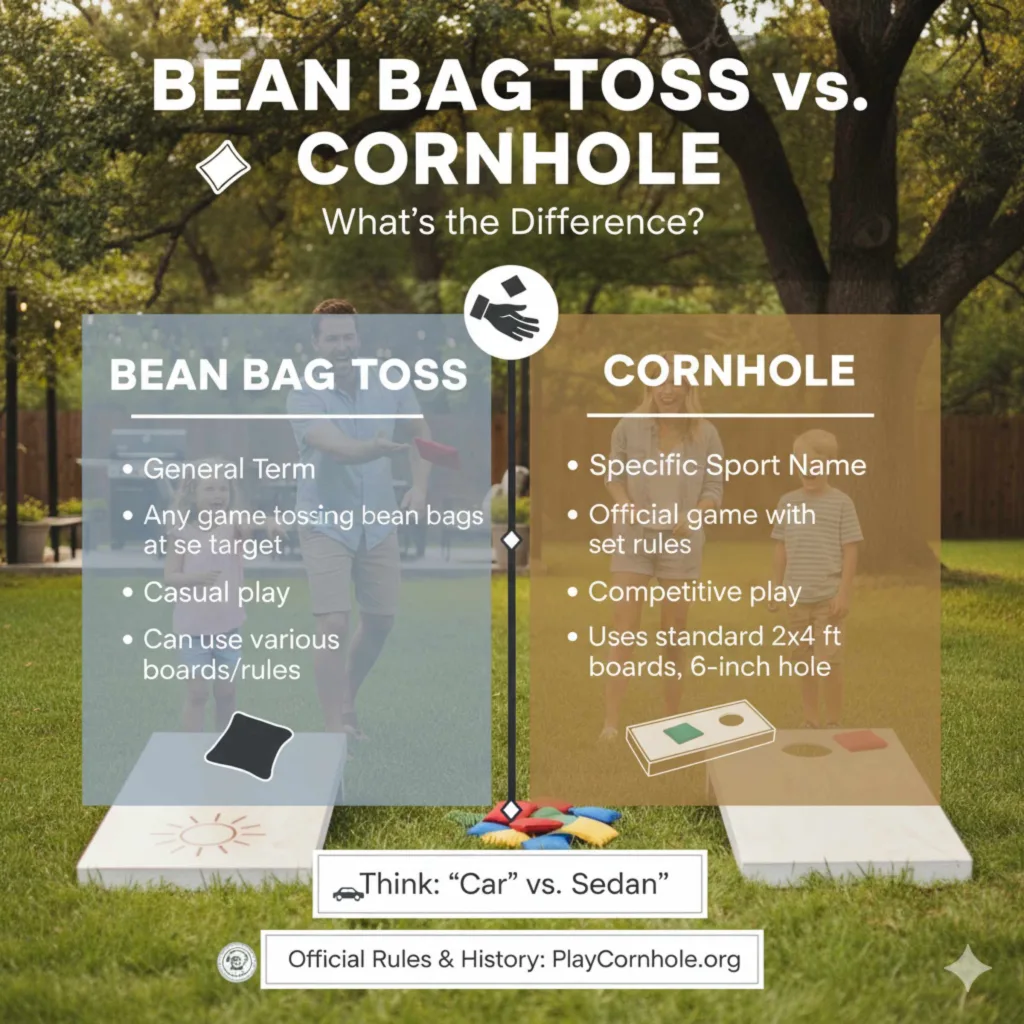
- Bean Bag Toss: This is a more general term that can refer to any game involving tossing bean bags at a target.
- Cornhole: This is the specific name for the game as played with the standard boards and rules we’ve discussed. It’s the official name of the sport.
So, while you might be playing “Bean Bag Toss,” if you’re using the official boards and rules, you’re specifically playing “Cornhole.” It’s like the difference between saying “car” and “sedan” – one is a broad category, and the other is a specific type. You can learn more about the official sport and its history on resources like PlayCornhole.org, which is dedicated to the sport’s evolution and official rules.
Bean Bag Toss FAQ
Have more questions? We’ve got you covered. Here are some common beginner queries:
How far apart should the boards be?
For official games, the distance between the front edge of one board and the front edge of the other is 27 feet. For casual play, you can adjust this to be shorter, especially for kids or for a more relaxed game.
What if a bag hangs on the edge of the hole but doesn’t fall in?
If the bag is touching the board and is not over the hole, only touching the edge of the hole, it counts as 1 point for being on the board. If it’s over the hole and you can see daylight through the hole under the bag, it counts as 3 points for being in the hole!
Can I hit my opponent’s bags?
Absolutely! Hitting and knocking your opponent’s bags off the board is a key strategic element of the game. This is part of the “cancellation” scoring where points are offset.
What if my bag touches the grass before landing on the board?
Any bag that touches the ground (grass, dirt, deck, etc.) before landing on or going into the board is considered “dead” and scores zero points for that toss. It’s as if it never happened.
How do you handle ties at 21 points?
If a team reaches 21 points and their opponent also has 21 points, play continues. You must win by a margin of at least two points. So, if it’s 21-21, you keep playing until someone reaches 23-21, 24-22, and so on.
What is a “wash” in Bean Bag Toss?
A “wash” occurs when both teams score the same number of points in a given round. In this case, no points are awarded to either team, and the score remains unchanged. For example, if both teams score 4 points in a round, it’s a wash, and the overall score doesn’t change.
Can multiple people play on one team?
Yes! While singles games (1v1) are common, doubles play (2v2) is very popular. In doubles, partners usually stand at opposite ends of the court, with one partner on each team at each board. This allows for communication and teamwork between partners.
Conclusion
And there you have it! You’re now equipped with all the essentials on how to play Bean Bag Toss. From setting up your boards the right distance apart to understanding the smart strategy of cancellation scoring, you’re ready to host your own tournament or join in the fun at any party. Remember, the best way to learn is by playing, so grab some bags, find a friend (or three), and head outside. You’ll be surprised how quickly you pick it up and how much fun this simple game can be. It’s a fantastic way to enjoy a sunny afternoon, bond with friends and family, and maybe even develop a new favorite pastime. Go out there and aim for that hole!


