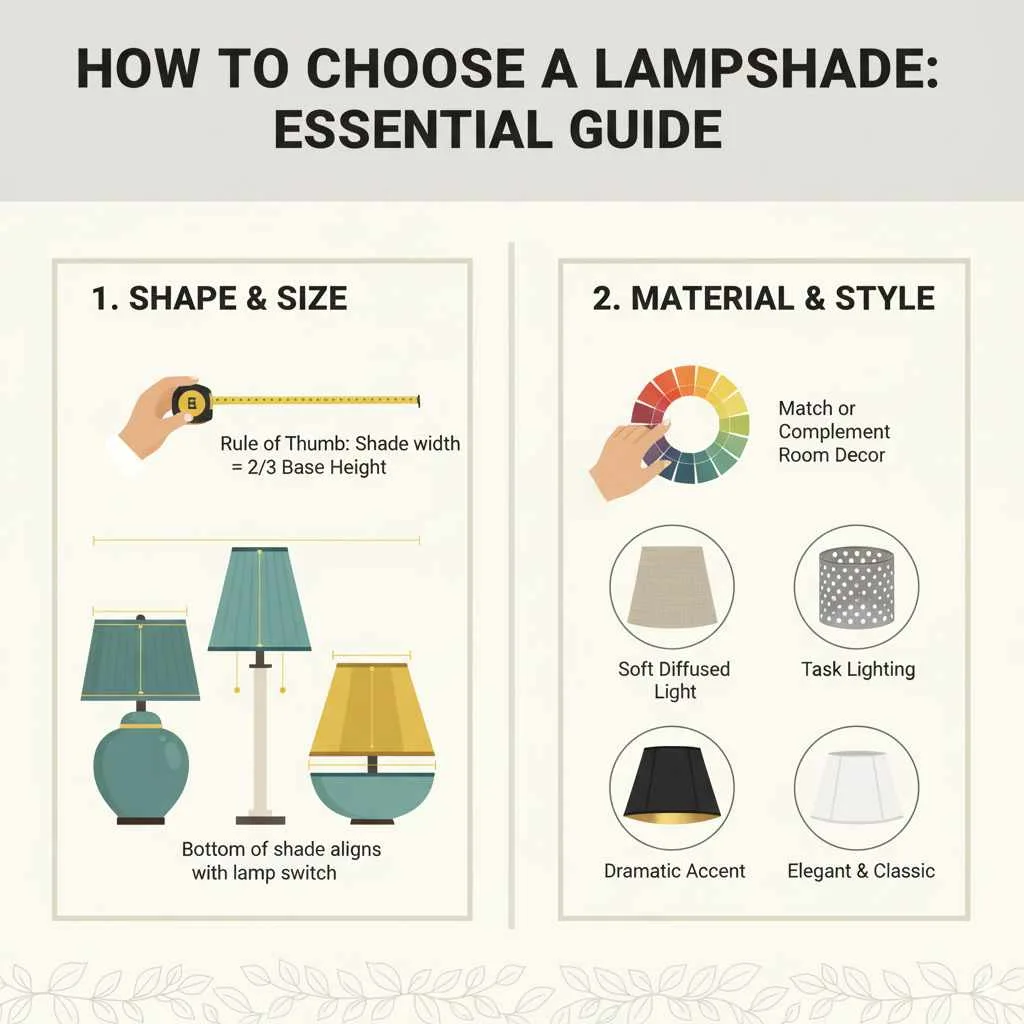
Choosing a lampshade might seem simple, but the right shade dramatically impacts your room’s style, light, and mood. Select a shade that complements your lamp base’s size and shape, matches your room’s decor, and provides the desired illumination for a perfectly lit and beautifully styled space.
Ever looked at a lamp and thought, “It just needs… something”? Often, that something is the perfect lampshade. Picking a lampshade can feel a little tricky, especially when you realize how much it can change the whole look and feel of a room. You want it to be stylish, of course, but also functional. Don’t worry! It’s not as complicated as it seems. With a few simple tips, you’ll be confidently choosing lampshades that make your lamps shine and your home feel even more welcoming. Let’s walk through it together!
This guide will break down the process into easy steps, covering everything from size and shape to color and material. By the end, you’ll know exactly how to find that perfect shade to elevate your home decor.
Why Your Lampshade Choice Matters More Than You Think
Lampshades are more than just fabric shields for light bulbs; they are crucial design elements. A well-chosen lampshade can:
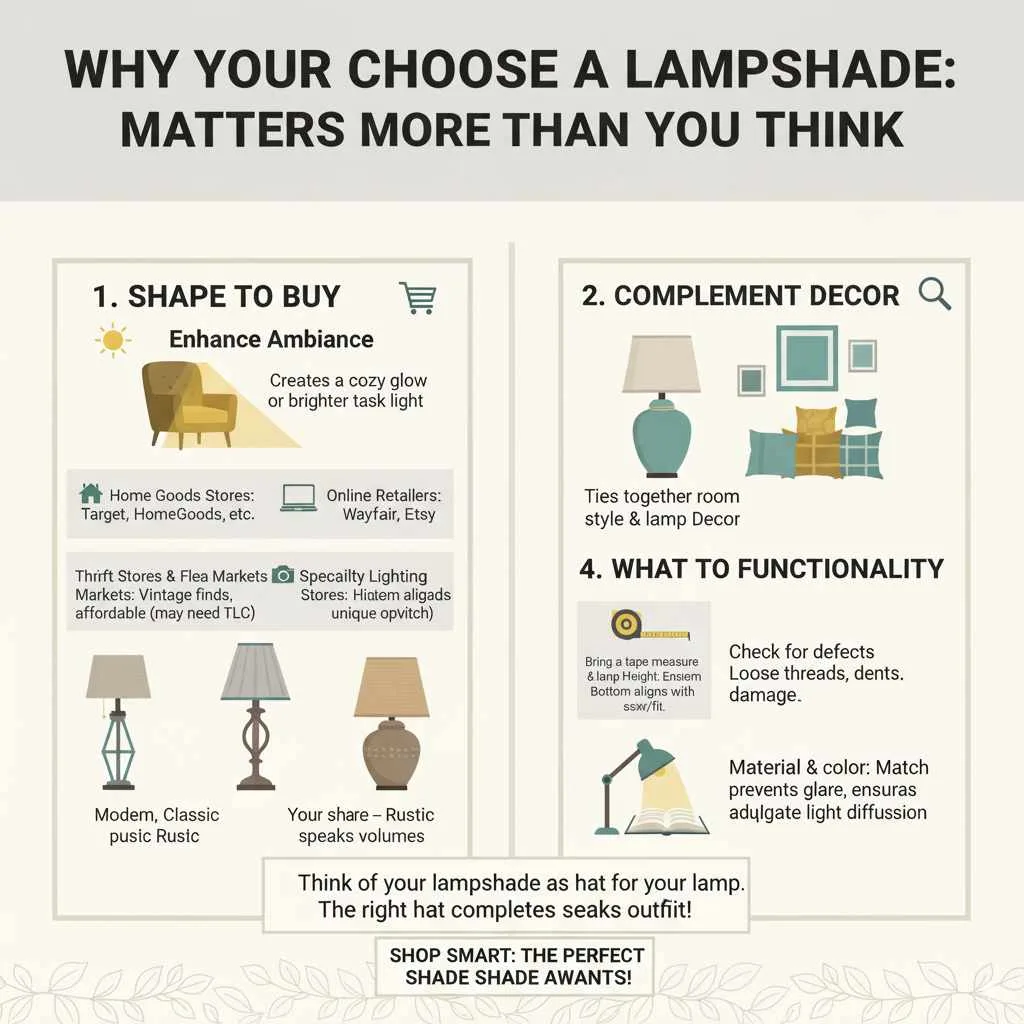
- Enhance Ambiance: The shade controls how light diffuses, creating a cozy glow or brighter task lighting.
- Complement Decor: It acts as an accessory, tying together the style of your room and your lamp base.
- Define Style: From modern geometric shapes to classic drum styles, the shade speaks volumes about your aesthetic.
- Improve Functionality: The right size and shape ensure the lamp provides adequate light without glare.
Think of your lampshade as the hat for your lamp. The right hat can make an outfit (or a lamp!) truly stand out and feel complete. The wrong one can make it look a bit awkward. We want to avoid the awkwardness and go straight for the fabulous!
The Golden Rule – Size and Proportion
This is the most important step for a balanced and attractive look. A lampshade that’s too big or too small can throw off the entire lamp’s appearance and its lighting performance.
Understanding Lamp Height and Shade Height
A good starting point is to have the shade’s height be about two-thirds of the lamp base’s height. However, this is just a guideline. The overall height of the lamp (base + shade) should also be considered relative to its placement.
For example, if the lamp is on an end table next to a sofa, the top of the shade should ideally be around eye level when you’re seated. This prevents glare and directs light downwards effectively. You can find more detailed visual guides on lamp proportions from interior design resources.
Lamp Base Width and Shade Width
When you look at your lamp base, find its widest point. The diameter of your lampshade at its widest point should generally be about twice the width of your lamp base. This creates a visually pleasing balance.
- For straight-sided shades (like drum or empire): Measure the diameter at the widest point.
- For shaped shades (like bell or pagoda): Measure the diameter of the bottom opening.
The Harp and Finial Connection
Most lamps use a harp and finial system to attach the shade. The harp is the U-shaped metal piece that extends from the bulb socket, and the finial is the decorative cap that screws onto the top of the harp to secure the shade.
- Harp Size: Harps come in different lengths. The top of the shade should align with or slightly above the harp’s top loop where the finial attaches.
- Vertical Alignment: An easy check is to imagine a vertical line from the very bottom of the lamp base straight up. The shade shouldn’t extend much beyond these imaginary lines on either side.
If your lamp doesn’t have a harp (some modern lamps have built-in shades or different attachment mechanisms), you’ll need to measure the fitting directly. Many lampshades come with an adapter ring (called a uno fitter) that attaches directly to the bulb socket, or a spider fitter that sits on top of the harp.
Shape Does Matter – Finding the Right Silhouette
The shape of your lampshade plays a significant role in both style and how light is emitted. Different shapes cast light differently and complement different lamp bases.
Common Lampshade Shapes and Their Effects
Let’s look at some popular shapes:
| Shape | Description | Best For | Light Effect |
|---|---|---|---|
| Drum | Cylindrical, with straight sides. The top and bottom diameters are the same. | Modern and minimalist bases; larger lamps. | Provides even light distribution, both up and down. Good for general lighting. |
| Empire | A classic, slightly conical shape with a wider bottom than top. | Traditional and ornate bases; smaller to medium lamps. | Directs more light downwards, good for reading. Creates a softer, more focused glow. |
| Bell | A curved, flared shape that resembles a bell. | Graceful or delicate bases; accent lamps. | Softens light, casting a gentle glow. Can be decorative on its own. |
| Square/Rectangular | Angular shapes that echo the lines of some lamp bases. | Geometric or modern bases; can add a unique touch to any style. | Similar to drum shades in even light distribution, but with sharper aesthetics. |
| Pleated | Features fabric folded into pleats. Can be in various shapes (empire, drum). | Adds texture and a vintage or romantic feel. | Often diffuses light softly, creating a cozy atmosphere. |
| Coolie/Coolie Hat | A shallow, wide, conical shape, wider at the bottom. | Often found on bridge lamps or pull-chain lamps. | Spreads light widely, can be good for ambient lighting. |
Matching Shape to Your Lamp Base
- Simple, Cylindrical Bases: Often look great with drum shades for a sleek, modern look, or bell shades for a softer touch.
- Ornate or Sculptural Bases: Can be balanced by a simpler shade shape like a drum or empire to avoid visual clutter.
- Traditional Bases: Empire or bell shapes often complement classic lamp designs beautifully.
- Geometric or Angular Bases: Square or rectangular shades can echo these clean lines.
Material and Texture – Adding Personality
The material of your lampshade significantly influences its appearance, light diffusion, and durability. It’s where you can really inject your personal style!
Common Lampshade Materials
You’ll find a wide array of materials, each offering a unique look and feel:
- Fabric (Linen, Cotton, Silk, Polyester): The most common. Linen and cotton offer a natural, versatile look. Silk provides a luxurious feel. Polyester is durable and often more affordable. These materials diffuse light softly, creating a warm glow.
- Paper: Often found in minimalist or Asian-inspired designs. It’s lightweight and can create beautiful shadow patterns.
- Plastic/Acrylic: Durable, easy to clean, and can be molded into various shapes. Often found in more contemporary or budget-friendly options.
- Metal: Often used for more industrial or modern styles. Can be perforated to create patterns or used as a grille.
- Glass: Less common for typical shades but used in some decorative fixtures.
- Natural Materials (Rattan, Wicker): Add a bohemian or coastal vibe. These materials create interesting light and shadow play.
How Material Affects Light
- Opaque materials (like thick fabric or metal) block light from escaping the sides, directing most of it upwards and downwards. Good for task lighting.
- Translucent materials (like thin linen, parchment, or frosted plastic) allow light to pass through the shade itself, illuminating the shade and creating a softer, more ambient glow.
- Perforated or patterned materials create decorative light effects on walls and ceilings.
Consider the room’s function. For a reading lamp, you’ll want a shade that directs light downwards. For ambient mood lighting, a translucent material is ideal.
Color, Pattern, and Style – The Finishing Touch
This is where you have fun and let your personality shine through! Your lampshade color and any patterns should harmonize with your existing decor.
Choosing the Right Color
- Neutral Colors (White, Cream, Beige, Gray): These are timeless and versatile. They blend seamlessly with most decors and allow the lamp base to be the focal point. White and cream shades tend to reflect light most effectively, brightening the room.
- Bold Colors: Can make a statement and add a pop of personality. Consider a color that is already present in your room’s color scheme (e.g., accent pillows, artwork) to ensure it ties in.
- Dark Colors: Can create a more intimate, moody atmosphere. They absorb more light, so use them where you don’t need strong illumination.
Patterns and Prints
Patterns can add visual interest and tie a room together:
- Subtle Patterns: Small geometrics, subtle florals, or textured weaves can add depth without being overwhelming.
- Bold Patterns: Large florals, striking geometrics, or artistic prints can serve as a focal point. Ensure the pattern complements your room’s overall style.
Matching Shade Style to Room Decor
Think about the overall aesthetic of your room:
- Modern/Mid-Century: Clean lines, geometric shapes (drum, square), solid neutral colors or bold, graphic patterns.
- Traditional/Classic: Empire, bell, or pleated shapes, rich fabrics like silk or linen, subtle patterns or solid, classic colors.
- Bohemian/Eclectic: Natural materials (rattan, macrame), intricate patterns, vibrant colors, or unique shapes.
- Farmhouse/Rustic: Natural fabrics (burlap, linen), simple shapes (drum, empire), muted colors, or subtle vintage-inspired prints.
Always consider the lamp base itself. A very ornate base might look best with a plainer shade, while a simple base can handle a more decorative shade.
Light Quality – How Much and What Kind?
The lampshade plays a critical role in determining the quality and quantity of light your lamp produces. This is crucial for both ambiance and functionality.
Ambient vs. Task Lighting
- Ambient Lighting: This is softer, diffused light that fills a room. Lampshades made of translucent materials (like linen or parchment) that allow light to pass through are excellent for ambient lighting. Drum and bell shades often do this well.
- Task Lighting: This is focused light for activities like reading or crafting. Shades that direct light downwards (like empire or straight-sided shades made of thicker material) are best for this. You want to minimize glare.
How Shade Opacity Affects Light
The density of the lampshade material affects how much light is diffused:
- Light-Diffusing Materials (e.g., thin linen, fabric): These allow light to glow through the sides of the shade, creating a warm, inviting atmosphere.
- Light-Blocking Materials (e.g., thick fabric, metal, opaque plastic): These focus light upwards and downwards, creating more direct illumination without much light escaping the shade’s body.
If you need bright light for a workspace, opt for a wider shade made of a lighter material or one that is primarily open at the top and bottom. For a cozy reading nook, a slightly smaller, opaque shade will provide a more concentrated and comfortable light.
Special Considerations and Practical Tips
Beyond the basics, a few extra points can help you make the best decision.
Cleaning and Maintenance
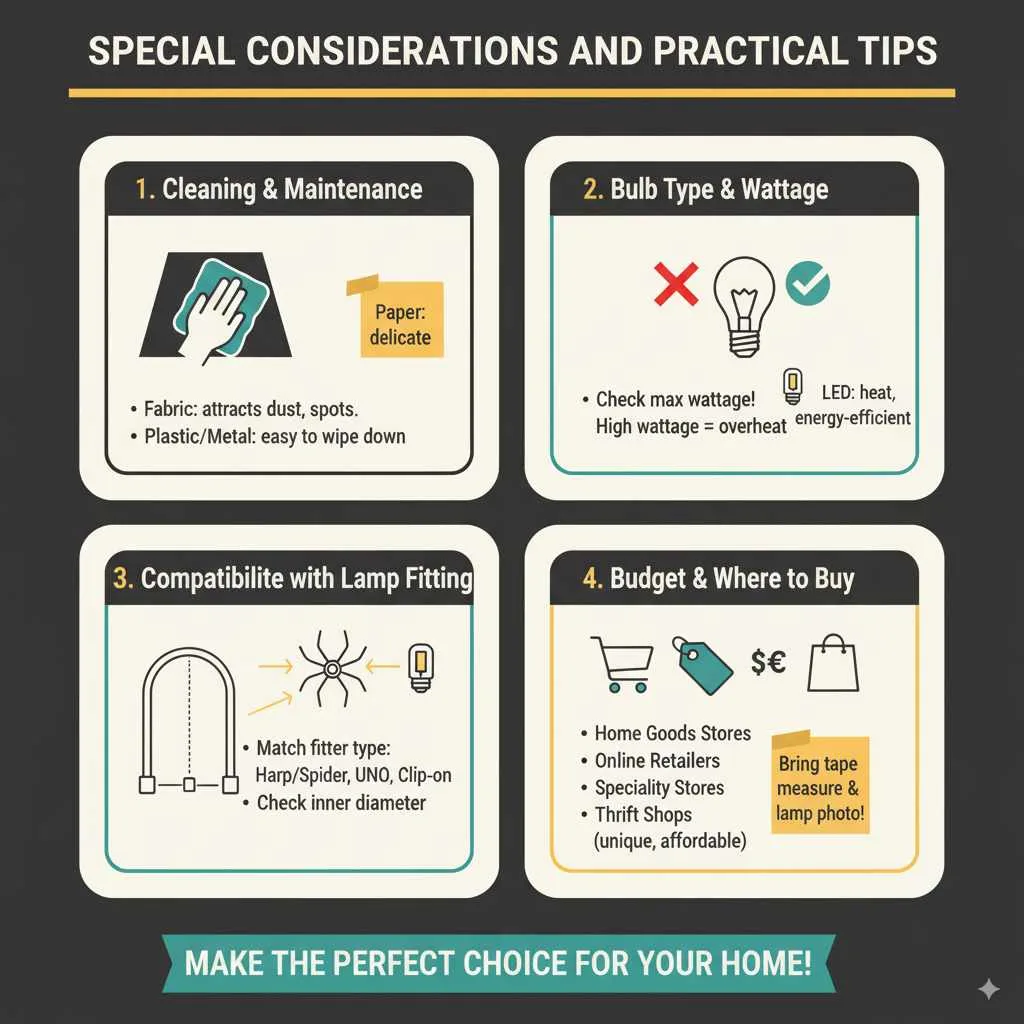
Consider how easy the lampshade will be to clean. Fabric shades can sometimes attract dust or spots. Paper shades are delicate. Plastic or metal shades are generally easier to wipe down.
Bulb Type and Wattage
Always check the maximum wattage recommended for your lampshade. Using a bulb that’s too high in wattage can overheat and damage the shade, especially fabric and paper ones. LED bulbs are a great, energy-efficient option as they produce less heat.
Compatibility with Lamp Fitting
As mentioned earlier, ensure the lampshade’s fitting type (harp/spider, uno fitter, clip-on) matches your lamp’s socket or harp. Most standard lamps use a spider fitter. Make sure the inner diameter of the shade’s fitter is correct for your harp size.
Budget
Lampshades can range from a few dollars for a basic clip-on to hundreds for designer or custom shades. Determine your budget early on. You can often find stylish and well-made shades at affordable prices from online retailers, home goods stores, and even thrift shops (which can be a treasure trove for unique finds!).
Where to Buy, and What to Look For
You can find lampshades in many places:
- Home Goods Stores: Target, HomeGoods, TJ Maxx, Marshalls often have a good selection.
- Online Retailers: Amazon, Wayfair, Etsy, and dedicated lighting websites offer vast choices.
- Specialty Lighting Stores: For higher quality or unique options.
- Thrift Stores & Flea Markets: Great for unique, vintage, or affordable finds, though you might need to clean or even reupholster them.
When shopping, if possible, bring a tape measure and even a photo of your lamp. Check the shade for any defects, loose threads, or damage before purchasing.
FAQ: Your Lampshade Questions Answered
Q1: How do I know if a lampshade is the right size for my lamp?
Generally, the shade’s diameter at the widest point should be about twice the width of your lamp’s base. Also, the shade’s height should be roughly two-thirds the height of the lamp base. For a table lamp, the top of the shade should be around eye level when you’re seated.
Q2: What’s the difference between a spider fitter and an uno fitter?
A spider fitter has a crossbar in the center and sits on top of a harp. An uno fitter has no crossbar and screws directly onto the light bulb socket, sitting flush with the socket’s thread. Ensure you know which one your lamp uses!
Q3: Can I use any color lampshade?
You can use any color that fits your room’s style and intended mood. Neutral colors are versatile. Bold colors can be statement pieces. Darker colors absorb light, creating a cozier feel, while lighter colors reflect it, brightening the space.
Q4: How do I clean a lampshade?
This depends on the material. Fabric and paper shades can usually be cleaned with a soft brush or a vacuum cleaner attachment. For stains, spot cleaning with a damp cloth might work for some fabrics, but always test in an inconspicuous area first. Plastic or metal shades can typically be wiped with a damp cloth.
Q5: What happens if my lampshade is too small for the harp?
If your lampshade’s spider fitter is too large for the harp, it will sit loosely and crookedly. You can often fix this by adjusting the harp itself or, if the harp is not adjustable, by using a harp extender or a thicker washer inside the shade’s fitter. Alternatively, you may need to find a shade with a smaller fitter diameter.
Q6: Should the lampshade match my curtains or rug?
Not necessarily! While matching can create a cohesive look, it’s often more stylish to have your lampshade complement your room’s color palette rather than directly match other elements. It can pick up an accent color from artwork or throw pillows for a more sophisticated feel.
Q7: What kind of light bulb should I use with a new lampshade?
Always check the lampshade’s recommendation for the maximum wattage. It’s safer to use LED bulbs, as they generate significantly less heat than incandescent bulbs, reducing the risk of damage to the shade material and also saving energy.
Conclusion:
Choosing the right lampshade is a simple yet impactful way to enhance your home’s decor and comfort. By considering the proportion and size of the shade relative to your lamp base, selecting a shape that suits your style and functional needs, and choosing materials and colors that complement your room, you can transform an






Leave a Reply