
Quick Summary: Breaking a deadbolt requires careful technique and the right tools to ensure safety and effectiveness. This guide offers a straightforward, essential method for those needing to bypass a locked deadbolt, emphasizing preparedness and secure execution.
Getting locked out of your home can feel like a real design dilemma, can’t it? You’re ready to relax inside, but that stubborn deadbolt just won’t budge. It’s a frustrating situation, especially when you’re not dealing with a broken lock, but simply a locked door with no key. Don’t worry, though! We’re going to walk through a proven method to get you back inside. Think of it as a practical problem-solving step in your journey to a comfortable and secure home. We’ll break down exactly what you need and how to do it, making this whole process feel much more manageable.
Understanding Deadbolts and How They Work
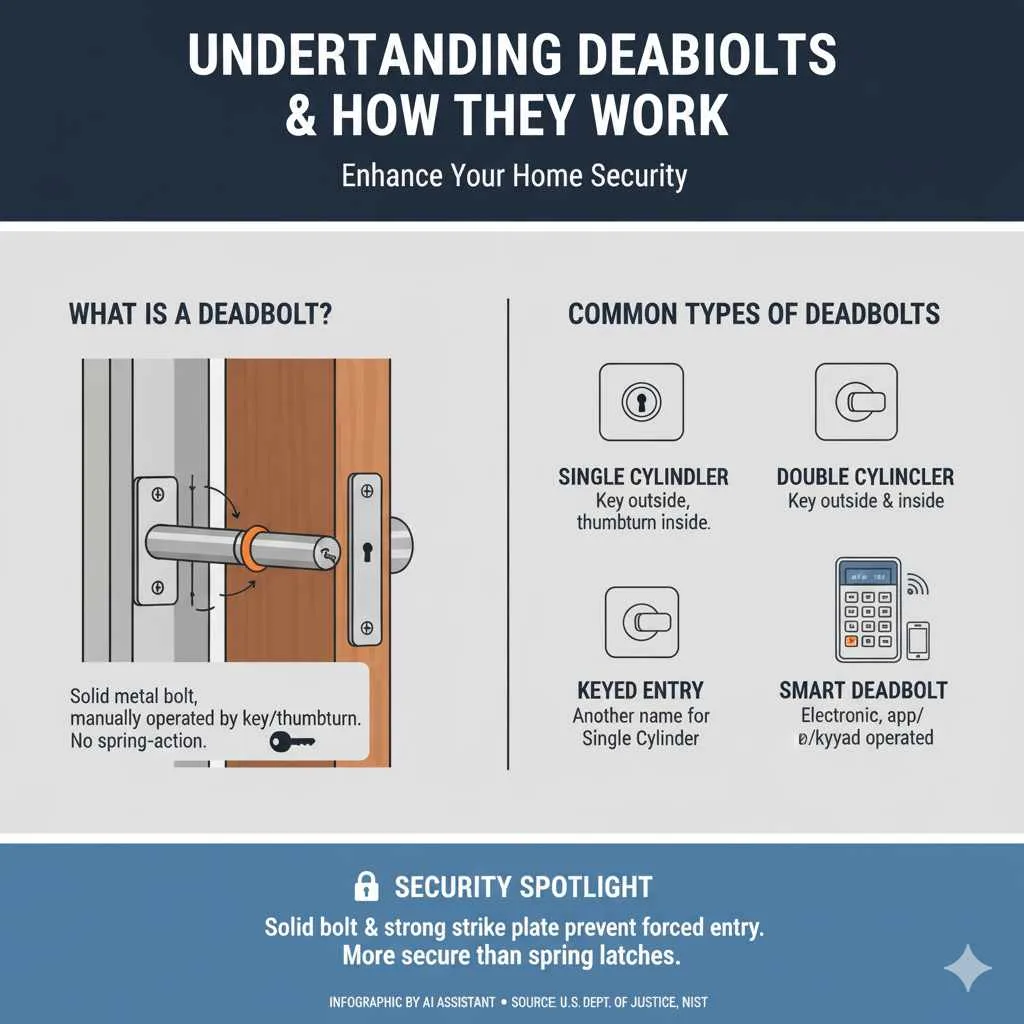
Before we dive into how to bypass a deadbolt, it’s helpful to know what we’re dealing with. A deadbolt is a type of lock mechanism commonly found on exterior doors. Unlike spring latch locks (which are usually operated by a knob or handle and retract automatically), a deadbolt is operated by a key, and it has a bolt that extends into the doorframe. This bolt is solid metal and is not spring-loaded. When you turn the key, the bolt extends or retracts. The “dead” in deadbolt refers to the fact that it has no spring action – it needs to be manually operated by a key or a thumbturn on the inside. This makes them much more secure than standard spring latches, as they can’t be easily forced open by shimming.
There are a few common types of deadbolts:
- Single Cylinder Deadbolt: This is the most common type. It requires a key from the outside and a thumbturn knob from the inside to operate.
- Double Cylinder Deadbolt: This type requires a key to lock and unlock from both the inside and the outside. These are often used for added security, especially on doors with glass panels.
- Keyed Entry Deadbolt: This is essentially another name for a single cylinder deadbolt.
- Smart Deadbolts: These are electronic and can be operated via smartphone apps, keypads, or traditional keys. For this guide, we are focusing on traditional mechanical deadbolts.
The strength of a deadbolt lies in its solid bolt and the way it engages with the strike plate within the doorframe. When an attempt is made to “break” a deadbolt, the goal is usually to either bypass the locking mechanism itself or to compromise the door and frame enough to release the bolt. For beginners, aiming to bypass the mechanism directly is often the most challenging and least destructive path, but sometimes the situation calls for a more direct approach.
When Might You Need to Break a Deadbolt?
It’s important to approach this topic with responsibility. The situations where you might need to break a deadbolt are typically emergencies or, in rare cases, when a lock has malfunctioned and you have no other recourse:
- Emergency Situations: Fire, flood, or medical emergencies where immediate access is critical.
- Lost Keys and No Spare: If all keys are lost and there’s no other way in, and a locksmith is not immediately available.
- Malfunctioning Lock with No Other Access: If the deadbolt is jammed, broken internally, or otherwise won’t operate with a key or thumbturn, and you cannot wait for a professional.
- Securing a Property Temporarily: After damage or when immediate security is needed before a permanent repair or replacement.
It’s crucial to remember that damaging a lock or door can be costly. If you can wait, calling a locksmith is usually the smartest, safest, and most cost-effective option in the long run. However, understanding basic bypass methods can be a valuable skill for unique circumstances.
Essential Tools for Breaking a Deadbolt
Success in bypassing a deadbolt often comes down to having the right tools. While some intricate lock-picking methods require specialized tools, for a more direct bypass, you’ll want items that can apply force or manipulate the lock mechanism. Remember to always wear safety glasses and gloves when working with tools and potential hazards.
Here’s a list of commonly useful tools for various deadbolt bypass methods:
- Screwdriver Set: A set of Phillips head and flathead screwdrivers is essential for removing the lock assembly if possible.
- Drill and Drill Bits: If the lock cylinder needs to be destroyed, a drill is necessary. Various sizes of drill bits, including a larger one to bore through the cylinder, will be needed.
- Hammer: For applying force, whether to drive a wedge or to make an impact.
- Pry Bar/Crowbar: Useful for creating leverage between the door and the frame.
- Wedges: Can be used to force open the gap between the door and the frame.
- Lubricant (e.g., WD-40): Sometimes a seized lock just needs a little help, though this is less about breaking and more about troubleshooting.
- Safety Glasses: Absolutely crucial to protect your eyes from flying debris.
- Work Gloves: To protect your hands from splinters, sharp edges, and the tools themselves.
- Sturdy Card (e.g., credit card, gift card): For latch-type locks or if the deadbolt bolt isn’t fully extended and there’s a gap. (Less effective on a truly engaged deadbolt.)
- Thin Metal Shim: Similar to a card, but provides more rigidity.
The specific tools you’ll need will depend on the method you choose. For a beginner-friendly approach that aims to minimize damage, we’ll focus on methods that might involve manipulation rather than brute force or destruction first.
The Proven Essential Method: Manipulating the Bolt
This method aims to disengage the bolt from the strike plate without necessarily destroying the lock cylinder itself. It’s a slightly more delicate approach and might work on certain types of deadbolts, especially if the bolt isn’t fully thrown or if there’s a slight gap. It’s a good first attempt before resorting to more forceful or destructive methods.
Step-by-Step Guide: Manipulating the Deadbolt
This method is most effective if the deadbolt is not fully engaged, meaning there’s no significant pressure holding the bolt within the strike plate, or if there is a slight gap between the door and the frame. If the door is tightly sealed and the deadbolt is firmly engaged, this method may not work.
Step 1: Assess the Situation and Gather Tools
First, take a deep breath and assess your situation. Is the door warped? Is the deadbolt fully thrown? Do you have a key for any of your locks? For this method, you’ll primarily need a sturdy credit card or a thin metal shim, some gloves, and your safety glasses.
Step 2: Create a Gap (If Necessary)
Gently try to push or pull the door to see if there’s any play. If you can create even a tiny gap between the door and the frame near the deadbolt, it will help. Sometimes, gently kicking or pushing on the door near the lock can achieve this, but be careful not to damage the frame or door. The goal isn’t to break the door, but to create just enough space to insert your shim.
Step 3: Insert the Shim or Card
Slide your sturdy credit card or metal shim into the gap between the door and the frame, aiming directly at the deadbolt’s sloped surface. You want to angle the card/shim downwards towards the deadbolt bolt. If the deadbolt has a bevel (most do on one side), you want to slide the card along the bevel.
- For a sloped bolt: Try to work the card down the angled surface of the bolt.
- For a straight bolt: This method becomes less effective.
Here’s a table illustrating how the card interacts with the bolt:
| Tool | Target | Action | Objective |
|---|---|---|---|
| Sturdy Card/Shim | Sloped surface of the deadbolt bolt | Slide and wiggle | Push the bolt back into the lock housing |
Step 4: Apply Pressure and Wiggle
Once the card/shim is in place, try to push it further into the gap while wiggling the door back and forth. The idea is to use the card/shim to push the sloped side of the deadbolt back into its housing. You might need to apply pressure on the door in the opposite direction of the bolt’s extension (i.e., pull it towards you if the bolt is extending away from you).
Step 5: Repeat and Adjust
You might need to try this several times. Adjust the angle of the card/shim and the pressure you apply to the door. If the bolt is fully engaged and flush with the edge of the door, this method is unlikely to work. If it does work, you’ll feel the bolt retract, and the door should then open.
Important Note: This method is much more effective on simple spring latches but can sometimes work on a poorly adjusted or lightly engaged deadbolt with a beveled bolt. It’s generally not successful on fully engaged security deadbolts.
Alternative Method: Drilling the Lock Cylinder
If the manipulation method fails, or if you have a double-cylinder deadbolt where you can’t access a thumbturn and the bolt is firmly engaged, you might need to resort to drilling. This method will destroy the lock cylinder and will require a replacement lock. It’s a more forceful approach but effective if done correctly.
Step-by-Step Guide: Drilling the Deadbolt Cylinder
Step 1: Identify the Pins
Locate the keyway (where the key goes). Inside the keyway are pinning chambers. The easiest place to drill to disable the lock is usually right above or below the keyway, where you can access and destroy these pins.
Step 2: Select the Right Drill Bit
Start with a smaller drill bit (e.g., 1/8 inch or 3mm) and a drill. You’ll then move up to a larger bit (e.g., 3/8 inch or 10mm) to effectively destroy the pins and the cylinder. For a more direct approach, a larger bit can be used initially.
A good resource for understanding lock mechanisms is the Locksmith Training curriculum, which provides detailed insights into pin tumblers.
Step 3: Drill Through the Cylinder
Wearing your safety glasses and gloves, position the drill on the lock cylinder. Aim to drill straight through the cylinder, targeting the area where the pins are located. You want to drill through the shear line, which is the point where the cylinder separates into two halves internally. Destroying the pins and the shear line will prevent the lock from operating.
Step 4: Clear Debris and Test
After drilling through the cylinder, you may need to clear out debris. You can use a screwdriver or a small pry bar to help break apart the damaged cylinder. Once the cylinder is sufficiently compromised, the bolt should be free to retract.
Step 5: Remove the Lock and Install a New One
Once the bolt is retracted, you can usually remove the rest of the lock hardware. This will involve unscrewing any visible screws. You will then need to install a new deadbolt.
Here’s a comparison of the two methods:
| Method | Pros | Cons | Best For |
|---|---|---|---|
| Card/Shim Manipulation | Non-destructive, preserves lock hardware | Only works on certain lock types and bolt engagements, requires a gap | Lightly engaged deadbolts, doors with slight gaps |
| Drilling | Effective on most deadbolts, bypasses all security features | Destroys the lock cylinder, requires replacement | Firmly engaged deadbolts, double-cylinder deadbolts, jammed locks |
Important Safety Precautions
Working with locks, especially when attempting to bypass them, carries risks. Always prioritize safety to avoid injury or further damage.
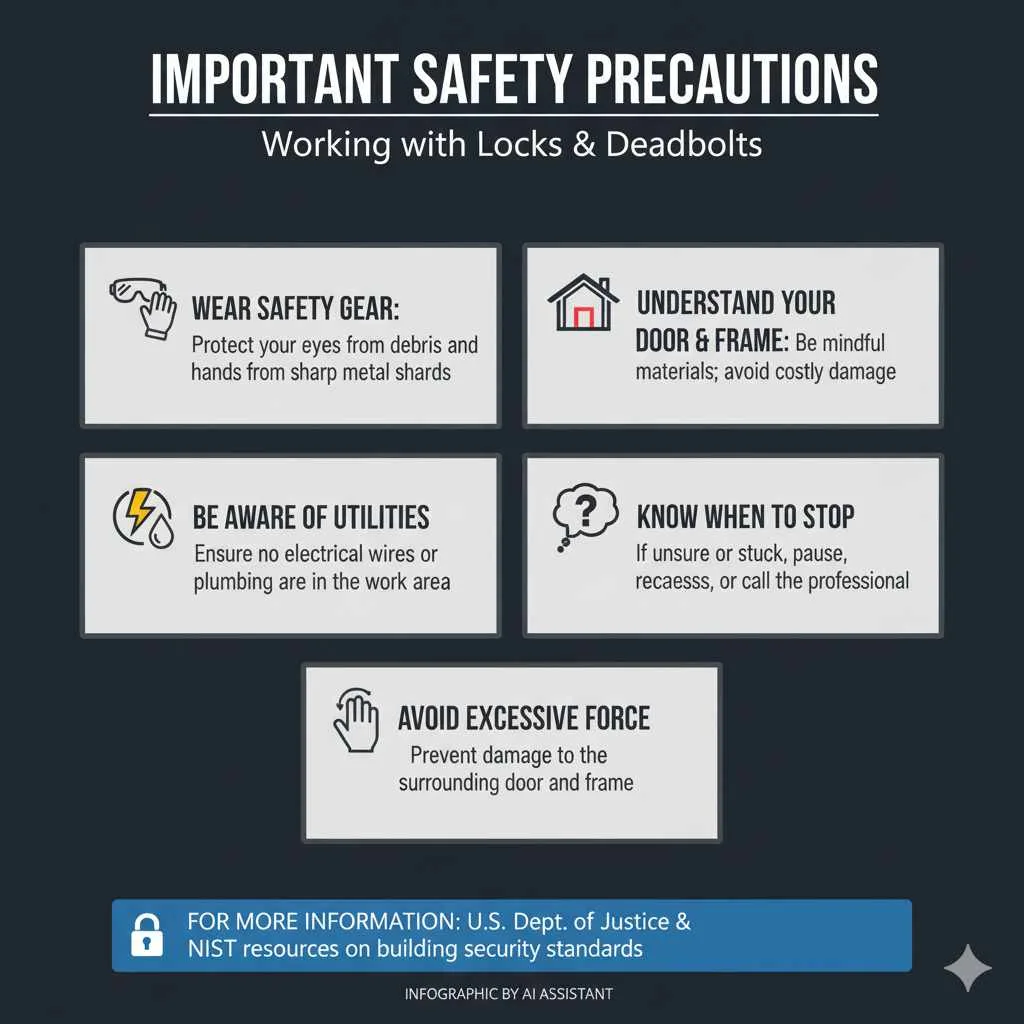
- Wear Safety Gear: Always wear safety glasses to protect your eyes from flying debris and sharp metal shards. Gloves will protect your hands.
- Understand Your Door and Frame: Be mindful of the materials your door and frame are made of. Forcing a flimsy door or frame can lead to much more expensive repairs than replacing a lock.
- Be Aware of Utilities: Ensure you are not drilling into anything that could cause a hazard, such as electrical wires or plumbing. While unlikely in a door, it’s a general safety principle.
- Know When to Stop: If you’re not making progress or are unsure about a step, it’s better to pause and reassess, or call a professional locksmith.
- Avoid Excessive Force: While some force may be necessary, excessive, uncontrolled force can damage the surrounding door and frame, leading to costly repairs.
For more detailed information on lock safety and security, the U.S. Department of Justice and National Institute of Standards and Technology (NIST) offer resources on building security standards.
Frequently Asked Questions (FAQ)
Q1: Can I really break a deadbolt with a credit card?
A1: You might be able to, but only under specific circumstances. This method works best on locks where the deadbolt bolt has a bevel (slant) and isn’t fully jammed into the strike plate. It’s less effective on tightly secured doors or double-cylinder deadbolts where the bolt is firmly engaged with no give.
Q2: Will breaking a deadbolt damage my door?
A2: Some methods, like drilling, will definitely destroy the lock cylinder, requiring a replacement lock. Forceful methods like prying can potentially damage the door frame or the door itself if not done carefully. The card/shim method is the least likely to cause damage.
Q3: How long does it take to break a deadbolt?
A3: This depends heavily on the method used, the type of deadbolt, and your skill level. The card method might take a few minutes of trying. Drilling can take 5-15 minutes once you’re set up. Calling a locksmith is often the quickest solution if you need immediate access.
Q4: What is the easiest way to get through a locked deadbolt?
A4: The “easiest” depends on your definition. The least destructive is the card/shim method, but it’s not always successful. Drilling is effective but destructive. For most people, the easiest and wisest solution is to call a professional locksmith.
Q5: If I break my deadbolt, how much does it cost to replace?
A5: Replacing a standard deadbolt can range from $20 for a basic model to $150 or more for high-security or smart deadbolts. Installation costs from a locksmith can add another $75-$150, depending on your location and the complexity of the job.
Q6: Is it legal to break into my own home?
A6: Yes, it is legal to force entry into your own home if you are locked out. However, if you are using methods that cause damage, you are responsible for the repair costs. If you suspect your home has been unlawfully entered, contact law enforcement immediately.
Conclusion
Navigating a locked door can be a stressful experience, but by understanding the mechanics of a deadbolt and having a few basic techniques at your disposal, you can tackle the situation. We’ve explored how to manipulate the bolt with tools like a sturdy card or shim, which offers a less destructive path. For more stubborn locks, or when emergencies dictate, we’ve also outlined the process of drilling out the cylinder, a method that guarantees access but requires lock replacement. Remember, safety should always be your top priority, so wear your protective gear and proceed with caution.
While these methods are effective, they can lead to damage and added expense. Whenever possible, giving a professional locksmith a call is often the most efficient and least damaging way to resolve being locked out. They have specialized tools and expertise to get you back inside quickly and often without damaging your door or lock hardware. Whichever path you choose, knowing these options empowers you to handle unexpected home access challenges with greater confidence. Your home should always be a sanctuary, and we’re here to make sure you can always get back into yours!