

Bakers typically earn an average of $16 to $20 per hour when starting out, but this rate can quickly increase to $25 or more based on location, specialty, and experience. Keep reading for a clear breakdown of what factors drive baker wages and how you can boost your earnings.
Ever stopped to think about the person behind that perfectly flaky croissant or that towering, beautiful wedding cake? Baking is an art, but it’s also a job. If you love dough more than data entry, you might be wondering what kind of paycheck you can expect. Figuring out how much bakers make an hour can feel tricky because the pay isn’t the same everywhere. It changes depending on where you work and what you can whip up! Don’t worry, we are going to break down the numbers simply. We will show you the average pay, the big factors that change your rate, and how you can start growing your own baking income.
Understanding the Baker’s Hourly Wage: The Starting Line
When you first step into a commercial kitchen, you are starting your career journey. Just like learning to change your own oil, starting pay reflects the learning curve. We need a solid baseline to understand where we stand.
National Averages: What the Numbers Say
When we look at broad data, we get a general picture of the market. These figures often come from national surveys or government reports that pool information from thousands of baker positions. Think of these as the starting point—the middle of the road.
According to recent data compiled from various labor statistics, the average hourly rate for a baker generally falls within a specific range. For entry-level roles, this is often closer to the lower end.
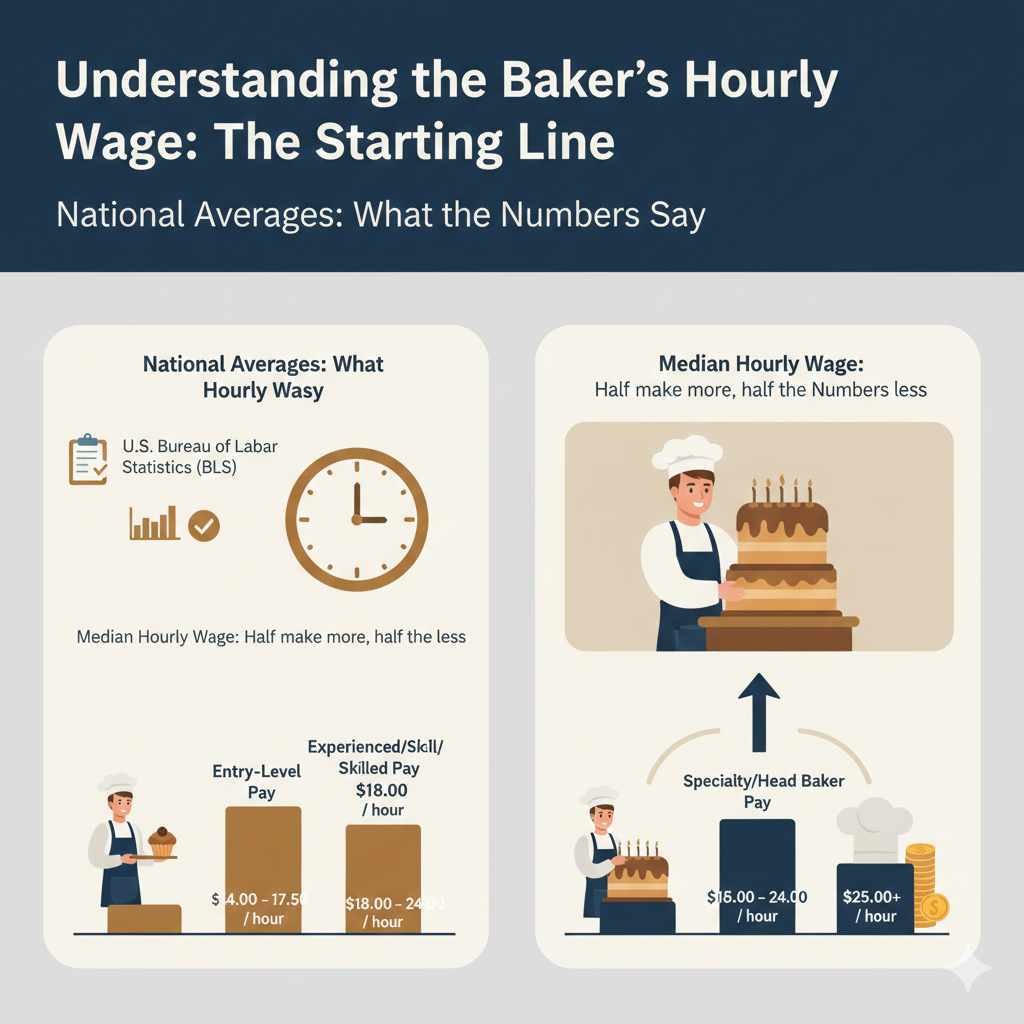
For example, data sources like the U.S. Bureau of Labor Statistics (BLS) often show a median hourly wage, meaning half of all bakers make more, and half make less.
For someone just starting or working standard hours at a community grocery store, you should expect pay to hover around:
- Entry-Level Pay: $14.00 – $17.50 per hour
- Experienced/Skilled Pay: $18.00 – $24.00 per hour
- Specialty/Head Baker Pay: $25.00+ per hour
The Difference Between ‘Baker’ and ‘Pastry Chef’
It is important to know that the title matters just as much as the skill when checking those pay scales. A “Baker” often handles production—mass-producing bread, rolls, or standard desserts. A “Pastry Chef,” however, usually involves more specialized skills, recipe development, and often management duties.
Think of it like working on your car. A general mechanic might handle oil changes (standard baking production), while a specialized transmission expert commands a higher rate (pastry arts or custom cake design).
Pastry Chefs, especially those running the dessert program in a nice restaurant or hotel, almost always earn significantly more per hour than general production bakers.
Key Factors That Strongly Influence How Much Bakers Make Per Hour
If you see a wide range in hourly pay, it is because several big factors act like levers, pulling your potential earnings up or down. Being aware of these levers helps you negotiate better or choose a career path that maximizes your income.
1. Location, Location, Location (Cost of Living)
This is non-negotiable. If you are baking in a major metropolitan area where the rent is sky-high, your employer must pay more just to keep staff. A baker in Manhattan, New York, will almost certainly earn more per hour than a baker in a small town in rural Kansas, even if they have the exact same skills.
| Area Type | Typical Hourly Range (Estimate) | Why the Difference? |
|---|---|---|
| High Cost of Living City (e.g., San Francisco, NYC) | $21.00 – $30.00+ | Higher operational costs and demand for specialized labor. |
| Medium Cost of Living City (e.g., Denver, Atlanta) | $17.00 – $23.00 | Balanced market wage reflecting local expenses. |
| Low Cost of Living/Rural Area | $15.00 – $19.00 | Lower general wage standards and cheaper overhead costs. |
2. Type of Establishment
Where you clock in makes a huge difference in your pay scale. You are selling a product at very different price points, which affects what the business can afford to pay you.
Here is a quick look at common workplaces:
- Grocery Store/Wholesale Bakery: Often pays standard hourly wages, sometimes with overtime opportunities. Pay tends to be more consistent but lower on the scale.
- Independent Retail Bakery (Your Local Shop): Pay can vary widely. Small shops focus heavily on margins, but if they specialize (like sourdough), they might pay slightly better for skill.
- High-End Restaurant or Hotel: These establishme nts demand perfection. If you are working under an Executive Pastry Chef, your specialized knowledge means a higher hourly rate, often supplemented by tips or kitchen service charges.
- Contract/Institutional Baking (Schools, Hospitals): Tends to follow set wage scales, offering stability but sometimes less spectacular growth than a boutique shop.
3. Skill Level and Specialization
Are you great at bread? Can you do detailed sugar work? Specialization pays dividends. If you bring a rare or highly demanded skill to the table, you are more valuable.
Highly valued skills that boost hourly earnings include:
- Advanced cake decorating (fondant work, sculpted cakes).
- Mastery of specific bread styles (laminates, high-hydration sourdough).
- Understanding mass production efficiency (scaling recipes for large output).
- Knowledge of food safety certifications (like ServSafe).
4. Hours Worked (Overtime Potential)
Baking is not a 9-to-5 job. You are often starting before dawn. If you are working mandatory overtime, especially in production facilities, that time-and-a-half rate can significantly increase your average hourly take-home pay compared to someone working a standard 40-hour week.
The Education Path: Does Formal Training Increase Pay?
Many people ask if going to culinary school is necessary just to learn how much bakers make an hour. The answer is complex: it gives you a boost, but experience often wins out in the long run.
Culinary School vs Apprenticeship
Formal education provides structure, theory, and often faster access to management tracks. However, experience in a real, demanding kitchen teaches speed and efficiency that books cannot.
Think about this when considering your investment:
- Culinary School Graduates: They might start slightly higher than someone with zero experience because they speak the language and understand kitchen hierarchy. They often have better networking options.
- Apprentices/On-the-Job Training: These bakers learn by doing. While their starting wage might be lower, rapid skill acquisition in a high-volume environment can bridge the gap quickly, especially if they master efficiency.
For deep dives into occupational safety and standards within food production environments, resources from respected national organizations can provide context on professional expectations, which often correlates with better pay structures. You can explore standards related to commercial food handling and safety through state-certified training programs.
Negotiating Your Worth: Practical Steps to Increase Your Hourly Rate
Knowing the average is great, but how do you push past that average? As a baker, your value lies in consistency and speed. Here are some practical, actionable steps you can take to improve your hourly earnings.
Step 1: Master Efficiency, Not Just Taste
The business owner needs to know that the time they pay you for results in maximum output. If you can consistently produce 100 perfect croissants in the time it took someone else 90 minutes, you are saving the shop money.
Track your output. Can you:
- Organize your station (Mise en place) before your shift even starts?
- Reduce waste by accurately scaling ingredients?
- Streamline repetitive tasks (like scaling dough portions)?
Step 2: Specialize in High-Margin Items
Certain baked goods have a very high perceived value compared to their ingredient cost. If you master these, you become more valuable because you are directly contributing to higher profit margins for the bakery.
Focus on perfecting:
- Artisan Bread (Sourdough, ancient grains)
- Custom Wedding or Specialty Cakes
- High-quality laminated doughs (Danish, puff pastry)
Step 3: Be Present for the Busy Season (The Overtime Advantage)
If your bakery is slammed during the holidays (Thanksgiving, Christmas, Valentine’s Day), volunteer for extra hours if you are paid overtime; this is often the fastest way to see a temporary spike in your average hourly earnings for the month. Just be careful not to burn out—this is a marathon, not a sprint!
Step 4: Seek Out Management or Lead Roles
The biggest hourly jump usually comes when you move from being a doer to being a planner. A Lead Baker or Kitchen Manager isn’t just mixing dough; they are scheduling staff, ordering supplies, and managing inventory.
These roles come with added responsibility, demanding more pay, often structured as a higher base hourly rate or a blended hourly/salary arrangement.
The Freelance and Artisan Baker Route: Setting Your Own Hourly Rate
Once you have significant experience, moving into freelance or starting your own micro-bakery provides the ultimate control over “how much you make per hour.” However, this shifts the equation entirely—you must now account for business costs.
Calculating Your True Freelance Rate
When working for yourself, your hourly rate needs to cover everything. You are the baker, the marketer, the cleaner, and the accountant.
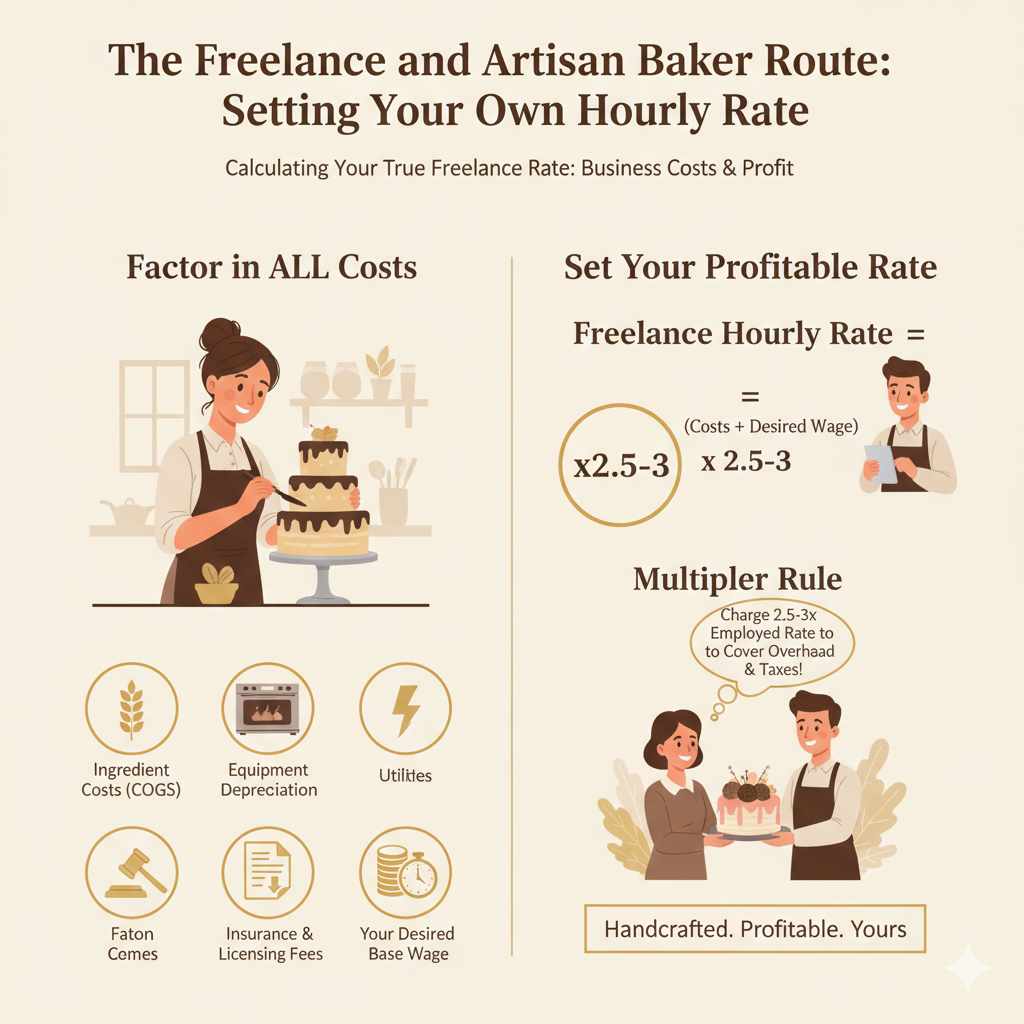
When setting your freelance rate, you need to factor in:
- Ingredient Costs (COGS)
- Equipment Depreciation (Oven wear and tear)
- Utilities (The oven runs hot!)
- Insurance and Licensing Fees
- Your desired base wage (the standard hourly rate you want to achieve).
A good rule of thumb for a self-employed artisan is to charge at least 2.5 to 3 times what a standard employed baker earns per hour, just to cover overhead and taxes. This ensures that when you finally hand over a custom cake, the true time spent equals a profitable return.
Stability vs Potential: Comparing Employment Types
As someone new to the trade, you have a choice: do you want the security of a steady paycheck or the higher earning potential of a dynamic environment?
| Factor | Standard Employment (Grocery/Chain Bakery) | Fine Dining/Specialty Shop |
|---|---|---|
| Pay Consistency | High. Predictable weekly or bi-weekly checks. | Moderate. Can fluctuate based on restaurant traffic. |
| Benefits (Healthcare/Paid Time Off) | Often provided. | Varies greatly; less common or minimal in smaller shops. |
| Tip Potential | Low to None. | High, especially if serving front-of-house staff or for special orders. |
| Career Growth Pace | Steady, following corporate structure. | Faster skill development, potential for rapid promotion based on talent. |
FAQ: Beginner Questions About Baker Pay
We know you have questions simmering as you plan your career path. Here are some quick, clear answers to the most common concerns beginners have about bakery wages.
Q1: Can I realistically make over $25 per hour as a baker?
A: Yes, absolutely. You generally need to be highly skilled, work in a high-cost-of-living area, or hold a supervisory role (like Head Baker or Pastry Chef) in an upscale establishment to consistently earn over $25 per hour.
Q2: Do bakers get tips that add to their hourly wage?
A: It depends entirely on where they work. Bakers in production-only facilities rarely see tips. Bakers working in smaller retail shops or restaurants, especially if they interact with customers or manage special orders, often receive a portion of the gratuities.
Q3: Is overtime pay common for bakers?
A: Very common, especially around holidays. Since baking often involves tight deadlines (products must be ready by opening time), working extra late or coming in early is normal. Ensure you understand your state’s overtime laws regarding non-exempt employees.
Q4: How many years does it take to significantly improve my hourly rate?
A: Significant improvement often occurs within the first 2 to 4 years if you are actively learning, switching jobs to gain diverse experience, and specializing in a profitable area. After 5 years, you should solidly be in the upper range of hourly pay for your region.
Q5: Do independent food trucks or farmers’ market bakers make more hourly?
A: Potentially, yes, but this requires careful calculation. While the sales price per item is higher at a market, you must subtract all your daily costs (market fees, tent rental, ingredients, travel time) to find your true net hourly wage, which can sometimes be lower than a salaried position initially.
Q6: What certifications genuinely help me earn more dough (money)?
A: While hands-on experience is king, formal certifications like a Certified Baker (CB) or Certified Pastry Chef (CPC) from recognized culinary associations can signal high competence, helping you open doors to specialized, better-paying jobs, especially in large corporate settings.
Conclusion: Baking Your Way to a Better Paycheck
Figuring out how much bakers make an hour isn’t about finding one magic number; it’s about understanding the levers of the industry. You now know that your location, the prestige of your workplace, and, most importantly, your specialized skills all combine to set your final rate.
If you are currently earning on the lower end, focus your energy on mastering one high-value skill—be it sourdough fermentation or intricate chocolate work. Seek out training, track your efficiency, and don’t be afraid to look at job listings in more expensive areas or higher-end restaurants, as these are where the top dollar is made.
Baking is a rewarding craft that demands hard work, often during inconvenient hours. By being strategic about where you work and what you bring to the mixing bowl, you can confidently steer your career toward the higher end of that hourly wage spectrum. Keep practicing, keep learning, and soon you’ll be seeing the results in your paycheck!