
The quick answer: Shrimp cook incredibly fast, usually just 1-3 minutes per side in a hot skillet. Overcooking makes them tough, so watch for a quick color change to pink and opaque.
Shrimp is one of those fantastic ingredients that can transform a simple meal into something special, with minimal fuss. But have you ever found yourself staring at a sizzling skillet, wondering, “Are they done yet?” You’re not alone! It’s easy to go from perfectly cooked to rubbery in mere seconds. Many home cooks worry about undercooking or, more commonly, overcooking their delicate shrimp. Don’t let this frustration stop you from enjoying delicious, tender shrimp dishes. This guide is here to make skillet shrimp foolproof, ensuring tender, juicy results every single time. We’ll walk you through exactly how long to cook shrimp in a skillet, so you can confidently whip up amazing meals.
Mastering the Skillet: The Art of Perfectly Cooked Shrimp
Cooking shrimp in a skillet is wonderfully quick and versatile. It’s a weeknight savior and a gourmet treat all at once! The key to success lies in understanding how quickly shrimp cook and what signs to look for. Unlike a hearty roast or a dense vegetable stew, shrimp demands your attention for just a few minutes. Let’s dive into the essential factors that determine cooking time and the simple steps to get it right.
Factors Influencing Shrimp Cooking Time
While the general rule for cooking shrimp in a skillet is very short, a few things can slightly alter the timing. Understanding these will help you adapt and achieve perfect results, no matter the size or type of shrimp you’re using.
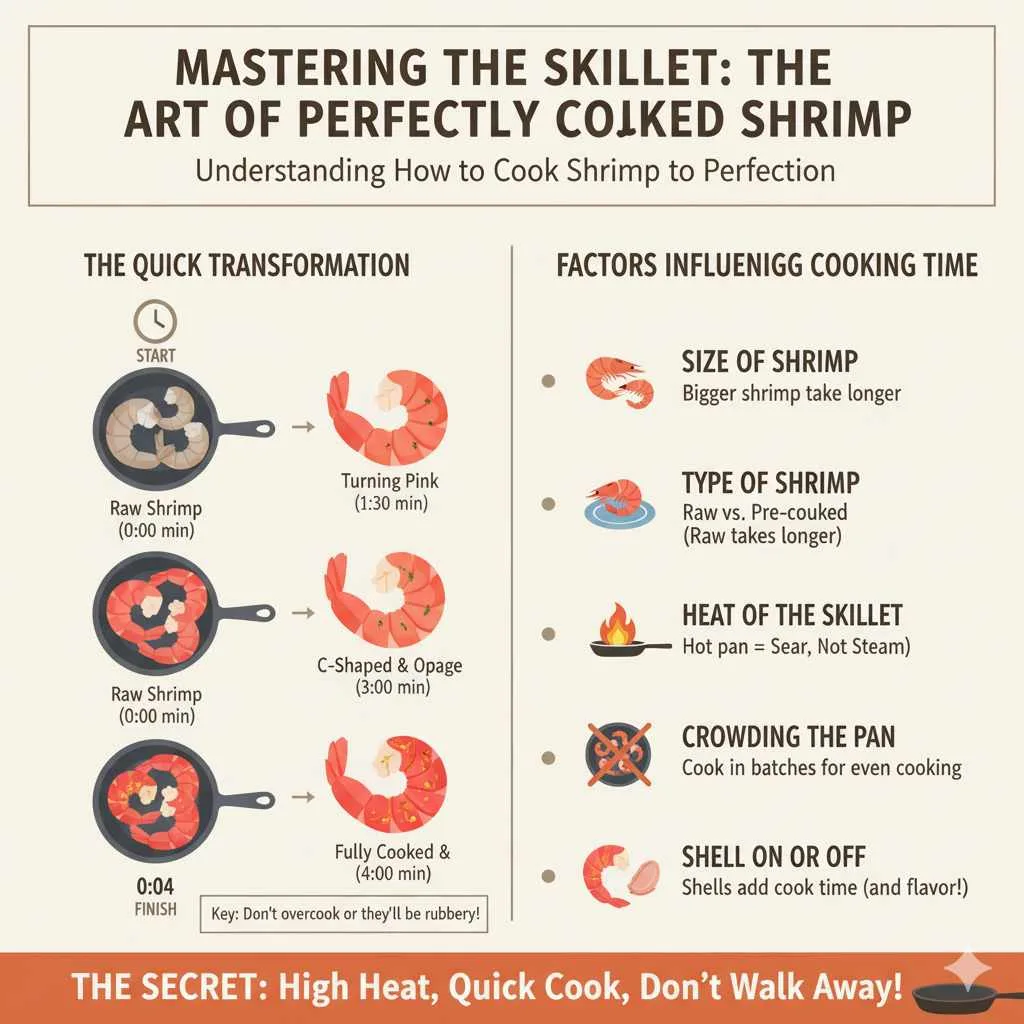
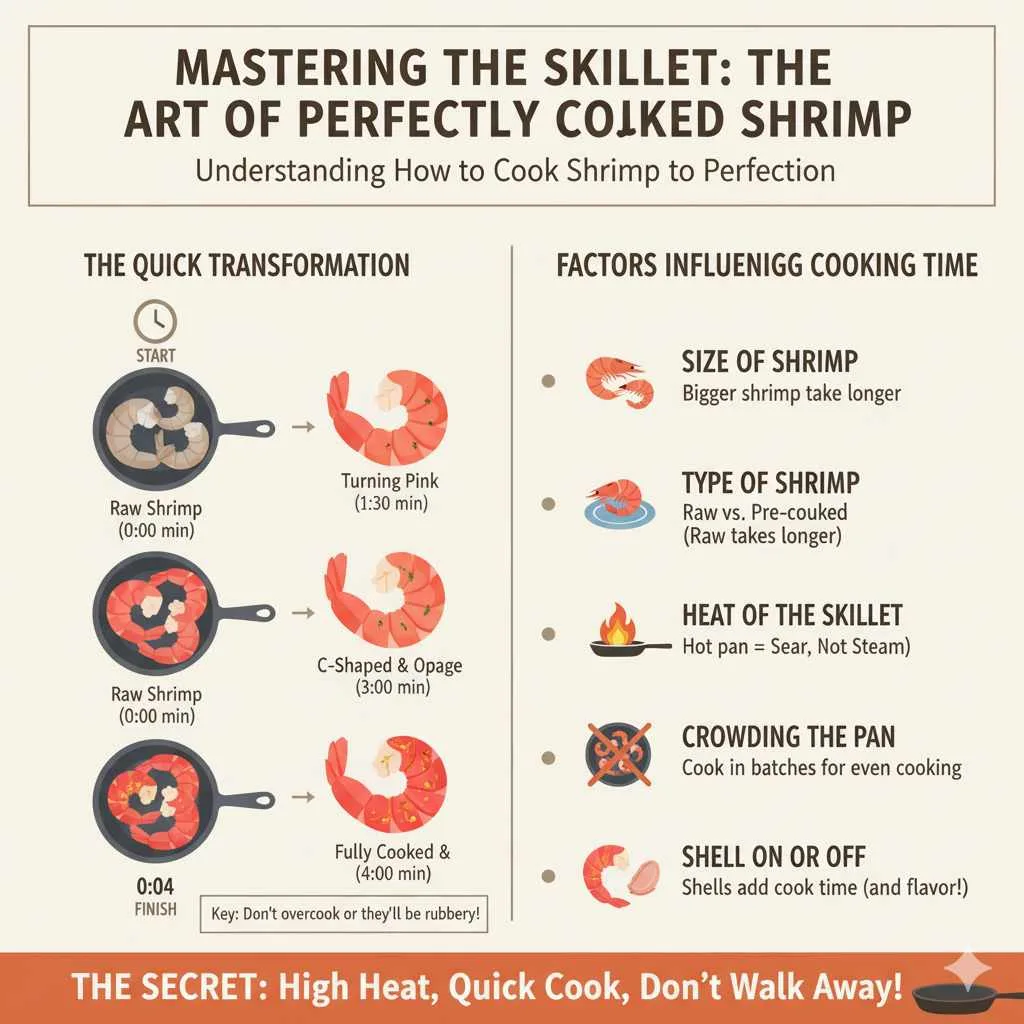
- Size of Shrimp: This is the biggest factor! Smaller shrimp will cook faster than larger ones. Think of it like cooking pasta – thinner strands cook quicker than thicker ones.
- Type of Shrimp: Fresh or thawed frozen shrimp generally cook at the same rate. However, pre-cooked shrimp only needs to be heated through, which is much faster. This guide focuses on cooking raw shrimp.
- Heat of the Skillet: A well-heated skillet is crucial. If your pan isn’t hot enough, the shrimp will steam instead of sear, taking longer and not developing that desirable golden-brown crust.
- Crowding the Pan: Trying to cook too many shrimp at once can lower the pan’s temperature. This can lead to uneven cooking, and your shrimp might end up steaming rather than frying, increasing the cooking time. Cook in batches if necessary!
- Whether the Shell is On or Off: Shrimp cooked in their shells will take slightly longer than peeled and deveined shrimp, as the shell offers a bit of insulation. However, the flavor difference can be wonderful!
The “How Long to Cook Shrimp in a Skillet” Deep Dive
So, how long does it really take? Let’s break it down by shrimp size, as this is your most important guidepost. The goal is to achieve a beautiful pink color and an opaque texture throughout. Remember, shrimp finish cooking very quickly, even after you remove them from the heat.
For the best results, always use a medium-high heat for your skillet. This ensures a quick sear and prevents the shrimp from becoming watery.
Cooking Times by Shrimp Size
Here’s a handy guide to help you time your skillet shrimp perfectly. These times assume you are cooking peeled and deveined shrimp. If cooking with shells on, add about 30-60 seconds per side.
| Shrimp Size | Approximate Cook Time Per Side | Total Estimated Cook Time | Visual Cues |
|---|---|---|---|
| Small (51-60 count per lb) | 1 minute | 2 minutes | Faint pink, opaque |
| Medium (31-40 count per lb) | 1.5 minutes | 3 minutes | Fully pink, opaque, slightly curled |
| Large (21-30 count per lb) | 2 minutes | 4 minutes | Deep pink, opaque, tightly curled ‘C’ shape |
| Jumbo (11-20 count per lb) | 2.5 minutes | 5 minutes | Vibrant pink, opaque, C shape; careful not to overcook to ‘O’ |
| Colossal (U-8 to 10 count per lb) | 3 minutes | 6 minutes | Rich pink, opaque, C shape; slightest hint of curling |
This table is a fantastic reference, but always trust your eyes and touch over a stopwatch. The visual cues are your best friend!
What Overcooking Looks Like
It’s just as important to know what not to do! Overcooked shrimp turn tough, chalky, and unappetizing. They’ll lose their delicate texture and become unpleasantly chewy. Visually, they might start to curl into a tight “O” shape instead of a gentle “C”. If you see any browning or firming that looks too rigid, you’ve likely gone too far.
What Undercooking Looks Like
Undercooked shrimp will still have a translucent or greyish appearance, especially in the very center. They might also feel quite soft and not firm up during cooking. While rare when following the short cooking times, it’s good to know the signs. If you’re unsure, take one shrimp out and cut it in half to check the center.
Step-by-Step: How to Cook Shrimp in a Skillet to Perfection
Ready to get cooking? Follow these simple steps for delicious skillet shrimp. This method is perfect for a quick appetizer, a seafood pasta, or a salad topping. Remember to prep all your ingredients beforehand, as shrimp cooks in a flash!
What You’ll Need:
- Raw shrimp (peeled and deveined for best results, though shell-on is fine)
- 1-2 tablespoons of cooking oil (like olive oil, canola, or avocado oil)
- Salt and freshly ground black pepper, to taste
- Optional: Garlic, herbs, lemon juice, butter for added flavor
- A good quality skillet (cast iron or stainless steel work wonderfully)
- Tongs or a spatula
The Process:
- Preparation is Key: Make sure your shrimp are thawed if they were frozen. Pat your shrimp thoroughly dry with paper towels. This is a crucial step to ensure they sear properly rather than steam.
- Heat the Skillet: Place your skillet over medium-high heat. Let it heat up for a couple of minutes. If using oil, add it to the pan and let it shimmer – this indicates it’s hot enough. A hot pan is non-negotiable for a good sear!
- Season the Shrimp: While the pan heats, lightly season your dry shrimp with salt and pepper. You can add other spices at this stage if you like.
- Add Shrimp to the Skillet: Carefully place the seasoned shrimp in a single layer in the hot skillet. Don’t overcrowd the pan; cook in batches if necessary to maintain heat and ensure even cooking. You should hear a gentle sizzle.
- Cook the First Side: Let the shrimp cook undisturbed for about 1 to 3 minutes, depending on the size (refer to the table above). You’ll see the edges start to turn opaque and pink.
- Flip and Cook the Second Side: Using tongs or a spatula, flip the shrimp. Cook for another 1 to 3 minutes, again depending on size, until the shrimp are fully pink and opaque throughout. They should have a slight curl, forming a “C” shape.
- Add Flavor Enhancers (Optional): If you’re adding butter, garlic, or herbs, do it in the last minute of cooking. Swirl the butter in the pan; it will melt and coat the shrimp beautifully. Sauté garlic briefly until fragrant.
- Serve Immediately: Once cooked, remove the shrimp from the skillet immediately. Do not let them sit in the hot pan, as residual heat will continue to cook them. Serve them right away for the best texture.
If you’re looking for more detailed insights into seafood preparation, resources like the NOAA Seafood Health Facts offer valuable information on sourcing, safety, and preparation of various seafood types.
Tips for Deliciously Versatile Skillet Shrimp
Cooking shrimp is just the first part; making them sing with flavor is the next step! Here are a few ideas to elevate your skillet shrimp from simple to spectacular.
Flavor Boosters to Try
- Garlic Butter: Sauté minced garlic in butter during the last minute of cooking, then toss the shrimp in the fragrant sauce. A squeeze of fresh lemon juice at the end is divine.
- Spicy Kick: Add red pepper flakes or a pinch of cayenne pepper to the skillet along with the shrimp for a touch of heat.
- Herbal Delight: Toss in fresh chopped herbs like parsley, cilantro, or chives right before serving for a burst of freshness.
- Citrus Zest: The zest of a lemon or lime added in the last 30 seconds of cooking provides a bright, zesty aroma and flavor.
- Asian-Inspired: A splash of soy sauce, a drizzle of sesame oil, and a bit of grated ginger can transform your shrimp into an Asian-inspired delicacy.
Serving Suggestions
Perfectly cooked skillet shrimp are incredibly adaptable. Consider these delicious ways to serve them:
- Tossed with pasta and a light sauce.
- Piled onto a fresh green salad.
- Served as an appetizer with a dipping sauce.
- Added to tacos or quesadillas.
- As a topping for rice or grain bowls.
- Folded into an omelet or frittata.
Common Questions About Cooking Skillet Shrimp
It’s natural to have questions when you’re learning a new cooking technique. Here are some common queries about how long to cook shrimp in a skillet, answered simply:
Q1: Can I cook frozen shrimp in a skillet?
It’s best to thaw frozen shrimp completely before cooking. You can thaw them overnight in the refrigerator or place the sealed bag in a bowl of cold water for about 30 minutes. Cooking shrimp directly from frozen can lead to uneven cooking and a less desirable texture.
Q2: How do I know when shrimp are pink?
Shrimp turn pink as the protein filaments in their shells and flesh change structure when heated. They will transition from a greyish-blue or translucent color to a vibrant pink. This color change is a key indicator that they are nearing doneness.
Q3: What should I do if my shrimp cook too fast?
If your shrimp are cooking faster than you anticipated, it usually means your skillet is very hot or you have smaller shrimp. Simply remove them from the heat immediately to prevent overcooking. It’s always better to err on the side of slightly undercooked, as they will continue to cook slightly from retained heat.
Q4: Can I cook shrimp in oil or butter?
Both oil and butter work well! Oil (like olive, canola, or avocado oil) is great for achieving a good sear due to its higher smoke point. Butter adds a rich flavor and can be combined with oil. Add butter towards the end of cooking to prevent it from burning.
Q5: How long should I cook pre-cooked shrimp in a skillet?
Pre-cooked shrimp already have their color and firm texture. Your goal is just to heat them through. This usually takes only 1-2 minutes per side in a lightly oiled, medium-hot skillet. Overheating them will make them tough, so be brief!
Q6: What’s the difference between shrimp cooked in the shell vs. peeled?
Shrimp cooked in their shells tend to retain more moisture and may cook slightly slower, offering a bit more protection against overcooking. They also absorb flavors from marinades and cooking liquids more intensely. Peeled shrimp cook faster and are more convenient for many dishes but can dry out more easily if you’re not careful.
Q7: How much oil or butter should I use?
For most recipes, 1 to 2 tablespoons of oil or butter are sufficient for a pound of shrimp. This is enough to coat the bottom of the pan lightly and help the shrimp cook evenly and prevent sticking without making them greasy.
Conclusion: Confidently Cooking Perfect Shrimp Every Time
You’ve got this! Understanding how long to cook shrimp in a skillet is a game-changer for quick, delicious meals. Remember the golden rules: medium-high heat, a hot pan, and vigilant observation. Watch for that beautiful pink color and opaque texture, and aim for that gentle “C” curl. With just a few minutes of attention, you’ll transform simple shrimp into a tender, flavorful star of any dish. Don’t be afraid to experiment with seasonings and serving ideas. Cooking is an adventure, and mastering shrimp in the skillet is a fantastic step in your culinary journey.