
The main difference between ceramic and enamel cookware lies in their coating and core. Ceramic cookware has a silica-based non-stick coating over a metal base, making it lightweight and great for delicate foods. Enamel cookware features a durable, non-reactive glass coating fused to a heavy cast iron or steel core, excelling at heat retention for searing and braising.
Walking down the cookware aisle can feel overwhelming. You see shiny pans, colorful pots, and words like “ceramic” and “enamel” everywhere. What do they even mean? It’s easy to feel stuck, worried you might pick the wrong one for your kitchen. But don’t worry, figuring this out is much simpler than it looks.
I’m here to help you understand the real difference between ceramic and enamel cookware. We’ll break down exactly what each one is, what it’s good for, and what it’s not so good for. By the end of this guide, you’ll feel confident and ready to choose the perfect cookware for the way you cook. Let’s get started!
To make the best choice for your kitchen, we first need to understand what each type of cookware really is. They might look similar on the shelf, but they are built very differently, which changes how they cook your food.
What is Ceramic Cookware?
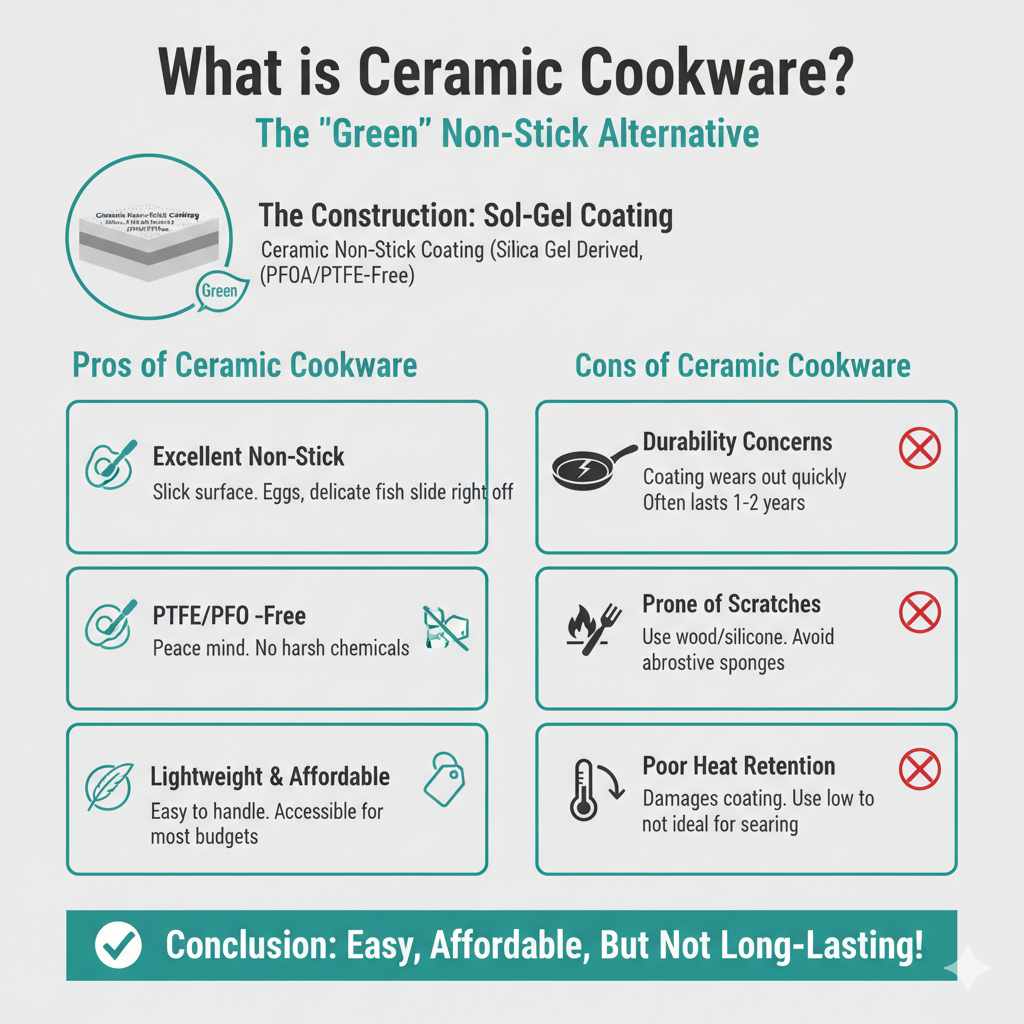
When we talk about “ceramic cookware,” we’re usually not talking about pots made from 100% solid ceramic, like a clay pot. Instead, we’re referring to metal cookware (most often aluminum) that has a ceramic non-stick coating. This coating is made from a sand-derived silica gel, applied to the pan’s surface and cured with heat. This process is often called “sol-gel” coating.
Ceramic cookware became very popular as an alternative to traditional non-stick pans that used materials like PTFE (Teflon). It is often marketed as a “green” or “healthy” non-stick option because its manufacturing process does not involve PFOA or PTFE. These pans are known for their slick surface and are available in a wide array of bright, attractive colors.
Pros of Ceramic Cookware
- Excellent Non-Stick Surface: When new, a ceramic pan is one of the most non-stick surfaces you can find. Eggs and delicate fish slide right off with little to no oil.
- PTFE and PFOA-Free: For cooks concerned about the chemicals used in traditional non-stick coatings, ceramic offers peace of mind.
- Lightweight and Easy to Handle: The aluminum core makes ceramic pans very light, so they are easy to lift and maneuver, even when full.
- Heats Up Quickly: Aluminum is a great heat conductor. This means your ceramic pan will get hot very fast, saving you time.
- Affordable: Generally, ceramic cookware is less expensive than high-quality enamel cookware, making it accessible for most budgets.
Cons of Ceramic Cookware
- Durability Concerns: The biggest drawback of ceramic cookware is the lifespan of its non-stick coating. It tends to wear out much faster than other types, often losing its non-stick properties within one to two years.
- Prone to Scratches: The ceramic coating is relatively delicate. Metal utensils can easily scratch it, and improper cleaning with abrasive sponges can damage the surface.
- Not for High Heat: Extremely high heat can cause the non-stick coating to break down quickly. It’s best used on low to medium stovetop settings.
- Doesn’t Retain Heat Well: Just as it heats up fast, it also cools down fast. This isn’t ideal for tasks that require steady, even heat, like searing a steak.
What is Enamel Cookware?
Enamel cookware is a different beast entirely. It consists of a heavy metal core—most commonly cast iron, but sometimes carbon steel—that is coated with a layer of enamel. This enamel is essentially powdered glass that has been fused to the metal at an extremely high temperature, creating a hard, non-porous, and durable surface called vitreous enamel.
Think of the classic, heavy Dutch oven from brands like Le Creuset or Staub—that’s enamel cookware. The enamel coating protects the cast iron core from rust and eliminates the need for seasoning. It also provides a smooth surface that is easy to clean and non-reactive, meaning it won’t interact with acidic foods like tomatoes or wine.
Pros of Enamel Cookware
- Incredibly Durable: With proper care, enamel cookware can last a lifetime. The fused glass coating is tough and resistant to wear.
- Superior Heat Retention: The cast iron core is fantastic at holding onto heat. Once it’s hot, it stays hot, providing even and consistent cooking temperatures perfect for searing, braising, and slow-cooking.
- Non-Reactive Surface: You can cook anything in an enamel pot without worrying about the metal leaching into your food or altering its flavor.
- Versatile: Most enamel cookware can go from the stovetop directly into the oven, making it perfect for a wide range of recipes.
- Easy to Clean: The smooth, glass-like surface is much easier to clean than raw cast iron.
Cons of Enamel Cookware
- Very Heavy: A large enamel Dutch oven can be quite heavy, especially when filled with food, which can be a challenge for some cooks.
- Heats Up Slowly: The thick cast iron core takes a while to come up to temperature. You need to preheat it patiently for the best results.
- Not Truly Non-Stick: While it can be “low-stick” with enough oil or fat, it doesn’t have the slippery, release-everything quality of a new ceramic pan.
- Can Chip: If you drop it or bang it with a metal utensil, the enamel coating can chip. While small chips on the outside are cosmetic, chips on the cooking surface can be a problem.
- More Expensive: High-quality enamel cookware is a significant investment upfront.
Head-to-Head Comparison: Ceramic vs. Enamel
Seeing the key features side-by-side can make the differences crystal clear. Here is a simple table to help you compare them at a glance.
| Feature | Ceramic Cookware | Enamel Cookware |
|---|---|---|
| Core Material | Typically Aluminum | Typically Cast Iron or Carbon Steel |
| Coating | Sol-gel silica (sand-based) | Vitreous enamel (fused glass) |
| Weight | Lightweight | Heavy |
| Heat Conduction | Very fast | Slow |
| Heat Retention | Poor | Excellent |
| Non-Stick Quality | Excellent (when new) | Low-stick (not truly non-stick) |
| Durability & Lifespan | Low (1-3 years) | Very high (can last a lifetime) |
| Oven Safety | Limited (check manufacturer) | Excellent (often up to 500°F or more) |
| Utensil Use | Silicone, wood, or nylon only | Silicone, wood, or nylon recommended to prevent scratching |
| Best For | Eggs, pancakes, delicate fish, quick meals | Searing meat, braising, stews, soups, baking bread |
| Price | $ (Affordable) | $$$ (Investment) |
Key Differences Explained in Detail
Now let’s dive deeper into the four biggest factors that separate these two types of cookware: the core material, the coating, heat performance, and durability.
1. The Core Material Matters
The metal underneath the coating is the heart of your cookware. For ceramic pans, that heart is usually aluminum. Aluminum is fantastic because it’s light and heats up incredibly fast. The downside is that it doesn’t hold that heat for very long. If you add cold food to a hot aluminum pan, the temperature will drop significantly.
Enamel cookware almost always has a core of cast iron. Cast iron is the opposite: it’s dense, heavy, and takes a long time to heat up. But once it’s hot, it stays hot. This powerful heat retention is why it’s the champion for getting a deep, brown sear on a steak or for holding a steady simmer in a stew for hours.
2. The Coating: Sprayed-On vs. Fused Glass
The cooking surface is just as important. The “ceramic” coating is a delicate layer applied through a process that ends up feeling like a very smooth, hard paint. It creates a wonderfully non-stick surface, but it’s not deeply bonded to the metal underneath. Over time, heat, use, and cleaning cause this layer to wear down.
The “enamel” coating is made of glass particles that are melted and fused directly onto the cast iron. This creates an incredibly strong bond that becomes part of the cookware itself. According to materials scientists at Drexel University, this process, known as vitrification, creates a non-porous and highly durable surface. This is why enamel is so much more durable and long-lasting than a ceramic coating.
3. Heat Performance: Quick Sizzle vs. Steady Sear
Think about what you cook most often. Do you need a pan that’s ready to go in 30 seconds for your morning scrambled eggs? That’s where ceramic shines. Its aluminum core heats up in a flash, letting you cook and get on with your day.
Or do you love making rich stews, braised short ribs, or baking crusty bread? For that, you need the steady, radiant heat that only enamel over cast iron can provide. It delivers even, consistent heat from the bottom and the sides, surrounding your food and cooking it perfectly without hot spots.
4. Durability and Lifespan
This is perhaps the biggest deciding factor for many people. A ceramic pan is a short-term tool. Even with the best care, its non-stick magic will fade. Most people find they need to replace their ceramic pans every couple of years. It’s a consumable item in your kitchen.
An enamel pot or pan is a long-term investment. If you take care not to chip it, it can be passed down for generations. It won’t lose its cooking ability over time. Its surface remains stable, easy to clean, and ready to cook for decades. It’s a true kitchen heirloom.
Which Cookware is Safer? A Look at Health Concerns
Safety is always a top priority in the kitchen. The good news is that both modern ceramic and enamel cookware are considered very safe to use.
Ceramic cookware gained its “healthy” reputation by being a PFOA- and PTFE-free alternative to some older non-stick pans. As long as the coating is intact, it is perfectly safe.
Enamel cookware is also extremely safe. The glass surface is inert and non-reactive. The Food and Drug Administration (FDA) regulates food contact surfaces to ensure they are safe, and reputable brands of enamelware easily meet these standards. There have been concerns in the past about lead or cadmium in the pigments of some enamelware, but modern, high-quality manufacturers do not use these materials in their food-contact surfaces. Sticking to well-known brands is always a good practice.
How to Choose the Best Cookware for Your Kitchen
So, which one is right for you? It’s not about which one is “better” overall, but which one is better for your specific needs.
You Should Choose Ceramic Cookware If…
- You need a true non-stick pan. For cooking eggs, pancakes, or flaky fish without them sticking, nothing beats a new ceramic pan.
- You prioritize lightweight cookware. If you have trouble lifting heavy pots and pans, the lightness of ceramic will be a huge benefit.
- You are on a budget. Ceramic offers great performance for a very reasonable price, even if you have to replace it more often.
- You cook quick meals. If your cooking style is more about fast weekday dinners than slow weekend roasts, ceramic’s quick-heating nature is perfect.
You Should Choose Enamel Cookware If…
- You want a “buy it for life” piece. If you value durability and want cookware that will last for decades, enamel is the clear winner.
- You love to sear, braise, or slow-cook. For recipes that require high, sustained heat or long, slow simmers, the heat retention of enameled cast iron is unmatched.
- You want maximum versatility. The ability to go from stovetop to oven to table makes enamel cookware a kitchen workhorse.
- You don’t mind the weight or the price. If you can handle the heft and are willing to invest, enamel cookware will reward you for years to come.
Caring for Your Cookware: Tips for a Longer Life
No matter which you choose, proper care will help you get the most out of your purchase.
Ceramic Care Tips
- Use Low to Medium Heat: High heat is the number one enemy of a ceramic coating.
- Avoid Metal Utensils: Stick with silicone, wood, or nylon to prevent scratches.
- Hand Wash Gently: The dishwasher is too harsh. Use a soft sponge and mild soap. Avoid abrasive scrubbers.
- Use Fat, Not Sprays: Cooking sprays can build up a residue that is hard to remove and can ruin the non-stick surface. Use a small amount of butter or oil instead.
Enamel Care Tips
- Preheat Slowly: Never place a cold enamel pot on a high-heat burner. Let it warm up gradually to avoid thermal shock, which can cause cracking.
- Avoid Extreme Temperature Changes: Don’t plunge a hot pot into cold water. Let it cool down first.
- Soak, Don’t Scrape: For stuck-on food, fill the pot with warm, soapy water and let it soak. Avoid harsh scouring pads.
- Handle with Care: Be mindful not to drop your cookware or bang it against the sink to prevent chipping the enamel.

Frequently Asked Questions (FAQ)
Is ceramic cookware made of 100% ceramic?
No, this is a common misconception. Most “ceramic cookware” is a metal pan (usually aluminum) with a ceramic-based non-stick coating. Solid ceramic bakeware exists, but it’s different from the non-stick skillets you see in stores.
Can you use metal utensils on enamel cookware?
It’s not recommended. While the enamel is very tough, metal utensils can scratch or scrape the glass surface over time. It’s best to stick with wood, silicone, or nylon tools to keep your cookware looking and performing its best.
Which is better for high-heat searing?
Enamel cookware is the definitive winner here. Its cast iron core is designed to handle and hold high temperatures, giving you the perfect crust on meats and vegetables. Ceramic cookware should not be used on high heat.
Does enamel cookware need to be seasoned like cast iron?
No, it does not. The enamel coating seals the cast iron, protecting it from rust and creating a non-porous surface. No seasoning is required.
Why is my ceramic pan starting to stick?
This usually happens for two reasons: the non-stick coating is simply wearing out from age and use, or there is a buildup of microscopic food residue or burnt oil. You can try a deep clean with a baking soda paste, but often, it means the pan is nearing the end of its useful life.
Is chipped enamel cookware safe to use?
If the chip is on the outside of the pot, it’s a cosmetic issue and generally safe to continue using. If the chip is on the inside cooking surface, it’s best to stop using it. The chip can get worse, and the exposed cast iron underneath can rust.
Which type is easier to clean?
Initially, a brand-new ceramic pan is easier to clean because everything slides right off. However, once it starts to lose its non-stick properties, it can become difficult. Enamel is consistently easy to clean throughout its long life, as long as you let it soak to loosen any stubborn bits.
Conclusion: Making the Final Decision
Choosing between ceramic and enamel cookware doesn’t have to be complicated. It all comes down to understanding your own cooking habits, priorities, and budget.
If you need an affordable, lightweight pan for quick, everyday non-stick tasks like cooking eggs and are okay with replacing it every few years, ceramic cookware is an excellent choice. It does its job well and makes cooking delicate foods a breeze.
If you are looking for a long-term kitchen investment that excels at retaining heat for searing, braising, and slow-cooking, and you don’t mind the extra weight and cost, then enamel cookware is the perfect fit. It’s a durable, versatile workhorse that you will be proud to have in your kitchen for years, or even decades, to come.
Ultimately, many happy kitchens have both! A ceramic skillet for the quick jobs and an enamel Dutch oven for the weekend feasts. Now that you know the difference, you can walk into any store with confidence and pick the perfect tool for you.