
Corn Hole vs. Bean Bag: What’s the Real Difference?
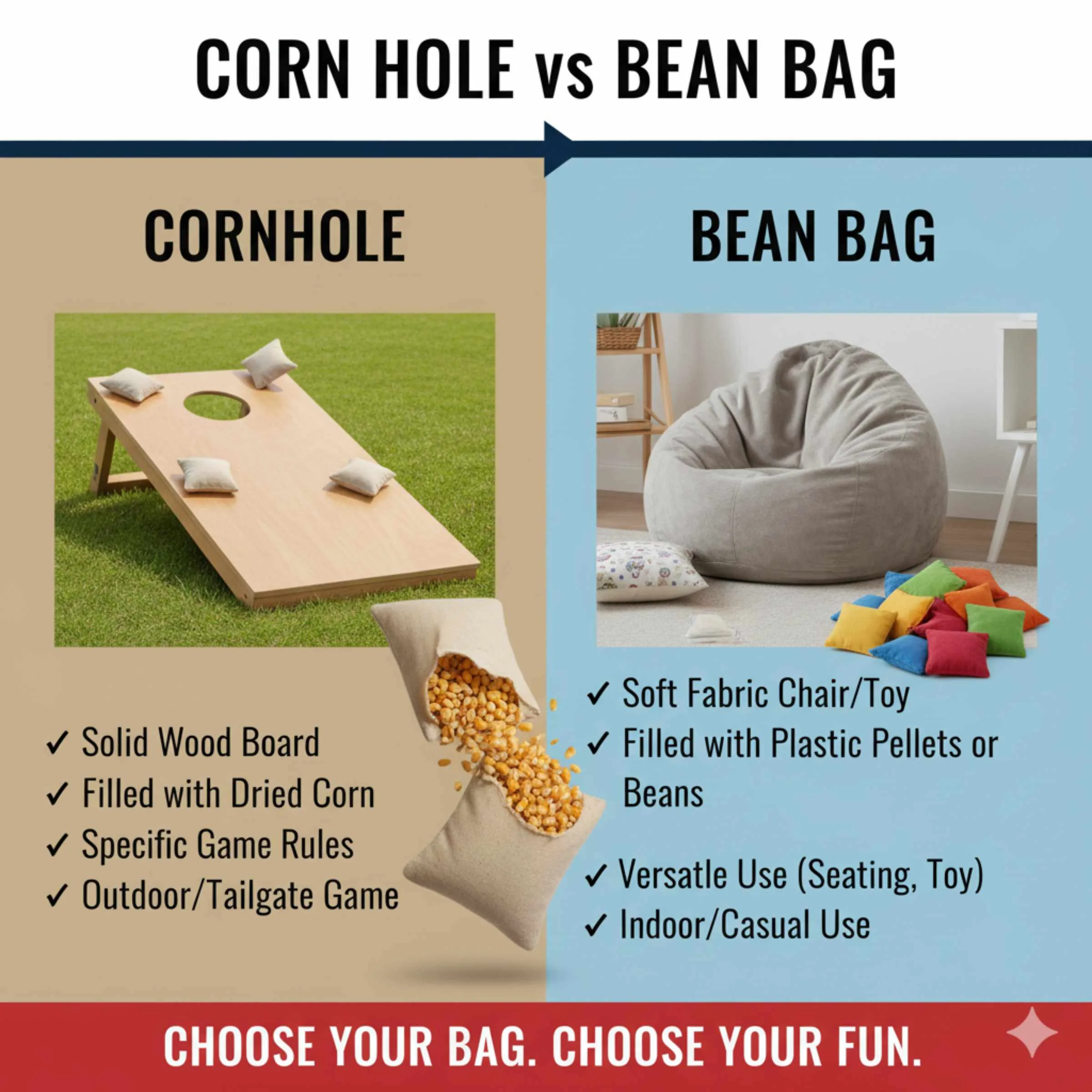
You might be wondering about “corn hole” and “bean bag” and if they’re the same game. They often are! “Corn hole” is the popular name for a yard game where players toss bags filled with corn (or resin) at a sloped board with a hole. The term “bean bag” is a more general description for the throwable objects used. So, while you play corn hole with bean bags, the game itself is typically called corn hole.
Hey everyone, Dustin Hall here! Ever feel a bit confused when people talk about yard games? You hear “corn hole” and then someone mentions “bean bag toss,” and your mind wanders. Are they talking about the same fun outdoor activity, or is there a hidden secret? You’re not alone in this! Many folks scratch their heads trying to sort out these similar-sounding games. It’s like trying to figure out if a sedan and a car are different – one is a specific type, and the other is a broader category. Today, we’re going to clear the air and settle this “corn hole vs. bean bag” debate once and for all. We’ll break down exactly what makes them tick, so you can confidently join the next backyard game. Get ready, because by the end of this, you’ll be a yard game expert!
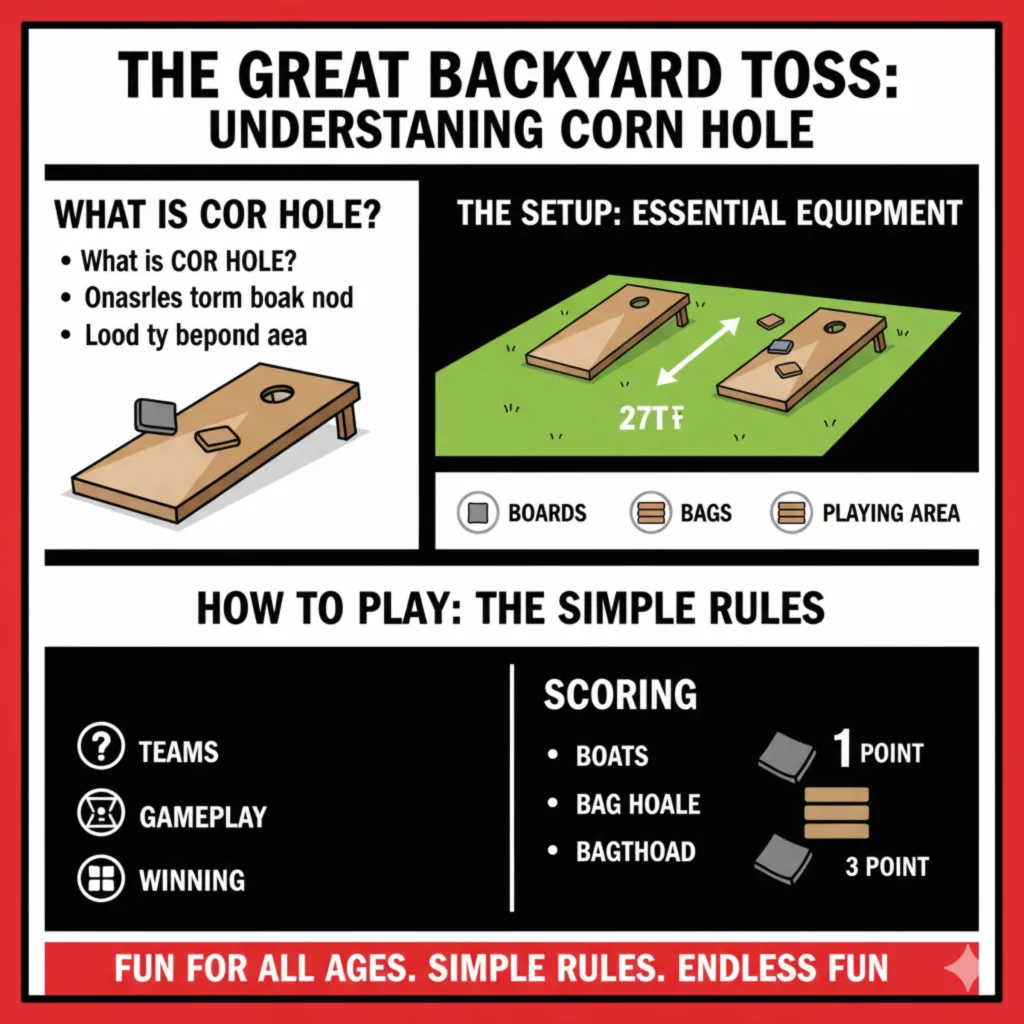
The Great Backyard Toss: Understanding Corn Hole
Let’s dive straight into the star of the show: Corn Hole. This game has exploded in popularity over the years, and for good reason! It’s easy to learn, fun for all ages, and can bring a serious competitive spirit to any gathering. Think of it as a test of skill and a great excuse to hang out with friends and family outdoors.
What Exactly is Corn Hole?
At its core, Corn Hole is a game played by tossing fabric bags filled with filler (traditionally corn kernels, but more on that later) towards a raised, slanted board with a hole cut into the upper portion. The objective is to score points by either landing a bag on the board or, even better, getting it through the hole. It’s a game of precision and a little bit of luck, perfect for tailgates, family reunions, or just a lazy Sunday afternoon.
The Setup: Essential Equipment
Before you can play, you need the right gear. The basic setup for Corn Hole is pretty simple:
- Corn Hole Boards: These are typically made of wood, usually plywood, and are designed with a specific slope. The dimensions are standardized for competitive play, but you can find or build them in various sizes for casual fun. The key is the angled surface and the notorious 6-inch diameter hole. You can find detailed plans and dimensions from organizations like the American Cornhole Association (ACA).
- Bags (or Bean Bags): These are the projectiles you’ll be tossing! Traditionally, they were filled with dried corn kernels, hence the name “corn hole.” However, modern bags often use resin pellets. They are usually square-shaped and measure about 6 inches by 6 inches.
- Playing Area: You’ll need a flat, open space. For standard play, the boards are set up 27 feet apart from the front edge to the front edge. For younger players or less experienced throwers, you can adjust this distance to make it more manageable.
How to Play: The Simple Rules
The beauty of Corn Hole is its straightforward rules. Here’s a quick rundown:
- Teams: You can play one-on-one or in teams of two. In team play, partners stand at opposite ends, usually one on each side of a board.
- Scoring:
- A bag that lands on the board (but doesn’t go in the hole) is worth 1 point.
- A bag that goes through the hole (or bounces off the board and goes in) is worth 3 points.
- A bag that hits the ground before landing on the board scores 0 points.
- Gameplay: Players take turns tossing bags, alternating throws. When playing in teams, one player at one end throws all their bags, then the player at the other end throws their bags.
- Winning: The game is played to a predetermined score, usually 21 points. However, you must win by at least 2 points. If a round ends with a score of 21-20, play continues until one player or team leads by two points.
Bean Bags: The Versatile Throwables
Now, let’s talk about the “bean bag” aspect. This term is where a lot of the confusion comes from. Is a bean bag just another name for the bags used in Corn Hole? Yes, and no. It’s a bit more nuanced than that.
What is a Bean Bag?
A bean bag, in its most general sense, is a small, fabric bag typically filled with dried beans, corn, or synthetic pellets. These bags have been used for various purposes throughout history, from children’s games to educational tools. When we talk about them in the context of yard games, we’re usually referring to the specific type used in Corn Hole.
Types of Fillers: Corn vs. Resin
The filler inside the bag is a key distinction, even within the “bean bag” category:
- Corn-Filled Bags: These are the traditional choice. They offer a distinct feel and a bit more unpredictability. Over time, corn kernels can break down, get dusty, or absorb moisture, which can affect their weight and flight. They tend to grip the board a little more than resin bags.
- Resin-Filled Bags: These are the modern standard, especially in competitive Corn Hole. Made with synthetic pellets (like small plastic beads), they offer more consistency. They are less susceptible to weather, don’t break down easily, and provide a smoother, faster slide across the board. Many players prefer resin bags for their reliability and predictable performance.
Beyond Corn Hole: Other Bean Bag Games
While Corn Hole is the most popular game using these bags, they can be used for other simple tossing games:
- Target Toss: Set up various targets (buckets, hoops, marked areas on the ground) and try to land bags in them for different point values.
- Relay Races: For kids, bean bags can be part of fun relay races, where they have to carry the bag in a certain way (e.g., on their head, between their knees) to a destination.
- Learning Tools: Bean bags are often used in preschools and early education for teaching hand-eye coordination, counting, and simple sports skills.
Corn Hole vs. Bean Bag: The Showdown
So, after all this talk, what’s the definitive answer to “Corn Hole vs. Bean Bag”? It’s not a direct fight because they aren’t mutually exclusive; they are related in a very specific way.
Think of it this way:
- Corn Hole: This is the game. It has specific boards, rules, and objectives.
- Bean Bag: This is the object you throw in the game of Corn Hole. The term “bean bag” is often used interchangeably with “corn hole bag” because of the game’s origin.
Here’s a table to help visualize the relationship:
| Element | Description | Relationship to the other |
|---|---|---|
| Corn Hole | The name of the popular yard game. | The game that uses bean bags. |
| Bean Bag / Corn Hole Bag | The throwable object used in the game. | The essential tool for playing Corn Hole. |
Therefore, when people say “bean bag game,” they are almost always referring to Corn Hole or a very similar variation. The key difference is often in the specific bag filler (corn vs. resin) and the exact dimensions of the board, especially if you’re talking about official competitive rules versus casual backyard setups.
Key Differences Summarized
While the terms are often used interchangeably for the game, let’s look at what might differentiate them in common usage:
- Specificity of Game: “Corn Hole” refers to a well-defined game with specific boards and scoring. “Bean Bag” is a broader term that can refer to the object or a more general tossing game.
- Bag Material: Traditionally, Corn Hole bags were filled with corn. When people say “bean bag toss,” they might be referring to a game using bags filled with actual beans, or more commonly, just using “bean bag” as a synonym for the Corn Hole bag.
- Competitive Context: In the competitive world of the game, it’s always called “Corn Hole,” and the official bags are often resin-filled for consistency.
Choosing Your Bags: Corn vs. Resin
For the best experience, especially if you’re looking to play seriously or just have reliable equipment, understanding the bag difference is important.
Pros and Cons of Corn-Filled Bags:
- Pros:
- Authentic, traditional feel.
- Slightly more grip on the board, which can help learners.
- Often less expensive initially.
- Cons:
- Susceptible to moisture, which can cause them to swell, get dusty, or rot.
- Can break down over time, losing their shape and weight consistency.
- Less predictable flight path and slide compared to resin.
Pros and Cons of Resin-Filled Bags:
- Pros:
- Highly durable and long-lasting.
- Weather-resistant (won’t get ruined by a little dew or spill).
- Consistent weight, size, and feel for predictable play.
- Smooth slide, which is preferred by many experienced players for advanced shots.
- Cons:
- Can be more expensive upfront.
- May feel “slicker” to beginners, requiring more practice to control.
For most recreational players and competitive environments, resin-filled bags are the way to go due to their durability and consistency. You can find high-quality options from reputable manufacturers. For instance, many suppliers recommended by the American Cornhole Association offer excellent resin-filled bags and boards.
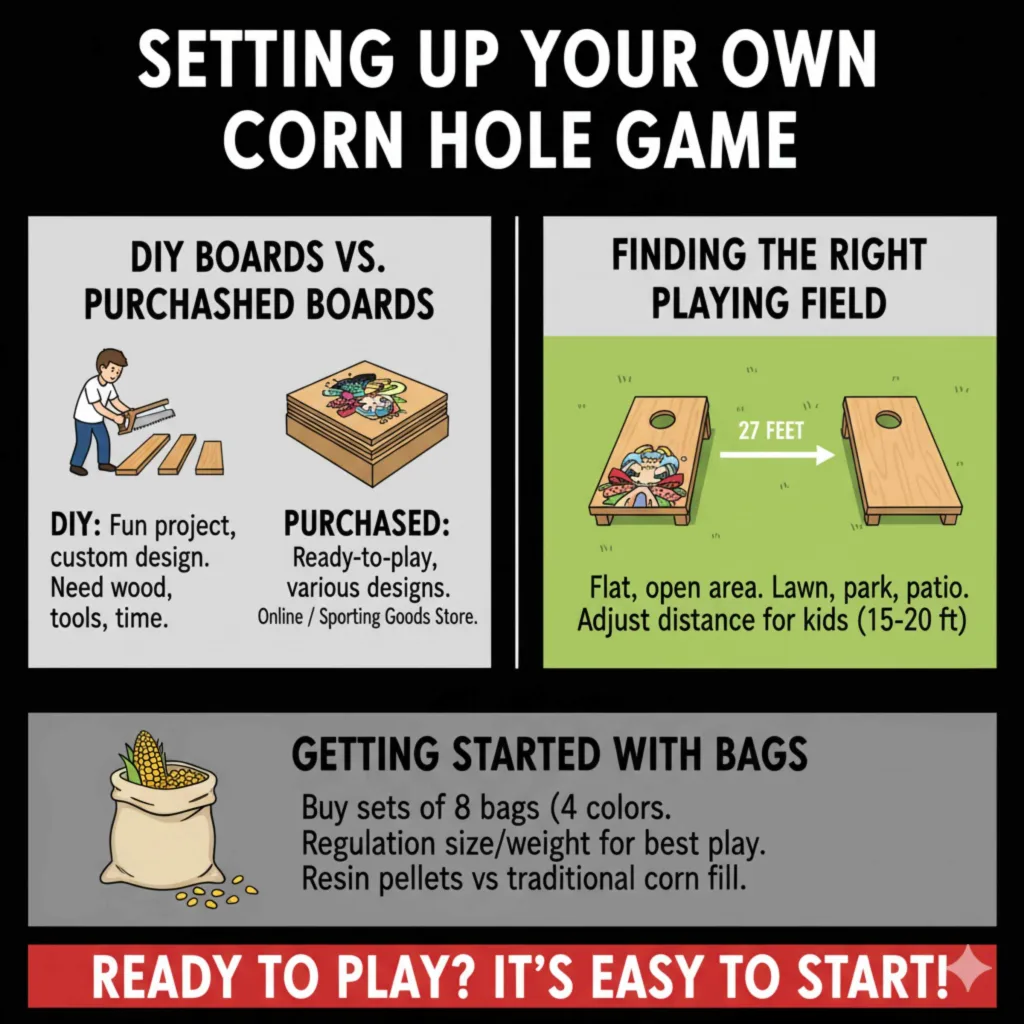
Setting Up Your Own Corn Hole Game
Ready to get your own game going? Setting up is a breeze!
DIY Boards vs. Purchased Boards
You have two main options for getting Corn Hole boards:
- DIY: Building your own boards can be a fun project! You’ll need wood (like 2x4s for the frame and plywood for the deck), screws, a saw, a drill, and a hole saw for the 6-inch opening. Organizations like HomeTalk offer excellent step-by-step guides complete with measurements.
- Purchased: You can buy pre-made Corn Hole boards online or from sporting goods stores. They range from basic wooden sets to elaborate designs with custom graphics. Many sets come with bags too, making it an easy all-in-one solution.
Finding the Right Playing Field
The ideal spot for Corn Hole is a flat, open area. A backyard lawn, a park, or even a paved patio works well. Remember the official distance is 27 feet from the front of one board to the front of the other, but adjust this based on who is playing. For kids, 15-20 feet is often plenty.
Getting Started with Bags
When buying bags, consider buying sets of 8 (4 of each color). Most sets are designed to be regulation size and weight. If you’re playing casually, any small, sturdy fabric bags filled with a dense material will work to get a feel for the game, but investing in proper Corn Hole bags will make the experience much more enjoyable and consistent.
Frequently Asked Questions About Corn Hole vs. Bean Bags
Let’s tackle some common questions to clear up any lingering confusion.
Is Corn Hole the same as Bean Bag Toss?
Yes, largely. “Corn Hole” is the specific name of the popular game. “Bean Bag Toss” is a more general term, often used interchangeably to describe the activity of throwing bags, usually referring to Corn Hole.
What’s the difference between Corn Hole bags and Bean bags?
Corn Hole bags are specifically designed for the game of Corn Hole. While historically filled with corn, modern “Corn Hole bags” are often filled with resin pellets for durability and consistency. “Bean bags” is a more general term for any fabric bag filled with materials like beans, corn, or pellets, used for various games or activities.
Why is it called Corn Hole if bags can be filled with resin?
The name “Corn Hole” originated from the early days of the game when bags were filled with dried corn kernels. Even though resin is now common and preferred by many, the traditional name has stuck.
Which type of bag is better: Corn-filled or Resin-filled?
Resin-filled bags are generally considered better for Corn Hole due to their durability, weather resistance, and consistent performance. Corn-filled bags offer a more traditional feel but can degrade over time and are affected by moisture.
Can I use just any small bags for Corn Hole?
For casual fun, yes, you can use other small, sturdy bags. However, for the proper feel, weight, and consistency of the game, dedicated Corn Hole bags (either corn or resin-filled) are recommended. Standard Corn Hole bags measure about 6×6 inches and weigh around 15-16 ounces when new.
How far apart should the boards be?
For official Corn Hole play, the boards are set 27 feet apart from front edge to front edge. For casual play, especially with children or less experienced players, you can shorten this distance.
What are the basic rules for scoring in Corn Hole?
A bag on the board scores 1 point. A bag that goes through the hole (or bounces in) scores 3 points. Bags that hit the ground score 0 points. The first player or team to reach 21 points, winning by at least two, wins the game.
Conclusion: Game On!
So there you have it! The “corn hole vs. bean bag” showdown is less of a battle and more of a clarification. Corn Hole is the name of the game, and bean bags are the essential tools used to play it. Whether you call your bags “corn bags” or “bean bags,” the fun and friendly competition remain the same. From backyard barbecues to competitive tournaments, this game offers endless enjoyment. Now that you’re armed with this knowledge, you can confidently grab a set of boards, your favorite bags, and head outside to play. Remember to keep it fun, play by the rules (or your own version!), and enjoy the satisfying thud of a bag landing on the board or the thrilling swish of it going through the hole. Happy tossing!

Leave a Reply