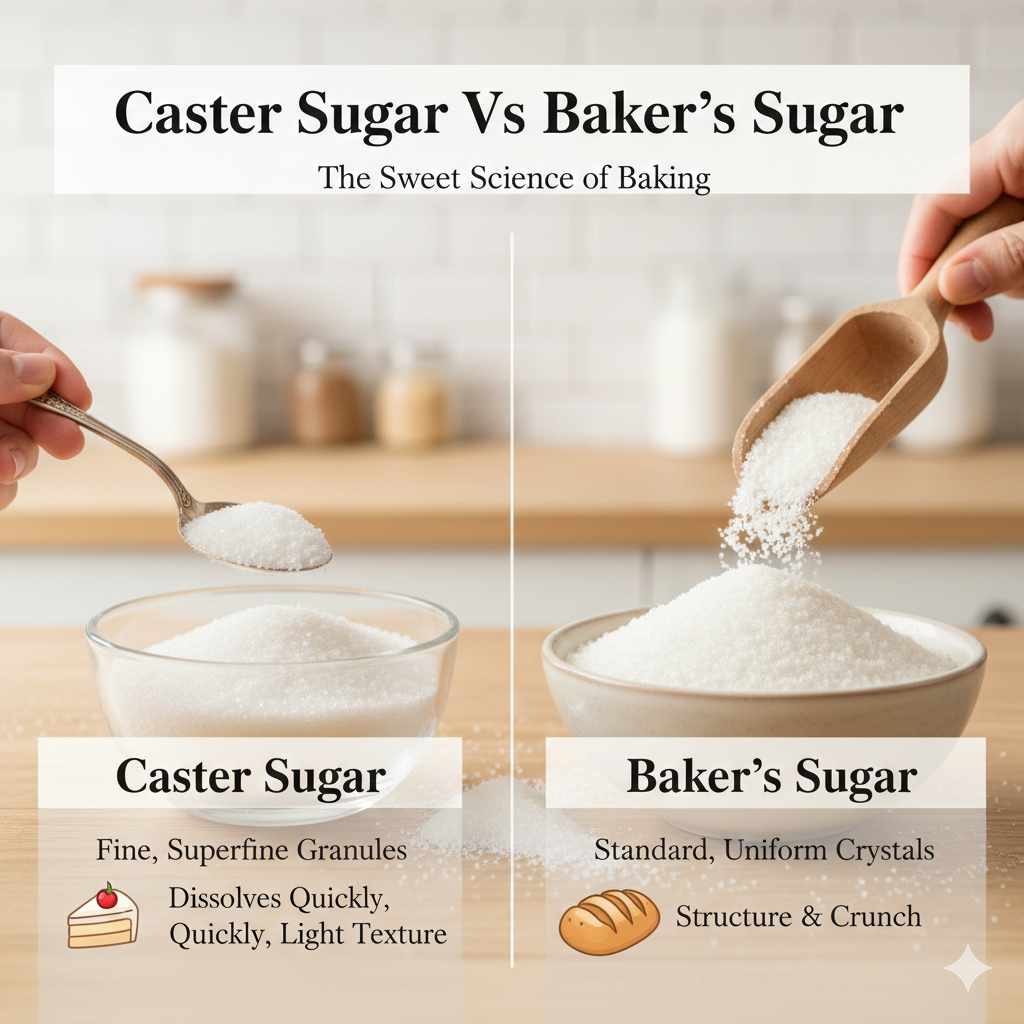
While often confused, caster sugar has finer, smaller crystals perfect for light meringues and delicate baking, while baker’s sugar (superfine sugar) is nearly identical and often used as a direct substitute. The main difference lies in region; in the US, ‘baker’s sugar’ usually means superfine, whereas in the UK, ‘caster sugar’ is the standard fine option.
Welcome to the garage, home edition! Do you ever stare at a recipe, see “caster sugar,” and scratch your head because your pantry only has plain white sugar? You are not alone. In the world of baking, ingredients often have confusing names, much like the difference between a torque wrench and a breaker bar in your toolbox. Sugar is no exception!
Let’s pop the hood on these two sweet ingredients and see what makes them tick!
Caster Sugar Vs Baker’s Sugar: The Short Answer (What’s the Real Difference?)
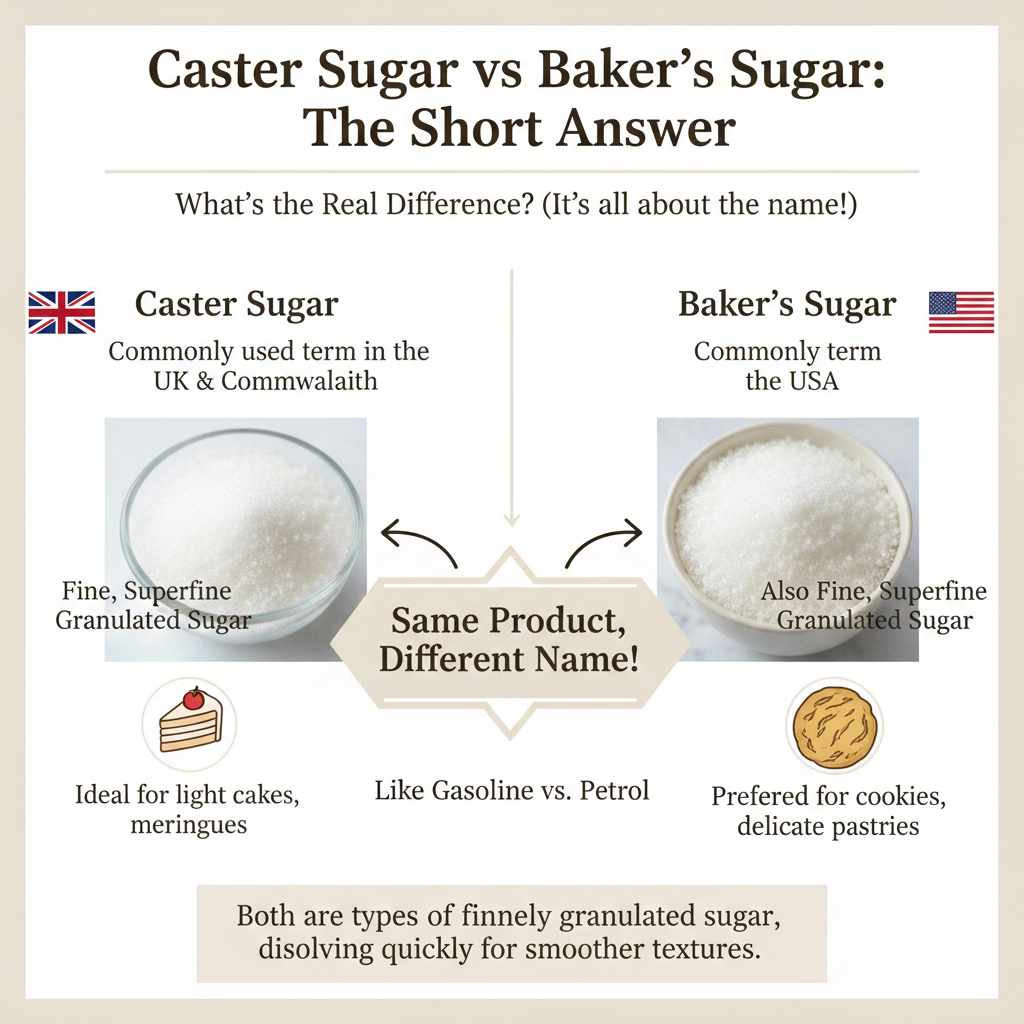
For many home bakers, especially in the United States, “caster sugar” and “baker’s sugar” are often used interchangeably. This is because, functionally, they are the same thing: granulated sugar that has been processed to have finer, smaller crystals than standard table sugar.
The biggest confusion comes from geography. What one country calls it, another might call something else entirely! Think of it like the difference between “gasoline” and “petrol”—same stuff, different name based on where you live.
Crystal Size Matters: Why Fine Sugar is Better for Certain Jobs
Why do we even need sugar that is finer than the regular stuff we put in our morning coffee? It all comes down to texture and speed.
When you cream butter and sugar together (that first step in most cookie and cake recipes), you are whipping air into the mixture. Smaller sugar crystals break down faster and incorporate those air bubbles more effectively. This leads to lighter, taller, and more tender baked goods. Larger crystals take longer to dissolve, which can result in a heavier texture.
Here’s a quick look at how the crystals stack up:
| Sugar Type | Crystal Size Description | Best Use |
|---|---|---|
| Granulated (Table) Sugar | Standard, average size | Sweetening drinks, general sprinkling |
| Caster/Baker’s Sugar (Superfine) | Finer, smaller than table sugar | Meringues, Angel Food Cake, delicate frostings |
| Powdered (Confectioners’) Sugar | Ground into a fine powder with cornstarch | Dusting, smooth icing, glazes |
Breaking Down Caster Sugar: The UK Favorite
Caster sugar is the standard fine sugar used widely across the UK, Australia, and other Commonwealth nations. It gets its name from the old “castor” or “caster” device used to sprinkle sugar over foods before the era of shakers.
If you are working from an older cookbook or a British baking blog, you will almost certainly see this measurement.
What Happens When You Use Caster Sugar?
- Faster Dissolving: Because the crystals are smaller, they dissolve instantly when mixed with wet ingredients or heated.
- Better Aeration: It whips into butter better, creating tiny pockets of air essential for fluffy cakes.
- Clearer Liquids: In syrups or clear jellies, caster sugar dissolves without leaving a grainy residue.
Understanding Baker’s Sugar: The US Standard for Fine
In the United States, the term “baker’s sugar” is overwhelmingly synonymous with “superfine sugar.” Bakers prefer this finer grain for the same reasons international bakers use caster sugar—better texture!
You can often buy bags specifically labeled “Superfine Sugar”—that is your baker’s sugar. It is engineered precisely for baking applications requiring a delicate structure.
The Convenience Factor
If you walk into a typical US grocery store, finding a package explicitly labeled “Caster Sugar” might be tough, but you will definitely find “Superfine Sugar.” Using superfine sugar is simply the easiest way to ensure you are getting those fine crystals needed for superior results.
The Regional Showdown: Caster Sugar vs Baker’s Sugar
This is where the confusion usually kicks into high gear. For practical purposes in your home kitchen, you can generally treat them as the same ingredient with the same measurements. If a recipe calls for one, and you have the other, swap them 1:1 without worry.
However, just for full transparency, let’s look at the slight nuances in production, which are often subtle enough to be irrelevant in home baking but important for large commercial operations.
A Note on Grain Size Measurement
In the professional world, crystal size is precisely measured. While definitions vary slightly between regions and manufacturers, the general consensus is:
- Standard Granulated Sugar: Typically has about 0.7 to 1.0 millimeters per crystal.
- Caster/Superfine Sugar: Usually falls between 0.35 to 0.5 millimeters per crystal.
This reduction in size is significant enough to speed up the creaming process considerably. For more information on ingredient standardization, you might want to review published standards from food science groups like the Institute of Food Technologists (IFT).
No Fine Sugar? No Problem! How to Make Your Own Substitute
What if you need caster sugar right now for that perfect meringue, but all you have is standard table sugar? Don’t get stuck! Making your own substitute is incredibly easy. This is one of the best DIY tricks every confident home baker should know.
DIY Superfine/Caster Sugar Tutorial
This process is simple enough that you don’t need fancy equipment. It works by mechanically breaking down the larger crystals.
Tools You Will Need:
- A clean food processor or a high-powered blender.
- Standard granulated sugar.
- A fine-mesh sieve (optional, for extra refinement).
- Parchment paper or a baking sheet.
Step-by-Step Instructions:
- Measure Your Sugar: Start with a measured amount of standard granulated sugar. For best results, only process in small batches (about 1 to 2 cups at a time) to ensure even processing.
- Pulse Gently: Place the sugar in the food processor. Pulse in very short bursts—just 1 to 3 seconds at a time. You are trying to crack the crystals, not turn the sugar into powder.
- Check Texture: Stop frequently to check the texture. You want it to look finer and more silky than regular sugar, but it should not clump heavily like powdered sugar.
- Sift (Optional but Recommended): If you want the professional texture of true caster sugar, sift the processed sugar through a fine-mesh sieve. Any large grains remaining can be re-processed in the next batch.
- Use Immediately or Store: Use your homemade fine sugar right away, or store it in an airtight container. If you are storing it, remember that homegrown fine sugar might absorb humidity faster than commercially processed sugar, so keep it sealed tight.
Safety Check: Never run the food processor continuously when trying to make fine sugar. If you process too long, you will quickly move past “superfine sugar” and end up with powdered sugar, which behaves very differently in recipes!
When to Use Caster/Baker’s Sugar: The Best Applications
Knowing the difference is great, but knowing when to use the fine stuff makes you a better baker. Here are the top three areas where using fine sugar makes a noticeable difference.
1. Delicate Meringues and Whipped Egg Whites
Meringues (like the topping on a lemon meringue pie or French macarons) rely entirely on stable, voluminous foam built from egg whites and sugar. If you use regular granulated sugar, the sharp edges of those large crystals can physically cut the delicate protein structure of the whipping egg whites, causing them to collapse.
Caster/Baker’s sugar dissolves quickly into the egg whites, providing sweetness and structure without tearing the foam apart. This results in a stronger, glossier meringue.
This concept is critical when looking at quality control guides. For instance, understanding how protein denaturation (like that caused by sharp sugar crystals) affects food structure is a core topic in food science education.
2. Light Sponge Cakes and Angel Food Cake
These cakes rely heavily on mechanical leavening—meaning the air you whip into the eggs or batter is what makes them rise. As discussed, finer sugar creams faster with butter or incorporates better with egg whites, ensuring maximum air incorporation before baking. This is crucial for achieving that ethereal, cloud-like crumb structure.
3. Buttercream Frostings and Glazes
If you are making a classic American buttercream (butter, icing sugar, milk/cream, and optional flavorings), using caster sugar instead of standard table sugar can often result in a smoother, less gritty final product, especially if you are not whipping the frosting for an extremely long time.
When Can You Substitute with Regular Table Sugar?
While fine sugar is ideal for precision baking, there are many situations where whipping out the standard container of table sugar is perfectly fine. Don’t stress if you need to make a swap!
Situations Where Substitution Works Well:
- Cookies: Most cookie recipes are forgiving. Unless you are making a very thin, delicate cookie that relies heavily on creaming, regular granulated sugar works just fine.
- Muffins and Quick Breads: These batters are usually mixed just until combined. The sugar granularity doesn’t significantly impact the final rise or texture.
- Sweetening Beverages or Topping Things: If you are just adding sweetness to iced tea or sprinkling on top of a crumble before baking, you won’t notice the difference.
- Recipes Requiring Melting: If the recipe calls for melting the sugar into a syrup (like caramel or simple syrup), the initial crystal size matters much less as it will fully dissolve anyway.
When to Stick to Fine Sugar (If Possible):
In these scenarios, try to use caster/superfine sugar, or at least make your own substitute:
- Any recipe where the instructions specifically say to “cream butter and sugar until pale and fluffy.”
- Recipes featuring egg foam heavily (meringues, soufflés).
- Delicate cakes like chiffon or genoise sponges.
Caster Sugar vs Baker’s Sugar: Measuring and Conversion
Since we treat them as the same ingredient for swapping purposes, we should talk about volume versus weight. In baking, precision is key—it’s like checking the oil dipstick carefully before a long drive!
Whether you measure by volume (cups) or by weight (grams/ounces), the conversion factor remains the same because the density is nearly identical.
Weight vs. Volume Comparison Chart
This chart confirms that regardless of the name (Caster or Baker’s) when the crystal size is superfine, the weight conversion is consistent:
| Measurement Unit | Standard Granulated Sugar (Approx.) | Caster/Baker’s Sugar (Approx.) |
|---|---|---|
| 1 Cup by Volume | 200 grams | 200 – 225 grams (Slightly less volume needed by weight) |
| 1 Tablespoon by Volume | 12.5 grams | 12 – 14 grams |
Pro Tip: If you can invest in a digital kitchen scale (a relatively inexpensive tool), weighing your sugar is the most reliable method, as it removes all guesswork related to packing or crystal size variation between brands.
The Relationship with Powdered Sugar (A Quick Detour)
To round out our sugar knowledge, it is vital to ensure we don’t confuse caster/baker’s sugar with powdered sugar (confectioners’ sugar). They are worlds apart!
Powdered sugar is NOT just very fine sugar. It is granulated sugar that has been ground into a powder so fine that manufacturers must add a small amount of cornstarch (usually 3–5%) to prevent clumping.
Why You Cannot Substitute:
- Texture: Powdered sugar dissolves instantly, which is great for icing, but terrible for creaming butter.
- Leavening Interference: The added cornstarch in powdered sugar can change the structure and moisture balance of a cake batter, potentially leading to a heavier or denser result when substituted for caster sugar.
Simply put: unless the recipe calls for powdered sugar, do not use it as a substitute for caster or baker’s sugar.
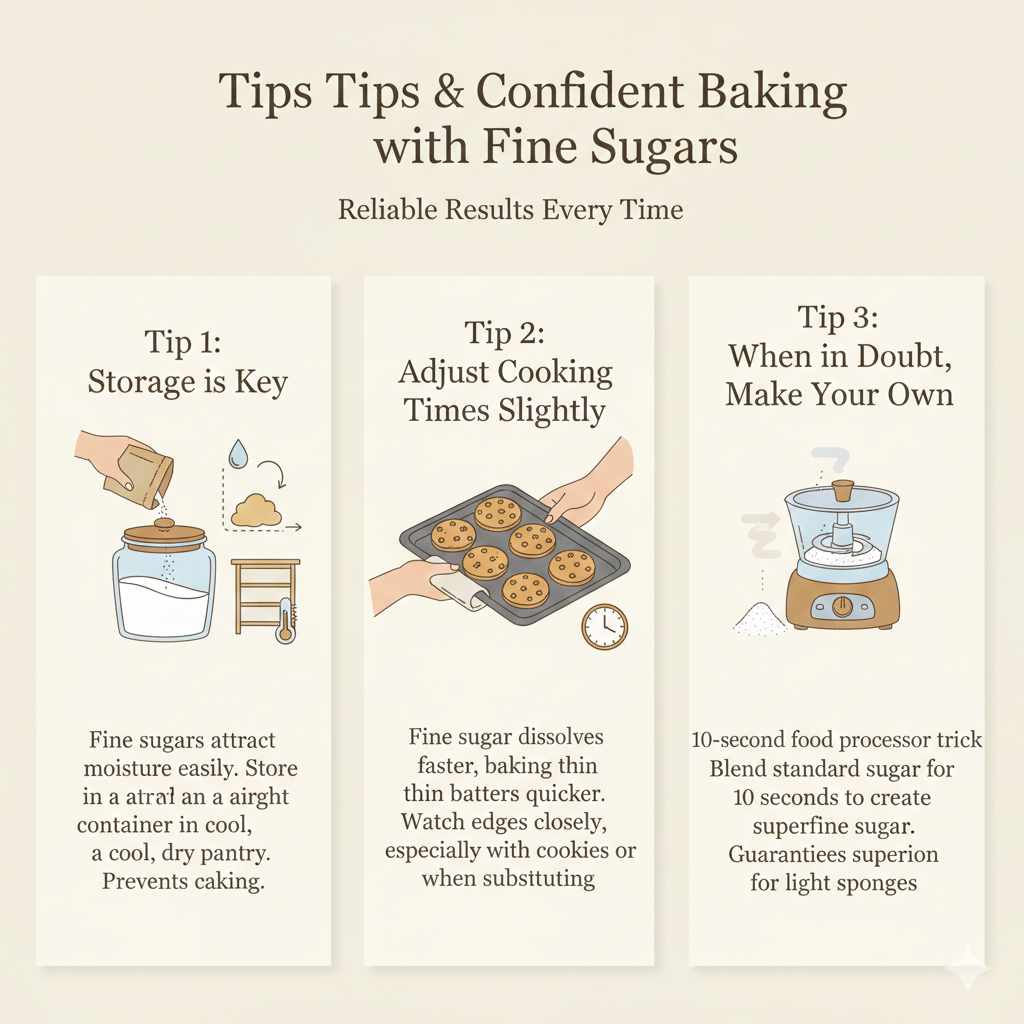
Top Tips for Confident Baking with Fine Sugars
Now that you understand the similarities and differences, here are a few practical tips to help you drive home your new baking knowledge and achieve reliable results every time.
Tip 1: Storage is Key
Fine sugars are more hygroscopic than coarse sugars, meaning they attract moisture from the air more easily. Store caster or baker’s sugar in an airtight container placed in a cool, dry pantry. Humidity causes them to cake up, making them hard to measure accurately.
Tip 2: Adjust Cooking Times Slightly
Because fine sugar dissolves faster, some batters might cook through slightly quicker than expected, especially in thin layers like cookies. Keep a closer eye on your edges, especially when substituting fine sugar for standard sugar in established recipes.
Tip 3: When in Doubt, Make Your Own
If you are anxious about the texture difference between store-bought granulated sugar and superfine sugar, always commit to the 10-second food processor trick. It costs nothing but a moment of your time and guarantees that superior aeration needed for light sponges.
Frequently Asked Questions (FAQ) About Caster and Baker’s Sugar
Q1: Can I use regular table sugar instead of caster sugar in a meringue?
A: You can try, but it is not recommended. Regular table sugar crystals can cut the air bubbles in the egg whites, leading to a weepy or flat meringue because the sugar won’t dissolve quickly or smoothly enough.
Q2: Is Baker’s Sugar the same as Superfine Sugar?
A: Yes. In the United States, baker’s sugar is just another common retail name for superfine sugar, which shares the same small crystal size as international caster sugar.
Q3: How do I know if my homemade DIY caster sugar is done processing?
A: It should look visibly finer than the original sugar, feeling less harsh between your fingers. If you rub a small amount between your palms, it should feel smoother, but not totally slick like flour. If it’s clumping, you’ve gone too far and made powdered sugar.
Q4: Does Caster Sugar change the sweetness level compared to regular sugar?
A: No. Both caster sugar and regular granulated sugar are 100% sucrose. They taste exactly the same level of sweet; only the speed at which they dissolve changes.
Q5: If a recipe calls only for “Sugar,” should I use granulated or caster?
A: If the recipe does not involve creaming butter or whipping eggs extensively, use standard white granulated sugar. If it is a delicate cake or meringue, use caster/superfine sugar.
Q6: Where can I find true Caster Sugar in the US?
A: While superfine sugar is common, true British-style caster sugar might only be found in specialty international food aisles or online retailers that import baking goods.
Conclusion: Confidence in the Kitchen
Navigating the world of baking ingredients can feel like reading an ancient manual, but when it comes to caster sugar versus baker’s sugar, the answer is simple: they are almost always the same fine-grained ingredient designed to make your baked goods lighter and smoother.
Whether you are whipping up a show-stopping meringue or creaming butter for a standard layer cake, knowing that the finer crystal size ensures better aeration gives you the ultimate control over your results. If you cannot find the exact bag labeled “Caster,” don’t sweat it—a few quick pulses in the food processor will give you that necessary superfine texture right at home.
Keep practicing these small ingredient swaps, and soon you will be navigating the pantry like a seasoned mechanic handles their main tools—with total confidence and precision. Happy baking!