
Quick Summary:
A bookshelf is typically a simple, open set of horizontal shelves, often part of a larger furniture piece or wall unit. A bookcase is a freestanding, enclosed piece of furniture, usually with doors and a more defined structure, designed specifically for storing books. Understanding this difference helps you choose the right storage for your home.
Ever found yourself staring at your growing collection of books, wondering where to put them all? You might be looking for a “bookshelf” or a “bookcase,” but are they really the same thing? It’s a question that pops up more often than you might think, and it can be a little confusing. Don’t worry, though! Just like knowing the difference between a wrench and a socket can save you a trip to the store, understanding the difference between a bookshelf and a bookcase will help you pick the perfect storage for your precious reads. We’ll break it down simply, so you can get your books organized in no time.
Think of it this way: all bookcases are essentially large, specialized bookshelves, but not all bookshelves are bookcases. We’ll cover what makes each unique, so you can make the best choice for your space and style. Let’s dive in and clear up this common question!
What Exactly is a Bookshelf?
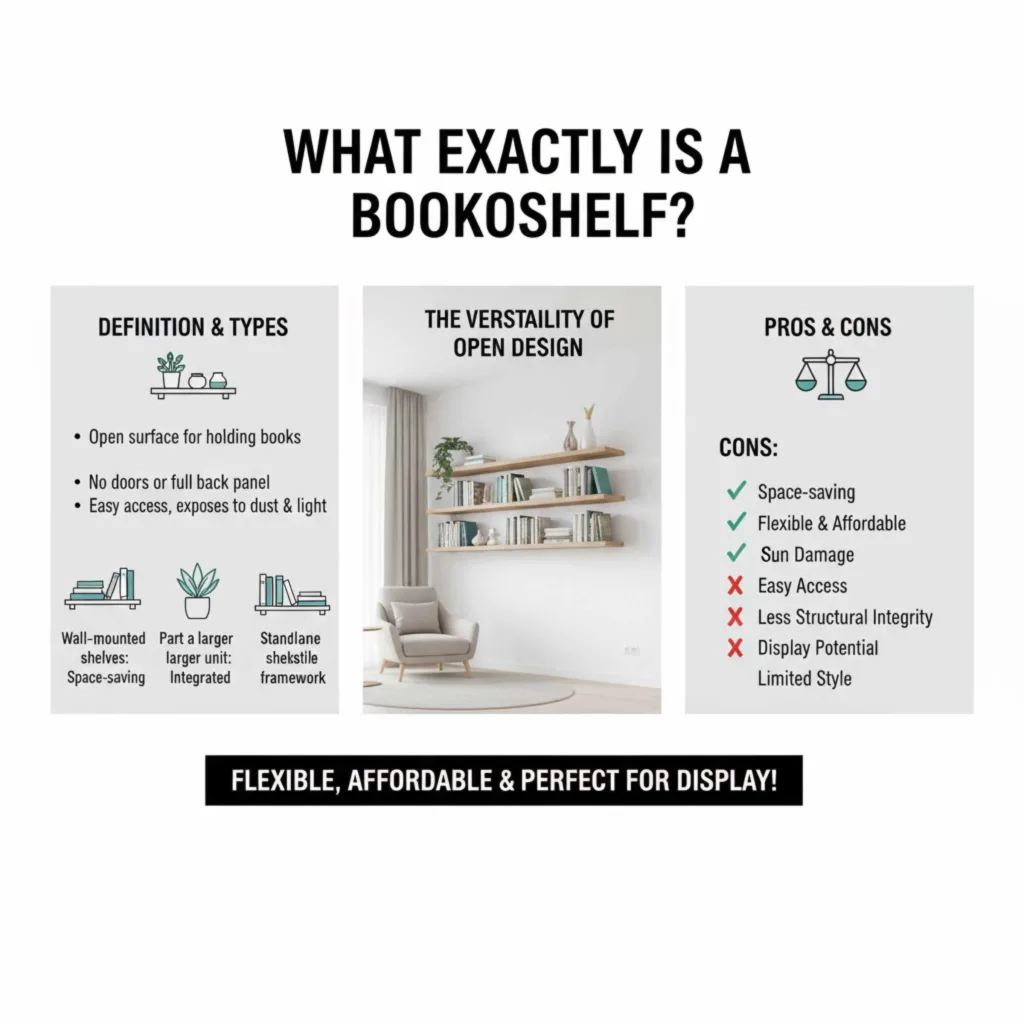
At its core, a bookshelf is an open surface designed for holding books. The term is quite broad and can refer to many different types of book storage. Imagine a simple, flat piece of wood mounted on a wall, or a set of shelves that are part of a larger unit. These are all considered bookshelves.
The defining feature of a bookshelf is its openness. There are typically no doors or a complete back panel enclosing the shelves. This makes books easily accessible but also exposes them to dust and light. Bookshelves can be:
- Wall-mounted shelves: These are fixed directly to the wall, saving floor space. They can be installed in a single row or multiple stacked rows.
- Part of a larger unit: You might find bookshelves integrated into entertainment centers, desks, or other furniture pieces.
- Basic, standalone shelves: These are simple frameworks with horizontal planks, often made of wood, metal, or composite materials.
The simplicity of a bookshelf makes it versatile. You can arrange them in various configurations to fit specific spaces, like under a window or along a narrow wall. Their open design also allows for displaying decorative items alongside books, adding a personal touch to your room.
Pros of a Bookshelf:
- Space-saving: Wall-mounted options are excellent for smaller rooms.
- Flexible: Can be arranged in many custom layouts.
- Affordable: Often less expensive than full bookcases.
- Easy access: Books are readily available.
- Display potential: Great for showcasing decor items too.
Cons of a Bookshelf:
- Dust exposure: Books can accumulate dust easily.
- Sun damage: Direct sunlight can fade book covers and pages over time.
- Less structural integrity: May not be suitable for very heavy collections unless professionally installed.
- Limited style: Can sometimes look less polished than a full bookcase.
What is a Bookcase?
A bookcase is a specific type of shelving unit designed primarily for storing books. The key distinction is that a bookcase is usually a freestanding piece of furniture, often with a back panel and sometimes doors. Think of a sturdy, cabinet-like structure filled with shelves dedicated to your literary treasures.
Bookcases are designed to be strong and self-supporting. They often have a more finished look than basic bookshelves, with a solid back that adds to their stability and helps protect books from dust settling from behind. Many bookcases also come with:
- Doors: These can be glass (to still show off your books while protecting them) or solid wood/material (for a more enclosed look).
- A solid back panel: This enhances stability and prevents books from pushing through.
- A finished appearance: Designed to be a prominent piece of furniture in a room.
- Adjustable shelves: Allowing you to customize the height between shelves to fit different book sizes.
The enclosed or semi-enclosed nature of a bookcase offers better protection for your books. They are ideal for valuable first editions, delicate paperbacks, or simply for maintaining a tidier appearance by hiding less aesthetically pleasing book spines or other items. Bookcases come in a wide array of styles, from modern minimalist designs to ornate traditional pieces.
Pros of a Bookcase:
- Book protection: Offers better defense against dust, light, and damage, especially with doors.
- Stability: Freestanding units are generally very stable and can hold significant weight.
- Aesthetics: Often considered more elegant and a statement piece of furniture.
- Tidy appearance: Can help create a neater look by containing everything.
- Variety: Available in countless styles, sizes, and finishes.
Cons of a Bookcase:
- Cost: Typically more expensive than simple bookshelves.
- Space: Freestanding units take up floor space.
- Less flexible: Placement is usually fixed once set up.
- Assembly: Often requires assembly, which can be time-consuming.
Key Differences at a Glance
While both serve the purpose of storing books, the “bookshelf” and “bookcase” have distinct characteristics. Here’s a quick breakdown to help you see the difference clearly.
| Feature | Bookshelf | Bookcase |
|---|---|---|
| Structure | Typically open shelves, may lack a solid back or be integrated into other furniture. | Freestanding unit, usually with a solid back and often doors. |
| Purpose | General shelving that can hold books and other items. | Primarily designed for book storage. |
| Protection | Minimal protection from dust and light. | Offers better protection, especially against dust and light, and can be enclosed. |
| Mobility | Can be wall-mounted (fixed) or movable if part of a unit/simple design. | Freestanding, designed to be placed and remain in position, though can be moved. |
| Aesthetics | Can be basic or stylish, often functional. | Generally considered a more substantial and decorative furniture piece. |
| Cost | Tend to be more affordable. | Can be more expensive due to construction and features. |
Understanding these distinctions will help you search for the right item. If you’re looking for a simple, budget-friendly solution to hold a few books and display some photos, a bookshelf might be perfect. If you have a large collection, want to protect your books, or are aiming for a more polished look, a bookcase is likely what you need.
Choosing the Right Storage for Your Books
Deciding between a bookshelf and a bookcase comes down to a few important factors about your books, your space, and your personal style. Here’s a guide to help you make the best choice:
Consider Your Book Collection
- Volume: Do you have a small stack of paperbacks or an extensive library of hardcovers? A large collection might benefit more from the sturdy, expansive nature of a bookcase.
- Value and Condition: Are your books valuable first editions, or do you have sentimental paperbacks? If protecting them from dust, light, and potential damage is a priority, a bookcase with doors is a wise investment. For everyday reads, open bookshelves are often fine.
- Type: Are your books mostly standard sizes, or do you have oversized art books or long paperbacks? Ensure the shelves you choose (whether bookshelf or bookcase) have adjustable heights or are deep enough to accommodate them.
Assess Your Space
- Room Size: In a small apartment or a tight corner, wall-mounted bookshelves can maximize vertical space without eating into the floor. A large, freestanding bookcase can serve as a focal point in a spacious room.
- Layout: Where do you plan to put the storage? If it’s in a high-traffic area or a place prone to dust, a bookcase might be more practical. If it’s in a cozy reading nook, open shelves can feel more inviting.
- Existing Decor: What is the style of your room? Modern, minimalist decor might suit sleek, open metal bookshelves, while a traditional study might call for a rich, dark wood bookcase with glass doors.
Think About Your Budget
Generally, simpler, open bookshelves are less expensive than elaborate, enclosed bookcases. However, both options come in a wide range of price points. You can find affordable particleboard bookcases and very high-end, custom-built bookshelves. It’s helpful to set a budget before you start shopping.
Installation and Assembly
Wall-mounted bookshelves often require drilling into your walls, which means you’ll need appropriate tools and a bit of DIY confidence. For heavy units, it’s crucial to locate wall studs for secure mounting. You can learn more about safe wall mounting techniques from resources like the Consumer Product Safety Commission, which provides vital information on preventing furniture tip-overs, including secure anchoring methods.
Freestanding bookcases usually come flat-packed and require assembly. While most are straightforward, some can be complex. If you’re not comfortable with tools or following instructions, you might consider paying for assembly services.
Popular Styles and Materials
Whether you opt for a bookshelf or a bookcase, you’ll find a vast array of styles and materials to match your taste. This variety ensures you can find something that not only functions well but also enhances your home’s aesthetic.
Materials Used:
- Wood: Solid hardwood (like oak, maple, cherry) offers durability and a classic look but can be expensive. Plywood and MDF (Medium-Density Fibreboard) are more budget-friendly alternatives.
- Metal: Often used for modern or industrial styles, metal frames can be paired with wood or glass shelves. They are strong and can create a sleek, minimalist appearance.
- Glass: Primarily used for doors on bookcases or for shelves in modern designs. It adds a sense of lightness and elegance.
- Laminates and Veneers: These are common on affordable MDF or particleboard furniture. They can mimic the look of wood but are less durable than solid wood.
Common Styles:
- Modern/Contemporary: Characterized by clean lines, minimalist designs, and often open or geometric shelving. Materials like metal, glass, and light-colored wood or laminates are popular.
- Traditional/Classic: Features ornate details, darker wood finishes, and often enclosed bookcases with mullioned glass doors.
- Industrial: Combines raw materials like metal piping, reclaimed wood, and exposed hardware for a rugged, utilitarian look.
- Scandinavian: Focuses on simplicity, functionality, and natural materials, often featuring light wood tones and clean, unfussy designs.
- Bohemian: Can be eclectic and colorful, using a mix of materials and unique shapes to create a vibrant and personalized feel.
When selecting materials and styles, think about how they will fit with your existing furniture and the overall ambiance you want to create in your space. For example, choosing a robust material like solid oak for a bookcase can provide a timeless appeal and long-lasting durability, aligning with quality furniture principles advocated by sites like the This Old House restoration guides.
DIY Bookshelf and Bookcase Ideas
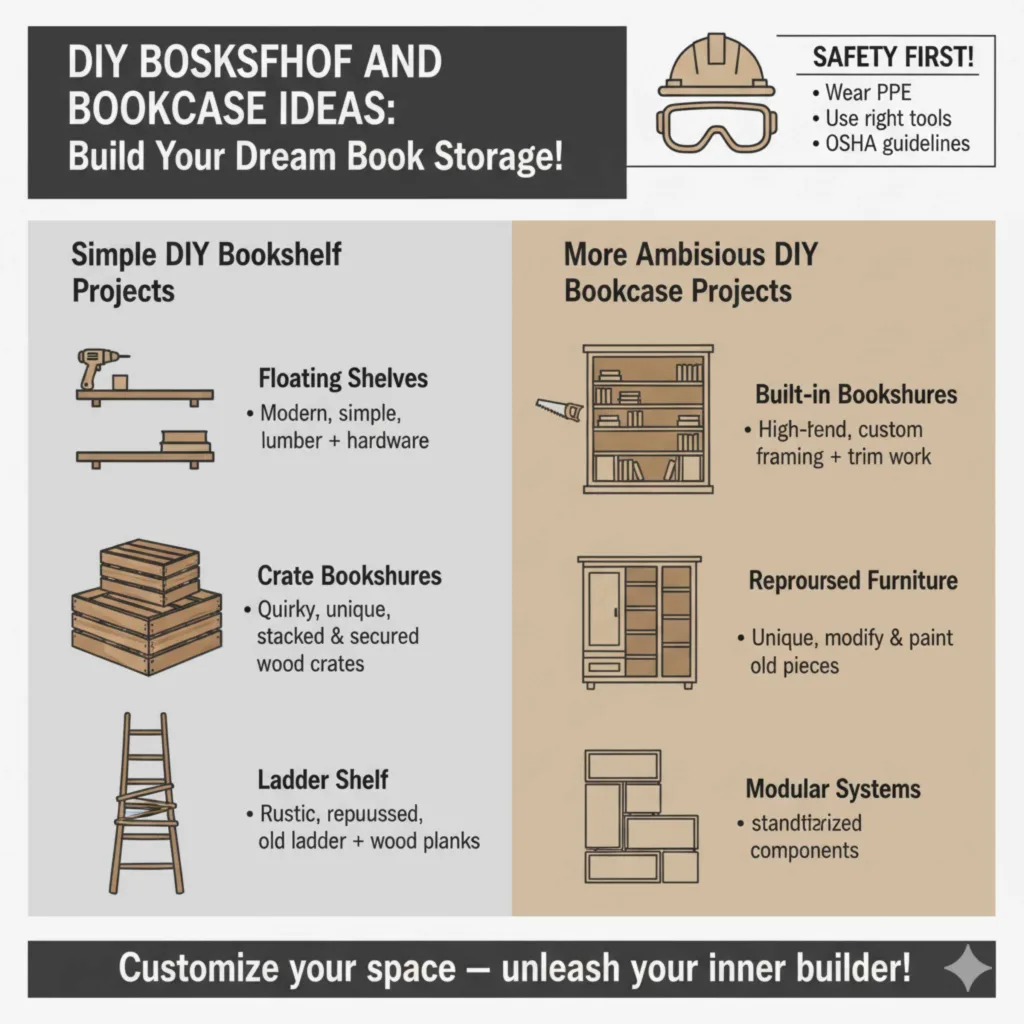
If you’re feeling hands-on, building your own bookshelf or bookcase can be a rewarding project. It allows for complete customization in size, style, and functionality.
Simple DIY Bookshelf Projects:
- Floating Shelves: These are excellent for a modern look and are surprisingly simple to install. You can buy floating shelf hardware and cut shelves to your desired length from lumber.
- Crate Bookshelves: Wooden crates, either stacked and secured or mounted individually to the wall, can create quirky and unique bookshelves.
- Ladder Shelf: An old wooden ladder can be repurposed into a rustic shelving unit by placing planks across the rungs.
More Ambitious DIY Bookcase Projects:
- Built-in Bookshelves: While more complex, creating shelves that are integrated into your wall offers a high-end look and maximizes space. This often involves framing, mounting shelves, and finishing with trim.
- Repurposed Furniture: An old dresser, armoire, or even a china cabinet can be transformed into a beautiful, unique bookcase with some modifications and a fresh coat of paint.
- Modular Systems: Designing a system using standardized components can allow for flexibility and future expansion, similar to commercial modular shelving units.
For those venturing into DIY, safety is paramount. Always use appropriate personal protective equipment (PPE) like safety glasses and gloves, and ensure you have the right tools for the job. Resources from organizations like OSHA’s Safety Pays campaign highlight how investing in safety training and practices can prevent injuries and save money in the long run, even for small home projects.
Frequently Asked Questions (FAQ)
What’s the main difference between a bookshelf and a bookcase?
A bookshelf is generally an open set of shelves, while a bookcase is a self-contained, often enclosed, piece of furniture with a back and sometimes doors, specifically designed for books.
Can a bookcase be considered a type of bookshelf?
Yes. A bookcase is a more specific, structured type of shelving unit. All bookcases function as bookshelves, but not all bookshelves are bookcases.
Are bookshelves better for small spaces?
Often, yes. Wall-mounted bookshelves are excellent for small spaces because they utilize vertical space without taking up much floor area.
Do bookcases offer better protection for books?
Generally, yes. Bookcases, especially those with doors, provide better protection from dust, light, and potential damage compared to open bookshelves.
What materials are most durable for bookcases?
Solid wood like oak or maple is typically the most durable. High-quality plywood can also be very strong. Metal is also a durable option for frames.
Is it better to buy or build a bookshelf/bookcase?
It depends on your budget, skill level, and desired customization. Buying is quicker and often easier for standard needs, while building offers complete control over design and can be more cost-effective for unique requirements.
Do I need to anchor a bookcase to the wall?
It is highly recommended, especially for taller or heavier bookcases, to anchor them to the wall. This prevents them from tipping over, which is a significant safety hazard, particularly in homes with children or pets.
Conclusion
So, there you have it! The mystery of the bookshelf versus the bookcase is solved. Remember, the key distinction lies in structure and function. A bookshelf is the broad term for open shelving, versatile and adaptable, while a bookcase is a specific, freestanding furniture piece, often enclosed, offering dedicated and protected book storage. Both have their unique advantages and can beautifully house your literary world. Whether you choose simple wall-mounted shelves to save space or a grand, classic bookcase to make a statement, understanding these differences ensures you’ll pick the perfect fit for your books and your home. Happy organizing!