
A queen box spring is the foundation your mattress needs for support, longevity, and comfort. Upgrading or selecting the right one ensures better sleep quality and prevents premature mattress sagging. This guide covers choosing the perfect size, type, and height for your bedroom setup, making the decision simple and stress-free.
You’ve got that comfy queen mattress, but is it really performing its best? Many folks treat the box spring—or foundation—like an afterthought, but it’s actually crucial. If your mattress feels shaky, seems to be sinking too fast, or you’re struggling to get in and out of bed, the foundation might be the culprit. It’s easy to feel overwhelmed by measurements and styles. Don’t worry! Think of me, Dustin, as your guide. We are going to break down everything you need to know about selecting and upgrading a queen box spring so you can get back to worry-free sleeping. We’ll cover what they are, why you need one, and how to pick the perfect match for your bedroom setup, step by step.
What Is a Box Spring and Why Do I Need One?
In the simplest terms, a box spring is the sturdy, usually wooden frame covered in fabric that sits between your mattress and the bed frame or foundation base. Its job is to provide firm, even support.
The Main Jobs of a Box Spring
Why skip the foundation? Because it does important work!
- Support and Stability: It stops your mattress from dipping or sagging in the middle where you sleep most often. This helps your mattress keep its shape longer.
- Shock Absorption: The springs (or supportive slats) absorb the minor shocks from tossing and turning. This protects the delicate inner workings of your mattress, especially in bouncy innerspring models.
- Height Adjustment: Box springs raise your mattress up to a comfortable sleeping height. Trying to climb too low into bed can be tough on the knees and back.
- Warranty Protection: Many mattress manufacturers require a proper, supportive foundation to keep your warranty valid. Using the wrong base might void coverage if the mattress fails prematurely.

Box Spring vs Foundation: What’s the Difference?
This is where things get confusing fast! While people often use the terms interchangeably, there is a technical difference, especially with modern mattresses.
Traditional Box Spring: Built with an actual grid of internal springs. This provides bounce and excellent shock absorption. They are traditionally paired with innerspring mattresses.
Platform Foundation (or Box Foundation): These are solid or feature tightly spaced wooden slats instead of springs. They offer firm, minimal bounce support. These are often necessary for modern memory foam or hybrid mattresses which don’t like the added bounce of traditional springs.
The key takeaway for you: Check your mattress manufacturer’s recommendation! If you bought a super-firm memory foam layer, you probably need a solid platform foundation, not a bouncy, springy box spring.
Sizing Up Your Queen Box Spring
The word “Queen” can sometimes be tricky when you are holding measuring tape. When buying a queen box spring, you must match the dimensions exactly so everything sits neatly and safely.
Standard Queen Dimensions
A standard queen size is very consistent across the board in North America.
| Measurement | Standard Queen Size (Inches) | Standard Queen Size (Centimeters) |
|---|---|---|
| Width | 60 inches | 152 cm |
| Length | 80 inches | 203 cm |
Always double-check—just because it’s called “Queen” doesn’t mean it fits your specific frame. Measure your existing bed frame and your mattress to be absolutely certain before ordering.
The Split Queen Box Spring: A Lifesaver for Tight Spaces
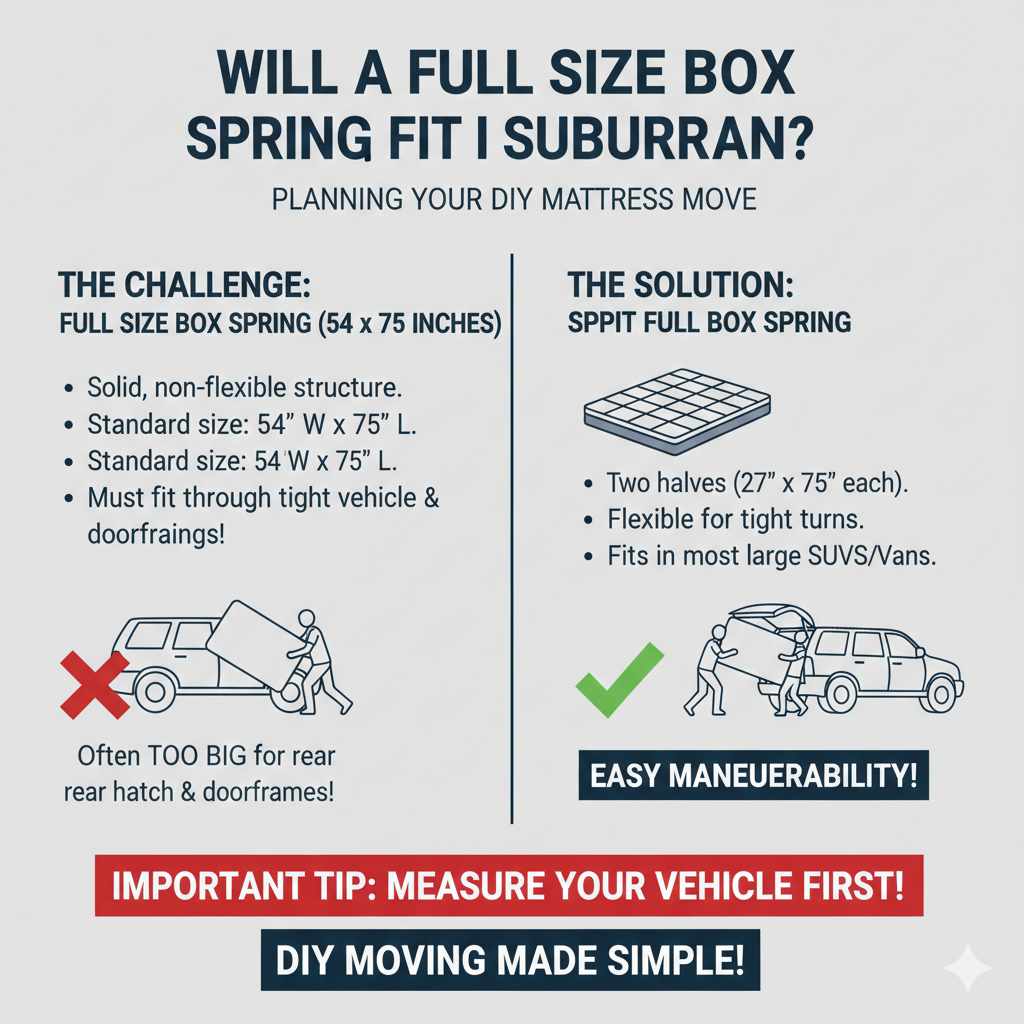
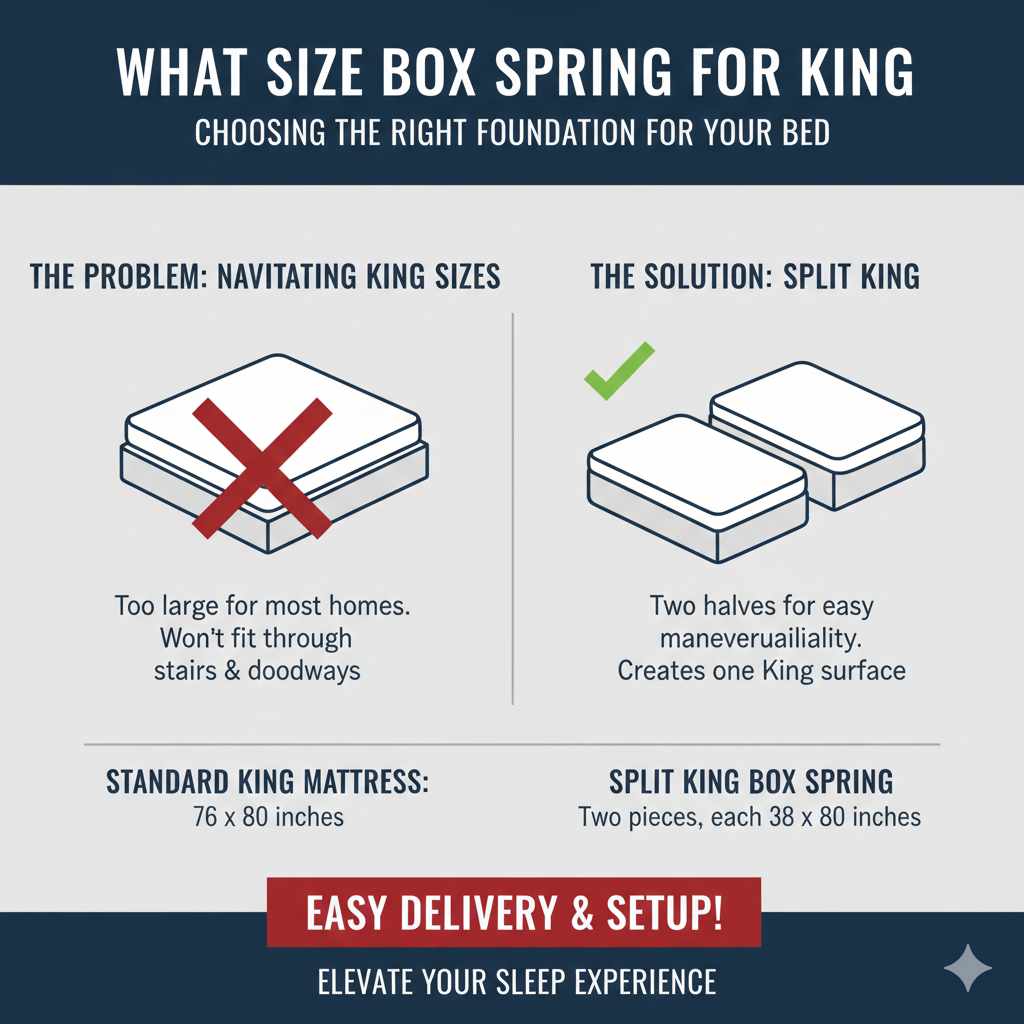
If you have ever tried to move a single, enormous box spring (even a Queen size), you know the pain. Sometimes, a standard queen foundation comes in two separate pieces, which is known as a Split Queen.
Why this matters:
- Maneuverability: Two 30-inch wide pieces are much easier to carry up tight stairwells, around tight hallway corners, or lift into upper-floor bedrooms than one massive 60-inch piece.
- Stability: Sometimes, two separate half-foundations provide better structural integrity across the frame than one long unsupported span.
If you are buying a replacement or moving into an older home with narrow access points, always consider asking about a split option!
Choosing the Right Type of Foundation
You aren’t just buying a piece of wood and springs anymore. You need to match the support system to your specific mattress technology. Using the wrong support type can ruin a brand-new, expensive mattress quickly.
Traditional Innerspring Box Springs
These are perfect if you have an older, traditional innerspring mattress. They utilize coiled springs inside the frame to offer the familiar, slightly yielding support people love.
Pros:
- Great bounce and familiarity.
- Very good airflow keeps the mattress cool.
- Often the most budget-friendly option.
Cons:
- Too much give for foam layers, potentially causing premature breakdown of the foam sections.
- Can be noisy if the springs wear out.
High-Profile vs Low-Profile Foundations
This choice is mostly about aesthetics and accessibility, often called “bed height.”
High-Profile (Standard): These are usually 9 to 14 inches tall. They give the bed a classic, commanding look. If you have a tall mattress (like a pillow-top), a high-profile box spring often balances the height perfectly.
Low-Profile (Bunkie Board Style): These are typically 5 to 8 inches tall. They offer a modern, sleeker look, keeping the mattress lower to the ground. This is great if you have mobility issues or prefer a contemporary bedroom style.
Modern Alternatives: Platforms and Slatted Bases
For newer foam, latex, or hybrid mattresses, you often need a solid surface so soft foam doesn’t sink between gaps.
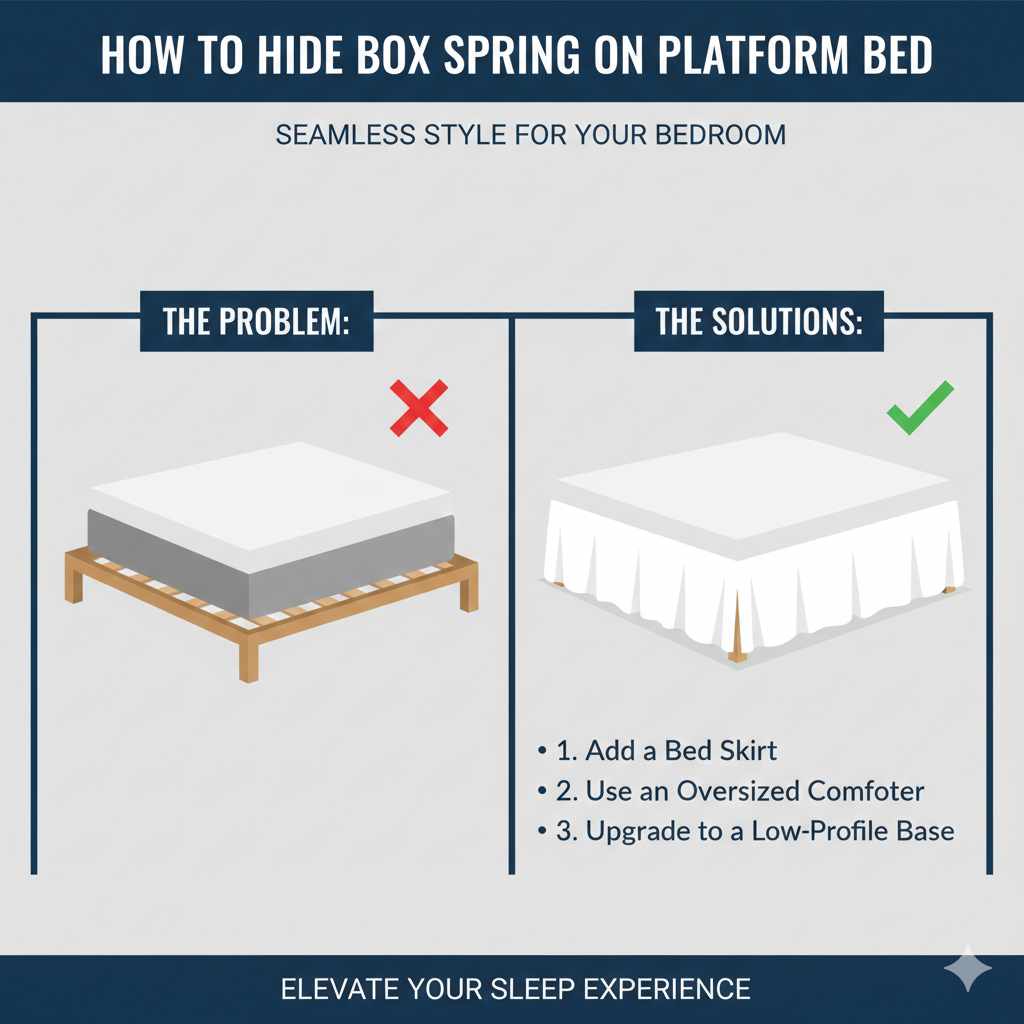
Platform Beds: These frames come with built-in solid support, meaning you often don’t need a separate box spring at all. They are designed to support the mattress directly.
Slatted Foundations: These are supportive frames with wooden or metal slats running across. They offer good airflow while preventing sagging. If you choose this route, check the manufacturer’s guidelines—most require slats to be no more than 3 inches apart for full support.
For context on proper support structures, understanding building standards helps ensure longevity. For instance, wood framing used in quality furniture often relies on standards similar to those outlined by building organizations, ensuring structural integrity when weight is applied consistently (US Department of Transportation often discusses material standards that parallel quality furniture construction, emphasizing load-bearing capacity).
Step-by-Step Guide to Upgrading Your Queen Box Spring
Ready to make the switch? This process is very straightforward, provided you measure twice and buy once. Follow these steps for a smooth upgrade.
Step 1: Assess Your Needs and Mattress Type
This is the most important step. Do not skip digging up your mattress paperwork!
- Check Warranty Requirements: Look up your specific mattress model online or in your paperwork. Does it require springs, a solid platform, or slats with a specific gap size?
- Determine Height Preference: Do you want a high, traditional bed (High-Profile) or a lower, modern look (Low-Profile)?
- Measure Access Points: Take your measuring tape to hallways, stairwells, and doorways leading to your bedroom. If your stairwell has a tight turn, plan for a split foundation if possible.
Step 2: Measure Your Existing Frame
You must know the dimensions of the structure your new foundation will sit on.
Use a reliable tape measure and record:
- Internal Length & Width: Measure the inside distance from headboard bolts to footboard bolts (or where the frame sides meet). This must accommodate the 60″ x 80″ queen standard.
- Center Support: If your bed frame has a center support beam running from head to foot, measure where the box spring will rest on it. Most queen frames require a center support beam for optimal weight distribution.
Tools Needed for Inspection (You probably won’t need tools for the actual setup, but for inspection):
- Tape Measure (a sturdy, metal one works best)
- Flashlight (to peek under the bed frame)
- Your Mattress Manual or Manufacturer Website Info
Step 3: Purchasing the Right Box
When you shop, be specific. Don’t just ask for “a queen box spring.” Ask for:
“I need a queen box spring specifically designed for a memory foam mattress, 8 inches high, preferably a split design for easier moving.”
If you are buying a new bed frame that came with slats, you might just need a Bunkie Board (a thin, rigid piece of wood/plywood) instead of a full thick box spring.
Step 4: Delivery and Setup
Setting up a queen box spring is usually a two-person job because even the lighter ones are bulky.
- Clear the Area: Remove the mattress and any old foundation from the bed frame. Give yourself plenty of room to maneuver.
- Assemble the Frame (If necessary): If your new foundation came in pieces (like a platform frame base), assemble the frame around your center support beam if required.
- Place the Foundation: Carefully lift the box spring sections (or the single unit) onto the frame. If you have a split design, place the two halves side-by-side. Ensure the center seam lines up perfectly with the center support of your bed frame.
- Check for Leveling: Rock the foundation gently. It should sit firmly on the frame rails and center support without wobbling.
- Place the Mattress: Finally, carefully set your queen mattress on top of the new foundation.
When Is It Time to Replace Your Old Box Spring?
Just like a mattress, a foundation has a lifespan. If you notice these warning signs, it’s likely time to upgrade your support system.
| Warning Sign | What It Means | Fix Recommendation |
|---|---|---|
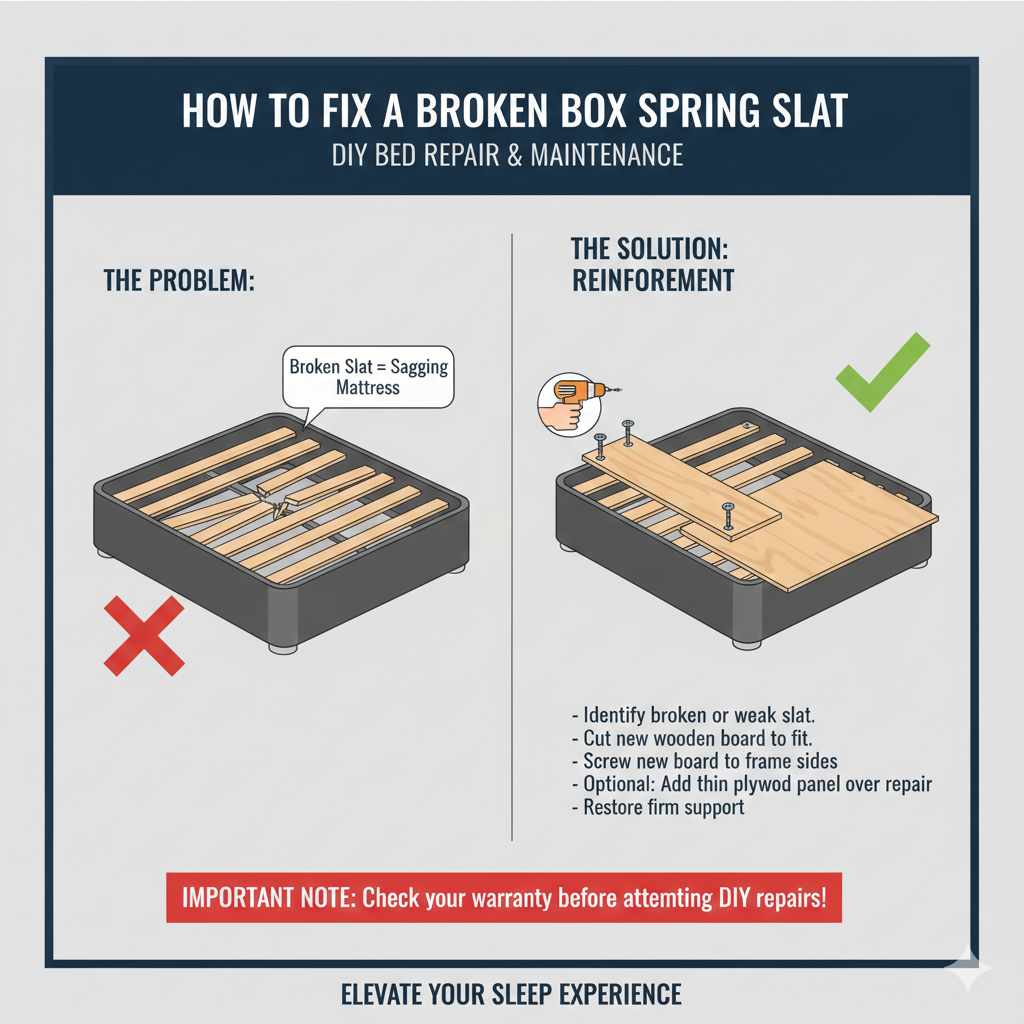
| Visible Sagging or Bumps | Internal springs or support braces have broken or shifted significantly under years of weight. | Immediate replacement is necessary for mattress health. |
| Noisy Creaking | The frame joints or internal springs are loosening, causing noise when you move. | A new, tight foundation will eliminate noise. |
| Mattress Warranty Voided | The mattress is sagging because the foundation is failing, and this is no longer covered. | Upgrade to a foundation that meets current manufacturer specs. |
| Bed Feels Too Low | The fabric or wood structure has compressed over time, lowering the overall height of your bed. | Switch to a high-profile foundation for easier entry/exit. |
The Lifespan of a Foundation
Most quality box springs or foundations are designed to last between 7 and 10 years, though some high-end frames can last longer. Since they bear all the weight, they often wear out before the mattress does. If your mattress is less than 7 years old but your box spring is over 10, the box spring is probably holding you back!
Common Mistakes to Avoid When Buying a New Box
As your friend in vehicle maintenance knows, avoiding simple mistakes saves major headaches later on. The same applies here! Don’t let these common pitfalls derail your purchase.
- Buying Without Checking Frame Compatibility: Many new metal bed frames do not require a box spring at all; they use built-in slats. If you buy a box spring for this type of frame, you might make the bed too high or create an uneven surface.
- Ignoring Mattress Type: Putting a traditional bouncy box spring under a dense, all-foam mattress is a recipe for premature foam breakdown. Always match the support to the material.
- Forgetting Center Support: Most queen frames rated for heavy use require a center support leg or beam running down the middle, touching the floor. If your frame lacks this and you buy a standard box spring, you risk the center sagging deeply.
- Underestimating Delivery Size: If you live in an apartment complex with an elevator that only opens on the second floor, and your only pathway is a narrow service staircase, you must opt for a split foundation or a frame that breaks down completely.
Maintenance Tips to Make Your New Box Last Longer
Once you have the perfect new foundation, a little preventative care will keep it solid for years. Think of this like rotating your tires—simple checks prevent big failures.
Keep It Dry and Ventilated
Moisture is the enemy of wood framing and springs.
- If you live in a humid basement or ground-floor apartment, consider a foundation with metal (rather than wood) slats or one that allows significant airflow underneath to prevent mildew or mold growth in the wood.
- Never cover the foundation sides tightly with decorative fabric that prevents air from getting under the bed.
Check the Screws and Legs (If Applicable)
If you bought a platform frame or a metal grid foundation—not a classic fabric-covered box—you must treat it like any other piece of assembled furniture.
Every year or so, use an inexpensive ratchet set to gently tighten any visible bolts or screws connecting the frame pieces. Loose connections create movement, and movement leads to noise and eventual structural failure.
Avoid Jumping or Piling Heavy Items
Box springs are built for slow, consistent vertical weight (you lying down). They are not designed for sudden, sharp impact.
Keep kids from using the bed as a trampoline. Also, avoid stacking heavy, non-mattress items (like stacks of old books or heavy exercise equipment) directly on the box spring for extended periods. That weight should be on the floor or a dedicated shelf.

Frequently Asked Questions About Queen Box Springs
Q1: Can I use my old box spring with a new mattress?
A: Maybe, but you should check the new mattress warranty first. If you have a new memory foam or latex mattress, your old, potentially softer spring box might void the warranty because it doesn’t offer the required firm, even support.
Q2: Do all queen beds require a box spring?
A: No. Many modern mattresses, especially those sold as “bed-in-a-box,” are designed to sit directly on a platform bed base or a frame with closely spaced slats (usually 3 inches or less apart). Always follow the mattress manufacturer’s specific foundation instructions.
Q3: What is the difference between a queen box spring and a queen foundation?
A: A queen box spring uses internal springs to add bounce and shock absorption, which works best with traditional innerspring mattresses. A queen foundation, however, provides a firm, solid surface using wood or slats instead of springs. Most modern foam and hybrid mattresses perform better on a foundation because they require stable, even support.
Q4: How do I know if my queen box spring is causing mattress sagging?
A: If your mattress feels uneven or dips in the center, the foundation underneath could be failing. Remove the mattress and inspect the box spring for visible sagging, broken support beams, or creaking noises. A weak or unstable base often leads to premature mattress wear.
Q5: Can I put a queen box spring directly on the floor?
A: While it may work temporarily, placing a box spring directly on the floor limits airflow and can trap moisture over time. Poor ventilation may lead to mold, mildew, or material breakdown. For long-term durability and proper support, it’s best to use a compatible bed frame with center support.
Final Thoughts: Building the Right Foundation for Better Sleep
At the end of the day, a queen box spring is not just a supporting accessory—it is a critical part of your entire sleep system. The right foundation protects your mattress, improves comfort, and helps you get the full lifespan you paid for. Ignoring it can lead to sagging, uneven support, and unnecessary replacements far sooner than expected.
Whether you choose a traditional spring model, a solid modern foundation, or a low-profile option for a sleeker look, the key is matching the support system to your mattress type and bed frame. Take the time to measure properly, confirm warranty requirements, and think about your preferred bed height before making a purchase. A few careful decisions now can save years of frustration later.
Sleep quality starts from the ground up. When your queen mattress rests on the proper foundation, everything feels more stable, supportive, and comfortable. Invest wisely in the base, and your mattress will reward you with better rest night after night.