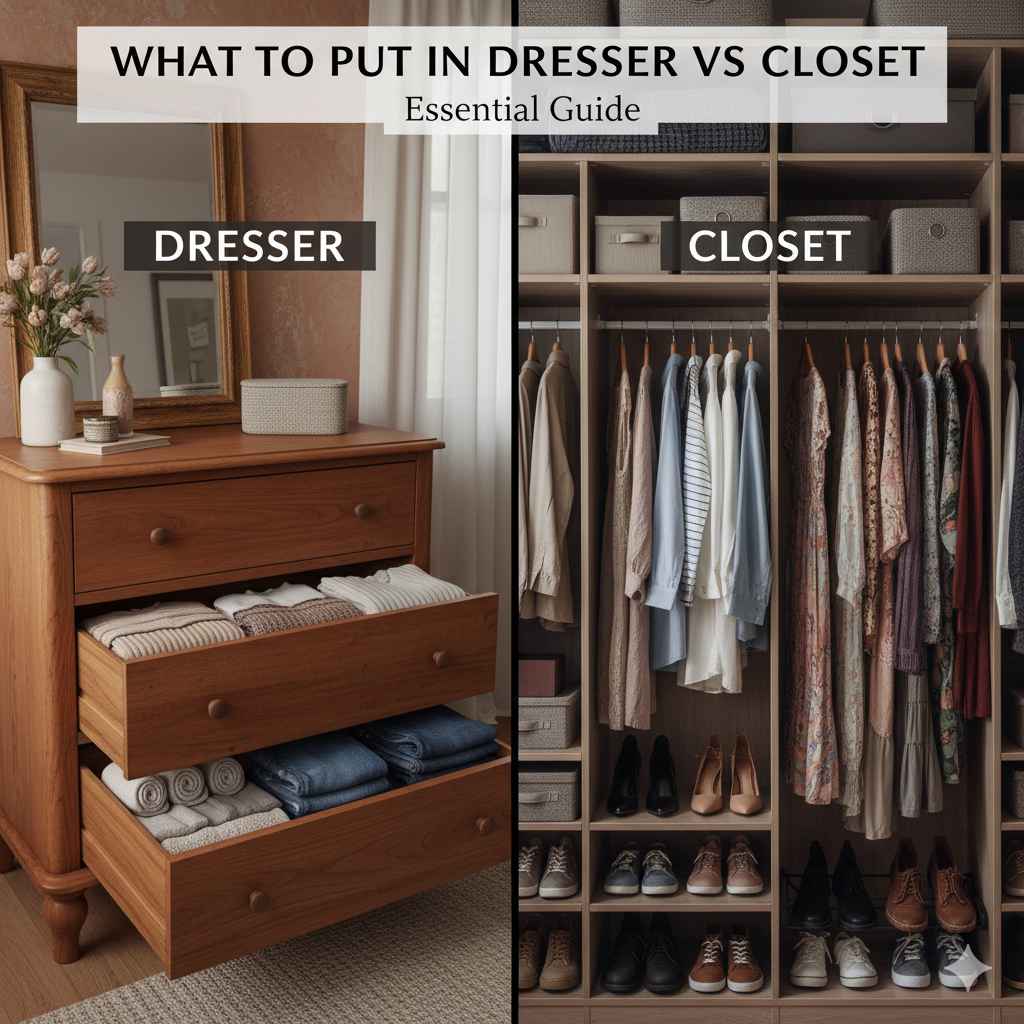
The best rule for what to put in dresser vs closet is simple: Drawers are for folded items you use often (like socks, underwear, T-shirts), while closets are for hanging items (shirts, dresses) and bulky things you use less often (like heavy coats or seasonal wear). This strategy keeps your most-used clothes accessible and wrinkle-free.
Sorting your clothes between your dresser drawers and your closet can feel like a big puzzle. You stare at your wardrobe, wondering where that stack of jeans should go, or if your workout shirts belong hanging up. It’s frustrating when you can’t find what you need, or when folding takes forever!
Don’t worry; this is one of the most common home organization challenges. You don’t need fancy storage bins to fix this. With a few easy guidelines, you can decide exactly what belongs where. We will break down the simple rules so you can organize your space perfectly and get ready faster every day. Let’s explore the best way to use both your dresser and your closet for maximum efficiency.
The Great Divide: Understanding Dresser vs. Closet Roles
Think of your dresser and your closet as two different teams working together. Each one has a specific job to make getting dressed simple. Getting this division right is the secret to a tidy bedroom that makes sense.
Why This Decision Matters for Your Daily Routine
When your clothes are organized logically, your mornings become smoother. If you have to dig through a messy closet for a folded sweater, you waste time. If your socks are lost in a deep, dark dresser drawer, you start your day stressed. Clear organization means less time searching and more time doing what you love.
Proper storage also helps your clothes last longer. Hanging items that wrinkle easily (like nice button-down shirts) keeps them looking sharp. Protecting delicate items from getting crushed in tight drawers is also important. Good storage is good garment care!
The Golden Rule: Folded vs. Hung
This is the simplest way to start separating your items. If it wrinkles easily when folded, it probably needs to hang. If it stretches out when hung, it probably needs to be folded.
- The Closet’s Main Job: To keep items wrinkle-free and store long, bulky, or less-frequently used items.
- The Dresser’s Main Job: To neatly store items that are best kept folded, are small, or are accessed multiple times a week.

What Belongs in the Dresser (The Drawer Crew)
Dressers are fantastic for things that stack neatly. They protect these items from dust better than open shelves in a closet. We want drawers for items that look good folded, or items that would waste valuable hanging space.
Category 1: Undergarments and Small Basics
These are the items you grab first thing every single morning. They need easy access and organization, which drawers provide perfectly.
- Socks: Roll them or use small drawer dividers. Hanging socks is a huge waste of rod space.
- Underwear and Bras: Folding or rolling these keeps them neat. Use shallow drawers for easy visibility.
- Sleepwear/Pajamas: They are often soft and bulky when folded; drawers keep the pile contained.
- T-Shirts (Casual/Everyday): For the most casual tees you wear often, folding them KonMari style (standing up) in a deep drawer works great.
Category 2: Foldable Knits and Heavy Items
Items made of heavy materials like denim or thick cotton should almost never hang. Hanging heavy sweaters or jeans will stretch out the shoulders or the waistband over time.
Denim and Casual Bottoms
Jeans, casual shorts, and even some heavier athletic pants are perfect for drawers. They fold relatively flat and don’t wrinkle easily.
- Fold jeans neatly into thirds.
- Stack them by weight or type (e.g., all shorts together, all dark jeans together).
Sweaters and Sweatshirts
This is crucial for garment longevity. Heavy knitwear should always be folded.
If you store them hanging, gravity pulls them down, creating “shoulder bumps” or permanently stretching the fabric over time. Keep all knitwear folded in your deepest, sturdiest drawers.
Category 3: Accessories and Linens
Sometimes, dressers hold more than just clothes. If you have extra dresser space, these small items fit perfectly.
- Scarves (if you don’t have a dedicated hanging organizer).
- Belts (if rolled or placed in a shallow tray).
- Extra bed linens (like fitted sheets or pillowcases) if you don’t have a linen closet.
Pro Tip for Drawers: Use drawer dividers or small acrylic bins! These prevent the “sock avalanche” where everything mixes up the second you open the drawer. They keep every category separate and visible.
| Item Type | Why It Goes in the Dresser | Best Storage Method |
|---|---|---|
| Socks, Underwear | Small, used daily, easily stacked | Rolled or divided vertically |
| T-Shirts (Casual) | Resist wrinkling when folded | File-folded (standing up) |
| Jeans & Heavy Pants | Hanging stretches the waistband | Neatly stacked, one pile |
| Sweaters (Knitwear) | Hanging causes permanent stretching/shoulder bumps | Flat folded, low stack height |
What Belongs in the Closet (The Hanging Zone)
The closet is reserved for items that need air circulation, require vertical storage to prevent wrinkles, or are simply too large for dresser drawers.
Category 1: Items That Must Hang
If an item looks sad and crumpled after being folded for 24 hours, it belongs on a hanger. This preserves the cut, the shape, and the fabric integrity.
- Dress Shirts and Blouses: The crisp collars and smooth fronts are easily ruined by folding.
- Dresses and Skirts: Hanging prevents deep creases across the waistline or the body of the garment.
- Tailored Trousers/Slacks: Use proper clip hangers or trouser hangers to maintain a sharp crease.
- Jackets and Blazers: These items need shoulder support (use wooden or padded hangers) to maintain their structure.
Category 2: Bulky and Outerwear Storage
Closets provide the depth needed for thick, large items that would take up way too much drawer real estate.
- Winter Coats and Heavy Jackets: These are used seasonally, so they should be stored where they are protected but out of the way.
- Boots and Formal Shoes: If you have closet floor space or shoe racks, this keeps them organized and off the bedroom floor.
- Formal Wear: Gowns, tuxedos, or delicate suits need protective garment bags and space to breathe.
Category 3: Seasonal Rotation and Infrequently Used Items
If you only wear something three months out of the year, it shouldn’t clog up your prime drawer space. Use the back of the closet, high shelves, or the floor space for these.
For example, swap out heavy wool sweaters for lightweight summer cardigans in the high-shelves section when the seasons change. This keeps your daily access clear.
For more information on how hanger type affects clothing lifespan, you can look at resources provided by textile preservation experts, such as those offered by the Library of Congress on clothing care, which emphasizes proper support.
Hanger Selection: An Often Overlooked Step
The type of hanger you use in the closet makes a big difference, much like how you fold items in the dresser.
- Use Slim, Matching Hangers: Velvet or slim wood hangers save space compared to chunky plastic ones.
- Avoid Wire Hangers: These are what you get from the dry cleaner. They rust and often create sharp points that poke holes in delicate fabrics.
The Gray Area: Where Items Can Go Either Way
Some clothing items are versatile. They can work in a drawer or on a hanger, depending on your lifestyle and how much space you have. This is where personal preference comes in!
Athletic Wear and Active Gear
Tanks tops, leggings, and shorts for working out are often debated.
- Dresser Option: If you work out 5 days a week, rolling leggings and folding tanks into a designated drawer keeps them super accessible.
- Closet Option: If you prefer your workout clothes perfectly flat, hanging them on lightweight, non-slip hangers is fine, especially if you have many more formal shirts than workout shirts.
Lightweight Cardigans and Casual Blouses
A thin, jersey knit cardigan might be fine folded, but a structured knit might need hanging.
- Fold if: The material is sturdy and prone to piling if rubbed against other clothes on a hanger.
- Hang if: It’s made of silk or rayon and needs to look smooth for immediate wear.
Out-of-Season Items
If you are short on space, the best place for out-of-season clothing is out of sight. This might mean clear storage bins stacked on the top shelf of the closet, or perhaps a dedicated, unused drawer in your dresser. The goal is to keep your daily-use items in prime real estate.
Creating Zones: Using Both Spaces Together
A highly efficient system often uses both storage units for related items. For example:
- Top Drawer (Dresser): Everyday T-shirts.
- Hanging Rod (Closet): Dressier shirts and blouses that go well with those T-shirts.
- Middle Drawer (Dresser): Shorts/Casual Bottoms.
- Hanging Rod (Closet): Dress pants and skirts.
This co-location helps you see all related options at once when you open both storage areas.
Advanced Organization: Utilizing Closet Shelves and Drawers
Whether you are dealing with a walk-in closet or a small reach-in unit, the unused spaces often hold the key to perfect organization. Shelves and high rods are often neglected.
Maximizing Closet Shelves
Shelves are a middle ground between hanging and drawers. They are perfect for items that need to be folded but are too bulky or infrequently used for the main dresser.
Use these shelves for:
- Folded Sweaters (If Dresser is Full): Use shelf dividers to keep stacks from toppling over.
- Extra Blankets and Comforters: Keep them contained in linen bags.
- Accessory Bins: Purses, clutch bags, or hats (if shaped well).
Maximizing Dresser Top Space
The top of your dresser is prime real estate for things you need quickly or items that don’t belong inside a drawer.
Consider adding a small tray here for:
- Jewelry (that isn’t hung in the closet).
- Watches and daily sunglasses.
- A small catch-all dish for keys or loose change.
If you are looking for tips on maximizing small closet spaces, resources on optimizing home layouts often recommend using vertical storage solutions. Check out reputable guides on maximizing small bedroom storage for more ideas on shelving and door space.
The Drawer Depth Test
Before you decide where something goes, try this simple test. Can the item be folded so it takes up less than 1/3 the depth of the drawer? If the answer is yes, the drawer is a good fit. If it requires you to stack it so high that it will collapse when you open the drawer, it might be better suited for a shelf or a hanger.
Step-by-Step: Reorganizing Your Space Today
Feeling ready to tackle the sorting process? Here is a simple, safe way to move through your wardrobe without getting overwhelmed. We’ll use the “Pull, Sort, Place” method.
Step 1: Empty Everything Out (The Pull)
Take every single piece of clothing out of your dresser and off your closet rod. Pile it all in one spot—your bed is usually best. This lets you see exactly how much you own.
Step 2: Sort Into Initial Piles
Create three main zones on the floor:
- Hang Pile: Anything that wrinkles easily or is structured (blazers, nice shirts).
- Fold Pile: Anything heavy, chunky, or knit (jeans, sweaters, PJs).
- Toss/Donate Pile: Anything damaged or unworn.
Step 3: Apply the Golden Rule (The Sort)
Now, go through the Hang Pile and the Fold Pile, applying the core rules we discussed:
- If it’s underwear, socks, or very thin casual T-shirts, move it from the Fold Pile into a new category: Dresser Drawer Items.
- If it’s a heavy sweater, move it from the Hang Pile into Dresser Drawer Items.
- If it’s a dress shirt, keep it in the Closet Hang Items.
Step 4: Place Strategically (The Place)
Start filling your storage back up, following the hierarchy of use:
- First, Stock the Dresser Drawers: Put the items you use daily (socks, underwear, favorite T-shirts) in the top, easiest-to-reach drawers. Put heavier knits or less-used items in the bottom drawers.
- Next, Fill the Closet Rod: Hang all your dress shirts, dresses, and blazers, keeping similar items grouped together (all work shirts, all casual dresses).
- Finally, Use Shelves and Floor Space: Place out-of-season coats or extra linens on high shelves or on the floor of the closet.
This process ensures that the things you touch every day are right where you need them, preventing future clutter buildup.

FAQ: Quick Answers for Organizing Confidence
Q1: Should workout leggings go in the dresser or the closet?
A: For most people, leggings are best folded and placed in a dresser drawer. They don’t wrinkle and take up far less space than if you tried to hang them, freeing up valuable closet rod space for structured shirts.
Q2: Where should I store my formal suits and tuxedos?
A: Always hang suits and tuxedos in the closet using wide, padded, or wooden hangers to support the shoulder structure. Never fold these items long-term, as the creases will set permanently.
Q3: Is it okay to store sweaters in the dresser?
A: Yes, it is highly recommended! Heavy wool or cashmere sweaters should always be folded and stacked flat in a deep dresser drawer. Hanging them will stretch the fabric and ruin their shape over time due to gravity.
Q4: Where do pajamas and loungewear belong?
A: Pajamas and loungewear are usually soft, comfortable items that don’t mind being folded. Dedicate one drawer in your dresser for all sleepwear to keep them separate from your daytime clothes.
Q5: What about bulky winter coats when it’s summer?
A: Out-of-season heavy coats should go into the closet, but not on the main hanging rod. Store them on the very top shelf of the closet in protective garment bags or vacuum-sealed bags if storage is tight.
Q6: Do I need to fold everything in the drawer, or can I just pile it?
A: While you don’t have to be perfect, try to fold items like T-shirts and shorts so they stand up when placed in the drawer (file folding). This allows you to see everything at a glance, unlike a flat pile where the bottom items disappear.
Q7: If I run out of dresser space, what’s the last place I should look?
A: The last place to use should be the closet floor or the back of the door. These areas are harder to access daily. Only place items you use very infrequently (like very formal wear or out-of-season items) here.
Conclusion: Confidence in Your Closet System
Making the choice between what goes in your dresser versus what goes in your closet doesn’t have to be confusing. By prioritizing wrinkle prevention and daily accessibility, you create a wardrobe system that supports your routine.
Remember the core idea: Drawers are for your folded basics, heavy knits, and small items that need to be contained. Closets are for anything that needs to hang freely or is bulky outerwear. By following these simple guidelines—and using quality hangers and drawer dividers—you’ll find that getting dressed becomes a much more pleasant, efficient part of your day.
Take a deep breath, trust the sorting process, and enjoy the calm that comes with knowing exactly where everything is. You’ve got this!