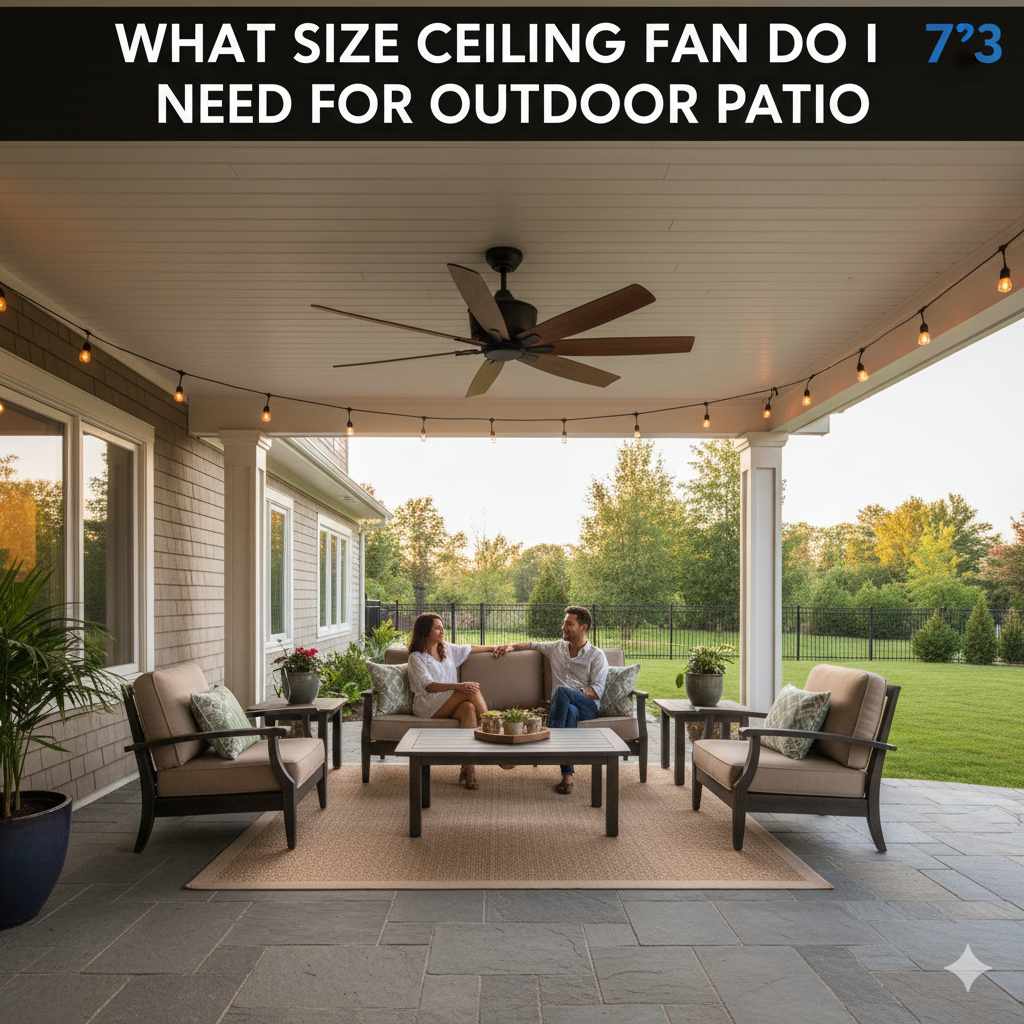
Outdoor ceiling fan size depends entirely on the size of your patio. A common rule is using blade spans between 44 and 60 inches for most standard residential outdoor spaces to ensure comfortable airflow without overwhelming the area. Getting this right guarantees a perfectly breezy, cool retreat.
Thinking about adding a ceiling fan to your outdoor patio? That is a fantastic idea for beating the summer heat! However, picking the right size can feel confusing. You want enough breeze to feel cool, but you do not want a giant fan hanging over a tiny space, or worse, a tiny fan that does nothing. Buying the wrong size is a common mistake that leaves folks frustrated. Don’t worry! We are going to walk through this step-by-step, just like checking your tire pressure. By the end of this guide, you will know exactly what size ceiling fan you need for your perfect outdoor setup, saving you time and ensuring maximum comfort.
Why Outdoor Fan Sizing Matters More Than You Think
When you buy an indoor fan, you are dealing with still, protected air. Outdoor fans are different. They fight humidity, stronger breezes, and often have to move air across a larger, more open area. Getting the size right is crucial not just for comfort but for safety and longevity of the fan itself. A fan that is too small will struggle, buzzing loudly and never moving enough air. A fan that is too big can look awkward, cause turbulence, and might even be too close to surrounding structures (which can be a fire or safety hazard).

The Three Critical Factors for Outdoor Fan Selection
Before we look at blade spans, we need to quickly cover three things unique to outdoor fans:
- Outdoor Rating: Your fan must be rated for the environment. Look for “Damp-Rated” (good for covered patios where rain won’t hit it directly) or “Wet-Rated” (safe for open pergolas or exposed areas). This is non-negotiable for safety!
- Airflow Efficiency (CFM): This stands for Cubic Feet per Minute. Higher CFM means more air movement. You always want good CFM relative to the fan’s size.
- Mounting Height: Fans mounted too high (or too low) won’t circulate air properly over the seating area.
Step 1: Measure Your Outdoor Patio Area Accurately
This is the most important step. Grab a tape measure and get the exact dimensions of the area you want to cool. Don’t guess! Measure the usable space—where your furniture sits and where people gather.
Measure the length and the width of your patio cover or the intended fan location. Let’s say your patio is 12 feet by 15 feet.
Understanding Ceiling Height
Fan size isn’t just about width (blade span); it’s also about how high it hangs. Safety standards are very strict here. You must have clearance!
- Minimum Blade Clearance: Blades must be at least 7 feet above the floor or deck surface. This is a safety code requirement you should always follow.
- Maximum Height: For optimal air movement, the fan should ideally be between 8 and 9 feet above the floor.
If your ceiling is very high (over 10 feet), you will need an extended downrod. If your ceiling is low (under 8 feet), you might need a special “hugger” style, low-profile fan, though this often limits cooling performance.
Step 2: The Ceiling Fan Sizing Chart for Patios
Once you have your square footage, you can match it to the recommended fan blade span (the diameter of the circle the blades create). This chart is based on industry standards and is the best starting point for what size ceiling fan do I need for outdoor patio situations.
| Patio Area (Square Feet) | Recommended Blade Span (Inches) | Typical Use Case |
|---|---|---|
| Up to 75 sq. ft. | 29″ to 36″ | Small balconies, narrow entryways |
| 75 sq. ft. to 144 sq. ft. | 42″ to 48″ | Small square patios, breakfast nooks |
| 144 sq. ft. to 225 sq. ft. | 50″ to 54″ | Standard average covered patios (Most common size) |
| 225 sq. ft. to 400 sq. ft. | 56″ to 62″ | Large outdoor kitchens, extended verandas |
| Over 400 sq. ft. | 64″ or larger (or multiple fans) | Very large commercial or custom outdoor living areas |
Let’s use our example patio measuring 12 ft x 15 ft. That equals 180 square feet. According to the table, a 50″ to 54″ fan is the perfect fit.
What If My Patio Doesn’t Fit Neatly?
If your space falls between categories, always size up slightly if you prefer a stronger breeze, or choose the smaller one if you know the area is heavily shaded. When in doubt on an average-sized patio, a 52-inch fan is almost always a safe and effective choice.
Step 3: Considering Fan Placement and Obstacles
The fan needs space surrounding it to work efficiently. Air needs to circulate freely into the blades and out the sides.
Clearance Rules for Optimal Performance
Imagine the fan spinning. That circle of air needs room to breathe. Follow these simple clearance checks:
- Wall Clearance: The tips of the blades should be at least 18 to 24 inches away from any wall, pillar, or obstruction. If the blades are too close to a wall, they create turbulence and waste energy.
- Center Placement: For rectangular patios, centering the fan in the main seating area is usually best. If the area is long and narrow (e.g., 10×30 feet), one large fan might not be enough. You might be better off with two smaller, strategically placed 48-inch fans instead of one huge 72-inch one.
- Dual Fan Strategy: For very large spaces (over 400 sq. ft.), don’t try to compensate with one enormous fan. Use two appropriately sized fans. For example, a 20 ft x 20 ft area (400 sq. ft.) could comfortably handle two 52-inch fans spaced evenly apart rather than one 70-inch monster.
For helpful standards on clearances, organizations like the International Residential Code often reference safety guidelines for ceiling mounted appliances, which are good benchmarks even for outdoor installations.International Code Council (ICC) Standards Note
Step 4: Understanding Outdoor Fan Ratings (Damp vs. Wet)
This is where many DIYers make costly errors. An indoor fan rusts quickly outside, but an outdoor fan is built to handle moisture. This is critical for safety and ensuring your investment lasts.
Damp-Rated Fans
These fans are designed to handle humidity and moisture in the air, like that found under a fully covered porch or patio roof that is protected from direct rain and splashing.
- Best For: Covered porches with solid roofs and walls on at least two sides.
- Construction: Usually feature sealed motor housings and hardware made of rust-resistant materials (like stainless steel or aluminum).
Wet-Rated Fans
These are the heavy-duty option. A wet-rated fan can handle direct exposure to rain, snow, and high humidity.
- Best For: Open pergolas, gazebos, or patios where precipitation can directly hit the unit.
- Construction: Feature specialized coatings, silicone gaskets, and inherently weather-resistant materials like marine-grade polymers or treated metals.
Pro Tip: When in doubt about the weather exposure on your patio, always step up to a wet-rated fan. It costs a bit more upfront but prevents major headaches down the road!
What About Airflow Efficiency (CFM)? Beyond Just Size
A big fan with low CFM is useless. Think of it like an engine: you need good horsepower (size) matched with good flow (CFM). Good airflow is what actually makes you feel cool.
When shopping, look at the specifications sheet for the CFM rating, usually listed at the highest speed setting. For outdoor use, you want fans that offer good efficiency.
CFM Efficiency Guide for Outdoor Fans
| CFM Rating | Airflow Feeling | Typical Blade Size |
|---|---|---|
| Under 4,000 CFM | Gentle breeze, suitable for very small, protected spots | Small (29″-36″) |
| 4,000 to 5,500 CFM | Moderate cooling, effective for average patios | Medium (44″-52″) |
| 5,500 CFM and Higher | Strong, effective cooling, needed for large or very hot areas | Large (54″+) |
When comparing two fans of the same size (say, two 52-inch models), always pick the one with the higher CFM rating for better outdoor performance.
Adjusting Fan Size Based on Climate and Purpose
While the charts give us a great baseline, the local weather where you live plays a huge role in your decision about what size ceiling fan do I need for outdoor patio.
If You Live in a Hot, Humid Climate (e.g., Florida, Texas Gulf Coast):
Humidity makes heat feel much worse because sweat doesn’t evaporate easily. You need maximum air movement to create that cooling wind chill effect. In this case, lean towards the higher end of the size recommendation or prioritize a fan with a very high CFM rating, even if it means slightly oversizing the blade span for your recorded square footage.
If You Live in a Moderate Climate (e.g., Pacific Northwest, mild summers):
Your goal might be gentler circulation to keep insects away or just slightly break up stagnant, warm air. A mid-range CFM fan that perfectly matches the size chart (e.g., 50″ for a 170 sq. ft. patio) will likely be perfect. You don’t need massive power.
Why Do I Need Air Movement, Not Just Air Mixing?
Unlike indoor fans, which mainly mix layers of air (destratification), outdoor fans are primarily about creating a localized wind chill effect on the people below. The air movement needs to effectively reach the seating zone (usually 3 to 7 feet above the deck) to provide comfort. This is why blade span and mounting height are directly related to effective cooling.
Putting It All Together: A Quick Decision Checklist
Before you hit “Add to Cart,” run through this final checklist to ensure you selected the perfect fan size and type for your outdoor space.
- Measure: Did you get the length and width of the usable area? (e.g., 14 ft x 14 ft = 196 sq. ft.)
- Size Match: Based on the 196 sq. ft., do you need a 52″ fan? (Yes, according to the main table).
- Clearance Check: Is the fan center point at least 30 inches away from any walls or support beams? (Crucial for performance).
- Height Check: Will the blades clear 7 feet easily, and is the fan hanging between 8 and 9 feet from the floor? (If ceiling is high, ensure you have the correct downrod).
- Rating Check: Is this patio fully covered (Damp-Rated OK) or exposed to weather (Wet-Rated Required)?
- CFM Reality Check: Does the fan have a CFM rating above 4500 for that 50+ inch size? (Ensures it moves air well).
Maintenance Reminders for Long-Lasting Outdoor Fans
Choosing the right size sets you up for success, but a little basic care keeps it running well for years, especially since outdoor fans deal with dust, pollen, and bugs.
Simple Outdoor Fan Tune-Ups
- Annual Cleaning: Wipe down the blades at the start of the season. Dirt buildup prevents smooth airflow and can cause the fan to wobble. Use a damp (not soaking wet) cloth.
- Tighten Connections: Every spring, check the screws holding the blades to the motor housing and the mounting bracket connecting to the ceiling. Vibration, which is more common outdoors, can loosen these over time.
- Check for Rust (Wet-Rated): Even on weather-resistant fans, look for pitting or chipping paint on hardware. Treating small spots immediately with exterior-grade paint can stop rust from spreading.
- Blade Pitch: Ensure all blades have the same angle (pitch). If one blade is slightly flatter than the others, it creates imbalance and noise.

Frequently Asked Questions (FAQ) About Outdoor Patio Fans
Q1: Can I use an indoor fan outside if my patio is covered?
A: It is not recommended. Indoor fans lack the sealed motor and rust-proof construction needed to withstand even high humidity. Using one indoors can void warranties and pose a safety risk due to electrical components corroding quickly.
Q2: How far should the fan blades be from the seating area?
A: Ideally, the blades should be positioned 8 to 10 feet above the seating area for maximum cooling effect, provided the ceiling height allows it. The absolute minimum clearance from the floor must be 7 feet for safety.
Q3: Do larger outdoor fans use a lot more electricity?
A: Not necessarily. Modern DC motor fans are very efficient regardless of size. However, a larger fan running at high speed will use more energy than a smaller fan running at low speed. Focus on getting the correct size so you can run it on a medium setting for the best balance of comfort and efficiency.
Q4: My patio space is oddly shaped. What size fan should I pick?
A: Measure the largest square or rectangular section where most people sit or gather. Use the square footage of that primary zone to determine the size. If you have an L-shaped patio, consider two smaller, appropriately sized fans instead of one massive fan fighting against the shape.
Q5: I have a low ceiling (7.5 feet). What fan size should I look for?
A: Safety first! Since you need 7 feet minimum clearance, you only have 6 inches of space for mounting hardware. You must purchase a low-profile or “hugger” style fan specifically designed for short ceilings. Be aware that these usually provide slightly less cooling power than standard mount installations.
Q6: Should I buy a fan with more or fewer blades for outdoor patios?
A: For outdoor use where you need strong air movement, it’s often better to stick to 3 or 4 blades. More blades add complexity and drag. A well-designed 3-blade fan usually delivers better CFM performance than a poorly designed 5-blade fan of the same diameter.
Conclusion: Confidently Choosing Your Perfect Outdoor Breeze
Selecting the right size ceiling fan for your outdoor patio doesn’t have to be intimidating. It boils down to accurate measurement and matching that measurement to the right blade span using established guidelines. Remember, an outdoor fan is an investment in your comfort and property value, so prioritizing the proper USDA or ICC-related clearance rules (7 feet minimum from the floor) and ensuring you select the correct Damp or Wet rating is just as important as the fan’s diameter.
By measuring your square footage, checking your available ceiling height, and referencing the sizing charts we covered, you can bypass the confusion and confidently select a reliable, perfectly sized fan. Enjoy those cool, well-circulated evenings on your patio—you’ve done the homework to make sure your setup is safe and effective!