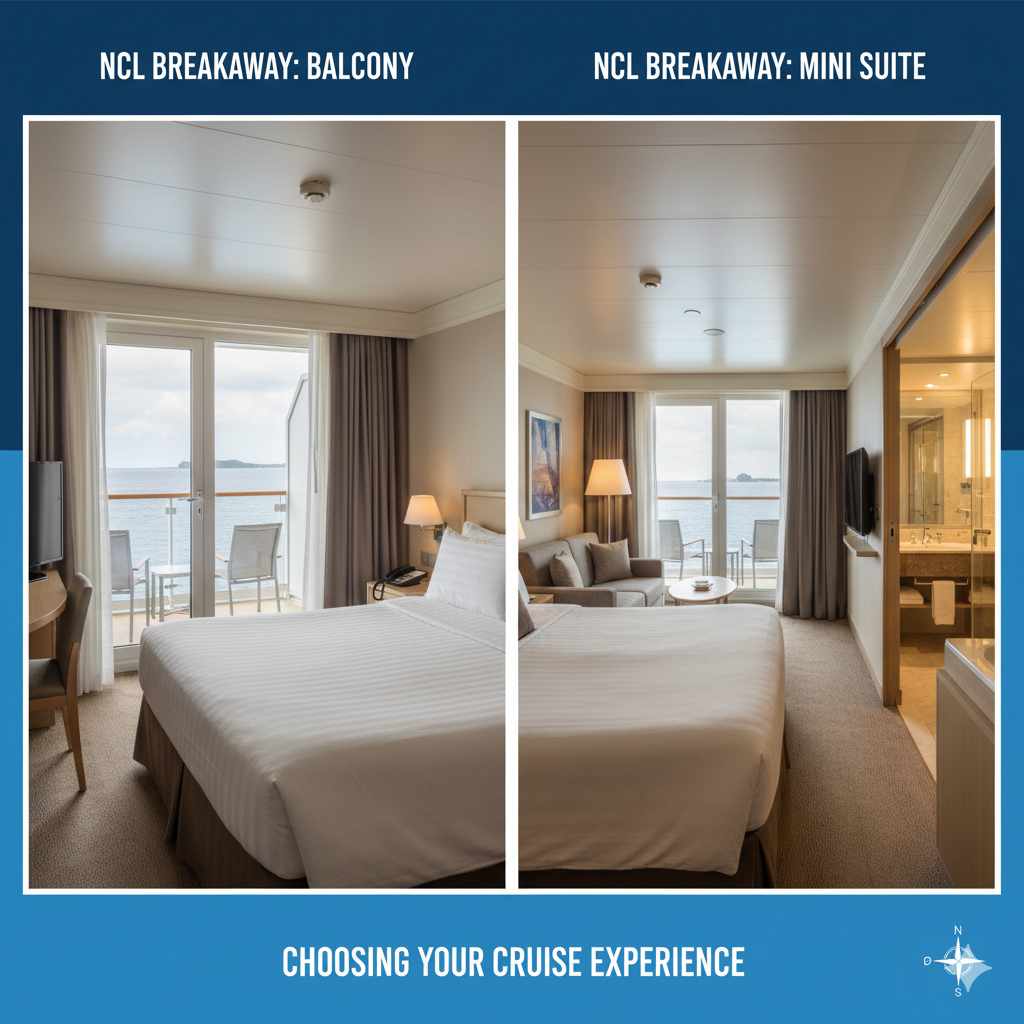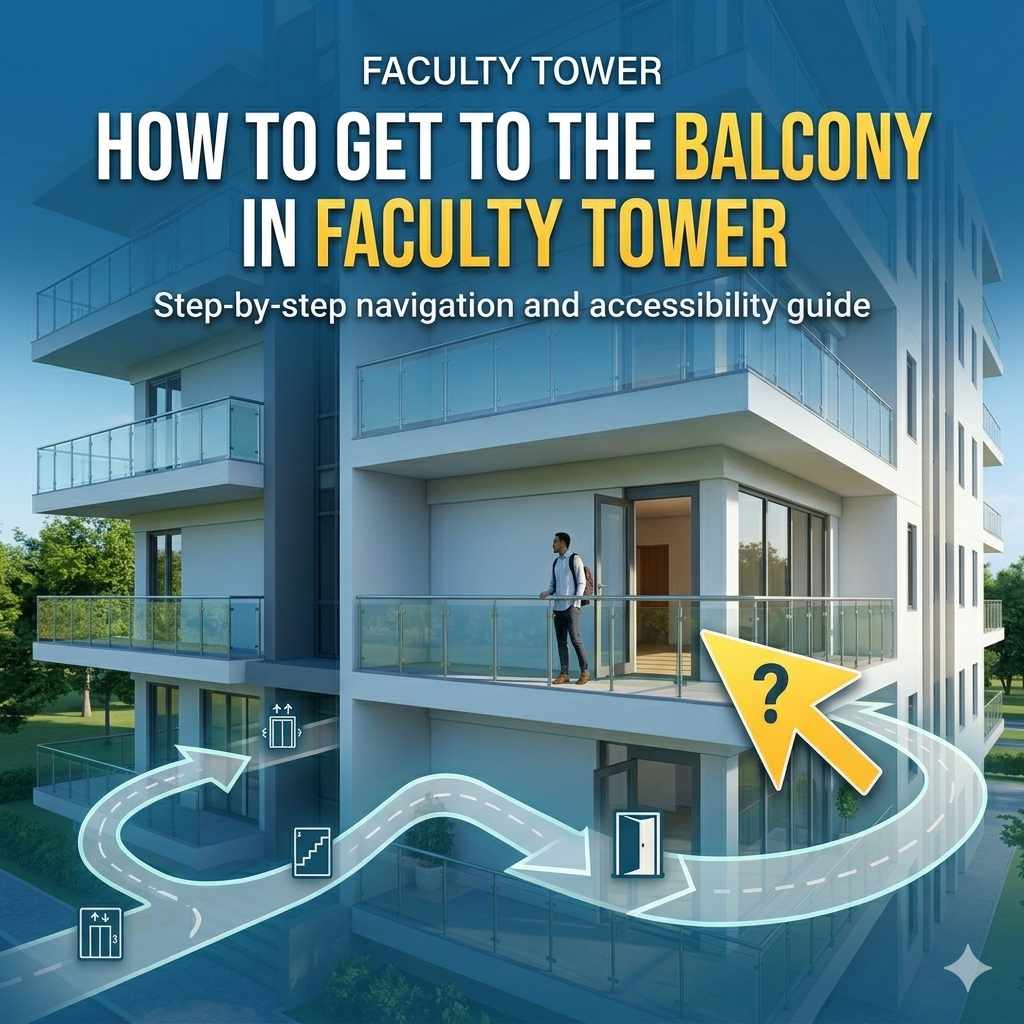
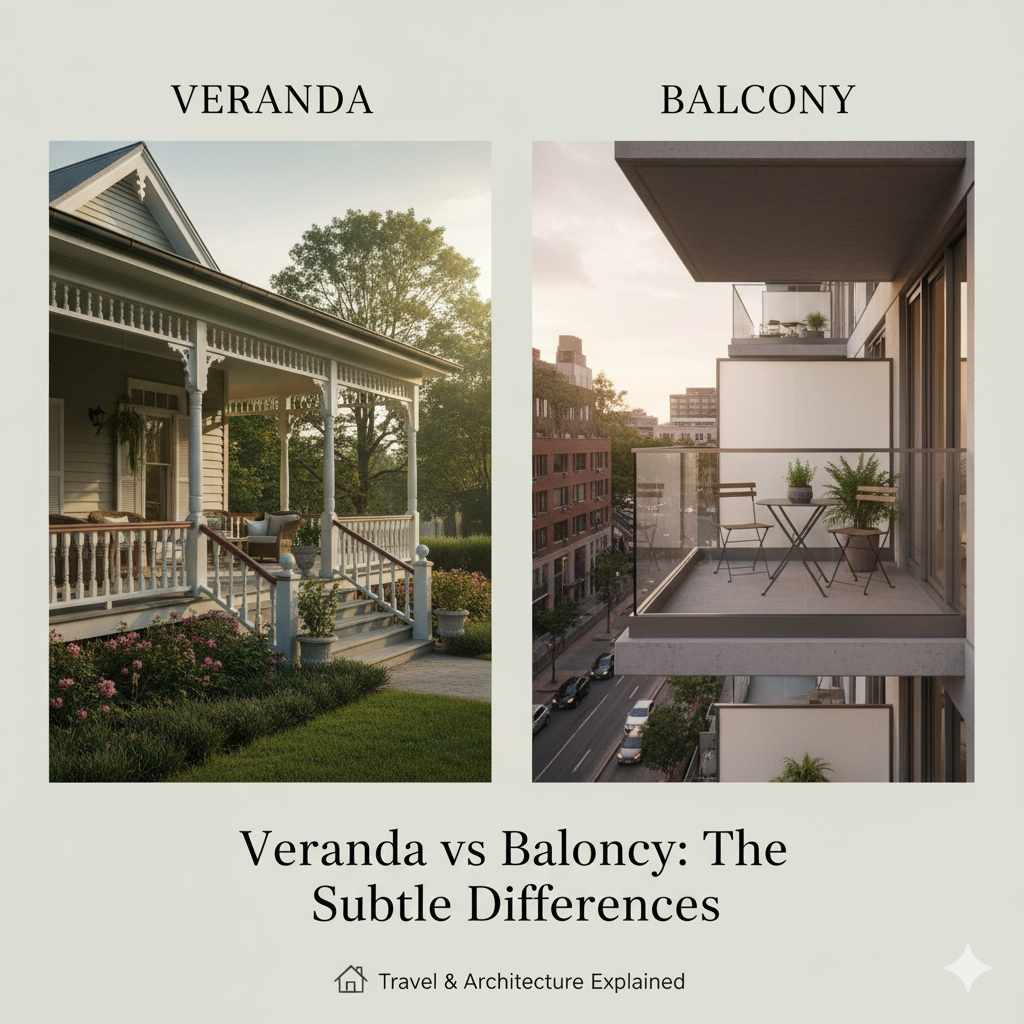
The main veranda and balcony difference is location and structure: A balcony is a small platform projecting from an upper floor, open to the air, while a veranda is a covered, roofed porch or gallery, usually on the ground floor or wrapping around the exterior of a building. Understanding this clear distinction helps when planning home improvements or discussing architectural features.
If you’ve ever been confused when talking to a builder, looking at real estate listings, or trying to imagine where to put your new patio furniture, you are not alone. This is a super common mix-up! Don’t worry; we are going to clear this up right now. By the end of this guide, you’ll understand the essential veranda and balcony difference so well that you can spot one from a mile away. We will break down their structures, typical uses, building rules, and the cozy feeling each one offers. Let’s get started and make your outdoor space language crystal clear!
Veranda vs Balcony: The Essential Structural Difference
The easiest way to tell a veranda and a balcony apart is by looking at how they are built and where they sit on the house. Think of it like this: one is usually attached to the ground floor, and the other hangs off an upper floor.
What Exactly is a Balcony?
A balcony is essentially an outdoor platform that extends outward from the wall of a building, usually on the second floor or higher.
Imagine looking up at an apartment building. Those small slabs sticking out where people stand? Those are balconies. They are supported by brackets or cantilevers (meaning they stick out without much ground support underneath them).

Key Characteristics of a Balcony:
- Location: Almost always located on an upper floor (second level or above).
- Support: Projects directly from the wall structure; it does not typically rest on columns extending to the ground.
- Roofing: Generally open to the elements, meaning no roof directly covering it (though sometimes there’s an overhang from the floor above).
- Size: Usually smaller, designed for one or two people to stand or hold a small bistro set.
- Access: Accessed via a door from an interior room.
Think of a balcony as a specific type of outdoor “deck,” but designed for elevated settings. Because they are elevated and cantilevered, they must adhere to very strict building codes regarding load-bearing capacity. For reliable structural information, consulting guidelines from organizations like the International Residential Code (IRC) is always smart, even for small modifications.
Defining the Veranda
A veranda, sometimes called a porch or a gallery in different regions, is much more integrated with the ground level of a building.
The defining feature of a veranda is that it is always covered by a roof, which is typically an extension of the main house roof or a separate, supported structure.
Key Characteristics of a Veranda:
- Location: Usually found on the ground floor, often running along the front or side of the house.
- Support: Supported by columns, posts, or piers that rest on the foundation or ground.
- Roofing: Always covered, offering protection from sun and rain.
- Size: Generally larger and more expansive than a balcony, often long enough to wrap around multiple sides of a home.
- Use: Designed as an outdoor room for seating, dining, and relaxation.
If you see people sitting comfortably outside, protected from sudden rain showers, enjoying a full outdoor dining set, you are most likely looking at a veranda or a very large porch. Its connection to the ground makes it feel like an extension of the interior living space.
Side-by-Side Comparison: Veranda and Balcony at Glance
To make the veranda and balcony difference truly stick, let’s put their main features into a quick reference table. This comparison helps solidify the structural and functional definitions.
| Feature | Balcony | Veranda |
|---|---|---|
| Primary Location | Upper floors (above ground level) | Ground floor or extending from the ground level |
| Roof Coverage | Usually uncovered or partially covered by the floor above | Always covered by a roof |
| Support Structure | Cantilevered or bracket-supported from the wall | Supported by posts or columns resting on the ground/foundation |
| Typical Size | Smaller, projecting platform | Larger, often long and deep, sometimes wrapping around |
| Primary Function | Small outdoor respite, light use | Outdoor living room, entertaining, dining area |
As you can see, the presence of a supporting roof and its relationship to the ground are the two biggest identifiers in the veranda and balcony difference.
Why Does This Difference Matter? (The Practical Side)
Knowing these distinctions isn’t just for architectural trivia; it impacts everything from cost to decorating. If you are planning an addition or renovation, understanding these terms ensures you hire the right professionals and get the right permits.
Structural Implications and Safety
The way these structures are built directly affects safety and cost.
A balcony must support its weight entirely by attaching firmly to the existing floor joists and wall framing of the upper level. This involves serious engineering to prevent collapse, which is why permits and inspections are crucial.
Conversely, a veranda draws its strength from the ground up. Its support posts transfer the vertical load directly down to a concrete footing or the home’s foundation. This is often simpler and less expensive than the complex structural work required for a suspended balcony.
When dealing with weight loads, always remember that local building codes dictate how much weight (live load plus dead load) these structures must safely handle. For detailed code information relevant to your area, checking local municipal planning and building department guidelines is essential.
Usage and Furniture Choices
The environment dictates what kind of furniture you can safely use.
On a balcony, weight is a major concern. You generally stick to lightweight wicker, aluminum frames, or foldable chairs. You must also accept that if it rains, your space gets wet, so you need weather-resistant cushions!
On a veranda, because it is covered and often larger, you have more freedom. You can bring out heavier wooden furniture, outdoor rugs, fans, and even more permanent décor, knowing the roof protects these items from the worst weather.
Permitting Differences
Building codes treat these two additions very differently.
- Balcony Permits: Typically require detailed structural plans showing ledger board attachment, cantilever projection, railing height compliance, and fire safety considerations (especially if replacing an existing exit).
- Veranda Permits: Usually require plans showing footing depth, roof tie-ins, post sizing, and deck/porch height compliance. While still essential, the engineering review for a ground-level veranda might focus more on foundation stability than the complex structural joinery of a cantilevered balcony.
Exploring Architectural Styles: Verandas Through History
Verandas have a rich history tied to climates needing shade and airflow. Understanding their origins helps appreciate their design.
The Southern Charm of the Wrap-Around Veranda
In places with hot, humid summers (like the American South or tropical climates), the veranda became a necessity, not just a luxury.
These large porches were designed to be transitional spaces. They added shaded buffer zones between the hot exterior and the cooler interior of the house, promoting natural ventilation before air conditioning was invented.
- They often wrap around three sides of the house.
- They provide deep shade, keeping the main walls cooler.
- They serve as the primary entertaining area during warm months.
Balconies in Urban Environments
Balconies, conversely, gained popularity in densely packed cities where ground space was nonexistent. They maximized usable outdoor square footage upward.
Think of the ornamental wrought-iron balconies found in historic districts. These were often small, just large enough for a person to step out for air or to water window boxes, proving that even tiny exterior spaces can add significant charm and utility.
Materials Matter: What Each Structure Uses
The materials used for construction often reflect the structural needs of the veranda versus the balcony.
Materials Common for Balconies
Since balconies are suspended, they must prioritize strength and weight management.
- Decking: Composite decking (for reduced weight and maintenance) or pressure-treated wood.
- Support: Steel support beams (often hidden or integrated) or heavy structural lumber strong enough for cantilevered loads.
- Railings: Must meet strict height and gap codes. Aluminum, glass panels, or steel cable systems are popular for modern looks that don’t block airflow.
Materials Common for Verandas
Verandas, resting on the ground, offer more versatility in heavier materials.
- Foundation: Concrete pier blocks or poured footings.
- Support Columns: Can range from traditional wood posts to substantial stone or brick pillars, often matching the home’s main facade.
- Roofing: Shingles or metal roofing that matches the main house roof, ensuring weatherproofing.
- Flooring: Concrete slabs, brick pavers, or traditional wood decking are all common options.
Veranda and Balcony Differences in Maintenance
Maintenance is another area where the distinction is crucial. One structure deals primarily with overhead weather exposure, while the other deals with structural wear from elevation.
Balcony Maintenance Checklist (Focus on Suspension and Railings)
Because a balcony is attached to the main structure, monitoring the connection points is vital.
- Check Flashing and Sealants: Inspect where the balcony meets the house wall. Cracked caulk or poor flashing can allow water intrusion into your home’s framing, which is a big problem.
- Inspect Railings: Wiggle the railings. Any looseness needs immediate attention, as railings are a critical safety feature.
- Look Underneath: Check brackets or visible support beams for signs of rust (if metal) or water damage/rot (if wood).
Veranda Maintenance Checklist (Focus on Ground Contact and Roof)
A veranda’s wear often comes from ground moisture and constant sun exposure on the roof.
- Examine Posts and Footings: Ensure the base of the support posts is not sitting directly in pooled water, which causes rot or shifting.
- Clean Gutters: Keep the veranda roof gutters clean. Clogged gutters cause water to spill over, soaking the fascia boards and posts below.
- Reseal Decking: If you have a wood floor, you’ll need to re-stain or re-seal the wood every few years to protect it from ground moisture and sun damage.
The Hybrid Space: Exploring Related Outdoor Structures
The architecture world loves blending features, leading to some close cousins of the veranda and balcony that can add to the confusion.
The Loggia
A loggia is often confused with a veranda. A loggia is essentially a deep, covered corridor or gallery that is open only on one side, usually supported by a series of columns or arches.
- Unlike a veranda, a loggia is typically recessed into the main building structure rather than projecting outward.
- It feels more like an integrated indoor/outdoor room.
The Covered Balcony (Balconette)
This is where the terms overlap slightly. A covered balcony has a roof, usually the floor slab of the level above. While it has a roof, its support structure remains elevated and cantilevered, keeping it firmly in the balcony category, even if it feels more protected than a fully open balcony.
The Portico
A portico is a structure consisting of a roof supported by columns, forming a porch at the entrance of a building. It’s usually much smaller and focused only on sheltering the front door, unlike the long, multi-purpose veranda.
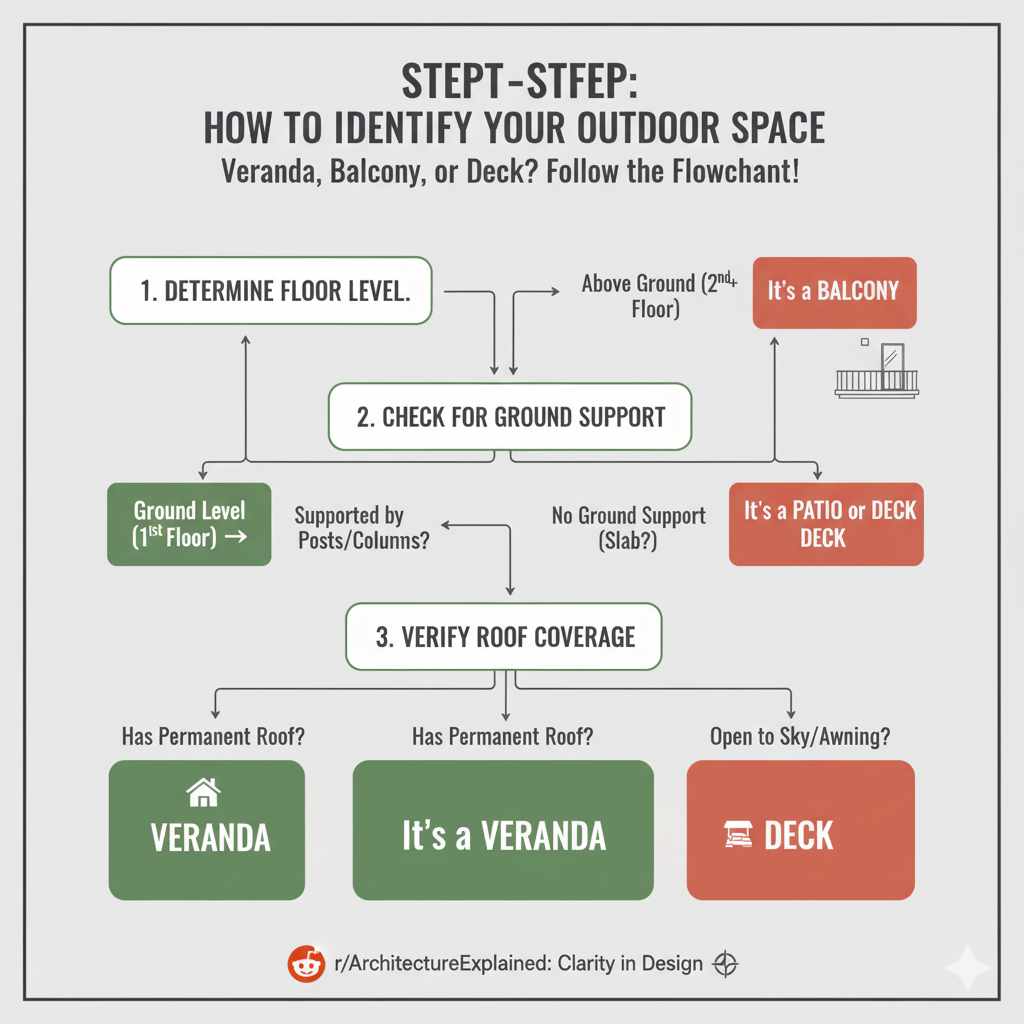
Step-by-Step: How to Identify Your Outdoor Space
If you are standing outside right now, looking at your space, follow these simple steps to correctly name it. This is the easiest way to settle the veranda and balcony difference once and for all.
Step 1: Determine the Floor Level
Is the floor of the area you are looking at:
- On the ground level? Go to Step 2.
- Above the ground level (second floor or higher)? You are almost certainly looking at a Balcony.
Step 2: Check for Ground Support
If you are on the ground level, look at how the structure is held up:
- Is it supported by posts or columns running to the ground/foundation? Go to Step 3.
- Is it simply a slab poured adjacent to the house with no substantial overhead roof support needed? This might be a standard patio or deck, not a formal veranda.
Step 3: Verify the Roof Coverage
If the area is ground-level and supported by posts, check the roof:
- Does it have a solid, permanent roof structure attached to the house, providing full cover? Congratulations, you have a Veranda (or a well-built porch matching the veranda definition).
- Is it open to the sky, or only has a retractable awning? This is technically a ground-level deck, as the lack of a permanent roof disqualifies it from the veranda description used in architecture.
Following these three simple checks removes all the guesswork from the veranda and balcony difference.
SEO Focus: Targeting Key Questions
To ensure you find exactly what you need, let’s address some of the search terms people commonly use when trying to distinguish between these structures.
Balcony vs Deck vs Patio
This is another common point of confusion when using outdoor space terms:
- Patio: A paved outdoor area, usually adjoining a house, laid directly on the ground (no wood structure). Made of stone, brick, or concrete pavers.
- Deck: A raised, flat, unoccupied platform, typically made of wood or composite material, supported by posts, and usually uncovered (unlike a veranda). Decks can be at any level.
- Balcony: Raised, suspended from the building, usually uncovered.
The key takeaway here is that Patios are ground-level slabs, Decks are ground-level or raised wooden structures without mandatory roofing, and Balconies are elevated and suspended.
Can a Veranda be on the Second Floor?
In traditional architectural terms, no. If a covered structure is elevated and projects from an upper floor, it is structurally a balcony, even if the owner calls it a “second-story veranda.” The structural support system defines it as a balcony. If it is built into the second floor with columns supporting the roof from below, it starts leaning toward a loggia or a covered loggia-style balcony. Stick to the rule: suspended means Balcony; ground-supported and roofed means Veranda.
Adding Value: How Each Feature Affects Home Appeal
Both spaces boost curb appeal, but they do so in different ways that appeal to different buyers.
Balconies Appeal To:
Urban buyers, apartment dwellers, or those who love views. Buyers often see a balcony as a premium feature, especially if it offers panoramic views or easy access to fresh air in a high-density area. They signify a desirable transition space without taking up valuable ground footprint.
Verandas Appeal To:
Families, homebodies, and those prioritizing outdoor living. A large, covered veranda suggests space for socializing, outdoor dining, and safety for children or pets (as they are visually connected to the yard). Buyers view a veranda as extended, usable square footage.
To see how regional design choices affect property value, researchers often study market behavior. For example, studies on home valuation in warmer climates sometimes show a high premium placed on functional, shaded outdoor spaces, heavily favoring veranda-style additions over small, exposed balconies.
Conclusion: Mastering the Outdoor Space Vocabulary
You’ve successfully navigated the essential veranda and balcony difference! You now know that the secret lies in looking at two main factors: height and roof support. A balcony is your elevated, often open, platform projecting from an upper story. A veranda is your expansive, ground-level, permanently covered outdoor room supported by posts tethered to the earth.
Armed with this knowledge, you can confidently discuss plans with contractors, write accurate advertisements, or simply enjoy a cup of coffee knowing exactly what kind of outdoor extension you are sitting on. Understanding the details of your home’s structure—whether it’s the foundation of a veranda or the cantilever of a balcony—gives you confidence in maintenance and