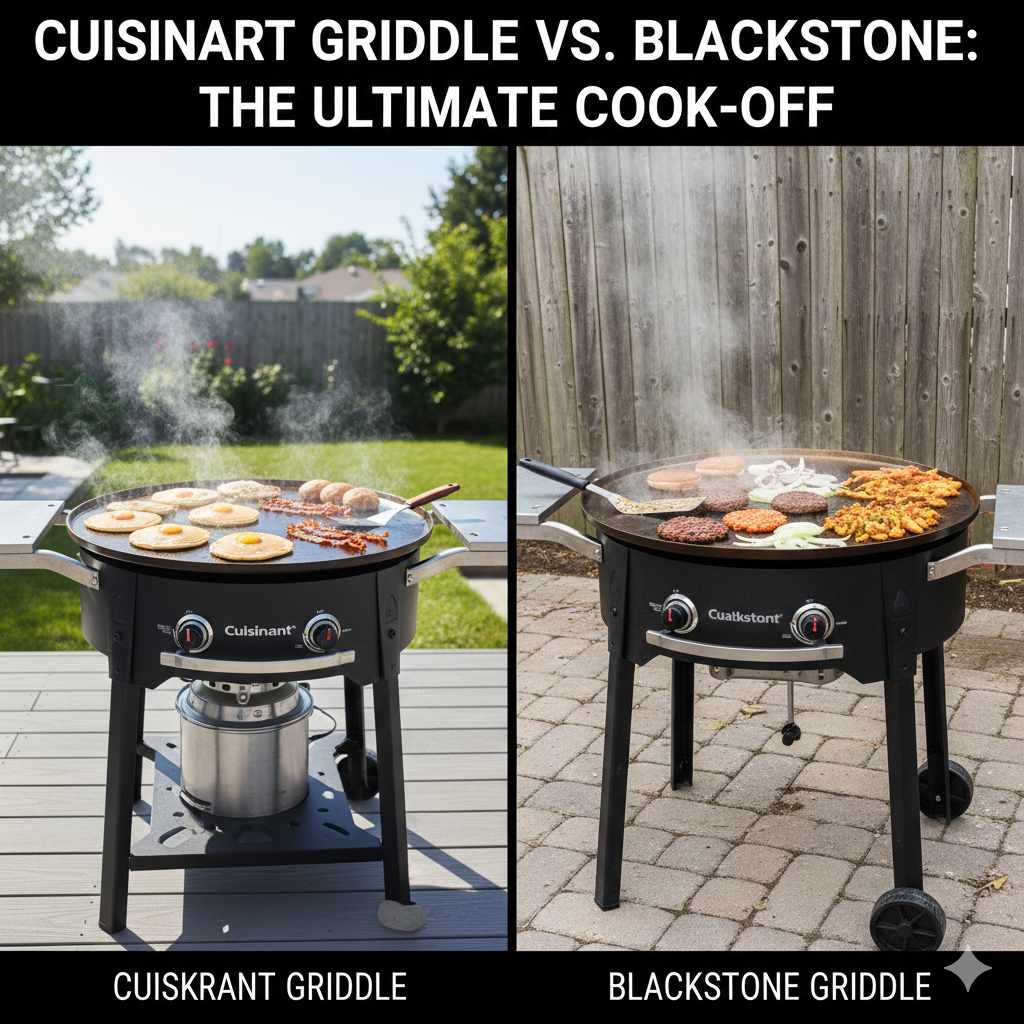
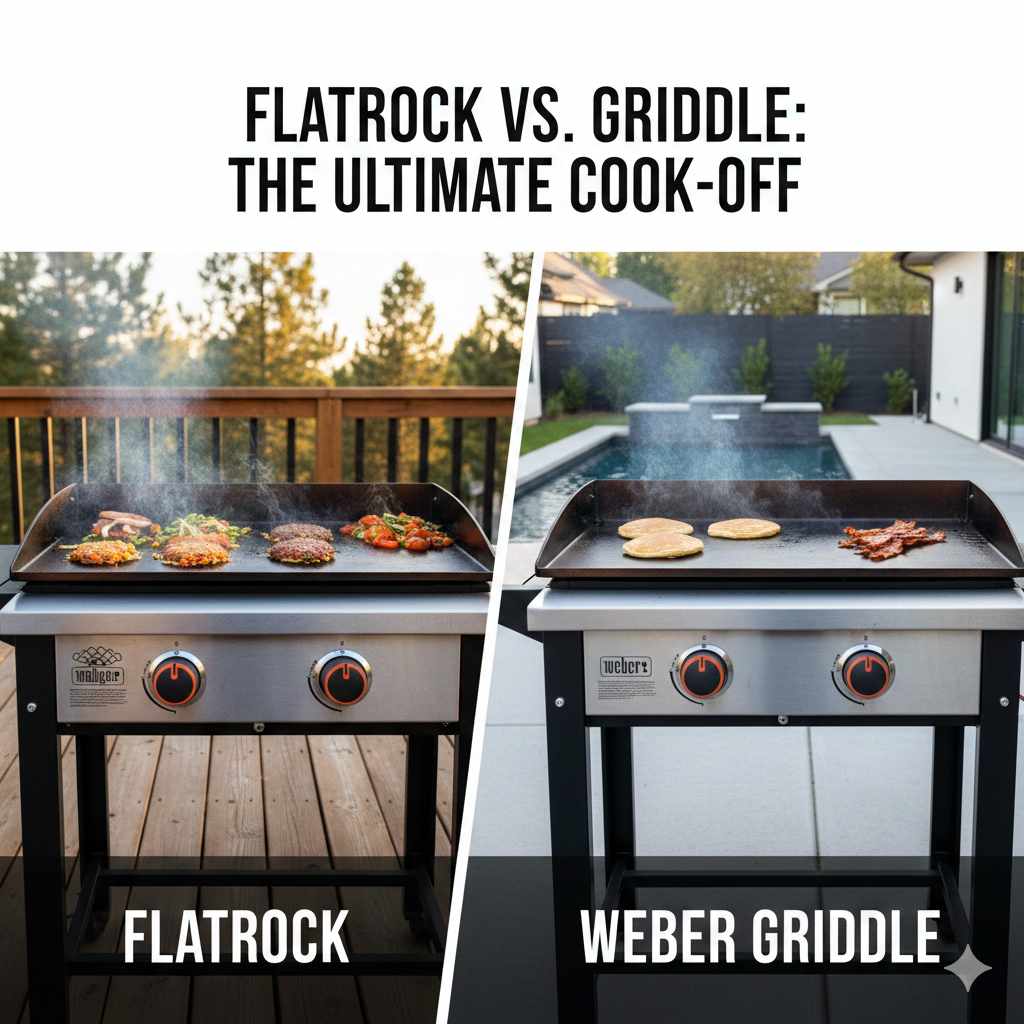
For most people, the Weber Griddle is the best choice due to its excellent build quality, reliable performance, and user-friendly design at a competitive price. The Traeger Flatrock is a premium option for those who want advanced features like superior heat control and innovative grease management, and are willing to pay more for them.
Choosing a new outdoor cooker can feel a lot like picking a new car. You see all these different models, and they all promise the best performance. It can be confusing! You just want something reliable that does the job well, without any headaches. You want to make a smart investment that will last for years of backyard fun.
You’ve probably heard two big names: Traeger and Weber. Both are giants in the outdoor cooking world, and now they both have flat top griddles. Deciding between the Traeger Flatrock vs Weber Griddle is a common puzzle. Don’t worry. We are going to break it down, piece by piece, just like we would with a car engine. We will look at what makes each one tick so you can choose the perfect one for your family.
What is a Flattop Griddle?
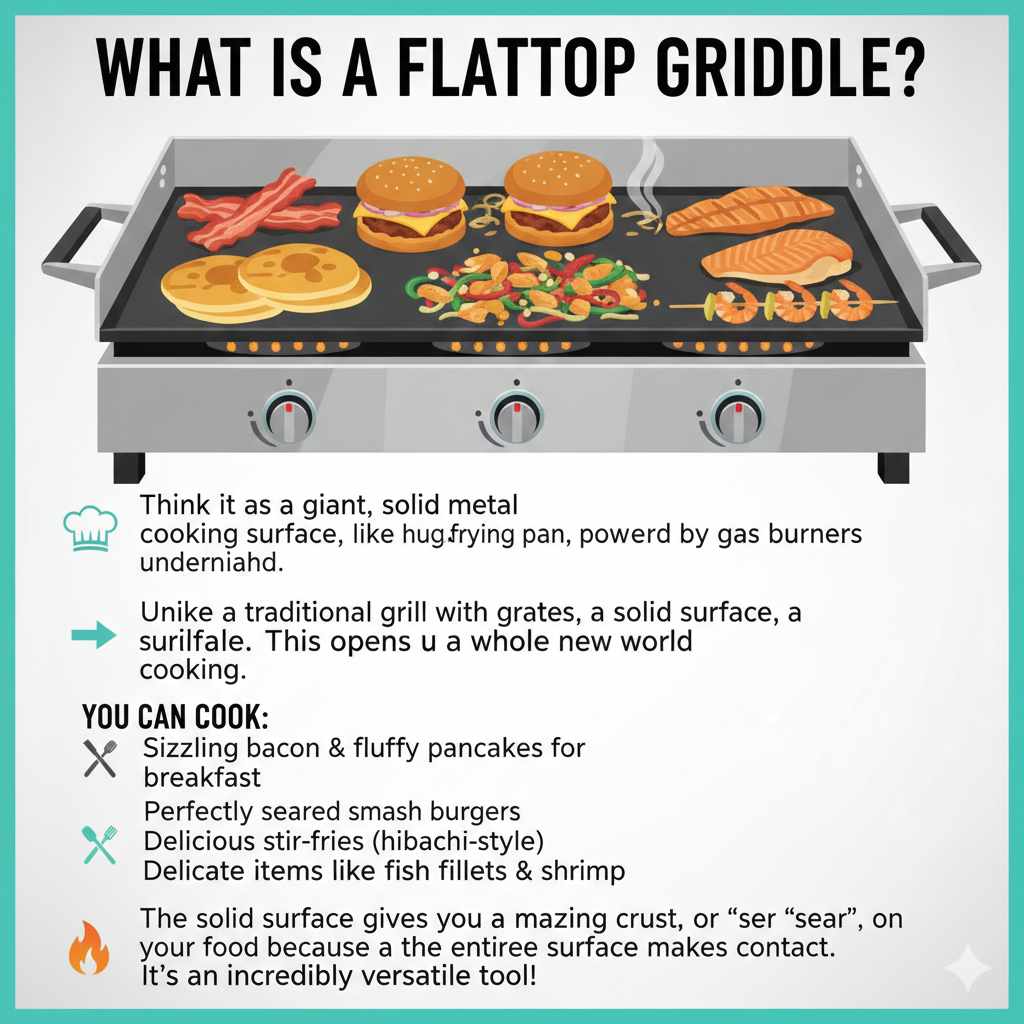
Before we dive into the models, let’s quickly talk about what a flattop griddle is. Think of it as a giant, solid metal cooking surface, like a huge frying pan, powered by gas burners underneath. Unlike a traditional grill with grates, a griddle has a solid surface. This opens up a whole new world of cooking.
You can cook things that would fall right through a normal grill grate:
- Sizzling bacon and fluffy pancakes for breakfast.
- Perfectly seared smash burgers with crispy edges.
- Delicious stir-fries like hibachi-style chicken and vegetables.
- Delicate items like fish fillets and shrimp.
The solid surface gives you an amazing crust, or “sear,” on your food because the entire surface makes contact. It’s an incredibly versatile tool for your backyard.
Meet the Contenders: Traeger Flatrock and Weber Griddle
Both Traeger and Weber have built their reputations on quality and innovation. They are trusted brands, but they approach their griddles in slightly different ways. Let’s pop the hood on each one.
The Traeger Flatrock: Power and Precision
Traeger is famous for its wood pellet grills, and they brought that same focus on technology and premium features to their Flatrock griddle. It’s designed to solve common griddle problems, like uneven heating and messy cleanup. The Flatrock is often seen as the high-tech, feature-packed option. It’s built for the person who wants the latest and greatest in outdoor cooking technology.
The Weber Griddle: Reliability and Performance
Weber is a legendary name in grilling. Their kettles are iconic. When Weber does something, they do it right, focusing on durability and user-friendly design. The Weber Griddle is their answer to the growing popularity of flattop cooking. It’s built like a tank and engineered for consistent, reliable results. It’s the trusty workhorse you know you can count on every time.
Head-to-Head Comparison: Traeger Flatrock vs Weber Griddle
Alright, let’s put these two griddles side-by-side. We’ll compare them across the most important categories so you can see where each one shines.
Cooking Performance & Heat Distribution
This is the most important part. How well do they cook? The secret is in the burner design and the power they produce, measured in BTUs (British Thermal Units). Think of BTUs like the horsepower of your griddle. According to the U.S. Department of Energy, a BTU is a measure of heat energy.
Traeger Flatrock: The Flatrock uses three U-shaped burners. This design is clever because it spreads the flame out over a wider area under the cooktop. The result is incredibly even heat from edge to edge. You get fewer hot spots and cold spots. This means your pancakes will all be the same beautiful golden-brown color, no matter where you place them on the griddle. Traeger calls its heat control system TruZone™, which gives you three distinct temperature zones. You can sear burgers on high heat on one side while gently toasting buns on low heat on the other.
Weber Griddle: The Weber uses four powerful, straight-line burners. These burners get hot—fast. Weber is known for high-heat performance, and this griddle is no exception. It delivers intense searing power, perfect for getting that dark, crispy crust on a steak or smash burger. While very powerful, the heat can be a bit more concentrated over the burners themselves. You might notice some hotter zones, which can actually be a good thing. Experienced cooks use these zones to their advantage, moving food around as needed. It’s powerful and effective, but might take a little more practice to master than the Traeger.
Build Quality & Materials
A griddle is an investment, so you want it to last. The materials and construction are key.
Traeger Flatrock: The Flatrock feels solid and well-engineered. The cooktop is made of thick carbon steel, which is excellent for holding heat and creating a non-stick surface once seasoned. The frame is sturdy, and it includes a feature called FlameLock™ construction, which is designed to protect the flames from wind, keeping your temperatures more stable on breezy days. The side shelves are large and fold down for easier storage.
Weber Griddle: Weber’s reputation for build quality is on full display here. The griddle features a heavy-duty aluminized steel cookbox, and the entire unit feels robust and durable. The cooktop is also thick carbon steel, designed to prevent warping under high heat. Weber’s design is simple and strong. It might not have as many fancy names for its features, but the quality is undeniable. It’s built to withstand the elements and years of heavy use.
Key Features & Innovation
This is where the two griddles really show their different personalities.
Traeger Flatrock: Traeger loaded the Flatrock with smart features.
- P.A.L. Pop-And-Lock™ Accessory Rail: This allows you to customize your setup with things like paper towel holders, tool hooks, and storage bins. It’s a great way to keep your cooking station organized.
- EZ-Clean™ Grease Keg: The grease trap is a large, fully enclosed keg on the side. It’s easy to access and has a huge capacity, so you’re not emptying it constantly.
- Folding Side Shelves: Both side shelves fold down, which makes the griddle more compact for storage. One shelf also contains a hidden storage bin.
- Propane Tank Gauge: A built-in gauge tells you how much fuel you have left, which is incredibly handy.
Weber Griddle: Weber focused on core functionality and ease of use.
- High-Performance Burners: The focus is on raw power and fast pre-heating. These burners are designed for reliability and high output.
- Front-Access Grease Tray: The grease management system features a large-capacity pan that pulls out from the front. It’s simple, effective, and very easy to clean. Many users prefer this design because it’s so straightforward.
- Heavy-Duty Caster Wheels: The Weber is easy to move around your patio or deck thanks to its robust wheels.
- Sturdy Side Tables: The two side tables are fixed, providing a very stable surface for your plates and tools.
Ease of Use & Cleanup
No one wants to spend an hour cleaning up after making dinner. A good design can make all the difference.
Traeger Flatrock: The side-mounted EZ-Clean™ Grease Keg is a great idea. It keeps the grease completely out of the way. However, some users find its location on the side can be a little awkward depending on their patio setup. The P.A.L. rail is fantastic for organization, making the entire cooking process smoother.
Weber Griddle: The front-pull grease tray on the Weber is a huge win for simplicity. After you scrape everything to the front-center drain, the tray just slides out for easy disposal and cleaning. It’s a no-fuss system that just works. Assembly is also known to be very straightforward, with clear instructions that Weber is famous for.
Detailed Spec Showdown
Let’s look at the numbers in a simple chart. This makes it easy to compare the Traeger Flatrock vs Weber Griddle at a glance.
| Feature | Traeger Flatrock | Weber Griddle (36″) |
|---|---|---|
| Cooking Surface Area | 858 sq. inches | 756 sq. inches |
| Burner System | 3 U-shaped burners | 4 straight-line burners |
| Total BTUs | 60,000 BTUs | 60,000 BTUs |
| Heat Zones | 3 distinct zones (TruZone™) | 4 zones (controlled by individual knobs) |
| Cooktop Material | Carbon Steel | Carbon Steel |
| Grease Management | Side-mounted EZ-Clean™ Grease Keg | Front-access grease tray with drip pan |
| Side Shelves | 2 folding shelves | 2 fixed shelves |
| Unique Features | P.A.L. Accessory Rail, FlameLock™, Propane Gauge | High-heat searing power, simple and durable design |
| Estimated Price | $$$ (Premium) | $$ (Mid-to-High) |
Who is the Traeger Flatrock For?
The Traeger Flatrock is for the griddler who loves technology and wants the most even-cooking surface possible. It’s like buying a luxury car with all the bells and whistles. You’re paying for precision engineering and innovative features that make the cooking experience smoother and more controlled.
Pros:
- Extremely even heat distribution with fewer hot spots.
- Innovative features like the P.A.L. rail and propane gauge add convenience.
- Excellent wind protection with its FlameLock™ design.
- Large capacity grease keg is great for big cooks.
Cons:
- Higher price point than most competitors.
- Some might find the side-mounted grease trap less convenient than a front-pull design.
- More complex design means more parts to potentially manage.
You should choose the Flatrock if you want the “best of the best” in terms of features, plan to cook a wide variety of foods that require precise temperature control, and have the budget for a premium piece of equipment.
Who is the Weber Griddle For?
The Weber Griddle is for the person who values reliability, raw power, and proven design. It’s the dependable truck that you know will start up every time and get the job done without any fuss. It’s less about flashy features and more about solid, powerful performance.
Pros:
- Exceptional build quality and durability Weber is known for.
- Incredibly simple and effective front-access grease management.
- Powerful burners deliver intense heat for amazing searing.
- Generally more affordable than the Traeger Flatrock.
Cons:
- Heat can be less even than the Flatrock’s U-burner design, requiring a bit more food management.
- Fewer innovative “quality of life” features.
- Fixed side shelves make its storage footprint larger.
You should choose the Weber Griddle if you prioritize build quality and straightforward performance, primarily cook foods like burgers, steaks, and bacon that benefit from high heat, and want a trusted brand at a more accessible price point.
The Final Verdict: Which One Should You Buy?
So, after looking at everything, which griddle parks in your driveway? There is no single “best” for everyone, but there is a best choice for you.
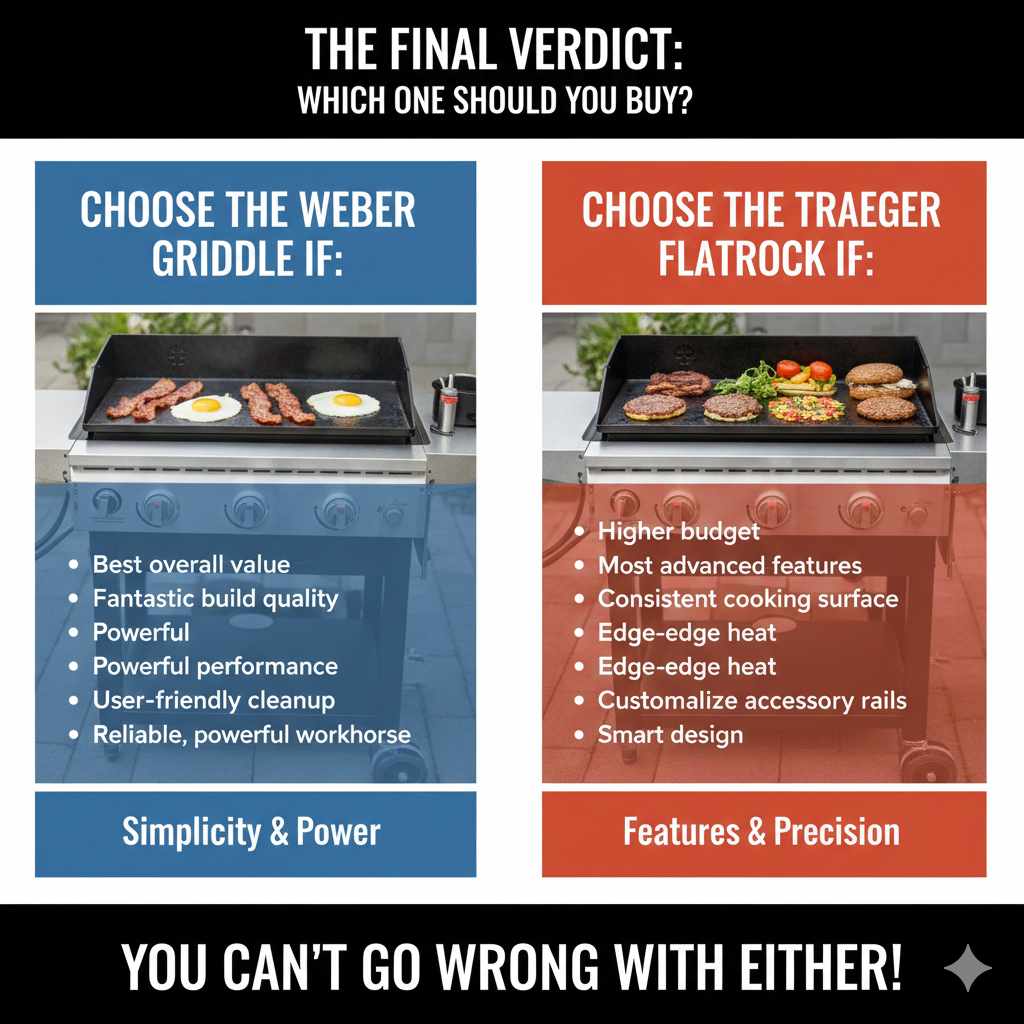
Choose the Weber Griddle if: You are looking for the best overall value. It offers fantastic build quality, powerful performance, and an incredibly user-friendly cleanup system. For most people getting into outdoor griddling, the Weber provides everything you need and more. It is a reliable, powerful machine from a brand you can trust for a lifetime.
Choose the Traeger Flatrock if: Your budget is higher and you want the most advanced features and the most consistent cooking surface. If the idea of perfect edge-to-edge heat, customizable accessory rails, and smart design touches excites you, the Flatrock is an amazing piece of equipment that you will love using.
Ultimately, the “Traeger Flatrock vs Weber Griddle” debate comes down to this: Both are excellent choices from top-tier brands. The Weber is the dependable, powerful workhorse, while the Traeger is the high-tech, precision instrument. You can’t go wrong with either, but by focusing on what you value most—simplicity and power vs. features and precision—you’ll find the perfect fit for your backyard.
Frequently Asked Questions (FAQ)
How do you season a new griddle?
Seasoning creates a natural, non-stick surface. First, wash the new cooktop with soap and water, and dry it completely. Then, turn the griddle on medium-high heat. Apply a very thin layer of a high-smoke-point oil (like canola or avocado oil) over the entire surface with a paper towel. Let it heat until the oil stops smoking, about 15-20 minutes. Repeat this process 3-5 times until the surface is dark and shiny.
Can you use cast iron pans on a griddle?
Yes, you can! Placing a cast iron pot or pan on the griddle is a great way to cook sauces, beans, or even deep-fry while you cook other food. The griddle acts as a giant, even heat source for your pan.
What’s the best oil to use for griddle cooking?
The best oils have a high smoke point, meaning they won’t burn and create bad flavors at high temperatures. Great choices include avocado oil, canola oil, grapeseed oil, or clarified butter (ghee). Avoid olive oil for high-heat searing, as it has a lower smoke point.
How do I clean my griddle after cooking?
Cleaning is easy. While the griddle is still warm, use a flat-edged metal scraper to push all the leftover food bits and grease into the grease trap. For stubborn spots, you can squirt some water on the warm surface; the steam will help lift them off. Finally, wipe down the surface with a paper towel and apply a very thin coat of cooking oil to protect it from rust.
Is a griddle better than a grill?
Neither is “better”—they are just different tools for different jobs. A grill with grates is best for getting a smoky flavor and those classic char marks. A griddle is better for cooking small foods that would fall through the grates, getting an all-over crust (like on smash burgers), and cooking with liquids (like pancakes).
How do I make sure my food is cooked safely?
The best way to ensure food safety is to use a meat thermometer. A griddle gets very hot, but the internal temperature of your food is what matters. The USDA provides a chart of safe minimum internal temperatures for all types of meat, which is a great resource to have handy.
Time to Start Cooking
Making a big purchase like a new griddle can feel overwhelming, but it doesn’t have to be. By breaking down the Traeger Flatrock and the Weber Griddle into their core parts—performance, quality, features, and ease of use—the choice becomes much clearer. You’re not just buying a piece of metal; you’re investing in countless future meals and memories with family and friends.
Whether you choose the high-tech precision of the Traeger or the rock-solid reliability of the Weber, you are getting a fantastic tool that will open up a new dimension of outdoor cooking. Now you have the knowledge to make a confident decision. So go ahead, pick the one that feels right for you, and get ready to fire it up. Happy griddling!