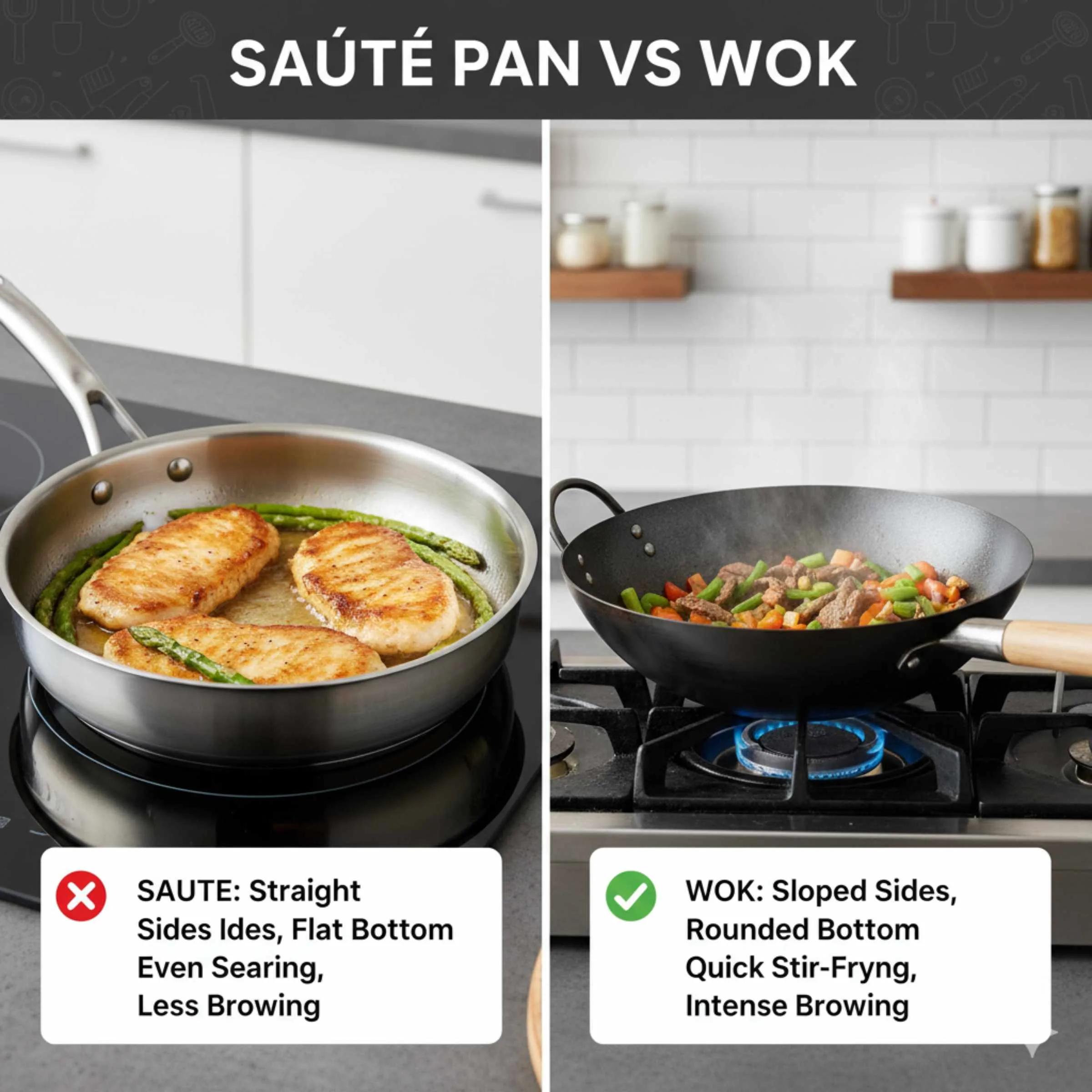
Quick Summary: The essential difference between a saute pan vs wok is shape: the saute pan has flat bottoms perfect for searing, while the wok has high, sloped sides, ideal for tossing food quickly over high heat. Choosing the right one depends entirely on whether you need direct, even heating (saute) or high-heat tossing and movement (wok).
Welcome! Are you standing in the kitchen aisle, staring at two very different pans, wondering which one deserves a spot in your cupboard? You’re not alone. Choosing the right cooking vessel can feel confusing, especially when you see a flat-bottomed saute pan next to a deep, round-bottomed wok. Both are kitchen workhorses, but they do very different jobs.
Don’t worry about needing a culinary degree to figure this out. Think of it like choosing the right tool for a repair: you wouldn’t use a screwdriver when you need a wrench. We are going to break down the saute pan and the wok using simple, practical terms. By the end of this guide, you’ll know exactly which pan to grab for that perfect sear or that speedy stir-fry. Let’s demystify these essential cooking showdown rivals!
Saute Pan Vs Wok: Understanding the Basics
Before we pit them against each other, let’s get familiar with what makes each pan unique. Their shape dictates everything about how they handle heat and how you use them. They are designed for completely different cooking goals.
The Saute Pan: The King of Searing and Flat Surfaces
The name “saute pan” comes from the French verb sauter, which means “to jump.” This refers to the cooking technique where small pieces of food are tossed quickly in a little fat over medium-high heat. But modern saute pans are much more versatile than just quick jumps!
Key Features of a Saute Pan
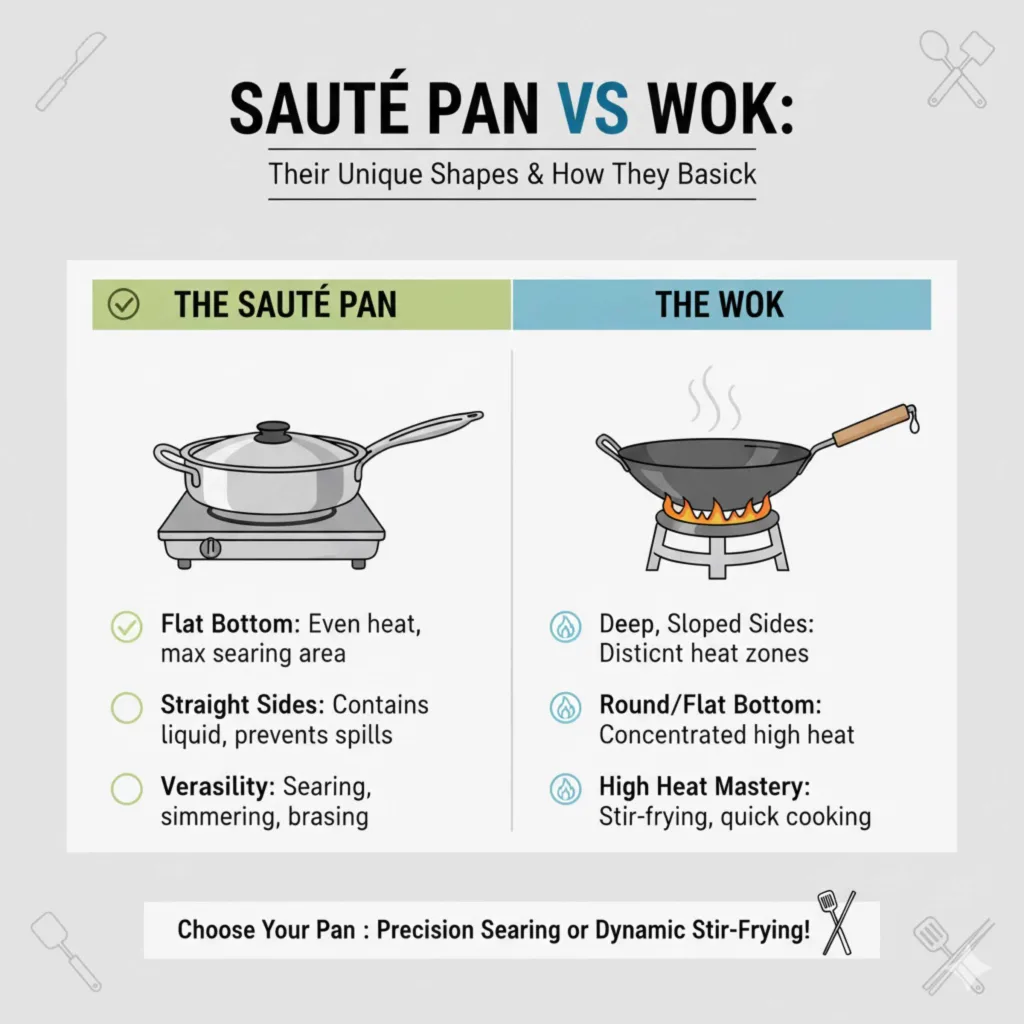
- Flat Bottom: This is the most defining feature. The perfectly flat base ensures even heat distribution right where your food sits, which is critical for consistent cooking.
- Straight, Vertical Sides: Unlike sloped pans, the sides stand straight up. This design maximizes the cooking surface area on the bottom and helps liquids stay put.
- Large Surface Area: They generally have a wider mouth relative to their height, giving you lots of room to work without overcrowding the food.
- Lid Compatibility: Most come with a tight-fitting lid, making them excellent for braising or simmering after searing.
Think of the saute pan as your reliable, steady partner. It’s great when you need the food to make direct, consistent contact with the heat source. Need to brown a steak? Saute pan wins. Want to make sure a sauce reduces evenly? The saute pan is your go-to.
The Wok: The Master of High Heat and Movement
The wok is central to East Asian cooking, particularly stir-frying. It is an ancient tool, perfected over centuries for efficient, fast cooking over intense heat. If you’ve ever watched a chef toss vegetables high in the air, they were likely using a wok.
Key Features of a Wok
- Deep, Sloped Sides: This unique shape creates distinct temperature zones. The bottom gets scorching hot, while the upper sides remain cooler.
- Round Bottom (Traditional) or Flat Bottom (Modern): Traditional woks require a wok ring burner for stability. Modern home versions often have a small flat spot on the bottom to sit securely on standard electric or gas stovetops.
- Heat Concentration: Because the surface area is smaller at the bottom, heat stays very concentrated, allowing you to achieve intense “wok hei” (the smoky flavor imparted by high heat).
- Capacity: The high sides mean you can toss large amounts of food without it spilling out.
The wok thrives on constant motion. You push cooked food up the cooler sides while raw food drops to the hot center. It’s designed for speed and managing different temperatures simultaneously. If you are cooking for a crowd quickly, the wok is built for that dynamic movement.
Direct Comparison: Saute Pan Vs Wok Head-to-Head
To make the choice even clearer, let’s put their core features side-by-side. This table highlights where each pan excels based on its physical design.
| Feature | Saute Pan | Wok |
|---|---|---|
| Bottom Shape | Flat and wide | Round or slightly flattened, small base |
| Side Walls | Straight and vertical | High and steeply sloped |
| Best For Stovetop | Even heat distribution on any burner | Requires high, concentrated heat that travels up the sides |
| Heat Management | Consistent, even heat across the entire cooking base | Creates distinct hot zone (bottom) and cooler zones (sides) |
| Primary Use | Searing, pan-frying, shallow braising, pan sauces | Stir-frying, deep-frying, steaming, boiling |
Which Pan Should You Use? Matching the Tool to the Task
The crucial takeaway here is functionality. You wouldn’t try to deep-fry three pounds of chicken in a standard saute pan without splattering oil everywhere, and you definitely shouldn’t try to perfectly sear four scallops in a wok.
When the Saute Pan is Your Best Friend (The Steady Cook)
Use your saute pan when the main technique requires consistent, direct contact with the heat source. These tasks benefit from the flat, wide base:
- Searing Proteins: When you want a deep, even crust on steaks, chicken breasts, or pork chops. The flat bottom guarantees the whole surface area browns beautifully.
- Making Pan Sauces: After searing, you deglaze the bottom (scrape up the browned bits). The high, straight sides prevent liquids from evaporating too quickly or spilling over when you stir vigorously.
- Braising and Shallow Frying: Because they often come with lids and hold liquid well, they are perfect for simmering smaller cuts of meat until tender.
- Cooking Delicate Items: Things like delicate fish fillets or pancakes that need a steady, non-tilting surface benefit from the saute pan’s stability.
A good surface material for searing is critical for confidence. Many professional chefs recommend stainless steel for a superior sear, though cast iron retains heat wonderfully. If you are worried about sticking, check out guides on maintaining non-stick cookware properly, like those offered by consumer safety organizations which often share best practices for temperature control.
When the Wok Shines (The High-Energy Cook)
The wok is all about speed, volume, and managing multiple ingredients at different stages of cooking right in the same pan. It’s about controlled chaos!
- Stir-Frying: This is the wok’s main event. You toss ingredients constantly, moving them from the intense heat at the bottom (to sear) up to the cooler slopes (to keep warm while other ingredients cook).
- Deep Frying: The deep, narrow base requires less oil for deep frying than a wide frying pan would, saving oil and distributing the heat more evenly around the submerged food.
- Large Batch Cooking: The sheer volume the high sides allow means you can cook big batches without overcrowding, which is vital for stir-fries (overcrowding steams the food instead of frying it).
- Steaming: With a rack and a lid, the wok transforms into an excellent steamer for dumplings or vegetables, utilizing its depth effectively.
If you are learning how to cook Asian cuisine, understanding the wok is non-negotiable. A key part of wok usage is the high heat. Always ensure your cooking surface (especially if you use an electric coil range) can deliver enough power to sustain that heat, even when cold ingredients are added. If you’re buying a new range, look for models that offer powerful center burners designed for high-BTU output.
Material Matters: Construction Comparison
Just like choosing the right wrench set requires different metals for different jobs, the material of your pan dramatically affects its performance in the saute pan vs wok debate.
Saute Pan Materials
Saute pans are usually built for durability and even heating across a flat plane:
- Stainless Steel: Excellent durability and oven-safe. It heats well, especially when clad (layered with aluminum or copper core), leading to very even cooking across the flat base.
- Non-Stick: Great for low-fat cooking and easy cleanup, but typically less suited for the extremely high searing temperatures often used in sauteing. Usually not recommended for high oven use.
- Cast Iron: Offers unmatched heat retention, fantastic for heavy searing, but the weight and slower heating time mean it doesn’t ‘jump’ food as quickly as stainless steel.
Wok Materials
Woks are often designed to heat up incredibly fast and respond quickly to temperature changes:
- Carbon Steel (The Traditional Choice): This is the gold standard for woks. It’s lightweight, heats up incredibly fast, and responds immediately when you lower or raise the heat. It develops a natural non-stick seasoning over time, which works perfectly with the stirring motion.
- Cast Iron: Heavy cast iron woks exist, usually with a flat bottom for modern stoves. They retain heat beautifully, which is great for deep-frying, but they are slow to heat up initially.
- Stainless Steel or Non-Stick: Less common for true stir-frying. Stainless steel tends to keep food in one temperature zone and does not allow for the necessary tossing motion as easily as seasoned steel.
If you are considering a carbon steel wok—which I highly recommend for authentic stir-frying—it requires a simple seasoning process much like cast iron. You essentially burn off the protective oil coating and replace it with a slick layer of polymerised fat. It’s easier than it sounds!
Cookware Chemistry: How Heat Moves Between the Pans
This is where the physics of cooking comes into play, and it’s the simplest way to understand the saute pan vs wok battle.
The Saute Pan: Conduction Dominance
In a saute pan, heat transfer is almost entirely via conduction—direct contact between the food and the hot metal surface. Because the bottom is flat, the heat is spread evenly. This is ideal when you want to create a Maillard reaction (browning) across an entire surface, like on a chicken cutlet.
The Wok: Conduction Meets Convection
The wok uses conduction at the bottom but heavily relies on convection due to its shape. When you toss food, the ingredients briefly touch the extremely hot metal (conduction), then they are thrown up into the air surrounding the pan walls where the hot air circulates (convection) before falling back down.
This convection cycle is what allows you to cook many different items quickly without any one piece getting soggy or burnt for too long. The high heat of the bottom sears, while the circulating air cooks through gently.
Practical Applications: Recipes That Demand One Over the Other
Let’s look at specific tasks where choosing the wrong pan will noticeably affect your final dish.
Recipes Best Suited for the Saute Pan
- Pan-Seared Scallops: Scallops need a completely dry, perfectly even, hot surface to develop that beautiful golden crust without being steamed. A wok’s sloped sides would prevent full contact, leading to uneven browning.
- Risotto: This requires constant, slow stirring while gradually adding liquid. The high, steady sides of the saute pan keep the rice and liquid contained while the flat bottom provides even heat for the slow cooking process.
- Making a Pan Gravy: Sauté aromatics, sear meat, deglaze, and simmer smoothly, all within the same contained, flat-bottomed vessel.
Recipes Best Suited for the Wok
- Classic Beef and Broccoli Stir-Fry: This needs extreme high heat and fast movement. The wok allows you to sear the beef quickly, push it aside, quickly sear the broccoli, and then toss everything together before any component overcooks.
- Deep-Frying Homemade Doughnuts: The necessary depth and smaller surface area of the wok conserve oil while ensuring the oil temperature doesn’t drop dramatically when you add the cold dough pieces.
- Noodle Dishes (Chow Mein): The ability to toss large volumes of noodles and vegetables without them falling onto the burner is essential for achieving that characteristic smoky flavor known as wok hei.
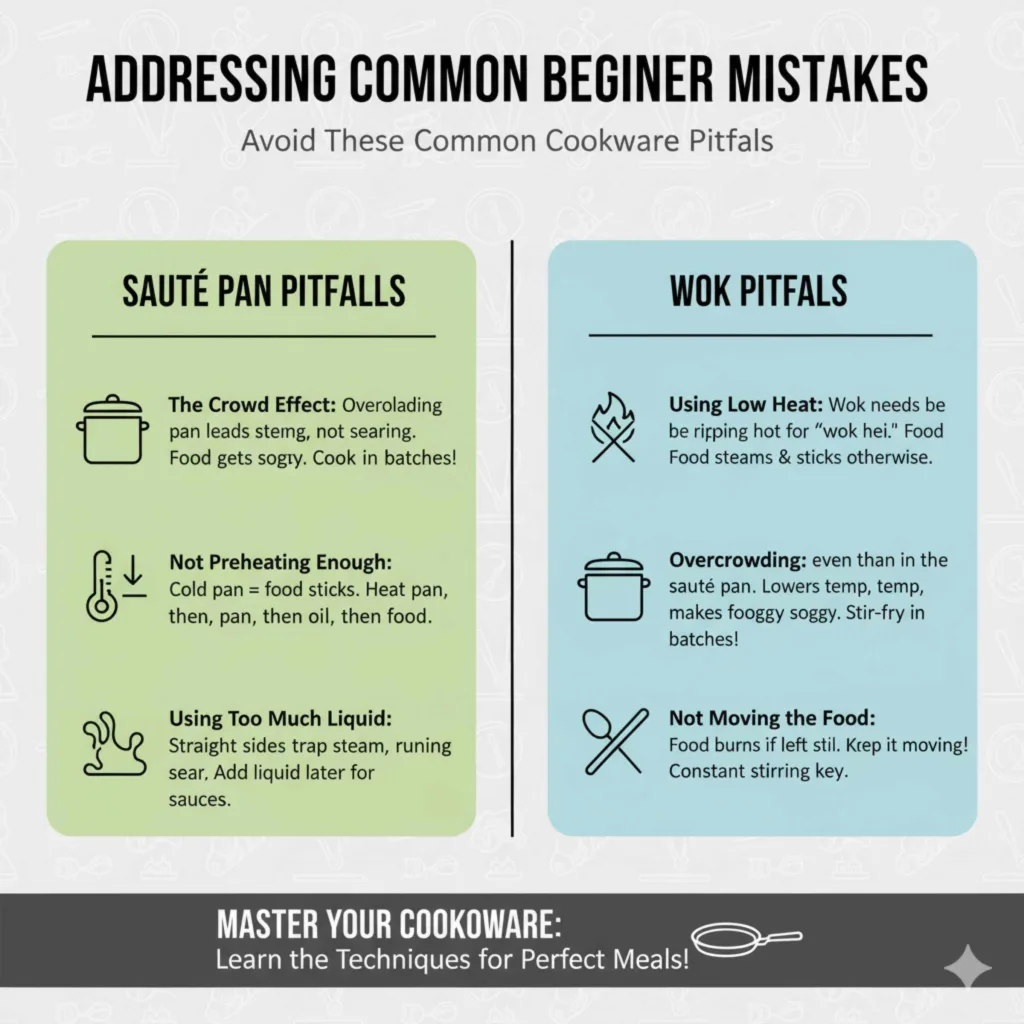
Addressing Common Beginner Mistakes
Whether you buy the saute pan or the wok first, beginners often run into the same few hurdles. Knowing these upfront saves a lot of frustration.
Saute Pan Pitfalls
- The Crowd Effect: Putting too much food in a saute pan. When you overload the flat bottom, the temperature drops instantly, the food releases moisture, and you end up stewing/steaming your food instead of searing it. You must work in batches!
- Not Preheating Enough: A saute pan, especially stainless steel, needs to be hot before you add the fat, and the fat needs to be hot before you add the food. This ensures a proper sear and prevents sticking.
- Using Too Much Liquid Early: Straight sides are great for holding liquid, but if you add too much to sear, you ruin the process.
Wok Pitfalls
- Using Low Heat: A wok is wasted on low heat. If you don’t get it ripping hot, the surface gets grey looking, and your food will steam and stick, especially if you have a traditional rounded bottom resting on an electric stove.
- Overcrowding: This is even worse in a wok than a saute pan. If you dump all your ingredients in at once, the temperature plummets, and you are back to steaming soggy vegetables instead of crisp ones.
- Not Moving the Food: If you let ingredients sit too long in the bottom of the wok, they will burn. The technique requires consistent, energetic movement.
Frequently Asked Questions for Beginner Cooks
Q1: Can I use a wok on a glass-top electric stove?
A: Yes, but it’s not ideal. Traditional, round-bottomed woks won’t sit flat and will heat poorly. You need a flat-bottomed wok designed for electric stoves. Even then, these stoves often struggle to provide the intense, concentrated heat a wok truly needs for proper stir-frying.
Q2: Which pan is better for cooking eggs?
A: The saute pan, especially if it is non-stick or well-seasoned cast iron. Eggs need gentle, even, low-to-medium heat across a flat surface to cook reliably without burning the bottom while the top remains runny.
Q3: Is the wok good for deep frying?
A: Absolutely. The wok’s deep, narrow shape is perfect. You use far less oil than you would in a wide skillet to reach the necessary depth for frying, and the high sides help contain splatter.
Q4: Can I put both pans in the oven?
A: Generally, yes, but you must check the handles! Stainless steel and cast iron saute pans are usually oven-safe well over 500°F. Woks made of carbon steel are also oven-safe, but non-stick coatings or certain handle materials (like Bakelite plastics) are not rated for high oven temperatures.
Do I Need Both? The Verdict for the Home Cook
This is the million-dollar question! The answer, ideally, is yes, you should have both a good saute pan and a wok if you cook varied cuisines regularly.
However, if you are just starting out and must choose only one to begin with, here is my advice based on your usual cooking:
- Choose the Saute Pan if: You focus mostly on Western cooking, enjoy searing steaks, making pan sauces for chicken or fish, and prefer easier cleanup (especially with a quality non-stick or stainless model).
- Choose the Wok if: You love Asian flavors, regularly cook large batches, prioritize quick vegetable cooking, and are willing to commit to seasoning and using high heat.
Many modern home cooks find that a very large (12-inch or larger) stainless steel skillet with slightly sloped sides can mimic some wok functions, especially if deep-fried or stir-fried items are cooked in small batches. Conversely, a flat-bottomed steel wok can do a decent job of searing, though its high sides can make flipping food tedious.