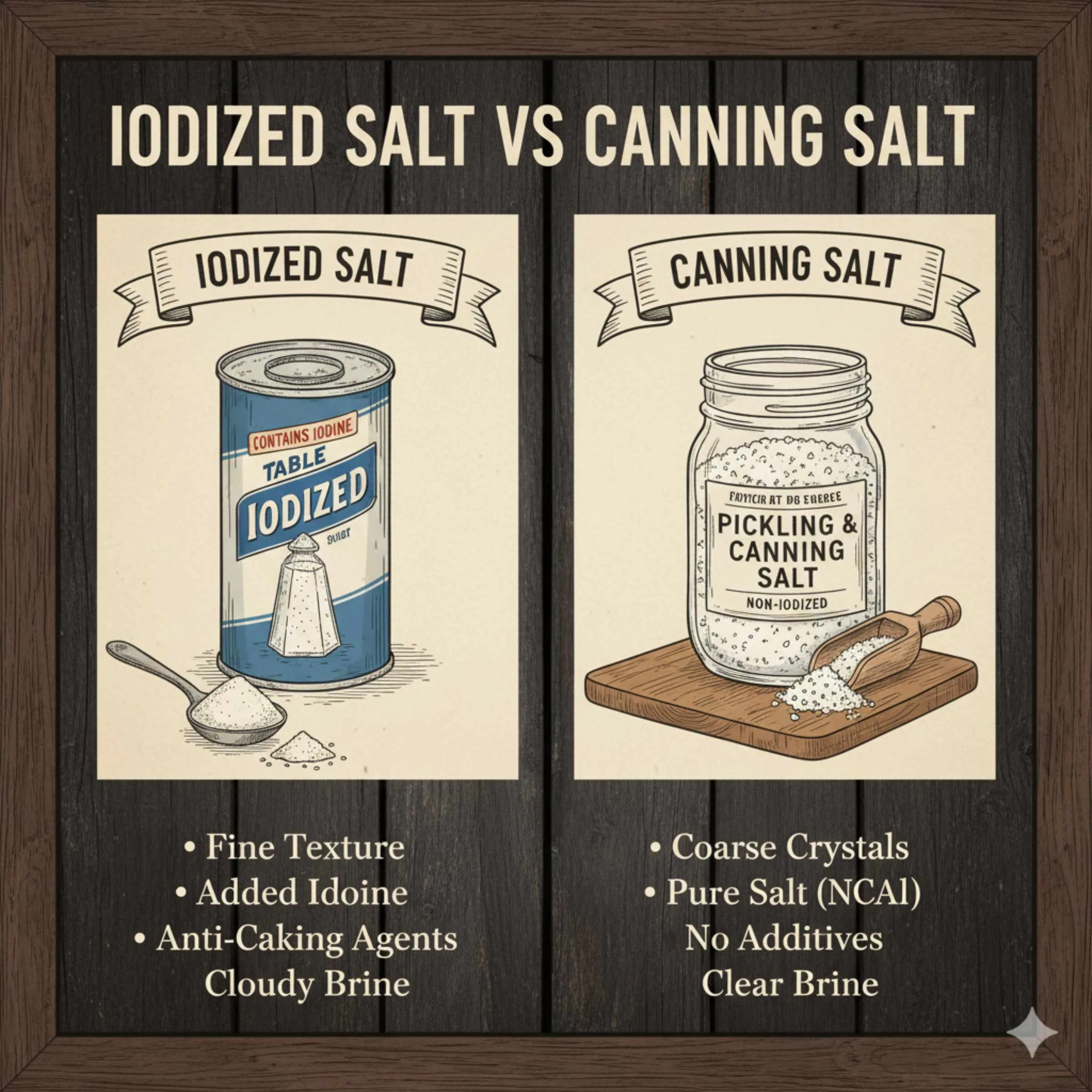
Quick Summary: For home preservation like canning or pickling, always choose canning salt. It is pure, non-caking, and will not cloud your brine or turn food dark, unlike iodized salt, which contains anti-caking agents and iodine that ruin the finished look and consistency.
Welcome, friends! If you’ve ever looked at two bags of white salt sitting side-by-side—one labeled “Iodized” and the other “Canning”—and wondered which one you should toss into your next batch of pickles or bread dough, you are not alone. This choice seems small, but it can dramatically change the results of your cooking or, more importantly, your safe food preservation efforts. Confusing these two can lead to murky brine, weird flavors, or even questionable safety down the road. Don’t worry; we are going to clear up this salty mystery right now. By the end of this guide, you will know exactly which salt is right for the job, every time. Let’s get these two salts head-to-head!
The Big Question: Why Can’t I Just Use Regular Table Salt?
It’s a fair question. Salt is just salt, right? Well, not exactly when you are dealing with preservation methods that need precise chemistry, like pickling cucumbers or making jams. When we talk about iodized salt vs canning salt, the difference isn’t about taste—it’s about additives.
Regular table salt, or common iodized salt, is packed full of extra ingredients that are great for keeping salt flowing freely in your shaker but terrible for canning recipes.
What Makes Iodized Salt Different? The Hidden Additives
Iodized salt has two main things added that canning salt does not:
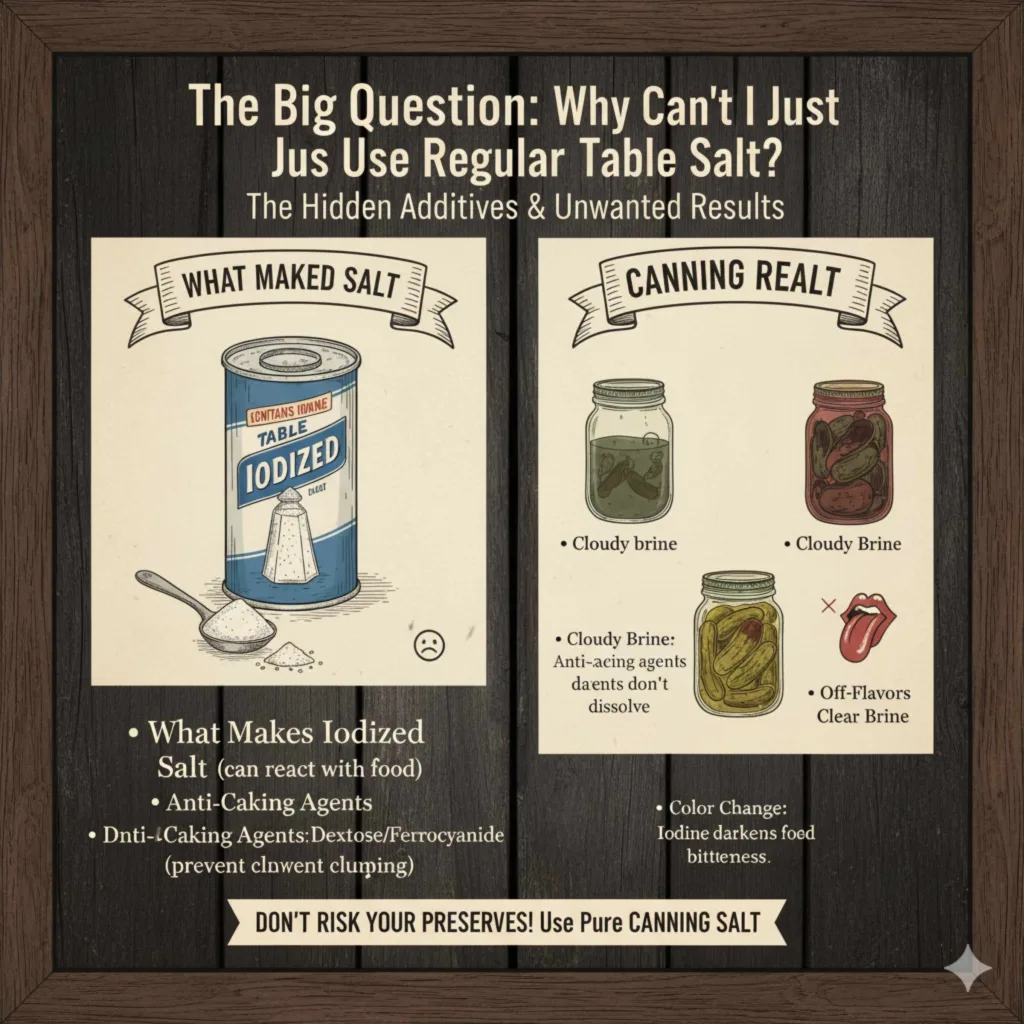
- Iodine: This is added for nutritional support—it helps your thyroid function, which is great for daily eating. However, in a hot canning process, iodine can react chemically with the food.
- Anti-Caking Agents: These are usually ingredients like dextrose or sodium ferrocyanide. They prevent the salt from clumping up in damp conditions.
These additives might seem harmless, but when salt dissolves into a brine or pickling liquid, these extras don’t dissolve cleanly. This leads directly to those dreaded problems:
- Cloudy Brine: The anti-caking agents float around, making your beautiful, clear pickle juice look murky and unappetizing.
- Color Change: The iodine can cause fruits and vegetables to turn an unappealing dark color, especially greens like dill or peppers.
- Off-Flavors: In large quantities, the iodine can sometimes impart a slight metallic or bitter aftertaste.
Canning Salt: The Preservation Powerhouse
Canning salt is often called pickling salt. Its main job is simple: to preserve and enhance flavor without interfering with the chemical structure or appearance of the food being preserved. Think of it as the purest form of salt for delicate jobs.
The Purity Promise of Canning Salt
Canning salt is refined to be virtually 100% pure sodium chloride. Because it lacks the minerals, anti-caking agents, and iodine found in table salt, it dissolves perfectly, yielding that crystal-clear brine every home canner dreams of.
When you look at a bag of canning salt, you should see very few ingredients listed. Its structure must be uniform so that when you are using tested, approved recipes—like those from the National Center for Home Food Preservation (NCHFP)—you know the salt content you are adding is accurate and won’t compromise the safety or texture of your sealed goods.
Head-to-Head: Iodized Salt vs Canning Salt Showdown
To make this crystal clear, let’s put these two contenders in the ring. Think of this comparison as your guide for everything from making homemade sauerkraut to brining meat.
| Feature | Canning Salt | Iodized Salt (Table Salt) |
|---|---|---|
| Purity (Sodium Chloride) | Very High (Usually 99.9%) | Lower (Due to additives) |
| Iodine Content | None | Added for nutrition |
| Anti-Caking Agents | None | Yes (Causes cloudiness) |
| Best For Brining/Pickling | Excellent (Clear brine, firm texture) | Poor (Can discolor food, cloud brine) |
| Best For Everyday Cooking | Good (If you don’t mind missing iodine) | Excellent (Adds necessary iodine) |
When to Use Which Salt: A Simple Decision Tree
To boost your confidence in the kitchen, use this quick guide:
- Are you sealing food for long-term, shelf-stable storage (canning, pressure cooking)? Use Canning Salt. Safety and texture rely on purity.
- Are you making a brine, cure, or pickle that needs to stay crystal clear? Use Canning Salt.
- Are you just seasoning soup, pasta water, or a morning egg? Use Iodized Salt (or Kosher/Sea Salt, if preferred). The additives don’t matter here.
- Are you using salt in your vehicle’s ice melt system or for de-icing walkways? Do NOT use canning salt. You need rock salt/coarse salt for that job!
Mastering Your Brine: The Chemistry Behind Clear Pickles
When you are following a recipe to make refrigerator pickles or fermented foods, the brine is everything. It needs to be potent enough to prevent spoilage but clean visually. This is often where beginners trip up.
The key role of salt in preserving is drawing water out of the food through osmosis. This process inhibits the growth of harmful bacteria. For this to work effectively across the entire batch, every salt particle must dissolve uniformly. If you use iodized salt, the dextrose or other anti-calking agents bind to the water slightly differently, leading to a milky-white suspension that never fully clears.
The Dangers of Non-Canning Salt in Water Bath Canning
While the visual drawback (cloudiness) is annoying, there’s a more serious concern with long-term canning.
In high-heat, pressurized environments like a pressure canner, those chemical additives in table salt might degrade unpredictably. While major canning centers generally advise against it primarily for texture and color, relying on unapproved ingredients in USDA-recommended recipes can introduce variables that compromise shelf-stability. For true long-term safety, stick to the tested ingredients. The USDA emphasizes the importance of following tested recipes exactly for safe home food preservation, and salt type is part of that equation.
What About Kosher Salt and Sea Salt?
This is the next common question! If canning salt is so pure, what role do Kosher salt and sea salt play?
This is a tricky area because the purity and grain size can vary wildly between brands:
- Kosher Salt: Most brands of kosher salt (like Diamond Crystal or Morton’s) are just pure salt without iodine. They are excellent for cooking and seasoning. However, their flake structure is much larger and more irregular than canning salt. If you substitute it cup-for-cup or teaspoon-for-teaspoon in a canning recipe, you might end up using too much or too little salt because the density is different.
- Sea Salt: This is often unrefined and may contain trace minerals. These minerals are great for flavor but, just like iodine, they can react with certain foods during heating and cause discoloration or cloudiness. For reliable canning, avoid unrefined sea salt unless the recipe specifically calls for it.
The Bottom Line: While some cooks successfully use standard Kosher salt in place of canning salt (by measuring by weight instead of volume), canning salt remains the safest, most foolproof choice for beginners because its density and texture are consistent.
Practical Guide: When You Face a Salt Emergency
Sometimes, you’re halfway through a recipe, ready to seal up those peppers, and you realize… you only have iodized salt left! What do you do? Don’t panic. Here is your best backup plan.
Step-by-Step: Substituting Iodized Salt (Use With Caution!)
If you absolutely must use iodized salt in a brine or pickle recipe that calls for canning salt, follow these steps to minimize visual disruption:
- Measure by Weight, Not Volume: Use a reliable digital kitchen scale. Iodized salt is denser than canning salt. If a recipe calls for 1 cup of canning salt, use about 7/8ths of a cup of iodized salt instead, as the anti-caking agents take up volume.
- Skip the Refrigerator Pickles: If you are making quick pickles (refrigerator pickles that you eat within a few weeks), the cloudiness is annoying but not dangerous. Proceed, knowing the results might look murky.
- Avoid Long-Term Boiling/Processing: If you are pressure or water bath canning, reduce your processing time to the absolute minimum required by the recipe, as excessive heat encourages iodine reactions.
- Rinse Produce Thoroughly: Ensure your vegetables are spotless before brining to remove any external debris that could cloud the solution.
If you are preserving meat (curing bacon or corned beef), the risk of discoloration is often higher, and the addition of iodine can interfere with the curing agents. For curing, it is best to run to the store for proper curing salt or canning salt.
Why It Matters for Your Budget and Confidence
I know what you might be thinking: “Why should I buy a whole new container of salt just for canning?”
Consider this: A large container of canning salt is very inexpensive, often costing only a few dollars. That small investment protects the time, effort, and expensive ingredients (like fresh cucumbers or beef) you’ve already put into the jar. It’s a cheap insurance policy against a ruined batch.
As a home DIYer, mastering these basic material differences builds huge confidence. Knowing you are using precise, approved ingredients means you can trust your shelf-stable food items for months or years. You aren’t just guessing; you are following a proven process, just like a trained technician follows safety specs!
Quick Reference: Storing Your Salt Properly
No matter which salt you choose, proper storage ensures it lasts and stays usable. Salt doesn’t truly expire, but it can absorb moisture and clump, making it hard to measure correctly.
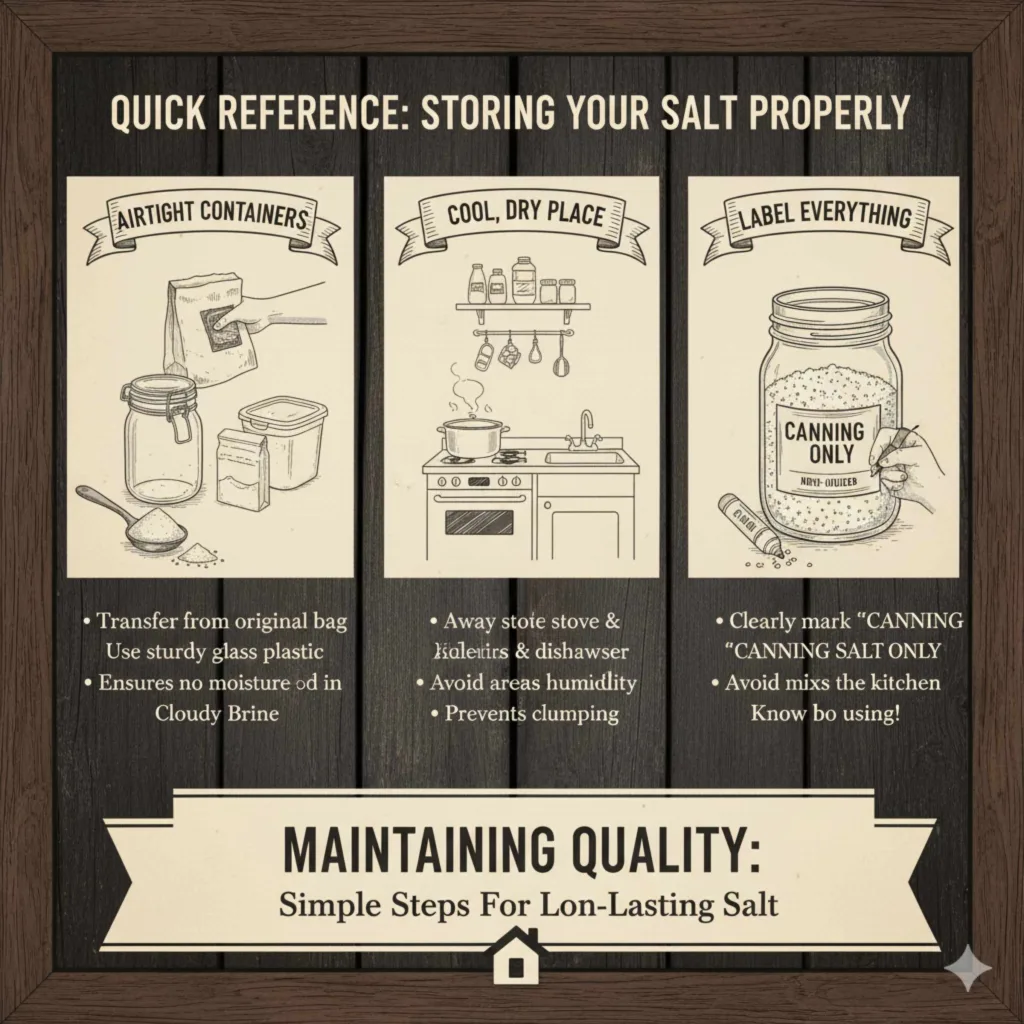
- Airtight Containers: Always transfer salt from the original bag into a sturdy, airtight plastic or glass container once opened.
- Cool, Dry Place: Store away from the stove, dishwasher, or any area with high humidity, like near the sink.
- Label Everything: If you buy a large container of canning salt, clearly label it “CANNING SALT ONLY” so no one accidentally uses it to season dinner later.
Frequently Asked Questions (FAQ)
Q1: Can I use canning salt for everyday table use?
A: Yes, absolutely! Canning salt is just pure salt. The only thing you miss out on for daily seasoning is the necessary iodine supplement for thyroid health.
Q2: If I use iodized salt for canning, will the food be unsafe to eat later?
A: In most cases, using iodized salt will not make the food immediately dangerous, provided the jar seals correctly. However, the texture, color, and clarity of the food and brine will likely be negatively affected, which is why experts advise against it.
Q3: Is canning salt the same as pickling salt?
A: For practical purposes, yes. They are often used interchangeably. Both are pure sodium chloride without additives meant for preservation.
Q4: Does the anti-caking agent in table salt affect pressure canning safety?
A: The primary concern documented by food safety experts like the NCHFP is discoloration and cloudiness, not usually direct failure of the seal. However, because you are introducing unverified chemicals into a high-heat canning environment, it is best avoided for safety assurance.
Q5: How do I know if my Kosher salt is safe for canning?
A: Check the ingredients list. If it only lists “Salt,” it is generally considered safe for canning purposes, provided you measure very carefully by weight to account for the different crystal structure compared to fine canning salt.
Q6: If my pickle brine is cloudy, what should I do?
A: If the brine is cloudy from using table salt, you cannot fix it once mixed. If you suspect spoilage (off-smells, mold), discard the contents immediately. If it smells fine but just looks cloudy, it is likely safe for short-term refrigerator use, but you should not attempt to process it for shelf stability.
Conclusion: Making the Right Salt Choice with Confidence
Dealing with ingredients can feel overwhelming when you are starting out, but we’ve broken down the essential difference between iodized salt vs canning salt easily. Remember this simple rule to keep your kitchen confidence high:
Use pure, additive-free Canning Salt for any process—brining, pickling, or fermenting—where the salt mixture needs to remain clear and stable over time.
Use regular Iodized Salt for seasoning your dinner plate.
By swapping out that one ingredient, you ensure your hard work results in beautifully clear, perfectly preserved food that tastes exactly as it should. This small switch is a huge step toward mastering home preservation safely and effectively. Happy canning!