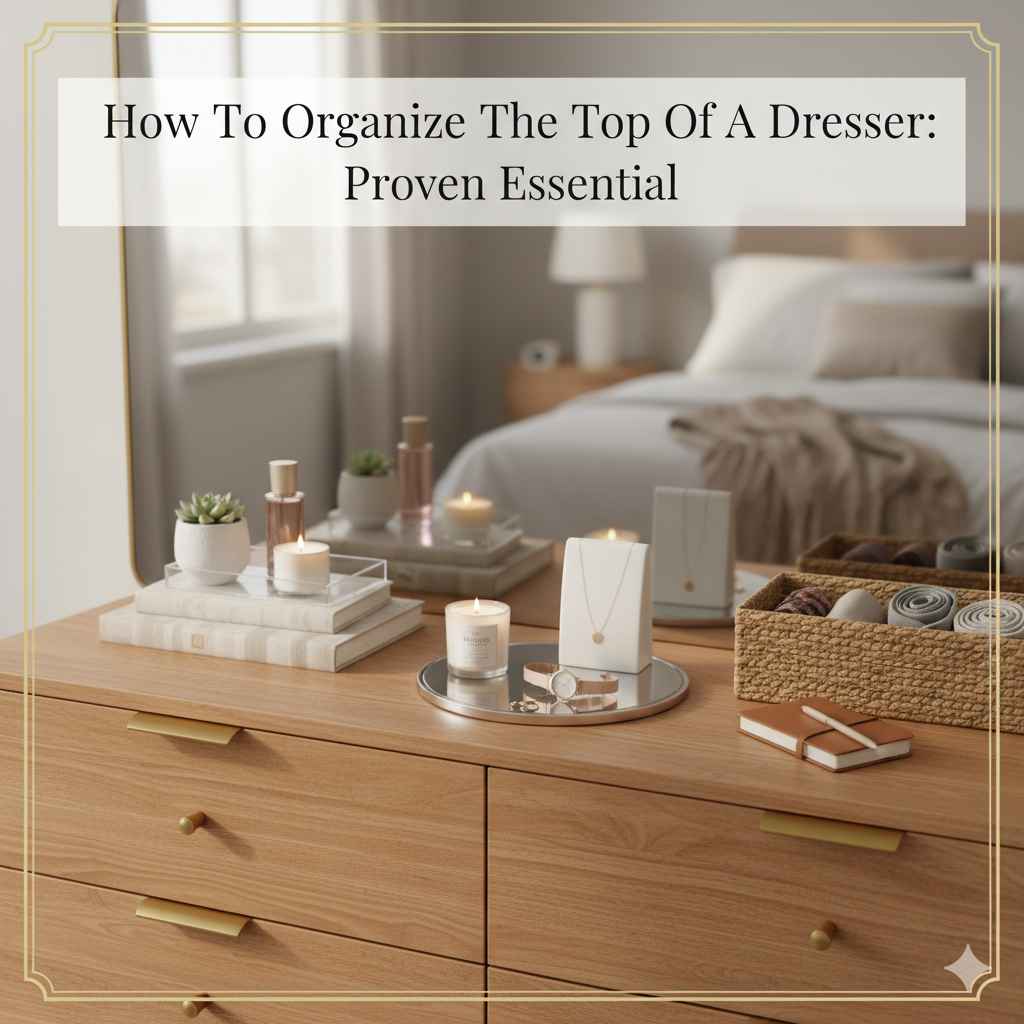
To organize the top of a dresser effectively, start by clearing everything off. Then, categorize items into three zones—decorative, functional, and storage. Use trays or drawer dividers for small items, limit decorative pieces to three or five, and ensure everything has a designated spot. This simple system keeps your surface tidy and accessible.
Is the top of your dresser looking more like a disaster zone than a stylish focal point? You are not alone! That flat surface seems to instantly collect everything: stray jewelry, charging cables, mail, and those decorative items you bought but never quite placed right. It happens fast, and suddenly, getting ready in the morning feels cluttered. Don’t worry, getting that space looking sharp and functional is easier than you think. We are going to break down exactly how to organize the top of a dresser into a system that sticks. By the end of this guide, you will have a clean, intentional look that makes your bedroom feel instantly calmer. Ready to reclaim that space? Let’s dive in!
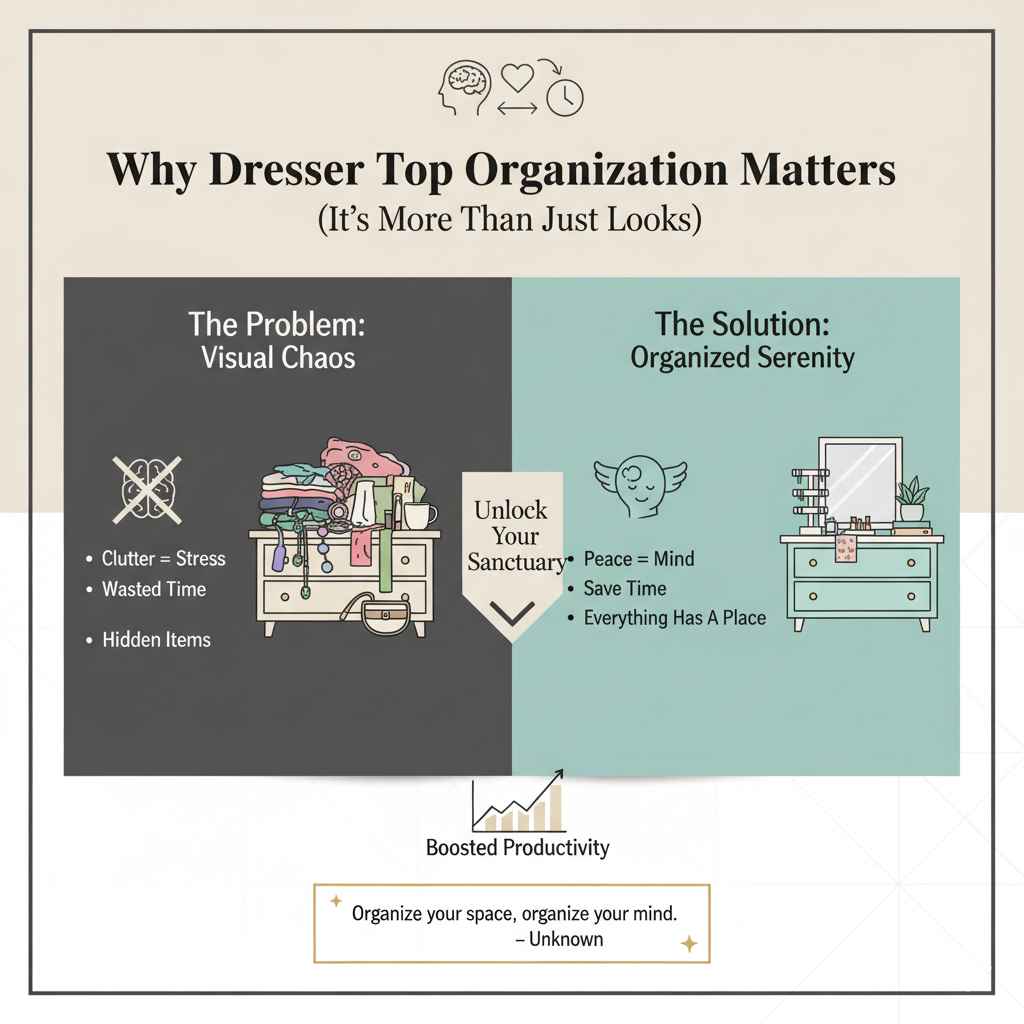
Why Dresser Top Organization Matters (It’s More Than Just Looks)
The top of your dresser is often the first surface you interact with when you wake up and the last one you see before bed. Think of it as prime real estate in your bedroom. If it’s messy, it creates visual noise that can stress you out, even if you don’t realize it.
Organizing this space isn’t just about making things look pretty for company. It’s about efficiency and peace of mind.
When everything has a place, you save precious minutes hunting for things like your keys, daily moisturizer, or reading glasses. Good organization reduces clutter, which studies show can lower stress levels. We want your bedroom to be a sanctuary, not another source of background chaos. This guide will focus on creating systems that are easy to maintain, even on busy mornings.
Step 1: The Essential Clear-Out – Starting from Scratch
The absolute first step in how to organize the top of a dresser is removing everything. You can’t organize clutter; you can only rearrange it. This step is crucial for resetting your space.
Tools You Will Need (Keep It Simple!)
You don’t need fancy tools for this, just a few basics to help you sort:
- A laundry basket or empty box (for sorting).
- Microfiber cloth and surface cleaner.
- Labels or painter’s tape (for temporary labeling during sorting).
The Purge Process (The Three-Box Method)
- Remove Everything: Take every single item off the dresser top. Yes, everything. Place it on your bed or the floor temporarily.
- Wipe Down: Now that the surface is bare, give it a thorough cleaning. A little polish can make the whole room feel fresher. Look underneath any old hardware or decorative items you might have forgotten about!
- Sort Ruthlessly: Go through the pile of items you removed. Use the three-box method:
- Keep & Use Daily: Items you need right here (e.g., watch, daily lotion).
- Relocate: Items that belong elsewhere (e.g., mail for the office, tools, books).
- Toss/Donate: Anything broken, empty, or unused. Be honest here!
Pro Tip: If you struggle to relocate items, consider that your dresser top might be acting as a catch-all for things that need a home inside your drawers or in another room entirely.
Step 2: Defining Zones – Function Over Form
Once the surface is clean, you need a plan. We are going to divide the dresser top into functional zones. This prevents that “everything goes everywhere” look. For most dressers, three zones work best: Decorative, Functional Daily Use, and Small Storage.
Understanding Your Needs
Before buying anything, think about what you use most often:
- Do you put on makeup here? (Needs a Beauty Zone)
- Do you always grab your keys off the dresser? (Needs a Drop Zone)
- Are you displaying treasured photos? (Needs a Decor Zone)
The Three Essential Zones Explained
We will assign specific areas based on how often you need access to the items. This mimics the efficient layout mechanics use in a workshop—tools needed most are closest at hand. According to principles of ergonomic design, frequently accessed items should be within easy reach.
| Zone Name | Purpose | Example Items | Placement Suggestion |
|---|---|---|---|
| Functional Zone (Daily) | Items needed every single day, multiple times a day. | Watch, rings, daily moisturizer, hand cream. | Front and center, within arm’s reach when sitting or standing in front of the dresser. |
| Transitional/Utility Zone | Items that are waiting to be put away or need charging. | Keys, wallet, phone charging stand, reading glasses. | To one side, often near a wall outlet if charging is involved. |
| Decorative Zone (Visual Rest) | Aesthetic items that offer visual appeal but require zero daily interaction. | Art, small plant, framed photos, perfume bottles (if aesthetically pleasing). | The other side or strategically placed to balance the room. |
Step 3: Containment is Key – Choosing the Right Organizers
This is where the magic happens. Loose items look messy, even if they are valuable. Containers bring order to chaos. When choosing organizers, think about height—you want the containers to be relatively low profile so they don’t overwhelm the surface.
Organizers for Small, Functional Items
Small items like earrings, cuff links, hair ties, or medication bottles are the biggest culprits for clutter buildup. They must be contained!
- Trays: Excellent for grouping items like perfume bottles or jewelry you wear often. A simple decorative tray instantly elevates everyday objects. Look for trays with slightly raised edges to keep things from rolling off.
- Small Dish Sets: These are great for the “drop zone.” Use a small ceramic dish specifically for keys and another for coins or rings.
- Drawer Dividers (Used on Top!): Sometimes, shallow drawer dividers (the kind made for socks or office supplies) work perfectly as small, sectioned boxes on the dresser top for separating small categories (e.g., one section for earrings, one for hair clips).
Utilizing Vertical Space (Carefully)
While the goal is a low-clutter surface, you can use vertical elements strategically:
- Jewelry Stands: Use a nice necklace bust or a tiered jewelry stand to keep necklaces from tangling. This organizes vertically instead of horizontally.
- Small Risers or Shelves: If you have a specific decorative element (like a small diffuser or a beautiful candle), placing it on a tiny riser or low-profile mirrored tile can make it look intentional and elevate it slightly above the daily items.
Step 4: Styling the Decorative Zone (The Visual Anchor)
The decorative zone should provide visual balance without competing with the functional items. This is where you add personality. Remember, less is often more. Over-decorating leads right back to clutter.
The Rule of Odd Numbers
Interior designers often stick to the “Rule of Threes” or “Rule of Fives” when grouping decorative objects. Odd numbers tend to look more natural and less staged than even numbers.
When creating your visual anchor, try grouping three items of varying heights:
- Tall Item: A slender vase, a tall photo frame, or a sculptural piece.
- Medium Item: A scented candle or a small stack of beautiful books (use books you actually read or enjoy looking at).
- Small Item: A beautiful small trinket box or a single interesting rock or crystal.
Integrating Light and Scent
The top of the dresser is a natural spot for creating ambiance. A lovely candle or an essential oil diffuser instantly upgrades the space. Make sure the candle jar is decorative, so even when unlit, it contributes to the look.
For more information on incorporating home scents safely, you can review guidelines from organizations like the U.S. Environmental Protection Agency (EPA) on indoor air quality, ensuring your decorative choices are healthy as well as beautiful.
Step 5: Maintaining the System – Making It Stick
Organization is not a one-time event; it’s a habit. The best organizing system in the world fails if you don’t maintain it. Since we are focusing on beginner-friendliness, the maintenance routine needs to be quick.
The 5-Minute Evening Reset
The secret weapon against clutter creep is the daily 5-minute tidy-up before bed. This prevents the surface from becoming overwhelmed.
- Put Away Clothes: Ensure no stray socks or tops end up on the dresser.
- Return Everything to its Zone: Put your watch back in its tray, your keys on their hook/dish, and your glasses back on their designated spot.
- Toss Trash: Clear away any empty gum wrappers, tissue paper, or stray receipts.
Monthly Deep Check
Once a month, take just ten minutes to review your items. Are you still using that daily lotion? Should that photo be updated? This prevents sentimental items from becoming visual clutter.
Advanced Organization: Utilizing Drawer Space for Dresser Top Relief
If you have followed the steps above but still find too many things migrating to the top, it means your drawers need better organization to absorb those items. The top should only hold what is actively used or purely decorative.
How Drawer Organization Supports the Top Surface
If your jewelry box is overflowing, those extra pieces end up loose on the dresser. Better drawer organization means less surface clutter. Think about utilizing drawer dividers specifically for the top layers of your drawers.
Here is a quick comparison to show how optimized drawers can free up surface space:
| Surface Clutter Item | Better Drawer Solution | Surface Space Gained |
|---|---|---|
| Loose Earrings | Velvet-lined jewelry tray insert for earrings. | The small dish used previously for earrings. |
| Cables/Chargers | A drawer with cord wraps or small bins for electronics accessories. | The entire utility zone area. |
| Makeup Brushes | Upright acrylic holder inside the top drawer. | The area where the brush holder sat. |
Tips for Storing Items Near the Dresser
If you have items that feel like they should be on the dresser but don’t fit the three-zone system, consider stylish nearby storage:
- A small, attractive wastebasket tucked beside the dresser.
- A narrow basket or bin on the floor next to the dresser for blankets or extra folded linens.
- Wall hooks placed slightly off to the side for hanging robes or tomorrow’s outfit.
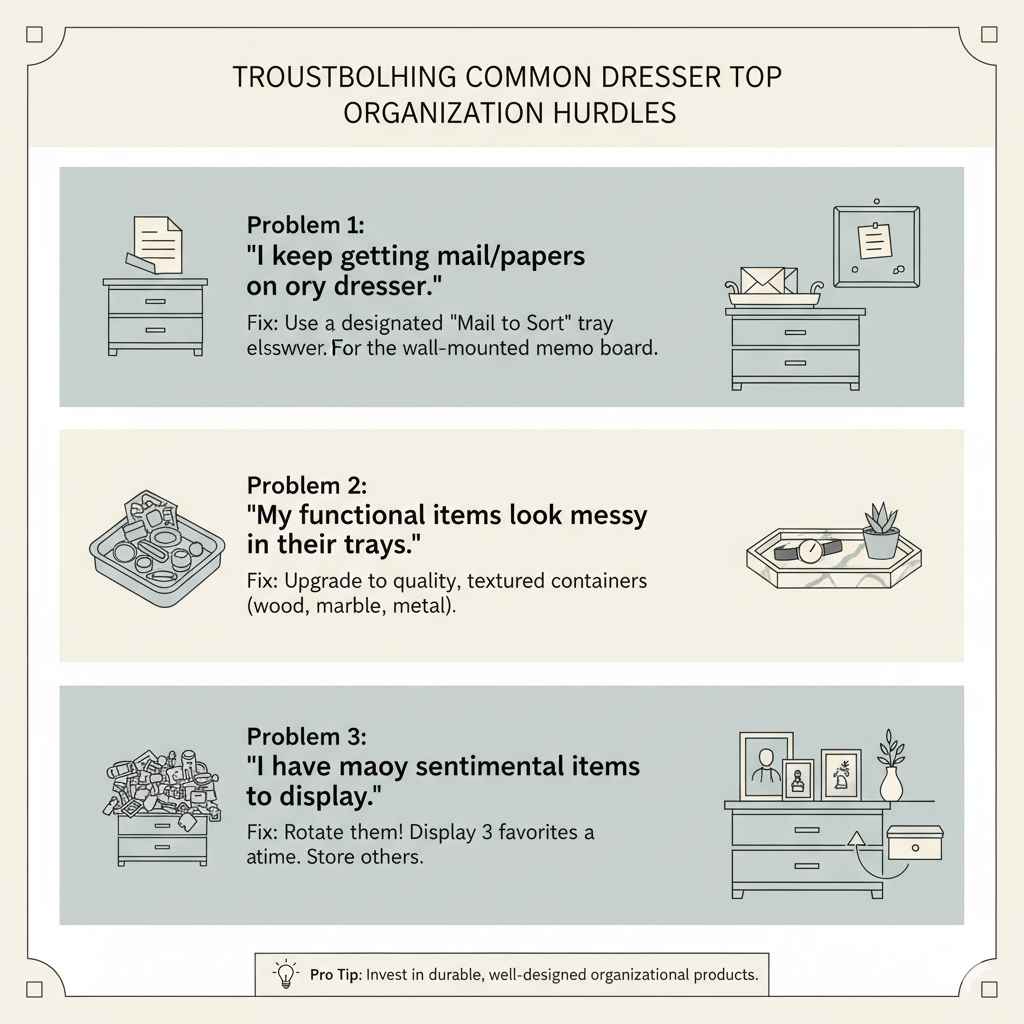
Troubleshooting Common Dresser Top Organization Hurdles
Even with a plan, things can go wrong. Here are common beginner issues and quick fixes:
Problem 1: “I keep getting mail/papers on my dresser.”
Fix: Paper belongs in a processing area, not a bedroom. Designate a tray in your home office or kitchen for “Mail to Sort.” If you absolutely need one piece of paper here (like a reminder note), use a small, decorative clip or magnet to attach it to a corkboard or memo board hung on the wall above the dresser, keeping the flat surface clear.
Problem 2: “My functional items look messy in their trays.”
Fix: Upgrade your containers. A tarnished plastic tray reads as clutter. Swap it for something with texture or finish—wood, marble, or polished metal. The higher quality the container, the more intentional the clutter looks (and the more you will want to keep it neat).
Problem 3: “I have too many sentimental items to display.”
Fix: Rotate them! Choose your top three favorite photos or trinkets for display right now. Put the others in a nice box and store it in the closet. Every few months, swap them out. This keeps your display fresh and prevents visual overload.
For excellent organizational product ideas that focus on durability and design, you can check out reputable home organization resources that often review quality container options, such as those provided by leading consumer product testing labs.
FAQs on Dresser Top Organization
Q1: What should never go on top of a dresser?
A: Generally, avoid dirty clothes, empty water glasses, charging electronics that aren’t actively being used (keep cables tucked away), and anything that belongs in the trash. The top should be reserved for items you interact with daily or display intentionally.
Q2: How do I stop my decorative items from looking like junk?
A: Use cohesive themes. Stick to a limited color palette (e.g., only whites, golds, and woods) or material (e.g., only glass and ceramic). Grouping items by texture or color makes them look like a curated collection rather than random objects.
Q3: Is it okay to keep my perfume bottles on the dresser top?
A: Yes, if they are beautiful and you use them often. Place them together on a small, attractive tray. This groups them neatly and protects the wood surface from potential spills. If the bottles are mismatched or cheap plastic, store them in a drawer instead.
Q4: What if my dresser is very small?
A: On a small dresser, you must prioritize function over decoration. Choose one small tray for daily essentials (keys, watch) and maybe one single small decorative item (like a small plant). If space is extremely limited, you might need to utilize wall space above the dresser for decorative elements.
Q5: How often should I declutter the dresser top?
A: Aim for a quick tidy-up every evening (5 minutes) to put things back. Do a full review and dusting once a month. This consistent, small effort keeps it manageable.
Q6: Can I use my dresser top for charging my phone?
A: Absolutely, but contain it! Use a dedicated charging station or a small box/tray specifically for electronics. This keeps the wires bundled and prevents the phone charger from becoming a random eyesore.
Conclusion: Enjoying Your Newly Organized Space
You’ve done the heavy lifting! Taking the time to figure out how to organize the top of a dresser moves it from being a magnet for random items to a functional, beautiful part of your bedroom décor. Remember the core principles: clear everything out first, create distinct zones (Functional, Utility, Decorative), and use containment solutions like trays to group small items.
It’s about creating habits, not perfection. If you do that five-minute reset each night, you’ll find that your dresser top stays clean, giving you a little boost of calm every time you walk into your room. Take a moment now to appreciate the clean surface—you earned it! Enjoy the simplicity and efficiency of a well-organized space.