

Quick Summary:
Solar lights work by converting sunlight into electricity using photovoltaic panels. This electricity is then stored in a rechargeable battery. At night, the stored power is used to illuminate an LED bulb, providing an eco-friendly and cost-effective lighting solution for your home and garden.
Ever admired those beautiful garden pathways lit up at dusk, or noticed how your porch glows without any visible wires? You might be wondering, “How does solar light work?” It’s a common question, especially as these lights become more popular for their charm and convenience. Many of us want that magical evening ambiance but worry about complicated installations or high energy bills. The good news is, solar lights are wonderfully simple and incredibly effective! They harness the sun’s power without any fuss. This guide will demystify how they function, showing you just how easy it is to enjoy bright, beautiful outdoor spaces affordably and sustainably. Let’s explore the magic of solar power together!
What Exactly ARE Solar Lights Anyways?
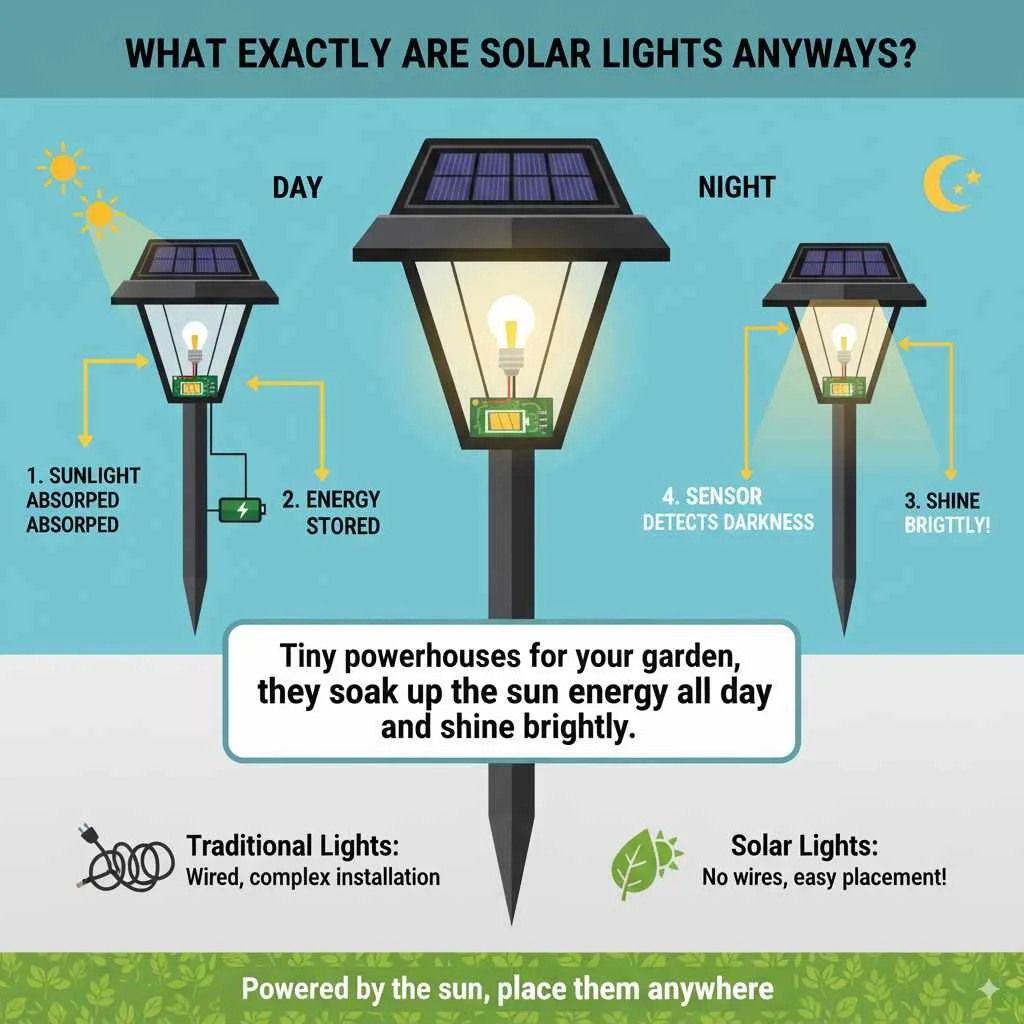
Think of solar lights as tiny powerhouses for your garden. They’re self-contained units designed to soak up the sun’s energy all day and then shine brightly when darkness falls. Unlike traditional outdoor lights that need to be wired to your home’s electricity (which can be a whole undertaking!), solar lights are powered entirely by the sun. This makes them super versatile – you can place them almost anywhere you get a good bit of sunshine.
The Magic Behind the Glow: How Does Solar Light Work, Step-by-Step
The process is surprisingly straightforward and involves a few key components working in harmony. It’s like a little science lesson for your yard! Here’s a breakdown of how these ingenious lights function:
- Capturing Sunshine: The most important part of a solar light is the photovoltaic (PV) panel, usually located on the top. This panel is made of special materials that can convert sunlight directly into electrical energy. It’s essentially a mini solar power generator!
- Storing the Power: When the PV panel converts sunlight into electricity, this energy doesn’t just disappear. It’s channeled to a rechargeable battery housed within the light fixture. This battery acts like a reservoir, storing the energy captured during the day for later use.
- The Brains of the Operation: Most solar lights have a built-in sensor, often called a photocell or light sensor. This sensor detects when daylight fades. When it senses that the ambient light is low enough, it tells the light to turn on.
- Let There Be Light!: Once the sensor signals it’s dark, it allows the stored energy from the battery to flow to the light source, which is typically an energy-efficient LED bulb. The LED then illuminates, casting its glow.
- The Cycle Repeats: As the sun rises the next morning, the PV panel starts collecting energy again, recharging the battery, and the whole cycle begins anew. The sensor also detects the returning daylight and switches the light off automatically.
It’s this elegant, automated process that makes solar lights so popular. You install them, and they pretty much take care of themselves, working with the natural rhythm of day and night.
Key Components That Make Solar Lights Shine
To truly understand how does solar light work, it’s helpful to know the main parts involved. Each piece plays a crucial role in this sunny-powered illumination:
- Photovoltaic (PV) Panel: This is the heart of the solar light. It’s what actively converts sunlight into usable electricity. The size and efficiency of this panel directly impact how much power the light can collect.
- Rechargeable Battery: Without a battery, the light would only work when the sun is shining! These batteries store the electricity generated by the PV panel. Common types include Ni-MH (Nickel-Metal Hydride) and Li-ion (Lithium-ion). The battery’s capacity determines how long the light can stay on after a full charge.
- LED Bulb: LEDs (Light Emitting Diodes) are the standard for solar lights because they are incredibly energy-efficient. They produce a bright light using very little power, maximizing the battery’s stored energy so your lights can shine longer.
- Light Sensor (Photocell): This is the “on/off” switch powered by darkness. It detects the level of natural light and triggers the LED to turn on when it gets dark and off when it gets light again.
- Circuitry/Control Board: Hidden inside the fixture, this small board manages the flow of electricity. It controls when the battery is charged, when the light turns on, and ensures everything works smoothly and efficiently.
Types of Solar Lights and How They Use the Sun
The fundamental way solar lights work remains the same, but the design and application of these lights vary. Here are some popular types you’ll see:
1. Solar Pathway Lights
These are perhaps the most common. They typically have a small PV panel on top, a stake to push into the ground, and a light head. They’re perfect for defining garden paths, illuminating flower beds, or adding a gentle glow along walkways. Their small size means they need a few hours of direct sunlight to store enough energy for a full night’s illumination.
2. Solar Security Lights
These are usually more powerful, designed to provide brighter light for areas like driveways, backyards, or entryways. They often feature larger solar panels and brighter LEDs, and some even come with motion sensors. The larger panel helps them gather more energy to power the brighter bulbs for longer periods. For more information on renewable energy and solar technology, the U.S. Department of Energy’s homeowner’s guide to solar promotions is a fantastic resource.
3. Solar String Lights
These are a favorite for creating ambiance on patios, decks, or balconies. They consist of multiple LED bulbs strung together along a wire, with a solar panel and battery pack typically positioned to receive maximum sun. They’re excellent for parties and summer evenings. Since they often have many bulbs, ensuring the solar panel has ample daylight is key for a good display.
4. Solar Spotlights and Floodlights
For highlighting trees, architectural features, or larger areas, these powerful lights are ideal. They usually have a separate, larger solar panel that can be positioned in the sunniest spot, connected by a wire to the light fixture. This flexibility allows you to place the light where you need it without worrying if that exact spot gets enough sun.
5. Solar Wall Lights and Sconces
These are designed to be mounted on walls, fences, or posts, often near doors or on the sides of the house. They provide decorative or functional lighting and add a touch of style. Their integrated solar panels are designed to catch the sun throughout the day.
Maximizing Your Solar Light’s Performance: Tips for Success
Understanding how does solar light work is the first step. Now, let’s make sure yours are performing at their best! A few simple tips can make a big difference in their brightness and longevity.
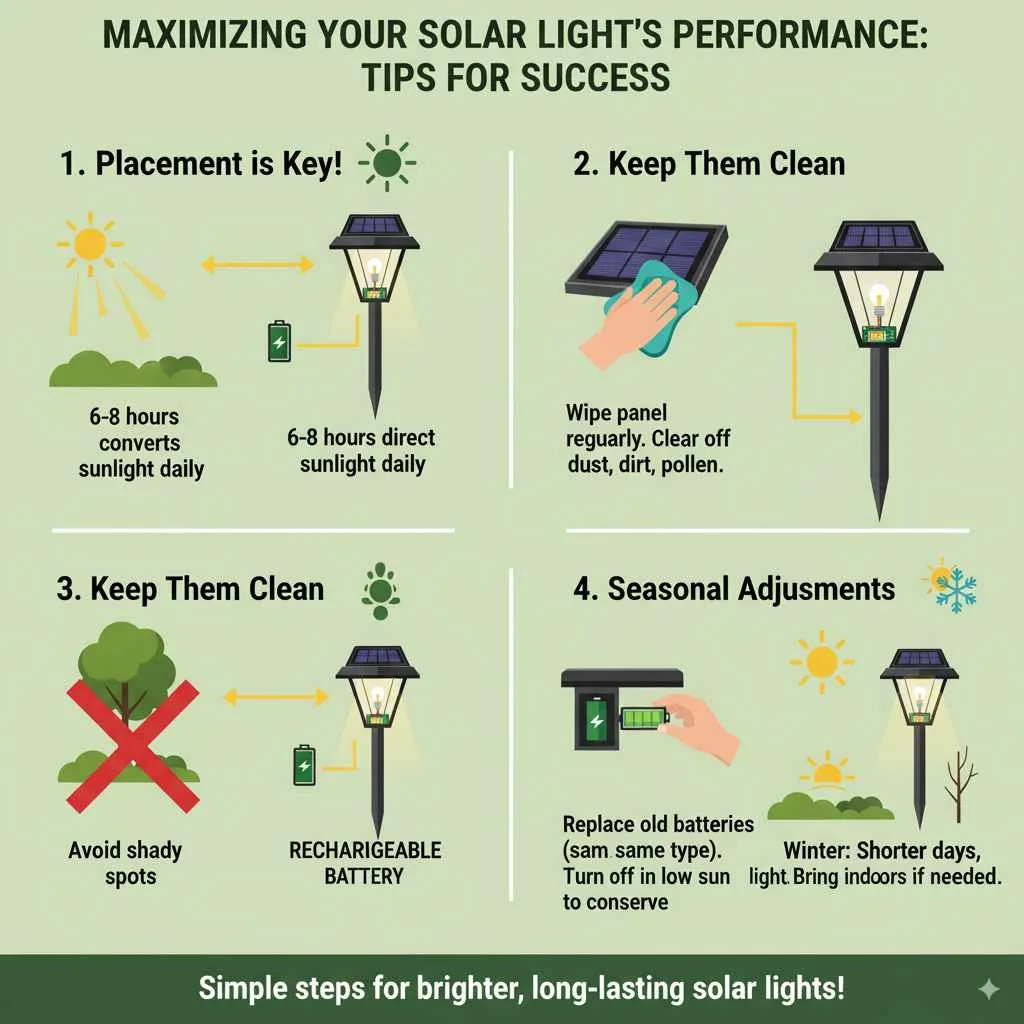
1. Placement is Key!
This is the most crucial factor. Solar lights need direct sunlight to charge their batteries effectively.
- Choose locations that get at least 6-8 hours of direct sunlight per day, especially during midday.
- Avoid shady spots from trees, buildings, or even tall plants.
- Consider the sun’s natural path throughout the day and year.
2. Keep Them Clean
The PV panel needs a clear view of the sun. Dust, dirt, pollen, and bird droppings can significantly reduce its efficiency.
- Wipe the solar panel gently with a damp cloth or sponge regularly (once a month is usually sufficient).
- For tougher grime, use a mild soap and water solution, then rinse and dry.
3. Battery Care
Rechargeable batteries have a lifespan. Over time, they may hold less charge.
- Most solar lights come with replaceable batteries. If your light starts dimming significantly after a full charge, it might be time to replace the battery. Look for batteries of the same type and capacity.
- During winter or periods of low sunlight, you might need to manually turn off some lights to conserve battery life or place them in a sunny indoor spot to ensure they charge adequately.
4. Seasonal Adjustments
The amount of daylight changes throughout the year. In winter, days are shorter, and the sun is lower in the sky.
- You might notice your lights don’t last as long in winter. This is normal. Ensure they’re still getting the most direct sun available.
- Consider bringing decorative solar lights indoors during harsh weather or if you’re not using them, to protect them.
Pros and Cons of Solar Lighting
Like any home decor choice, solar lights have their advantages and disadvantages. It’s good to weigh them to see if they’re the right fit for your needs.
| Pros | Cons |
|---|---|
| Eco-Friendly: Uses renewable solar energy, reducing your carbon footprint. | Sunlight Dependent: Performance relies heavily on sunshine; can be weak or non-existent on cloudy days or in winter. |
| Cost-Effective: No ongoing electricity costs and minimal maintenance. | Lower Light Output: Generally less bright than wired electric lights, especially for decorative and pathway models. |
| Easy Installation: No wiring required; simply place them where they get sun. | Battery Lifespan: Rechargeable batteries need replacing every 1-3 years, adding a recurring cost. |
| Versatile Placement: Can be used anywhere with sunlight, without needing an outlet nearby. | Durability Concerns: Some cheaper models can be prone to weather damage or feel less robust. |
| Safety: Low voltage makes them safer, especially in wet conditions. | Aesthetics: The solar panel can sometimes be visually prominent and detract from some modern or minimalist designs. |
| Automatic Operation: Turn on at dusk and off at dawn automatically. | Initial Cost: While saving money long-term, the upfront purchase can sometimes be more than basic wired fixtures. |
Frequently Asked Questions About Solar Lights
Here are some common questions beginners have about how solar lights work and how to use them effectively:
Q1: How many hours of sunlight do solar lights need to charge?
A1: Typically, solar lights need about 6 to 8 hours of direct sunlight to fully charge their batteries. The more direct sunlight they get, the longer and brighter they will shine at night.
Q2: What happens to solar lights on cloudy days?
A2: On cloudy days, the solar panels will still absorb some energy from the indirect sunlight, but it will be significantly less than on a sunny day. This means the lights might not charge fully and could have a shorter illumination time or be dimmer that evening.
Q3: Can I replace the batteries in my solar lights?
A3: Yes, most solar lights have easily replaceable rechargeable batteries. It’s usually recommended to use batteries of the same type and capacity for optimal performance. You can often find these at hardware stores or online.
Q4: How long do solar lights typically last?
A4: The LED bulbs themselves can last for many years (often 50,000 hours or more). The rechargeable batteries, however, usually need replacement every 1 to 3 years, depending on the quality of the battery, usage, and weather conditions. The fixture’s housing can last for many seasons if made of durable materials.
Q5: Do solar lights work in cold weather?
A5: Solar lights can work in cold weather, but their performance may be reduced. Snow and ice can cover the solar panels, preventing charging. Also, extremely cold temperatures can temporarily affect battery efficiency. It’s best to ensure panels are clear of snow and ice.
Q6: Are solar lights bright enough for security?
A6: While there are many types, some solar security lights are designed to be very bright and can be effective for general security purposes, especially those with motion sensors. However, for critical security areas, a professionally installed wired lighting system might offer more consistent and powerful illumination.
Q7: How do I clean the solar panel on my lights?
A7: Cleaning is simple! Use a soft, damp cloth or sponge with mild soap and water. Gently wipe the surface of the solar panel to remove dirt and debris. Rinse with clean water and allow it to air dry or gently pat it dry with a soft cloth. Avoid abrasive materials that could scratch the panel.
Conclusion
Discovering how does solar light work opens up a world of possibilities for enhancing your home’s exterior. It’s not just about illumination; it’s about adopting a lifestyle that’s both beautiful and responsible. These clever lights offer an effortless way to elevate your garden’s charm, boost your home’s curb appeal, and create inviting outdoor living spaces, all while harnessing the power of nature.
From delicate pathway lights that guide your steps to robust security lights that offer peace of mind, there’s a solar solution for nearly every need. By understanding their simple mechanics and following a few best practices for placement and care, you can ensure your solar lights perform beautifully season after season. They are a testament to how innovative design can merge seamlessly with sustainable living, proving that you don’t need complex wiring or high energy bills to enjoy a well-lit and welcoming home.
So go ahead, embrace the sun’s energy, sprinkle some light around your home, and enjoy the magic it brings. Happy decorating, and here’s to a brighter, greener home!






Leave a Reply