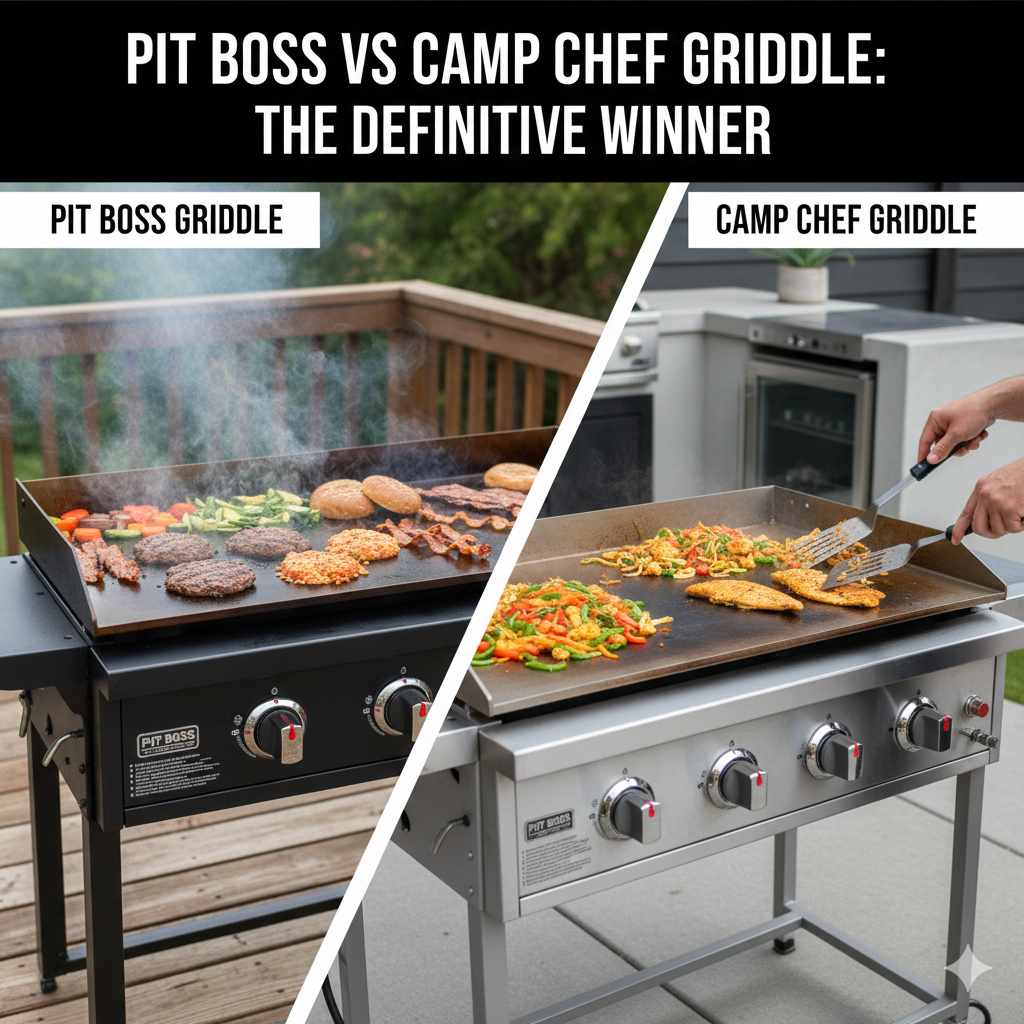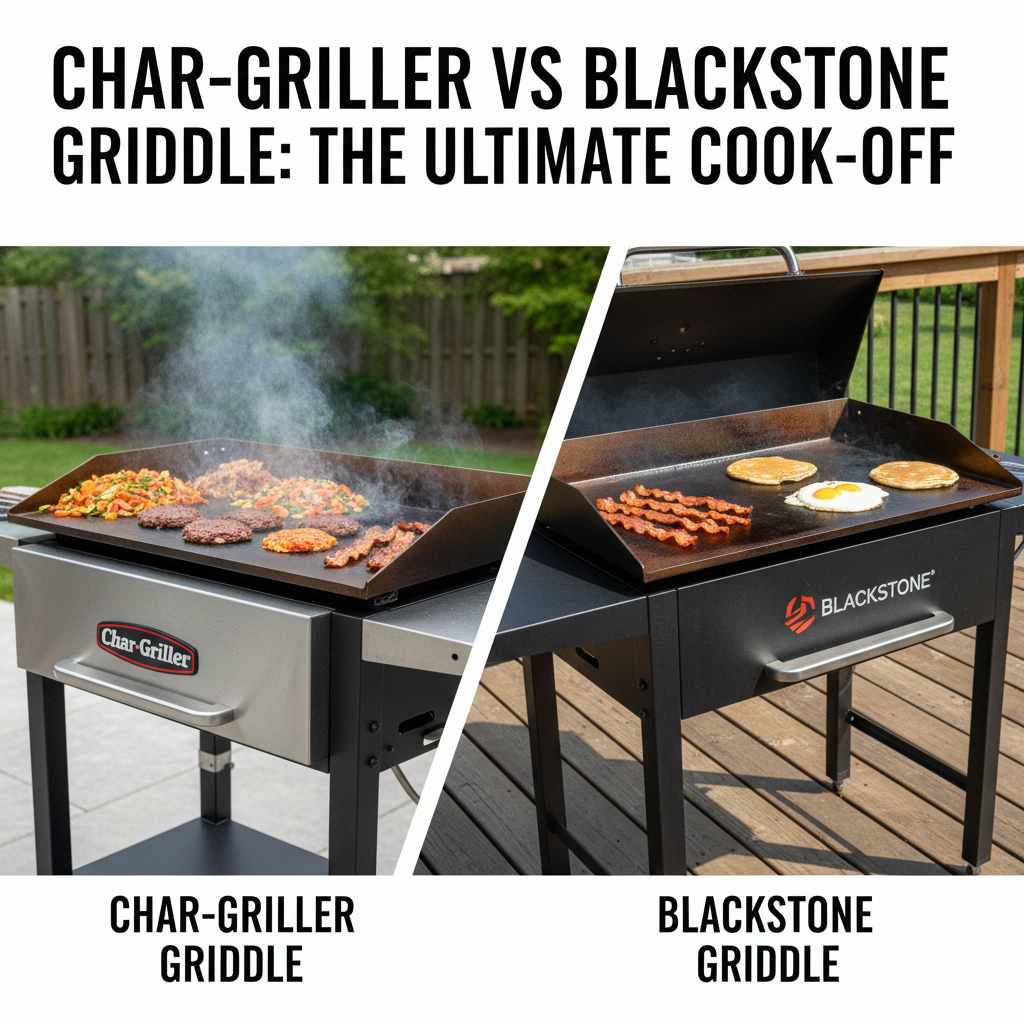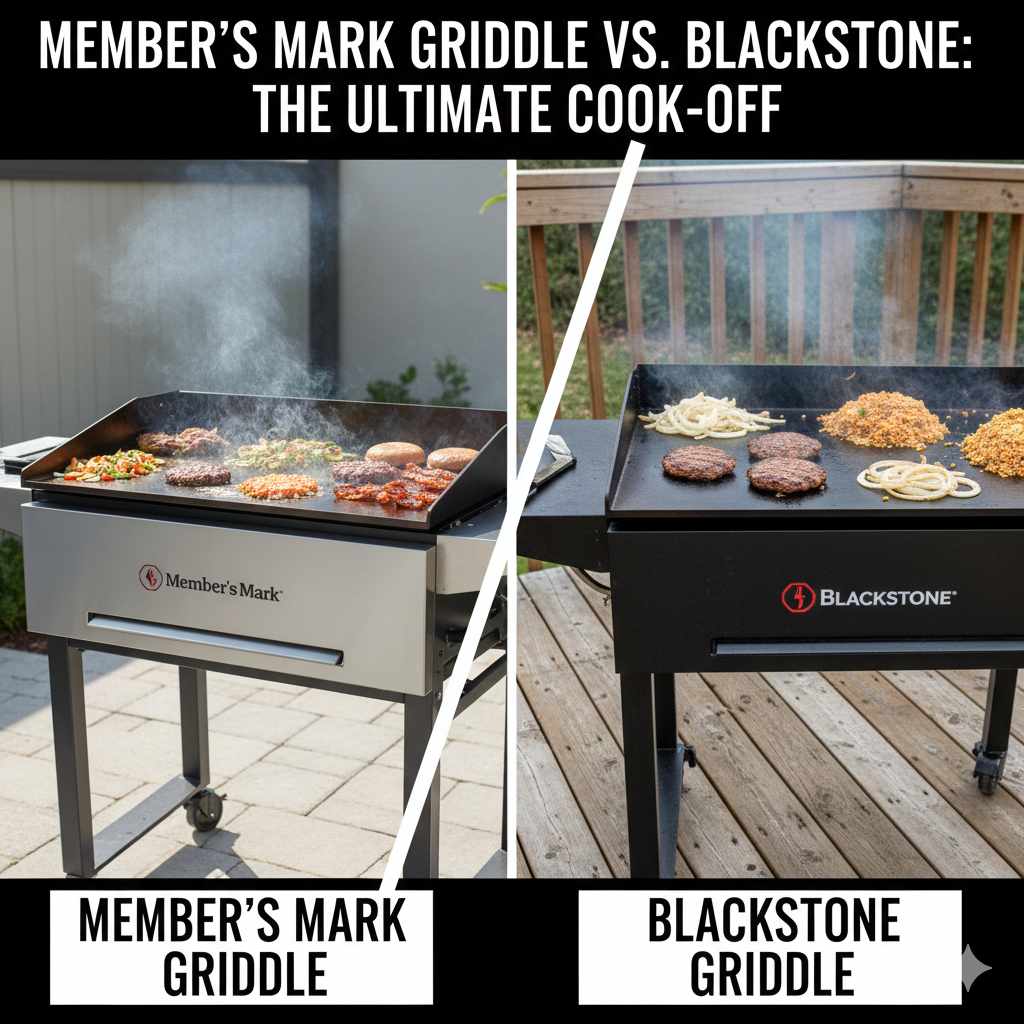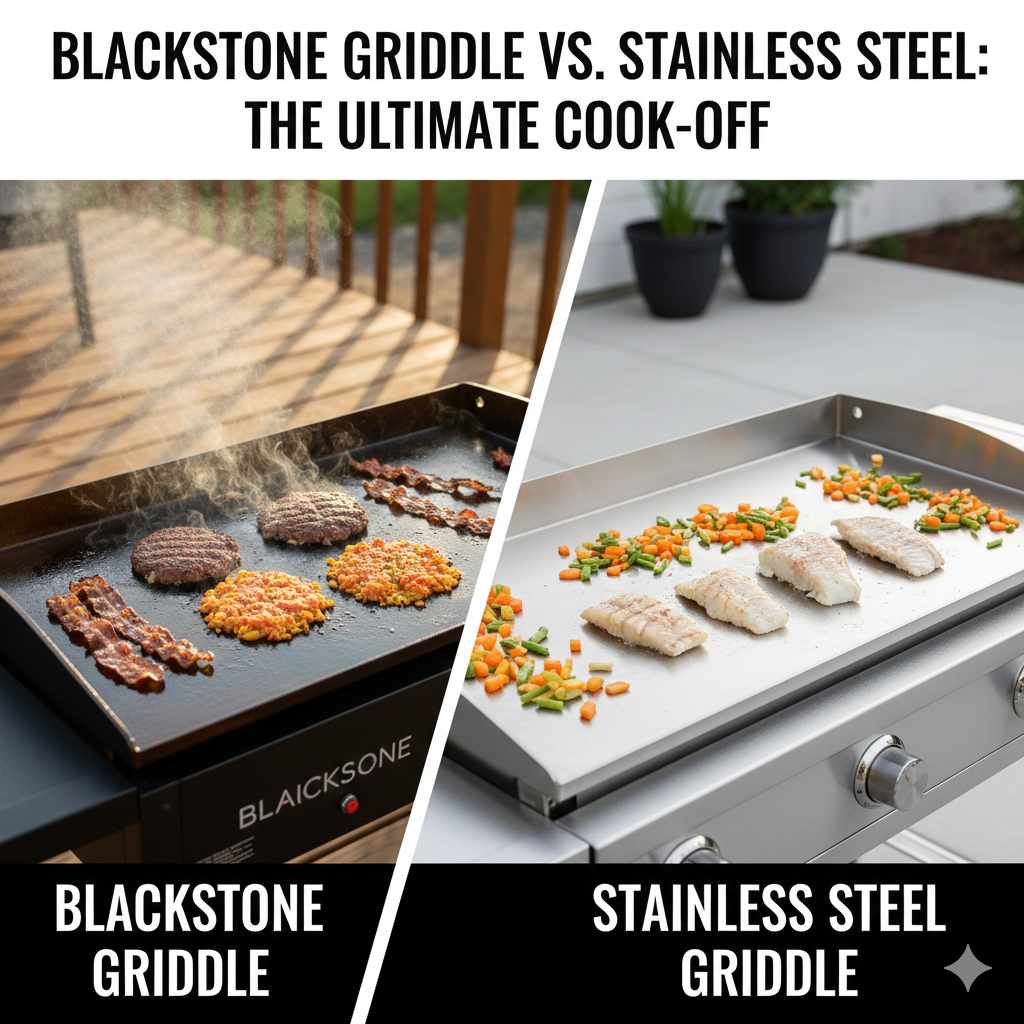
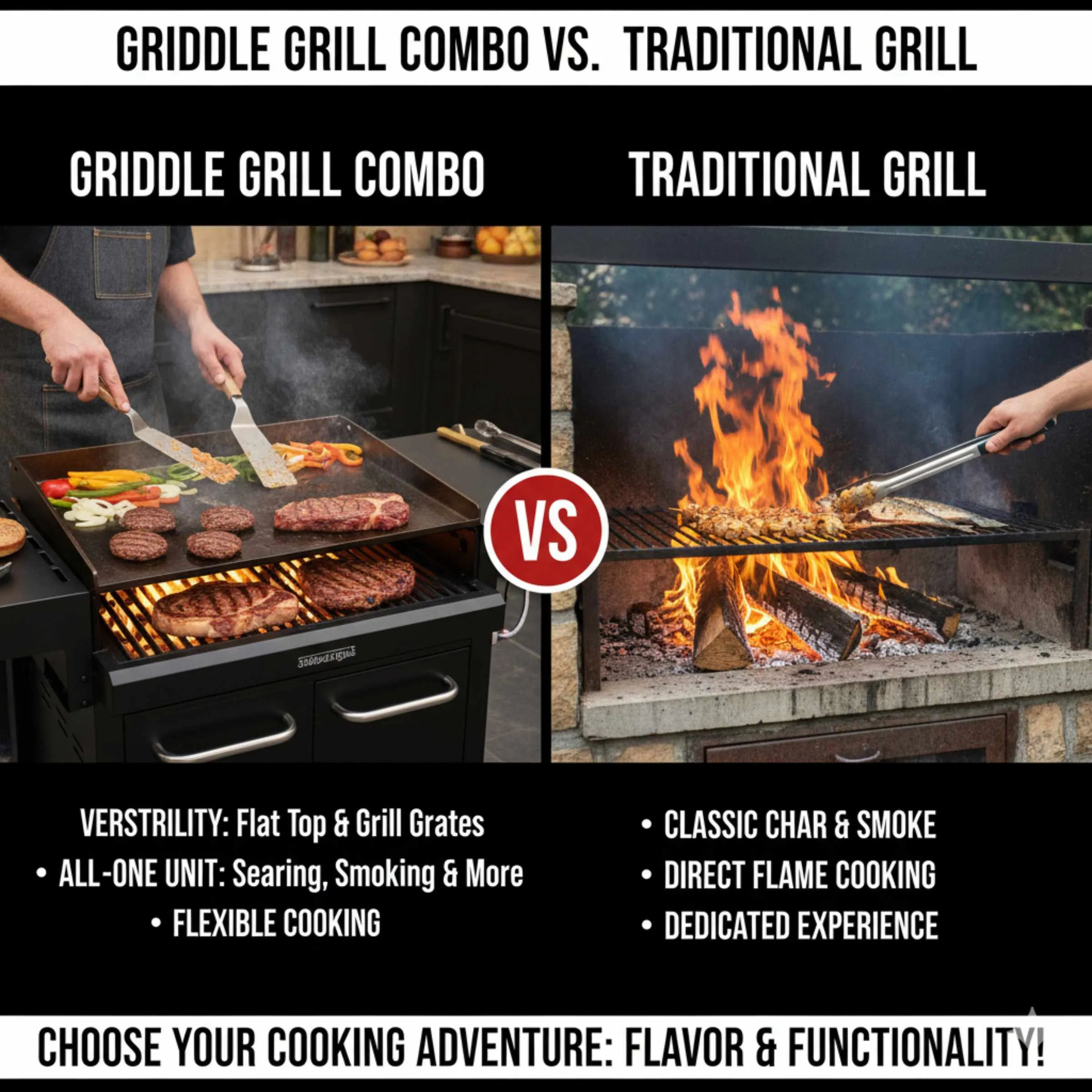
The essential showdown between a griddle grill versus a traditional grill comes down to cooking style: griddles offer even, flat-top heat perfect for smash burgers and breakfast, while open grills deliver smoky char great for steaks and visual marks. Choosing the right one depends entirely on what you love to cook!
Choosing the right outdoor cooking tool can feel like a big decision. You want that perfect sear, that smoky flavor, or maybe just clean, easy cooking for dinner. Many folks stand in the store, staring at the shiny, flat griddle tops and the classic open grate grills, wondering which one deserves a spot on their patio. It’s easy to get confused by all the features and fancy terms. Don’t worry! Think of me, Dustin, as the friend who rides shotgun on your maintenance journey. We are going to break down the griddle grill vs grill debate in a way that makes perfect sense, showing you exactly what each tool does best. By the end of this guide, you will feel totally confident picking the perfect cooker for your kitchen—no confusing jargon needed! Let’s fire up this comparison and see what’s cooking.
Understanding the Basics: What is a Griddle? What is a Grill?
Before we put them head-to-head, let’s quickly define what we are working with. These tools look similar but cook very differently because of their surface.
The Traditional Grill: Open Flame and Grates
A traditional grill—whether gas, charcoal, or pellet—uses an open surface, usually made of metal grates, set above a direct heat source.
The key characteristic here is the airflow and the direct heat. When you place a burger on a grate, the fat drips down, often causing flare-ups. These flare-ups create that classic smoky flavor and those iconic dark sear marks.
Why Drivers Love the Grill (Metaphorically Speaking)
Think of the traditional grill like an older, reliable truck engine. It’s built for raw performance and has character. It gives you that unmistakable char and smoky taste that many backyard chefs chase.
- Pros: Fantastic smoky flavor. Produces beautiful sear marks (grill marks). Great for large items like whole chickens or racks of ribs. Air circulation allows for smoking effects.
- Cons: Messy cleanup (grease drips everywhere). Food can easily fall through the grates. Difficult to cook small items like shrimp or diced onions without special baskets.
The Griddle Grill: The Flat-Top Powerhouse
A griddle grill, often just called a flat-top griddle, is essentially a large, thick metal cooking surface heated from below, similar to what you see at a diner. There are no open grates; the entire surface is solid metal.
The magic of the griddle is total contact. Every bit of your food touches the hot metal. This means you get an even, golden-brown crust across the entire piece of food, not just lines.
Why Drivers Love the Griddle (Metaphorically Speaking)
If the grill is the classic truck, the griddle is the modern, high-end sedan. It’s precise, clean, and handles multiple tasks at once with uniform results. It’s about high efficiency and consistent performance.
- Pros: Incredible versatility (cook anything from eggs to pancakes to Philly cheesesteaks). Very easy cleanup (just scrape and wipe). Excellent heat retention. No lost food through grates.
- Cons: Lacks the smoky flavor of charcoal/wood. Does not produce traditional sear marks. Can struggle with very thick cuts that need indirect heat rising up.

The Griddle Grill vs Grill Showdown: Key Differences Explained
The real decision comes down to how heat is transferred and what results you are looking for. Let’s look at the core performance metrics.
1. Heat Transfer and Searing
This is arguably the biggest difference point in the griddle grill vs grill debate.
Grill: Radiant & Direct Heat
On a grill, heat travels in two main ways: radiation from the flames/coals below and direct conduction where the metal grate touches the food. This combination creates the famous grill mark—a very hot, dark line—surrounded by slightly less cooked area.
If you are a steak lover, this can be great, but it requires careful turning to avoid burning the edges while waiting for the center to cook. Sometimes, if grease drips too much, you get what mechanics call a “hot spot that blows a gasket”—a massive flare-up that chars the outside too fast.
Griddle: Conduction Heat
The griddle uses pure conduction. Because the entire plate is a single, uniform temperature conductor, the heat transfers evenly across the entire surface that is touching the food. This results in the “Maillard reaction” happening everywhere simultaneously.
That means a smash burger on a griddle achieves a perfect, edge-to-edge crust (the “all-over sear”) that you just cannot get on an open grate. For safety, consistent cooking, and avoiding flare-ups that ruin dinner, the griddle is often the smoother ride.
2. Flavor Profile: Smoke vs. Crust
The flavor imparted by the cooking surface is a crucial differentiator when comparing griddle grill vs grill setups.
Grills build flavor through smoke. When dripping fat or marinades hit the hot coals or burners, they vaporize into smoke that coats the food. This is the classic BBQ taste.
Griddles build flavor through the crust. On a griddle, the fat and juices stay on the cooking surface, mixing with the food. This creates a highly intensified, savory flavor in the food itself. This is why diner-style onions and cheesesteaks taste so amazing—all that flavor stays right there on the plate.
If you crave that wood-fired depth, stick with a traditional grill. If you prioritize deep, savory crust flavor, the griddle is your champion.
3. Versatility and Limitations
Which appliance handles the widest range of tasks?
The Grill’s Limitations
Open grates are fantastic for sturdy items, but they are terrible for tiny or loose items. Think about trying to cook scrambled eggs or finely chopped vegetables on a standard grill—they just fall through.
While you can buy grill baskets or use foil packets, these additions are essentially creating a temporary, makeshift griddle on top of the grates. They defeat the purpose of the open-grate design.
The Griddle’s Superpowers
The griddle is the Swiss Army knife of outdoor cooking. Because it is a contained, flat surface, you can cook almost anything you would cook inside your kitchen:
- Breakfast foods (pancakes, hash browns)
- Sandwiches (grilled cheese, quesadillas)
- Delicate items (fish fillets, chopped veggies)
- Thick steaks (achieving a great crust before finishing)
For maximum flexibility without needing extra accessories, the griddle wins hands-down.
4. Cleanup and Maintenance
As a person who likes practical, easy solutions, I know cleanup can be the difference between cooking tonight and ordering takeout.
Grill Cleanup
Cleaning a grill involves dealing with hardened, stuck-on drippings under the grates, cleaning flavorizer bars, and sweeping ash out of the bottom (if charcoal). It usually requires wire brushes, scraping tools, and often a heavy-duty degreaser.
It is a necessary evil, but it takes time and effort.
Griddle Cleanup
Cleaning a griddle is usually as simple as scraping the excess food and grease into a grease trap while the surface is still warm. A good, long scrape with a stainless steel scraper, followed by wiping down with an oil-soaked paper towel, is often all you need. Many professional chefs consider the griddle the easiest large cooking surface to maintain.
If you want minimal effort after the meal, the griddle is your clear favorite.
Side-by-Side Comparison Table
To make the griddle grill vs grill choice crystal clear, here is a direct comparison of their core features:
| Feature | Traditional Grill (Grate-Style) | Griddle Grill (Flat Top) |
|---|---|---|
| Cooking Surface | Open metal grates | Solid, closed metal plate |
| Primary Heat Transfer | Radiant (Air/Smoke) & Conduction (Grates) | Pure Conduction (Direct Contact) |
| Flavor Profile | Smoky, charred, distinct grill marks | Deeply crusted, savory from held juices |
| Versatility for Small Foods | Poor (requires baskets/trays) | Excellent (cooks anything) |
| Cleanup Effort | High (scraping grates, cleaning drip pans) | Low (scrape and wipe) |
Who Should Choose the Traditional Grill?
If your primary goal in outdoor cooking aligns with these points, the traditional grill is the right tool for your shop.
The Traditionalist Who Needs Smoke
- You love the taste of genuine, slow-smoked BBQ.
- You enjoy the ritual of building a charcoal fire or managing a gas flame.
- You prioritize those dark, perfectly defined sear marks on steaks and chicken breasts.
- You are cooking large roasts or whole birds that benefit from ambient heat circulation.
The grill is about atmosphere and that authentic outdoor barbecue character. For that true “backyard BBQ” feeling, there is no substitute for the open flame.
Who Should Choose the Griddle Grill?
The griddle is ideal for those prioritizing efficiency, variety, and consistency—much like choosing reliable parts for longevity.
The Enthusiast Seeking Maximum Utility
- You often host large family brunches outdoors (pancakes, bacon, eggs).
- You hate cleaning brushes and prefer quick wipe-downs.
- You want to cook a full meal (veggies, protein, and starch) all at once on one surface.
- You cook things like burgers, fish tacos, or stir-fries regularly.
For maximizing cooking potential with minimal post-cook labor, the griddle design is superior. Furthermore, if you are interested in how temperature stability aids your cooking, remember that maintaining consistent heat is vital not just for cooking, but for engine health, too! For more on how temperature affects metal components, you can look into resources on thermal management in engineering, such as those provided by many university engineering departments.
A Deeper Dive: Mastering Heat Control
Heat control is key to great results, regardless of your choice. Understanding how each surface manages temperature makes you a better cook instantly.
Grill Heat Management
On a grill, you manage heat by zoning. This is crucial for safe cooking. If you’re working with charcoal, you pile the coals on one side (high heat zone) and leave space on the other side (indirect heat zone). For gas grills, you turn on burners on one side and leave the other side completely off.
Why Zoning Matters:
- Searing: Place food directly over the flames/coals for a quick, intense sear.
- Cooking Through: Move the food to the indirect zone to finish cooking slowly without burning the outside.
This method allows you to manage the intense radiant heat effectively.
Griddle Heat Management
Griddles often have multiple independent burners underneath the plate, allowing you to create “zones” horizontally across the flat top.
How Griddle Zones Work Best:
- Hot Zone (High Heat): Set one side to 450°F or higher for smashing patties or achieving quick surface caramelization.
- Warm Zone (Medium/Low Heat): Set another side to 300°F to hold cooked food, gently melt cheese, or cook delicate items like eggs slowly.
The benefit here is precision. You move food side-to-side rather than up-and-down, ensuring the entire contact surface maintains its desired temperature setting.
When Griddles and Grills Can Work Together (The Hybrid Approach)
For the driver who wants the best features of both worlds, many modern devices offer hybrid solutions, or you simply use both appliances strategically.
Hybrid Models
Some manufacturers offer combined units, featuring a gas grill on one side and a large, built-in flat-top griddle on the other. This solves the griddle grill vs grill dilemma for good.
Advantages of Hybrid Cooking:
- Cook your smoky ribs on the grate while simultaneously frying onions and making the sauce base on the griddle.
- Manage different dietary needs at the same time (e.g., gluten for the burgers on the griddle, veggies on the grill).
- Maximize output when hosting large parties without juggling multiple pieces of equipment.
Using Accessories to Cross the Divide
If you already own a traditional grill, you can purchase a thick, cast-iron griddle piece designed to sit directly over your grates. This acts as a temporary griddle.
A Quick Tip: Make sure this accessory griddle is preheated thoroughly (at least 15–20 minutes) before placing food on it. Just like a proper flat-top, if you slap cold food on a lukewarm surface, you end up steaming the food instead of searing it!
Maintenance Check: Comparing Long-Term Care
Long-term reliability, much like car longevity, depends on how well you perform routine maintenance. Here’s how the care differs.
Traditional Grill Maintenance Routine
1. Burn-Off: After every use, turn burners/coals to high for 10–15 minutes to incinerate leftover debris stuck to the grates.
2. Brush: Vigorously brush the grates with a stiff wire brush.
3. Inspect: Periodically check burners (for gas grills) or the condition of the grates themselves for rust or warping. Replacement parts are common.
4. Deep Clean (Annually): Empty all ash/grease trays and use oven cleaner/degreaser to scrub the inside of the firebox occasionally.
Griddle Maintenance Routine
1. Scrape & Season: While warm, scrape all debris into the grease trap.
2. Oil Wipe: Apply a thin layer of high smoke-point oil (like canola or grapeseed) across the surface using a paper towel—this is called “seasoning.”
3. Storage: Always ensure the surface is dry before covering it, as moisture trapped against the steel causes rust spots (like brake rotors rusting overnight).
In terms of specialized equipment required, the griddle leans on simple scrapers and oil, whereas the grill often requires more chemical cleaners and dedicated brushes. This reinforces the griddle’s reputation for ease of use.

FAQ: Quick Answers for Beginner Buyers
Here are some common questions folks ask when they are trying to decide between these two fantastic cooking methods.
- Q: Can I make great burgers on a traditional grill?
- A: Yes, absolutely! They will have a smoky flavor and good sear marks, but they won’t have the edge-to-edge crispy crust a griddle provides.
- Q: Is a griddle surface harder to clean than grill grates?
- A: Generally, no. A griddle is easier because the food and grease stay on top of a solid surface, allowing you to scrape them off easily. Grates force you to clean underneath and through the openings.
- Q: Do I need a special oil for my griddle?
- A: Yes. Always use an oil with a high smoke point, like vegetable, canola, or grapeseed oil, for seasoning and cooking to prevent burning the protective layer.
- Q: Can charcoal flavor be replicated on a griddle?
- A: Not exactly. To get smoky flavor on a griddle, you must add wood chips or pellets to a metal tray placed directly on the hot surface, but the effect is much less intense than direct grilling.
- Q: Which one cooks faster?
- A: A griddle often cooks faster for thinner items because the heat transfer is immediate and 100% contact. Burgers cook very rapidly because they heat evenly from the bottom up.
- Q: Which is better for cooking breakfast outside?
- A: The griddle wins by a landslide. You cannot cook pancakes, eggs, or delicate bacon strips safely or cleanly on an open grill grate.
Conclusion: Making Your Final Decision
We have navigated the core mechanics, the flavor outcomes, and the maintenance routines in this griddle grill vs grill showdown. Whether you’re looking for the rugged, smoky performance of an open grate or the consistent, versatile efficiency of a flat top, the right choice is the one that matches your favorite way to cook.
If you’re the kind of home cook who loves that smoky char, the atmospheric ritual of tending a flame, and the specific look of grill marks on a perfect steak.