
Discover essential and proven different beef casserole recipes that are easy for beginners. These comforting, crowd-pleasing meals use simple pantry staples to create delicious, hearty dinners with minimal fuss, ensuring a successful bake every time you pull that pan from the oven.
We all look for that perfect weeknight meal—something warm, satisfying, and easy to clean up. If you have ground beef lingering in your fridge or freezer, a beef casserole is your best friend. Casseroles can sometimes look complicated, but they truly aren’t! They are the ultimate one-pan wonder. Having a few solid, reliable recipes in your back pocket saves the day when decision fatigue hits. We are going to walk through some of the most beloved and straightforward beef casseroles, teaching you the basics so you feel completely confident handling that oven rack.
Why Beef Casseroles Are A Beginner’s Best Friend
As someone who loves keeping things simple under the hood of your car, I appreciate reliability and straightforward assembly. Beef casseroles are exactly like that reliable old truck—they just work. They are forgiving, which means if you mix up a tablespoon for two, the dish still turns out great. They are also wallet-friendly. By stretching ingredients like rice, pasta, or potatoes with ground beef, you create a filling meal without breaking the bank.
The Core Components of Any Great Beef Casserole
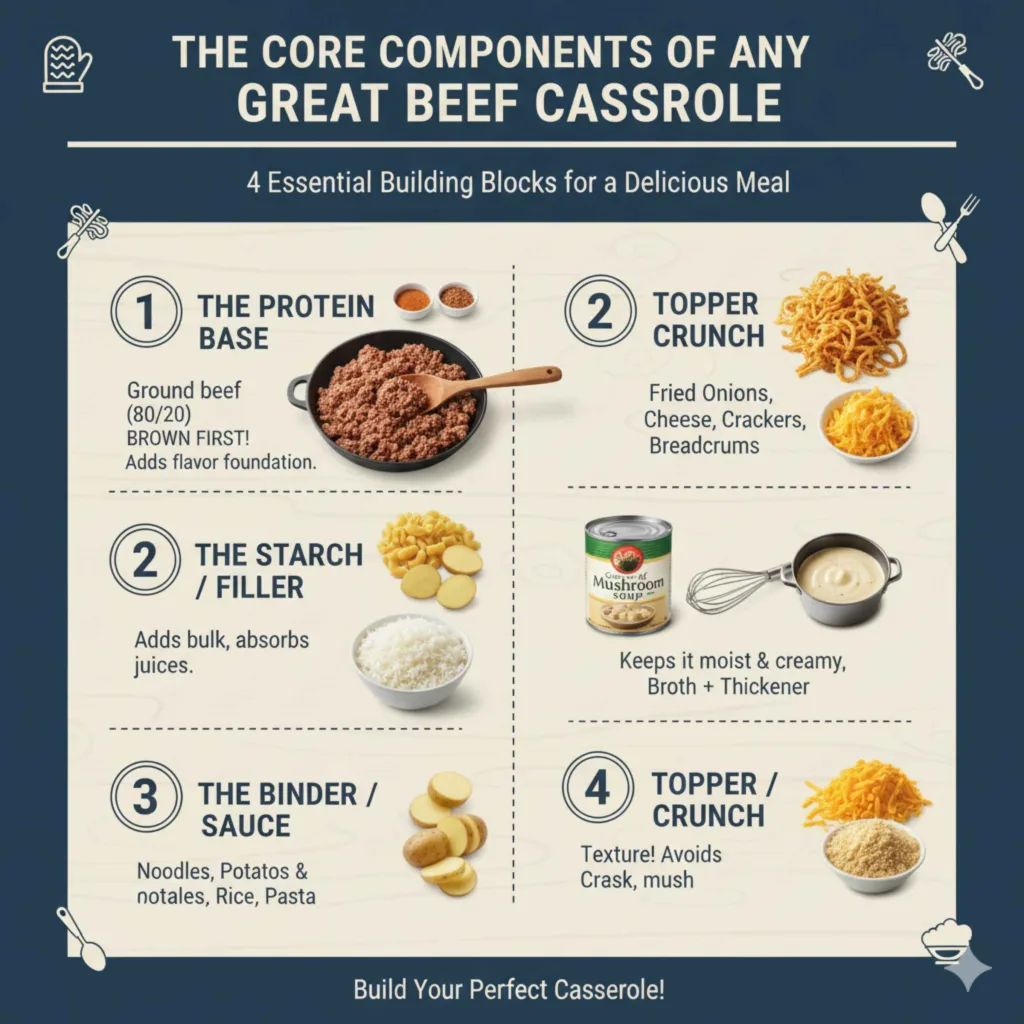
Before diving into specific recipes, it helps to know the four basic building blocks of almost any successful beef casserole. Think of these as the essential parts of a reliable engine; remove one, and it might sputter.
1. The Protein Base
This is usually ground beef (80/20 or 85/15 works well for moisture). You always cook this first! Browning the beef well, draining off excess grease, and seasoning it properly sets the foundation for the entire casserole’s flavor.
2. The Starch/Filler
This element adds bulk and soaks up all those tasty juices. Common choices include:
- Egg noodles (classic for stroganoff style)
- Canned or dried pasta (macaroni, shells)
- Rice (white or brown)
- Potatoes (sliced or diced)
3. The Binder/Sauce
This is what keeps everything creamy and moist. Canned soups are the MVP here—think cream of mushroom, cream of celery, or cheddar cheese soup. For a slightly from-scratch binder, you can use a combination of broth thickened with a little flour or cornstarch.
4. The Topper (The Crunch Factor)
This final layer provides texture so your casserole isn’t just soft mush. Great toppers include:
- Crushed crackers (like Ritz)
- French-fried onions (essential for flavor!)
- Shredded cheese (Cheddar, Monterey Jack)
- Breadcrumbs mixed with melted butter
Essential Recipe 1: Classic Ground Beef Noodle Casserole (The Ultimate Comfort Food)
This recipe lands high on most “best of” lists because it requires very few unique ingredients. It’s the one your grandmother likely made, and it’s foolproof.
What You Need (Ingredients List)
This recipe is easily adapted for a 9×13 pan.
| Ingredient | Amount | Purpose |
|---|---|---|
| Ground Beef | 1.5 lbs | Protein base |
| Egg Noodles | 12 oz | Starch/Filler |
| Cream of Mushroom Soup | One 10.5 oz can | Binder |
| Sour Cream | 1 cup | Creaminess/Tang |
| Beef Broth | 1/2 cup | Moisture |
| Frozen Peas and Carrots | 1 cup | Vegetable boost |
| Shredded Cheddar Cheese | 1 cup | Topping |
Step-by-Step Assembly Guide
Follow these steps precisely for the best results. Remember, preheating your oven is like setting your transmission properly before driving—it’s the critical first step for even heat!
- Preheat and Prep: Set your oven to 375°F (190°C). Lightly grease a 9×13 baking dish.
- Cook Noodles: Boil the egg noodles according to package directions until they are tender-crisp (slightly undercooked, as they’ll soften more in the oven). Drain them well.
- Brown the Beef: In a large skillet, brown the ground beef over medium heat. Once cooked through, drain off all the grease. This is important for avoiding a greasy casserole. You can find safety tips on proper grease disposal from local municipal waste guides, like those provided by many EPA resources.
- Mix the Binder: In a large bowl, stir together the cream of mushroom soup, sour cream, and beef broth. Mix until smooth.
- Combine Everything: Add the cooked noodles, browned beef, and frozen vegetables to the soup mixture. Stir gently until everything is coated nicely.
- Transfer and Top: Pour the entire mixture into your prepared baking dish. Sprinkle the shredded cheddar cheese evenly over the top.
- Bake: Bake for 25 to 30 minutes, or until the sauce is bubbly and the cheese is melted and lightly golden. Let it rest for 5 minutes before serving.
Essential Recipe 2: Easy Cheesy Shepherd’s Pie (No Fancy Gravy Needed)
Shepherd’s Pie traditionally uses lamb, but in modern kitchens, ground beef makes an exceptional “Cottage Pie.” This version skips the traditional gravy-making steps and uses simple canned condensed soup for a creamier, faster result.
The Key Difference: The Topping
Unlike the noodle casserole, this pie uses a mashed potato topping. Make sure your potatoes are creamy but thick enough to hold their shape.
Making the Potato Topping (Best Practices)
For the fluffiest topping, remember to:
- Use warm milk and softened butter when mashing.
- Whip them well—don’t just mash them flat.
- If they get too loose, you can add a tablespoon of cornstarch or increase your baking time slightly.
Assembling the Shepherd’s Pie
- Brown the Beef Base: Brown 1.5 lbs of ground beef with diced onions and celery until soft. Drain the fat.
- Add Flavor: Stir in one can of cream of mushroom soup, 1/2 cup of beef broth, and add some dried herbs like thyme or rosemary. Season well with salt and pepper. Cook this mixture on the stove for 5 minutes to thicken slightly.
- Layer: Spread the beef mixture evenly in the bottom of a 9×13 dish.
- Top It Off: Create the mash topping. Use about 6 cups of prepared, mashed potatoes. Spoon or pipe (if you have a piping bag) the potatoes over the beef layer, making sure to seal the edges all the way around.
- Create Texture: Run a fork across the top of the potatoes to create ridges. These ridges catch the heat and turn beautifully crispy.
- Bake: Bake at 375°F (190°C) for 30 minutes until hot all the way through. For extra color, briefly place it under the broiler for 1–2 minutes (watch carefully!).
Essential Recipe 3: Beef & Rice Casserole (The Pantry Staple Saver)
When you need something substantial but are low on fresh items, the Beef & Rice Casserole shines. It relies heavily on dried rice and canned broth/soup.
Tips for Perfect Rice in Casseroles
Cooking rice inside a casserole can be tricky. If you use uncooked rice, it needs a lot of liquid to absorb. If you use too little, you get crunchy rice. If you use too much, you get mush.
The Trick: Always use slightly more liquid than the package calls for, or pre-soak your rice slightly in hot water for 15 minutes before adding it to the mixture.
Recipe Snapshot: Beef & Rice
- Brown 1 lb ground beef with 1 chopped onion.
- Mix the beef with 1.5 cups of uncooked white rice (rinsed).
- Add 1 can of cream of chicken soup (don’t knock it until you try it!), 1 can of drained water chestnuts (for a little crunch), and 1.5 cups of hot beef broth.
- Mix well and pour into a greased baking dish.
- Cover tightly with foil. This traps the steam needed to cook the rice evenly.
- Bake at 350°F (175°C) for about 50–60 minutes. Check early; if the liquid is gone but the rice is hard, add another 1/2 cup of hot broth, reseal the foil, and bake longer.
- Uncover for the last 10 minutes and sprinkle with a layer of Monterey Jack cheese.
Understanding Baking Temperatures and Time (A Crucial Comparison)
One of the biggest confidence boosters for a beginner cook is understanding that temperature changes the outcome significantly. Lower temps mean slower, more even cooking, which is great for dense casseroles like the rice bake. Higher temps are for dishes that are mostly cooked already, like the noodle casserole, where you just want to heat it through and melt the cheese.
| Casserole Type | Recommended Oven Temp | Why This Temp? | Total Bake Time (Approx.) |
|---|---|---|---|
| Noodle Casserole | 375°F (190°C) | Melts cheese nicely and heats sauce quickly. | 25–30 minutes |
| Shepherd’s Pie | 375°F (190°C) | Heats the filling and forms a nice crust on the potatoes. | 30 minutes |
| Beef & Rice Bake | 350°F (175°C) | Lower heat allows the tough, uncooked rice to absorb liquid slowly without burning the edges. | 50–60 minutes (Covered) |
Always remember that your home oven might run hot or cool—it’s wise to invest in an inexpensive oven thermometer to ensure you are heating things correctly. This small tool can prevent a lot of burned edges!
Making It Your Own: Smart Variations and Upgrades
Once you master one of the three beginner recipes above, you open the door to endless creative variations. Think of these as routine maintenance—small tweaks that improve performance.
Vegetable Swaps
Feel free to swap out standard frozen veggies for others. For instance:
- For the Noodle Bake: Use canned, drained sliced mushrooms instead of frozen peas.
- For Added Color: Toss in chopped red or yellow bell peppers when browning your ground beef.
- Go Green: Stir in a cup of fresh, chopped spinach right before baking; it wilts down to almost nothing but adds nutrients.
The French Onion Touch
If you want a deeper, richer flavor in any beef casserole, use this trick: instead of just using plain beef broth for liquid, stir in a packet of dry onion soup mix (like Lipton’s) while you are mixing your binder sauce. It adds a huge boost of developed onion flavor without the fuss of slow-sauteing onions.
Browning the Beef Like a Pro
To get that savory, non-greasy base that professional cooks aim for, you need high, dry heat initially. Don’t overcrowd your skillet. Cook the beef in batches if necessary. Once it’s browned, use a slotted spoon to lift the bits out onto a paper towel-lined plate. This pulls away more residual fat than just tilting the pan. Good browning equals deep flavor.
Troubleshooting Common Casserole Headaches
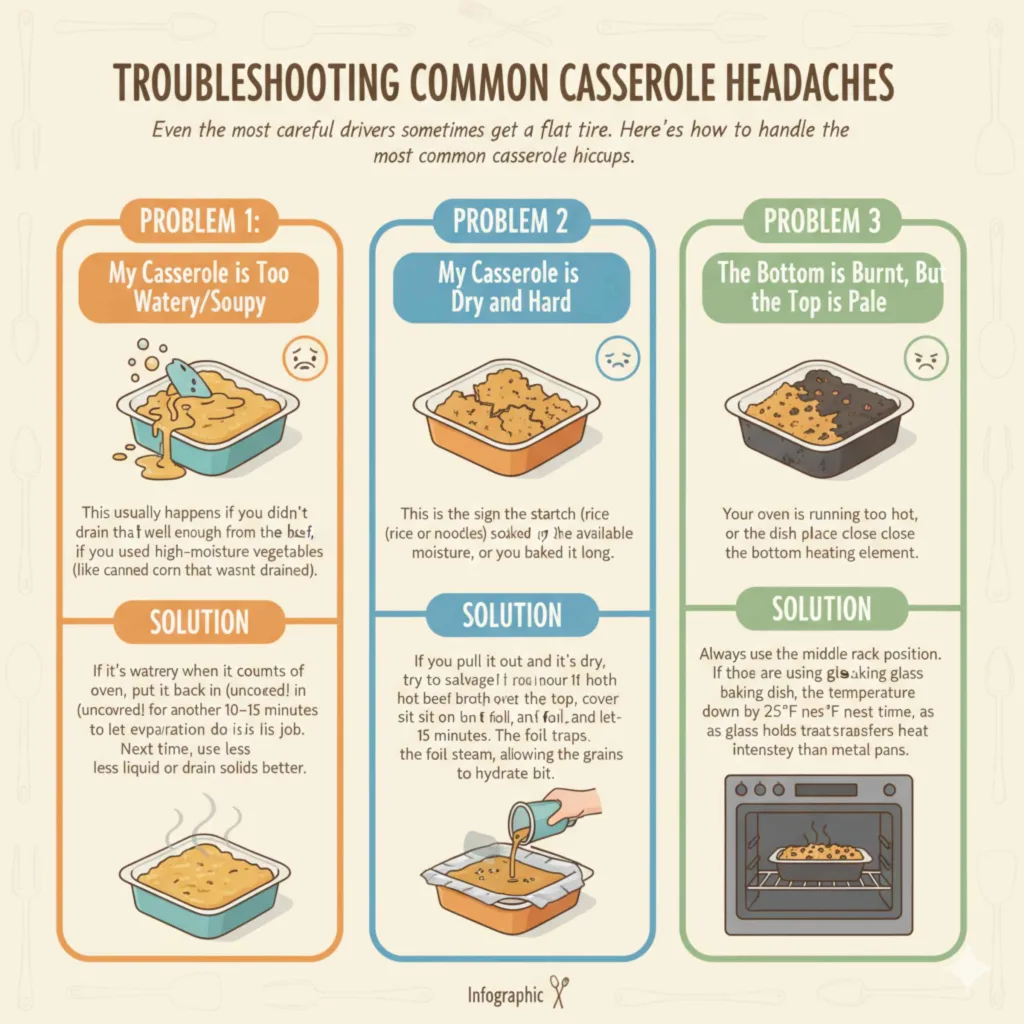
Even the most careful drivers sometimes get a flat tire. Here’s how to handle the most common casserole hiccups.
Problem 1: My Casserole is Too Watery/Soupy
Solution: This usually happens if you didn’t drain the fat well enough from the beef, or if you used high-moisture vegetables (like canned corn that wasn’t drained). If it’s watery when it comes out of the oven, put it back in (uncovered!) for another 10–15 minutes to let evaporation do its job. Next time, use less liquid or drain solids better.
Problem 2: My Casserole is Dry and Hard
Solution: This is a sign the starch (rice or noodles) soaked up all the available moisture, or you baked it too long. If you pull it out and it’s dry, try to salvage it now: pour 1/2 cup of hot beef broth over the top, cover immediately with foil, and let it sit on the counter for 15 minutes. The foil traps the steam, allowing the grains to hydrate a bit.
Problem 3: The Bottom is Burnt, But the Top is Pale
Solution: Your oven is running too hot, or the dish was placed too close to the bottom heating element. Always use the middle rack position. If you are using a glass baking dish, move the temperature down by 25°F next time, as glass holds and transfers heat more intensely than metal pans.
Frequently Asked Questions (FAQ) for Casserole Starters
Q1: Can I make any beef casserole ahead of time?
A: Yes! Most beef casseroles are excellent make-ahead meals. Assemble the entire dish (unbaked), cover it tightly with plastic wrap and then foil, and refrigerate for up to 24 hours. When you are ready to bake, let it sit on the counter for 30 minutes, or add 10–15 minutes to the bake time if going straight from the fridge.
Q2: What kind of ground beef is best for casseroles?
A: Medium-lean ground beef, usually 80% lean / 20% fat, is ideal. The fat renders down during cooking, adding flavor and moisture to the sauce. If you use very lean beef (93% or higher), you might need to add an extra splash of broth or sour cream to keep things creamy.
Q3: Do I have to drain the fat after browning beef for a casserole?
A: Yes, absolutely! If you leave the fat in, it separates during baking, leaving oily pools on the surface or a greasy texture throughout the sauce. Draining is a quick step that guarantees a much better final product consistency.
Q4: Can I substitute canned soup with homemade sauce?
A: Definitely. To replace one 10.5 oz can of condensed soup, whisk together 1/2 cup of beef broth, 1/2 cup of milk or cream, 1 tablespoon of cornstarch (or flour), and your desired seasonings (like Worcestershire sauce or dry mustard powder). Heat this mixture on the stove until slightly thick before adding it to your casserole mix.
Q5: What is the best cheese topping for maximum meltiness?
A: Shredded cheese melts best when it’s freshly grated, not the pre-shredded bagged varieties (which contain anti-clumping agents). Monterey Jack, Colby Jack, or mild Cheddar are fantastic choices for a smooth, even melt.
Q6: How do I know when a casserole is truly done?
A: Look for visual cues. The sauce should be bubbling visibly around the edges, and the internal temperature should register at least 165°F (74°C) if you are using meat. If using rice or pasta, check that the starch is tender when pierced with a fork.
Conclusion: Your Next Easy Dinner Awaits
See? Mastering different beef casserole recipes isn’t about complex techniques; it’s about reliably combining four core elements: protein, starch, binder, and topping. Whether you choose the comforting embrace of the Noodle Casserole, the hearty satisfaction of the Shepherd’s Pie, or the simple bulk of the Beef & Rice Bake, you now have the blueprint to succeed. Don’t let a busy evening stop you from making a wonderful, homemade meal. Grab your skillet and your favorite 9×13 dish; you’ve got this. Every time you pull a golden, bubbly casserole out of the oven, you’ll feel that same confidence you get when you successfully change your own oil for the first time—it’s practical, rewarding, and tastes great!