Fat burners are supplements designed to boost metabolism and increase fat breakdown, often by using natural stimulants or compounds. They are tools, like a specialized wrench for engine tuning, that work best when paired with consistent diet and exercise for safe and effective fat loss.
Have you ever felt like losing those last few pounds is like running a car engine that just won’t hit its peak RPM? You’re eating right and working out, but the results are slow. Many people turn to supplements hoping for a little extra help. That’s where “fat burners” come in. These products sound complicated, but they are simply supplements meant to give your body a helpful nudge toward using stored energy. It can be frustrating when your hard work isn’t matching the scale. Don’t worry! We’re going to break down exactly what fat burners are, how they work, and how to use them safely, just like learning the right way to clean your spark plugs.
What Are Fat Burners? The Simple Explanation
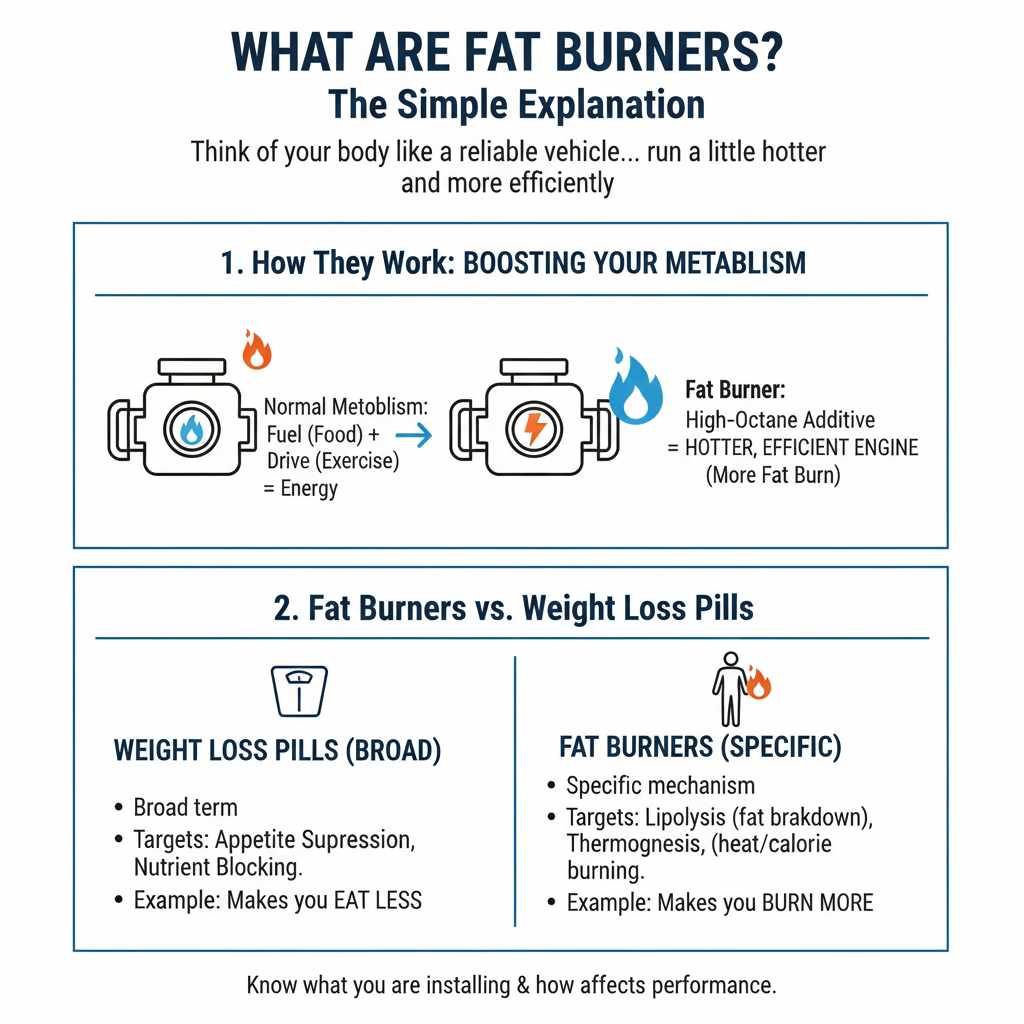
Think of your body like a reliable vehicle. You put in good fuel (food) and you drive it regularly (exercise). A fat burner is like a high-octane additive—it’s meant to make your engine (metabolism) run a little hotter and more efficiently at burning up stored fuel (body fat).
In simple terms, a fat burner is a dietary supplement marketed to help support weight loss by increasing fat oxidation (burning fat for energy) or improving energy levels so you can exercise harder. They are very popular, but just like aftermarket parts on a car, you need to know what you are installing and how it will affect performance.
Fat Burners vs Weight Loss Pills
You might hear the terms “fat burner” and “weight loss pill” used interchangeably, but there’s a slight difference in focus:
- Weight Loss Pills: This is a broad term that can include anything designed to make you lose weight. Some might focus on appetite suppression (making you eat less), while others might block nutrient absorption.
- Fat Burners: These are more specific. Their primary mechanism targets the process of lipolysis (breaking down fat) or increasing thermogenesis (heat production and calorie burning).
How Do Fat Burners Actually Work? The Science Simplified
Fat burners aren’t magic, but they use specific ingredients that tap into your body’s natural energy systems. They mainly work through two main pathways:
1. Increasing Thermogenesis (Turning Up the Heat)
This is the most common mechanism. Thermogenesis is the process where your body produces heat, which burns calories. When your body generates more heat, it requires more energy, leading to a higher overall energy expenditure even when you are just resting—this is your Basal Metabolic Rate (BMR).
Ingredients that promote thermogenesis often work by stimulating your central nervous system (CNS), similar to how a gentle tap on the gas pedal gets things moving.
2. Enhancing Lipolysis (Mobilizing Stored Fat)
Lipolysis is the breakdown of stored fat (triglycerides) into fatty acids that can be used for energy. Certain compounds in fat burners help signal fat cells to release this stored energy.
Imagine your stored fat is like a tightly locked garage full of tools (energy). A fat burner ingredient can act like a key, helping to unlock the door so those tools can be taken out and used by the body during exercise or daily activity.
3. Appetite Suppression and Energy Boost
Many products combine fat-mobilizing ingredients with compounds that:
- Suppress Appetite: Making it easier to stick to a calorie deficit—eating fewer calories than you burn.
- Increase Energy/Focus: Providing the drive to push harder during workouts, resulting in more calories burned overall.
The Key Ingredients: What You’ll Find Under the Hood
When you look at a fat burner label, it can look like an intimidating parts diagram. But most effective ingredients fall into a few key buckets. Understanding these helps you choose a reliable product.
Category 1: Stimulants (The Energy Drivers)
These ingredients rev up your system, increasing focus and calorie burn.
| Ingredient | What It Does (Simplified) | Analogy |
|---|---|---|
| Caffeine | The most common ingredient. Boosts energy, focus, and mildly increases metabolism. | Your regular weekly oil change—reliable and essential. |
| Green Tea Extract (EGCG) | Works synergistically with caffeine to enhance fat oxidation. | A top-shelf synthetic oil blend for better efficiency. |
| Yohimbine/Synephrine | Stronger stimulants that directly signal fat release. Use with caution. | A performance turbocharger—adds serious power but needs careful monitoring. |
Category 2: Thermogenics (The Heat Producers)
These ingredients slightly raise your body temperature to burn more fuel.
- Capsaicin (from Chili Peppers): Adds a little internal warmth, increasing calorie burn after a meal.
- Cayenne Pepper: Often used for the same thermogenic effect as capsaicin.
Category 3: Metabolic Boosters & Fat Mobilizers
These help your body process and use fat more effectively.
- L-Carnitine: Helps transport fatty acids into the mitochondria (the cell’s powerhouse) so they can be burned for energy. If this sounds like a delivery truck, you’re right—it moves the cargo!
- Green Coffee Bean Extract: Contains chlorogenic acid, thought to reduce carbohydrate absorption.
Category 4: Appetite Suppressants
These help you feel fuller for longer, making a calorie deficit easier to maintain.
- Glucomannan: A type of soluble fiber that absorbs water in your stomach, creating a feeling of fullness.
The Foundation: Why Fat Burners Need Diet and Exercise
This is the most crucial point in this entire guide. A fat burner is only effective if you are already doing the foundational work. Trying to rely only on a supplement to burn fat is like trying to win a race by putting premium gas in a car with flat tires and an empty gas tank. It won’t work!
For a fat burner to have any noticeable, safe effect, you must:
- Be in a Calorie Deficit: You must consistently burn more calories than you consume. Supplements can only slightly increase the “burn” side of the equation; you manage the “intake” side through diet.
- Engage in Resistance Training: Lifting weights or doing bodyweight exercises helps ensure that the weight you lose comes from fat, not crucial muscle mass. Muscle tissue burns more calories at rest than fat tissue does.
- Stay Hydrated: Water is essential for every metabolic process, especially those involving thermogenesis.
To find scientifically backed guidance on building a sustainable calorie deficit, resources like the National Heart, Lung, and Blood Institute (NHLBI) offer great starting points for sustainable health goals.
Finding the Right Fat Burner for You: A Beginner’s Approach
Since you are new to this, we want to keep things simple and safe. Don’t jump straight for the strongest product on the shelf. We need reliability and clarity, just like checking the oil level before a long road trip.
Step 1: Start with the Basics (Stimulant-Free Options)
If you are sensitive to caffeine or have never taken supplements before, start with a stimulant-free fat burner. These usually focus only on ingredients like L-Carnitine or fiber sources.
Why? You want to see how your body reacts to the core mechanism (fat mobilization) without the jitters, heart racing, or sleep disruption that stimulants can cause. If you can manage your diet and exercise without stimulants, you are building a stronger foundation.
Step 2: Introduce Mild Stimulants Slowly
If you feel you need an energy edge, introduce a product containing moderate levels of caffeine (100mg to 200mg per serving) or Green Tea Extract.
Safety Check: Always start with half the recommended dose recommended on the bottle to gauge your tolerance.
Step 3: Read the Label (The Mechanic’s Checklist)
A good product will clearly list the dosages of its active ingredients. Be wary of “proprietary blends.” This is like a manufacturer hiding exactly how much of each chemical is in their special fluid—you don’t know if you’re getting an effective dose or just marketing fillers.
Look for transparent labeling. If you see a list of 20 ingredients but only vague amounts, that’s a red flag.
Step 4: Cycle Your Use (Preventing the Engine from Overheating)
Your body adapts quickly, just like you get used to the sound of your car’s engine over time. If you use a stimulant-based fat burner every day for months, you might stop noticing the energy boost (tolerance builds). Even worse, over-stimulating your system isn’t healthy.
Cycling Strategy:
- Use the burner for 6 to 8 weeks (e.g., during a focused diet phase).
- Take a 1 to 2-week break where you stop using the product completely.
- Reintroduce it if necessary.
Safety First: Understanding Side Effects and Risks
Just like learning the torque specifications for lug nuts is critical for safety, understanding potential side effects is crucial for supplement use. Fat burners primarily affect your cardiovascular and nervous systems, so caution is necessary.
Common (Usually Mild) Side Effects:
- Jitters or Anxiety (from stimulants)
- Insomnia or difficulty sleeping (if taken too late in the day)
- Upset stomach or nausea
- Increased heart rate or slight blood pressure increase
When to Stop Immediately (Red Flags):
If you experience any of the following, discontinue use immediately and consult with a healthcare provider. These indicate that the product, or its dose, is not right for your system:
- Chest pain or palpitations
- Severe dizziness or passing out
- Persistent headaches that don’t go away
- Extreme mood swings or irritability
Pro Tip for Beginners: Since many fat burners contain stimulants, never take them within six hours of your intended bedtime. Good sleep is crucial for hormone balance and recovery, and poor sleep will sabotage your diet efforts faster than anything else.
Fat Burners vs Prescription Weight Loss Drugs
It’s important to clearly distinguish between over-the-counter supplements and prescription medications. These are fundamentally different tools.
| Feature | Dietary Fat Burner Supplement | Prescription Weight Loss Medication |
|---|---|---|
| Regulation | Regulated as food; less strict testing required by the FDA before market entry. | Heavily regulated by the FDA; requires extensive clinical trials for safety and efficacy. |
| Mechanism | Generally uses natural compounds to slightly boost metabolism or energy. | Often targets specific hormonal pathways or significantly alters appetite regulation in the brain. |
| Availability | Available freely online and in stores. | Requires a doctor’s authorization and prescription. |
Supplements are generally intended to support a healthy lifestyle, whereas prescription drugs are often reserved for specific medical conditions, usually involving higher levels of obesity.
Maximizing Your Results: Integration, Not Substitution
To get the most out of any fat burner, think of it as the finishing touch on a perfectly tuned machine. Here is a practical sequence to integrate a fat burner safely while maximizing your results.
Phase 1: Baseline Optimization (4 Weeks)
Focus entirely on diet and training. Establish consistent meal timing and workout frequency. Do not introduce any supplements yet.
Phase 2: Introducing the Booster (8 Weeks)
Introduce a low-dose, stimulant-based fat burner. Take it 20–30 minutes before your main workout session on training days. On rest days, use only half the usual dosage, or skip it entirely if you feel energetic enough.
- Goal: Use the energy boost to increase workout intensity (e.g., add 5 minutes to cardio or increase reps on lifts).
- Hydration Check: Ensure you are drinking at least 3 liters of water daily, as stimulants increase fluid needs.
Phase 3: Reassessment and Cycling (Ongoing)
After 8 weeks, take a full 2-week break from the burner. During this break, evaluate your progress. Did the fat burner significantly help you push past a plateau? If yes, you can reintroduce it after the break. If not, skip it and focus solely on refining your diet and training.
Common Misconceptions About Fat Burners
Part of being a confident DIY maintainer—whether for your car or your body—is knowing which myths to ignore. Here are a few common traps people fall into:
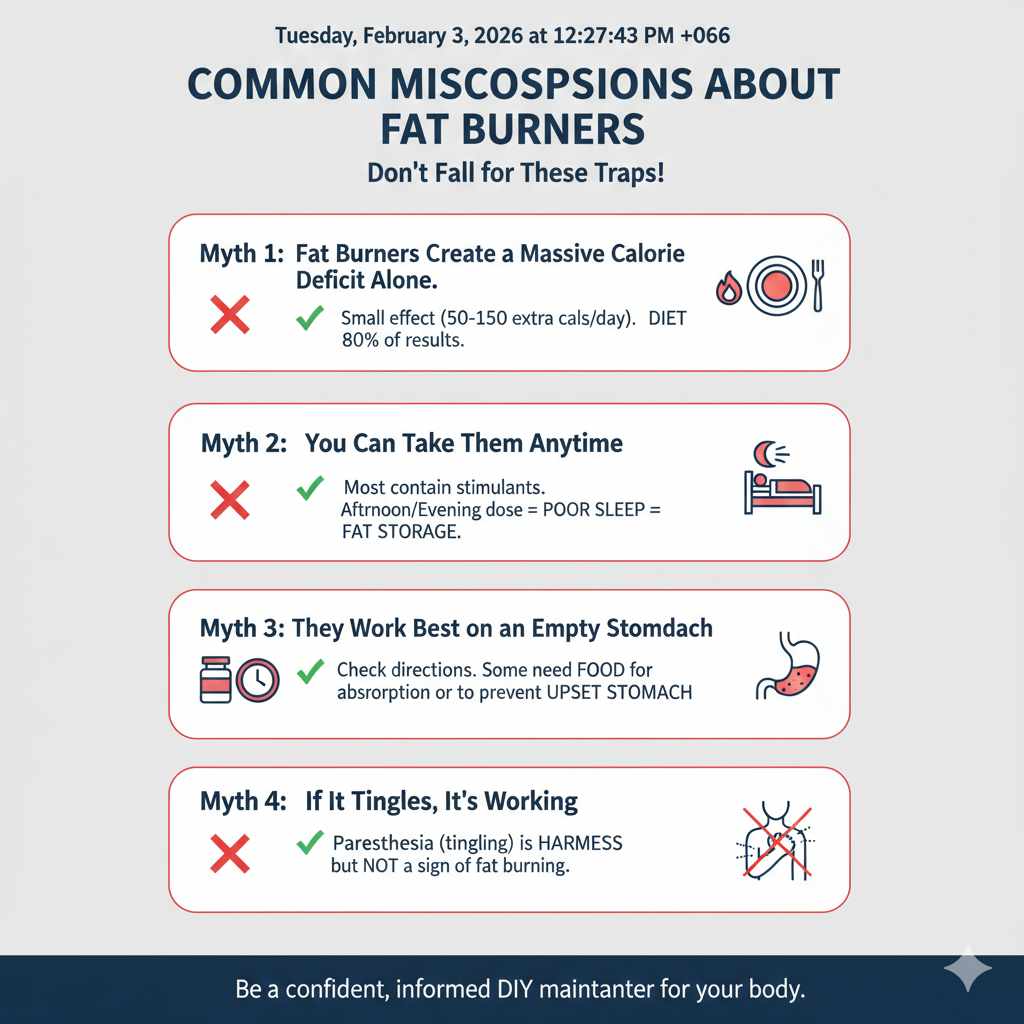
Myth 1: Fat Burners Create a Massive Calorie Deficit Alone.
Reality: Even the strongest legal fat burners might only contribute an extra 50 to 150 calories burned per day through increased metabolism. This effect is small compared to cutting 500 calories from your daily food intake. Diet drives 80% of weight loss results.
Myth 2: You Can Take Them Anytime.
Reality: Because most contain stimulants, taking them in the afternoon or evening guarantees poor sleep. Poor sleep raises cortisol (stress hormone), which encourages fat storage, completely counteracting the supplement’s goal. Always check timing.
Myth 3: They Work Best on an Empty Stomach.
Reality: For many ingredients, especially those that suppress appetite or contain stimulants, taking them before a meal might actually increase stomach discomfort. Check the specific product directions—some must be taken with food to ensure proper absorption or reduce stomach upset.
Myth 4: If It Tingles, It’s Working.
Reality: That tingling sensation common with high doses of Niacin (a B vitamin sometimes included) or certain amino acids is called paresthesia. It’s harmless, but it doesn’t necessarily mean fat is melting away. Don’t rely on tingling as an indicator of effectiveness.
Frequently Asked Questions (FAQ) for New Users
Q1: Can I drink coffee while taking a fat burner?
A: Be very cautious. Most fat burners already contain caffeine. If your burner has 200mg of caffeine, adding a large coffee on top could easily push you over 300-400mg, leading to jitters, anxiety, and potential heart strain. Check the label and count the caffeine in your supplements first.
Q2: How long until I see results from a fat burner alone?
A: If you take a fat burner without changing your diet or exercise, you will likely see no significant results. They are designed to enhance positive habits, not replace them. Results come from consistent lifestyle changes.
Q3: Are stimulant-free fat burners effective?
A: Yes, they can be very effective, especially for people sensitive to stimulants or those who already have high levels of energy. They typically focus on ingredients like L-Carnitine or fiber to improve how your body handles fat transport and signals fullness.
Q4: Should men and women use the same fat burners?
A: Generally, yes. The active ingredients that boost metabolism (like caffeine or green tea extract) work the same way in both sexes. Differences usually come down to body weight and differing nutritional needs, not a separate chemical pathway for fat burning.
Q5: What is the safest way to start using a fat burner?
A: The safest start is always the lowest dose. Try taking just half the serving size recommended on the bottle for the first week. If you feel fine, slowly work up to a full serving. Also, ensure the product is third-party tested if possible.
The Final Word on Confidence and Control
If you are looking for a way to gently speed up results while you diligently manage your diet and training, a high-quality fat burner that you understand can certainly be a helpful accessory. Remember what we said about maintenance checks—knowledge is power.
When you understand the ingredients, you control the process. You are not passively hoping a pill works; you are actively selecting a tool to support a healthy lifestyle you have already built. By being smart about dosage, timing, and cycling, you keep your body running smoothly and safely toward your fitness goals.