
For the best all-around performance, durability, and versatility, stainless steel is the proven choice for most home cooks. It excels at searing and will last a lifetime. Nonstick is excellent for specific tasks like cooking eggs and delicate fish, making it a great supplementary pan but not the primary workhorse.
Walking down the cookware aisle can feel overwhelming. Shiny stainless steel pans on one side, sleek nonstick pans on the other. Both promise perfect meals, but which one is right for your kitchen? It’s a common question, and the answer isn’t always simple. Many new cooks buy the wrong pan and end up with stuck food or a scratched surface, feeling frustrated and defeated.
But don’t worry. Choosing the right cookware is much easier than it seems. You don’t need to be a professional chef to make a great decision. We’re going to break down everything you need to know about stainless steel and nonstick pans in a simple, clear way. By the end of this guide, you’ll feel confident and ready to choose the perfect pan for your cooking style.
Understanding Stainless Steel Cookware
First, let’s talk about the kitchen workhorse: stainless steel. When you see chefs on TV flipping and searing, they’re almost always using a stainless steel pan. There’s a good reason for that. It’s tough, reliable, and gives you incredible control over your cooking.
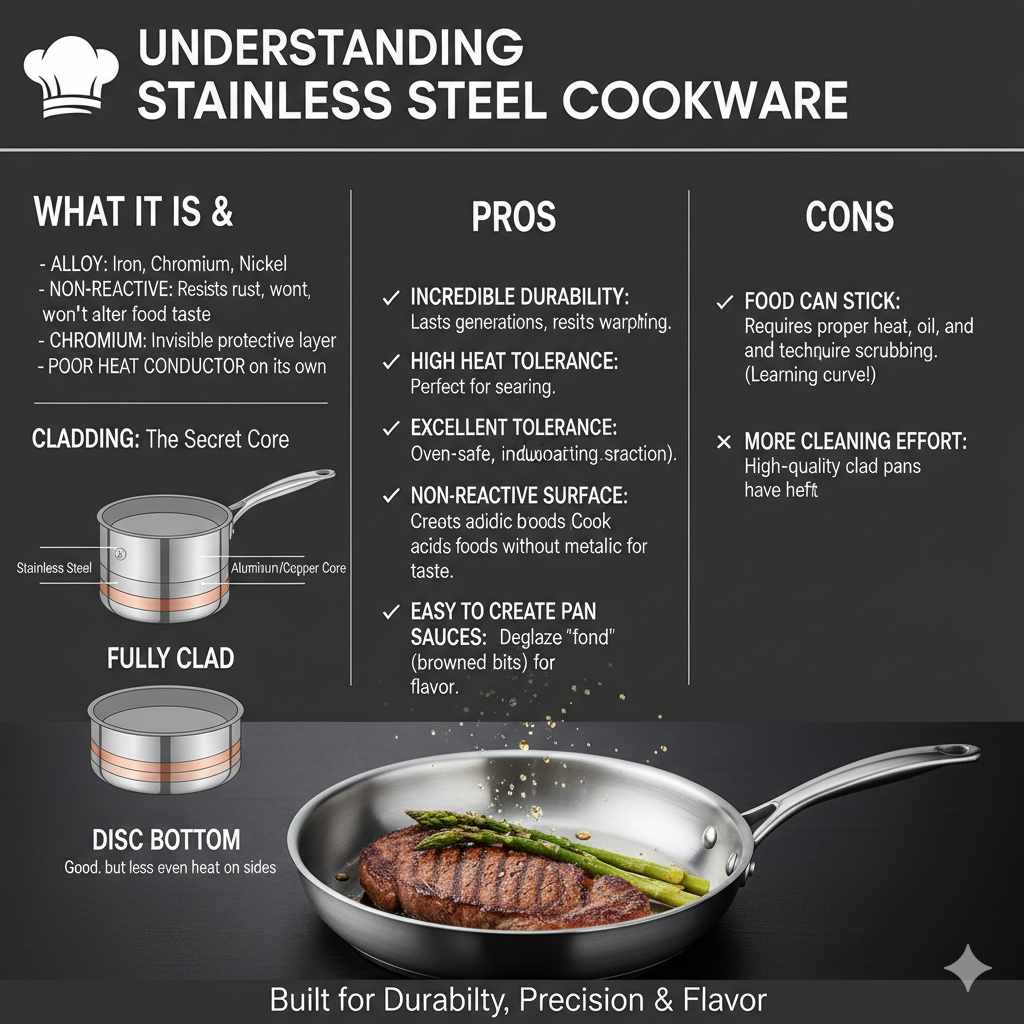
So, what is it? Stainless steel cookware is made from an alloy, which is a mix of metals. It primarily includes iron, chromium, and sometimes nickel. The chromium is key—it creates an invisible layer that resists rust and corrosion, keeping your pans looking great for years. It’s a non-reactive surface, meaning it won’t alter the taste of acidic foods like tomato sauce or lemon juice.
The Secret Core: Cladding and Heat Conduction
On its own, stainless steel isn’t the best at conducting heat. It can heat unevenly, creating hot spots that burn your food. To solve this, manufacturers “clad” the cookware. They sandwich a layer of a highly conductive metal, like aluminum or copper, between layers of stainless steel. This core distributes heat quickly and evenly across the bottom and up the sides of the pan.
- Fully Clad: The best stainless steel pans are fully clad, meaning the aluminum or copper core extends all the way up the sides. This provides superior, even heating for perfect results.
- Disc Bottom: Less expensive pans may only have a conductive disc bonded to the bottom. These work well, but the heat won’t be as even up the sides of the pan.
Pros and Cons of Stainless Steel
Like any tool, stainless steel has its strengths and weaknesses. Understanding them helps you use it correctly.
Pros:
- Incredible Durability: These pans are built to last. They resist warping, scratching, and chipping. With proper care, a good stainless steel pan can be passed down for generations.
- High Heat Tolerance: You can use stainless steel on any cooktop, including induction, and put it directly into a hot oven. It’s perfect for getting a deep, brown sear on steaks or chicken.
- Excellent Searing: The surface of stainless steel encourages the Maillard reaction, the chemical process that creates the delicious browning and flavor on meats and vegetables.
- Non-Reactive Surface: Cook anything you want in it. Acidic foods won’t react with the metal or pick up a metallic taste.
- Easy to Create Pan Sauces: Those little browned bits that stick to the bottom (called “fond”) are flavor gold. You can easily deglaze the pan with wine, broth, or water to make amazing sauces.
Cons:
- Food Can Stick: This is the biggest hurdle for beginners. Without proper heat management and enough fat (oil or butter), food can stick. There’s a learning curve, but it’s easy to master.
- Requires More Cleaning Effort: Since food can stick, you might need a little more elbow grease to clean it compared to a nonstick pan.
- Can Be Heavy: High-quality, fully clad stainless steel cookware has some heft to it, which might be a consideration for some users.
Understanding Nonstick Cookware
Now let’s look at the other popular option: nonstick cookware. These pans are famous for one thing: making food slide right out. They are incredibly user-friendly and are often the first type of pan a new cook buys.
Nonstick pans typically have a base made of aluminum, which is a great heat conductor. The magic is in the coating applied to the cooking surface. This coating is what prevents food from sticking.
Types of Nonstick Coatings
There are two main types of nonstick coatings you’ll find today:
- PTFE (Teflon): Polytetrafluoroethylene, commonly known by the brand name Teflon, is the classic nonstick coating. Modern PTFE coatings are safe for cooking, but they can break down at very high temperatures (above 500°F or 260°C), releasing fumes. It’s crucial to use these pans on low to medium heat.
- Ceramic: This is a newer type of nonstick coating made from a sand-derived gel. It’s PTFE-free and can often handle slightly higher temperatures. However, its nonstick properties tend to degrade faster than traditional PTFE.
A quick note on safety: Years ago, there were concerns about a chemical called PFOA used in the manufacturing of Teflon. However, as the U.S. Food and Drug Administration (FDA) confirms, PFOA has been phased out of cookware production for many years. Today’s nonstick pans from reputable brands are considered safe when used as directed.
Pros and Cons of Nonstick
Nonstick cookware is popular for a reason, but it’s important to know its limits.
Pros:
- Excellent Food Release: This is its superpower. Eggs, pancakes, and delicate fish slide out effortlessly, making cooking and flipping a breeze.
- Easy to Clean: With nothing stuck to the surface, cleanup is usually as simple as a quick wipe with a soapy sponge.
- Requires Less Fat: The slick surface means you can cook with very little oil or butter, which can be a plus for health-conscious cooking.
- Beginner-Friendly: The forgiving nature of nonstick makes it less intimidating for those just starting in the kitchen.
Cons:
- Not Durable: The nonstick coating is delicate. It can be easily scratched by metal utensils, harsh scrubbing, or even stacking other pans on top of it. Once the coating is significantly scratched, the pan should be replaced.
- Low Heat Only: Nonstick pans are not designed for high-heat cooking. Overheating can damage the coating and, in the case of PTFE, release fumes. This means you can’t get a proper sear on a steak.
- Shorter Lifespan: Even with perfect care, a nonstick pan’s coating will eventually wear out. You should expect to replace it every few years.
- Not Ideal for Pan Sauces: Since food doesn’t stick, you don’t get the flavorful fond needed to build a great pan sauce.
Stainless Steel vs Nonstick: A Head-to-Head Comparison
To make the choice even clearer, let’s put the two types of cookware side-by-side and compare them on the most important factors for any home cook.
| Feature | Stainless Steel Cookware | Nonstick Cookware |
|---|---|---|
| Heat Tolerance | Very High. Oven-safe to 500°F+ (260°C+). Perfect for searing. | Low to Medium. Overheating can damage the coating. Generally not for oven use. |
| Durability & Lifespan | Extremely durable. Can last a lifetime. Resists scratches from metal utensils. | Not durable. Coating scratches easily. Lifespan of 1-5 years. |
| Cooking Performance | Excellent for browning, searing, and sautéing. Builds fond for pan sauces. | Excellent for preventing sticking. Ideal for eggs, pancakes, and delicate foods. |
| Food Release | Requires proper technique (preheating, use of fat) to prevent sticking. | Superior food release. Food slides right out. |
| Maintenance & Cleaning | Dishwasher safe. May require soaking or scrubbing for stuck-on food. | Very easy to clean. Hand washing is highly recommended to preserve the coating. |
| Health & Safety | Completely inert and non-reactive. No health concerns. | Safe when used correctly. Do not overheat or use if the coating is badly scratched. |
| Best For… | Searing meat, sautéing vegetables, creating pan sauces, general-purpose cooking. | Eggs, pancakes, crepes, delicate fish, cheese dishes. |
When to Use Stainless Steel: The Powerhouse Pan
Think of your stainless steel skillet as your all-purpose tool. If you’re not sure which pan to grab, this is usually the right answer. It shines in situations where heat and browning are your friends.
Mastering the Sear
This is where stainless steel is the undisputed champion. To get a perfect, crusty sear on a steak, pork chop, or scallop, you need high, stable heat. Stainless steel delivers this perfectly. It allows the surface of the food to bond with the hot pan, creating that beautiful brown crust through the Maillard reaction. Once the crust is formed, the food will release itself naturally from the pan.
Building Flavorful Pan Sauces
After searing your protein, you’ll see browned bits stuck to the bottom of the pan. That’s the fond! By pouring in a liquid like wine, broth, or even water, you can “deglaze” the pan, scraping up all that concentrated flavor to create a restaurant-quality sauce right in the same pan.
Everyday Sautéing and Browning
Whether you’re browning ground meat for a chili, softening onions and carrots for a soup, or sautéing mushrooms, stainless steel gives you precise heat control. You can adjust the temperature quickly to prevent burning while still achieving excellent color and flavor development.
When to Use Nonstick: The Specialist Pan
A nonstick pan is not a do-it-all pan, but it is an unbeatable specialist. It excels at cooking delicate foods that are prone to sticking, making certain kitchen tasks much less stressful.
The Perfect Eggs
This is the number one reason to own a nonstick pan. Scrambled, fried, or folded into an omelet, eggs will slide right out of a nonstick skillet with no fuss and minimal fat. It turns a potentially messy task into a simple, clean process.
Fluffy Pancakes and Crepes
Just like with eggs, a nonstick surface is ideal for pancakes, crepes, and French toast. It ensures they cook evenly without sticking, allowing for an easy, confident flip every time. You get perfectly golden-brown results without the risk of tearing.
Cooking Delicate Fish
Flaky fish fillets like tilapia, cod, or flounder can easily fall apart in a regular pan. The slick surface of a nonstick pan allows you to cook them gently and turn them without breaking the delicate flesh.
The Verdict: What’s the Proven Best Choice?
So, after all this, which one should you buy? The proven best choice isn’t about picking one winner for everything. It’s about building a smart, versatile kitchen toolkit. The best kitchens have both.
If you can only afford one pan right now, make it a 10 or 12-inch stainless steel skillet. Its sheer versatility makes it the most valuable player in the kitchen. It can handle 90% of your cooking tasks, from searing a steak to boiling pasta, and it will last forever. You will have to learn how to manage heat and use oil properly, but this is a fundamental cooking skill that will make you a better cook.
The ideal setup for most home cooks is a core set of stainless steel cookware (a skillet, a saucepan, and a stockpot) supplemented by one good-quality 8 or 10-inch nonstick skillet.
This hybrid approach gives you the best of both worlds:
- You have the durable, high-heat powerhouse for all your serious cooking.
- You have the easy-release specialist for your delicate, sticky foods.
This way, you aren’t trying to force one pan to do a job it wasn’t designed for. You use the right tool for the right task, which leads to better food and less frustration.

Frequently Asked Questions (FAQ)
1. Is nonstick cookware safe to use?
Yes, modern nonstick cookware from reputable brands is safe when used as directed. The chemicals of past concern (like PFOA) are no longer used in production. The key is to avoid overheating the pan (stay on low-to-medium heat) and to stop using it if the coating is deeply scratched or flaking.
2. Why does all my food stick to my stainless steel pan?
This is the most common issue for beginners. Food sticks to stainless steel for two main reasons: the pan isn’t hot enough when you add the food, or you’re not using enough fat (oil/butter). Always preheat your pan over medium heat for a minute or two. A good test is to sprinkle a few drops of water in the pan; if they sizzle and dance, it’s ready. Then, add your oil, let it heat up for a few seconds, and then add your food.
3. Can I use metal utensils on my pans?
On stainless steel, yes! It’s tough enough to handle metal spatulas and spoons without any issue. On nonstick, absolutely not. Metal utensils will scratch and destroy the delicate coating. Always use silicone, wood, or nylon utensils with nonstick cookware.
4. How often do I need to replace my nonstick pan?
With gentle use and proper care (hand washing, no metal utensils, no high heat), a good quality nonstick pan can last between 3 to 5 years. A lower-quality or heavily used pan might only last a year or two. Once you see significant scratches or the nonstick property is gone, it’s time for a replacement.
5. Can I put my cookware in the dishwasher?
Most stainless steel cookware is dishwasher safe, although hand washing will keep it looking its best. For nonstick cookware, you should always hand wash it. The harsh detergents and high heat of a dishwasher can degrade the nonstick coating much faster, significantly shortening its lifespan.
6. What is the one pan every beginner must have?
A 10-inch stainless steel skillet. It’s the most versatile pan in the kitchen. You can use it to learn fundamental cooking techniques like searing and sautéing. While a nonstick pan is easier at first, mastering a stainless steel pan will make you a much more capable and confident cook in the long run.
Conclusion: Cook with Confidence
Choosing between stainless steel and nonstick cookware doesn’t have to be a complicated decision. It’s not about finding a single “winner,” but about understanding that each pan is a tool with a specific purpose. Stainless steel is your durable, all-around workhorse, perfect for developing flavor and handling high-heat tasks. Nonstick is your specialist, designed for delicate foods that need a gentle touch and an easy release.
By starting with a high-quality stainless steel skillet and adding a nonstick pan for your eggs and pancakes, you create a powerful, efficient, and long-lasting kitchen team. This smart combination empowers you to tackle any recipe with confidence, knowing you have the right tool for the job. Now you can stop worrying about your cookware and start focusing on the joy of creating delicious meals.