
The key difference is performance and durability. Stainless steel is a lifetime investment, perfect for high-heat searing and developing flavor, but food can stick. Hard-anodized cookware offers superior non-stick performance and even heating, making it ideal for delicate foods like eggs and fish, but its surface can wear down over time.
Stepping into the world of cookware can feel overwhelming. You see shiny stainless steel pans next to sleek, dark hard-anodized ones. They both look great, but which one is right for your kitchen? It’s a common question, and picking the wrong one can lead to burnt food and frustrating cleanup.
Don’t worry. Choosing the right cookware isn’t as complicated as it seems. We’re going to break down everything you need to know about these two popular materials. This guide will walk you through the pros and cons of each, helping you understand how they cook, how to care for them, and which one truly fits your cooking style. Let’s find the perfect pans for you.
What Is Stainless Steel Cookware?
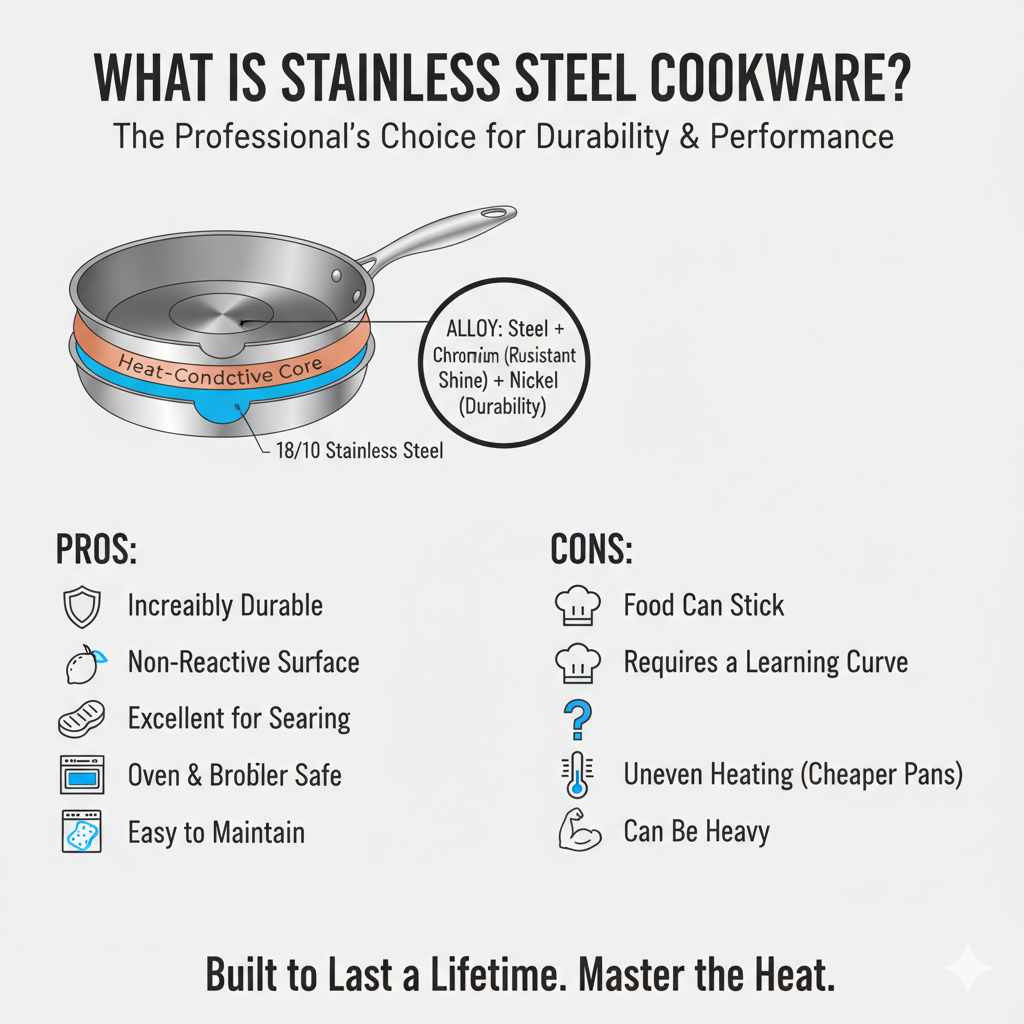
Think of stainless steel cookware as the reliable workhorse of the kitchen. It’s made from a steel alloy that includes chromium, which gives it its signature shine and resistance to rust, stains, and corrosion. You’ll often see numbers like 18/8 or 18/10 on the bottom of these pans. This simply refers to the percentage of chromium and nickel in the steel—more nickel means better rust resistance and a longer-lasting polish.
On its own, stainless steel isn’t a great heat conductor. This is why high-quality stainless steel cookware has a hidden secret: a core made of a more conductive metal like aluminum or copper. This core is sandwiched between layers of stainless steel, allowing the pan to heat up evenly and quickly. This construction, often called “tri-ply” or “multi-clad,” gives you the best of both worlds: the durability and non-reactive surface of steel with the superior heating of aluminum or copper.
Pros of Stainless Steel Cookware
- Incredibly Durable: A good set of stainless steel pans can literally last a lifetime. They don’t chip, peel, or wear out. You can pass them down to your kids.
- Non-Reactive Surface: You can cook acidic foods like tomatoes, wine, or lemon juice without worry. The steel won’t react with the food or impart a metallic taste.
- Excellent for Searing: If you want a perfect, crusty sear on a steak or crispy skin on chicken, stainless steel is your best friend. It excels at high-heat cooking.
- Oven and Broiler Safe: Most stainless steel pans can go from the stovetop straight into a hot oven or even under the broiler, giving you more cooking versatility.
- Easy to Maintain: They are typically dishwasher safe and can handle metal utensils and abrasive scrubbers without getting damaged.
Cons of Stainless Steel Cookware
- Food Can Stick: Without proper technique (preheating the pan and using enough oil), food can easily stick, making cleanup a chore.
- Requires a Learning Curve: It takes a little practice to learn how to control the heat and prevent sticking. It’s not as forgiving as non-stick cookware.
- Potential for Uneven Heating (in cheaper pans): Low-quality stainless steel pans without a proper aluminum or copper core will have hot spots and cook food unevenly.
- Can Be Heavy: High-quality, multi-clad pans are substantial and can be heavy to lift, especially when full.
What Is Hard-Anodized Cookware?
Hard-anodized cookware starts its life as simple aluminum, which is a fantastic heat conductor. However, aluminum on its own is soft, scratches easily, and reacts with acidic foods. The hard-anodization process fixes all of that.
The aluminum pan is submerged in a special acid bath and then subjected to an electrical current. This electrochemical process creates an oxidized layer on the surface that is incredibly hard, durable, and non-porous. Think of it as giving the soft aluminum a suit of armor. This surface is much stronger than stainless steel and is naturally stick-resistant.
Most hard-anodized pans also have a final layer of PFOA-free non-stick coating applied on top, giving you an ultra-smooth cooking surface where food just slides right off. It combines the amazing heat conduction of aluminum with the durability and convenience of a non-stick pan.
Pros of Hard-Anodized Cookware
- Exceptional Heat Conduction: The aluminum base heats up very quickly and evenly, eliminating hot spots that burn your food.
- Very Durable Surface: The hard-anodized exterior is scratch-resistant and won’t chip or peel like traditional non-stick coatings.
- Excellent Non-Stick Performance: Perfect for delicate foods like eggs, pancakes, and fish that are prone to sticking.
- Lightweight: Generally lighter than multi-clad stainless steel pans, making them easier to handle.
- Easy to Clean: Food rarely sticks, so cleanup is usually just a quick wipe with a sponge and soapy water.
Cons of Hard-Anodized Cookware
- Not Always Dishwasher Safe: Harsh dishwasher detergents can damage the non-stick coating over time. Hand washing is almost always recommended.
- Non-Stick Coating Wears Out: While the pan itself is durable, the non-stick coating will eventually degrade, especially if overheated or scratched. It won’t last a lifetime like stainless steel.
- Avoid Metal Utensils: You should stick to wood, silicone, or nylon utensils to protect the non-stick surface from scratches.
- Not Induction Compatible (Usually): Standard hard-anodized aluminum won’t work on an induction cooktop unless it has a special magnetic steel plate bonded to the bottom.
Stainless Steel vs Hard-Anodized: A Head-to-Head Comparison
Now that you know the basics of each material, let’s put them side-by-side to see how they stack up in the areas that matter most to a home cook.
Durability and Lifespan
When it comes to longevity, stainless steel is the undisputed champion. A high-quality stainless steel pan is an investment that can last for decades. It resists warping, scratching, and denting. You can use any utensil you want and scrub it as hard as you need to. Hard-anodized cookware is very durable in its own right—the anodized surface is harder than steel—but its lifespan is limited by the non-stick coating. With proper care, a good hard-anodized pan can last for several years, but it will eventually lose its non-stick properties and need to be replaced.
Winner: Stainless Steel
Heat Conduction and Distribution
This is where hard-anodized cookware really shines. Because its core is aluminum, it heats up incredibly fast and distributes that heat evenly across the entire cooking surface. This means no frustrating hot spots. A high-quality stainless steel pan with a thick aluminum or copper core can perform nearly as well, but a cheaper one will be noticeably inferior. For pure heating performance, hard-anodized has the edge.
Winner: Hard-Anodized
Cooking Performance
The “better” performer really depends on what you’re cooking. For high-heat tasks like searing a steak, browning meat for a stew, or getting a crispy skin on salmon, stainless steel is superior. It allows a beautiful crust to form and creates those delicious browned bits (called “fond”) on the bottom of the pan, which are essential for making pan sauces.
For delicate tasks, hard-anodized is the clear winner. Scrambling eggs, flipping pancakes, or pan-frying a delicate piece of fish is effortless. The non-stick surface provides a forgiving experience, ensuring your food doesn’t tear or stick.
Winner: It’s a tie—it depends on your cooking style.
Ease of Use and Cleaning
For day-to-day use and cleanup, hard-anodized is much easier. Food releases effortlessly, and cleaning is often as simple as a quick wipe. It’s very beginner-friendly. Stainless steel requires more attention. You need to preheat it properly and use the right amount of fat to prevent sticking. When food does stick, it can require soaking and some elbow grease to get clean. However, stainless steel wins points for being dishwasher safe, a convenience hard-anodized pans usually lack.
Winner: Hard-Anodized (for daily cleaning), Stainless Steel (for dishwasher convenience)
Health and Safety
Both cookware types are considered very safe for everyday cooking. Stainless steel is one of the safest and most stable materials available. It’s non-reactive and won’t leach anything into your food. Modern hard-anodized cookware is also safe. Concerns about non-stick coatings are usually related to chemicals like PFOA, which has been phased out of production in the United States. Today’s non-stick surfaces are PFOA-free. The U.S. Food and Drug Administration (FDA) has determined that nonstick coatings made with PTFE are safe for consumer use. The main safety rule for any non-stick pan is to avoid overheating it (above 500°F or 260°C), as this can cause the coating to break down.
You can find more detailed information on cookware safety from resources like the FDA’s page on food contact substances.
Winner: Both are safe, but stainless steel is inert and has no coating to worry about.
Comparison at a Glance
Here’s a simple table to help you see the key differences quickly.
| Feature | Stainless Steel | Hard-Anodized |
|---|---|---|
| Lifespan | Lifetime (25+ years) | 3-5 years (limited by non-stick coating) |
| Heat Conduction | Good to Excellent (with a quality core) | Excellent |
| Best For | Searing, browning, pan sauces | Eggs, fish, pancakes, delicate foods |
| Non-Stick? | No, requires oil and proper technique | Yes, excellent non-stick surface |
| Cleaning | Can be difficult, but is dishwasher safe | Very easy, but usually hand-wash only |
| Utensils | Metal utensils are safe | Avoid metal; use wood, nylon, or silicone |
| Oven Safety | High heat, often broiler safe | Usually oven safe to a lower temperature |
| Induction Ready? | Yes, most are | No, unless it has a bonded steel base |
Which Cookware Should You Choose?
The best choice for you comes down to how you cook, what you cook, and what you value most in your cookware. There’s no single “best” answer for everyone.
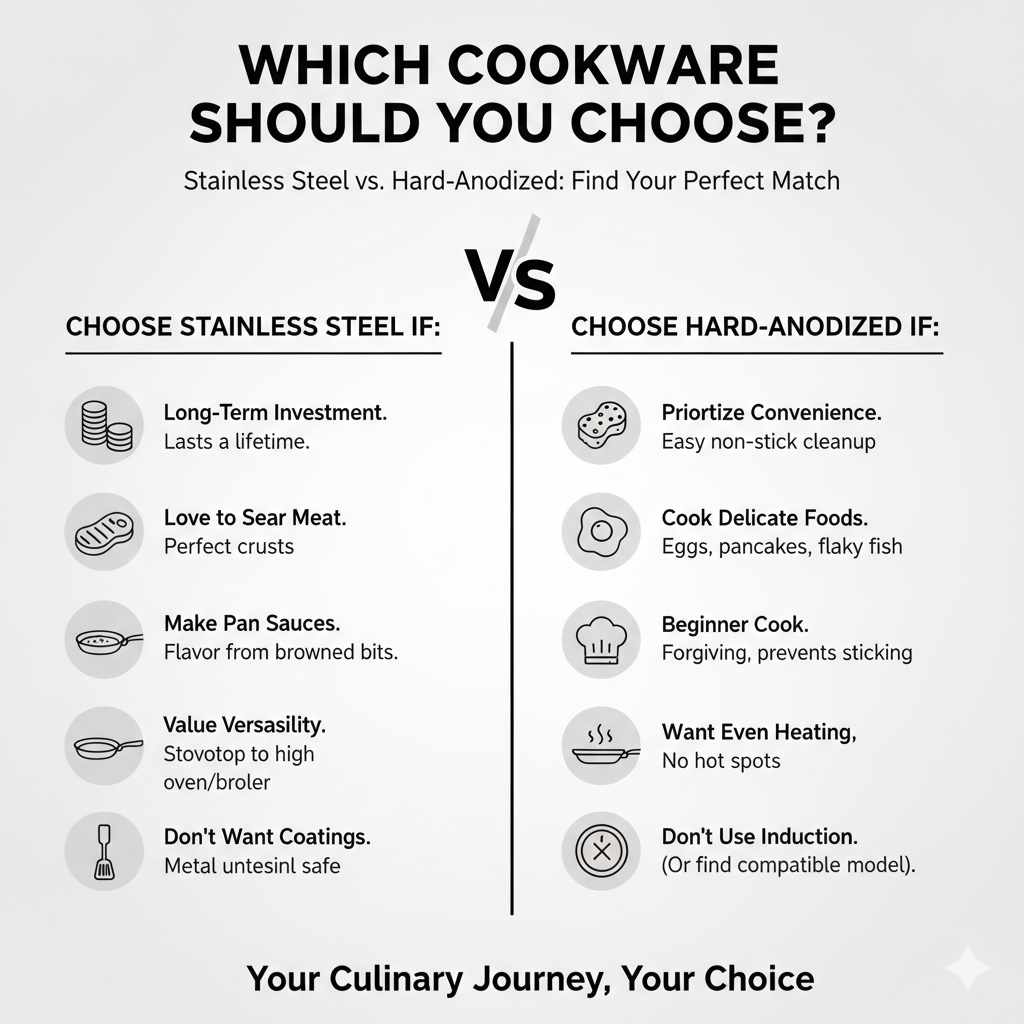
You should choose Stainless Steel if:
- You want a long-term investment. You are willing to pay more upfront for pans that will last a lifetime.
- You love to sear meat. You want that perfect brown crust on steaks, chops, and chicken.
- You enjoy making pan sauces. You use the browned bits left in the pan to build flavorful sauces.
- You value versatility. You want pans that can go from the stovetop to a very hot oven or broiler.
- You don’t want to worry about coatings. You prefer a pure, uncoated cooking surface and don’t mind using metal utensils.
You should choose Hard-Anodized if:
- You prioritize convenience. You want an easy, non-stick cooking experience with minimal cleanup.
- You cook a lot of delicate foods. Your go-to meals include eggs, omelets, pancakes, or flaky fish.
- You are a beginner cook. You want a more forgiving pan that helps prevent sticking while you learn.
- You want superior, even heating. You’re tired of pans with hot spots that burn food in one area while leaving another undercooked.
- You don’t use an induction stove. Or you are willing to look for a specific induction-compatible model.
The Best Solution: A Mix of Both
For most home kitchens, the ideal solution isn’t choosing one type over the other—it’s using both! A well-rounded cookware collection leverages the strengths of each material.
| Cooking Task | Recommended Cookware | Why It’s a Good Fit |
|---|---|---|
| Searing a Steak | Stainless Steel Skillet | Achieves high heat for a perfect crust and creates fond for sauces. |
| Scrambling Eggs | Hard-Anodized Skillet | Non-stick surface ensures eggs slide out easily without sticking. |
| Simmering Tomato Sauce | Stainless Steel Saucepan or Pot | The non-reactive surface won’t interact with the acidic tomatoes. |
| Flipping Pancakes | Hard-Anodized Griddle or Pan | Even heating and a slick surface make for perfect, golden pancakes. |
| Browning Ground Beef | Stainless Steel Skillet | Allows moisture to evaporate for better browning and flavor development. |
By having a stainless steel skillet for your high-heat searing and a hard-anodized pan for your everyday non-stick tasks, you get the best performance for every meal you cook. This hybrid approach allows you to cook any dish like a pro.
Frequently Asked Questions (FAQ)
1. Is hard-anodized cookware safe to use?
Yes, it is very safe. The hard-anodized surface is sealed and non-porous. Modern non-stick coatings are PFOA-free and considered safe for normal home cooking. Just be sure not to overheat the pan (above 500°F) or use pans with deeply scratched surfaces.
2. Which cookware is better for a beginner cook?
Hard-anodized cookware is generally more beginner-friendly. Its non-stick surface is very forgiving, which helps build confidence in the kitchen. It makes it easy to cook things like eggs and pancakes without the frustration of them sticking to the pan.
3. Can I use metal utensils on my pans?
You can safely use metal utensils on stainless steel cookware—it’s tough enough to handle them. You should absolutely avoid using metal utensils on hard-anodized or any non-stick cookware, as they can scratch and damage the surface, reducing its lifespan.
4. How do I clean a badly stained stainless steel pan?
For tough stains or burnt-on food, fill the pan with a bit of water and a splash of vinegar, bring it to a simmer, and gently scrape the bottom with a wooden spoon. For stubborn discoloration, a paste made of baking soda and water or a specialized stainless steel cleaner like Bar Keepers Friend works wonders.
5. Does hard-anodized cookware last forever?
No, it does not. While the anodized aluminum body of the pan is extremely durable, the non-stick coating applied to the cooking surface will wear out over time. With gentle use and proper care (hand washing, no metal utensils), you can expect a good pan to last for 3 to 5 years.
6. Why does my food always stick to my stainless steel pan?
This is the most common issue with stainless steel and it’s almost always due to improper heating. You must preheat the pan before adding oil, and then let the oil get hot before adding food. When a cold pan heats up, the metal expands, grabbing onto the food. A properly preheated pan creates a barrier that prevents sticking.
Conclusion: Making the Right Choice for Your Kitchen
Choosing between stainless steel and hard-anodized cookware doesn’t have to be a tough decision. It’s simply about matching the tool to the job. Both are excellent materials that serve different purposes in the kitchen. Stainless steel is the durable, high-performance champion for searing and browning, a true long-term investment. Hard-anodized is the convenient, user-friendly option that excels at non-stick cooking and even heating.
Think about the meals you love to cook most often. If your weeknights are filled with quick stir-fries and omelets, a hard-anodized skillet will make your life easier. If you love weekend projects like searing a perfect steak or simmering a complex sauce, a stainless steel pan will give you better results. In the end, the very best kitchens often have a mix of both. Now you have the knowledge to confidently choose the right pans to help you create amazing meals for years to come.