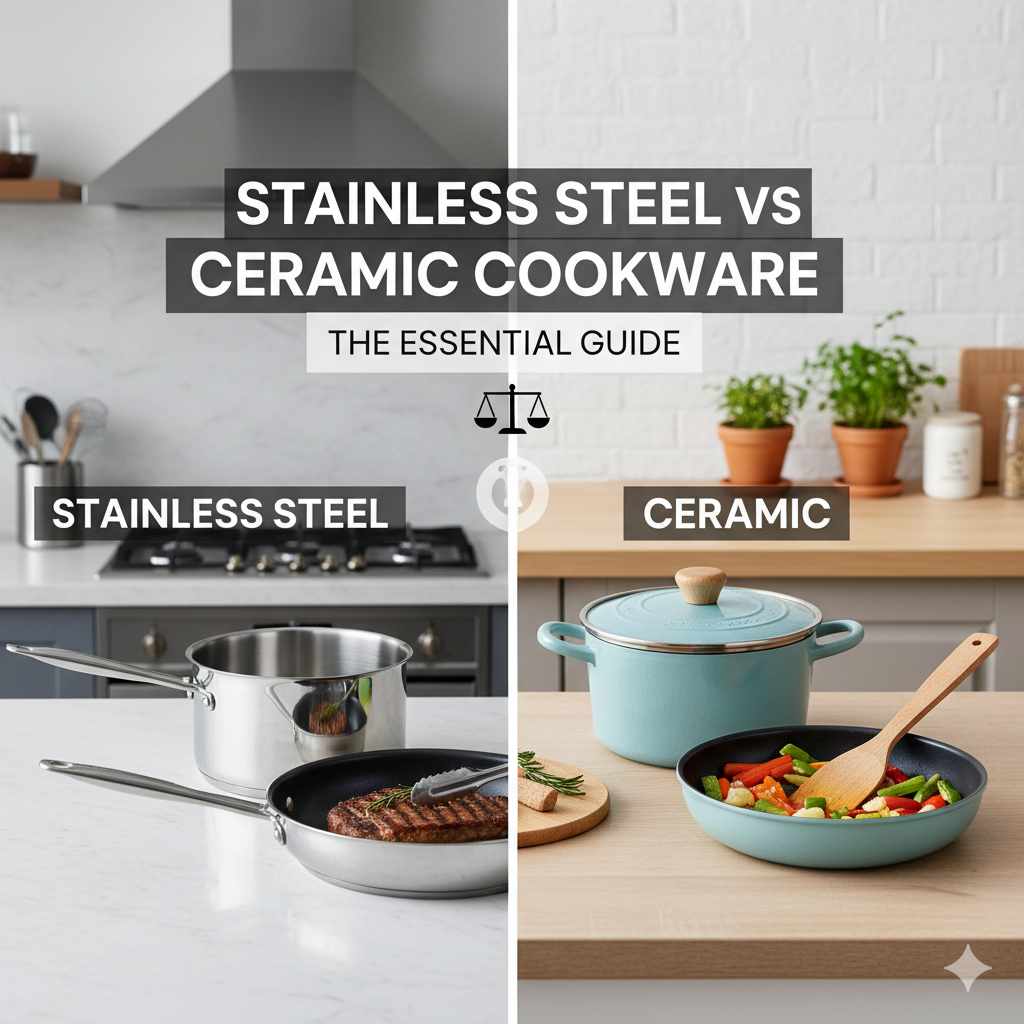
Choosing between stainless steel and ceramic cookware depends on your cooking style. Stainless steel is a durable, long-lasting workhorse, perfect for searing and high-heat cooking. Ceramic offers excellent non-stick performance for delicate foods like eggs and is very easy to clean, but its coating is less durable and requires more care.
Walking down the cookware aisle can feel a lot like staring under the hood of a car for the first time. You see shiny options, colorful choices, and a lot of confusing terms. It’s easy to feel overwhelmed. You just want something that works well, lasts long, and doesn’t cost a fortune. Sound familiar?
You’re not alone. Many home cooks struggle to decide between the two most popular options: classic stainless steel and modern ceramic. One seems professional but intimidating, while the other looks convenient but perhaps less durable. It’s a common kitchen puzzle.
But don’t worry. Just like fixing a flat tire, choosing the right pan is simple once you know the basics. We’re going to break down everything you need to know about stainless steel and ceramic cookware, without any confusing jargon. By the end of this guide, you’ll be able to confidently pick the perfect tool for your kitchen jobs.
What is Stainless Steel Cookware?
Think of stainless steel cookware as the trusty, reliable sedan of the kitchen. It’s not always the flashiest, but it’s built to last and can handle almost anything you throw at it. Stainless steel is an alloy—a mix of metals, primarily iron, chromium, and sometimes nickel. The chromium is key, as it prevents the iron from rusting, giving it that “stainless” quality.
How It’s Made
Most quality stainless steel cookware isn’t just a single layer of steel. That would heat up unevenly and create “hot spots” that burn your food. Instead, manufacturers use a technique called cladding.
- Cladding: This involves sandwiching a core of a highly conductive metal, like aluminum or copper, between layers of durable stainless steel. This construction runs all the way up the sides of the pan.
- Disc Bottom: A less expensive alternative is a pan with a heavy, multi-layered disc bonded only to the bottom. It heats evenly on the base, but the sides don’t get the same benefit.
You might also see numbers like “18/10” or “18/8” stamped on the bottom. This refers to the percentage of chromium and nickel in the steel (e.g., 18/10 is 18% chromium and 10% nickel). More nickel means better rust resistance and a shinier finish.
Pros of Stainless Steel
- Incredibly Durable: A good stainless steel pan can literally last a lifetime. It resists dents, scratches, and warping. You don’t have to worry about using metal utensils on it.
- Excellent Heat Control: It heats up quickly, distributes heat evenly (especially cladded versions), and can handle very high temperatures. This makes it perfect for getting a beautiful sear on a steak.
- Versatile: You can use it on any cooktop, including induction, and it’s almost always oven-safe. From browning meat on the stove to finishing a dish in the oven, it does it all.
- Non-Reactive: Stainless steel won’t react with acidic foods like tomatoes or lemon juice. This means your food’s flavor and color will remain pure.
- Easy to Maintain: While it might need some occasional deep cleaning, it’s generally dishwasher safe and can handle tough scrubbing if needed.
Cons of Stainless Steel
- Food Can Stick: This is the biggest hurdle for beginners. Stainless steel is not naturally non-stick. It requires proper technique—preheating the pan and using enough fat (oil or butter)—to prevent sticking.
- Can Be Heavy: Well-made, multi-clad cookware has some heft to it, which can be a downside for some users.
- Potential for Discoloration: High heat can sometimes cause a rainbow-like tint on the surface. While harmless, it can be annoying. This is easily removed with a bit of vinegar or a specialized cleaner.

What is Ceramic Cookware?
If stainless steel is the reliable sedan, ceramic cookware is the sleek, modern electric vehicle. It’s stylish, eco-friendly in its branding, and offers a super-smooth ride (or cooking experience). However, it requires a bit more gentle handling.
It’s important to clarify a common misconception. Most “ceramic” cookware is not made of solid ceramic. Instead, it’s metal cookware (usually aluminum) that has been coated with a ceramic-like non-stick layer made from a silica-based gel (sol-gel). This coating is free from chemicals like PFOA and PTFE, which are found in traditional Teflon non-stick pans.
How It’s Made
The process involves spraying or dipping an aluminum or hard-anodized aluminum pan body with the sol-gel coating. The pan is then cured at high temperatures, which hardens the coating into a smooth, slick, glass-like surface. This is what gives ceramic its fantastic non-stick properties right out of the box.
Pros of Ceramic Cookware
- Superior Non-Stick Surface: Food slides right off, making it ideal for delicate items like eggs, pancakes, and fish. You can often cook with very little oil or butter.
- Extremely Easy to Clean: Thanks to the slick surface, most messes wipe away with a simple paper towel or a soft sponge and soapy water.
- Lightweight: Because the core is usually aluminum, ceramic pans are much lighter and easier to handle than their stainless steel counterparts.
- Free of PTFE/PFOA: This is a major selling point for health-conscious consumers. According to the American Cancer Society, there are concerns about the chemicals used in traditional non-stick coatings, making ceramic a popular alternative.
- Aesthetically Pleasing: Ceramic cookware often comes in a wide variety of bright, attractive colors, adding a pop of style to your kitchen.
Cons of Ceramic Cookware
- Durability is a Concern: The ceramic coating is relatively fragile. It can chip, scratch, or crack if you use metal utensils, abrasive cleaners, or subject it to sudden temperature changes (like running a hot pan under cold water).
- Non-Stick Fades Over Time: Unlike stainless steel, the non-stick properties of ceramic degrade. With regular use, you can expect the coating to last 1-3 years before it starts to lose its effectiveness.
- Lower Heat Tolerance: Ceramic coatings can be damaged by very high heat. Most manufacturers recommend using only low to medium heat, which means it’s not the best choice for searing.
- Not Always Dishwasher Safe: While some brands claim to be dishwasher safe, the harsh detergents can wear down the coating much faster. Handwashing is strongly recommended to prolong its life.
Head-to-Head Comparison: Stainless Steel vs. Ceramic
Sometimes the easiest way to decide is to see the specs side-by-side. Here’s a quick-glance table to help you compare the key features of each cookware type.
| Feature | Stainless Steel | Ceramic |
|---|---|---|
| Durability & Lifespan | Excellent (Decades, potentially a lifetime) | Fair (Coating lasts 1-3 years on average) |
| Heat Tolerance | Very High (Great for searing, oven-safe to 500°F+) | Low to Medium (High heat damages the coating) |
| Non-Stick Performance | Poor (Requires oil and proper technique) | Excellent (Initially requires little to no oil) |
| Cleaning & Maintenance | Moderate (Dishwasher safe, can handle scrubbing) | Very Easy (Handwash with soft sponge recommended) |
| Utensil Compatibility | Safe for metal, wood, and silicone | Wood or silicone only (Metal will scratch) |
| Health & Safety | Very safe, non-reactive metal | Very safe, free of PTFE/PFOA |
| Average Price | Mid to High (Investment piece) | Low to Mid (More affordable but needs replacing) |
| Best For | Searing meat, pan sauces, boiling, general-purpose cooking | Eggs, pancakes, delicate fish, sticky foods |
A Deeper Dive: Which is Right for Your Cooking Style?
Now that we have the basics down, let’s talk about how these pans perform in the real world. Your choice really comes down to what you cook most often and how you like to cook.
For the Serious Home Chef: The Stainless Steel Workhorse
If you love getting a deep, brown crust on a steak, making complex pan sauces, or want a set of pans that will last forever, stainless steel is your best bet. The ability to go from a high-heat sear on the stovetop directly into a hot oven is something ceramic can’t match.
Learning to cook on stainless steel is a skill, but it’s a rewarding one. Here’s the secret to making it non-stick:
- Place the empty pan on the stove over medium heat.
- Let it preheat for 2-3 minutes. You can test if it’s ready by dropping a tiny bit of water in the pan. If the water beads up and glides around like a mercury ball, it’s ready. If it just sizzles and evaporates, it’s not hot enough.
- Add your cooking oil and swirl to coat the bottom. Let the oil heat up for about 30 seconds until it shimmers.
- Now, add your food. You’ll find it releases easily once it has formed a proper crust.
For the Everyday Convenience Seeker: The Ceramic Specialist
If your daily routine involves scrambled eggs for breakfast, grilled cheese for lunch, or pan-frying a delicate piece of salmon for dinner, you will love the ease of ceramic. The effortless food release and quick cleanup can make daily cooking feel like less of a chore.
Ceramic is the perfect tool for specific jobs. It excels at low-to-medium heat cooking where sticking is the primary concern. Think of it as a specialty tool. You wouldn’t use a screwdriver to hammer a nail, and you shouldn’t use a ceramic pan to sear a steak on high heat.
The Best Solution: Why Not Both?
Just as a good mechanic has more than one wrench, a well-equipped kitchen often benefits from having both types of cookware. This “hybrid” approach gives you the best of both worlds:
- A 10- or 12-inch Stainless Steel Skillet: This will be your go-to for searing meats, sautéing vegetables, and building flavorful pan sauces. It’s the most versatile pan in the kitchen.
- An 8- or 10-inch Ceramic Non-Stick Pan: Reserve this pan specifically for sticky, delicate foods. Use it only for eggs, pancakes, and flaky fish. By using it only for these tasks and caring for it properly, you will dramatically extend the life of its non-stick coating.
This combination allows you to use the right tool for the job every time, ensuring great results and maximizing the lifespan of your cookware investment.

Frequently Asked Questions (FAQ)
1. Is ceramic cookware completely non-toxic?
Yes, ceramic-coated cookware is considered very safe. The coatings are made from inorganic minerals (mostly silica) and do not contain lead, cadmium, Polytetrafluoroethylene (PTFE), or Perfluorooctanoic acid (PFOA). This makes them a popular choice for health-conscious cooks.
2. Can you use metal utensils on stainless steel and ceramic pans?
You can safely use metal utensils on stainless steel—it’s tough enough to handle them without damage. However, you should never use metal utensils on ceramic cookware. They will easily scratch and ruin the delicate non-stick coating. Stick to wood, silicone, or nylon tools for your ceramic pans.
3. How do I stop food from sticking to my stainless steel pan?
The key is proper preheating. Heat the dry pan over medium heat for a couple of minutes, then add your oil and let it get hot before adding food. This creates a temporary non-stick layer and allows your food to develop a crust and release naturally from the pan.
4. Is all ceramic cookware oven-safe?
It varies by brand. Many ceramic pans are oven-safe, but usually to a lower temperature than stainless steel (often around 350-400°F). High oven temperatures can degrade the non-stick coating over time. Always check the manufacturer’s instructions before putting a ceramic pan in the oven.
5. How do I clean the rainbow stains off my stainless steel pan?
Those colorful, heat-tint stains are harmless and easy to remove. Simply simmer a small amount of white vinegar or lemon juice diluted with water in the pan for a few minutes, or wipe the surface with a cloth dipped in vinegar. The mild acid will remove the discoloration instantly.
6. How long does a ceramic non-stick coating really last?
With proper care (handwashing, no high heat, no metal utensils), a good quality ceramic pan’s non-stick surface can last for about two to three years of regular use. Cheaper pans may only last a year. Once food starts sticking consistently, it’s a sign the coating has worn out and it’s time to replace the pan.
7. Which type of cookware is better for a beginner cook?
This is a great question. Ceramic is often easier for a true beginner because its non-stick surface is very forgiving. However, learning to cook on stainless steel teaches valuable heat management skills that will make you a better cook in the long run. A good approach is to start with one small ceramic pan for eggs and one stainless steel skillet for everything else.
Conclusion: The Right Tool for the Right Job
Choosing between stainless steel and ceramic cookware isn’t about finding a single “best” option—it’s about understanding your own needs in the kitchen. There’s no winner or loser here, only different tools designed for different tasks.
Stainless steel is the durable, all-purpose foundation of a kitchen, built for high performance and a lifetime of use. It rewards a little learning with incredible versatility. Ceramic is the convenient, easy-to-use specialist, perfect for making everyday cooking faster and cleaner, especially with delicate foods. Its lifespan is shorter, but its performance with sticky ingredients is unmatched.
By now, you should feel confident in your ability to choose. Whether you invest in a “buy it for life” stainless steel set, opt for the easy cleanup of ceramic, or wisely decide to use both, you’re no longer guessing. You’re making an informed decision, equipped with the knowledge to pick the perfect cookware for the delicious meals you’re about to create.