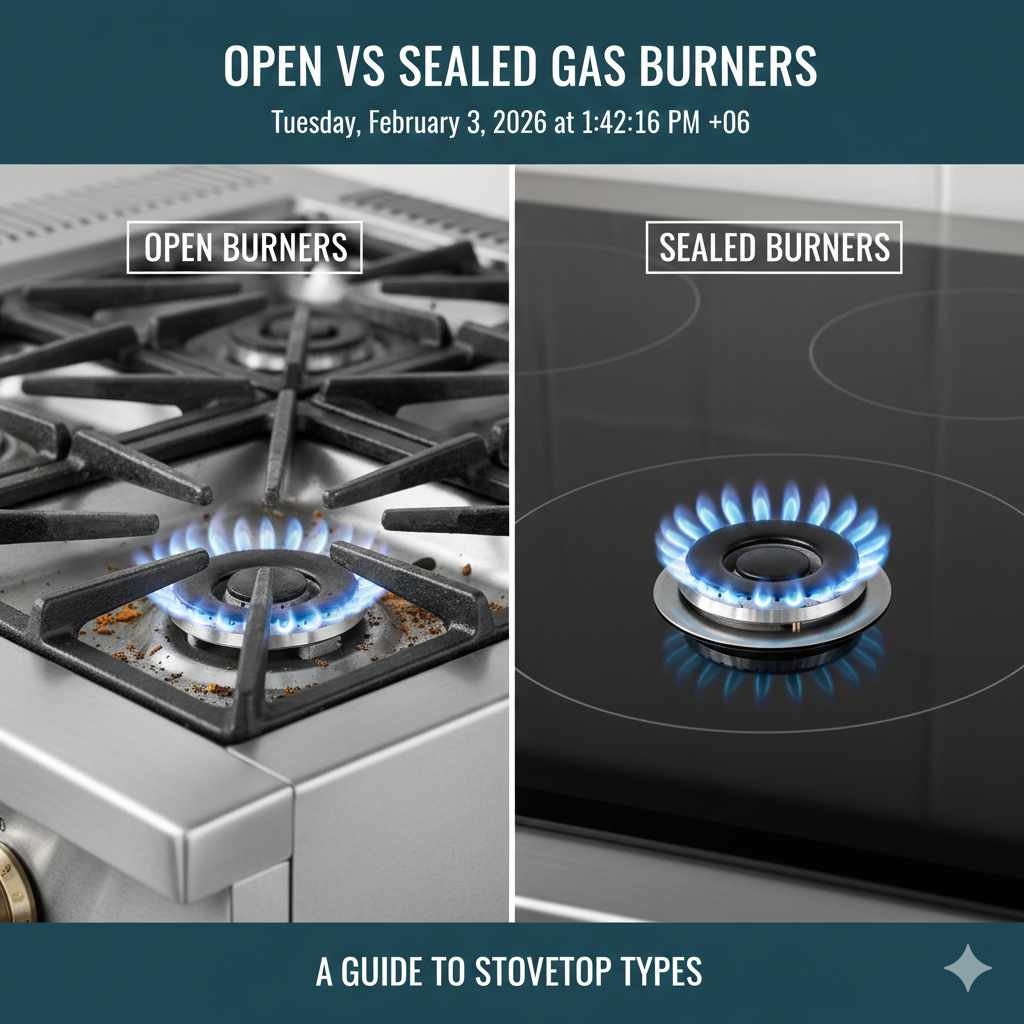
Open vs sealed gas burners are defined by how they handle spills and airflow. Sealed burners prevent food and liquid from dripping down into the stove’s internal components, making cleanup much easier, while open burners expose more parts but often offer slightly more precise temperature control. Understanding this difference helps you choose the right cooktop for your kitchen needs and maintenance style.
Welcome! Dealing with a gas stove is a big part of everyday life, but knowing the little details about how it works can save you headaches later. You’ve likely seen the terms “open burner” and “sealed burner” when shopping for a new range or trying to clean a tough mess. It can feel confusing, like picking between two similar tools when you only need one to work well. Don’t worry! We are going to break down exactly what these two types are. By the end of this guide, you will know exactly which burner setup fits your cooking style best. Let’s dive in and take the mystery out of your stovetop!
What Are Gas Burners Anyways?
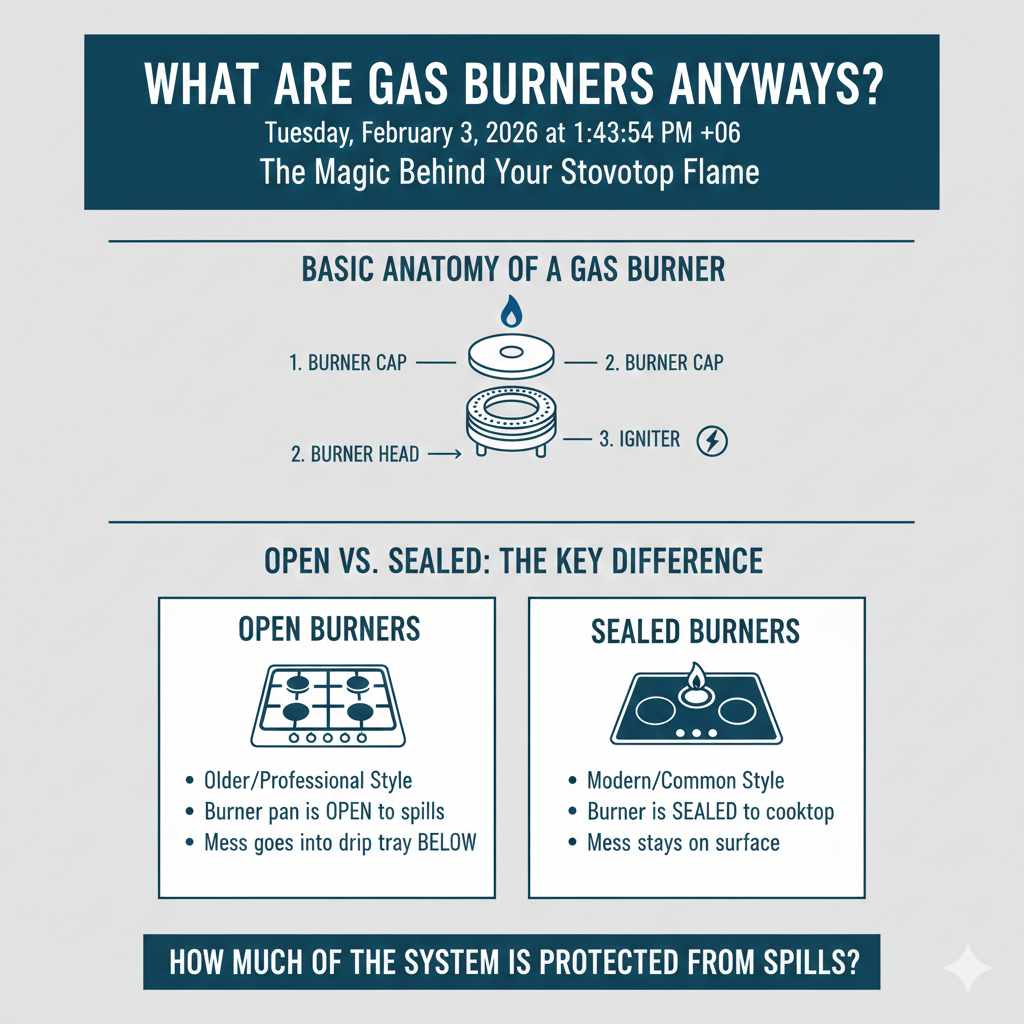
Before we look at open versus sealed, let’s get the basics straight. A gas burner is the part of your stove where the magic happens: mixing natural gas or propane with air and lighting it to create a steady flame for cooking. It has three main parts that matter to us:
- The Burner Cap: This sits on top and helps spread the flame evenly.
- The Burner Head: This has small holes where the gas comes out.
- The Igniter: This is the little sparker that lights the gas when you turn the knob.
When you turn the knob, gas flows through these parts. The easy way to tell open from sealed is how much of that system is protected from spills and crumbs.
The Sealed Gas Burner: The Clean Dream
The sealed gas burner system is incredibly popular today, especially for home cooks who value easy cleanup. Think of it like a fortress for your internal stove guts. In this design, the cooktop surface is one continuous, smooth piece of metal or porcelain, and the burner basin sits slightly above this surface. Nothing can easily fall underneath the cooking surface.
How Sealed Burners Work
The key feature here is that the burner assembly sits fully within a basin that is part of the cooktop, meaning there are no gaps underneath the main cooking surface. If you spill soup or drop a piece of chopped onion, it lands right in the shallow basin surrounding the burner.
- Spill Containment: Liquids stay right on top of the cooktop surface.
- Simple Wiping: You lift off the grates and the burner caps, and you can wipe the whole area clean easily.
- Airflow Control: Air intake is carefully managed by the sealed design, leading to very consistent flame quality.
Pros and Cons of Sealed Burners
Every system has its trade-offs. Here is a quick look at what makes sealed burners great and where they might fall short.
| Pros (The Good Stuff) | Cons (Things to Watch For) |
|---|---|
| Extremely easy to clean; spills stay only on top. | Less customization for burner parts since they are factory-set. |
| Safer for beginners as there are fewer exposed parts. | If a major spill reaches the ignition area, repair can involve sealing/unsealing components. |
| Modern look, often found in newer appliance models. | Can sometimes lose a small bit of burner efficiency compared to perfectly tuned open systems. |
If you want low-stress cleanup after a big family dinner, the sealed burner is likely your best friend. You can find more information about kitchen safety standards from organizations like the U.S. Consumer Product Safety Commission (CPSC) as you compare appliance types.
The Open Gas Burner: The Classic Chef’s Choice
The open gas burner is the traditional design you often see in older kitchens or in professional restaurant settings. This style features a burner head that sits higher up, with a collection tray or drip pan underneath, but the actual burner components are exposed.
How Open Burners Operate
In an open design, the burner head often sits above a small opening or gap that leads down to a drip pan. This allows more air to enter the combustion process from the sides, which is partly why some chefs feel they offer greater control over temperature fluctuation.
- Airflow Freedom: More air can reach the flame from multiple angles.
- Component Separation: The burner head and valve components are usually easier to access for routine maintenance or part replacement.
- Grates are Key: The heavy-duty grates that hold your pots usually sit directly on the cooktop surface, surrounding the elevated burner assembly.
Pros and Cons of Open Burners
Open burners are rugged and loved by serious cooks, but they demand more attention when it comes to cleaning.
| Pros (The Good Stuff) | Cons (Things to Watch For) |
|---|---|
| Often provides better visual flame control (high heat looks more robust). | Spills almost always fall under the burner head and into the stove cavity. |
| Can sometimes offer slightly better low-end simmer control for expert users. | Cleaning is multi-step: cleaning grates, caps, the drip pan, and the area underneath. |
| Historically easier and cheaper to repair individual components. | More places for crumbs and grease to accumulate, which can lead to poor ignition over time. |
If you are someone who loves tinkering with your appliance or you spend hours over the stovetop developing complex sauces, the open burner might appeal to your hands-on style. However, be prepared to pull those drip pans out often for a deep clean!
Direct Comparison: Open Vs Sealed Gas Burners
To make the decision super clear, let’s put the core differences side-by-side. This comparison focuses on the main things that affect your day-to-day use: cleanliness and performance.
Key Differences Summary
The main difference boils down to sealing the components from the cooking surface. Sealed burners integrate the burner basin into the cooktop deck, acting like a spill barrier. Open burners leave that basin exposed or use removable drip pans.
- Cleaning Difficulty: Sealed wins easily.
- Flame Consistency: Sealed systems are often more electronically consistent between batches.
- Accessibility for Repair: Open systems are traditionally easier for a DIYer to access the basics.
Flame Quality and Heat Output
This is where a lot of the debate happens! Does one cook better than the other?
For the everyday cook using standard pots and pans, the difference in heat output and flame quality between modern sealed and open burners is negligible. Both systems are designed to meet strict efficiency standards.
However, historically, open burners benefited from an unobstructed path for air mixing, which some traditionalists argue leads to a more nuanced, responsive low-end simmer. Today, manufacturers have engineered sealed burners to overcome this, often using advanced algorithms to ensure your simmer setting is just as steady as it would be on an open system.
The Practical Takeaway: Unless you are a world-class pastry chef demanding exact micro-adjustments to your flame, you will find that both deliver excellent, powerful heat for everyday cooking.
Installation and Maintenance: What Does It Mean for Maintenance?
When you own a gas range, you are signing up for some level of maintenance. Knowing if you have an open or sealed system tells you exactly what kind of cleaning effort to expect.
Maintaining a Sealed Burner System
Maintaining a sealed system is mostly about quick cleanup and occasional minor part removal.
Step-by-Step Sealed Burner Cleaning
- Safety First: Always make sure the stove is completely cool and turn off the gas supply if you are doing a deep clean involving removing the burner heads.
- Remove Grates and Caps: Lift off the cooking grates and the burner caps. Set these aside.
- Wipe Down the Surface: Use a damp sponge or cloth with mild dish soap to wipe all around the burner base where the spill is sitting.
- Clean the Small Ports: Use a soft brush or toothbrush to gently clean the tiny holes on the burner head itself. Do not use anything sharp that could scratch or widen the holes.
- Reassembly: Put the burner caps back on, making sure they sit perfectly centered over the burner head—this is crucial for an even flame! Then replace the grates.
Remember, because the system is sealed, you generally don’t need to worry about cleaning inside the stove cabinet unless a massive flood (like a boiling pot overflowing completely) pushes liquid past the seals.
Maintaining an Open Burner System
Open systems require you to manage multiple layers of components, often involving grease that has dripped below the top surface.
Step-by-Step Open Burner Cleaning
- Safety Check: Ensure the stove is cool. For deep cleans, consider turning off the gas valve leading to the appliance entirely.
- Remove Grates and Caps: Take off the heavy grates and burner caps.
- Access the Drip Pans: Open burner systems always have a drip pan or tray directly under the burner head. These often lift straight out.
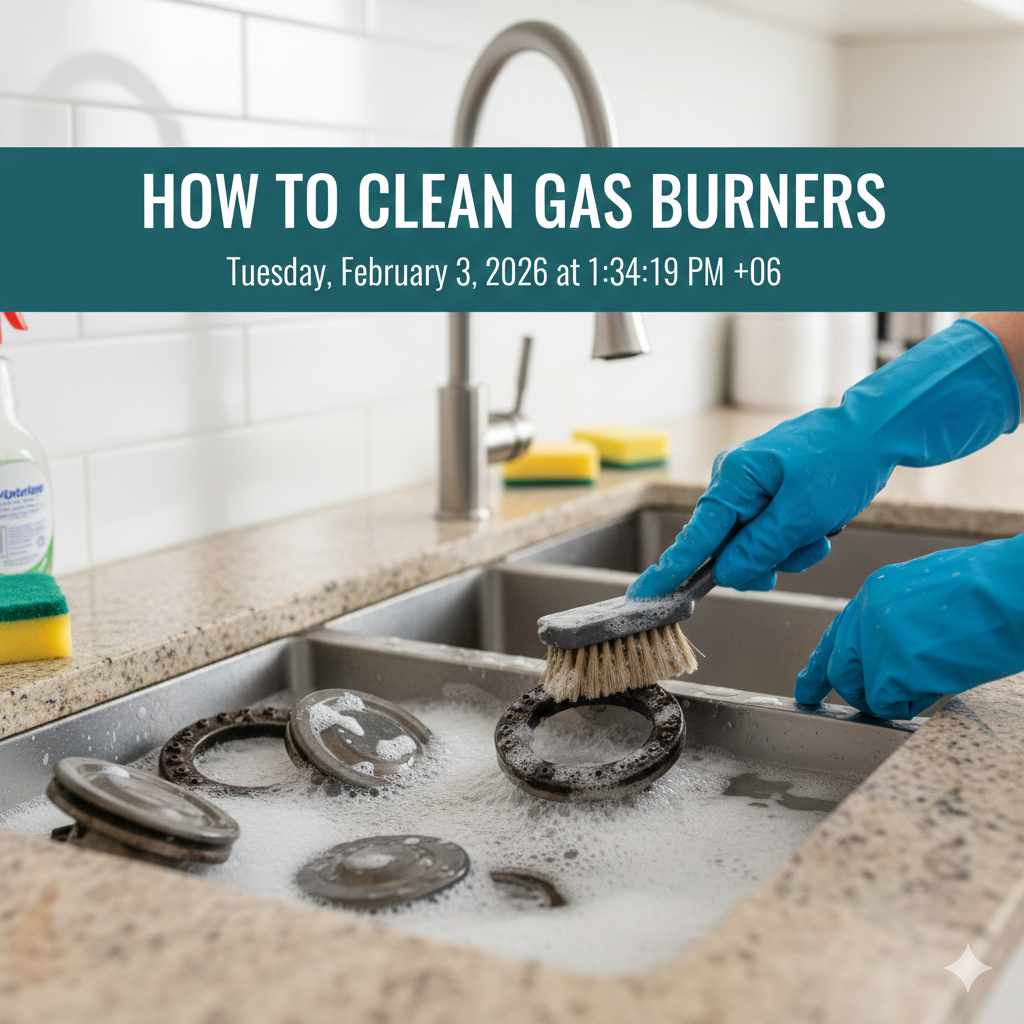
- Clean All Components Separately: Wash the grates, caps, and the removable drip pans in hot, soapy water. For tough baked-on grease on the pans, a soaking period helps immensely.
- Scrub the Cavity: Carefully wipe down the cavity area beneath where the drip pan sits. This is where most grease tends to collect in an open system.
- Reassemble Carefully: Place the drip pans back in their exact spots, then the burner heads, caps, and grates. Ensuring the burner head sits correctly ensures proper ignition.
If you notice your flame is uneven or weak, often a quick clean of the burner heads and their associated ports in an open system clears the issue right up. A dedicated grease cleaner can be very helpful here.
Which Type Is Right For You? (Making Your Choice)
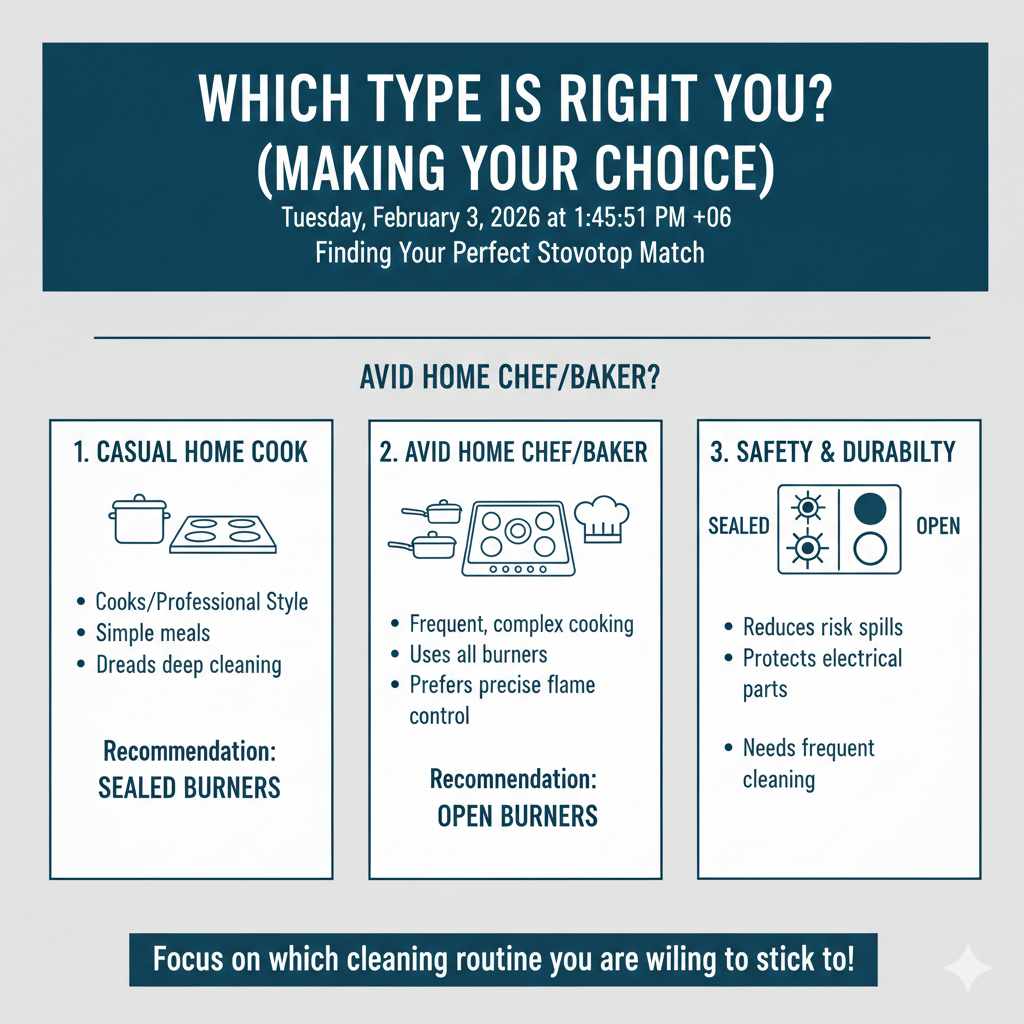
Choosing between open and sealed burners really comes down to your lifestyle in the kitchen. There isn’t a “best” answer; only the best answer for you.
Consider the Casual Home Cook
If you cook a few times a week, enjoy simple meals, and dread spending your Sunday morning cleaning the kitchen, the choice is simple.
Recommendation: Sealed Burners. They offer peace of mind. A quick wipe-down takes care of 99% of messes, letting you spend more time enjoying the food and less time scrubbing grease.
Consider the Avid Home Chef or Baker
If you frequently use all five burners at once, do a lot of complex sauces, or prefer the tactile feel of manually adjusting flame intensity, the traditional design might suit you.
Recommendation: Open Burners. While they demand more cleaning time, the ability to access and potentially fine-tune the burner assemblies can be worth the effort for extreme precision.
Consider Safety and Durability
Both systems are highly durable when used properly. However, from a safety perspective regarding spills:
- Sealed burners reduce the risk of spills reaching sensitive electrical components (like the electronic igniter underneath the cooktop).
- Open burners may have more accessible parts for repair, but those exposed parts can sometimes get gummed up faster if not cleaned regularly.
Ultimately, new stoves today make both options very reliable. Focus on which cleaning routine you are willing to stick to!
Frequently Asked Questions (FAQ) About Gas Burners
Q1: Can I convert my open burner stove to a sealed burner stove?
A: Generally, no. This is not a simple switch. Because the cooktop surface, the drip pan alignment, and the burner housing design are fundamentally different between the two systems, a conversion is usually impossible without replacing the entire range unit or the cooktop assembly, which is often more expensive than buying a new stove.
Q2: Which type is more energy efficient?
A: Modern manufacturing has made efficiency nearly equal. Older open burners might lose small amounts of heat around the base due to gaps. Today’s sealed systems are designed for optimal air-to-gas mixing right at the head, often achieving very high efficiency ratings. Check the Energy Star rating of the specific model you are looking at.
Q3: What should I do if my sealed burner still clicks after lighting?
A: This almost always means the burner cap is slightly wet or misaligned. Lift the cap, dry it completely underneath with a paper towel, and place it back down making sure it sits perfectly flat and centered over the burner head. If it still clicks, a small amount of grease or food might be blocking airflow to the igniter itself, requiring a gentle cleaning using a soft brush.
Q4: Do open burners produce a blue flame or a yellow flame?
A: Both open and sealed gas burners should produce a steady, mostly blue flame tipped with a lighter blue or white. A yellow or orange flame indicates incomplete combustion, often because the air intake is blocked or the gas-to-air mixture is wrong. This needs immediate attention as it can produce soot or carbon monoxide.
Q5: Are sealed burners more prone to failure?
A: No, they are not inherently more prone to failure. Components like the igniters wear out in both types. Sealed systems tend to have fewer external moving parts that get coated in grime, which can actually lead to less frequent minor ignition issues caused by debris.
Q6: What is the most common part that wears out on gas burners?
A: The most common maintenance item, regardless of the system type, is the igniter electrode. This is the white ceramic piece that creates the spark. Over time, soot, grease, or water can coat the tip, causing it to struggle to spark. Cleaning or gently sanding the tip often restores function.
Conclusion: Confidence in Your Cooktop Choice
Understanding the difference between open vs sealed gas burners moves you from being a hesitant appliance user to an informed owner. The decision really boils down to your tolerance for deep cleaning versus your desire for specific, hands-on flame control. If easy cleanups are your priority, the modern, highly convenient sealed burner is the clear winner. If you prefer a very classic, repair-friendly design and don’t mind pulling out drip pans regularly, the open burner still offers fantastic performance.
No matter which system you choose, remember that gas appliances are built to last when cared for properly. By sticking to a simple cleaning routine—whether it’s a quick wipe-down of a sealed basin or a thorough scrub of open drip pans—you ensure your stove will light quickly, cook safely, and serve you delicious meals for years to come. You’ve got this!