
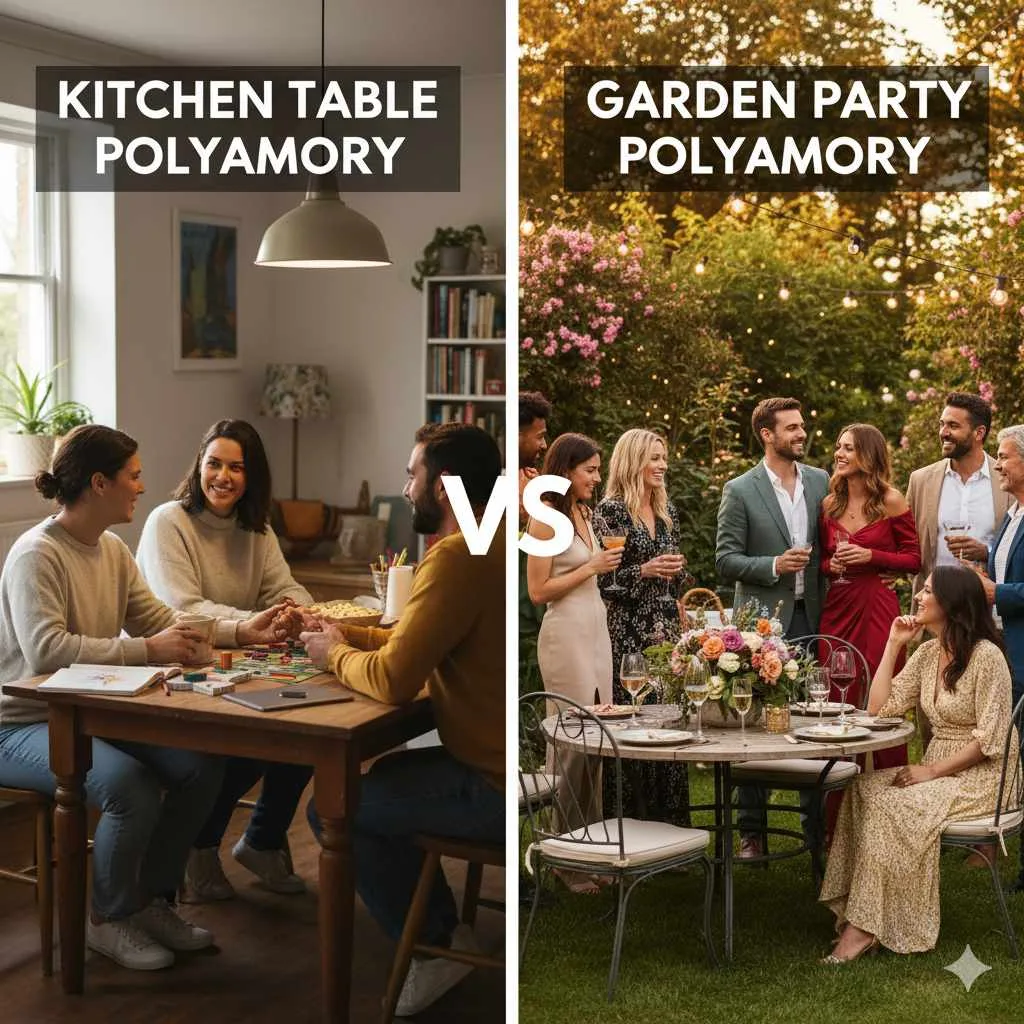
Kitchen Table vs Garden Party Polyamory: Essential Guide
The terms “kitchen table polyamory” and “garden party polyamory” describe different ways people in polyamorous relationships connect and interact. Understanding these distinctions can help you navigate your own relationships or simply understand polyamory better. This guide breaks down what each term means, their key differences, and how they might look in practice, making it easy for anyone to grasp these concepts.
Understanding Polyamory: More Than Just Dating
Polyamory, at its heart, is about having multiple consensual romantic relationships simultaneously. It’s a style of ethical non-monogamy where individuals can love and be in committed relationships with more than one person, with the full knowledge and agreement of everyone involved. It’s a journey that requires open communication, honesty, and a deep understanding of personal boundaries and desires. Unlike jealousy-driven infidelity, polyamory is built on trust and mutual respect.
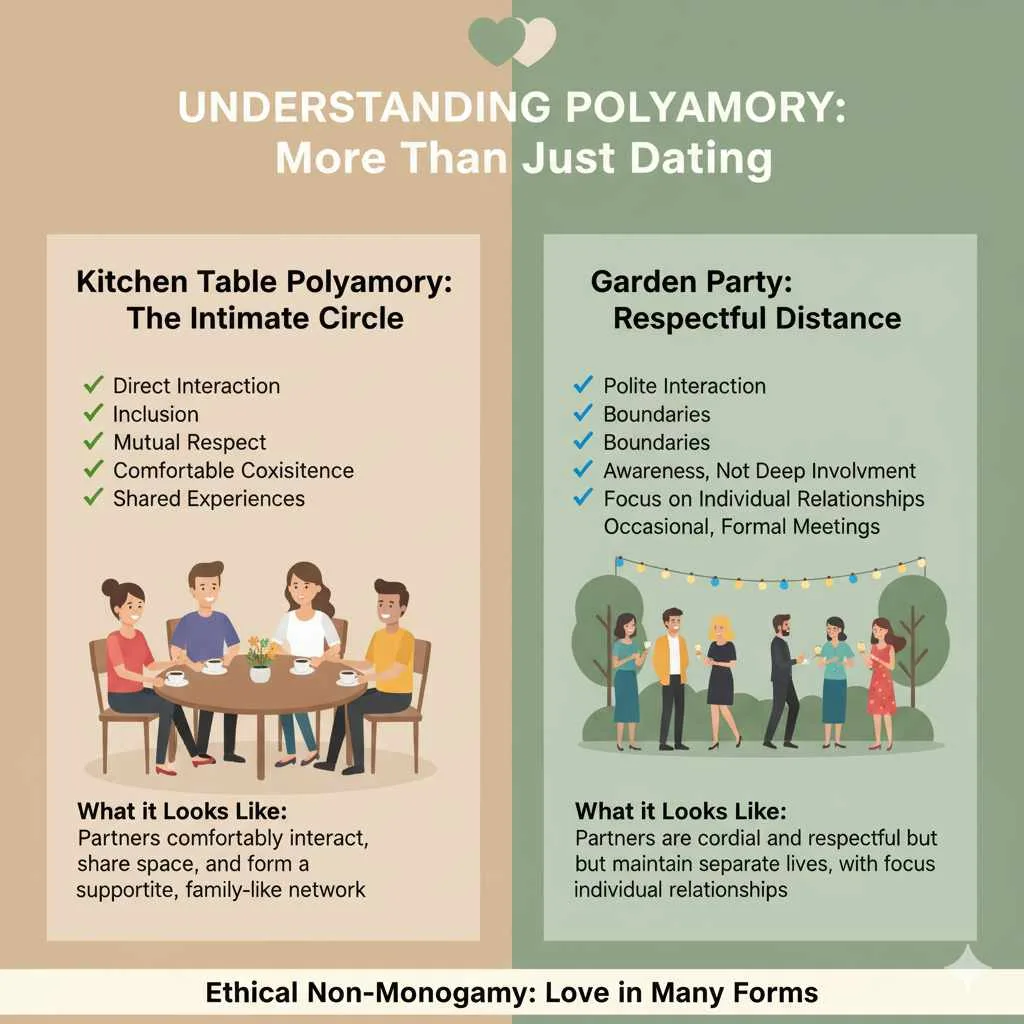
Kitchen Table Polyamory: The Intimate Circle
Kitchen table polyamory refers to a dynamic where all partners within a polycule (a network of interconnected romantic relationships) feel comfortable and willing to interact directly with each other. Imagine a cozy kitchen table setting where everyone gathered can chat, share stories, and truly know one another. This isn’t about being best friends necessarily, but about a level of acceptance and familiarity that allows for a harmonious coexistence.
Key Characteristics of Kitchen Table Polyamory:
- Direct Interaction: All partners are comfortable spending time together, conversing, and sharing space.
- Inclusion: There’s a sense of being part of a larger, interconnected family or community.
- Mutual Respect: Partners respect each other’s relationships and the individuals involved.
- Comfortable Coexistence: The aim is for everyone to feel at ease and welcomed when interactions occur.
- Shared Experiences: Partners might attend events together, share holidays, or have joint discussions about relationship matters.
What Kitchen Table Polyamory Looks Like in Practice:
Picture a scenario where Person A is dating Person B and Person C. In a kitchen table dynamic, Person A might have dinner with Person B and then later that week, have a relaxed evening with Person C. Crucially, if Person B and Person C ever met, they would be able to have a pleasant conversation, perhaps even over that metaphorical kitchen table. They might not be dating, but they understand and respect the connection between their partner and the other person. This often means that partners of your partners (your metamours) are treated with kindness and consideration. It’s common for kitchen table polyamorous individuals to support each other’s individual relationships with their shared partner.
Garden Party Polyamory: Respectful Distance
Garden party polyamory, on the other hand, signifies a dynamic where partners interact but maintain a more formal or less intimate connection. Think of a polite garden party where guests mingle and are cordial, but deep personal involvement isn’t the primary focus. In this model, partners in a polycule are aware of each other and maintain respectful relationships, but they don’t necessarily seek out deep, personal connections or extensive shared time together.
Key Characteristics of Garden Party Polyamory:
- Polite Interaction: Partners are cordial and respectful when they do meet.
- Boundaries: Clear boundaries are maintained, and personal space is honored.
- Awareness, Not Deep Involvement: Partners know about each other and accept their existence, but don’t necessarily form close bonds.
- Focus on Individual Relationships: The emphasis is on the primary dyadic relationships, with other connections being acknowledged rather than deeply integrated.
- Occasional, Formal Meetings: Interactions might be limited to specific events or necessary discussions happening in a structured, respectful manner.
What Garden Party Polyamory Looks Like in Practice:
Using our previous example of Person A dating Person B and Person C: In a garden party dynamic, Person A might be dating Person B and also dating Person C. Person B and Person C are aware of each other and acknowledge their partner’s other relationship. If they were to meet, they would likely be polite, perhaps exchange pleasantries at a mutual friend’s event, but they wouldn’t necessarily plan separate hangouts or seek to become close friends. Their interaction is based on mutual respect for their shared partner’s other commitments. They understand that their partner’s time and emotional energy are finite, and they are comfortable with their partner managing multiple relationships without requiring active social integration with their other partners.
The Core Differences: A Simple Comparison
The main difference between kitchen table and garden party polyamory lies in the level of intimacy and direct interaction between metamours (your partner’s partners). It’s about how integrated the network of relationships – the polycule – is socially and emotionally.
| Feature | Kitchen Table Polyamory | Garden Party Polyamory |
|---|---|---|
| Level of Metamour Interaction | High; comfortable direct engagement, sharing space and time. | Low to moderate; polite, respectful interactions, often at shared events. |
| Goal of Interaction | Building familiarity, comfort, and a sense of interconnected community. | Maintaining politeness, respect, and acknowledging each other’s presence. |
| Emotional Intimacy Between Metamours | Can develop, but not a requirement; overall aim is comfort. | Generally low; focus is on respecting the primary relationships. |
| Structure of Relationships | More integrated polycule, fostering a sense of a larger chosen family. | Relationships are acknowledged but less socially integrated; emphasis on individual connections. |
| Potential for Shared Activities | High; shared holidays, joint meetings, group outings. | Limited; may include occasional presence at joint social gatherings. |
Why These Distinctions Matter
Neither approach is inherently “better” than the other. They are simply different ways of structuring and navigating polyamorous relationships that work for different people and different relationship dynamics. Understanding these terms can help you:
- Articulate Your Needs: You can identify what kind of connections you desire with your metamours. Do you crave deep connections, or are you happier with polite acquaintances?
- Communicate Expectations: Clearly discussing these concepts with your partners can prevent misunderstandings about social expectations and how much interaction you want with their other partners.
- Manage Boundaries: Knowing these distinctions helps in setting and respecting boundaries regarding time, energy, and emotional involvement with metamours.
- Appreciate Diversity: It highlights the incredible diversity within polyamory and how individuals tailor their relationships to suit their unique circumstances and desires.
Choosing Your Path: What Works for You?
The beauty of polyamory lies in its flexibility. What works for one group might not work for another. Here are some factors to consider when determining which model, or a blend of both, might best suit your relationships:
Factors to Consider:
- Individual Personalities: Are you and your partners introverted or extroverted? Do you thrive in large social settings, or do you prefer smaller, more intimate gatherings?
- Time and Energy Resources: Managing multiple relationships is demanding. Both models require significant emotional energy, but deep integration (kitchen table) can demand more time and social bandwidth.
- Geographic Proximity: If partners live far apart, extensive kitchen table dynamics might be impractical, leaning more towards respectful, occasional interactions.
- Comfort Levels with Metamours: Regardless of the model, a baseline of respect is crucial. However, the degree of comfort and willingness to engage directly with metamours varies greatly.
- Relationship Structures: Are you in a hierarchical polyamorous structure, or a more non-hierarchical one? This can sometimes influence the desire for or comfort with integration.
- Past Experiences: Previous experiences with metamours can significantly shape current preferences.
Navigating Metamour Relationships
Building healthy relationships with metamours, whether you’re aiming for kitchen table comfort or garden party cordiality, requires intentional effort. It’s always about respect and clear communication.
Tips for Metamour Harmony:
- Prioritize Respect: This is non-negotiable. Always treat your metamours with dignity and kindness. See The Treehouse for more on fostering healthy metamour connections.
- Communicate Openly: Talk to your partner about your feelings and expectations regarding metamours. Encourage your partner to do the same with their other partners.
- Avoid Comparisons: Do not compare your relationship with your partner to their relationships with their other partners.
- Set Boundaries: Be clear about what you are comfortable with regarding time, energy, and emotional involvement with metamours.
- Manage Jealousy Constructively: Jealousy is a normal human emotion. When it arises, explore its root cause with your partner rather than letting it dictate your interactions with metamours. For more on managing jealousy, resources from places like Psychology Today can be insightful.
- Focus on Your Own Relationships: Ultimately, your primary responsibility is to your own direct relationships. Nurturing those connections will contribute positively to the wider polycule.
- Be Mindful of Time Commitments: Understand that your partner has limited time and emotional capacity.
The Spectrum of Polyamory
It’s important to remember that “kitchen table” and “garden party” are descriptive terms, not rigid rules. Many polyamorous individuals and groups fall somewhere on a spectrum between these two points, or their dynamics may shift over time. What matters most is that the chosen approach is ethical, consensual, and works for all parties involved.
Examples and Scenarios
To further illustrate, let’s consider a few scenarios:
Scenario 1: The “Kitchen Table” Ideal
Maya is dating Alex and Ben. Maya, Alex, and Ben all enjoy spending Sundays together. They have brunch, discuss their week, and plan a joint camping trip for the fall. Alex and Ben are comfortable with each other and often check in with one another directly about Maya’s well-being or shared plans.
Scenario 2: The “Garden Party” Reality
Chloe is dating David and Sam. Chloe, David, and Sam are aware of each other. David and Sam have met briefly at Chloe’s birthday party and were polite. David is very busy with his own life and doesn’t have much desire to socialize with Sam. Sam respects this and is happy to simply know David exists and that Chloe is happy. If they both attend the same event hosted by Chloe, they’ll chat briefly, but they don’t seek each other out or form independent connections.
Scenario 3: A Blend of Both
Liam is dating Noah and Olivia. Liam and Noah are very close and regularly spend time with Noah’s other partner, Emily, often having family dinners (kitchen table). Olivia, on the other hand, is dating Liam but prefers to keep her social interactions separate from Noah and Emily. She is friendly and polite when they meet at Liam’s home for specific events, but she doesn’t initiate separate meetups or require deep integration (closer to garden party). Liam navigates these differences by respecting each arrangement.
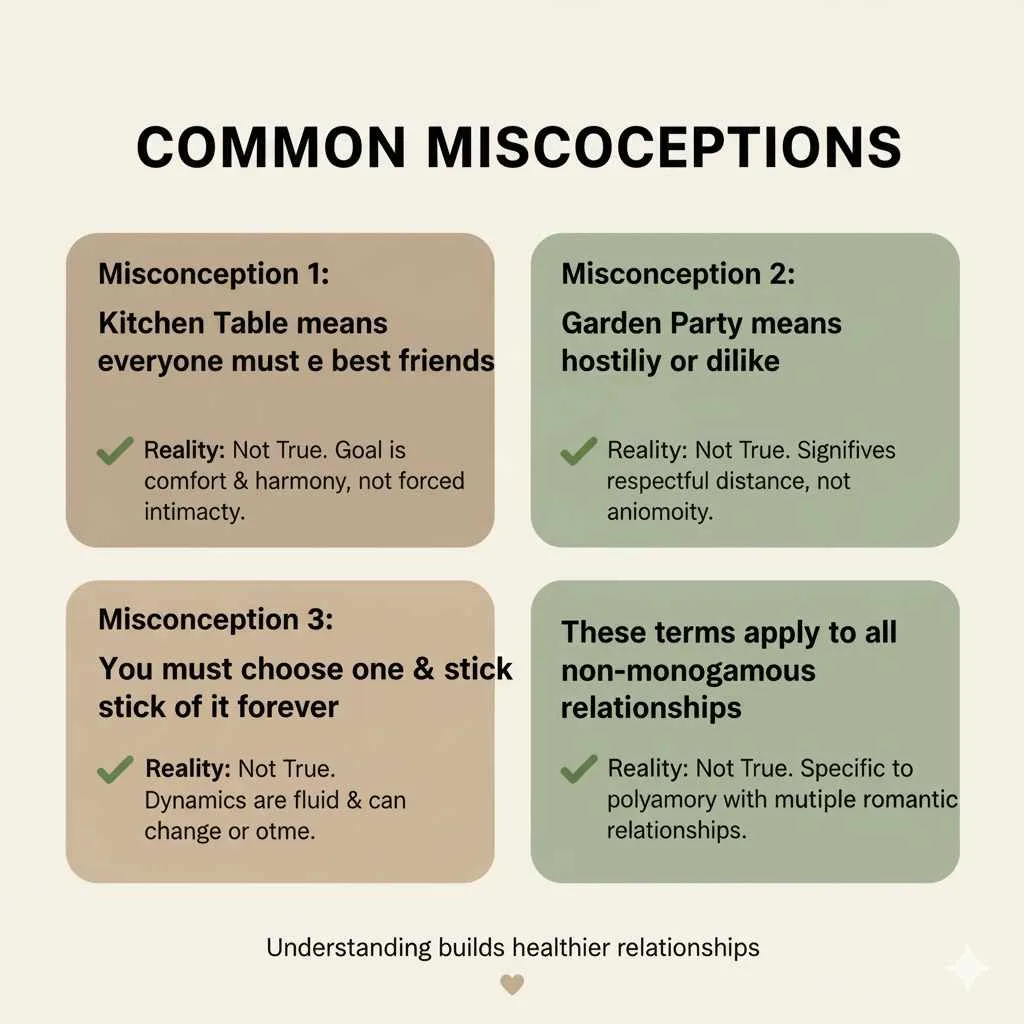
Common Misconceptions
There are a few common misunderstandings about these terms:
- Kitchen Table means everyone must be best friends: This is not true. The goal is comfort and harmony, not forced intimacy.
- Garden Party means hostility or dislike: Absolutely not. It signifies respectful distance, not animosity or disrespect.
- You must choose one and stick to it forever: Polyamorous relationships are dynamic. Your preferences or the needs of your polycule may change over time.
- These terms apply to all non-monogamous relationships: These are specific to polyamorous dynamics where multiple romantic relationships are active.
FAQs About Kitchen Table vs. Garden Party Polyamory
Q1: What is the main difference between kitchen table and garden party polyamory?
The main difference is the level of direct interaction and intimacy between metamours (your partner’s partners). Kitchen table polyamory involves comfortable, direct engagement, while garden party polyamory involves polite, respectful distance and less direct social integration.
Q2: Do I have to be best friends with my metamours in kitchen table polyamory?
No, not necessarily. The goal of kitchen table polyamory is for everyone to feel comfortable and welcomed when they interact, fostering a sense of harmony and familiarity. Deep friendship is a bonus, not a requirement.
Q3: Is garden party polyamory dismissive of other relationships?
Not at all. It’s about respecting boundaries and the unique nature of each relationship. Partners are aware of and acknowledge each other’s existence and their shared partner’s connections, but they may not seek deep personal involvement with one another.
Q4: Can a polycule practice both kitchen table and garden party dynamics simultaneously?
Yes, absolutely. A polycule can have different dynamics for different partner pairs. For example, one pair of metamours might be very close (kitchen table), while another pair maintains a more distant, cordial relationship (garden party).
Q5: What if I prefer to keep my relationships separate, but my partner wants kitchen table dynamics?
This is a common point of negotiation in polyamory. Open and honest communication with your partner about your comfort levels and boundaries is crucial. You may need to find a compromise, set clear boundaries, or explore why this difference exists and how to navigate it respectfully. Resources on ethical non-monogamy can provide strategies.
Q6: How do I know which model is right for me and my partners?
The best approach depends on the personalities, comfort levels, time availability, and desires of everyone involved. Openly discuss what each person hopes for in their relationships with metamours. Experiment with different levels of interaction and see what feels sustainable and respectful for everyone.
Q7: Is it possible for relationships to move from a garden party dynamic to a kitchen table dynamic?
Yes, it’s entirely possible. As metamours get to know each other better and build trust, comfort levels can increase, naturally shifting the dynamic towards more direct engagement and familiarity. Conversely, relationships can also become more distant if that’s what works best.
Conclusion: Building Your Own Polyamorous Harmony
Navigating the landscape of polyamory, and understanding terms like “kitchen table” and “garden party,” is all about finding structures that support healthy, ethical, and fulfilling connections. Whether you gravitate towards the warm embrace of integrated relationships or the respectful acknowledgment of individual connections, the guiding principles remain the same: honesty, consent, and mutual respect. There’s no one-size-fits-all approach. The most beautiful polycules are those that are consciously built, lovingly communicated, and constantly adapted to meet the evolving needs of the people within them. Embrace the journey, communicate openly with your partners, and build a polyamorous life that feels authentic and joyful for everyone involved.