
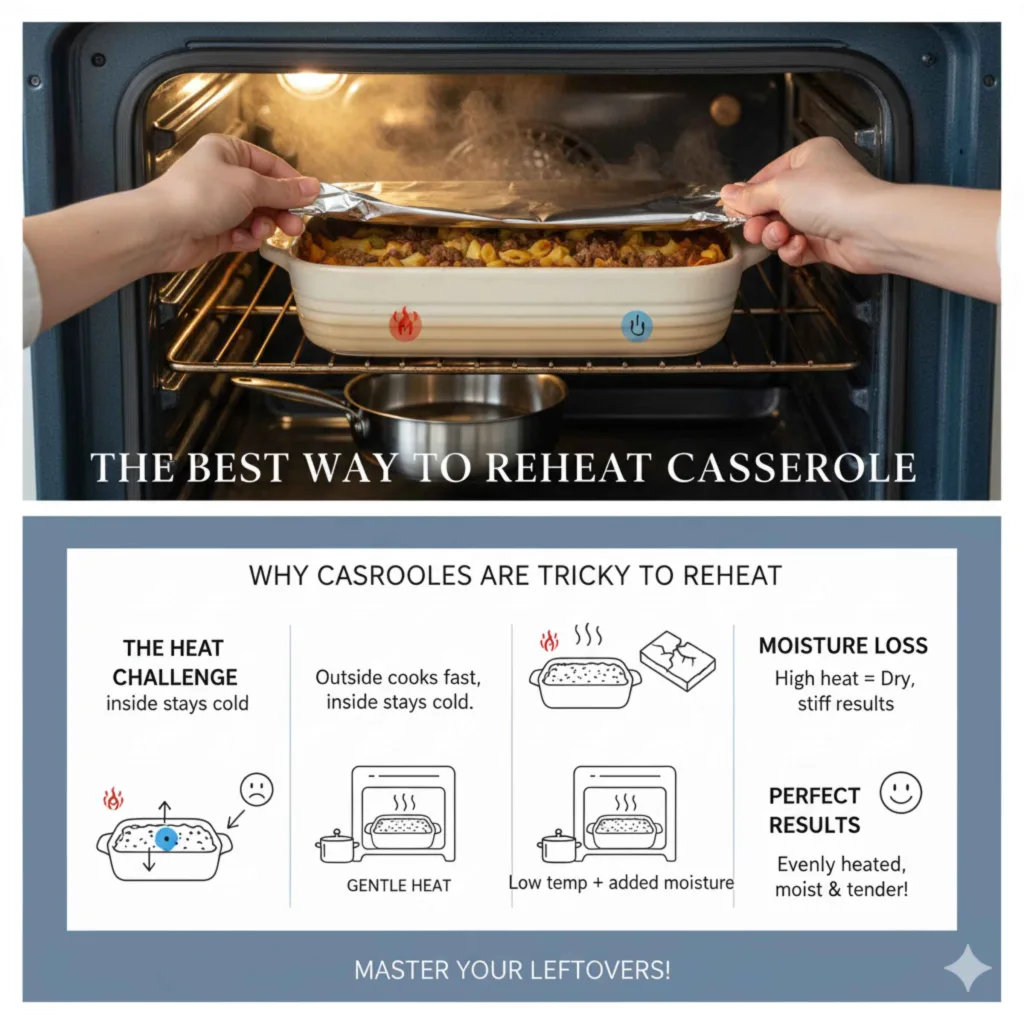
The best way to reheat a casserole is usually in a moderate oven (around 350°F or 175°C) after covering it tightly with foil. This traps moisture, heats the center evenly, and prevents the top edges from drying out or burning. Always allow extra time for large or dense casseroles.
There’s nothing quite like a hearty casserole straight from the oven. But what happens the next day when you want to enjoy those leftovers? Reheating them can feel tricky. You want that cozy, melty goodness back, but often the edges turn dry, or the middle stays cold. That results in a frustrating meal instead of a comforting one. That confusion is common, but getting it right is simple. We will walk through the most reliable way to bring your favorite baked dishes back to life, ensuring every bite is just as delicious as the first time. Get ready to say goodbye to dried-out leftovers forever!
Why Casseroles Are Tricky to Reheat
Casseroles, by definition, are loaded dishes—they involve layers of starch, protein, cheese, and sauce, all baked together until set. This complexity is what makes them great but also what makes reheating a challenge.
The Heat Challenge
When you heat something up, the outside always heats faster than the inside. With a casserole, the edges, which have more surface area exposed to the heat, can easily overcook, dry out, or even burn while the center is still lukewarm. This imbalance ruins the texture.
Moisture Loss is the Enemy
Casseroles rely on moisture (sauce, liquids, vegetables) to stay tender. High heat or too much exposure in the oven blasts that moisture away, turning a creamy dish into a stiff brick. Our goal is to use gentle, moist heat.
The Proven Best Method: Oven Reheating (The Gentle Approach)
For the absolute best texture and flavor restoration, the oven is your champion. It allows for slow, even heating, bringing the entire dish up to temperature safely without scorching the top. This method works wonders on most layered dishes like lasagna, mac and cheese, chicken pot pie filling, or breakfast bakes.
What You Will Need (Your Prep Toolkit)
This process is straightforward; you likely have everything already.
- The leftover casserole (cooled completely is best, but room temperature works).
- An oven-safe baking dish (the one it was cooked in is perfect).
- Heavy-duty aluminum foil.
- A small amount of extra liquid (like broth, milk, or water—optional, but highly recommended for very dry dishes).
- An oven thermometer (optional, but helps ensure accuracy, like having the right tire pressure).
Step-by-Step Guide: Reheating in the Oven
Follow these steps closely. Think of this like a careful tune-up for your meal; precision ensures a great result.
Step 1: Preheating – Set the Right Temperature
Safety first! Always preheat your oven. For casseroles, we want a moderate temperature—never blast it on high heat.
- Set your oven temperature to 350°F (175°C). This low-to-moderate heat ensures the middle warms up before the edges burn.
- Allow the oven to fully preheat. Using an oven thermometer helps verify it’s truly at temperature.
Step 2: Preparing the Casserole for Moist Heat
This is the key step for preventing dryness. Moisture is your friend here.
- Remove the casserole from the refrigerator about 20–30 minutes before baking to let it take the chill off slightly.
- If your casserole looks significantly drier than when it was first made (like chili mac or things with less sauce), add a small splash (1–2 tablespoons) of water, broth, or milk evenly over the top.
- Cover the dish tightly with aluminum foil. Crimp the edges down securely. This creates a miniature steam tent, trapping moisture inside and reflecting some direct heat away from the top layer of cheese or breadcrumbs.
Step 3: Baking Time – Low and Slow
Don’t rush this part. You are thawing and heating, not flash-frying.
- Place the foil-covered dish in the preheated oven.
- Baking time depends entirely on the casserole size and density. A single serving might take 15 minutes, while a full 9×13 dish can take 30 to 45 minutes.
- To check if it’s ready, use a thin knife or digital thermometer inserted into the very center. The goal is an internal temperature of 165°F (74°C), as recommended by the USDA for reheating leftovers to ensure safety.
Step 4: The Browning Touch (Optional Final Step)
If you removed the foil and the cheese/topping looks lackluster, you can add a quick blast of color.
- Once the center is hot (165°F), carefully remove the foil.
- Switch your oven setting to BROIL (watch this closely—it happens fast!).
- Broil for 1–3 minutes until the top is golden and bubbly. Do not walk away; broilers can burn food in seconds.
Alternative Methods: When Time is Tight
While the oven is the gold standard, sometimes you need leftovers fast. Here are reliable alternatives for quicker heating, focusing on balancing speed with quality.
Microwave Reheating: Best for Small Portions
The microwave is fast, but it is notorious for uneven heating—hot on the outside, cold in the middle. Use these tips to make it work better.
- Portion Control: Never reheat a whole casserole in the microwave. Scoop out individual servings onto microwave-safe plates.
- Add Moisture: Place a small, damp paper towel over the top of the portion. This creates steam, similar to the foil tent, preventing the edges from becoming rubbery.
- Short Bursts: Heat on 50–70% power for 1 to 2 minutes, stir, and repeat. Checking and stirring helps distribute heat evenly.
Stovetop Reheating: Great for Saucy Dishes
If your casserole is very saucy (like chili, stew, or very creamy pasta), the stovetop method can mimic the original texture beautifully.
- Scoop the portion into a saucepan.
- Add a splash of matching liquid (broth, milk, water).
- Heat over medium-low heat, stirring frequently until heated through. This prevents scorching the bottom while warming the rest.
Choosing Your Reheating Method: A Quick Comparison
Deciding which tool to use depends on how much you are reheating and how much time you have. This chart, much like choosing the right wrench for the job, helps clarify the best approach.
| Method | Best For | Pros | Cons |
|---|---|---|---|
| Oven (350°F/175°C) | Full pans, delicate crusts, dishes with cheese toppings | Most even heating; restores original texture beautifully. | Takes the longest (30+ minutes). |
| Microwave | Single servings, quick lunch fixes | Extremely fast (under 5 minutes). | Can lead to dry edges or cold spots; texture suffers. |
| Stovetop (Saucepan) | Saucy or liquid-heavy casseroles (e.g., baked spaghetti) | Excellent texture control for creamy dishes. | Only works well for scooped portions, not whole pans. |
Tips for Success Based on Casserole Type
Not all casseroles are created equal. A tuna noodle bake requires a different approach than a dense breakfast strata. Context matters, just like knowing whether to use synthetic or conventional oil for your engine.
For Cheesy Toppings and Crusts (e.g., Lasagna, Mac & Cheese)
If your topping is critical, moisture management is key.
Always use the foil tent. Do not skip this. The foil prevents the direct radiant heat from hardening the cheese into a shell.
If reheating large slices, place a drop of water or butter on the cheesy corner before replacing the foil.
For Egg-Based Bakes (e.g., Breakfast Casseroles, Quiche)
Egg proteins can get rubbery easily when overheated.
Use the lowest temperature: try 325°F (160°C) instead of 350°F.
If reheating a wedge, wrap the sides loosely in foil, leaving the top slightly exposed to gently heat the egg structure without drying it out.
For Meat and Vegetable Heavy Dishes (e.g., Shepherd’s Pie)
These dishes often contain less sauce and can dry out faster, especially the meat layer underneath the topping.
Add a tablespoon of beef or vegetable broth around the edges before covering with foil.
Ensure the internal temperature reaches 165°F—this is crucial for safely reheating ground meats. According to the Food and Drug Administration (FDA), leftovers must reach this internal temperature for food safety.
Troubleshooting: Fixing Common Reheating Problems
Even with the best method, sometimes things go wrong. Here are quick fixes for the most common complaints.
Problem 1: The Casserole is Dry
The heat was too high, or it cooked too long uncovered.
The Fix: If it’s already dry and cooled down, place it back in the oven (covered tightly with foil) at 300°F. Add a few strategic spoonfuls of liquid—broth, milk, or cream—over the top surface and let it sit for 15 minutes. The steam will help rehydrate the upper layers.
Problem 2: The Center is Still Cold
This means the heat didn’t penetrate fully, usually because the dish was too thick or too cold going into the oven.
The Fix: Leave the foil on! Return it to the oven immediately. If you suspect the temperature gauge is off, increase the heat slightly to 375°F (190°C) for just 10 minutes, then check the internal temperature again.
Problem 3: The Bottom is Burning
This is often caused by placing the dish directly on a hot lower rack or baking stone.
* The Fix: Immediately move the casserole dish to a higher rack position in the oven. If the bottom is already scorched, you may need to gently scoop the top, hot portion onto a plate or serving dish and discard the bottom layer.
The Importance of Cooling Time Before Storing
Before you even think about reheating, proper storage is essential. Improper cooling leads to temperature struggles later on.
When storing leftovers, you want to cool them down quickly before refrigerating. However, you shouldn’t put a piping hot dish straight into the fridge, as it can raise the internal temperature of your refrigerator, potentially warming up other foods.
- Divide large casseroles into smaller, shallower containers. This increases surface area, allowing heat to escape faster.
- Allow cooling on the counter for no more than two hours before covering and refrigerating.
- Use refrigerated leftovers within 3 to 4 days for best food safety. (Learn more about safe food handling practices through resources like the USDA Food Safety and Inspection Service).
Advanced Technique: Reheating Frozen Casseroles Safely
Many people freeze leftover casseroles for future meals—a great way to save time! Reheating from frozen requires a slightly different strategy to prevent the edges from turning to dust while the center thaws.
The Overnight Thaw vs. The Oven Thaw
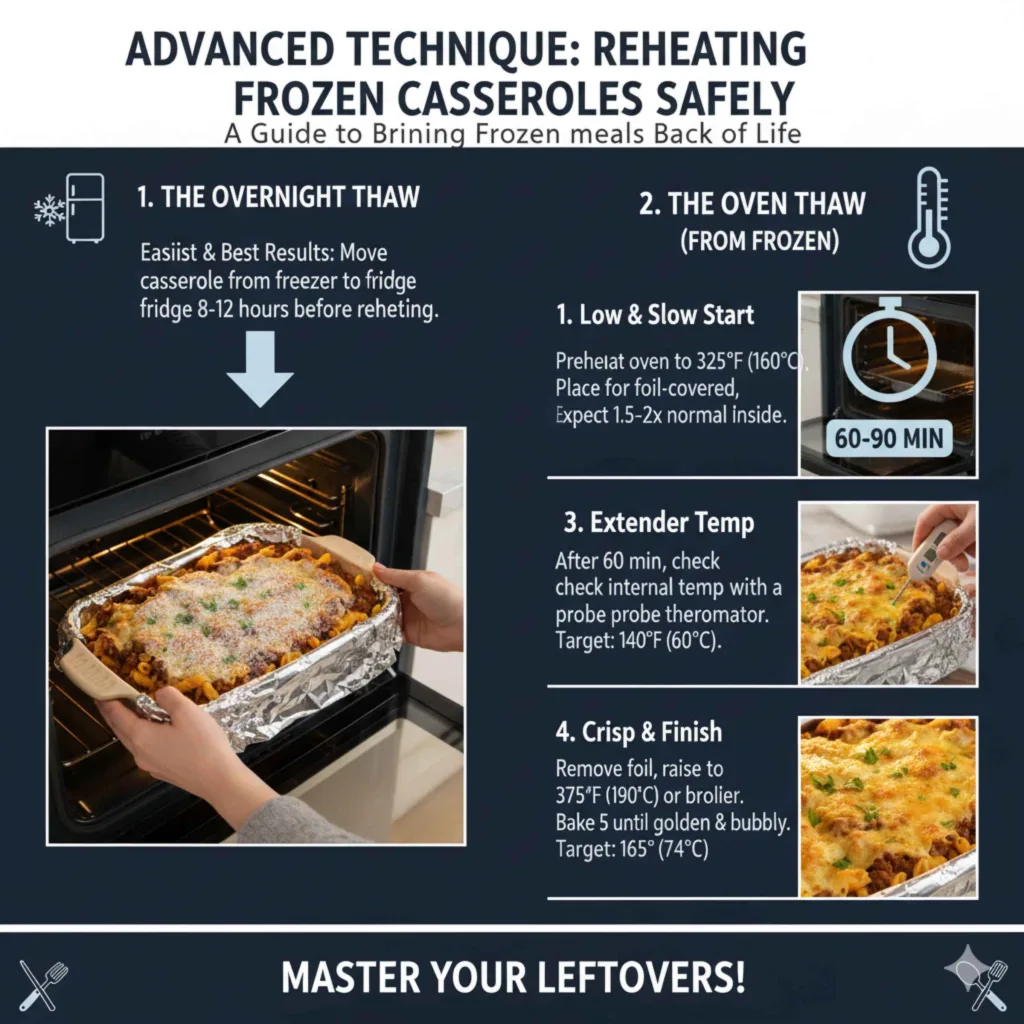
For the best results, always thaw the casserole in the refrigerator overnight. However, if you forget, here is the oven method:
Oven Reheating from Frozen
- Lower the Oven Temp: Preheat your oven to a lower temperature—about 325°F (160°C).
- Longer Covered Time: Place the foil-covered, frozen casserole directly into the oven. Because it is starting from below freezing, the reheating time will be significantly longer—plan for 1.5 to 2 times the normal reheating duration.
- Monitor Closely: Do not trust standard timing charts. After about 60 minutes, check the internal temperature.
- Raise Heat for Finish: Once the internal temperature hits 140°F (60°C), foil off and increase the oven to 375°F (190°C) or use the broiler for 5 minutes to brown the top and bring the center up to the safe 165°F (74°C).
Frequently Asked Questions (FAQ) About Casserole Reheating
- Q1: Can I reheat a thin casserole (or leftovers) faster in the microwave?
- A: Yes, but scoop it out first. Never microwave a full pan. Use 50% power in short bursts, stirring often, and always cover it with a damp paper towel to keep the moisture locked in.
- Q2: How long can I keep leftover casserole in the fridge?
- A: Most cooked casseroles are safe and maintain good quality for 3 to 4 days in the refrigerator when stored in airtight containers.
- Q3: Why is my lasagna topping dry after reheating?
- A: The tomato sauce provides excellent moisture, but the top layer of pasta and cheese cooks quickly. Always use the foil tent for lasagna to keep the steam in. If it’s dry, add a thin layer of water or tomato sauce around the edges of the slice before reheating.
- Q4: Is it safe to reheat a casserole more than once?
- A: It is safest to reheat only the portion you plan to eat immediately. You can generally reheat leftovers safely one time, provided they were stored correctly and reached 165°F (74°C) during the initial reheating. Avoid reheating leftovers repeatedly.
- Q5: What if my casserole has a crispy topping that I don’t want to soften?
- A: If you must preserve a crispy topping (like fried onions or toasted breadcrumbs), scoop out the portion you want to eat, place it on an oven-safe plate, and bake uncovered at 350°F (175°C), monitoring closely for dryness. If you only have a small amount, using an air fryer on a medium setting also works well for crisping.
- Q6: Does the type of leftovers dish matter (glass vs. ceramic vs. metal)?
- A: Metal pans heat up and cool down the fastest. Glass and ceramic pans retain heat much longer. If reheating in glass, you might need to reduce the oven temperature by 25°F, as they transfer heat more aggressively.
Conclusion: Enjoying Your Effort Again
Reheating a casserole doesn’t have to be a lesson in kitchen anxiety. By treating your leftovers gently—using the moderate oven temperature of 350°F (175°C) and keeping that foil tent secured—you are trapping the delicious moisture and ensuring uniform heating from edge to center. This foolproof method respects the complex layers of your original creation, bringing back that comforting, fresh-out-of-the-oven experience without any fuss. Take your time, check that magical 165°F internal temperature mark, and enjoy one of life’s great culinary rewards: a second helping of comfort food, perfectly restored. You’ve got this!