
The proven best idea for making a chicken casserole is starting with pre-cooked or rotisserie chicken, using a simple base like canned soup or creamy sauce mix, and binding it together with pasta or rice. This method is fast, nearly foolproof, and guarantees a comforting, crowd-pleasing meal every time. We’ll walk through every step.
Trying to figure out the perfect weeknight dinner can feel like a complicated repair job. You want something hearty, delicious, and easy to manage, but sometimes recipes look like complicated wiring diagrams! Chicken casserole often seems like a magical fix, but many first-timers worry about dry chicken or a soupy mess. Don’t sweat it! Making a truly great chicken casserole is simple when you follow clear steps. We are going to break down the best, most reliable method so you can confidently bake a delicious casserole that everyone will ask for again. Get ready to master this kitchen staple.
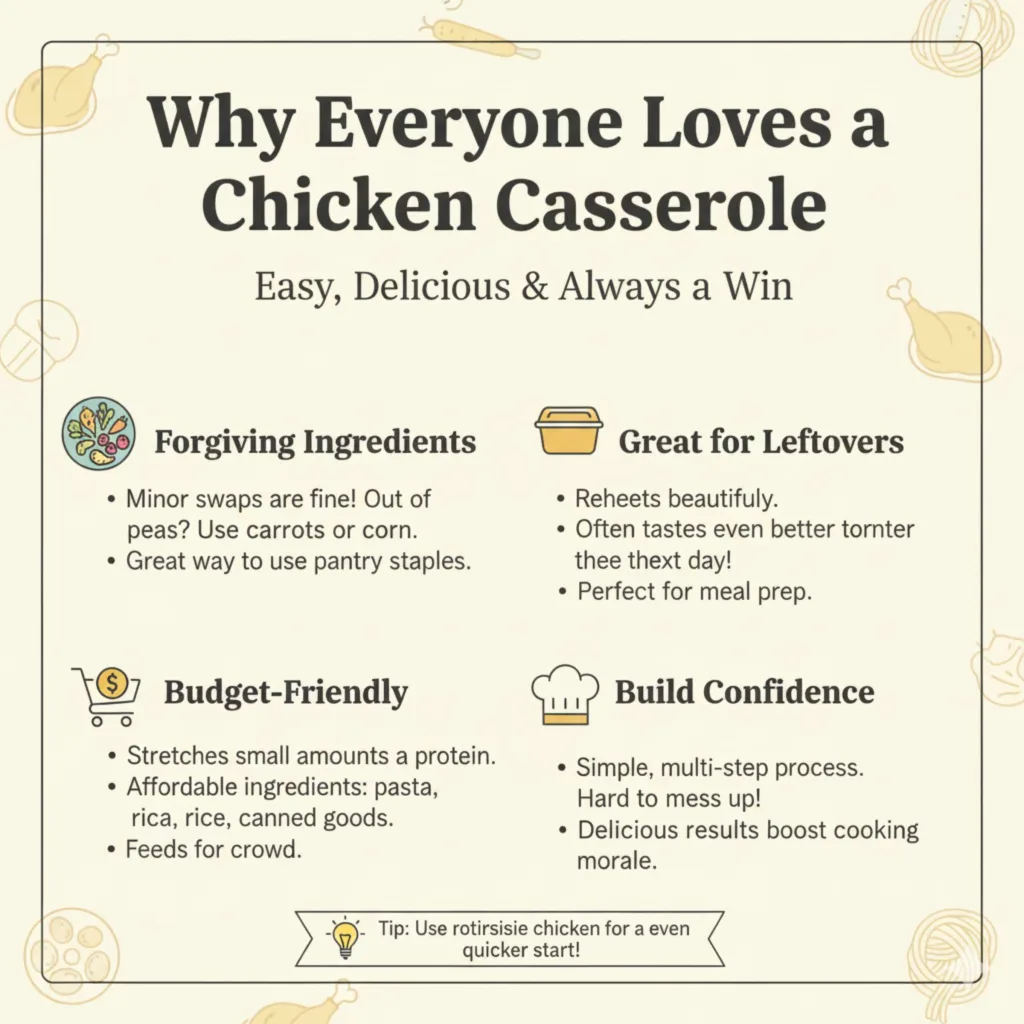
Why Everyone Loves a Simple Chicken Casserole
If you’ve ever looked in your pantry and felt overwhelmed, you understand the appeal of a casserole. It’s the culinary equivalent of an all-in-one tool: one dish, minimal cleanup, and maximum comfort. Casseroles work because they take simple ingredients and let the oven do the heavy lifting, melding all the flavors together perfectly.
For beginners, a chicken casserole is excellent because:
- Forgiving Ingredients: It holds up well to minor ingredient swaps. If you are out of peas, carrots work just fine!
- Great for Leftovers: They reheat beautifully, often tasting even better the next day.
- Budget-Friendly: They stretch small amounts of protein (like chicken) into a full meal using affordable pantry staples like pasta, rice, or canned goods.
- Build Confidence: Successfully baking a casserole proves you can handle a multi-step cooking process without stressing about precise timing.
The Essential Components of the “Best” Chicken Casserole
Think of your chicken casserole like replacing a flat tire—it needs four main parts working together to be road-ready. Get these four elements right, and the success rate skyrockets. Since we are focusing on the beginner-friendly “Best Idea,” we will use rotisserie chicken to save time and ensure moisture.
Here are the four pillars of a reliable chicken casserole:
- The Protein (The Heart): The chicken. We recommend using already cooked meat due to its reliability.
- The Binder (The Glue): This creamy element holds everything together and prevents dryness. This is often cream of mushroom soup, cream of chicken soup, or a homemade béchamel sauce.
- The Filler (The Bulk): These starches absorb the creamy binder, making the dish substantial. Think pasta (egg noodles are classic), white rice, or potatoes.
- The Flavor & Texture (The Spice Rack): Vegetables and seasonings that add color, nutrients, and that signature savory taste.
Step 1: Gathering Your Tools and Ingredients
Before you start mixing, make sure your garage (or kitchen) is stocked! You don’t need specialized equipment, just the basics. This recipe focuses on a classic, comforting flavor profile that works well for a 9×13 inch baking dish, serving about 6 to 8 people.
Required Tools (Your Basic Toolkit)
- Standard 9×13 inch baking dish
- Large mixing bowl
- Measuring cups and spoons
- Rubber spatula or large spoon for mixing
- Sharp knife (for shredding chicken)
- Pot (if cooking pasta/rice from scratch)
Core Ingredients List (The Dependable Lineup)
This list forms the backbone of our foolproof recipe. We will discuss substitutions later!
| Component | Ingredient | Quantity |
|---|---|---|
| Protein | Cooked Chicken (shredded or cubed) | 3 cups |
| Binder | Canned Cream of Chicken Soup (low sodium preferred) | 1 (10.5 oz) can |
| Binder Enhancer | Milk or Chicken Broth | 1/2 cup |
| Filler | Cooked Egg Noodles or White Rice | 4 cups |
| Texture/Flavor | Frozen Mixed Vegetables (peas, carrots, corn) | 1 cup |
| Seasoning | Onion powder, Garlic powder, Black Pepper | 1 teaspoon each |
| Optional Topping | Crushed buttery crackers (like Ritz) or Panko breadcrumbs | 1 cup |
| Optional Topping Fat | Melted Butter | 2 tablespoons |
Step 2: Preparing the Components (Prep Work)
In automotive terms, this is like checking the oil and tire pressure before a long drive. Proper prep ensures smooth assembly and even cooking.
A. Handling the Chicken
If you bought a rotisserie chicken, that is excellent! Let it cool just enough so you can handle it safely. Use two forks to shred the meat, or chop it into bite-sized cubes—whatever you prefer for texture. Aim for about 3 cups of cooked chicken.
Pro Tip for Beginners: Shredding is better than cubing if you are worried about dryness. Shredded meat mixes more thoroughly with the sauce, ensuring every bite is coated.
B. Preparing the Filler (Pasta or Rice)
Your filler needs to be cooked al dente (slightly underdone). Why? Because it will continue to cook in the oven while baking in the sauce. If you overcook it on the stove, it will turn mushy in the casserole—the dreaded “casserole sludge.”
If using egg noodles, boil them for about 6 minutes instead of the package directions (usually 8-10 minutes). Drain well.
If using rice, cook according to directions, but use slightly less water than recommended to keep it firm.
C. Getting the Veggies Ready
We prefer frozen mixed vegetables because they are quick, already cut, and cook evenly in the oven. There is no need to thaw them first! Simply toss the frozen bag into the growing pile of other ingredients.
Step 3: Mixing the Casserole Base
Now we combine everything in our large mixing bowl. This is the easiest part—no complex layering required for this beginner-approved style!
Follow this order for the best mixing experience:
- Start with the Binder: Pour the can of cream of chicken soup into the bowl.
- Add Liquid: Stir in the 1/2 cup of milk or broth. This loosens the soup base so it coats everything evenly later.
- Season Generously: Add your onion powder, garlic powder, and pepper. Taste-testing the sauce here is okay! If you want more punch, add a dash of salt or a pinch of dried thyme.
- Fold in the Main Ingredients: Gently add the cooked rice/noodles, the shredded chicken, and the frozen vegetables.
- Mix Gently: Use your spatula to fold everything together. Go slow! You want the sauce to coat every piece—the chicken, the noodles, the veggies—but you don’t want to break the noodles into tiny bits.
This thorough mixing stage is crucial. It’s important that the sauce is distributed evenly so you don’t end up with patches of dry noodles next to puddles of sauce.
Step 4: Baking – The Transformation
This is where the magic happens. The oven takes these separate components and fuses them into one cohesive, hot, flavorful dish. Proper oven setup ensures reliable results.
Preheating and Pan Preparation
Preheat your oven to 375°F (190°C). This temperature is ideal because it’s hot enough to cook through in 25–30 minutes but gentle enough not to dry out the chicken.
Lightly spray your 9×13 inch baking dish with non-stick cooking spray. This prevents the sticky sauce from permanently bonding your casserole to the glass.
Layering and Topping
- Pour the entire contents of your mixing bowl into the prepared baking dish.
- Use the spatula to spread the mixture evenly across the bottom. Press down lightly so the surface is relatively flat.
- Apply the Topping (Optional but Recommended): For that highly satisfying, crunchy top layer, mix your crushed crackers or breadcrumbs with 2 tablespoons of melted butter. Sprinkle this mixture evenly over the top of the casserole. A crunchy top is the hallmark of a truly great casserole!
Baking Time and Temperature Check
Place the dish in the preheated oven on the center rack. Bake for 25 to 30 minutes.
How to Know When It’s Done:
- The edges should be bubbling vigorously.
- The topping should be golden brown and crisp (if you used one).
- The internal temperature, if checked with a thermometer, should be at least 165°F (74°C) in the center—though since all components were pre-cooked or safe, we are mostly checking for heat retention and sauce thickening.
Once removed from the oven, let the casserole sit on the counter for 5 to 10 minutes before serving. This resting time lets the sauce set up properly, preventing it from running everywhere when you scoop it out. This is similar to letting engine oil settle after shutting down a car—it makes for a cleaner operation!
Making It Your Own: Variations and Skill Upgrades
Once you master the basic structure, you can start customizing. Think of the basic recipe as your reliable sedan; variations are like installing custom wheels or a turbocharger!
Upgrade Options for Texture and Flavor
| Component Category | Beginner Option (Used Above) | Next Level Upgrade | Why it Works |
|---|---|---|---|
| Binder | Canned Cream of Chicken Soup | Homemade Béchamel Sauce with a dash of nutmeg | Richer mouthfeel, less sodium, professional flavor depth. |
| Filler | Egg Noodles | Roasted cubed sweet potatoes or wild rice blend | Adds natural sweetness and fiber, making it heartier. |
| Vegetables | Frozen Mixed Veggies | Sautéed fresh mushrooms, spinach, and diced onion | Deepens savory (umami) flavor profile before baking. |
| Cheese (The Secret Weapon) | No cheese | 1 cup shredded sharp Cheddar mixed into the sauce | Adds tanginess and stretchiness when hot. Check resources like the USDA FoodData Central for nutritional comparisons of different cheese types. |
Pro Tip: Dealing with Too Thin or Too Thick Sauce
This is a common breakdown point. If, after mixing, your sauce looks too runny, don’t panic. Here are two easy fixes:
- If too thin: Mix 1 tablespoon of cornstarch with 2 tablespoons of cold water together (this is called a slurry). Stir this slurry into your entire casserole mixture before baking. The starch thickens beautifully in the oven.
- If too thick (or dry): Stir in just a splash (1/4 cup) more milk or chicken broth until you reach a coating consistency.
Safety First: Handling Ingredients and Baked Goods
Just like you always secure your lug nuts after changing a tire, food safety is non-negotiable. Since this recipe primarily uses cooked ingredients, the risk is lower, but we still need to follow best practices.
Food Safety Checklist
- Fridge Time Limits: Never leave your mixed casserole sitting at room temperature for more than two hours before baking. Bacteria multiply fast between 40°F and 140°F (4°C and 60°C).
- Chicken Handling: If you are cooking raw chicken instead of using rotisserie, ensure all surfaces used to handle the raw meat are thoroughly washed with hot, soapy water immediately afterward.
- Checking Doneness: Always confirm the internal temperature is safe if you decide to use raw protein. The FDA recommends poultry reach 165°F (74°C) internally.
- Handling Hot Glass: Casserole dishes get extremely hot. Always use heavy-duty oven mitts. Avoid setting a hot glass dish directly onto a cold granite countertop, as the temperature shock can cause the glass to crack. Place it on a trivet or wooden cutting board.
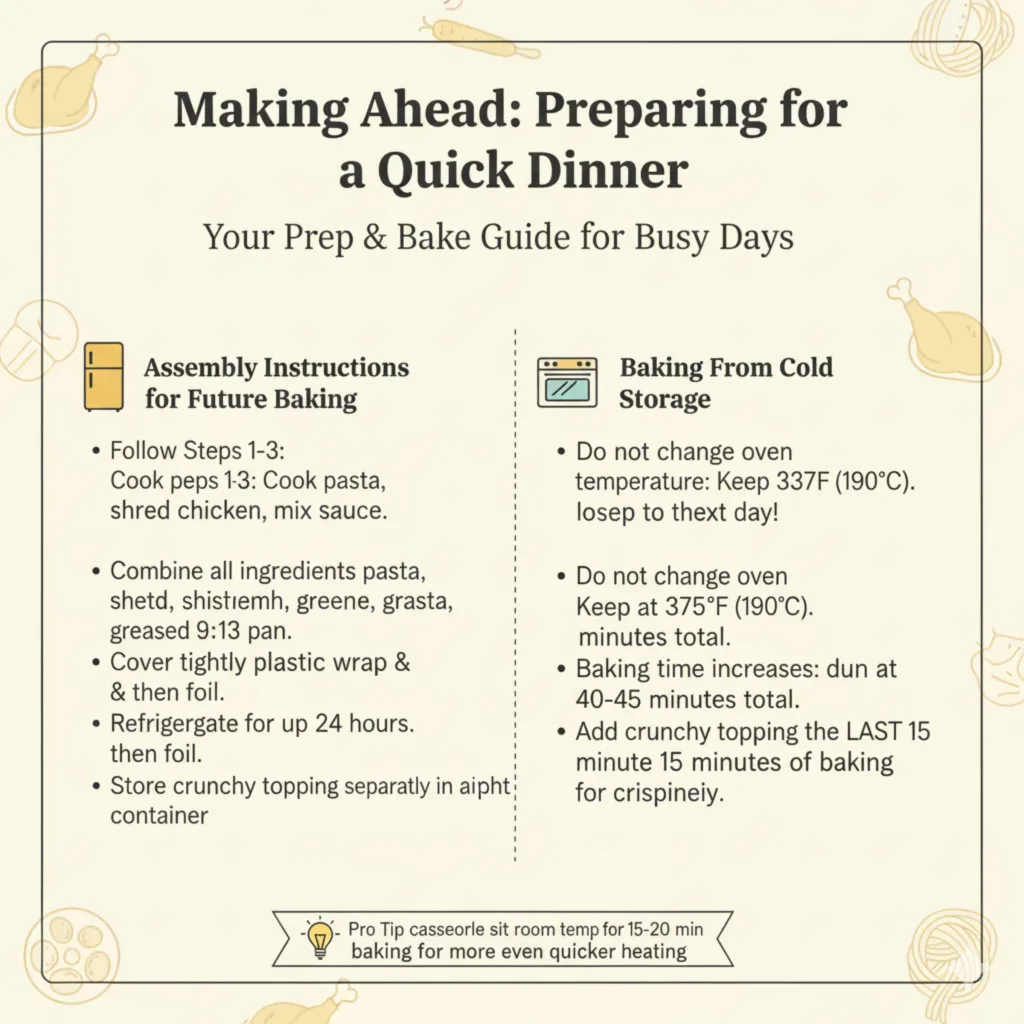
Making Ahead: Preparing for a Quick Dinner
One of the best features of a casserole is its ability to be prepped completely in advance—perfect for busy weekdays. This is like building your car’s maintenance schedule far in advance!
Assembly Instructions for Future Baking
- Follow Steps 1, 2, and 3 exactly as written: Cook pasta/rice, shred the chicken, mix sauce, and combine all ingredients.
- Press the mixture into your greased 9×13 pan.
- Cover the entire dish tightly with plastic wrap, and then cover it securely with aluminum foil.
- Refrigerate for up to 24 hours.
Baking From Cold Storage
If you bake the casserole straight from the fridge, it will take longer to heat through. You must adjust your baking time:
- Do not change the oven temperature: Keep it at 375°F (190°C).
- Baking time will increase from 25–30 minutes to approximately 40–45 minutes.
- You may want to wait to add the crunchy topping until the last 15 minutes of baking to ensure it stays crispy and doesn’t absorb moisture while baking for too long.
Frequently Asked Questions (FAQs) for Casserole Beginners
Q1: Can I use raw chicken instead of pre-cooked chicken?
Yes, but you must adjust the method. If using raw cubed chicken, mix it with the sauce and ingredients, then bake until the center reaches 165°F (74°C). This usually requires a longer bake time, closer to 45–55 minutes, depending on the size of your cubes.
Q2: What are the best substitutes if I don’t have cream of chicken soup?
The best substitute is a homemade white sauce (béchamel). To make a quick one, melt 2 tablespoons of butter, whisk in 2 tablespoons of flour, cook for one minute, then slowly whisk in 1.5 cups of milk until thick. Season with salt and pepper. You can add a small can of drained mushrooms for flavor.
Q3: My casserole came out dry. What went wrong?
Dryness usually comes from overbaking or using too little binder. Next time, ensure your pasta/rice is slightly undercooked before baking, and consider adding an extra splash of milk or using a cheese topping, which helps seal in moisture.
Q4: Can I freeze leftover chicken casserole?
Yes! Once cooled, slice the cooked casserole into individual portions if desired. Wrap each portion tightly in plastic wrap, then seal inside a freezer bag. It keeps well for up to 3 months. Thaw overnight in the fridge before reheating in the microwave or oven.
Q5: What vegetables work best if I don’t like peas and carrots?
For savory flavor, sautéed mushrooms or broccoli florets are fantastic additions. Diced celery added during the mixing stage, or even a layer of thinly sliced zucchini right on top, works well to add bulk and flavor without changing the creamy base significantly.
Q6: How do I get the topping crispy and not soggy?
The secret is mixing the topping (crackers or breadcrumbs) with melted butter before sprinkling. The butter acts as a fat barrier against the sauce. For maximum crispness, add the topping halfway through the baking time, or in the last 10 minutes if baking from cold.
Conclusion:
A great chicken casserole doesn’t have to be complicated to be comforting. By starting with pre-cooked or rotisserie chicken, choosing a simple creamy binder, and pairing it with reliable fillers like pasta or rice, you remove the most common risks—dry meat, uneven cooking, or a watery result. This proven method is fast, forgiving, and ideal for busy weeknights or beginner cooks who want dependable results.
Once you understand the four core components—protein, binder, filler, and flavor—you can confidently mix, bake, and serve a casserole that’s hearty, flavorful, and crowd-pleasing every time. From pantry-friendly ingredients to easy customization, this approach turns chicken casserole into a stress-free, one-dish meal you’ll return to again and again. Master the basics, and you’ll always have a reliable comfort-food solution ready to go!