
Quick Summary: The essential baking time for perfectly done sweet potato casserole is generally 25 to 35 minutes at 375°F (190°C). This applies to most standard recipes. Always check for doneness by ensuring the edges are bubbly and a knife slides in easily. Adjust timing based on your dish size and topping preference.
Trying to get that perfect holiday dish just right can feel tricky. You follow the recipe exactly, but when you pull the sweet potato casserole out of the oven, it seems either slightly runny or maybe just a bit too dry on top. Getting the bake time correct is the key to creamy insides and that wonderful crunchy topping we all love. It is frustrating when something meant to be comforting turns into a baking puzzle!
Don’t worry. We’ve all been there, staring at the oven clock, wondering if five more minutes will ruin everything. Think of me as your trusted roadside assistant for the kitchen—I’m here to give you clear, simple directions so you can nail this classic side dish every single time. We will break down exactly how long to bake sweet potato casserole and, more importantly, how to know when it’s absolutely done.
Next, we will look at the ideal temperature, how oven size changes things, and the foolproof testing methods experts use. You will bake your best casserole yet!
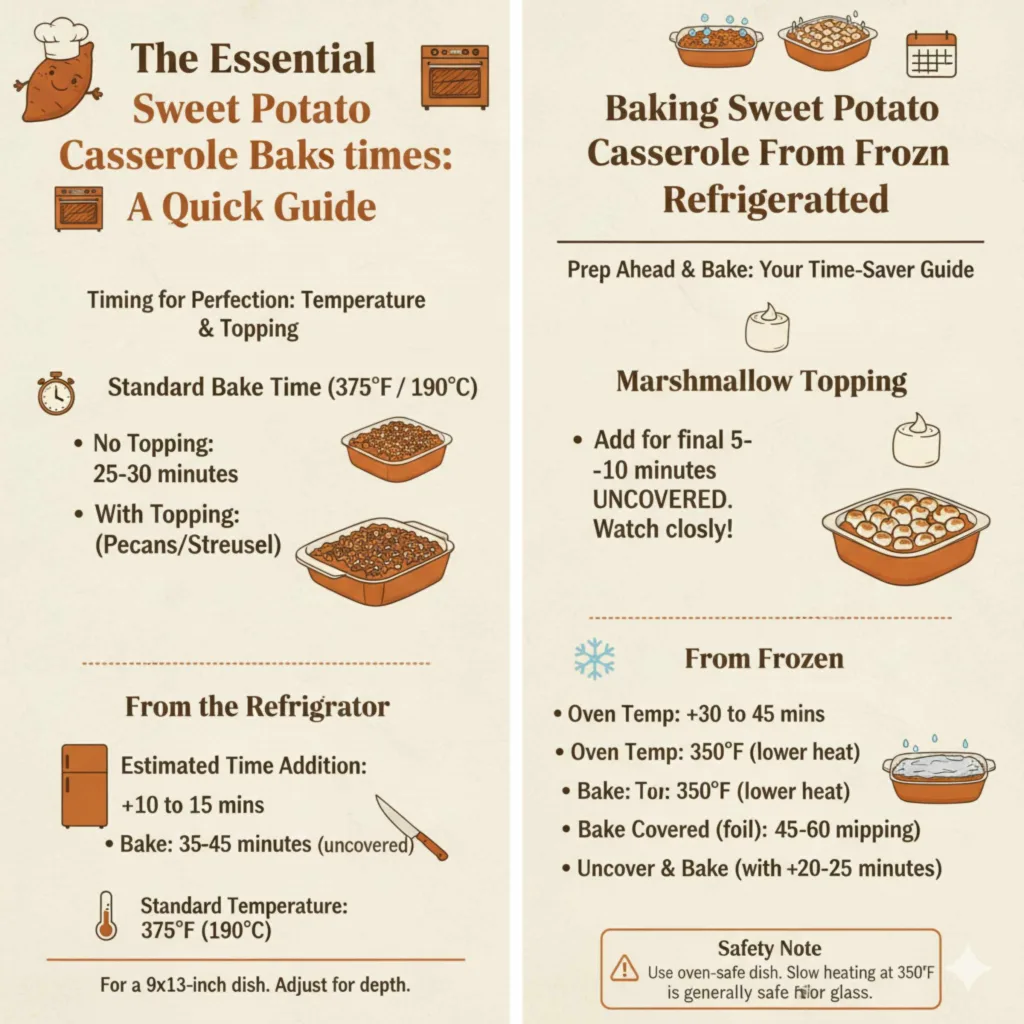
The Essential Sweet Potato Casserole Baking Times: A Quick Guide
When cooks ask, “how long do you bake sweet potato casserole,” the answer usually depends on two big factors: the temperature you choose and whether you are baking it with or without a topping.
Baking sweet potato casserole often involves two stages: setting the filling and crisping the topping. Getting the timing right means the sweet potato base is smooth, hot, and fully cooked through, while the pecans or marshmallows on top turn golden brown without burning.
Standard Baking Temperature and Time
For most standard 9×13-inch casserole dishes, keeping a steady oven temperature is crucial for even cooking. Most successful recipes rely on middle-ground heat.
A temperature of 375°F (190°C) is the industry standard for casseroles. It allows the center to heat thoroughly before the edges dry out or the top burns.
- Standard Bake Time (No Topping): 25–30 minutes. The goal here is just to heat everything through and ensure it’s set.
- Standard Bake Time (With Topping): 30–40 minutes. This allows time for the filling to set and the topping (like pecans or oatmeal streusel) to achieve that perfect crunch.
- Marshmallow Topping Addition: If you add marshmallows later, only bake them for the final 5–10 minutes uncovered, watching very closely!
The Impact of Dish Size and Depth
This is where many beginner cooks run into trouble. A shallow layer of casserole will cook much faster than a deep, thick one. Think about how you bake loaf bread versus a sheet cake—the depth matters significantly.
If you are using a smaller, deeper baking dish (like an 8×8 inch square), you need to add extra time. Conversely, if you are using a disposable foil pan that is very shallow, you might shave off 5 to 10 minutes.
Here is a quick comparison to help you adjust:
| Casserole Dish Size | Approximate Fill Depth | Adjusted Total Bake Time (at 375°F) |
|---|---|---|
| 9×13 inch (Standard) | Medium | 30–40 minutes |
| 8×8 inch or 9-inch Round | Deep | 40–50 minutes |
| Freezer-to-Oven Disposable Pan | Shallow/Wide | 25–30 minutes |
Step-by-Step Baking Process: Hitting Perfection Every Time
To ensure you get a consistently great casserole, follow these simple steps, which build confidence like checking your tire pressure before a long trip. It’s preparation that guarantees smooth sailing!
Step 1: Preheat Correctly (Don’t Skip This!)
Oven accuracy is crucial. If your oven thinks it’s 375°F but it’s actually running at 350°F, your casserole will take much longer, potentially drying out the edges.
- Place an oven rack in the center position of your oven. This ensures the heat surrounds the dish evenly.
- Preheat your oven to 375°F (190°C) for at least 15 minutes before placing the casserole inside. If you have an oven thermometer, use it to confirm the temperature.
Step 2: Prepare the Dish
Ensure your sweet potato base is poured evenly into your buttered or sprayed baking dish. Even surface area helps the dish cook uniformly from corner to corner.
Expert Tip: If your sweet potato mixture is colder (straight from the fridge), it will need about 5 to 10 minutes longer to heat fully than room-temperature batter. Try letting your mixture sit on the counter for 30 minutes before baking if your recipe advises pre-cooking the puree.
Step 3: The Initial Bake (Covered or Uncovered?)
This is a common decision point. For maximum tenderness and to prevent the top from browning too quickly while the center cooks, covering the dish initially is a great strategy.
- Cover the baking dish tightly with aluminum foil.
- Bake for the first 20 minutes at 375°F. This traps steam, heating the base evenly without drying out the starches.
Step 4: The Topping Reveal and Final Bake
Once the initial baking time is done, it’s time to add that signature crunch and color.
- Carefully remove the foil.
- Apply your topping (pecan mixture, brown sugar, or marshmallows).
- Return the dish to the oven, uncovered.
- Bake for an additional 10 to 20 minutes. This time is specifically for browning the topping and ensuring the casserole structure is set.
Step 5: Testing for Doneness (The Secret to Success)
This is the most important part. Forget the clock for a minute and focus on what your casserole is telling you. How do we know it’s done, just like knowing when your brake pads are worn out needs a physical check?
A properly baked sweet potato casserole should look golden brown on top, and the edges should be actively bubbling, not just simmering gently.
The Wiggle Test
Gently nudge the side of the baking dish with an oven mitt. If the center jiggles like liquid Jell-O, it needs more time. If it only wiggles slightly around the very center, it is likely done or very close.
The Knife or Skewer Test
Insert a thin, clean knife or wooden skewer into the center of the casserole. If it comes out clean or with just moist crumbs clinging to it, you are good to go. If it comes out coated in raw batter, give it another 5 to 8 minutes.
For reference on maintaining your kitchen tools, knowing how to properly clean and store metal tools used in baking is important for longevity. Organizations like the USDA Food Safety and Inspection Service recommend thorough cleaning of all kitchen items after use to prevent cross-contamination.
Adjusting Time for Different Toppings
The topping you choose heavily dictates the final minutes of baking time. Marshmallows melt quickly, while streusel toppings need longer to crisp up and toast.
Pecan Streusel or Crumb Topping
These toppings are usually added halfway through the bake or near the end. They require direct, dry heat to become crunchy.
- Bake Time Adjustment: Add 15–20 minutes uncovered at 375°F.
- Look For: Deep golden brown color and a firm, crunchy texture when lightly tapped.
Classic Marshmallow Topping
Marshmallows are tricky because they go from white to lightly toasted to burnt charcoal incredibly fast. This is why they often go on last.
- Timing Strategy: Bake the casserole base for 30 minutes, remove, top with marshmallows, and return for only 5–10 minutes.
- Alternative: If you want a very light toast, bake fully, then turn your oven to the “Broil” setting for 1 to 2 minutes, watching every second! This requires standing right next to the oven door.
No Topping (Simple Baked)
If you prefer a creamy, simple top, you only need to ensure the filling is fully heated and set. You can bake covered for the entire time, removing the foil for the last 5 minutes if you want a very slight skin to form.
- Total Time: 30–35 minutes covered.
- Test: Use the Wiggle Test extensively here, as there is no visual cue from a topping.
Troubleshooting Common Sweet Potato Casserole Baking Issues
Sometimes the oven gods aren’t cooperative. Here are simple fixes for the most common baking problems, saving you from serving a subpar side dish.
Problem 1: The Edges Are Burning, But the Middle is Still Runny
This almost always means your oven or pan setup is creating too much direct heat on the outside of the dish.
- The Fix: Immediately wrap the edges of the casserole dish tightly with strips of aluminum foil. This acts like a heat shield, slowing down the cooking of the perimeter while allowing the center to catch up.
- Next Step: Reduce the oven temperature by 25°F (e.g., from 375°F to 350°F) and continue baking until the center passes the knife test.
Problem 2: The Casserole Won’t Set (It’s Too Soupy)
This usually means either too much liquid was added to the recipe (like too much milk or broth) or it hasn’t baked long enough.
- The Fix: Keep it in the oven! Give it another 10 to 15 minutes at 375°F.
- If it’s still soupy: If you have baked it for 50 minutes total and it won’t set, gently mix in 2 tablespoons of quick-cooking oats or a tablespoon of flour/cornstarch slurry (mix with equal parts cold water) right on top, spread it evenly, and bake uncovered for 10 more minutes. This will help absorb the extra moisture.
Problem 3: The Topping Burned Before the Filling Was Done
This is common when using a sugar-heavy pecan topping or when broiling too long.
- The Fix: Swiftly remove the dish from the oven. Scrape off the burnt topping layer with a spoon. If the filling underneath looks cooked, you may be done. If the filling looks underdone, cover the entire casserole with foil and return it to a slightly lower oven (350°F) to finish the internal cooking process.
Baking Sweet Potato Casserole From Frozen or Refrigerated
Many people prep ahead, especially around holidays. Knowing how to handle chilled or frozen casseroles is a massive time-saver!
Baking Casserole From the Refrigerator
A refrigerated casserole is already thawed, only needing time to heat through. This does not require a huge jump in baking time, but you must account for the temperature difference.
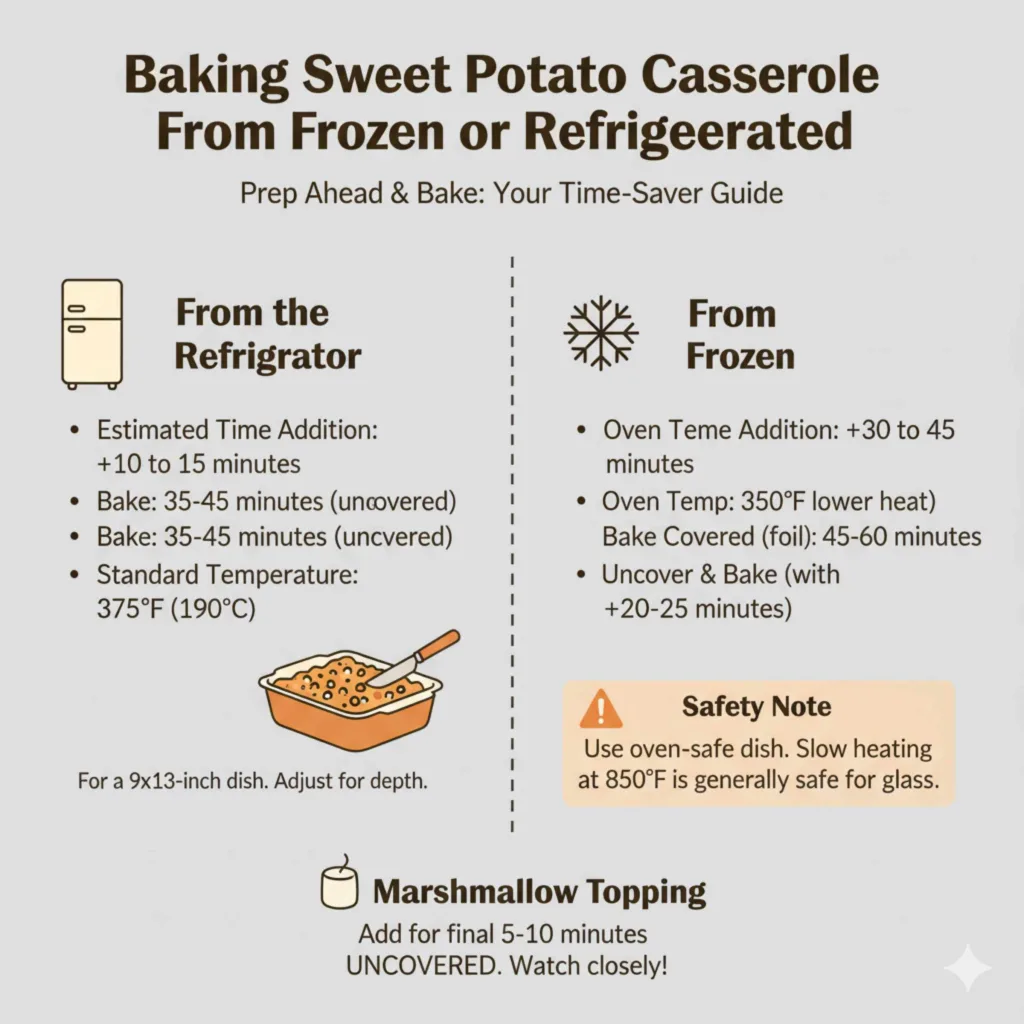
Estimated Time Addition: Add 10 to 15 minutes to your standard recipe time.
- Preheat oven to 375°F.
- Place the refrigerated dish directly into the oven. Do not cover initially.
- Bake for 35 to 45 minutes, depending on depth.
- Test for doneness using the knife method. Follow topping instructions as usual.
Baking Casserole From Frozen
Baking from frozen is tougher because the cold center fights the hot environment, risking scorched edges. This process requires patience and lower heat.
Safety Note: Always ensure any packaging or disposable foil pans intended for baking are oven-safe. If there is any doubt, transfer the frozen contents into a ceramic or glass baking dish first. Using frozen items can sometimes cause glass dishes to crack if subjected to extreme, rapid temperature changes, although recent food safety guidelines suggest that slow heating in a moderate oven is generally safe (Good Housekeeping often covers these practical home science tips).
Estimated Time Addition: Add 30 to 45 minutes to your standard recipe time.
- Preheat oven to 350°F (lower heat helps the center thaw gradually).
- Bake covered with foil for 45 to 60 minutes.
- Remove foil. If adding a topping, bake for an additional 20–25 minutes until set and bubbly.
FAQ: Quick Answers for Beginner Bakers
Q1: Can I bake sweet potato casserole at 350°F instead of 375°F?
Yes, you can. Baking at 350°F will result in a slightly creamier texture because the heat penetrates slower, but you must add about 10 to 15 minutes to the total baking time to ensure the center is fully heated and set.
Q2: How long should I bake a single-serving sweet potato casserole?
If you are making small ramekins or individual servings, the bake time is significantly reduced, usually between 18 and 22 minutes at 375°F. They will brown faster, so watch the topping closely.
Q3: Do I need to cover my casserole dish while baking?
It is highly recommended to cover it with foil for the first two-thirds of the baking time. This keeps moisture in and prevents the crust or topping from burning before the center is hot and firm.
Q4: My recipe calls for a fully pre-cooked sweet potato base. Does that change the baking time?
Yes. If your base is fully cooked and just needs to be heated and set, your baking time will be shorter—closer to 25–30 minutes total at 375°F, focusing mostly on setting the mixture and browning the top.
Q5: What should the internal temperature be when the casserole is finished?
For safety and texture, a baked casserole should reach an internal temperature of 165°F (74°C) in the very center, though most people rely on the visual and physical tests (bubbly edges, clean knife) which usually confirm this temperature has been met.
Q6: Why is my casserole still wet in the middle after baking for the right amount of time?
This usually means that the casserole was over-packed with liquid (like heavy cream or evaporated milk) or the eggs/binders didn’t fully activate. Give it an extra 10 minutes uncovered. If it still won’t set, a thin sprinkle of cornstarch on top might absorb surface moisture.
Conclusion: Trust Your Senses, Not Just the Timer
Baking sweet potato casserole successfully is less about rigidly following a clock and more about understanding what the dish needs to become perfect. We have established that the typical timeframe is about 30 to 40 minutes at 375°F for a standard dish, but true success comes from learning your equipment and trusting your visual and physical checks.
Remember the key takeaways: preheat thoroughly, cover initially for even cooking, and always use the Wiggle Test or the Knife Test before you pull that dish out. Whether you are dealing with a deep dish or a frozen helper, adjusting the temperature or time slightly will be your secret weapon.
You don’t need complex tools or years of experience to master this essential side dish. By following these clear, calibrated steps, you gain the confidence to serve a consistently creamy, perfectly topped sweet potato casserole for every gathering. Now go ahead, get that casserole in the oven—it’s going to be fantastic!